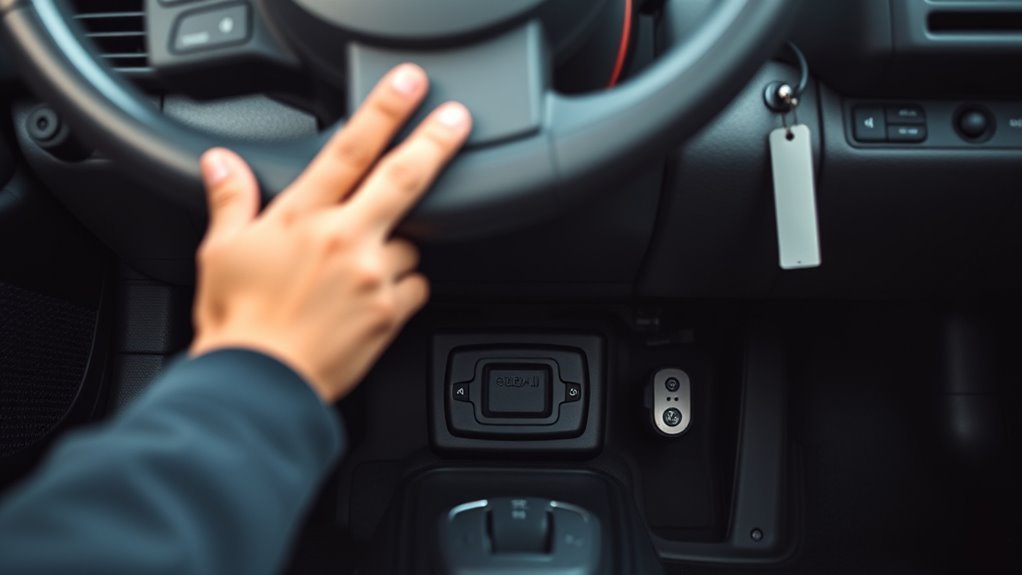
Approach a steep driveway at about a 45° angle so your Supra’s weight spreads evenly and you don’t jackknife. Use a low gear and a slow, steady throttle to control momentum and avoid abrupt inputs. Check tire pressures, suspension travel, and rear departure angle before committing, and visually judge clearance early to prevent front lip contact or high‑centering. If you’re getting scrapes, temporary ramps or skid plates help, and below you’ll find setup and repair options.
How to Angle-Enter a Steep Driveway (Quick Steps)

Approach the driveway at a 45-degree angle, positioning the Supra parallel to the curb before you turn in so weight’s distributed evenly and scraping’s minimized; you’ll then turn the wheel fully as the front wheels pass the opening. Use slow, steady throttle to control momentum—no abrupt inputs—so the chassis settles onto the incline. Watch driveway angles visually and judge clearance; align early to avoid last‑second steering. Check rear departure angle mentally: guarantee enough space behind before committing to prevent rear rub. This technique optimizes weight distribution front-to-rear, keeping contact patches balanced and suspension from bottoming. You’re choosing freedom from scraped bumpers by applying measured inputs, precise alignment, and respect for geometry rather than brute force.
Prep Your Supra: Tires, Gear, and Suspension Checks
Before you tackle a steep driveway, check tires, gear selection, and suspension so you don’t introduce avoidable risk to clearance or traction. Inflate tires to the manufacturer’s recommended pressure — correct pressure improves grip and stabilizes ride height. Practice tire maintenance: inspect tread, sidewalls, and valve condition to avoid unexpected loss of traction. Select a lower gear before the approach to maximize torque and control; don’t rely on throttle alone. Verify suspension settings and perform suspension tuning if adjustable: raise ride height temporarily to gain clearance and reduce scrape risk. Inspect the undercarriage for existing damage and consider skid plates for protection. Know your Supra’s approach limitations and act deliberately; freedom to drive confidently comes from disciplined prep.
Why Supras Scrape: Approach, Breakover, and Departure Angles
Because the Supra rides low and often carries aftermarket lips, you’ll frequently encounter clearance limits defined by three geometric angles: approach, breakover, and departure. You face scraping causes primarily from a low approach angle—typically 10–15°—that makes front lips contact steep inclines. The breakover angle, set by wheelbase and ground clearance, dictates whether you’ll high-center on shifts; a long wheelbase and 4-inch clearance are unforgiving. The departure angle mirrors the front: a low rear bumper will catch on exits. Angle importance is simple: each angle defines the envelope your chassis can traverse without contact. Read these geometries, pick your line, and modulate speed to keep the lowest points off pavement—precise technique prevents damage and preserves your freedom to drive confidently.
Fixes When Technique Fails: Portable Ramps, Lifts, and Regrading
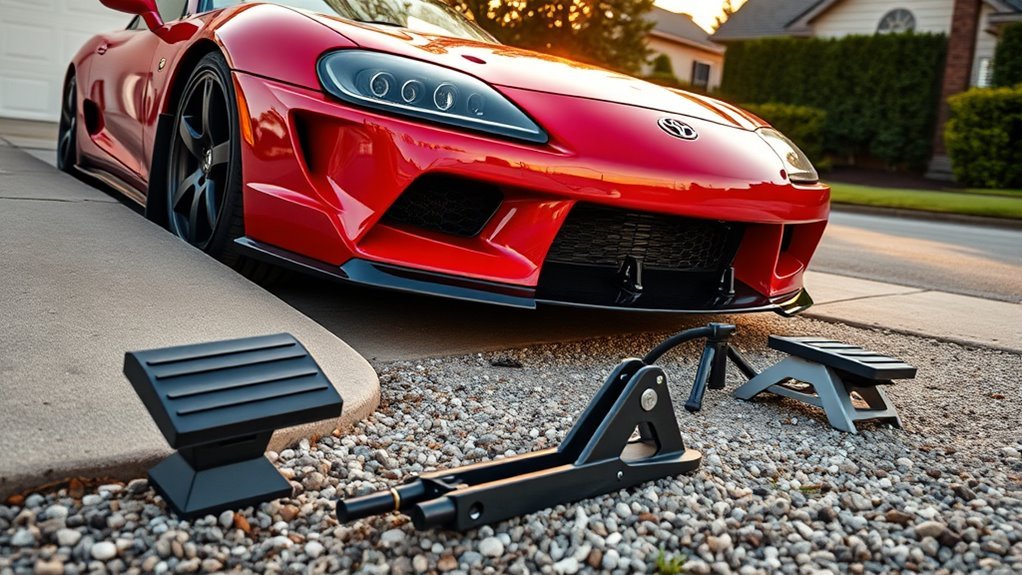
If technique and careful line selection still leave you kissing lips, there are physical fixes that change the problem instead of your driving: portable ramps and driveway aprons smooth the angle temporarily or permanently, skid plates shield vulnerable components, lift kits raise the whole chassis, and regrading alters the slope itself. You can choose short-term ramp materials like BRIDJIT-style rubber modules to bridge changes, or install plastic/rubber aprons for lower-cost permanence. Skid plates add sacrificial protection. If you want freedom from constant caution, evaluate lift options—front-end lifts or full kits give permanent clearance at a higher cost. Regrading requires permits and contractors but solves the root cause. Pick the intervention that balances budget, permanence, and liberation.
- Portable rubber bridge (temporary)
- Skid plates (protective)
- Regrade or lift (permanent)
Had a Scratch or Near‑Miss? Quick Troubleshooting and Inspection
When you’ve had a scratch or near‑miss, stop and inspect the front lip and undercarriage immediately for visible damage, noting scrape location and depth so you can assess risk to components like the oil pan or intercooler. Check suspension alignment and bushings for signs of knock or uneven wear—scraping often reveals misalignment that compromises control. Measure approach angle; under 10–15 degrees signals you must change technique or add protection. Log the approach angle, entry speed, and vehicle attitude during the event to refine future attempts. Use a spotter and maintain slow, steady speed to minimize risk. Consider temporary scraping prevention like skid plates or minor driveway modifications while you plan lasting changes that restore freedom to drive confidently.
Choose the Right Long‑Term Fix for Your Budget and Use Case
Although the right fix depends on your budget and daily use, start by matching solutions to measurable needs: note your Supra’s approach angle and typical entry speed, then weigh permanent driveway work, adjustable lift systems, portable curb ramps, or temporary parking services against cost, effectiveness, and long‑term convenience. You’ll choose between heavy upfront expense and operational freedom: regrading or repaving fixes angle issues permanently but costs thousands; lift kits or air suspension ($7,500–$15,000 installed) buy adjustable clearance; BRIDJIT ramps are cost effective solutions and portable; parking services remove daily risk. Use long term planning to align funds with desired freedom and maintenance burden. Decide by quantifying scrape risk, frequency, and acceptable ongoing costs.
- Regrade/repave: permanent, high cost, low daily hassle
- Lift/air: adjustable, mid/high cost, vehicle‑centric freedom
- BRIDJIT/parking: low cost, flexible, minimal commitment
Frequently Asked Questions
How to Fix a Steep Driveway Entrance?
You should regrade the driveway gradient to soften the approach, adjust surface materials for better compaction and drainage, install a curb ramp or terrace, and obtain permits; these technical steps free you from constant scraping.
What Is the Best Way to Make a Steep Driveway?
Make a steep driveway by combining appropriate driveway materials with smart slope design—yes, you’ll love the climb. You’ll calculate grades, choose permeable pavers or reinforced concrete, and optimize drainage so you’re free from future repairs.
How Do I Drive Into a Steep Driveway?
You approach the steep driveway at a 45-degree angle, using controlled braking techniques and gentle throttle control, steering fully as needed, maintaining tire pressure, and moving slowly so you’ll avoid scraping and keep your vehicle safe and free.
How to Prevent Ground Scraping on Steep Driveways?
Angle awareness and approach: you’ll adjust driveway angles, maintain slow speed, and increase ground clearance with skid plates or ramps; you’ll check tire pressure, approach diagonally, and confidently choose curb or ramp modifications for liberated, lasting protection.
Conclusion
Keeping your Supra scratch‑free on steep driveways is about technique, prep, and sensible fixes. Remember: nearly 60% of low‑ride sports car damage at home happens at the approach — a reminder that driver habits matter as much as hardware. Check tires, gear selection, and suspension, practice angled entries, and carry portable ramps or know your garage’s lift options. If you do scrape, inspect mounting points and undertray quickly, then choose a repair or modification that fits your budget and daily use.