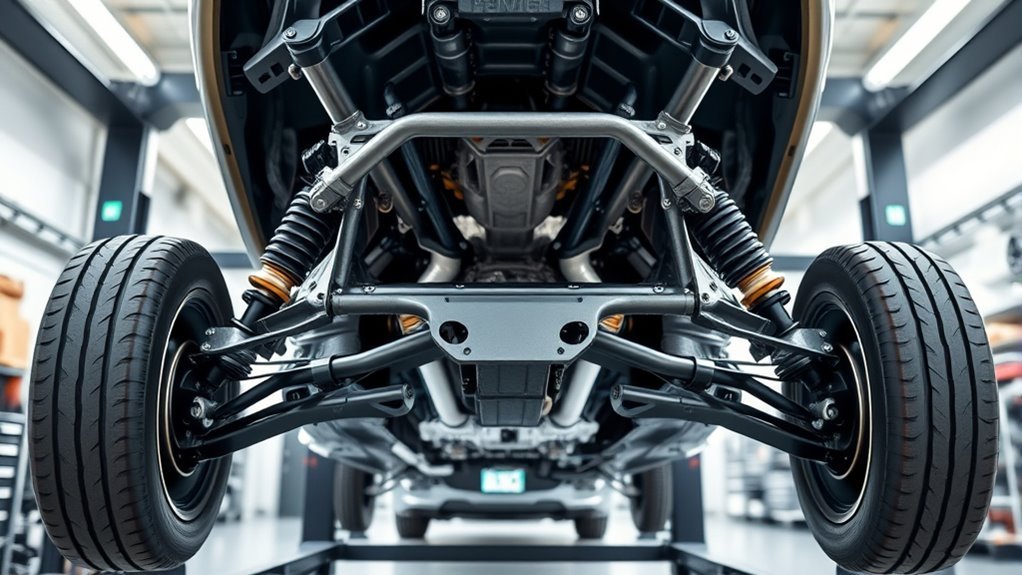
The Toyota GR Supra’s ground clearance is 119 mm (4.5 in), which directly limits approach/departure angles and how easily you’ll scrape the chin spoiler, undertray and sills on driveways or speed bumps. That low stance lowers drag and the center of gravity for sharper handling and quicker acceleration, but it raises daily-use risk—especially with added load, suspension travel, or lowered setups. Follow practical angle techniques and protection options to reduce damage, and keep reading to learn detailed fixes and trade-offs.
What “Ground Clearance” Means for the Supra

Ground clearance—the vertical distance between the Supra’s lowest underbody point and the road—measures 119 mm (about 4.5 in) on the Toyota GR Supra and directly determines how the car negotiates uneven surfaces without underrunning or scraping. You’ll assess that clearance as a performance parameter: it defines approach/departure angles and limits the steepness of obstacles you can tackle without contact. Lower clearance sharpens aerodynamics and handling but reduces terrain compatibility, making inclined driveways and speed bumps riskier. Your suspension tuning choices change effective clearance and behavior; lowering for cornering gains sacrifices obstacle negotiation, while protective additions restore resilience at cost of weight or drag. Apply measured adjustments and angled entry techniques to preserve freedom of movement without compromising chassis integrity.
Supra Ground‑Clearance: OEM Spec Vs. Real Life
Having covered how OEM clearance is defined, let’s compare the Supra’s factory spec—119 mm (4.5 in)—with what owners actually experience on real roads. You’ll see a gap between spec and practice driven by approach geometry, lowered setups, and environment.
- Owners report angled driveway entries reduce scraping; front approach angle matters more than pure millimeters.
- Some lower their Supra up to 0.8 in for performance tuning, then add chin spoilers or strips to protect the nose.
- Real-life clearance varies with suspension travel, cargo load, and tire profile; spec is a static baseline, not operating clearance.
- In winter driving the low stance struggles with deep snow and increases risk of immobilization; plan routes accordingly.
This analysis frees you to make pragmatic choices.
Why the Supra’s Low Ride Helps Performance : And Where It Hurts Daily Use
You’ll notice the Supra’s 4.5-inch ride height trims aerodynamic drag and raises high-speed stability by reducing airflow under the chassis. That lower center of gravity also tightens cornering response and cuts body roll during dynamic maneuvers. In everyday use, though, the same geometry forces practical compromises—scraping on driveways and speed bumps is common unless you approach obstacles at an angle, and poor roads or winter conditions further limit usability.
Improved Aerodynamics
Because the Supra sits just 4.5 inches off the pavement, it slices through air with less drag and gains high‑speed stability, which directly lowers lap times and contributes to a 0–60 mph of about 3.7 seconds. You benefit from clear aerodynamic benefits: reduced frontal area and controlled airflow cut drag coefficient and enhance straight‑line predictability. The low center of gravity tightens roll response, sharpening cornering for liberated, confident driving.
- Reduced drag: better top‑speed efficiency and fuel use.
- Stability: improved yaw damping at high velocities.
- Handling: quicker turn‑in and sustained grip through corners.
- Trade technique: approach obstacles angled to protect the undercarriage.
These performance metrics are tangible; you gain measurable speed and handling at the cost of everyday clearance considerations.
Practical Compromises
Although the Supra’s 4.5‑inch ride height sharpens aero efficiency and cornering by lowering center of gravity and reducing drag, it forces concrete compromises in everyday use that you need to manage. You’ll gain exceptional stability—skidpad grip near 1.05 g—so you can exploit high‑speed grip and precise turn‑in. But performance trade offs appear in daily environments: inclined driveways, speed bumps, gutters and winter snow expose the low underbody. You’ll mitigate damage with protection strips, raised approach awareness, and altered routes; some owners adjust ride height or install sacrificial skid elements. These practical adjustments preserve performance while extending usability, yet they accept decreased practicality in deep snow and rough urban settings. The choice is deliberate: liberation through performance requires calculated concessions.
Common Scraping Spots: Chin Spoiler, Undertray and Side Sills
You’ll most often contact the chin spoiler first—its 4.5-inch clearance makes steep driveways and curbs a high-risk area. The undertray and side sills are next most vulnerable, especially on uneven surfaces or straight-on speed bumps. Owners mitigate damage with angled approaches and protective strips on the chin spoiler.
Chin Spoiler Vulnerabilities
When negotiating driveway aprons, speed bumps, or steep inclines, the Supra’s 119 mm (4.5 in) ground clearance makes the chin spoiler the most vulnerable contact point, followed by the undertray and side sills. You’ll want to assess approach angles and entry technique to reduce impacts; entering at an angle often lowers contact risk. Consider chin spoiler modifications and scraping prevention tips that prioritize reversible, lightweight protection.
- Inspect front approach angle for low points and plan lines.
- Install protection strips on the chin spoiler to absorb initial contacts.
- Use angled entry technique to convert vertical clearance into horizontal clearance.
- Monitor damage patterns regularly to refine preventive measures and regain control.
Side Sill And Undertray
Beyond the chin spoiler, the Supra’s undertray and side sills present the next highest risk for scraping due to the car’s 119 mm (4.5 in) ground clearance and low lateral overhangs. You’ll find contact occurs on driveways, speed bumps and uneven surfaces, especially when you approach straight-on; adopting angled entries reduces incidence. Assess the undertray and side sills visually after low-clearance maneuvers and prioritize undertray maintenance to prevent aerodynamic panel damage and debris buildup that amplifies scraping. Fit durable side sill protection strips or replaceable skid elements where impacts recur; they’re a pragmatic, reversible modification that preserves structure and resale value. Operate within the clearance envelope, inspect fasteners regularly, and plan routes that honor the Supra’s low stance for liberated driving.
Supra and Driveways: Gutters, Aprons and Speed‑Bump Expectations
Although the GR Supra’s 4.5‑inch (119 mm) ground clearance gives it a low centerline, you can reduce scraping by changing your approach to driveway aprons, gutters and speed bumps. You’ll use practical driveway techniques and scraping prevention strategies to preserve the chin spoiler and undertray while maintaining freedom of movement.
- Enter inclined aprons at an angle to shift load and improve effective approach angle.
- Scout street gutters; a slight lateral offset prevents the front from dipping on straight approaches.
- Fit protection strips on the chin spoiler to absorb intermittent contact without structural harm.
- Approach standard speed bumps slowly and at an angle when feasible; owners report no major issues with thoughtful technique.
These measures are technical, efficient, and liberating for daily driving.
How to Approach Driveways and Speed Bumps Without Scraping

With only 4.5 inches of clearance, you should approach driveways and speed bumps at an angle to reduce the effective ramp length and lower the chance of the chin spoiler contacting the surface. Entering angled cuts down on front-end lift and bounce, especially where gutters create a front dip during a straight-on approach. If you still encounter scraping risk, fit protection strips to the chin spoiler to absorb contact and preserve the OEM fascia.
Approach At An Angle
If you approach a shallow driveway or speed bump at a deliberate angle, you reduce the effective nose-over and lower the chance the Supra’s 4.5-inch ground clearance and chin spoiler will contact the obstacle. You’ll use angled entry and driveway navigation to shift the pivot point, cutting frontal rake and minimizing scrape risk.
- Reduce approach angle — steer gently to create a diagonal trajectory across the incline.
- Control speed — crawl slowly to let suspension compress predictably and avoid abrupt nose dip.
- Monitor wheel placement — lead with one wheel to lift the opposite corner over gutters or bumps.
- Stabilize steering — keep small corrections to prevent sudden pitch that defeats the angled entry.
This method liberates confident, damage-free urban driving with analytical precision.
Use Protection Strips
After using angled entries to reduce nose-over, add protection strips to the Supra’s chin spoiler to guard against unavoidable contact with driveways and speed bumps. You’ll gain a measurable buffer that preserves the 4.5-inch clearance and reduces repair frequency. Evaluate protection effectiveness by selecting abrasion-resistant, impact-dissipating materials and testing low-speed contacts on representative inclines. Installation tips: clean and degrease the spoiler, align strips to follow the front approach contour, use automotive-grade adhesive plus mechanical fasteners where possible, and torque fasteners to spec. Approach gutters and speed bumps at an angle to minimize dip-induced scraping; monitor front approach angle to avoid bounce. This methodical, liberated approach gives you pragmatic control over minor impacts while maintaining the Supra’s stance and aerodynamics.
Protection Options: Strips, Skid Plates and Bumper Guards
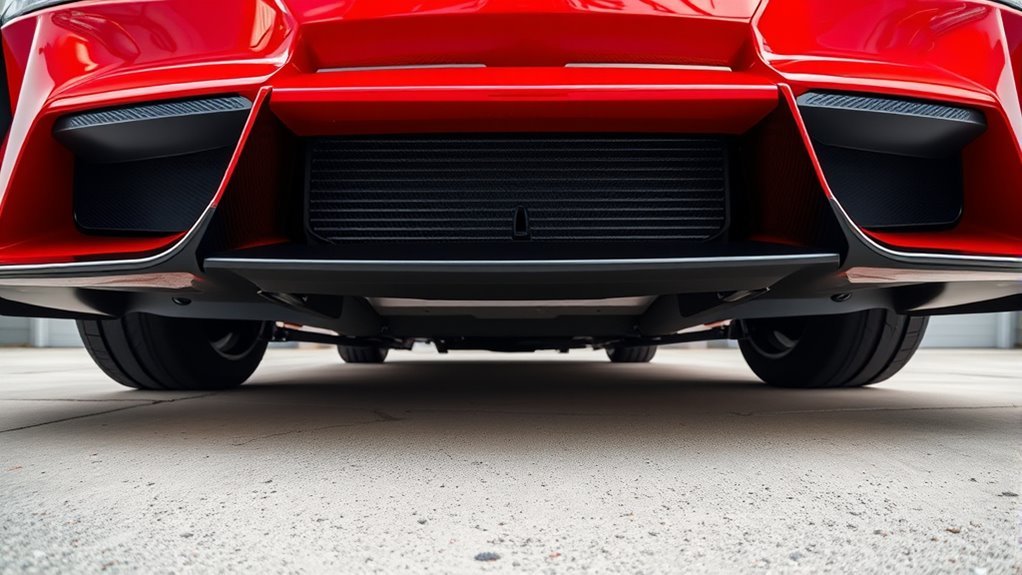
Because the Supra rides low, you’ll want targeted protection where contact is most likely: chin spoiler strips to reduce scraping on inclines, skid plates to shield the undercarriage from rocks and rough surfaces, and bumper guards to absorb impacts to the front and rear fascia. You’ll gain protection benefits and practical installation tips by choosing durable materials and correct attachment points. Monitor wear regularly to maintain function without compromising performance.
- Chin spoiler strips: sacrificial, replaceable, reduce scrape frequency; torque hardware per spec.
- Skid plates: cover oil pan, subframe; select high-strength alloy, verify clearance margins.
- Bumper guards: absorb low-speed impacts, protect fascia edges; inspect fastenings routinely.
- Maintenance: scheduled inspections, timely replacement, keep mounting points corrosion-free for liberated driving confidence.
Lowering the Supra: Expected Clearance Loss and Mitigation
Lowering your Supra by 0.8 inches reduces ground clearance from 4.5 to roughly 3.7 inches, cutting margin for approach angles and increasing scraping risk on driveways and speed bumps. You’ll gain lowering benefits—improved center of gravity and handling responsiveness—but you’ll face clear clearance concerns that demand mitigation. Fit protection strips to the chin spoiler and consider modestly angled bracket adjustments to shift contact points and restore approach geometry. Inspect clearances frequently after modifications; small shifts in suspension or ride height compound scraping risk. When you act, prioritize reversible changes and durable guards so you preserve mobility and freedom to drive varied roads. Measure, document, and test incrementally to balance performance gains against practical road hazards.
When to Modify the Car Vs. Change Your Driving Style
When you frequently encounter scrapes on driveways or speed bumps despite adjusting approach angles, it’s time to weigh physical modifications against changing your driving technique. You’ll decide by comparing measurable outcomes: frequency of contact, repair costs, and freedom to drive varied routes. Consider driving habits first if scrapes are occasional and angle approaches work; it’s the lowest-cost path to liberation. Modify when constraints persist or you want a consistently lower stance.
- Quantify: log scrape incidents per week and context.
- Cost-benefit: compare protection strips or 0.8″ lowering versus repeated repairs.
- Risk profile: lowering increases scraping on inclines despite tighter stance.
- Intervention: choose modest protection strips or technique retraining when freedom to roam matters.
Use metrics, not emotion, to choose.
Quick Checklist: Assess Routes and Decide If the Supra Fits Your Lifestyle
Before you commit to a GR Supra as your daily driver, run a targeted route audit so you can objectively decide if its 119 mm (4.5 in) ground clearance will work for your roads. Measure driveway inclines, gutter heights, and frequent speed bumps. Note winter routes—deep snow makes the Supra impractical. Adjust driving habits: approach steep entries at an angle to reduce scraping. Consider chin-spoiler protection strips if routes are marginal.
| Route Element | Risk Level | Action |
|---|---|---|
| Driveway incline | High | Angle entry or avoid |
| Speed bumps | Medium | Slow, angled approach |
| Urban curb/gutter | High | Measure, modify route |
Use this checklist to liberate your mobility decisions—choose modification, route change, or another vehicle based on data, not desire.
Frequently Asked Questions
What Is the Ground Clearance of the Toyota Supra?
The Toyota Supra’s ground clearance is 119 mm (about 4.5 inches). You’ll note this low clearance affects performance impact and limits off road capability, so you’ll adopt angled approaches or protective mods to preserve freedom.
Is Lower or Higher Ground Clearance Better?
Lower or higher depends: you’ll weigh pros cons—lower improves performance handling, aerodynamics and stability on smooth roads; higher aids obstacle clearance and off-road capability, sacrificing some agility and precision on pavement.
Conclusion
You’ll know quickly if the Supra suits you: its low OEM ground clearance improves handling but bites at steep driveways, gutters and speed bumps. Measure clearance at the chin spoiler, undertray and sill, and expect a few inches less if you lower the car. Fit skid plates, bumper guards or protective strips where needed, or alter routes and speeds. Weigh modifications against daily practicality — don’t throw the baby out with the bathwater when a simple habit change solves it.