Last updated: August 31, 2026
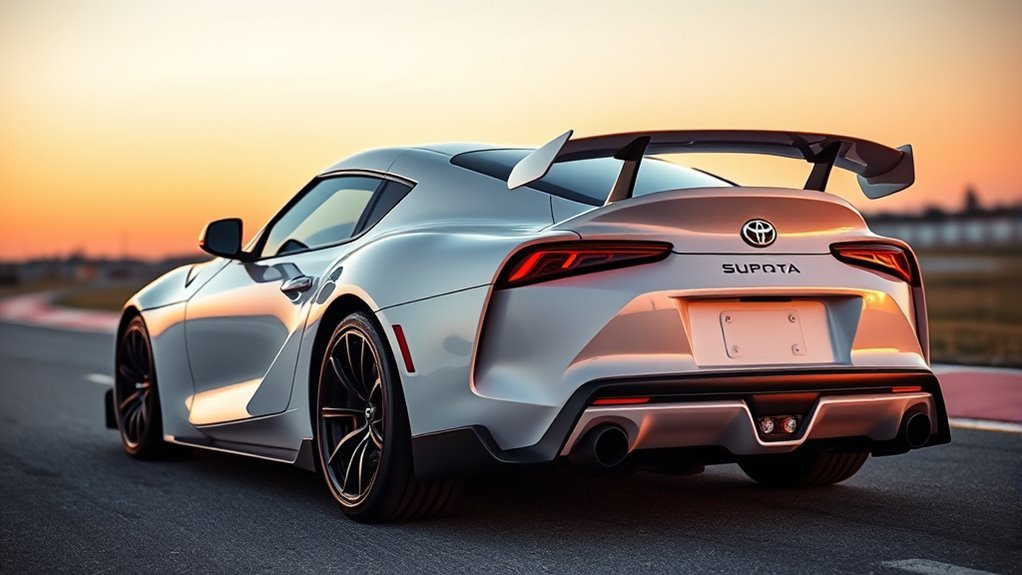
The 2020–2026 MkV Toyota GR Supra does not use factory active aero. Toyota fitted fixed or integrated aerodynamic parts, including an integrated rear spoiler on the original model and additional fixed aero on the 2026 MkV Final Edition. None is a motorized wing that changes angle while you drive. Do not confuse the MkV with the older A80/MkIV: some Japan- and Europe-market A80 cars used a powered active front spoiler. On a MkV, an aftermarket active-aero build must be treated as a complete system with rigid mounts, matched actuators, sensor inputs, control logic, electrical protection, and a tested fail-safe position.
Quick Answer
The 2020–2026 MkV Toyota GR Supra does not have OEM active aero or a factory motorized rear wing. Its factory spoilers, flaps, and other aero parts are fixed. A true aftermarket active-aero system moves automatically while the car is operating and requires a load-rated aero surface, structural mounts, actuators with position control, suitable sensors, a controller, and a predictable fault position. The older A80/MkIV is a separate case because some market versions used a powered active front spoiler. Do not use a universal speed or wing-angle map on a MkV; the correct settings depend on the exact hardware and closed-course test data.
Key Takeaways
- The 2020–2026 MkV GR Supra uses fixed factory aero, not a motorized active wing; some older A80/MkIV market versions used an active front spoiler.
- A manually adjustable wing is not active aero if it cannot change position while the car is operating.
- Vehicle speed should be an enabling input, not the only command used to move the wing.
- Mount strength, actuator position feedback, movement-rate limits, and power-loss behavior matter as much as wing angle.
- Rear-only aero changes can increase understeer unless front and rear aerodynamic loads remain balanced.
- Commission high-load settings only on a closed course and confirm the applicable road, insurance, and competition rules first.
At a Glance
| Generation scope | 2020–2026 MkV/A90-A91 GR Supra; older A80/MkIV active-front-spoiler systems are separate |
|---|---|
| Factory system | Fixed or integrated aero; no motorized wing-angle control |
| Aftermarket system | Aero surface, structural mounts, actuator or actuators, position feedback, controller, sensors, and protected wiring |
| Best use | Purpose-built track or competition application with documented testing |
| Main risk | Sudden front-to-rear balance change caused by movement, failure, or poor calibration |
| Safe test location | Stationary checks first, followed by controlled closed-course testing |
Scope: This guide explains system architecture, installation planning, and safety checks. It does not provide a universal speed map, wing angle, or downforce figure because those values depend on the exact wing, mounts, ride height, tires, circuit, weather, and test method.
Does the MkV Toyota GR Supra Have Factory Active Aero?
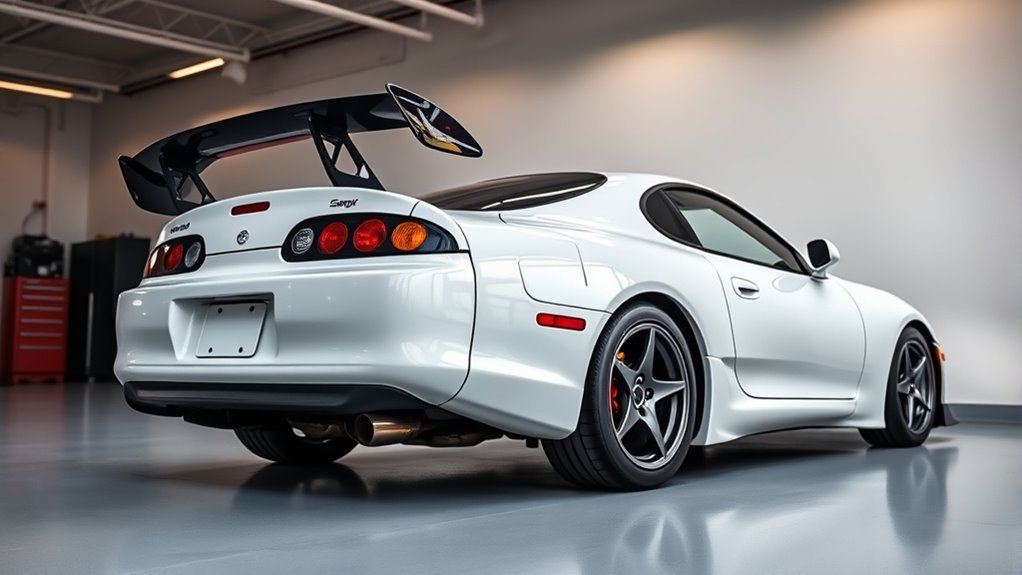
No. Toyota described the original MkV GR Supra as using an integrated rear spoiler that helps suppress aerodynamic lift. For 2026, Toyota added a fixed carbon-fiber ducktail rear spoiler, front wheel-arch flaps, and taller front tire spats to the MkV Final Edition. These are aerodynamic components, but they do not automatically change position while the car is moving.
On a Supra, true active aero is an aftermarket engineering project. A powered wing, flap, or splitter changes position in response to a controller. The intended goal may be to reduce drag on a straight, add aerodynamic load in a corner, or deploy an airbrake under braking. Each function needs separate limits and validation.
Note: “Active aero” and “adjustable aero” are not interchangeable. A wing that you adjust by hand in the paddock is adjustable, but it is not active.
What About the MkIV Supra Active Front Spoiler?
The older A80/MkIV is the main reason a broad search for “Supra active aero” can be confusing. Some Japan- and Europe-market A80 cars were equipped with a powered active front spoiler. That generation-specific system is different from the fixed factory aero on the 2020–2026 MkV GR Supra. If you are identifying an older car, start with the Toyota Supra generation history, then use the correct A80 wiring and service information for that market and model year.
For the MkV covered here, assume there is no factory active wing or active front spoiler to “unlock.” Any moving aero surface is an aftermarket system and should be engineered, wired, calibrated, and tested as such.
| System Type | Moves While Driving? | Typical Control | MkV GR Supra Status |
|---|---|---|---|
| Factory fixed aero | No | No actuator or movement map | Factory equipped |
| Manually adjustable wing | No | Angle set while parked | Aftermarket |
| True active aero | Yes | Powered controller and sensor inputs | Aftermarket custom system |
| Airbrake function | Yes | Tested braking-state deployment | Aftermarket custom system |
Key Components: Wing, Actuators, Sensors, and Control Unit
A Supra active-aero build starts with the aero surface and its load path. The wing, flap, uprights, brackets, fasteners, and body reinforcements must withstand the expected aerodynamic load without flexing, loosening, or transferring that load into unsupported outer sheet metal.
The actuator must provide enough travel and force for the intended surface. It also needs repeatable position control. If a design uses two actuators, the controller must keep them synchronized so one side does not lead, bind, or twist the wing.
A complete system normally needs these four layers:
- Aero and structure: A suitable wing or flap, rigid uprights, reinforced mounting points, mechanical travel limits, and clearance through the full range of movement.
- Actuation: An actuator or matched actuators, suitable joints, position feedback, movement-rate limits, and a means to prevent binding.
- Control: A controller that may use vehicle speed, brake input, throttle position, steering angle, yaw rate, drive mode, or separate sensors according to a validated map.
- Electrical and fault protection: Correct fusing, protected wiring, sealed connectors, fault reporting, a manual lockout, and a predetermined position for power or sensor failure.
Do not splice into CAN-bus or safety-system wiring unless the active-aero supplier and a qualified motorsport electrician provide a documented, vehicle-specific interface. The aero controller must not alter ABS, stability-control, airbag, lighting, or powertrain functions.
[Products Worth Considering]

The Autel MaxiCOM MK900BT is a professional bidirectional diagnostic scan tool built for modern vehicles with advanced system coverage and fast, accurate troubleshooting. It supports 3000+ active tests, 40+ service functions, all-system diagnostics, Auto VIN, pre/post scan reports, and newer vehicle protocols for broad compatibility. Designed for technicians and serious DIY users, it delivers efficient maintenance, smarter diagnostics, and expanded service capabilities across a wide range of makes and models.

This front left door lock actuator assembly is a direct replacement for select Toyota and Lexus models, helping restore reliable power door locking and latch operation. Built as an OEM-quality aftermarket part, it includes the latch assembly and is factory tested for dependable performance. It is designed for driver-side front door fitment across a wide range of compatible vehicles and comes with replacement support for added peace of mind.

This driver side front door lock actuator is designed to restore reliable locking performance across a wide range of Toyota, Lexus, and Scion vehicles. It serves as a direct replacement for multiple OE part numbers and helps solve issues with power door locks that are slow, unresponsive, or failing. Built for broad compatibility and backed by a one-year warranty, it is a practical solution for dependable door lock operation.
When Should Active Aero Move?
Active aero should respond to a defined driving state rather than move whenever one sensor crosses a single threshold. The map also needs filtering, separate engage and disengage thresholds, and movement-rate limits so sensor noise or a brief pedal input does not make the wing hunt between positions.
Why Speed Alone Is Not Enough
Vehicle speed can prevent deployment below a useful operating range, but it should not be the only command. At the same speed, the car may be accelerating on a straight, braking for a corner, or carrying lateral load through a bend. Those situations can require different aero behavior.
| Driving State | Possible Aero Command | Required Safeguard |
|---|---|---|
| Parked or low-load operation | Neutral, locked, or system disabled | No unintended movement during loading or service |
| High-throttle straight | Lower-drag position | Minimum-speed enable and stable position control |
| Sustained cornering | Validated downforce position | Rate limits and front-to-rear balance testing |
| Braking | Airbrake position only if designed and tested for it | Brake-input validation, travel limits, and stable release behavior |
| Sensor, actuator, or power fault | Predetermined safe position | Fault warning, lockout, and no uncontrolled free movement |
How Should Yaw and Steering Inputs Be Used?
Steering angle and yaw rate can help the controller identify a cornering state, but they should not directly command a large wing movement on their own. A rapid aero change during turn-in can alter front-to-rear balance before the driver expects it.
Use validated thresholds, filtering, and movement-rate limits so brief steering corrections or sensor noise do not trigger abrupt movement. The commanded position should also be compared with actual position feedback. If they disagree, the controller should report a fault and enter the defined safe mode.
Drive Modes, Manual Overrides, and Fault Modes
Some aftermarket controllers support several maps. Each map needs a defined purpose, maximum authority, and failure response. A mode label alone does not make a calibration safe.
| Mode | Recommended Purpose | Key Limit |
|---|---|---|
| Road or transport | Disabled, locked, or conservative operation where legal | No public-road commissioning |
| Test | Restricted travel and conservative movement rate | Closed-course use with active data logging |
| Track | Validated corner, straight, or braking behavior | Use only within the tested hardware configuration |
| Fault or service | Known locked position | No automatic reactivation until inspected |
Performance: Downforce, Drag, and Handling Trade-Offs

Active aero does not create free performance. A higher wing angle may add rear aerodynamic load, but it can also add drag and reduce straight-line speed. A lower angle can reduce drag, but it may also remove rear support before or during a high-speed corner if the transition is poorly timed.
Front-to-rear balance matters more than the rear-wing number by itself. A large rear-wing contribution without enough front aero can increase understeer. A strong front splitter without enough rear support can make the car nervous in fast bends. A moving rear wing adds another concern: the balance can change during the transition between positions.
The safest question is not “How much angle can the system add?” It is “Does the complete car become more predictable and repeatable throughout each part of the lap?”
How Do You Measure Whether Active Aero Works?
Record a fixed-aero or locked-wing baseline before enabling automatic movement. Compare repeatable runs under similar conditions and change only one control variable at a time.
| Measurement | What It Can Reveal | Warning Sign |
|---|---|---|
| Sector and lap consistency | Whether the system improves repeatable pace | One fast lap followed by inconsistent balance |
| Straight-line terminal speed | Drag cost of the deployed position | Lower speed without a cornering or braking gain |
| Steering corrections and driver notes | Predictability during transitions | New push, looseness, or correction when the wing moves |
| Tire temperatures | Changes in axle and contact-patch loading | A new front-to-rear imbalance |
| Ride height or suspension travel | Platform movement under aerodynamic load | Bottoming, excessive pitch, or loss of clearance |
| Commanded and actual wing position | Actuator tracking and synchronization | Lag, disagreement, oscillation, or incomplete travel |
| Controller fault log | Intermittent electrical or sensor problems | Repeated faults, resets, or unexplained mode changes |
OEM Aero vs Aftermarket Wings and Spoilers
The Supra’s factory aero prioritizes predictable road behavior, cooling, drag control, and front-to-rear balance. It uses fixed shapes rather than a motorized production wing. The 2026 MkV Final Edition’s ducktail rear spoiler and other additions remain fixed.
A fixed aftermarket wing is simpler than active aero because it has no powered transition or actuator-failure mode. A manually adjustable wing can still provide several angle settings, but the vehicle must be stopped before the setting changes.
True active aero adds control flexibility, but it also adds moving joints, electrical loads, software, position sensors, and transient balance changes. Read the separate Toyota Supra aerodynamics and downforce guide for passive-aero fundamentals, splitters, diffusers, fixed wings, and front-to-rear balance.
Do not select a wing only by appearance or a universal downforce claim. Look for vehicle-specific load data, the stated test speed and angle, mounting instructions, replacement-part support, and evidence that the front and rear package was developed together.
[Products Worth Considering]

This front bumper license plate bracket is designed for Toyota Camry and Camry Hybrid models from 2018 to 2026, offering a secure and street-legal way to mount your plate. Built from durable, rust-proof plastic with included screw bolts and a wrench, it helps protect your bumper paint while making installation straightforward. The bracket fits US and Canada plates and is made to keep your license plate and registration sticker visible.

This Plustool crimping tool is designed for reliable, rock-solid connections with heat shrink connectors in AWG22-10 applications. Its ratcheting mechanism, quick release lever, and adjustable compression wheel help deliver consistent crimps with less effort, while the ergonomic cushioned handle improves comfort during repeated use. Ideal for electrical repairs, vehicle wiring, and home appliance projects, it offers precise control without damaging insulation.

This body repair kit provides the essential tools for dent removal, panel shaping, and sheet metal work on automotive projects. With three hammers, four precision dollies, and a storage case, it offers a complete and organized solution for smoothing surfaces and restoring body panels. The fiberglass handles help deliver a comfortable grip and improved shock resistance for dependable use in garages or home workshops.
Is Active Aero Worth It on a MkV Supra?
For most road cars and many track builds, a well-documented fixed aero package is the simpler choice. Active aero becomes easier to justify only when you have a specific problem that a moving surface can solve, the structure and controls are engineered for the load, and you can validate the result with repeatable data.
| Option | Best Fit | Main Advantage | Main Trade-Off |
|---|---|---|---|
| Fixed aero | Road use, HPDE, simpler track builds | Predictable balance with fewer failure modes | One compromise for straights, corners, and braking |
| Manually adjustable wing | Track setup changes between sessions | Lets you tune a fixed angle without in-motion hardware | Must be stopped to change the setting |
| True active aero | Purpose-built testing or competition where rules permit it | Can use different validated positions for different driving states | Adds structural, electrical, software, and transient-balance failure modes |
A practical go/no-go test is simple: if you cannot document the wing load, mounting load path, actuator force and feedback, fault position, wiring protection, control logic, and closed-course validation plan before installation, choose fixed aero instead.
What Should You Check Before Installing Active Aero on a Supra?
Decide where and how the car will be used before buying hardware. A road-driven car adds water, vibration, lighting, inspection, and insurance concerns. A track car adds repeated high-load cycles, technical inspection, class rules, data logging, and rapid service requirements.
- Wing or flap data: Confirm the supplier documents the intended angle range, load direction, mounting method, and tested configuration.
- Structural load path: Make sure the mounts transfer load into suitable reinforced structure rather than relying only on thin outer hatch or body skin.
- Full-travel clearance: Check the wing, linkages, wiring, hatch, glass, bodywork, and nearby components through the entire movement range.
- Actuator behavior: Confirm travel, speed, position feedback, joint alignment, and synchronization if two actuators are used.
- Mechanical limits: Use suitable hard stops or other measures so a software error cannot drive the mechanism beyond its safe range.
- Power-loss behavior: Define what happens when power, a sensor, an actuator, or the controller fails.
- Manual lockout: Provide a way to disable movement and secure the surface for transport, inspection, or fault recovery.
- Electrical protection: Use appropriate fusing, wire protection, strain relief, weather sealing, and grounding.
- Vehicle systems: Do not interfere with brake lights, the center high-mounted stop lamp, cameras, plate visibility, hatch operation, or factory safety wiring.
- Test plan: Write the stationary, low-load, fault, and closed-course tests before enabling full movement.
Warning: Never commission a new active-aero map at public-road speeds. A sudden movement, actuator disagreement, loose mount, or incorrect fault position can change the car’s balance without warning.
[Products Worth Considering]

Designed for Toyota RAV4 models from 2013 through 2018, this three-piece windshield wiper set delivers clear, quiet performance for dependable visibility in changing weather. The precision-fit blades provide streak-free wiping, simple installation, and durable all-season use with reduced wind noise and consistent pressure across the windshield.

This front bumper license plate bracket is designed for Toyota vehicles from 2000 to 2026, offering a secure and street-legal way to mount your plate without covering important registration details. Made from durable, rust-proof materials, it helps protect your car’s finish while providing a clean, stable fit. The kit includes mounting hardware and a wrench for easier installation, making it a practical accessory for drivers who want a reliable plate holder solution.

This rivet nut tool kit provides a complete set of metric press-fit nuts along with a manual installer for creating strong threaded connections in a wide range of projects. Built from durable steel with galvanized rivet nuts, it is designed for reliable use in furniture, automotive, marine, sheet metal, and home improvement applications. The organized storage box and labeled compartments make selection, transport, and storage simple.
How Should Suspension, Brakes, and Aero Be Tuned Together?
Aero load changes how the suspension, tires, and alignment behave at speed. The platform must retain suitable travel and clearance without excessive pitch, bottoming, or contact between the aero parts and the road.
Brake changes may be appropriate if testing shows higher entry speeds, inconsistent pedal feel, excess temperature, or inadequate durability. Do not assume a wing or airbrake removes the need for proper pads, fluid, cooling, rotors, and inspection. For the broader heat-management checks that go with repeated track use, see the Supra track temperature management guide.
Use this commissioning order:
- Inspect the car and record the fixed-aero or locked-wing baseline.
- Confirm mount torque, linkage alignment, wiring, and full travel while stationary.
- Trigger each input separately and verify the commanded and actual positions.
- Disconnect or simulate the loss of each permitted input according to the supplier’s test procedure and confirm the defined fault response.
- Perform conservative low-load checks in a controlled environment.
- Begin closed-course testing with restricted travel and movement rate.
- Change one threshold, angle, or movement-rate value at a time.
- Compare repeatable data before increasing the system’s authority.
Track lap times, sector times, tire condition and temperatures, driver notes, ride height, straight-line speed, wing position, and controller faults. Stop testing if the system adds inconsistent understeer, oversteer, oscillation, binding, or unexplained movement.
| Component | Why It Matters | What to Check |
|---|---|---|
| Suspension | Controls the aerodynamic platform | Travel, pitch, damping, ride height, and bottoming |
| Brakes | Handles entry speed and repeated heat | Pedal consistency, temperature, wear, fluid, and cooling |
| Tires | Turn added load into usable grip | Pressure, temperature spread, wear, and load capacity |
| Alignment | Controls the contact patch as the car loads | Camber, toe, stability, and repeatable tire temperatures |
| Aero controller | Determines when and how fast balance changes | Thresholds, filtering, rate limits, feedback, and faults |
Active Aero Maintenance and Common Failure Modes
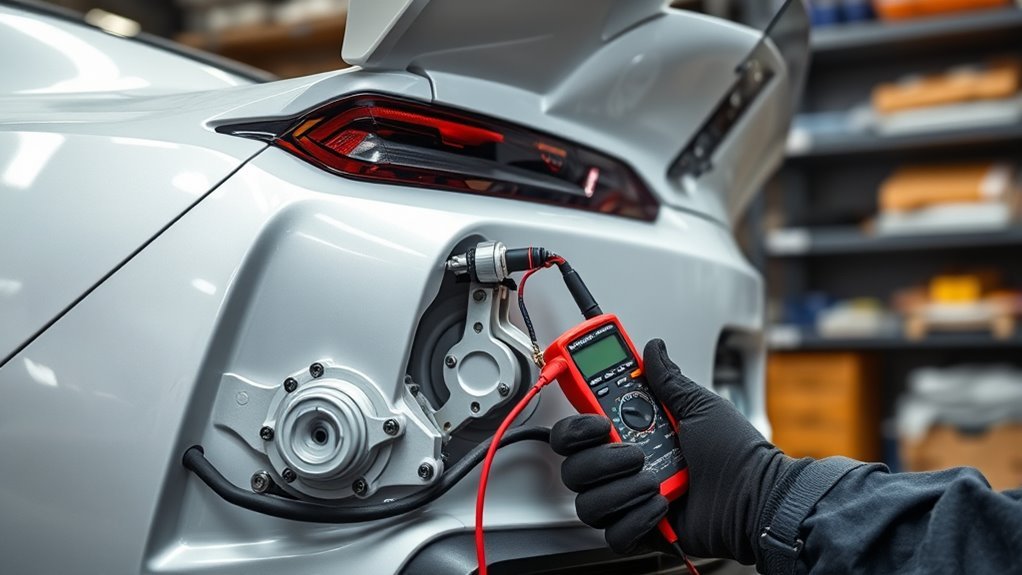
Active aero adds moving joints, structural fasteners, wiring, sensors, and control software. Inspect the system at the supplier’s required intervals and before high-load track use.
Do not continue using active aero after unexplained movement, actuator disagreement, structural looseness, or a recurring controller fault.
- Inspect the wing, uprights, brackets, reinforcement, hinges, joints, and fasteners for cracks, movement, deformation, or contact marks.
- Check fastener torque according to the hardware or system supplier’s documented procedure.
- Move the surface through its full range while stationary and watch for binding, uneven speed, excessive play, or wiring tension.
- If the system uses two actuators, compare left and right position feedback and verify that the wing does not twist.
- Inspect wiring, connectors, grounds, fuse holders, strain relief, and seals for heat, water, corrosion, rubbing, or loose terminals.
- Review the controller log after any warning, reset, incomplete movement, or unexpected mode change.
- Confirm that manual lockout and the fault position still work after service or software changes.
- Install control-software updates only when the supplier confirms compatibility with the exact controller, actuator, sensor, and map version.
Common warning signs include grinding, clicking, slower travel, unequal actuator positions, repeated fuse failure, oscillation between positions, unexpected deployment, loose mounts, water in connectors, and fault codes. Lock the surface in the documented safe position and inspect the cause before further use.
Legal, Safety, and Track-Rule Implications
Road legality and competition eligibility depend on the location, vehicle configuration, and event class. Approval at one track or in one state does not establish approval elsewhere.
What Road-Legal Issues Should You Check?
An aftermarket wing or its mounts must not obstruct required lamps, the license plate, cameras, or driver visibility. In a federal interpretation concerning spoilers, NHTSA explained that spoiler installation can create a center high-mounted stop-lamp compliance problem. The interpretation also distinguishes professional installation from owner modification: dealers and motor-vehicle repair businesses may not render federally required safety equipment inoperative, while an owner’s own modification remains subject to applicable state law.
Before road use, check the rules that apply where the car is registered and driven. Review lighting visibility, plate visibility, external projections, sharp edges, maximum dimensions, secure attachment, inspection requirements, and any restriction on driver-controlled or automatically moving body parts.
Are Active Wings Allowed at Track Events?
Competition rules vary by class. The SCCA Time Trials rules, for example, restrict aftermarket aero by category. In a wing-permitted category, a wing designed to be adjustable while the car is moving must be locked in one position; another rule states that, except as original equipment, aerodynamic aids may not be adjustable while the vehicle is in motion. The rules also require an aerodynamic addition that becomes partially or completely detached on track to be removed for the remainder of the competition after the car is made safe and inspected.
Read the current rulebook before building the system. Confirm whether movable aero, powered actuators, body modification, wing dimensions, mounting locations, cockpit controls, and data connections are permitted in the intended class. Obtain written clarification from the organizer when the rule is unclear.
What Should You Ask Your Insurer and Installer?
Disclose structural body modifications, powered aero, and track use to the insurer and request written confirmation of how the changes affect coverage. Ask the installer to document the parts, reinforcement, wiring, fuse protection, control-map version, fault behavior, and inspection procedure.
- Confirm whether modified aero parts are covered after collision, theft, or mechanical failure.
- Ask whether timed events, driver education, test days, or competition are excluded.
- Keep invoices, part documentation, alignment records, photographs, and controller-map revisions.
- Record each inspection, repair, actuator replacement, and structural fastener check.
Owner Checklist: Diagnostics, Upgrades, and When to Consult a Pro
Inspect the system before hard driving and after any impact, off-track excursion, unexplained noise, software change, or body repair. Do not treat a fault as cleared merely because cycling the ignition makes the warning disappear.
| Checkpoint | Action | Stop-Use Condition |
|---|---|---|
| Structure | Inspect wing, mounts, reinforcement, and fasteners | Crack, looseness, deformation, or pulled bodywork |
| Movement | Verify smooth, repeatable full travel while stationary | Binding, twist, grinding, or unequal motion |
| Position feedback | Compare commanded and actual position | Persistent disagreement or oscillation |
| Electrical | Check fuses, connectors, grounds, sealing, and strain relief | Heat damage, corrosion, water, or repeated fuse failure |
| Diagnostics | Read stored and intermittent controller faults | Recurring fault or unexplained reset |
| Fail-safe | Test lockout and documented fault position | Uncontrolled movement or failure to hold position |
| Vehicle clearance | Check hatch, glass, lamps, body, and wiring clearance | Contact at any point in the travel range |
Consult a qualified race-fabrication or controls professional before cutting body panels, reinforcing the hatch or chassis, integrating with vehicle data, designing an airbrake function, or writing a high-authority control map. Professional help is also necessary if the mechanism binds, twists, moves unevenly, loses position feedback, damages fuses, or shows repeated faults.
Sources and Verification
This guide was rechecked on August 31, 2026. Toyota’s U.S. newsroom documents the MkV’s fixed production aero, including the 2026 MkV Final Edition changes. NHTSA’s spoiler interpretation explains the federal stop-lamp compliance concern and the distinction between professional and owner modifications. SCCA’s published Time Trials rules show why competition eligibility must be checked by category before relying on movable aero. The A80/MkIV generation distinction is also cross-checked against a Supra-specific technical reference.
- Toyota: 2020 GR Supra world debut and integrated rear spoiler
- Toyota: 2026 GR Supra MkV Final Edition aerodynamic changes
- NHTSA Interpretation 3151o: spoiler and center stop-lamp compliance
- SCCA Time Trials: current published rules text
- JZA80 technical reference: A80/MkIV active front spoiler market context
Frequently Asked Questions
How does active aero work?
Active aero uses a powered mechanism to move a wing, spoiler, flap, or splitter while the vehicle is operating. A controller interprets defined inputs and commands a position intended for lower drag, more aerodynamic load, braking support, or a safe fault state.
Does the Toyota GR Supra have active aero?
No. The 2020–2026 MkV Toyota GR Supra uses fixed or integrated factory aero rather than a motorized wing that changes angle automatically while driving.
Is the 2026 GR Supra Final Edition spoiler active?
No. Toyota describes the MkV Final Edition as having a fixed carbon-fiber ducktail rear spoiler, front wheel-arch flaps, and taller front tire spats. These parts improve the fixed aero package but do not move automatically.
What is the difference between active aero and an adjustable wing?
A manually adjustable wing changes angle only when someone stops the car and changes its setting. True active aero uses an actuator and controller to change position while the vehicle is operating.
Did the MkIV Supra have active aero?
Some A80/MkIV Supra market versions used a powered active front spoiler. That older system is separate from the 2020–2026 MkV GR Supra, which uses fixed factory aero. Always identify the generation, market, and model year before using wiring or service information.
Is active aero automatic?
It can be automatic, but safe operation requires more than a speed switch. A suitable controller uses validated states, filtering, movement-rate limits, position feedback, manual lockout, and a defined response to sensor, actuator, or power failure.
What should happen if an active-aero actuator fails?
The controller should identify the position error, warn the driver, stop further automatic commands, and place or hold the surface in the system’s predetermined safe position. The correct fault position must be established for the exact car and aero package.
Can active aero make a Supra faster on track?
It may improve performance when the complete front and rear package is balanced and the movement map is supported by repeatable closed-course data. A poor setup can add drag, increase understeer, create an unstable transition, or make lap times less consistent.
Is active aero legal on the street?
Legality depends on the location and installation. Check state and local rules, required-light and plate visibility, secure attachment, vehicle dimensions, external projections, inspection requirements, and insurance terms before public-road use.
Is active aero allowed at track events?
It depends on the organizer and competition class. In SCCA Time Trials, the published rules restrict aero by category and do not generally allow non-OE aerodynamic aids to adjust while the vehicle is moving; a movable aftermarket wing may have to be locked in one position. Confirm the current rulebook for your exact class and obtain written clarification when the rule is unclear.
Conclusion
The 2020–2026 MkV Toyota GR Supra does not come with factory active aero. Its production aerodynamic parts are fixed, including the additional ducktail spoiler, wheel-arch flaps, and tire spats fitted to the 2026 MkV Final Edition. That conclusion applies to the MkV; some older A80/MkIV market versions used a factory active front spoiler and require generation-specific information.
An aftermarket active wing can offer more control than a fixed wing, but it also introduces structural loads, moving joints, electrical circuits, software, and changing aero balance. Start with a documented load path, position feedback, movement limits, protected wiring, manual lockout, and a tested fault position. Establish a locked-wing baseline, commission the mechanism while stationary, and validate higher-load behavior only on a closed course.
If the supplier cannot document aerodynamic loads, structural mounting, position feedback, fault behavior, and vehicle-specific wiring, use a fixed aero package or consult a qualified race-fabrication and controls specialist instead.