· Reviewed for accuracy · Last updated: September 16, 2026
Toyota Supra ground clearance is 4.5 inches (114.3 mm) for the 2026 U.S. GR Supra in Toyota’s product information for the 3.0, 3.0 Premium and MkV Final Edition lineup. That figure is not universal worldwide: Toyota Canada lists 112 mm for the 2026 GR Supra, while Toyota Kuwait lists 115 mm with 19-inch tires. Match the model year and market before comparing a published figure with your own car.
A published ground-clearance number cannot predict every scrape. Driveway angle, front overhang, vehicle load and aftermarket parts can make the front lip, undertray, center underbody or rear diffuser touch an obstacle that appears lower than the published clearance.
Quick Answer
Toyota’s 2026 U.S. product information lists the GR Supra’s ground clearance at 4.5 inches, or 114.3 mm. Other 2026 Toyota market specifications differ, including 112 mm in Canada and 115 mm in Kuwait. In daily driving, scraping risk also depends on approach angle, front overhang, obstacle shape, tire setup, load and suspension modifications.
Key Takeaways
- Toyota’s 2026 U.S. product information lists 4.5 inches, equal to 114.3 mm.
- Toyota’s 2026 market figures are not identical: Canada lists 112 mm, while Kuwait lists 115 mm with 19-inch tires.
- The front lip is often the first visible contact point on a steep transition, but the undertray, center braces, rear diffuser or an aftermarket splitter may sit lower in other situations.
- Driveways and abrupt bumps depend heavily on approach, breakover and departure angles, not obstacle height alone.
- A nominal 0.8-inch suspension drop may reduce a 4.5-inch clearance figure to about 3.7 inches only if the lowest fixed point moves down by the full amount.
- Measure your own car in its normal loaded condition before lowering it or committing to a difficult daily route.
At a Glance
| 2026 U.S. Clearance | 4.5 inches / 114.3 mm |
| 2026 Canada Clearance | 112 mm / 4.4 inches |
| 2026 Kuwait Clearance | 115 mm / about 4.5 inches with 19-inch tires |
| Why Scraping Still Happens | Approach, breakover and departure geometry can cause contact before vertical clearance is exhausted |
| Best Route-Specific Check | Measure the lowest visible front, center and rear points at correct cold tire pressure and normal load |
Toyota Supra Ground Clearance by Market (2026)
Different Supra clearance numbers can all be legitimate when they come from different regional specifications. Quote the year and market with the number instead of treating one global figure as correct for every car.
| Market and Model Year | Published Clearance | Scope | Official Source |
|---|---|---|---|
| United States, 2026 | 4.5 in. / 114.3 mm | 3.0, 3.0 Premium and MkV Final Edition variants | Toyota U.S. 2026 GR Supra press kit and Product Specs |
| Canada, 2026 | 112 mm / 4.4 in. | Canadian GR Supra specifications | Toyota Canada specifications |
| Kuwait, 2026 | 115 mm / about 4.5 in. | 3.0L Turbo with 19-inch tires | Toyota Kuwait 2026 specifications |
Why Do Some Sites List 4.4 Instead of 4.5 Inches?
Some third-party U.S. specification databases list the 2026 Supra at 4.4 inches, while Toyota’s 2026 U.S. Product Specs list 4.5 inches. The difference is only 0.1 inch, or 2.54 mm, but it is large enough to create conflicting search results.
For a factory specification, use the Toyota document for the exact model year and market. For a real driveway or obstacle, measure the lowest point on your own car because tires, load, suspension changes and added aero parts can matter more than a 0.1-inch published-spec difference.
Method Note: This is a source-based guide that compares published Toyota specifications and applies practical vehicle-clearance geometry. No instrumented first-hand Supra clearance test was performed for this article, and it does not present one owner’s tape measurement as a universal factory value. Measure your own Supra if you need clearance for a specific driveway, lift or modification.
What Is the Toyota GR Supra Ground Clearance?
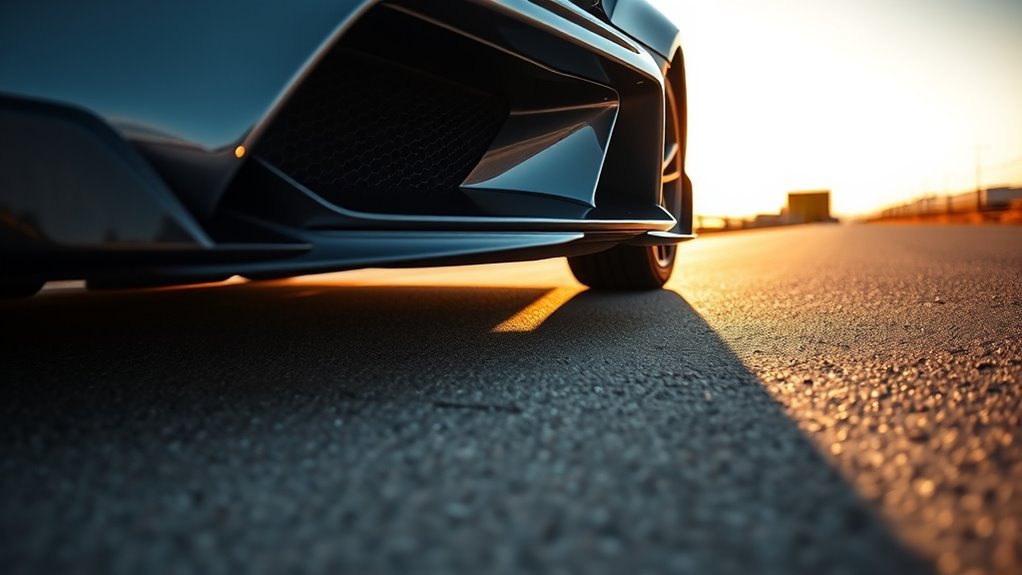
Ground clearance is the vertical distance between level ground and the lowest fixed point beneath the vehicle. Toyota’s 2026 U.S. Product Specs list 4.5 inches of ground clearance. That converts to 114.3 mm.
The number is a useful baseline, but it does not guarantee that every part of the front bumper sits 4.5 inches above the road. Added splitters, lip protectors, skid plates, tire wear, low pressure, passengers and cargo can change the usable margin.
A Supra can also scrape an obstacle lower than its published ground clearance. The front bumper extends ahead of the front axle, so it may contact a steep ramp before the front tires begin lifting the car.
The 2026 U.S. GR Supra specification is 4.5 inches, but the usable clearance at a driveway depends on the car’s overhang, load, modifications and the shape of the grade change.
Why Can a Supra Scrape With 4.5 Inches of Clearance?
The factory number describes vertical clearance on a level reference surface. Real obstacles introduce slopes, crests, dips and suspension movement. Scrape risk therefore changes with obstacle shape, braking or suspension movement, tire setup, passenger weight, cargo, front-lip accessories and the location of the lowest component.
| Factor | How It Changes Scrape Risk | What to Do |
|---|---|---|
| Steep driveway apron | Challenges the front approach angle | Enter slowly on the safest available line |
| Gutter before a driveway | Lets the nose drop while the front wheels remain low | Use a wider arc where legal and safe |
| Sharp crest | Can challenge breakover clearance after the front clears | Watch the center underbody, not only the front lip |
| Aftermarket lowering | Reduces static clearance and suspension margin | Measure before and after installation |
| Passengers or cargo | May compress the suspension | Test with the normal load you carry |
| Low tire pressure or worn tires | Can reduce measured ride height | Set the correct cold pressure before measuring |
| Snow, debris or road plates | Can create a raised or abrupt contact point | Reduce speed, change routes or avoid the obstacle |
Two stock Supras can therefore have different real-world experiences if they travel on different roads or carry different loads. The published number is a reference, not a promise that every obstacle below 4.5 inches will clear.
Approach, Breakover and Departure Angles
| Geometry Limit | What It Describes | Likely Contact Area |
|---|---|---|
| Approach angle | How steeply the front can meet a ramp before touching | Front lip, splitter or lower bumper |
| Breakover angle | Whether the center can pass over a crest without high-centering | Undertray, braces, exhaust or center underbody |
| Departure angle | How steeply the rear can leave a slope without dragging | Rear diffuser, bumper or exhaust area |
Why Is the Supra Designed to Sit So Low?
The Supra’s low stance supports its performance-focused design. Toyota describes the current GR Supra as using a specially crafted flat undercover that redirects airflow beneath the vehicle and helps it feel stable at speed.
Toyota also emphasizes the GR Supra’s adaptive suspension, electronically controlled rear differential, performance tires and wide stance as parts of its handling package. Those choices prioritize responsive paved-road driving, while the low body leaves less margin for rough surfaces and abrupt grade changes.
Aerodynamics and Handling Benefits
Managing airflow beneath the car can improve stability and reduce unwanted turbulence. The Supra’s underbody panels are therefore functional parts, not merely cosmetic covers.
That makes damaged or loose underbody panels worth inspecting. A hanging panel can disturb airflow, catch debris or drag against the road at speed.
Daily-Driving Compromises
In daily use, the low stance creates three common challenges:
- Driveway transitions: The front lip can touch when a gutter and steep apron create a sharp change in grade.
- Short speed bumps: Abrupt parking-lot bumps can challenge the front or center underbody.
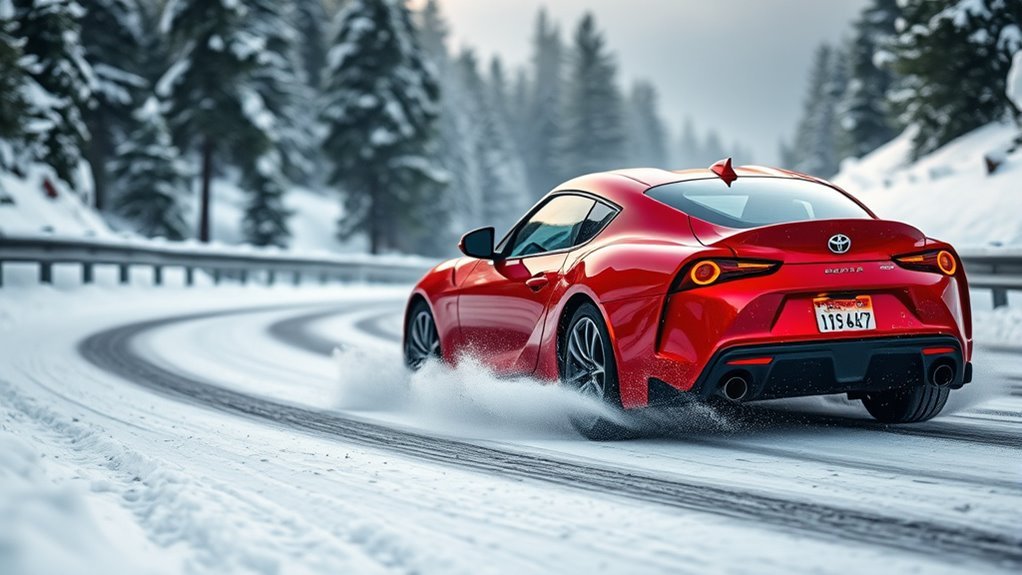
- Winter roads: Packed snow, slush and frozen ridges can contact the bumper or undertray before the tires pass over them.
Warning: Do not assume the Supra can clear an obstacle simply because it appears lower than 4.5 inches. Overhang, grade changes, suspension movement and added parts can cause contact sooner.
What Parts of a Supra Scrape First?
The contact point depends on the obstacle and the car’s configuration. Check the following areas after a hard scrape or when inspecting a used Supra.
Front Lip and Lower Bumper
The front lip, sometimes called the chin spoiler, is often the first visible point to touch a steep driveway. It sits ahead of the front axle, so it reaches the transition before the tires can lift the nose.
Look for scuffs, cracks, missing fasteners, loose trim or uneven panel gaps beneath the bumper. Light cosmetic marks are common on low cars, but broken tabs or hanging pieces should be repaired.
Undertray, Center Underbody and Rear Diffuser
The undertray, center braces, exhaust area and rear diffuser may contact a sharp crest or short bump after the front lip clears. Side-sill edges can also be damaged by curbs, incorrect lifting or uneven roadside surfaces.
Use a flashlight from outside the car’s footprint and check for loose fasteners, cracks, fresh scrape marks or hanging panels. Listen for new rattles or dragging sounds during a slow test drive.
Safety Warning: Never crawl beneath a vehicle supported only by a jack. Use correctly rated jack stands at approved lifting points or have the underbody inspected on a professional lift.
Can a Stock Supra Clear Speed Bumps and Driveways?
A stock Supra can clear many gradual driveways and properly designed speed humps when driven slowly. No universal guarantee is possible because private parking-lot bumps, damaged pavement and driveway aprons vary widely.
The Federal Highway Administration’s Traffic Calming ePrimer recognizes several forms of vertical traffic control. NACTO describes a typical speed hump as approximately 3–4 inches high and 12–14 feet wide. Its gradual shape is usually easier for a low car than a short, abrupt parking-lot bump of similar height.
The most difficult driveway shape is often a gutter followed immediately by a steep apron. The front wheels remain low in the gutter while the bumper reaches the rising driveway, reducing the usable approach margin.
Note: A long, smooth speed hump is usually easier to clear than a short bump with a sharp edge, even when their maximum heights are similar.
This section is the clearance-focused summary. For ramps, driveway changes and a more detailed approach walkthrough, see the site’s dedicated guide to entering a steep driveway in a Supra without scraping.
How Do You Approach a Driveway Without Scraping?

For a clearance check, slow down before the grade change. Where space, visibility and traffic rules allow, a gentle diagonal path can let one front wheel begin climbing before the other. This page keeps the advice clearance-focused; the dedicated Supra steep-driveway guide covers angle selection, ramps and repeated driveway fixes in more detail.
[Products Worth Considering]
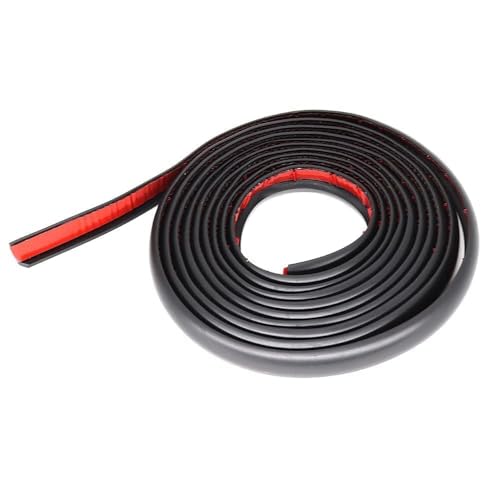
Universal Fit: Our pliable trim features an "L" shape design that works with any car, making it perfect for all your interior or exterior needs
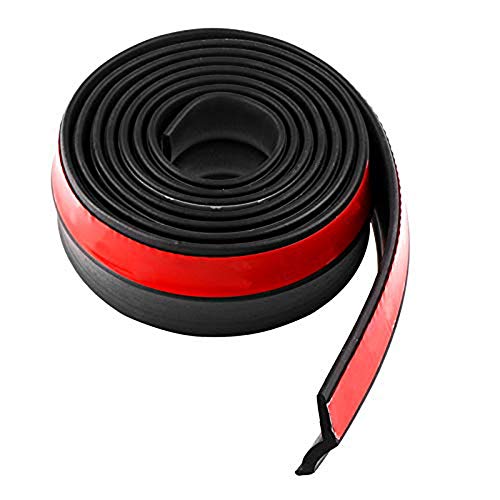
Universal fit for most cars, trucks, SUV--- guard protection bumper spoiler rubber skirt, anti-scratch and decorative

Best Material: Made of durable and sturdy rubber. Smooth and delicate cross-section. Prevent scratches. Flexible in use. Easy to bend. Have excellent wear resistance. Bumper lip completely fit with your bumper design.
Use the Safest Available Line
- Slow down before the transition. Brake early rather than braking hard as the nose reaches the incline.
- Check traffic and clearance. Do not swing into another lane, cross toward pedestrians or block oncoming traffic.
- Use a gentle arc where safe. Let one front wheel begin climbing before the second wheel.
- Stop if contact begins. Reverse slowly if safe; clearing the front lip does not guarantee that the center underbody or rear diffuser will clear.
Pro Tip: Use a spotter the first time you test a difficult private driveway. The spotter should stand to the side, remain visible to the driver and stay away from the car’s path.
Use Protection Strips Carefully
Protection strips are sacrificial pieces fitted beneath the front lip. They do not increase clearance, and a thick strip can slightly reduce the remaining gap. If repeated light abrasion is the problem, compare the protection options below before adding a lower contact point.
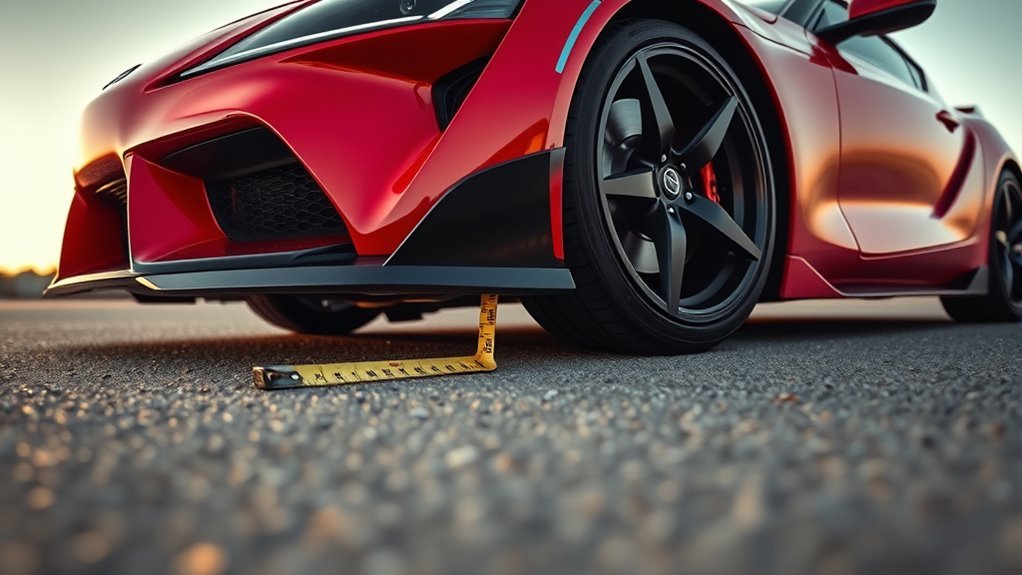
How Do You Measure Your Own Supra’s Clearance?
Your car may not match a published number because of tire condition, pressure, suspension changes, accessories or load. Record the measurement conditions so you can reproduce the result later.
- Park the Supra on flat, level pavement.
- Set the tires to the recommended cold pressures shown on the vehicle placard.
- Record the tire size, approximate fuel level, passengers, cargo and aftermarket parts.
- Use a flashlight to identify the lowest visible fixed points at the front, center and rear.
- Measure vertically from the ground to each point without placing your body beneath the vehicle.
- Write down each measurement rather than recording only the front lip height.
- Repeat the check with the normal passenger and cargo load you usually carry.
- After any suspension, wheel, tire, splitter or skid-plate change, measure again.
If the front lip sits much lower than the published figure, you may be measuring an added splitter, protection strip or damaged panel rather than the factory reference point. That lower measurement is still the one that matters for your driveway.
[Products Worth Considering]

PITCH & SLOPE LOCATOR: Boasting excellent durability in heavy-duty job sites this pitch & slope locator has a tough, high-impact molded body that promises to withstand the test of time

Protection Options: Strips, Skid Plates and Replaceable Splitters
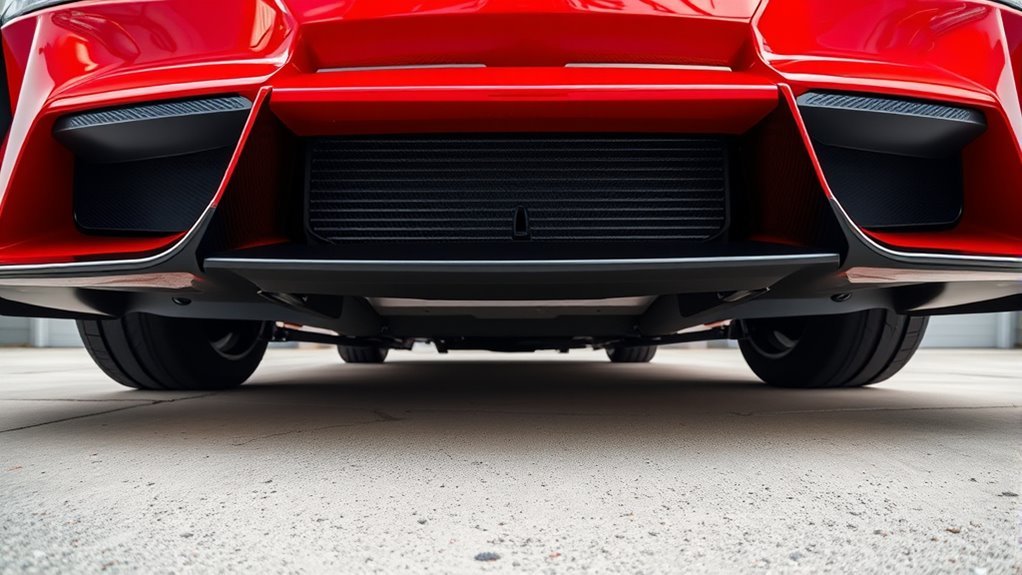
If technique is not enough, protect the area that actually makes contact. Avoid installing a part that creates a new, lower contact point.
| Protection Option | Best For | Trade-Off |
|---|---|---|
| Front-lip protection strips | Light, repeated driveway abrasion | Can peel, wear down or reduce the remaining gap slightly |
| Model-specific skid plates | Protecting vulnerable underbody areas | Added weight, service-access changes and possible clearance loss |
| Replaceable splitter | A sacrificial front edge | May sit lower than the factory bumper |
| Route or driveway changes | A repeated obstacle at home or work | May require planning, permission or professional work |
Confirm model-year and trim compatibility before installing a part. Check whether it changes underbody airflow, cooling, service access, lifting points or warranty coverage.
[Products Worth Considering]

WheelX front lip spoiler compatible with 2020-2026 Toyota GR Supra A90 A91.

Perfect Fitment: HYPER GLORY precision-molded front bumper lip Fits 2020-2026 Toyota GR Supra A90 A91 & 2020-2025 Toyota Supra, aligns perfectly with factory bumper contours, no gaps, no trimming required
How Much Clearance Does a Lowered Supra Lose?
A suspension drop usually reduces practical clearance, but the final number must be measured. If a car begins with a 4.5-inch reference and its chassis and lowest fixed point both move down by the full 0.8 inch, the simple estimate becomes 3.7 inches.
The real result can differ because of tire diameter, spring settling, suspension geometry, bump-stop engagement, added splitters and underbody parts. Measure the lowest front, center and rear points after the installation and alignment.
If a stock Supra already scrapes on your normal driveway, lowering it will reduce the available margin unless the route, driveway transition or vehicle equipment also changes.
Warning: Measure your stock car and its regular routes before ordering springs or coilovers. Do not rely only on the advertised suspension drop.
Should You Modify the Car or Change Your Driving Style?
Start with technique when scraping is rare. Reduce speed, choose a smoother line, avoid parking blocks and use a spotter on unfamiliar private driveways.
Consider protection when the same part receives light, repeated contact on a route you cannot avoid. Repair the car first if a scrape has left loose fasteners, cracked panels, rattles or hanging underbody pieces.
- Use technique first when only a few transitions cause trouble.
- Add sacrificial protection for repeated light front-lip abrasion.
- Repair damaged panels before they catch airflow or debris.
- Change the driveway or route when the same obstacle causes hard contact.
- Reconsider lowering when the stock car already has little margin.
Will the Supra’s Clearance Work for Your Daily Routes?
Check the roads you use rather than relying only on the published number.
| Route Element | Why It Can Be Difficult | Action |
|---|---|---|
| Steep driveway incline | Sharp grade changes can challenge the front approach angle | Test slowly with a spotter |
| Gutter before driveway | The nose can dip before the front tires begin climbing | Use the safest legal arc or change the transition |
| Long speed hump | Gradual vertical deflection is usually easier than a short abrupt bump | Use a slow, smooth approach |
| Short parking-lot bump | A sharp edge can contact the front or center underbody | Inspect the shape and avoid if uncertain |
| Parking block or curb | A fixed obstacle can reach the bumper or lip before the tires stop | Stop short and do not rely on the bumper |
| Pothole edge or raised road plate | Abrupt height changes combine with suspension movement | Reduce speed and avoid sharp edges |
| Deep snow or packed slush | Material can contact the bumper or undertray before the tires pass through | Choose a plowed route or another vehicle |
The National Weather Service advises drivers to prepare vehicles for winter conditions and slow down in snow. For a low sports car, snow depth also becomes a physical clearance limit. See the dedicated guide to driving a Toyota Supra in snow for tire and winter-route guidance.
Frequently Asked Questions
What is the ground clearance of the Toyota GR Supra?
Toyota’s 2026 U.S. GR Supra Product Specs list 4.5 inches. That equals 114.3 mm. Other markets publish different figures, so check the specification for your model year and country.
Why do Supra ground-clearance figures vary by market?
Toyota publishes market-specific specifications. For 2026, the U.S. Product Specs list 4.5 inches, Toyota Canada lists 112 mm (4.4 inches), and Toyota Kuwait lists 115 mm with 19-inch tires. Quote the model year and market with any clearance number.
Why do some sites say the Supra has 4.4 inches of ground clearance?
Some third-party databases publish 4.4 inches, but Toyota’s 2026 U.S. Product Specs list 4.5 inches. Use the manufacturer document for the exact year and market when you need the factory figure, then measure your own car for driveway clearance.
Does a stock Supra scrape on speed bumps?
A stock Supra can clear many gradual speed humps when driven slowly, but short parking-lot bumps, damaged surfaces and sharp crests can still contact the front lip or underbody. Obstacle shape matters as much as height.
Is lower or higher ground clearance better?
Lower clearance can support sports-car aerodynamics and a lower center of gravity on smooth pavement. Higher clearance provides more margin for rough roads, steep transitions, snow and debris. The better choice depends on how and where you drive.
Can you daily-drive a Toyota GR Supra with 4.5 inches of clearance?
Yes, if your regular roads, driveways and parking areas are manageable. Daily use becomes less convenient around steep gutter transitions, abrupt parking-lot bumps, broken roads or deep winter snow.
Should you install skid plates or front-lip protection?
Front-lip strips may help with light, repeated abrasion. A model-specific skid plate may protect vulnerable underbody parts, but it can add weight or become a lower contact point. Confirm fit, airflow, service access and finished clearance before installation.
Conclusion
Toyota’s 2026 U.S. GR Supra Product Specs list 4.5 inches of ground clearance, equal to 114.3 mm. That number should not be applied globally because Toyota publishes different 2026 regional figures, including 112 mm in Canada and 115 mm in Kuwait.
For daily use, the practical limit depends on the lowest part of your own car, the front and rear overhangs, vehicle load, obstacle shape and any suspension or aero modifications. Measure the car in its normal configuration, approach difficult transitions slowly, inspect safely after hard contact and avoid lowering the car until you understand the clearance available on your regular routes.
Sources
- Toyota 2026 GR Supra U.S. Press Kit — hosts Toyota’s 2026 Product Specs, which list 4.5 inches of ground clearance.
- Toyota Canada 2026 GR Supra Specifications — Canadian ground-clearance figure.
- Toyota Kuwait 2026 GR Supra Specifications — 115 mm ground clearance with 19-inch tires.
- Toyota 2026 GR Supra Official U.S. Page — underbody-aerodynamics and current vehicle-design information.
- Federal Highway Administration Traffic Calming ePrimer — vertical traffic-calming context.
- NACTO Speed Hump Design Guide — typical speed-hump height, width and ramp context.
- National Weather Service Winter Safety — winter preparation and hazardous-road guidance.
- The Car Connection 2026 Toyota Supra Specifications — example of a current third-party 4.4-inch listing used to explain the published-spec discrepancy.