For your Toyota Supra, use the door‑sticker cold PSI (usually 36–38 psi) and measure after the car’s been parked at least three hours. Cold PSI is the baseline because tire pressure falls about 1 psi per 10°F drop, so check more often in cold snaps and adjust to about 37–38 psi for winter comfort and control. Use TPMS for real‑time monitoring but set to sticker cold values; follow up with routine logs and troubleshooting for full guidance.
What “Cold” Tire Pressure Means for Your Supra

When you check your Supra’s “cold” tire pressure, measure it after the car’s been sitting at least three hours so heat from driving won’t raise the reading. You’ll use the cold value to set tire inflation to the manufacturer’s recommendation—usually about 36 psi—to maintain predictable handling and tire longevity. Cold pressure is the baseline you’ll compare against as temperatures shift, and you’ll adjust only to match the door-jamb sticker guidance rather than guessing. Monitor pressures more often in colder months since drops can alter contact patch, traction, and steering precision. By controlling tire inflation to spec, you reclaim authority over your car’s performance impact, reduce uneven wear, and keep safety margins intact.
How Temperature Changes Affect Supra Tire PSI
Because tire air contracts as temperatures fall, expect roughly a 1 psi drop for every 10°F decrease, so you should check and adjust your Supra’s cold pressures more often in colder months. You’ll monitor tire pressure proactively to preserve handling and safety; under‑inflation reduces grip and increases wear. Use the recommended cold inflation (typically 36–38 psi) as your baseline, but account for modifications or load and seasonal adjustments—many drivers set about 37 psi in winter to balance comfort and control. Rely on your Supra’s TPMS for alerts, but don’t let it replace manual checks with a calibrated gauge. Understand temperature effects as predictable physics you can manage: check tires after the car sits overnight, correct to spec, and drive freer knowing pressure’s controlled.
Door‑Sticker vs TPMS: Which Pressure to Use
Use the door sticker as your baseline: it gives the manufacturer’s recommended cold inflation (typically ~36–38 psi for the Supra) for safety and performance. Rely on TPMS for live feedback, but remember its readings shift with tire temperature and can differ from the cold-sticker value. Set pressures to the sticker when tires are cold, then use TPMS to monitor and adjust for temperature-driven changes.
Door Sticker Priority
1 clear rule: trust the door‑jamb sticker for cold inflation pressures. You’ll use that manufacturer‑recommended cold pressure (typically 38 psi) as the authoritative baseline for tire safety and performance optimization. TPMS readings fluctuate with temperature and can mislead you when tires are warm or cold, so don’t override the sticker unless a known correction exists.
When tires are cold, check and set pressures to the sticker value to preserve handling, wear, and braking consistency. If TPMS triggers an alert after cold exposure, reset or recalibrate it after you confirm sticker pressures. Make seasonal checks routine: measure with a quality gauge, adjust to the door‑sticker spec, and document changes. That discipline frees you from guesswork and keeps your Supra performing reliably.
TPMS Temperature Influence
While the door‑jamb sticker gives you a fixed cold inflation target (typically 38 psi for the Supra), the TPMS reports pressures that shift with tire temperature and ambient conditions, so you’ll often see TPMS values a psi or two lower when tires are cold. You should prioritize the sticker for baseline settings but use TPMS feedback to manage real‑time deviations caused by temperature fluctuations and to verify TPMS accuracy.
- Check sticker: set cold pressure to 38 psi.
- Read TPMS: expect ~1 psi lower when cold; note trends.
- Adjust and reset TPMS after inflation changes to align system calibration.
- Monitor seasonally: compensate for ambient drops to preserve handling and safety.
Use both tools: sticker for authority, TPMS for liberation through informed control.
Quick Steps: Check and Set Supra Tires in Cold Weather
Check the tires when they’re cold and read the door‑jamb cold inflation value—this gives your target pressure. Use a calibrated gauge to verify each tire, since TPMS can lag or vary. If outdoor temperature is well below the reference, add ~1 psi for every 10°F drop (or follow the sticker’s cold psi, typically 38 psi) and recheck.
Check Cold Tire Pressure
Because cold air contracts, you should verify your Supra’s tire pressure when the tires are cold and set them to 38 psi as the baseline for ideal cold-weather performance. You’ll monitor and adjust proactively: pressure falls ~1 psi per 10°F, so check often during winter and drop to 37 psi in very cold conditions to preserve traction and handling. Reset TPMS after adjustments so readings stay reliable.
- Park after several hours of inactivity; measure cold tire pressure.
- Record ambient temperature and pressure for trend tracking.
- Inflate or deflate to target (38 psi baseline; 37 psi if needed) and recheck.
- Reset TPMS and drive conservatively until pressure stabilizes.
Stay precise, take control, and maintain your Supra’s freedom on icy roads.
Use A Quality Gauge
If you want repeatable, accurate readings, use a high-quality tire pressure gauge—digital or calibrated analog—and keep it clean and protected when not in use. You’ll rely on gauge accuracy to detect small drops that matter for performance and safety; even a one-psi change affects handling in cold weather. Check pressures when tires are cold and compare to the Supra’s recommended 38 psi (about 37 psi in colder conditions). Inspect the gauge for damage, zero it if possible, and store it where moisture and dirt won’t degrade calibration. Make tire maintenance a deliberate habit: measure, adjust, and reset the TPMS after changes. Consistent, precise readings free you from guessing and keep your Supra responsive and safe.
Adjust For Temperature
When temperatures fall, lower air density causes tire pressure to drop roughly 1 psi for every 10°F, so set your Supra’s cold inflation to about 37 psi in winter and recheck pressures before driving. You’ll take control of safety and performance by making deliberate tire pressure adjustments and following practical winter driving tips.
- Check pressures cold—before driving—to get accurate readings and adjust to the target psi.
- Use the door jamb sticker as a reference; Supra recommended cold inflation is typically near 38 psi, so reconcile that with 37 psi guidance.
- If TPMS warns after a temperature shift, top off immediately and recheck each week during cold snaps.
- Inspect tread and valve condition; monitor pressures to maintain handling, fuel economy, and liberation on winter roads.
Troubleshooting: Drops, Uneven Wear, and TPMS Quirks
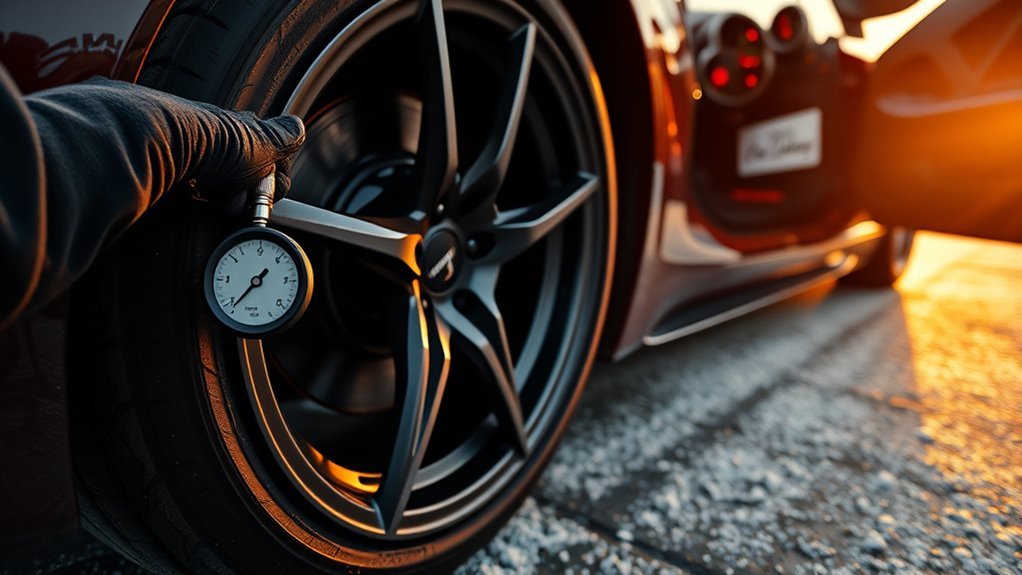
Although cold snaps can steal about 1 psi for every 10°F drop, you’ll usually see TPMS alerts and handling changes long before pressures reach dangerous levels, so check and adjust your Supra’s tires regularly in chilly weather. You’ll keep tire maintenance strict: verify cold inflation pressure (about 36 psi), correct deviations, and log readings. If you see premature center tread wear, lower-than-spec pressures or high-torque launches are likely culprits—raise pressure to spec and reassess alignment. TPMS quirks include delayed alerts and the need for resets after pressure changes; don’t ignore sensor fault messages. Monitor for uneven wear patterns, rotate tires per torque-driven wear profiles, and drive deliberately while you reclaim control and maintain peak performance impact.
Seasonal Schedule: When to Recheck and Long‑Term Care
Because temperatures shift seasonally, you should set a routine for checking your Supra’s tire pressures so they stay within spec and wear evenly. Use seasonal reminders and basic maintenance tips to free yourself from unexpected failures and keep control. Check pressures every two weeks in cold weather; expect about 1 psi loss per 10°F drop. After long drives, recheck because heat can raise pressure 3–5 psi. Keep a quality gauge handy.
- Biweekly checks during cold snaps; adjust to manufacturer cold inflation (~37–38 psi).
- Recheck after long highway runs; correct for heat-induced rise.
- Increase frequency when local temps swing rapidly.
- Log readings for long-term care and predictive maintenance.
Frequently Asked Questions
What Is the Best Psi for a Supra?
Set your Supra to about 36 psi cold; you can try 37–38 psi if temperatures drop. You’ll follow tire maintenance tips, boost winter driving safety, and reclaim confident control while staying practical and technically sound.
Is 30 Psi Too Low for Winter Tires?
Yes — 30 psi is likely too low; you should follow recommended tire pressure to preserve winter performance. Check door jamb or manual, adjust to specified cold inflation, and regularly monitor as temperature drops affect pressure.
Conclusion
Cold weather can steal PSI like a slow leak, so check and set your Supra’s tire pressures when tires are cold and use the door-sticker values as your baseline. Remember TPMS shows relative drops, not target PSI. Recheck after big temp swings, before long trips, and seasonally—especially if you store the car. Treat pressure like tuning: small, consistent adjustments keep handling sharp, tire wear even, and safety uncompromised.