To check for vacuum leaks on your Toyota Tacoma, start by recognizing symptoms like rough idling and hissing noises when pressing the brake pedal. Use essential tools like a soapy water spray bottle or a handheld vacuum pump for testing. Conduct a visual inspection of hoses and the intake manifold for cracks or wear. Don’t forget to monitor engine behavior for RPM changes during testing. You’ll discover more detailed methods and preventative tips as you continue.
Recognizing Symptoms of Vacuum Leaks and Their Impacts

When you notice your Toyota Tacoma idling roughly or experiencing fluctuations, it could be a sign of a vacuum leak affecting engine performance. These leaks often manifest as a hissing noise when you press the brake pedal, indicating a compromised brake booster vacuum line. This not only impacts your braking efficiency but also leads to an imbalanced air-fuel ratio, decreasing fuel efficiency as the engine runs lean. You might also experience stalling during idle or rapid drops in engine RPMs, which can severely affect drivability. Over time, these vacuum leaks can cause overheating components, increasing combustion temperatures due to excess oxygen intake. Addressing these symptoms promptly is essential for maintaining ideal engine performance and preventing potential damage. Recognizing these signs early empowers you to take action, ensuring your Tacoma runs smoothly and efficiently.
Essential Tools for Detecting Vacuum Leaks
Identifying vacuum leaks in your Toyota Tacoma requires the right set of tools to guarantee accuracy and efficiency. A handheld vacuum pump is essential for testing vacuum components independently, allowing you to verify their integrity without running the engine. For low-cost leak detection, a soapy water spray bottle effectively reveals leaks by producing bubbles at the site of air escape. Additionally, using a rubber hose as a stethoscope helps you pinpoint hissing sounds from vacuum leaks, enhancing your ability to locate elusive issues. A mirror and flashlight are vital for inspecting hard-to-see areas, such as behind the intake manifold and around vacuum lines. Finally, an ultrasonic leak detector can identify micro-noises of escaping air in a quiet environment, providing a precise and efficient way to detect leaks. Equip yourself with these tools, and you’ll streamline the vacuum leak detection process.
Visual Inspection: Common Areas to Check
Start by inspecting the vacuum hoses and connections for any cracks or loose fittings, as these are common failure points. Next, check the intake manifold gasket for signs of wear, which can lead to significant vacuum leaks. Addressing these areas early can help maintain your Toyota Tacoma’s engine performance.
Inspect Vacuum Hoses
Inspecting vacuum hoses is essential for maintaining your Toyota Tacoma’s engine performance. Start by examining the hoses for signs of wear, cracks, or splits, especially around bends and connections, which are common failure points. Pay close attention to the connections; verify they’re secure and free from debris or corrosion. Look for any friction against other components that could lead to premature wear or leaks. Don’t overlook the vacuum lines connected to the brake booster, as damage here can impact brake performance and engine idle. If you find any issues, consider hose replacement using durable materials like rubber or silicone to guarantee longevity. Regular checks will help keep your Tacoma running smoothly and efficiently.
Check Intake Manifold Gasket
Checking the intake manifold gasket requires a thorough visual inspection to spot potential issues that could lead to vacuum leaks. Start by examining the gasket for visible cracks or wear, especially around corners and joints, where leaks often occur. Look for coolant seepage, as this indicates seal integrity failure that could compromise performance. Inspect the bolts securing the intake manifold; loose or corroded bolts can create gaps, allowing unwanted air into the system. Additionally, check the surfaces of the intake manifold and cylinder head for warping or imperfections, which can prevent a proper seal. Use a flashlight to thoroughly illuminate these areas, ensuring you capture all potential leak points before considering gasket replacement.
How to Use the Soapy Water Test for Leak Detection
One effective method to detect vacuum leaks in your Toyota Tacoma is the soapy water test. To perform this test, you’ll need to follow these steps:
- Soapy Solution Preparation: Mix dish soap with water in a spray bottle.
- Engine Warm-Up: Verify your engine is at normal operating temperature for accurate results.
- Application: Spray the soapy solution generously around suspected leak areas, focusing on high-risk spots like the throttle body, intake manifold, and brake booster connections.
- Bubble Formation Observation: While the engine runs, watch for any visible bubbles forming, indicating escaping air.
If you see bubbles, it confirms a vacuum leak. Those areas require immediate inspection and repair. This method is straightforward and effective, allowing you to maintain your Tacoma’s performance efficiently.
Using Propane and Other Gas Methods for Leak Detection
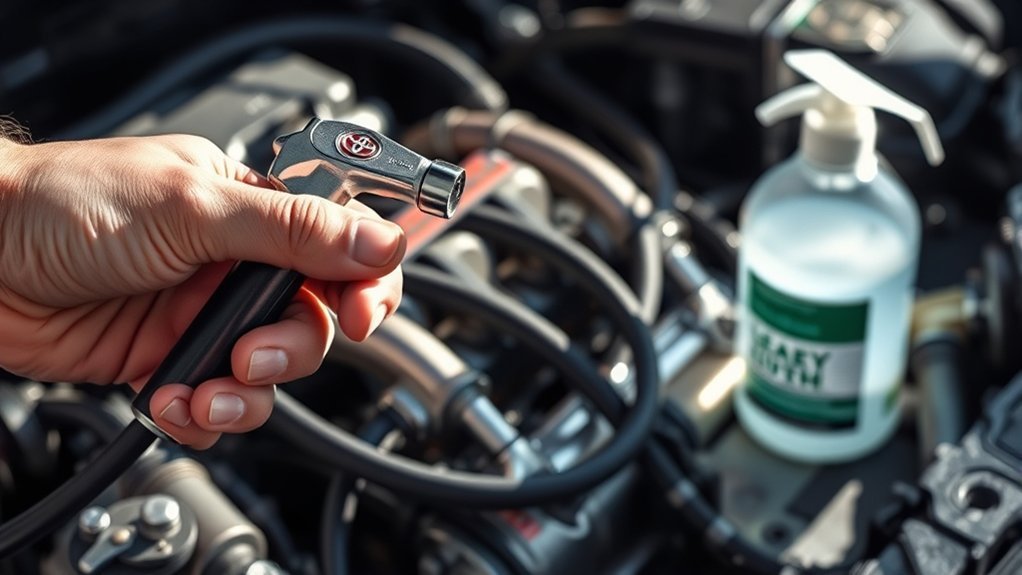
To effectively identify vacuum leaks in your Toyota Tacoma, using propane can be a reliable method. Start with the engine running at idle, as this allows for precise detection of leaks when the air-fuel mixture is most sensitive. Carefully apply unlit propane around suspect areas like vacuum hoses, intake manifold gaskets, and throttle body regions. Watch for changes in engine RPM; if the engine revs higher, it indicates a leak, as the propane enriches the fuel mixture.
For safe application, use a propane torch with the flame extinguished to introduce the gas without combustion risks. Always prioritize propane safety by working in a well-ventilated area, steering clear of open flames or sparks. While propane is effective, consider alternative methods like smoke tests for additional verification. This methodical approach guarantees you’ll accurately identify and address any vacuum leaks in your Tacoma.
Applying Ultrasonic Leak Detectors for Accurate Diagnosis
Ultrasonic leak detectors offer precise identification of vacuum leaks by converting high-frequency sound waves into audible signals. This technology enables you to detect micro-leaks that traditional methods might miss, ensuring thorough diagnostics. When using these detectors, focus on scanning around vacuum hoses and gaskets to accurately locate any leaks.
Benefits of Ultrasonic Detection
Detecting vacuum leaks is essential for maintaining your Toyota Tacoma’s engine performance, and ultrasonic leak detectors offer a highly effective solution. Here are some key ultrasonic advantages:
- Precision: Converts high-frequency sound waves from escaping air into audible signals, allowing for accurate leak identification.
- Comprehensive Coverage: Detects leaks missed by traditional methods, particularly in hard-to-reach areas with minimal airflow.
- Noise Resilience: Functions effectively in quiet environments, reducing background noise interference for clearer results.
- Quantitative Data: Measures sound frequency and intensity, helping you prioritize repairs based on leak severity.
Using ultrasonic detection can greatly reduce diagnostic time and enhance overall engine performance, ensuring all vacuum leaks are promptly identified and addressed.
Effective Leak Localization Techniques
While identifying vacuum leaks can be challenging, applying ultrasonic leak detectors streamlines the process markedly. These devices convert high-frequency sound waves into audible signals, making them ideal for quiet environments. By employing effective leak detection techniques, you can precisely localize leaks without invasive methods. Move the probe slowly around suspected areas, as even faint sounds can indicate escaping air. This precision is particularly beneficial in complex engine setups like the Toyota Tacoma, where traditional methods may overlook hidden leaks. Regular use of ultrasonic sensor applications not only aids in immediate leak detection but also enhances your preventative maintenance practices, helping you identify potential issues before they escalate into significant performance problems.
Key Areas to Inspect for Vacuum Leaks
To effectively identify vacuum leaks on your Toyota Tacoma, focus on several key areas that are prone to issues. Addressing these vacuum leak causes through preventive maintenance can greatly enhance engine performance. Here are four critical areas to inspect:
To enhance engine performance, focus on key areas to identify vacuum leaks in your Toyota Tacoma.
- Vacuum Hoses and Connections: Look for cracks, splits, or loose fittings, which are common leak points.
- Intake Manifold Gaskets: Check for wear or damage; compromised gaskets can lead to considerable leaks.
- Throttle Body and Grommets: Verify a tight seal; leaks here can drastically affect engine behavior.
- Brake Booster and Vacuum Lines: Assess for hidden leaks that can compromise braking performance and cause rough idling.
Use a visual inspection combined with the soapy water test on these areas. If bubbles form, you’ve identified a vacuum leak that needs addressing. Staying vigilant here can save you from more extensive issues down the road.
How to Analyze Engine Behavior During Leak Testing
Analyze your engine’s behavior during vacuum leak testing to pinpoint issues effectively. Begin by observing the engine idle; noticeable RPM fluctuations often indicate a leak’s presence. As you spray soapy water around suspected areas, listen for changes in engine sound or RPM—this confirms the leak location.
Utilize an unlit propane torch near vacuum lines; if you see an increase in idle speed, the propane’s being drawn in through a leak. Pay attention to any hissing noises, especially when pressing the brake pedal, as these can signify a leak in the brake booster vacuum line.
Monitor engine temperature and performance; if it struggles to maintain idle or runs irregularly, you might be facing an air-fuel ratio imbalance caused by a vacuum leak. Each behavioral change provides critical data that helps you identify the source of the issue, empowering you to take decisive action.
Next Steps After Finding a Leak

Upon discovering a vacuum leak in your Toyota Tacoma, take immediate action to replace any damaged hoses or gaskets. This is vital for restoring proper sealing and engine function. Follow these next steps:
- Secure Connections: Verify all vacuum connections are tightly fastened. Inspect for any wear or degradation.
- Use Diagnostic Tools: Clear any diagnostic trouble codes (DTCs) using an OBD-II scanner to reset the system.
- Perform a Test Drive: After repairs, take your Tacoma for a test drive. Focus on smooth idle and responsive acceleration; watch for misfires or stalling.
- Regular Checks: Regularly inspect the vacuum system, especially post-repair, to prevent future leaks and enhance engine efficiency.
Frequently Asked Questions
What Are Common Signs of a Vacuum Leak?
Common signs of a vacuum leak include rough idle fluctuations, decreased engine performance, and unusual hissing noises. You might also notice poor fuel efficiency and potential stalling during low RPMs, signaling an imbalance in the air-fuel mixture.
Conclusion
To sum up, finding a vacuum leak in your Toyota Tacoma is like hunting for a needle in a haystack—if the needle were a mischievous gremlin playing hide-and-seek. Armed with the right tools and techniques, you can outsmart this little rascal. Once you’ve pinpointed the leak, you’ll be ready to restore your engine’s performance and bid farewell to that annoying check engine light. After all, your Tacoma deserves better than playing the role of a broken-down drama queen.