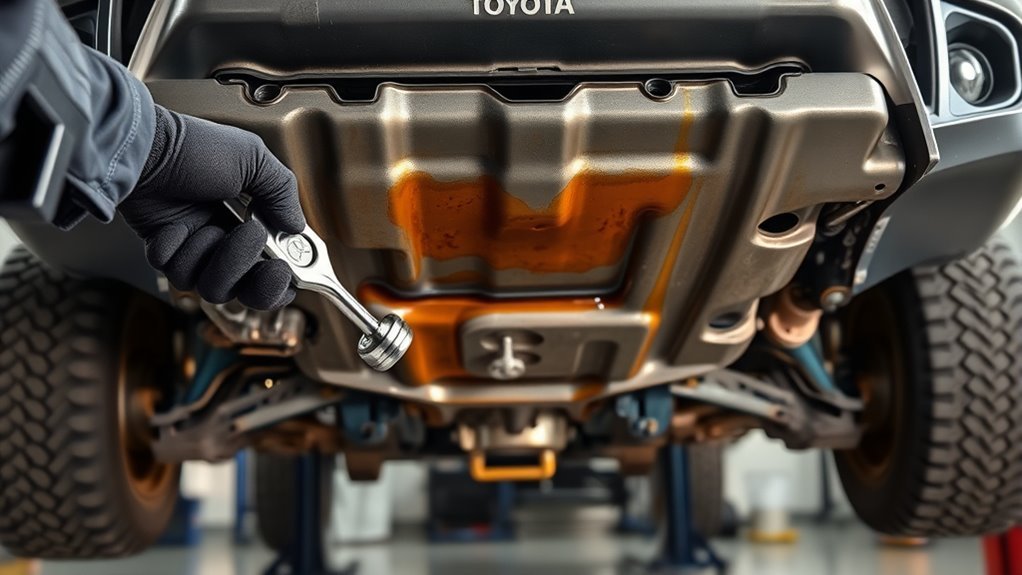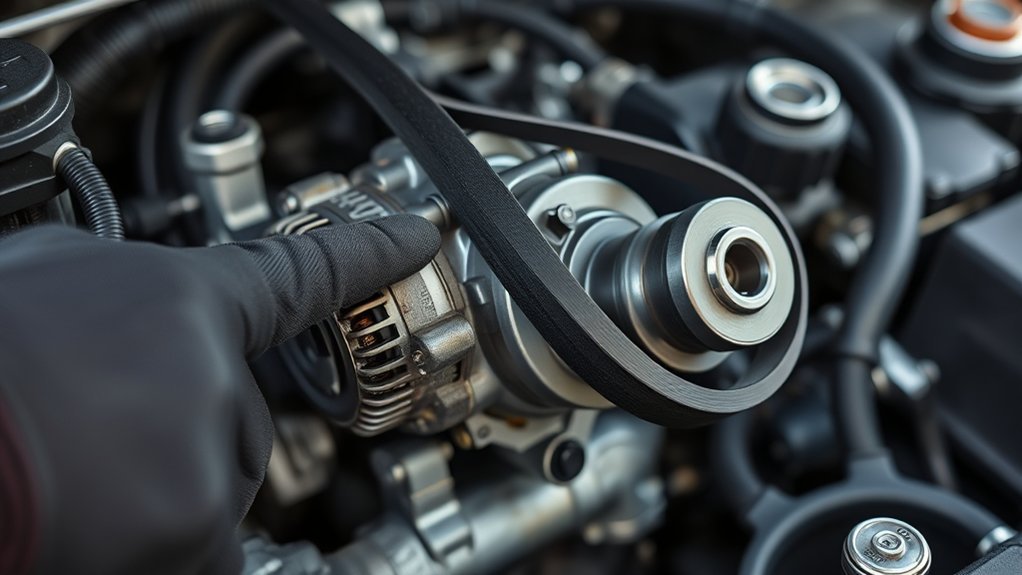
Your Tacoma’s serpentine belt transfers crankshaft rotation to the alternator, power‑steering pump, A/C compressor and usually the water pump, so it keeps your battery charged, steering assisted, cabin cooling working and coolant circulating. It rides pulley grooves under an automatic tensioner that maintains proper tension and absorbs shock. Look for cracking, glazing, fraying or squeals and replace around 50–100k miles depending on belt type. Keep an eye on symptoms and you’ll learn how to inspect, replace and troubleshoot.
What the Serpentine Belt Does on a Toyota Tacoma

Think of the serpentine belt as the Tacoma’s single drive link: it transfers rotational power from the crankshaft to the alternator, power steering pump, water pump, and A/C compressor so those systems run whenever the engine’s turning. You rely on that single loop to keep electrical charging, hydraulic assist, cooling circulation, and climate control functioning; when it fails you lose support systems and freedom to move. Inspect the belt for cracks, glazing, fraying, and proper tension at regular intervals—serpentine belt maintenance isn’t optional if you want reliability. Understand belt lifespan factors: material quality, driving conditions, alignment, and accessory load determine replacement interval, typically 50,000–100,000 miles. You’ll catch early degradation by checking for noise, vibration, or accessory malfunction and swapping the belt before catastrophic failure. Treat the belt as preventive-labor leverage: timely inspection and replacement preserve your mobility, reduce roadside dependency, and keep the Tacoma responsive to your plans.
What Tacoma Components the Serpentine Belt Powers
You’ll find the serpentine belt powers the alternator, supplying electrical charge to the battery and vehicle systems while the engine runs. It also drives the power steering pump to provide hydraulic assist for easy turning. And it turns the A/C compressor so the climate control can cool the cabin.
Alternator And Charging
The alternator in your Toyota Tacoma gets its mechanical drive from the serpentine belt, which links the crankshaft pulley to the alternator pulley so the battery stays charged while the engine runs. You rely on that direct link for alternator efficiency and battery health; any slip, misalignment, or loss of tension reduces output and risks a drained battery or stall. Inspect the belt for cracks, glazing, or stretching at regular intervals and replace it per service limits. When you fit a new belt, confirm proper tension and pulley alignment to prevent electrical anomalies. Maintain the belt proactively so your charging system remains dependable, freeing you from avoidable roadside failures and preserving the truck’s autonomy.
Power Steering Assist
While driving low-speed maneuvers or parking, you rely on the serpentine belt to drive the Tacoma’s power steering pump, which provides hydraulic assist so the steering effort stays light and predictable. When the belt slips or ages, you’ll notice reduced power steering assist or distinct belt noise signaling imminent failure. Maintain freedom on the road by inspecting the belt for cracks, glazing, and proper tension.
- Check for belt noise on cold starts and during turning — squeal indicates slippage or misalignment.
- Monitor steering effort: increased resistance means reduced hydraulic assist and possible belt issues.
- Replace the belt on schedule or immediately if damage appears to prevent loss of power steering and maintain autonomy.
Air Conditioning Compressor
Comfort depends on the serpentine belt powering your Tacoma’s air conditioning compressor, which links the crankshaft to the compressor so it can cycle refrigerant and cool the cabin whenever the engine runs. You rely on that mechanical connection for air conditioning efficiency; if the belt slips or degrades, compressor speed falls and cooling output drops. Inspect the belt regularly for belt wear indicators—cracks, fraying, glazing or missing ribs—so you can replace it before a failure leaves you without AC. A broken belt causes immediate loss of compressor drive and total cooling loss, limiting comfort and control in heat. Stay proactive: check tension, alignment, and visible wear during service intervals to preserve liberation from oppressive cabin temperatures.
How Tacoma Belt Routing and the Tensioner Work
You’ll follow a precise belt routing diagram that shows the serpentine loop around the crankshaft, alternator, power steering pump, and A/C compressor to guarantee groove alignment and prevent mis-tracking. The automatic tensioner applies a calibrated preload via a spring and pivot to keep belt tension within spec and absorb load spikes. Inspect the routing against the diagram and check tensioner travel to catch wear or weakness before the belt slips or makes noise.
Belt Routing Diagram
A clear belt routing diagram shows you exactly how the Tacoma’s serpentine belt snakes around the crankshaft, alternator, power steering pump, water pump, and A/C compressor so you can install or inspect it without guesswork. Use the diagram to verify direction, contact points, and pulley order; that prevents misrouting that causes overheating or accessory loss. Check for belt wear and plan tension adjustment when routing looks correct.
- Confirm pulley sequence against the diagram — misrouting kills performance and risks damage.
- Inspect belt wear at contact points shown on the diagram; replace if cracks or glazing appear.
- Verify tensioner position visually after routing; correct preload guarantees no slip and longer service life.
Follow the diagram to free yourself from uncertainty and premature failures.
Tensioner Operation Principles
Because the Tacoma’s serpentine belt drives multiple accessories, the spring-loaded tensioner keeps constant preload on the belt so it won’t slip, skip a pulley, or let accessory drive fluctuate as the belt stretches or wears. You’ll rely on correct belt routing through the alternator, power steering pump, and A/C compressor to let the tensioner maintain even force. The tensioner design uses a calibrated spring and a bearing-mounted pulley to absorb belt elongation and damp vibration. Inspect routing and tensioner materials — typically steel arm, stamped spring, and nylon or coated pulley — for wear or corrosion. If you want reliable, autonomous performance, check alignment, replace degraded materials, and confirm the spring still provides proper preload to prevent premature failure.
5 Signs Your Tacoma’s Serpentine Belt Is Failing
How can you tell your Tacoma’s serpentine belt is failing before it leaves you stranded? Look for clear belt wear indicators: cracking, fraying, or a glazed sheen on the ribs. Those visuals tell you the belt’s losing grip and integrity.
- Squeals or chirps when you start or run the engine — use noise troubleshooting to determine if the belt is slipping, misaligned, or glazed.
- Sudden loss of power steering or heavy steering effort while driving — a slipping or broken belt can stop the power steering pump, stripping away your control.
- Reduced A/C performance, engine overheating, or an illuminated Check Engine Light — these symptoms occur when the belt can’t drive the alternator, water pump, or compressor properly.
You should inspect the belt under good light and feel for looseness or contamination. Act decisively: a failing belt compromises multiple systems and your freedom to travel; don’t wait until it snaps.
When to Replace Your Tacoma’s Serpentine Belt (Miles & Signs)
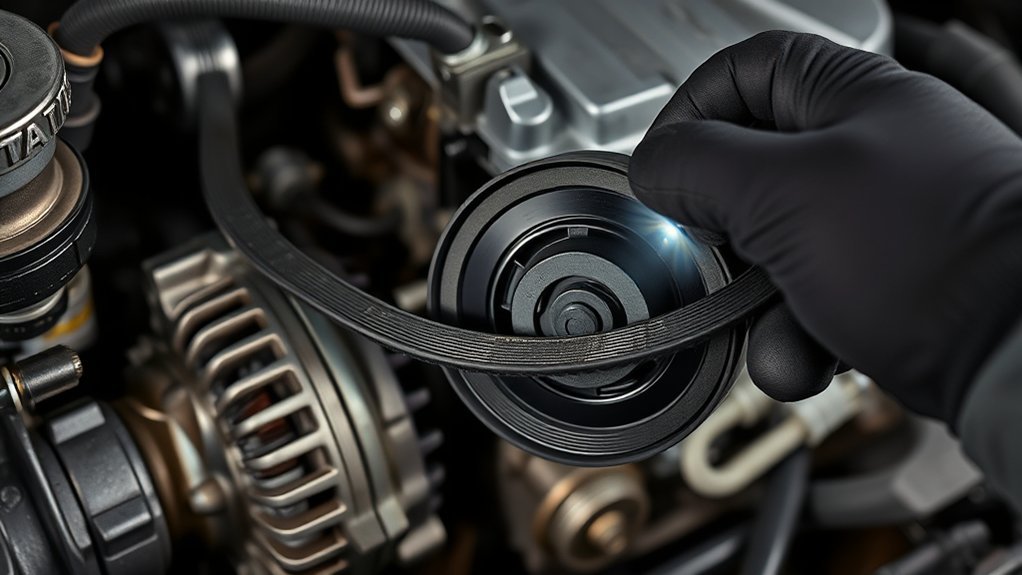
If you drive your Tacoma regularly, expect the serpentine belt to need replacement somewhere between about 50,000 and 100,000 miles depending on belt material—older neoprene belts wear out nearer 50k, while EPDM types can reach 100k. Use those replacement intervals as a baseline, but don’t rely solely on mileage. Inspect every 5,000–10,000 miles for cracks, fraying, glazing, or chunking. Listen for squeals or chirps; slipping noise demands immediate attention.
Functional symptoms — power steering loss, weak A/C, or a Check Engine Light tied to accessory drive faults — indicate proactive replacement. Prioritize replacement if visual deterioration appears even before recommended miles; degraded rubber fails fast under load. Track belt materials in service records so you know whether your Tacoma uses neoprene or EPDM and apply the appropriate interval. Regular checks free you from roadside failure and keep control in your hands; act on signs early rather than waiting for absolute mileage.
DIY: Replacing Your Tacoma’s Serpentine Belt – Step‑by‑Step
Now that you know when to replace the belt, you can do the job yourself with a few tools and careful steps. Gather installation tools: breaker bar, 5mm Allen key, gloves, and a routing diagram. Work deliberately; this is about reclaiming control over maintenance and maximizing belt longevity tips through correct fitment.
- Rotate the tensioner counterclockwise with the breaker bar, insert the 5mm Allen key to lock it, and create slack.
- Slide the old belt off pulleys, note routing, then route the new belt around the fan and each pulley, ensuring it sits fully in grooves.
- Rotate the tensioner counterclockwise again, remove the Allen key so the tensioner applies tension, then visually inspect alignment.
Start the engine briefly and listen for unusual noises; a quiet, smooth run confirms proper installation. You’ve reduced dependency on shops and extended service life by following precise steps and simple belt longevity tips.
Common Installation Challenges and Troubleshooting Tips
When you hit snag after snag during installation, stay methodical and check three things first: belt seating, tensioner access, and safety around the fan. Verify the belt is fully seated in every pulley: match grooves to grooves and flat surfaces to flat to avoid belt alignment issues, slippage, and whining. Use a breaker bar to rotate the tensioner counterclockwise for slack, but respect the spring force—control the tool and keep hands clear of moving parts.
If the tensioner service hole is hard to reach, use tensioner accessibility tips: slightly rotate the engine to improve clearance and visibility, or reposition the breaker bar for a better angle. Remove jewelry and secure loose clothing; fan blades can injure you if the engine moves. After installation, run the engine briefly and listen carefully—unusual noises point to improper alignment or incorrect tension. Troubleshoot promptly to regain control and freedom on the road.
Cost, Warranty Coverage, and When to Hire a Pro
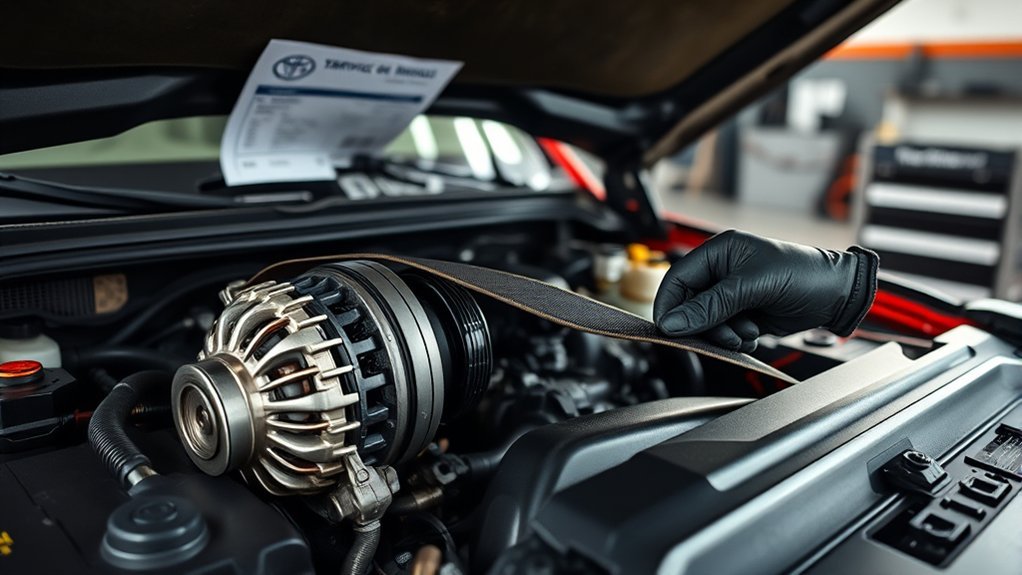
Although the job can seem straightforward, expect to pay roughly $100–$200 for a Tacoma serpentine belt replacement at a shop, which covers parts and labor and varies by provider and region. You’ll weigh cost factors like belt quality, labor rates, and whether pulleys or tensioners need replacement. Ask for warranty details upfront; many shops provide limited coverage from 12,000 to 36,000 miles — get that in writing.
- When to hire a pro: if you lack proper tools, service manuals, or confidence; improper installation risks engine accessory failure.
- Warranty verification: confirm mileage coverage, parts vs. labor limits, and exclusions to avoid surprise bills.
- Cost control: choose OEM or quality aftermarket belts and request itemized estimates to compare providers.
You want liberation from uncertainty: insist on clear warranty details, documented work, and a qualified technician if the task exceeds your competence.
Maintenance Tips to Extend Your Toyota Tacoma Belt Life
If you want the longest service life from your Tacoma’s serpentine belt, inspect it regularly for cracks, fraying, glazing, and proper tension, and replace it at 50,000–60,000 miles (or sooner if wear shows). You should perform visual checks every oil change, watching wear indicators like edge separation, rib chunking, or shiny glazing. Verify tension with a gauge or by following Toyota’s deflection specs; both slack and over-tightening accelerate failure. Use high-quality EPDM belts to resist heat, ozone, and moisture; they extend service intervals and resist premature degradation. Keep the engine bay clean and dry—remove oil, coolant leaks, and debris that raise local temperature and promote rubber breakdown. When you replace the belt, inspect pulleys, idlers, and the tensioner for bearing noise or misalignment; faulty components will shorten a new belt’s life. These targeted belt maintenance steps reduce roadside failures and give you control over reliability and mobility.
Frequently Asked Questions
How Often Should I Change the Serpentine Belt on My Tacoma?
Change it every 50,000–60,000 miles, though EPDM belts can extend serpentine belt longevity to ~100,000 miles. Inspect regularly for symptoms failure like cracks, fraying, steering loss, battery drain, and overheating to avoid being stranded.
What Are the Functions of a Serpentine Belt?
You might worry it’s minor, but the serpentine belt powers your alternator, power steering, water pump and A/C compressor; watch for belt wear and noise issues, follow maintenance tips, and schedule belt replacement proactively to stay free.
How Much Does It Cost to Replace a Serpentine Belt on a Toyota Tacoma?
You’ll pay about $75 to $150 for replacement costs, or $25–$50 DIY; factor belt longevity and possible tensioner replacement, expecting 1–2 hours of labor and a typical shop warranty around 2 years/24,000 miles.
Conclusion
You’re counting on the serpentine belt to drive critical systems—alternator, power steering, A/C, water pump—so don’t ignore wear. Notably, about 30% of roadside breakdowns are belt- or pulley-related, showing small issues quickly become big problems. Inspect every 30,000 miles, replace around 60,000–100,000 miles or at first sign of cracking, glazing, or squeal. Keep tensioner and pulleys clean and aligned; proactive replacement saves time, expense, and roadside risk.