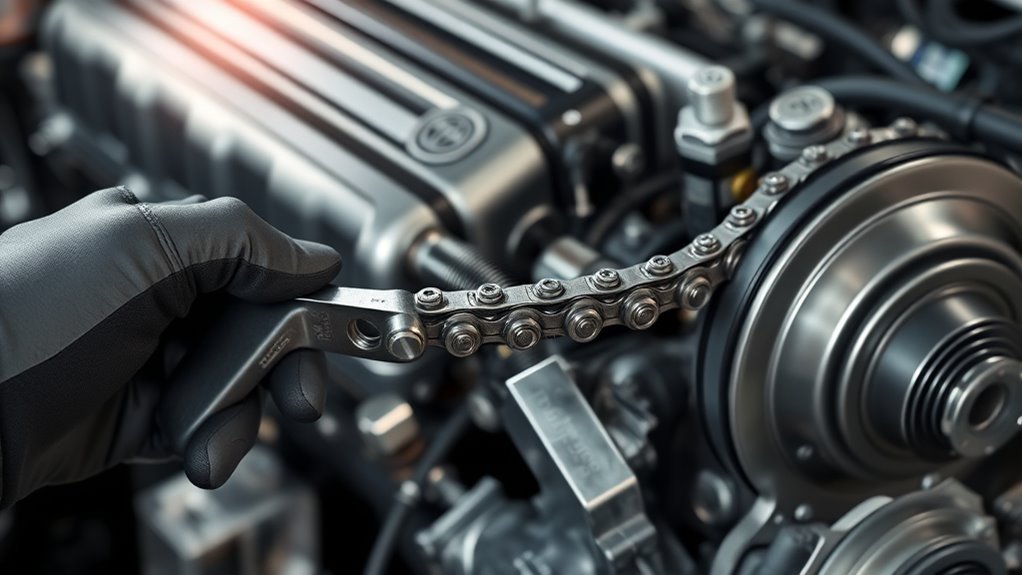
You can expect your Tacoma’s timing chain to last well beyond 200,000 miles if you keep oil fresh and levels correct. The metal chain synchronizes crank and camshafts and is lubricated constantly, so wear usually comes from poor oil maintenance, failed tensioners/guides, or overheating. Listen for rattles, check oil for metal shavings, and treat misfires or rough idle as urgent. Replacement is symptom-driven rather than strictly mileage-based; continue for inspection and maintenance details.
Quick Answer: Do Tacoma Timing Chains Need Replacing?
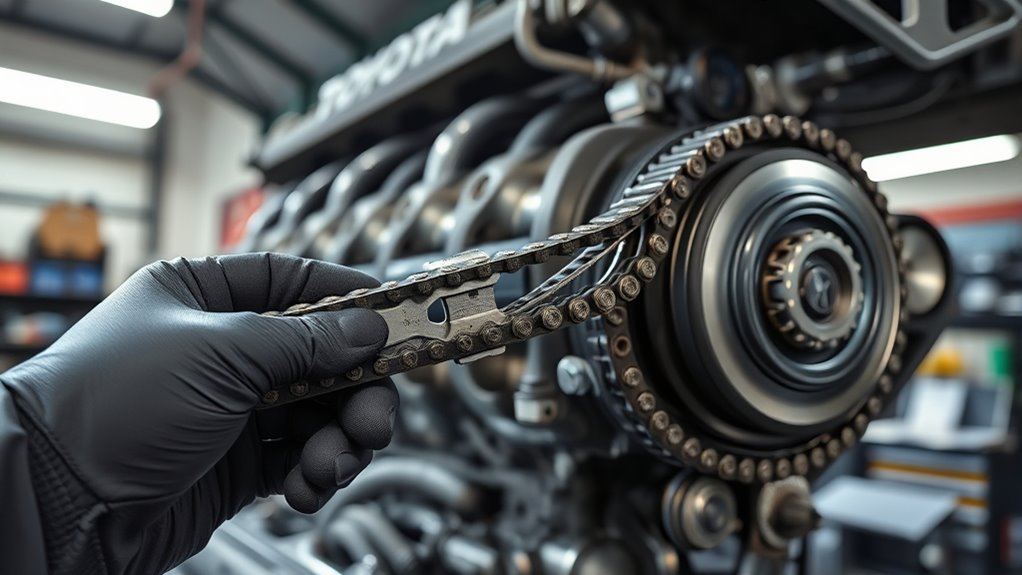
Curious whether you need to swap the timing chain on your Tacoma? You probably don’t, unless clear timing chain symptoms appear. Toyota designs Tacoma timing chains to last the engine life, and many owners report chains surviving beyond 200,000 miles with diligent oil and filter changes. You should monitor for rattling at startup, inconsistent idle, misfires, or slipping that indicate stretching or wear. If you see those symptoms, act promptly: diagnosing early avoids collateral engine damage and unpredictable replacement costs. Regular maintenance — clean oil, correct viscosity, timely filter swaps — preserves chain tensioners and guides, reducing failure risk and preserving your freedom from expensive, unplanned repairs. Unlike belts, chains generally resist scheduled replacement; you’ll replace only when symptoms, wear, or mechanical inspection demand it. Stay methodical: inspect condition during major services, document oil intervals, and budget for potential replacement costs if symptoms justify removal and overhaul.
What Is a Timing Chain and How Tacoma Engines Use It
You rely on the timing chain to link the crankshaft and camshaft so valve events occur with exact timing. It’s mounted at the front of the engine and runs in engine oil for continuous lubrication, which directly affects wear and service life. Compared with a belt, the chain is metal, runs slower relative to the crank, and is engineered to last the engine’s life with routine oil changes and sound monitoring.
Role In Engine Timing
Because precise valve timing is critical to combustion and engine durability, the timing chain in a Tacoma mechanically links the crankshaft and camshaft(s) to synchronize piston movement with valve opening and closing. You rely on that direct connection for engine synchronization; any slack or wear alters the performance impact immediately, reducing power delivery and increasing risk of valve-piston interference. Chains in Tacoma V6s are engineered to last the engine life, but you must monitor symptoms like rattling or misfires. Maintain oil and inspections to preserve timing integrity and freedom from catastrophic failure.
- Hear a rattle? Act — don’t accept compromise.
- Notice faltering acceleration? Reclaim control.
- Smell burning or rough idle? Defend your engine.
- Stay vigilant; preserve liberation through upkeep.
Location And Lubrication
While tucked behind the timing cover at the front of the engine block, the Tacoma’s timing chain directly links the crankshaft to the camshaft(s) and is continuously bathed in engine oil to minimize friction and wear. You’ll appreciate the clear chain placement: it runs along guides and tensioners at the engine’s front, spinning at half crankshaft speed to synchronize valves and pistons. Lubrication importance can’t be overstated—clean oil forms a hydrodynamic film that reduces metal-to-metal contact and limits accelerated wear. You must perform regular oil and filter changes to preserve that film and prevent contaminant-induced abrasion. The chain’s robust steel construction is intended to last the engine’s life, but neglecting lubrication undermines that design and reduces your freedom from unexpected repairs.
Chain Vs Belt
Having covered how lubrication keeps the Tacoma’s timing chain running smoothly, it helps to compare chains with timing belts so you can see why Toyota uses chains in these engines. A timing chain links crankshaft to camshaft, maintaining valve timing while oil bath lubrication reduces wear. You’ll note belts require scheduled replacement every 60k–100k miles; chains are built to last the engine life and, with regular oil changes, can exceed 300k miles. The 2008 Tacoma 4‑cylinder uses a chain for durability and lower replacement frequency. Watch for rattles, rough idle, or metal shavings—signals to inspect the chain.
- You feel relief knowing fewer interventions are needed.
- You gain confidence in long-term reliability.
- You resist unnecessary belt swaps.
- You accept responsibility for oil care.
Keywords: belt advantages, chain disadvantages
Timing Chain Lifespan: Expected Mileage and Risk Factors
If you maintain proper oil and filter service, a Toyota timing chain will typically outlast the engine and often reach 225,000–260,000 miles or more. You’ll benefit from timing chain durability when you follow disciplined maintenance practices: regular oil and filter changes minimize abrasive wear and preserve tensioner and guide function. There’s no fixed replacement interval; you’ll plan inspections and repairs based on condition, not arbitrary mileage.
Risk factors that shorten service life are predictable. Overheating degrades oil and accelerates wear, while worn guides or failing tensioners let slack and uneven loading occur. If you want freedom from unexpected failures, schedule periodic visual and functional checks during major services, verify oil pressure, and replace degraded components proactively. You’ll retain engine integrity longer by treating the chain system as a long-term asset—control lubrication, cooling, and component wear—and you’ll avoid reactive, high-cost repairs through steady, intentional maintenance.
Warning Signs to Watch For (Rattle, Misfire, Metal in Oil)
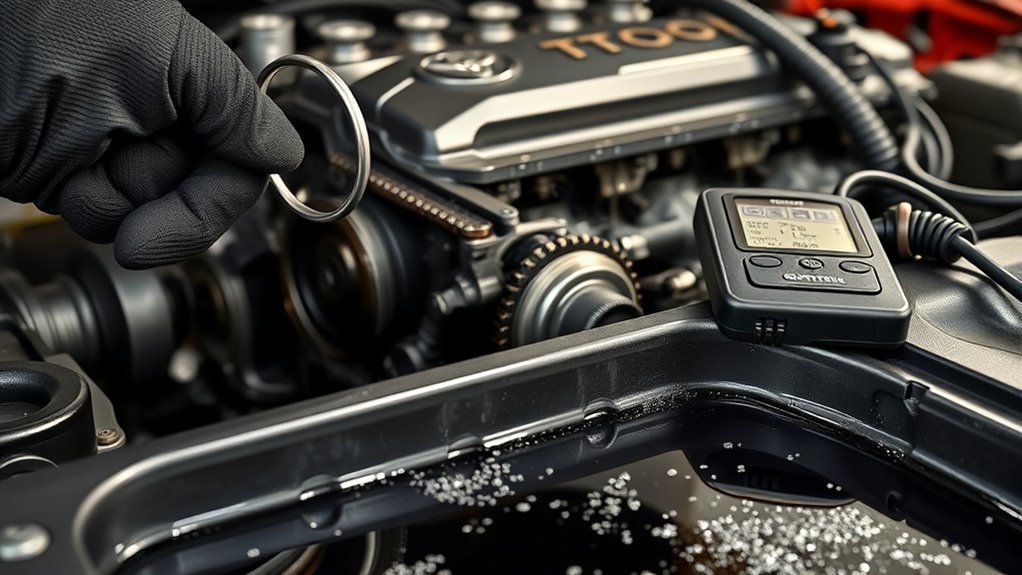
After you’ve followed maintenance routines that extend chain life, watch for mechanical cues that tell you the system’s condition. You’ll want precise rattle diagnosis: a persistent rattling or slapping from under the hood often means excessive chain slack or a failing tensioner. Note misfire causes linked to timing chain drift—intermittent misfires and rough idle show the chain no longer maintains correct valve timing. Finding metal shavings or visible chain fragments in the oil is an urgent, diagnostic confirmation of chain deterioration.
- Hear a steady rattle during cold start or idle — don’t ignore the sound.
- Experience sudden misfire symptoms or loss of smooth idle — inspect timing alignment.
- Discover metal particles in oil during service — treat as critical.
- Sense increased engine vibration or irregular power delivery — act promptly.
You’ll gain freedom from catastrophic failure by monitoring these symptoms and arranging prompt inspection and corrective action when any appear.
When to Replace : Urgency, Mileage Rules, and Decision Checklist
You should follow mileage-based guidelines but prioritize symptoms when evaluating a timing chain: even though Tacomas often exceed 200,000 miles, rattling, slack, or metal in the oil require immediate attention. Inspect the chain and tensioners during major services or if you see rough idle or performance loss. Use a simple decision checklist—mileage threshold, observed symptoms, and inspection findings—to determine urgency and whether to replace components.
Mileage-Based Guidelines
While timing chains on Tacomas are built to last the engine’s life and often exceed 225,000–260,000 miles, you should still base replacement on symptoms and inspection rather than a fixed interval. Consider mileage factors and engine conditions as contextual data points: high miles increase probability of wear, but poor oil maintenance or harsh operating environments accelerate failure. Use mileage as a guideline, not a rule.
- You’ll feel urgency if symptoms appear before high-mileage thresholds.
- You’ll act decisively when inspection shows slack, worn guides, or failed tensioners.
- You’ll value regular oil service to slow chain degradation and reclaim control.
- You’ll replace guides and tensioners with the chain to restore full reliability.
Make methodical decisions; free yourself from arbitrary intervals.
Symptom And Inspection
If unusual noises, rough idling, or visible metal shavings appear, treat the timing chain as a potential immediate failure point and inspect tensioners, guides, and chain slack without delay. You’ll use inspection techniques that are direct: visual oil-pan check for shavings, cold-start auditory test for rattles, and paint-mark verification for chain alignment. Symptom detection guides urgency—cold-start rattle or missing paint marks implies overheating and faster decay. Mileage rules are advisory: 225k–260k miles is typical lifespan, but symptoms trump mileage. Decision checklist: document noises, confirm metal debris, measure slack, assess tensioner pressure, and check guide wear. If two or more failure indicators exist, replace the chain and related hardware to reclaim control and prevent catastrophic engine damage.
Maintenance Checklist for Owners and Used-Tacoma Buyers
A precise pre-purchase and ownership checklist will help you protect the timing chain and overall engine health: Start by demanding immediate fluid maintenance — change engine oil, transmission fluid, and coolant if history’s unclear. You’ll extend timing chain life with regular oil and filter changes; clean oil reduces wear. Perform a methodical spark plug inspection and replace plugs per mileage to restore combustion efficiency and reduce load on valvetrain components. Listen for rattling or slapping noises and act fast. Know symptoms like rough idling or metal shavings in oil; they free you from surprises.
- Verify recent oil change and filter replacement; reject vague records.
- Inspect spark plugs, gaps, and deposits; replace if beyond spec.
- Scan for unusual engine noises; log and address immediately.
- Check oil for metallic particles and test drive under load.
Stay deliberate, armed with these checks, and you’ll liberate yourself from preventable timing chain failures and maintain dependable Tacoma performance.
Frequently Asked Questions
Can a Timing Chain Last 300,000 Miles?
Yes — you can expect a timing chain to reach 300,000 miles if you prioritize timing chain maintenance and monitor longevity factors: regular oil changes, tensioner and guide inspections, prompt repairs, and disciplined preventive care to preserve engine freedom.
How Many Miles Does a Toyota Timing Chain Last?
You can expect a Toyota timing chain to last 200,000–300,000+ miles. Like clockwork, diligent timing chain maintenance prevents timing chain issues; you’ll extend life with strict oil changes, inspections, and prompt tensioner or guide repairs.
How Much Does It Cost to Replace a Timing Chain on a 2017 Toyota Tacoma?
You’ll pay roughly $2,500–$3,000 total for timing chain maintenance and replacement process on a 2017 Tacoma; you’ll budget about $2,000 labor and $500–$1,000 parts, ensuring orderly upkeep to avoid catastrophic failure.
Conclusion
You should expect Tacoma timing chains to outlast belts but still inspect them like clockwork: treat uncommon rattle, misfire, or metal in oil as immediate fault indicators. If you see symptoms, act fast—replace or have a pro assess tensioners, guides, and sprockets. At typical mileages above 150–200k, plan replacement or close monitoring; for used buys, verify service records and oil-change history. A worn chain is like a frayed rope—its failure is sudden and unforgiving.