Check your Tacoma’s washer fluid monthly and run the pump to listen for a steady whine; no sound or weak spray points to pump, clog, or leak. Inspect nozzles for debris and clean with a pin or vinegar soak, disconnect lines to flush, and scan hoses, Y-split, and reservoir seams for wet spots or cracks. Replace damaged hoses or nozzles that won’t clear, use winter fluid in cold months, and keep spare parts handy if you want more step-by-step fixes.
Quick Checks: Symptoms, Sounds, and Washer Fluid Level
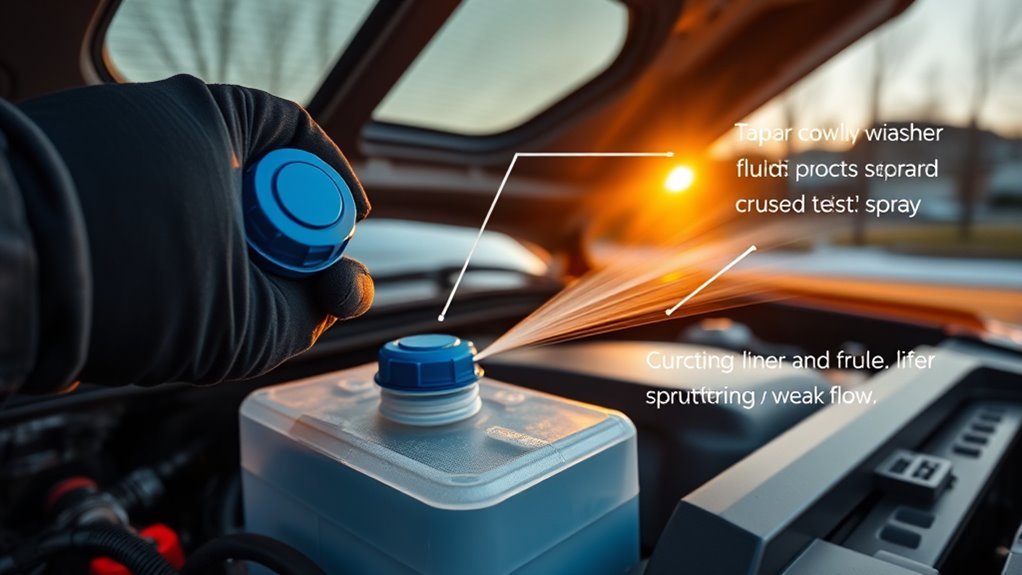
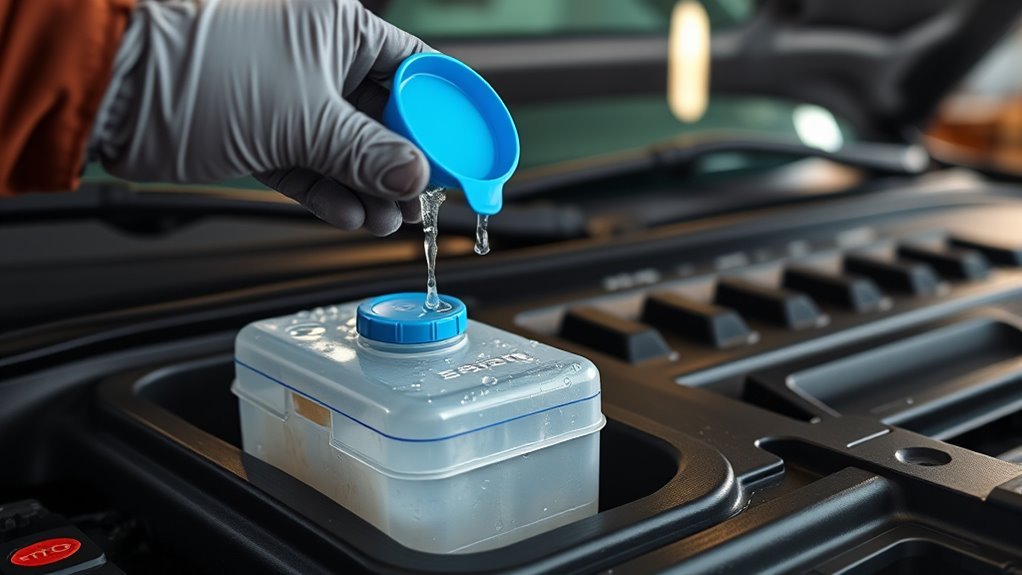
Start by checking the washer fluid reservoir level and then activate the sprayer so you can both see flow and hear the pump—if you hear a steady whine or buzz the pump’s getting power, but no spray or weak spray points to a clog, leak, or disconnected hose. You’ll use fluid monitoring and sound cues to isolate the issue quickly. Note reservoir low levels first; topping off rules out simple emptiness. If pump sounds normal, inspect nozzles for blockages and clear debris. Scan hoses and reservoir seams for wet spots or puddles that signal leaks or ruptures. To verify upstream flow, disconnect the washer line before the Y-split and operate the pump briefly—direct flow confirms downstream blockage. Each check is deliberate: listen, look, and trace the line. You’re aiming for self-reliance, not dependence on service shops—diagnose precisely, then move on to targeted repairs or controlled fixes with confidence.
Quick Fixes for Windshield Washer (No Tools Needed)
If your washer suddenly stops or sprays poorly, don’t panic—check fluid level, listen for the pump, and try simple, tool-free fixes you can do in minutes. First confirm the reservoir isn’t low; empty tanks are a common cause. Next, isolate the fault: cover the working driver-side nozzle and activate the system to see if the passenger side responds. That tells you whether you’re facing a pump, line, or nozzle problem.
For nozzle maintenance and clearing common blockages, use a pin or needle to gently dislodge debris from the spray aperture—no tools required. If the jet sprays off-target, rotate the tiny nozzle by hand to redirect the stream; many swivel slightly in their housing. For mineral buildup, dab vinegar on the nozzle area to dissolve deposits and restore flow without dismantling anything. These quick, controlled actions free you from dependence on a shop and often get you back on the road within minutes.
Clean and Unclog Washer Nozzles and Lines : Step by Step
Now that you’ve tried the quick, no-tools checks, move on to a methodical cleaning of the nozzles and lines to fix lingering clogs or mineral buildup. Start by inspecting nozzle tips; use a pin or needle for precise nozzle maintenance and clear visible debris that misdirects spray. Disconnect hoses at the nozzle end, secure the ends so they don’t leak, and run the pump to flush lines—observe flow to diagnose partial blockages.
If mineral deposits persist, soak nozzles briefly in a 1:1 vinegar and water mix, then rinse thoroughly with clean water to protect paint. After reattaching, test spray pattern and repeat flushing if flow is weak. Check hoses and connections for cracks or leaks; replace damaged sections. Upgrading to mist jets can free you from frequent clogs and improve coverage. Maintain good fluid quality—use proper washer fluid to reduce mineral buildup and extend system life.
When to Replace Nozzles : And How to Aim Them Correctly
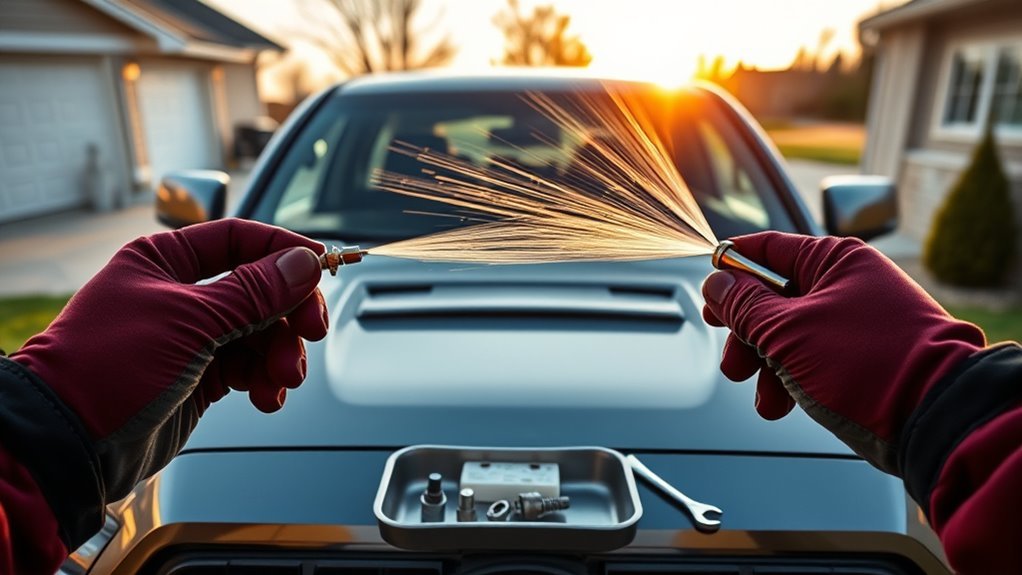
If your Tacoma’s spray stays clogged, splatters or misses the glass, it’s time to contemplate replacement after you’ve tried cleaning. Before swapping nozzles, clean them with vinegar or a fine wire and test the pattern; the 2021 Tacoma’s fixed-angle jets can often be nudged with a pin or thumbtack to correct aim. If problems persist, fit updated mist jets from 2005–2008 Tacomas for better performance and fewer clogs.
When To Replace
When washer spray keeps missing the windshield or nozzles stay clogged after cleaning, you should replace them—these faults impair visibility and safety. Track nozzle lifespan by inspecting spray patterns regularly; cleaning with vinegar or a fine wire can extend service, but don’t waste time on repeatedly failing parts. If spray remains misdirected or uneven after routine cleaning and gentle adjustments, swap the nozzle for a new or upgraded mist jet designed to resist clogging and deliver consistent coverage. Test replacements from the driver’s seat to verify effective reach. Replace proactively rather than risking a blocked blast during poor conditions. You’re reclaiming control: consistent checks, decisive replacement, and smarter nozzle choices keep your windshield clear and your drives free.
Aiming And Adjustment
After you replace a failing nozzle, you’ll want to aim and fine-tune the spray so it actually hits the windshield where you need it. Use a pin or thumbtack to gently rotate the nozzle until the spray pattern covers the glass zone cleared by your wipers. Check both sides—ensure nozzle alignment is even so you get a uniform spray pattern; misalignment reduces visibility and wastes fluid. If one nozzle won’t hold adjustment or keeps spraying off target, it’s likely clogged or damaged and needs replacement. Consider upgraded mist jets (05–08 models) for better coverage and fewer clogs. Inspect regularly: clear debris with a needle, then re-aim. You’ll regain control and refuse to be sidelined by poor visibility.
Cleaning Before Replacement
Start by trying to clean the nozzle before you reach for a replacement: grab a pin or needle and clear any visible debris or mineral buildup, then cycle the washer to check the spray. You’ll often fix clogs with simple nozzle cleaning; don’t let hard water deposits steal control. Inspect nozzle pivots for grime that blocks rotation. If spray hits wrong, use a thumb tack or small tool to make precise spray adjustment—rotate gently and test repeatedly until the pattern centers on the windshield. If misalignment persists or flow stays restricted after cleaning, consider upgrading to mist jets that resist clogging. Act like you’re reclaiming function: diagnose, clean, adjust, then replace only when those steps fail.
Under-Hood Troubleshooting: Pump, Hoses, and Y-Split Diagnosis
If your washer isn’t spraying properly, begin under the hood by checking the pump, hoses, and Y-split—listen for the pump’s whining when you activate the system, inspect all hoses for leaks, kinks, or disconnections, and examine the Y-split for blockages or damage that could be disrupting flow. Confirm pump functionality first: you should hear the motor; silence or irregular noise means power, grounding, or a failed unit. Next, verify hose integrity along their entire length—feel for soft spots, cracks, and bends that restrict flow. Trace each line from the reservoir to the Y-split and to the nozzles; a disconnected or punctured hose will stop spray. Inspect the Y-split for debris or collapsed walls and clear or replace it if it’s clogged or brittle. Don’t forget the screen filter over the pump: remove and clean it if you suspect contamination or if the reservoir was run dry. These focused checks free you to diagnose and act decisively.
Preventative Maintenance and Parts to Keep on Hand
1 simple routine can prevent most washer problems: check fluid level and inspect hoses, nozzles, and the Y-split monthly, topping off with the appropriate seasonal fluid and swapping any cracked hose or clogged nozzle you find. Do those preventative checks religiously before trips and when seasons shift — winter-grade fluid in cold months keeps lines from freezing and you from being stranded. Inspect for leaks or reduced spray; clean nozzles with a pin to remove mineral buildup that ruins the pattern.
Keep a small kit of spare parts: an extra nozzle, a short length of hose, and a basic connector for the Y-split. They’re cheap, easy to install, and restore function fast. Schedule inspections every few months and after rough roads. When you find a fault, replace rather than patch; it’s decisive, efficient, and frees you from repeated failures. With these steps and spare parts on hand, you’ll control minor issues before they control your drive.
Frequently Asked Questions
Can Washer Fluid Freeze in My Tacoma During Winter?
Yes — windshield fluid can freeze in winter. You’ll check concentration, use winter-rated fluid or antifreeze additives, keep reservoir topped, and inspect lines so you’re not stuck, empowered to prevent icy washer failure.
Are Rain-Repellent Additives Safe for Washer Systems?
Yes — you can use rain-repellent additives, but check additive compatibility with your washer, seals, and wipers. They offer rain repellent benefits like improved visibility and bead formation, yet you’ll diagnose and avoid damaging components.
How Often Should I Replace the Washer Pump?
You’ll usually replace the washer pump every 5–10 years; it’s practically immortal until it isn’t. Monitor pump lifespan and warning signs: weak spray, noise, leaks, or intermittent operation—replace promptly to reclaim reliable visibility and freedom.
Will Using Household Cleaners Damage Washer Components?
Yes — household cleaner effects can harm seals, hoses, and pump motors, so don’t use them. You’ll protect components by choosing alternative washer fluids or diluted, approved cleaners; inspect, flush, and replace damaged parts promptly to stay free.
Can Windshield Washer Issues Affect Wiper Motor Performance?
Yes — washer clogs or electrical faults can strain wiper motor compatibility and performance. You’ll perform windshield washer troubleshooting to isolate leaks, clogged jets, shorted wiring or fused circuits so you can free your driving experience.
Conclusion
Keep these checks and fixes part of your routine, and you’ll avoid most washer headaches. If sprays sputter, listen for the pump, check fluid, and clear nozzles before swapping parts. Replace damaged nozzles and aim them toward the glass; inspect hoses and the Y-split under the hood for leaks or clogs. Keep a spare pump, nozzles, and fluid on hand. Think of maintenance as tuning a small orchestra—each piece must play right for clear vision.