You can safely remove tree sap from your Toyota Tacoma by using a dedicated sap-and-tar remover, clean microfiber towels, and gentle pressure. Inspect the paint and clear coat first, test the product on a hidden panel, and work in shade. Apply remover to a towel, let it dwell, then blot to lift softened sap—avoid scrubbing or abrasives. Rinse and wash the area after treatment, repeat short dwell cycles for stubborn spots, and the following steps explain professional options and prevention.
Quick: Remove Sap From Tacoma Paint in Minutes
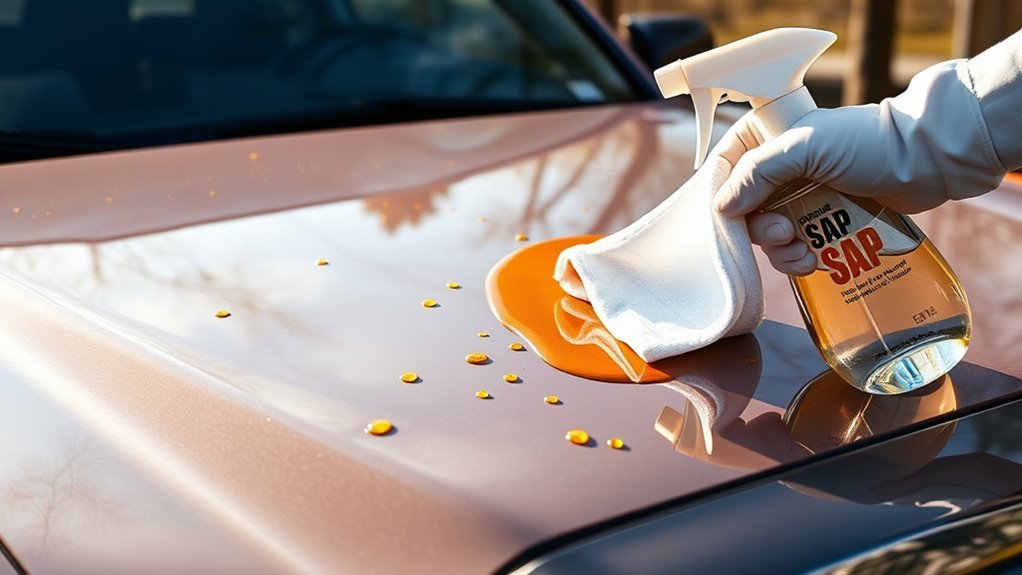
Act quickly: use a dedicated automotive sap-and-tar remover to dissolve tree sap on your Tacoma’s paint, applying it with a microfiber towel and light pressure so the solvent does the work without abrading the finish. You’ll act with intent: spray a targeted amount, let it dwell per product instructions, then blot—don’t scrub—to lift softened residue. These sap removal techniques prioritize chemical action over mechanical force, preserving clear coat integrity and accelerating restoration.
You’ll avoid household abrasives and coarse pads that introduce scratches; choose lint-free microfiber and calibrated pressure. Treat fresh deposits immediately to prevent polymerized sap from etching the paint, which complicates corrective steps. After removal, evaluate the panel visually and consider a ceramic coating to create a hydrophobic barrier, reducing future adhesion and easing maintenance. This concise, technical approach gives you control—liberation from recurring damage through disciplined automotive paint care and procedural rigor.
Prep: Check Tacoma Paint, Clear Coat, and Supplies
Before you touch any solvent, inspect your Tacoma’s paint and clear coat for chips, scratches, or existing damage that could be worsened during sap removal; work in a shaded, cool area and gather a dedicated sap-and-tar remover, lint-free microfiber towels, and car wash soap so you can test, dissolve, and clean without delay. You’ll adopt methodical cleaning techniques: test product compatibility on a hidden panel, observe for softening, discoloration, or finish dulling, and document any vulnerable areas. Keep pressure minimal; let solvents act rather than force abrasion. This preserves paint protection and maintains control.
Inspect paint and clear coat first; test removers on a hidden panel, work shaded, and let solvents do the work.
- Confirm clear coat integrity with a close visual and fingernail test.
- Stage supplies: remover, several lint-free towels, spray bottle with diluted soap.
- Choose a shaded workspace and have water accessible for rinsing.
You’re aiming for confident, liberated maintenance: controlled, deliberate prep that prevents collateral damage and sets you up to restore finish without compromise.
Gentle Sap Removal : Sap & Tar Remover + Microfiber Technique
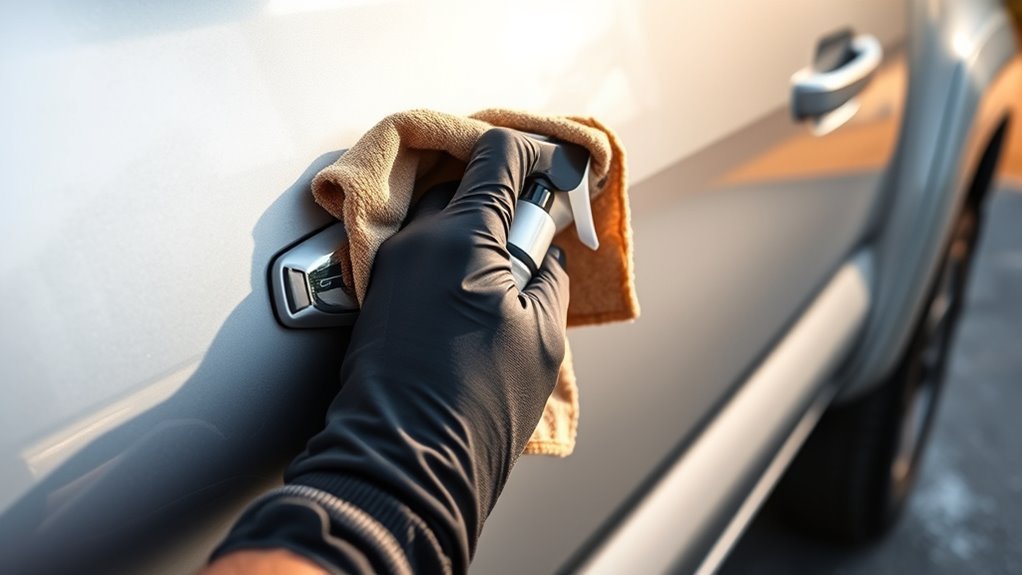
1 simple, controlled step will usually loosen fresh sap without risking your paint: apply a dedicated sap-and-tar remover to a clean microfiber, lay it over the blemish, and let the solvent dwell so it dissolves the resin while you avoid scrubbing. Use a product formulated for automotive paint to guarantee sap remover effectiveness and to minimize clear coat stress. Saturate a microfiber towel; the microfiber towel benefits include gentle lifting and minimal abrasion, so you’ll preserve the finish while the solvent works.
Lightly press the soaked cloth onto the sap for several minutes to allow chemical penetration; don’t rub. After the resin softens, blot and lift the residue with the towel’s clean section. Repeat briefly if necessary, keeping contact time controlled. Once removed, immediately wash the area with car shampoo and water, then apply wax or sealant to restore protection. Act promptly—timely intervention reduces risk of permanent etching and keeps your Tacoma’s paint liberated and intact.
Stubborn Sap? Safe DIY Fixes and When to Call a Pro
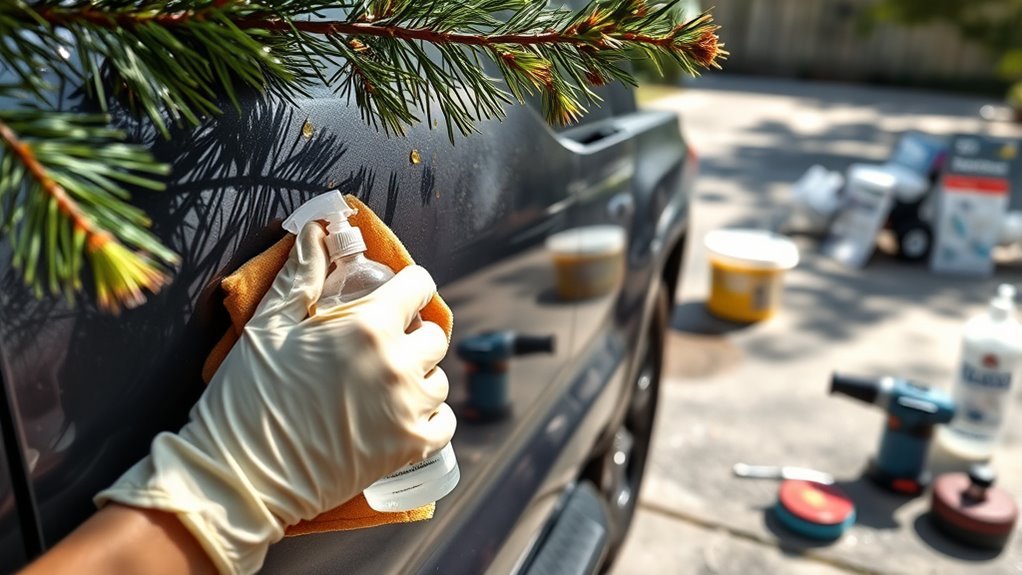
If the microfiber-and-sap remover method doesn’t fully lift hardened resin, you can take a few careful DIY steps before calling a pro. You’ll want a dedicated sap and tar remover and a fresh microfiber towel. Apply the remover, let it dwell for a few minutes to soften the resin, then gently wipe—never scrub with abrasive pads. Work in shaded, cool conditions to avoid rapid drying. If the sap resists, repeat short dwell cycles rather than increasing force.
- Use a targeted sap and tar remover, apply with microfiber, repeat dwell time as needed.
- Avoid abrasive tools or compounds that risk clear coat abrasion; inspect after each pass.
- If you notice paint etching, fading, or uncertain results, stop and seek professional detailing.
These sap removal techniques free you from hesitation: protect your finish, limit exposure time, and escalate to professional detailing when removal risks exceeding your skill or could cause permanent paint damage.
Prevent Sap Damage: Ceramic Coating, Checks, and Tree Habits
When you protect your Tacoma with a ceramic coating, you create a hard, hydrophobic barrier that reduces sap adhesion and slows chemical attack, making removal far easier and less risky for the clear coat. Use ceramic benefits intentionally: it minimizes dwell time and lets you remove sap with gentler products, preserving freedom from constant repairs. Inspect after storms and windy days; catch deposits before etching.
| Action | Frequency | Purpose |
|---|---|---|
| Apply ceramic coating | Every 2–5 years | Long-term sap resistance |
| Visual checks | After storms | Early detection |
| Wax/top-up | Quarterly | Supplemental barrier |
Avoid parking beneath sap-producing species — pine, maple — as a deliberate tree avoidance strategy. If you must park near trees, deploy a cover. Keep the Tacoma clean; contamination accelerates damage. These measures give you practical control: reduce risk, simplify maintenance, and reclaim time from avoidable paint restoration.
Frequently Asked Questions
Will Goo Gone Remove Tree Sap From Car Paint?
Yes — Goo Gone effectiveness is proven for sap removal techniques: you’ll apply, wait a few minutes, gently wipe with a microfiber, then wash the area; test invisibly first to avoid paint issues and preserve your vehicle’s freedom.
Can Tree Sap Permanently Damage Car Paint?
Yes — if you don’t remove tree sap promptly, it can permanently etch and degrade car paint. You’ll need consistent inspections and precise cleaning to prevent staining, clearcoat damage, and irreversible finish loss, reclaiming your vehicle’s freedom.
Will Dawn Remove Sap?
Can Dawn effectiveness remove sap? You can sometimes remove sap with Dawn, but its sap removal is limited; you’ll risk abrasions and wax stripping, so use specialized sap removers and microfiber techniques for reliable, liberating results.
Conclusion
You’ve removed sap safely and protected your Tacoma’s finish by acting quickly, using the right solvents, and avoiding abrasive scraping. Studies show sap exposure can etch clear coat within 24–48 hours under sun and heat, so prompt treatment matters. Keep a microfiber, sap remover, and gentle clay or isopropyl solution handy, inspect parking spots near trees, and consider ceramic coating to minimize future damage. Call a pro for deep etching or widespread finish loss.