When your Tundra’s check engine light comes on, it’s telling you the onboard diagnostics found a fault that could be minor (like a loose gas cap) or severe (like an engine misfire). A steady light allows cautious driving but needs prompt OBD‑II scanning; a flashing light signals a critical misfire—stop and tow. Common causes include oxygen sensors, spark plugs, catalytic converters, vacuum or fuel issues. Run diagnostics now, and continue for detailed causes, checks, and repair guidance.
What a Tundra’s Check Engine Light Means

When your Tundra’s Check Engine Light comes on, it’s signaling a fault detected by the vehicle’s onboard diagnostics that can range from a loose gas cap to critical issues like engine misfires or a failing catalytic converter. You’ll want to treat that signal as actionable data about engine performance rather than nuisance noise. A steady light flags faults that can lower fuel economy and degrade drivetrain reliability; a flashing light indicates an urgent fault that can damage the catalytic converter and demands immediate attention. Common triggers include faulty oxygen sensors, worn spark plugs, and aftermarket electrical components creating faults. You’ll use OBD-II diagnostic tools to read trouble codes and prioritize repairs—codes point you to affected subsystems so you can regain control and freedom from repeated failures. Don’t ignore the light: deferred diagnosis compounds wear, raises costs, and restrains your mobility. Use focused diagnostics and prompt corrective action to restore reliable engine performance.
Is the Light Serious: or Not?
When your Tundra’s check engine light comes on, check for easy fixes first (tighten the gas cap, note any performance loss) and scan for DTCs to prioritize repairs. A steady light usually signals a minor fault you can schedule; a blinking light or loss of power requires you to stop driving and get immediate attention to prevent engine or catalytic damage. Watch for limp mode, rough idle, or poor fuel economy as severity indicators that demand prompt professional diagnosis.
Immediate Actions To Take
If your Tundra’s check engine light begins blinking, treat it as urgent—this usually signals an engine misfire that can quickly damage the catalytic converter and requires immediate inspection. You should stop driving, pull over safely, and shut the engine to prevent further harm. Check for obvious warning signs: loss of power, rough idling, or unusual noises. If the light is steady, continue cautiously but plan immediate engine diagnostics; a loose gas cap or minor sensor fault can escalate. Avoid prolonged driving with the light on to prevent reduced fuel economy and cascading failures. Arrange towing or a prompt shop visit for code reading and targeted repairs. Regular inspections and prompt action preserve freedom from costly, immobilizing breakdowns.
Severity Indicators To Watch
Although a lit check engine light doesn’t always mean disaster, the pattern and accompanying symptoms tell you how urgent it is: a blinking light behavior signals a severe engine misfire and demands immediate shutdown and service to prevent catalytic converter damage. A steady light behavior usually indicates a less urgent fault—loose gas cap or minor sensor—but you’ll still want timely diagnosis to avoid escalation. If illumination coincides with clear performance impact, like reduced power or limp mode engagement, don’t drive it; limp mode protects the drivetrain but means towing and professional repair are likely. Intermittent illumination can hide emerging faults; monitor data and log occurrences. Never ignore any check engine indication—deferred attention increases repair costs and long-term performance decline.
Steady vs. Flashing: What Each Light Behavior Means
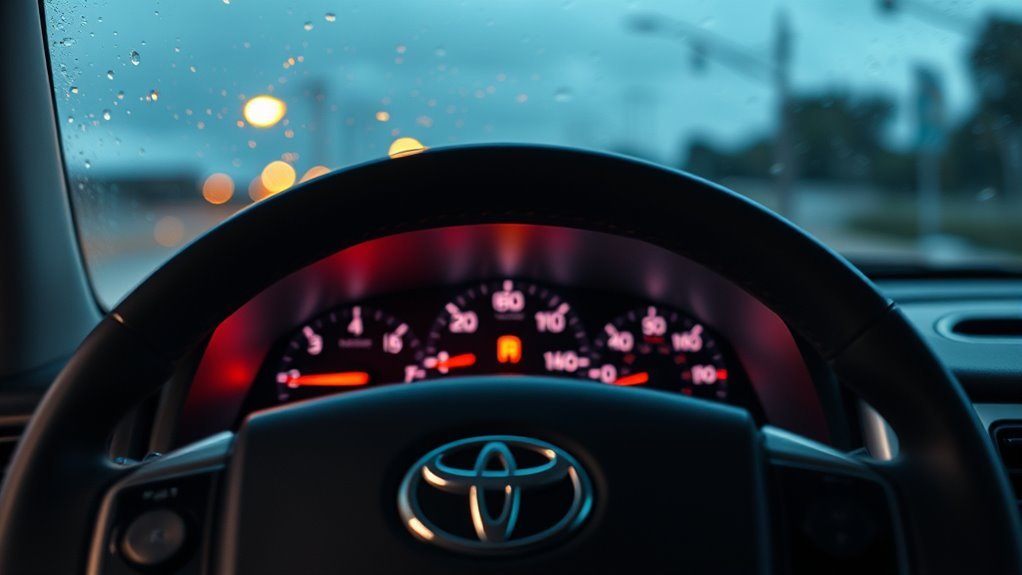
Because the check engine light can signal anything from a loose gas cap to an imminent engine failure, you need to distinguish steady from flashing behavior immediately. A steady light typically indicates a minor fault—think loose gas cap or a failing sensor—so you can continue driving cautiously but should schedule a diagnostic soon. It rarely impairs immediate performance, though prolonged neglect will erode fuel economy and system reliability.
A flashing light denotes a critical condition: ongoing misfires or combustion anomalies that risk catalytic converter damage and catastrophic engine harm. When the flashing light appears, stop driving as soon as it’s safe, minimize throttle, and arrange towing to a service center. Treat blinking as an emergency, not an inconvenience.
Understanding steady light versus flashing light lets you prioritize responses, avoid unnecessary disruption, and protect long-term vehicle autonomy. Make diagnostic scanning your next step for either state to reclaim control and prevent escalation.
Top 8 Causes of the Check Engine Light on a Tundra
When your Tundra’s check engine light comes on, you’ll want to diagnose the most likely causes quickly to avoid performance loss or damage. Start with the basics: a loose or damaged gas cap can drop fuel pressure and raise emissions, so secure or replace it first. Next, inspect oxygen sensors—failing units skew air-fuel data, hurting economy and drivability. Check spark plugs and spark plug wires for wear; misfires from ignition faults cut acceleration and waste fuel. Evaluate the catalytic converter: clogging will restrict exhaust flow, reduce power, and elevate emissions. Assess air flow inputs—mass air flow sensor faults disrupt the mixture, causing stalling or rough idle. Other common triggers include vacuum leaks, fuel system faults, and exhaust leaks that mimic sensor or converter issues. You’ll act with autonomy: prioritize fixes that restore emissions control and drivability, preventing escalation to costly repairs.
How to Read OBD‑II Codes for Your Tundra
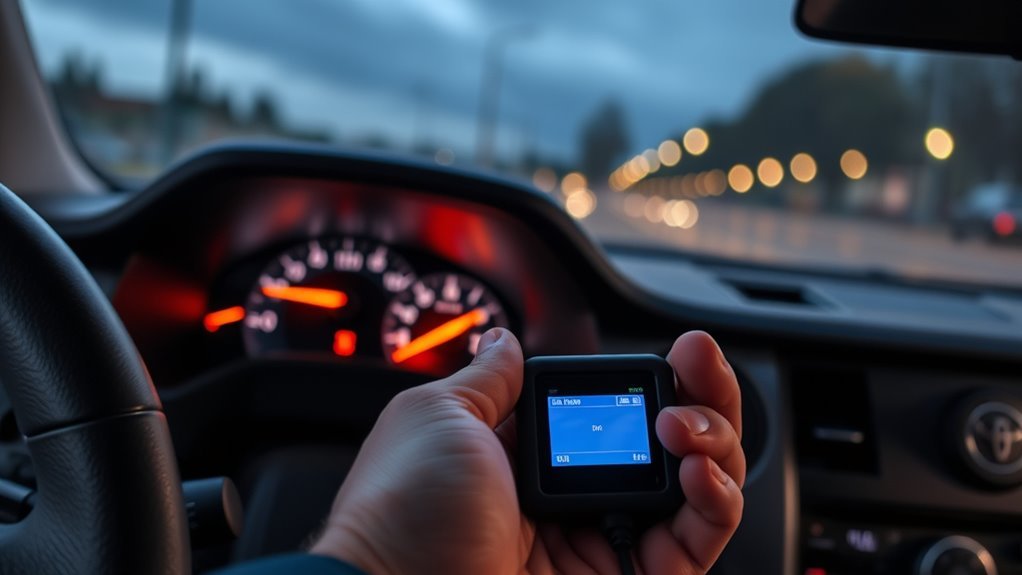
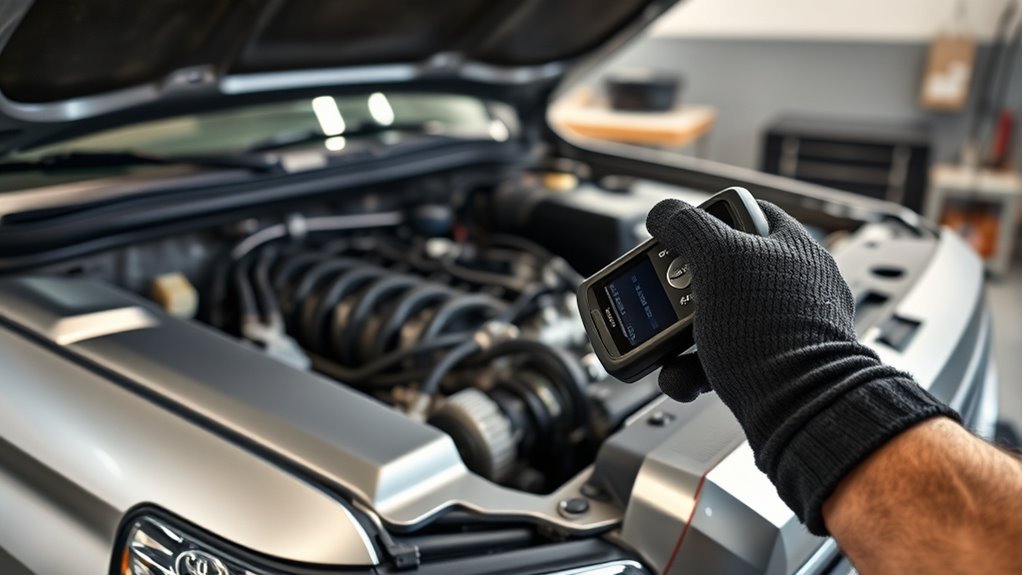
Grab an OBD-II scanner and plug it into the diagnostic port under the dash to read stored DTCs. Each code is a letter plus four digits (P/B/C/U + specific fault) that tells you which subsystem and fault type the ECU logged. Use the code definitions as a diagnostic starting point, but verify with sensor data and inspection before replacing parts.
Reading OBD-II Codes
Start by locating the OBD‑II port under the dashboard near the driver’s seat, plug in a compatible scanner, and retrieve the stored codes; each code is a letter plus four digits that pinpoint system and fault specifics. You’ll use OBD II basics to confirm code presence and freeze-frame data. Connect a trusted diagnostic tool, clear communication errors, and pull pending and permanent codes. Many parts stores will scan free, but owning Diagnostic tools lets you control timing and privacy. Record codes, mileage, and driving conditions for later reference. Don’t guess—capture data, then consult a repair manual or verified database to plan targeted fixes. Regular scanning keeps your Tundra reliable and frees you from avoidable failures.
Interpreting Code Definitions
Curious what that P‑code actually means for your Tundra? You’ll decode standardized OBD‑II codes: a letter (P for powertrain) plus four digits that map to specific faults. Learn code categories—P0xxx for generic powertrain, P1xxx for manufacturer-specific—so you’ll know whether it’s a universal repair or a Toyota‑specific strategy. Use an OBD‑II scanner at the diagnostic port to retrieve codes like P0300 (random/multiple cylinder misfire) or P0420 (catalyst efficiency). Don’t guess: cross‑reference the code with freeze‑frame data, live sensors, and service manuals to isolate root causes. Expect to encounter common misfires, sensor failures, and catalyst issues; reading codes lets you reclaim control, choose targeted parts, and avoid unnecessary replacements.
DIY Checks for a Tundra Check Engine Light
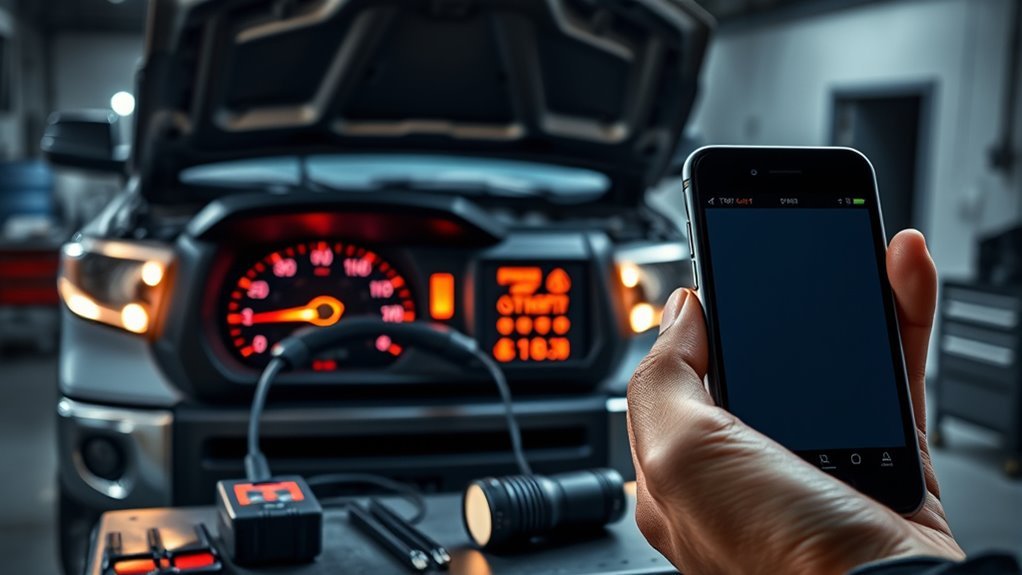
Wondering where to begin when your Tundra’s check engine light comes on? Start with simple, empowering DIY checks that isolate common causes. First inspect the gas cap—tighten or replace it if cracked; a faulty cap alters fuel pressure and triggers emissions issues. Next examine spark plugs and wires for wear or fouling; replace worn plugs to restore engine performance and prevent misfires. Use diagnostic tools—an OBD-II scanner—to read DTCs; codes direct you to targeted fixes and reduce guesswork. Check the MAF sensor for contamination or damage; clean it with appropriate cleaner or replace if faulty, since airflow measurement affects fuel mixture. Monitor oil quality and level regularly; low or dirty oil can signal lubrication problems that illuminate the light. These troubleshooting tips prioritize safety and vehicle autonomy: perform visual checks, record codes, address simple fixes, and decide whether further repair or professional diagnosis is necessary to regain control of your Tundra.
When to Drive, When to Stop, and When to Tow
If your Tundra’s check engine light comes on, assess the display and vehicle behavior immediately: a steady light often means you can drive cautiously to a service center, but a flashing light signals an active misfire or other severe fault where you should pull over and stop driving to avoid further engine or catalytic converter damage.
You’ll use diagnostic tools and observation to decide next steps. Monitor warning signs—rough idle, loss of power, smoke, or strange noises—then act. Don’t gamble with freedom; preserve mobility by making safe choices.
- Steady light + normal performance: drive slowly to a shop, but schedule diagnostics soon.
- Steady light + degraded performance: stop if unsafe; get scans immediately.
- Flashing light: stop, turn off engine, and arrange towing.
- Visible smoke or severe vibration: don’t drive; tow for immediate inspection.
- Unsure of severity: contact a certified technician or service center for guided assessment.
Choose prevention over risk; prompt diagnostics protect your Tundra and your autonomy.
Typical Tundra Repair Costs and Time to Fix Common Causes
After you’ve determined whether it’s safe to keep driving, the next practical step is estimating what repairs will cost and how long they’ll take. You’ll typically pay $88–$111 for an initial diagnostic at most service options; that gives you codes and a focused plan. Common fixes vary: an oxygen sensor replacement runs about $112–$165, while spark plug service generally falls between $100–$300 depending on quantity and labor. A catalytic converter is the costly outlier, often exceeding $1,000 based on condition and shop rates. Most check-engine repairs on a Tundra complete in roughly 1–3 hours, contingent on complexity and parts availability. Build a repair budget that includes diagnosis, parts, and labor plus a contingency for unexpected findings. Prioritize repairs by safety and drivability, then select from service options that match your timeline and principles. This keeps you empowered, informed, and ready to reclaim control of your vehicle.
Choosing a Trusted Shop and What to Expect During Diagnosis
Start by choosing a RepairPal Certified shop or a dealer that posts transparent pricing and backs repairs with at least a 12‑month/12,000‑mile warranty—you’ll get clearer accountability and predictable costs. You want trusted mechanics who communicate and empower you with options. Expect a documented process:
- Technician connects OBD‑II scanner to pull trouble codes and interpret fault data.
- Shop performs complimentary multi‑point inspection to scope related systems.
- They test sensors, spark plugs, emissions components, and fuel/ignition systems as indicated by codes.
- You receive a written estimate with prioritized repairs, parts, labor, and warranty terms.
- They demonstrate diagnostic tools output and explain failure modes so you can decide.
Diagnosis is systematic: code read, confirm with targeted tests, isolate root cause, then estimate repair. Choose shops that show live data and test results; that transparency liberates you from overcharge and guesswork. If a shop can’t show diagnostic steps or won’t document findings, walk away and find trusted mechanics that will.
Frequently Asked Questions
How Do You Fix a Toyota Check Engine Light?
You fix it by visually inspecting for obvious faults, then using diagnostic tools (OBD-II scanner) to read codes, addressing common issues like gas cap, oxygen sensor, spark plugs, then reset once repairs confirm liberation.
Conclusion
When your Tundra’s check engine light comes on, don’t panic: about 70% of CELs are tied to emissions‑related issues like a faulty O2 sensor or loose gas cap. You can often run basic OBD‑II checks and simple fixes yourself, but a flashing light or recurring codes means stop driving and get professional diagnosis. Use a trusted shop for precise troubleshooting; expect quick fixes to take hours, while deeper engine repairs may need days.