Tundra Weight-Distribution Hitch Setup Guide
What’s in This Article
- Quick Start: Tundra WDH Setup in 6 Steps
- Verify Trailer and Tundra Weight Limits
- Tools and Parts You’ll Need for a WDH Install
- Before You Begin: Safety and Setup Rules
- Measure Trailer and Truck Heights
- Install the WDH Head
- Mount Spring Bars and Set Tension
- Fine-Tune Tongue Weight and Front Height
- Road-Test Checklist
- Common Tundra Towing Problems
- Owner Tips and Maintenance Checks
- Frequently Asked Questions
A poor weight-distribution hitch setup can make your Tundra feel light in front and tense on the highway. You can fix that risk with real weights, clear measurements, correct bar tension, and a short road test before a long tow. This guide shows you how to set up a Tundra weight-distribution hitch with safer, repeatable steps.
Quick Answer
Set up a Tundra weight-distribution hitch by confirming your loaded trailer weight, keeping tongue weight near 10% to 15% of gross trailer weight, and measuring the Tundra’s front wheel-well height before and after hookup. Install the shank, hitch head, spring bars, and sway brackets exactly as your hitch manual directs. Adjust washers, brackets, or chain links until the front height moves back toward its unloaded baseline and the trailer rides close to level.
Key Takeaways
- Use the door label, owner’s manual, and hitch rating before you trust any online towing number.
- Keep bumper-pull trailer tongue weight near 10% to 15% of loaded Gross Trailer Weight.
- Measure the Tundra’s front wheel-well height uncoupled, coupled without weight distribution, and coupled with the bars engaged.
- Adjust hitch head angle, brackets, or chain links in small steps, then remeasure each time.
- Stop and recheck hardware, height, and handling after your first short test tow.
Estimated total time: 60 to 90 minutes for a first setup, plus a short road test and recheck.
Quick Start: Tundra WDH Setup in 6 Steps
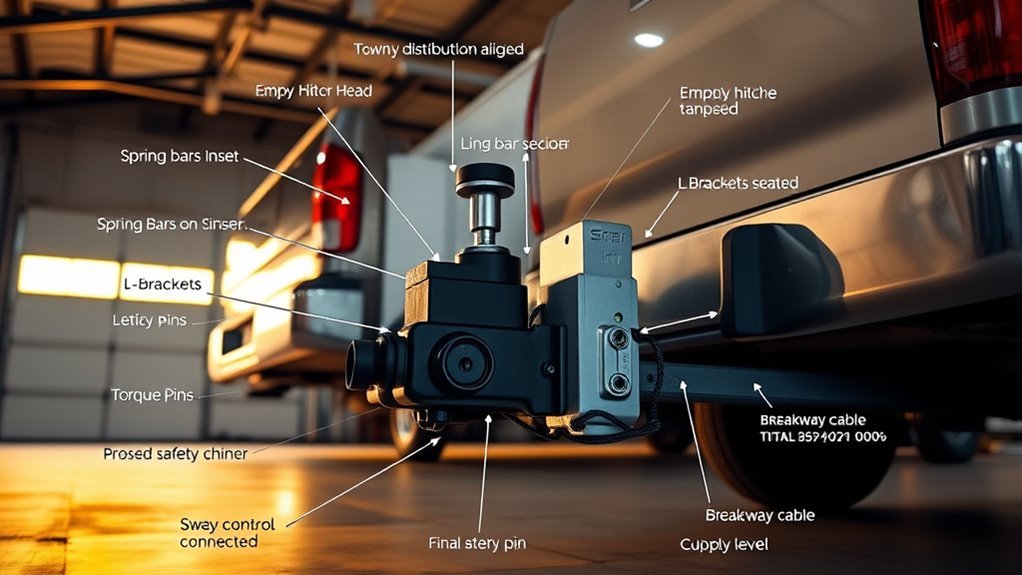
Use this quick checklist before you fine-tune the hitch. Work on level ground with the trailer loaded as you plan to tow it.
- Confirm ratings: Check Gross Trailer Weight (GTW), tongue weight (TW), Gross Vehicle Weight Rating (GVWR), Gross Axle Weight Rating (GAWR), receiver rating, ball rating, and weight-distribution hitch rating.
- Measure baseline height: Measure from the ground to the front wheel-well lip with the Tundra loaded for travel but uncoupled.
- Couple without bars: Lower the coupler onto the ball, retract the jack, and measure the front wheel well again.
- Install and engage the bars: Fit the spring bars, brackets, or chains as your hitch manual directs.
- Remeasure with bars engaged: Adjust head tilt, bracket height, or chain links until the front measurement returns toward the unloaded baseline.
- Road-test and recheck: Drive slowly at first, check steering and braking feel, then retorque and inspect hardware after the test.
Repeat these checks any time you change trailers, cargo, passengers, bed load, tire pressure, or hitch hardware.
[Products Worth Considering]

These TPE door anti‑kick pads provide durable, water‑resistant protection for Toyota Tundra doors from 2022 to 2026. They fit precisely, are easy to install with double‑sided tape, and can be cleaned simply with water. The pads guard against scuffs and impacts while preserving the door's appearance and smooth operation.

The Pigenius windshield sunshade protects your Tundra's interior from heat and UV damage while keeping the cabin cool. Its accordion design folds easily for storage and quick setup, and the triple‑laminate construction provides durable, reflective protection. Ideal for long trips and daily commutes, it guards dashboards, seats, and steering wheels from sun‑related wear.

Upgrade your Toyota's front bumper with this premium license plate bracket that fits US and Canada plates perfectly. Made from heavy‑duty, rust‑proof plastic, it protects your paint and stays street legal. The kit includes six unique screws and a wrench for quick, tool‑free installation, ensuring a secure mount without scratches.
Verify Trailer and Tundra Weight Limits (GTW, Tongue Weight)
Start with your exact Tundra, not a generic towing chart. Toyota lists the 2026 Tundra with a maximum towing rating of 12,000 pounds when properly equipped, but your real limit depends on trim, drivetrain, cab, bed, passengers, cargo, and added equipment.
Earlier Tundra trucks can have much lower limits. Don’t apply a current 12,000-pound figure to an older truck unless your manual and labels confirm it. Check your owner’s manual, door label, receiver label, and trailer label before you tow.
For most bumper-pull trailers, aim for tongue weight near 10% to 15% of loaded Gross Trailer Weight. A 6,000-pound loaded trailer often needs about 600 to 900 pounds of tongue weight, as long as every rating still allows it.
Use a public scale or tongue-weight scale when the numbers feel close. Don’t rely on dry trailer weight, brochure tongue weight, or guesses from an empty trailer.
Warning: Never tow above the lowest rated part in the setup, including the truck, receiver, ball, hitch, trailer, tires, and axles.
Tools and Parts You’ll Need for a WDH Install
Gather the tools before you start so you can measure, adjust, and torque the hitch without shortcuts. Keep the hitch manual beside you because torque values and setup targets change by brand and model.
- Tape measure, notepad, marker, and a small level.
- Socket set, ratchet, open-end wrenches, and breaker bar if your hitch requires it.
- Calibrated torque wrench that covers the torque range in your hitch manual.
- Wheel chocks, gloves, safety glasses, and sturdy blocks for the trailer jack.
- Weight-distribution hitch parts, including shank, head, spring bars, brackets, pins, clips, and sway-control parts.
- Grease or lubricant only where your hitch manufacturer tells you to use it.
Use the manual for your exact hitch. A chain-style hitch, Equal-i-zer style hitch, and other integrated sway-control hitches do not adjust in the same way.
[Products Worth Considering]

Upgrade your vehicle's cargo capacity with these heavy‑duty aluminum roof crossbars that lock securely and reduce wind noise. The aerodynamic design and adjustable width provide a quiet, stable platform for luggage up to 260 lb, while the easy‑install kit and labeled front and rear bars simplify setup. Ideal for Toyota Grand Highlander and Lexus TX models from 2024‑2026 with flush side rails.

Upgrade your RAV4 roof rack with these heavy‑duty aluminum crossbars featuring an anti‑theft lock and tie‑down loops for secure cargo transport. The matte‑powder‑coated bars resist corrosion and reduce wind noise, while easy installation fits existing rails without drilling. Ideal for bike mounts, roof boxes, kayaks and more.
Before You Begin: Safety and Setup Rules
Park the Tundra and trailer in a straight line on firm, level ground. Chock the trailer wheels, set the parking brake, and keep bystanders away from spring bars because they can hold high tension.
Load the trailer first. Add water, propane, tools, camping gear, bikes, coolers, and cargo just as you plan to tow. A perfect empty-trailer setup can turn wrong once cargo changes tongue weight.
Check tire pressure on the Tundra and trailer before you measure. Low pressure can change ride height and make the hitch harder to tune.
Measure Trailer and Truck Heights and Record Baseline
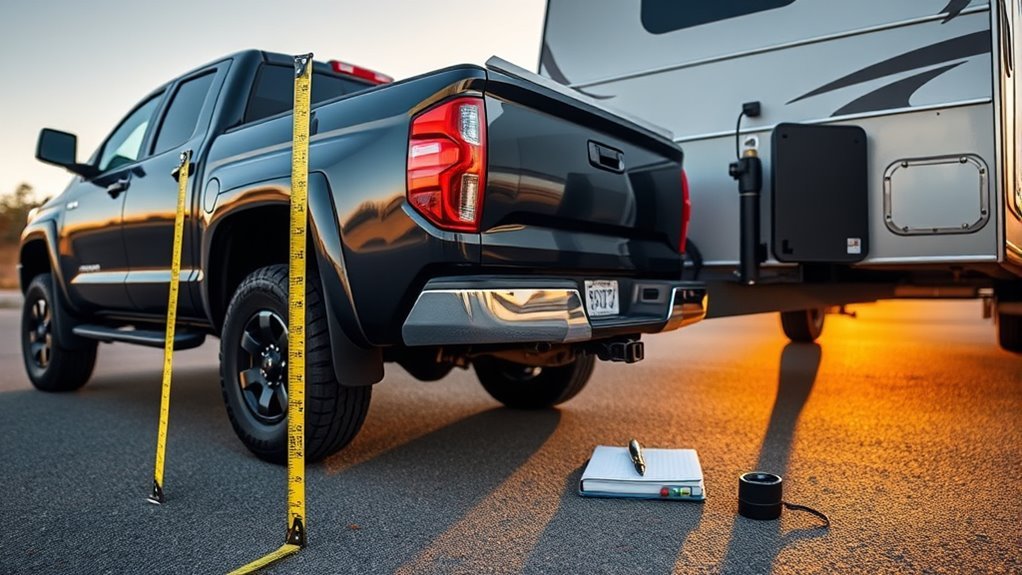
Measure the Tundra from the ground to the front wheel-well lip directly above the front axle. Measure both driver and passenger sides if the ground allows it, then use the average.
Write down three front measurements: uncoupled baseline, coupled without weight distribution, and coupled with the bars engaged. Equal-i-zer guidance for many 4K to 14K models targets the final front height between the uncoupled baseline and the halfway point between the first two measurements.
Measure trailer pitch too. Record the frame height near the front and rear of the trailer while it sits level, then compare those numbers after the hitch carries weight.
| Measurement | When to Take It | Why It Matters |
|---|---|---|
| Line A | Tundra loaded but uncoupled | Sets the front height baseline |
| Line B | Coupled with no bars engaged | Shows how much the tongue unloads the front axle |
| Line C | Coupled with bars engaged | Shows whether the hitch transfers enough load |
Install the WDH Head on Your Tundra
Slide the weight-distribution shank fully into the Tundra’s receiver. Secure it with the correct hitch pin and clip.
Set the hitch head on the shank so the trailer rides close to level once the bars carry weight. Many setup guides start with the ball slightly above the level coupler height, but your hitch manual controls the final target.
Add the washers, rivet, spacer, or angle hardware that your hitch uses to set head tilt. Start with the manufacturer’s base setting, snug the hardware for setup, and wait to final-torque until you finish the adjustments.
- Align the hitch head squarely on the shank.
- Use the correct ball size for the trailer coupler.
- Use a ball and shank rated at or above the loaded trailer weight.
- Follow the hitch manual for washer count, head angle, and torque.
Don’t guess on torque. Loose hitch-head hardware can shift under load and change the setup while you drive.
Mount Spring Bars, Set Chain Length, and Add Washers
Install the spring bars in the correct left-right orientation if your hitch uses marked bars. Engage the bars only after you raise the tongue jack enough to reduce tension during hookup.
On an Equal-i-zer style setup, the spring arms rest on L-brackets. On a chain-style setup, the chain links control bar tension. Both systems need equal side-to-side setup so the trailer doesn’t pull unevenly.
Proper Bar Orientation
Mount the spring bars exactly as the hitch maker shows. Some bars use sockets, some use trunnions, and some use round bars that load from the bottom.
- Confirm that both bars seat fully in the hitch head.
- Set both frame brackets at the same distance from the coupler.
- Keep the trailer and Tundra straight while you engage tension.
- Check that pins, clips, and brackets sit fully locked before you lower the jack.
Chain Length Adjustment
If your hitch uses chains, start with the link count in the manual. Use the same number of free links on both sides.
Shorter chains usually add bar tension, while longer chains usually reduce it. Adjust one link at a time, lower the jack, then remeasure the Tundra’s front height.
| Action | Result |
|---|---|
| Use equal links | Keeps side-to-side tension balanced |
| Raise the tongue jack before hookup | Reduces spring-bar strain during setup |
| Remeasure after each change | Shows whether the front axle regained load |
Washer Placement Technique
Many weight-distribution hitches use washers or a spacer system to tilt the hitch head. More rearward head tilt often increases spring-bar leverage, but the exact effect depends on the hitch design.
- Start with the washer count your manual recommends.
- Add or remove only one washer at a time.
- Reengage the bars and remeasure the front wheel-well height.
- Stop at the manufacturer’s maximum washer count or adjustment range.
If washer changes can’t reach the target, adjust bracket height, chain links, ball height, or cargo placement as your manual allows.
Fine-Tune Tongue Weight and Front Height on the Tundra
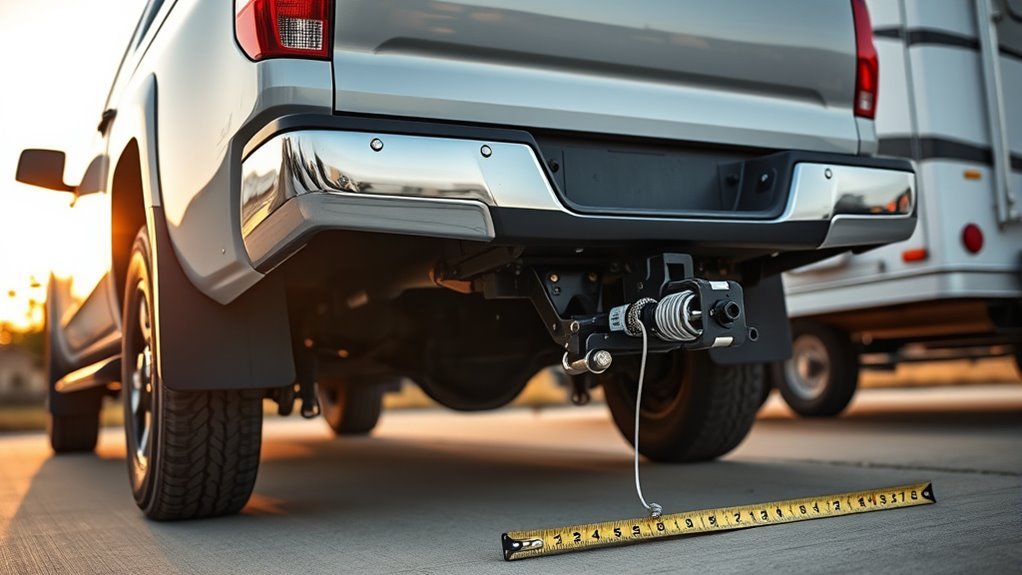
Now compare your measurements and weights. Your goal isn’t a truck that looks perfectly level. Your goal is to return enough load to the front axle while keeping the trailer close to level and every rating within limits.
Check Tongue Weight
Measure tongue weight with the trailer loaded for travel. If you can’t use a tongue-weight scale, use a public scale method that lets you compare truck-only, truck-and-trailer, and trailer axle weights.
- Move cargo forward if tongue weight sits too low and the trailer sways.
- Move cargo rearward if tongue weight exceeds the truck, receiver, or hitch rating.
- Keep heavy cargo low and near the trailer axle area when possible.
- Recheck tongue weight after you add water, bikes, generators, or rear cargo racks.
Set Front Ride Height
Use the front wheel-well numbers to judge the weight-distribution adjustment. If the final front height remains too high, add more weight distribution within the hitch maker’s limits.
If the final front height drops below the uncoupled baseline, you may have too much weight distribution. Reduce tension, then remeasure and road-test again.
After front height falls in the target range, check trailer pitch. A trailer that points too high or too low can still tow poorly even when the truck looks right.
Pro tip: Save your final measurements and hitch settings in your phone so you can repeat the setup after cargo changes.
Road-Test Checklist: What to Watch For and How to Readjust
Start the road test in a quiet area before you enter highway traffic. Listen for clunks, watch the trailer in the mirrors, and check whether the Tundra steers and brakes with normal control.
- Drive slowly, stop, and inspect all pins, clips, chains, brackets, and wiring.
- Check steering feel. A light front end means you may need more weight distribution or less rear cargo.
- Check trailer sway. Sway often points to low tongue weight, poor cargo placement, tire issues, speed, wind, or weak sway control.
- Check braking. Soft, pushing, or uneven braking means you should inspect trailer brakes, brake controller gain, and load balance.
- Stop after a short tow and remeasure front height if handling changed.
After your first 50 to 100 miles with a loaded trailer, inspect the setup again. Equal-i-zer recommends checking weight distribution after the first tow and after major loading changes.
Common Tundra Towing Problems and Precise Fixes (Squat, Sway)
Towing problems usually come from the same few causes: too much rear sag, low tongue weight, poor cargo balance, wrong hitch tension, or ratings that the setup exceeds. Fix the cause before you add more parts.
| Problem | Likely Cause | First Fix |
|---|---|---|
| Front feels light | Not enough weight returned to front axle | Increase bar tension within manual limits |
| Rear squats hard | High tongue weight or weak distribution | Weigh the rig and adjust cargo or hitch tension |
| Trailer sways | Low tongue weight, speed, wind, tires, or load balance | Slow down, rebalance cargo, and verify 10% to 15% tongue weight |
| Bars make excess noise | Dry friction points or binding | Lubricate only the points your hitch manual allows |
Air helper springs can level rear squat, but they don’t replace a correct weight-distribution setup. Set the hitch first, then use helper springs only as the truck and hitch makers allow.
Owner Tips: Packing, Scales, Adapters, Maintenance, and Checks
Pack the trailer with heavy items low and near the axle area, with enough weight forward to meet the tongue-weight target. Secure every item so it can’t slide rearward while you drive.
- Use a scale before long trips or major load changes.
- Check safety chains, breakaway cable, lights, and 7-pin wiring before every tow.
- Retorque hitch hardware at the interval in your hitch manual.
- Inspect spring bars, L-brackets, chain links, pins, and clips for wear.
- Keep a written setup record for each trailer you tow.
Note: Trailer-Sway Control can help, but it can’t fix an overloaded truck, poor tongue weight, or unsafe cargo placement.
Frequently Asked Questions
Does a 4000 Pound Trailer Need a Weight Distribution Hitch?
A 4,000-pound trailer may need a weight-distribution hitch if it causes rear squat, light steering, sway, or if your Tundra manual or receiver label requires one at that weight. Check the truck, receiver, and trailer ratings first. Use the hitch maker’s tongue-weight range to choose the correct bars.
What Is the Max Hitch Weight for a Toyota Tundra?
The max hitch weight depends on the Tundra year, trim, receiver, payload, axle ratings, and whether you use weight distribution. Don’t assume one number fits every Tundra. Use the lower rating from the door label, owner’s manual, receiver label, hitch label, and ball rating.
How to Determine Correct Weight Distribution Hitch?
Choose a weight-distribution hitch by loaded tongue weight, not dry trailer weight. Add the trailer’s loaded tongue weight plus cargo behind the Tundra’s rear axle when you size the bars. Pick a hitch that covers that real tongue-weight range without exceeding any truck or trailer rating.
Can a Weight-Distribution Hitch Reduce Actual Tongue Weight?
No. A weight-distribution hitch doesn’t change the trailer’s actual tongue weight. It uses leverage to move part of that load across the tow vehicle and trailer axles.
When Should You Recheck a Tundra WDH Setup?
Recheck the setup after your first short tow, after 50 to 100 miles, and any time your cargo changes. You should also inspect it after bracket movement, unusual noise, tire changes, or a different trailer.
Safety Disclaimer: This article gives general towing information only. Always follow your Toyota owner’s manual, trailer manual, hitch manual, and local towing rules, or ask a qualified towing professional to inspect your setup.
Conclusion
A safe Tundra weight-distribution hitch setup starts with real weights and repeatable measurements. Confirm every rating, set the hitch by the manual, and tune the bars until the front height returns toward baseline. Take a short road test before you commit to a long trip. Keep your notes, recheck after load changes, and tow with a setup you can trust.
References
- 2026 Toyota Tundra specs, Toyota, 2026
- Toyota vehicles for towing, Toyota, 2026
- Know Before You Tow, Equal-i-zer Hitch
- 6K to 14K Model Owner’s Manual Installation Guide, Equal-i-zer Hitch
- Why is Tongue Weight so Important?, Equal-i-zer Hitch
- Weight Distribution Hitch Setup, CURT Manufacturing
- How to Choose the Best Weight Distribution Hitch, CURT Manufacturing
- Towing a Trailer: Being Equipped for Safety, National Highway Traffic Safety Administration