When comparing disc brakes to drum brakes, you’ll find key differences in performance and maintenance. Disc brakes offer superior stopping power and heat dissipation, making them effective in diverse conditions. Conversely, drum brakes are cost-effective but struggle under high-stress scenarios. Maintenance needs vary, with disc brakes requiring less frequent servicing. While both systems have their pros and cons, understanding their functionalities reveals important insights that could influence your vehicle choice and performance preferences.
Disc Brakes vs. Drum Brakes: Which Is Better?
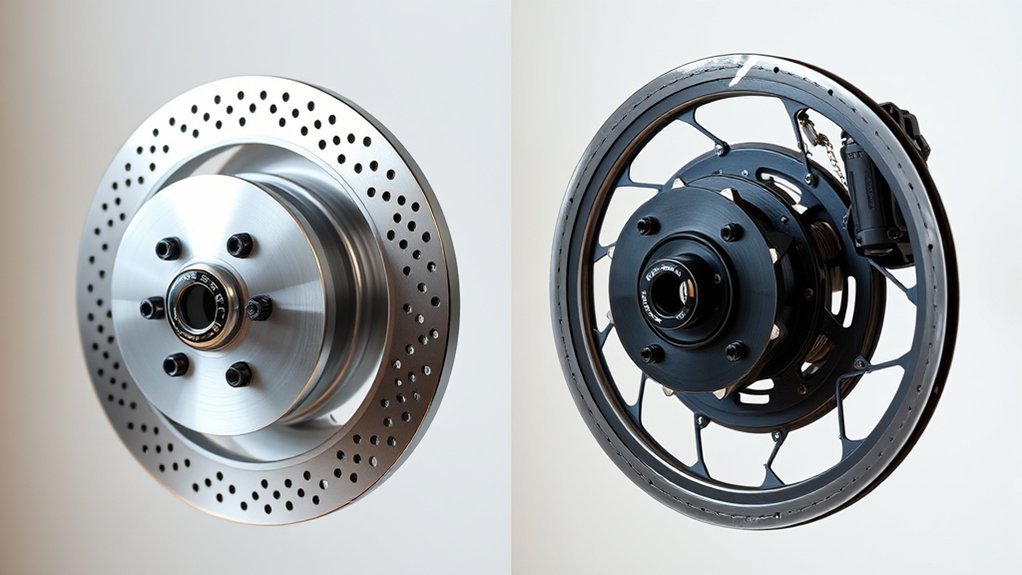
When considering whether disc brakes or drum brakes are better, it’s essential to evaluate their performance characteristics and applications. Disc brakes excel in stopping power and heat dissipation, making them the preferred choice for high-performance vehicles and wet conditions. They’re less prone to brake fade, enhancing vehicle safety during intense braking. The simpler design of disc brakes reduces maintenance complexity compared to drum brakes, which often overheat, compromising effectiveness.
On the other hand, drum brakes remain cost-effective to manufacture and maintain, commonly found on economy vehicles’ rear axles. While they serve well in everyday applications, their performance limitations become evident under demanding conditions. Ultimately, the choice between disc and drum brakes hinges on the vehicle type and intended use. For those prioritizing advanced brake technology and safety, disc brakes clearly emerge as the superior option, delivering reliability and performance where it matters most.
The Basics of Drum Brakes: How They Work
Disc brakes may lead the way in performance, but understanding how drum brakes function is essential for grasping their role in automotive design. Drum brakes consist of a rotating drum, brake shoes, a wheel cylinder, and return springs. When you press the brake pedal, hydraulic fluid flows to the wheel cylinder, activating the brake shoe mechanics. This pushes the brake shoes outward against the inner surface of the drum, creating friction that slows your vehicle.
The enclosed design provides advantages like better corrosion resistance and a larger friction contact area, contributing to a longer lifespan. However, under high braking conditions, drum brakes can overheat, reducing effectiveness and requiring deeper pedal presses due to thermal expansion. Maintenance can also be complex, often necessitating expert mechanics for repairs, making them less user-friendly compared to disc brakes. Understanding these mechanics offers insight into their unique advantages and limitations.
Understanding Disc Brakes: Key Components and Function
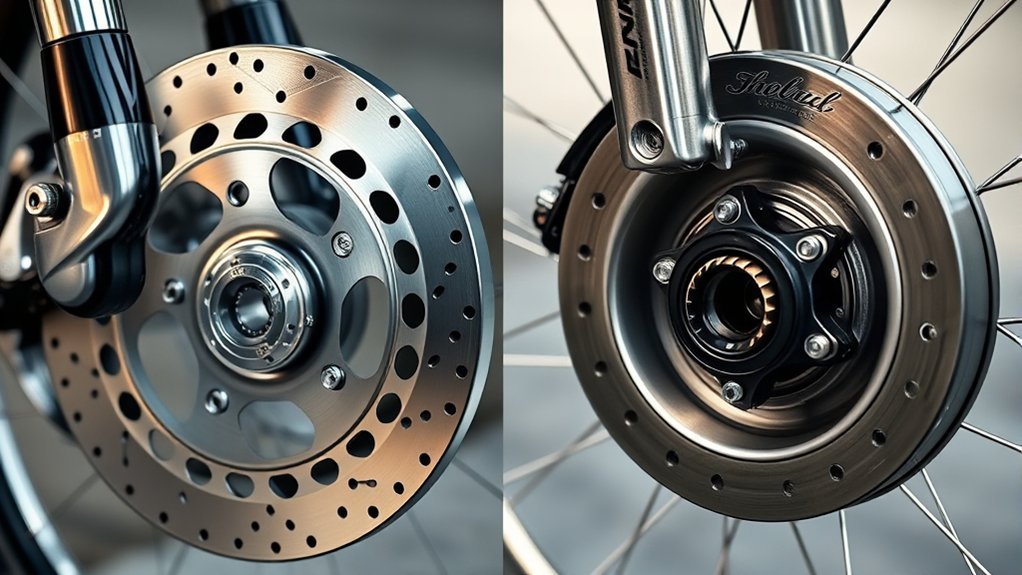
To understand disc brakes, you need to grasp their key components: the brake rotor, caliper, brake pads, and hydraulic pistons. These elements work in unison, with hydraulic pressure activating the caliper to push the pads against the rotating rotor, generating the necessary friction for stopping. This efficient design not only excels in heat dissipation but also guarantees reliable performance, even in wet conditions.
Key Components Overview
Understanding the key components of disc brakes is essential for grasping how they function effectively to guarantee vehicle safety. The brake rotor, a metal disc rotating with the wheel, provides a surface for the brake pads to create friction. The caliper, which houses the brake pads and pistons, compresses these pads against the rotor when hydraulic pressure is applied. Brake pads, made of friction material, generate the necessary friction for stopping. Inside the caliper, pistons, operated by hydraulic fluid, push the brake pads against the rotor, translating pedal force into braking action. Finally, brake fluid transfers force from the master cylinder to the caliper, allowing for precise control within the brake system, essential for effective braking performance.
How Disc Brakes Function
When you press the brake pedal, hydraulic fluid rushes to the caliper, activating the pistons that push the brake pads against the rotating rotor. This action creates friction, leveraging advanced brake technology to slow or stop your vehicle efficiently. The rotor, typically made of cast iron or composite materials, is designed for durability and effective heat dissipation during braking. Thanks to its open design, disc brakes excel in wet conditions, allowing water to escape and minimizing brake fade. Regular maintenance is vital; you should check pad wear, inspect the rotor for warping, and guarantee the hydraulic system adheres to peak performance standards. Understanding these hydraulic principles is essential for maximizing your braking efficiency and safety.
Advantages and Disadvantages of Drum Brakes
Drum brakes offer cost-effectiveness and durability, often making them a popular choice for budget-conscious consumers. Their enclosed design enhances corrosion resistance and maximizes friction contact area, contributing to a longer lifespan. However, performance limitations arise in high-stress conditions, leading to issues like brake fade and maintenance complexities that can challenge vehicle control.
Cost-Effectiveness and Durability
While many drivers seek cost-effective solutions, drum brakes often emerge as a practical choice for those on a budget. Their lower manufacturing and maintenance costs enhance cost efficiency, making them appealing for budget-conscious consumers. A longevity analysis reveals that the enclosed design of drum brakes offers better corrosion resistance, contributing to their durability over time. Additionally, the increased friction contact area allows for extended use before replacement. However, be cautious: while drum brakes excel in everyday conditions, they can overheat during heavy braking, impacting their effectiveness and lifespan in high-performance scenarios. Maintenance can also be more complex, potentially requiring expert mechanics, which may offset some of the initial savings. Balancing these factors is essential for informed decision-making.
Performance Limitations and Maintenance
Although drum brakes are often chosen for their cost-effectiveness and durability, they exhibit significant performance limitations, particularly under demanding conditions. When subjected to heavy braking, they can overheat, leading to brake fade, which compromises stopping power. This is especially concerning in high-performance scenarios where reliable braking is critical. Additionally, the enclosed design of drum brakes tends to trap moisture and debris, adversely affecting braking effectiveness in wet or muddy conditions. Maintenance can also be a challenge; their intricate construction often requires specialized knowledge for servicing, making routine upkeep more complex. While they excel in longevity and require less force to activate, the trade-offs in performance can be significant, especially for those who prioritize braking efficiency.
Pros and Cons of Disc Brakes
When considering brake systems, disc brakes stand out for their superior performance and reliability. One significant advantage is their exceptional heat dissipation, which reduces the risk of brake fade during intense braking situations. This guarantees consistent stopping power, enhancing your safety benefits, especially in high-performance or heavy-duty applications.
The open design of disc brakes also excels in wet conditions, quickly expelling water and minimizing slipping. Maintenance is another area where disc brakes shine; they typically wear down slower and are easier to inspect and replace compared to drum brakes, leading to less frequent servicing.
However, it’s worth noting that disc brakes often come with a higher initial manufacturing cost. Still, their long-term performance and safety advantages often justify this investment. Ultimately, if you’re seeking reliable and effective braking solutions, disc brakes provide compelling advantages worth considering.
Performance Comparison: Drum vs. Disc Brakes
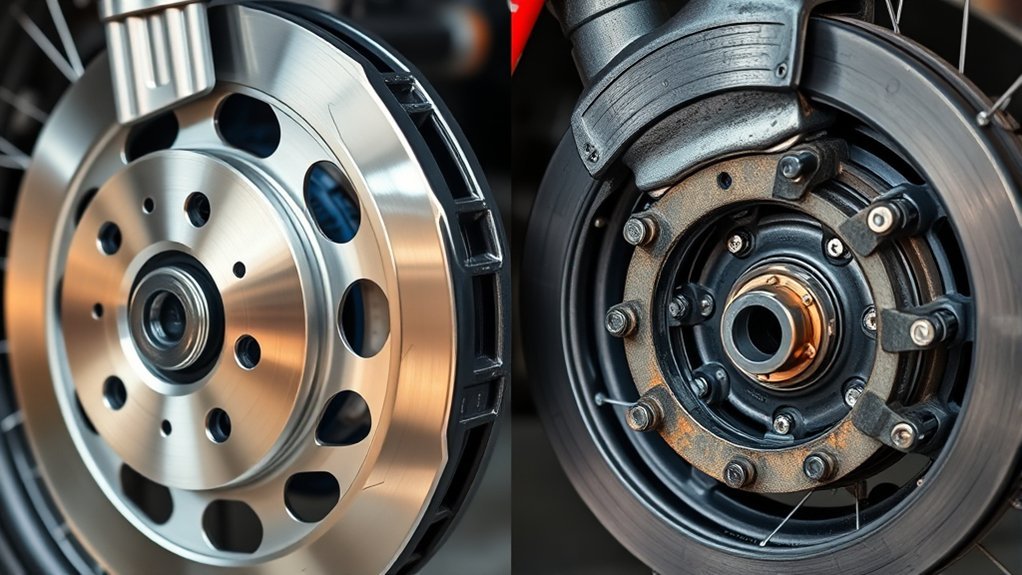
With the advantages of disc brakes established, it’s important to compare their performance directly against drum brakes. Regarding brake technology, disc brakes excel in high-performance and emergency scenarios due to their superior stopping power and effective heat dissipation, which minimizes brake fade. While drum brakes feature a larger friction contact area that can enhance lifespan under normal conditions, they struggle with overheating during aggressive use. In wet conditions, disc brakes maintain effective braking force, as their open design prevents water accumulation, unlike drum brakes that can falter. Maintenance frequency also favors disc brakes, requiring less servicing due to simpler construction. Although drum brakes are more cost-effective for budget vehicles, their performance metrics fall short in safety-critical situations. Ultimately, if you’re seeking reliable stopping power and efficiency, disc brakes are the clear choice over drum brakes.
How to Maintain Your Drum and Disc Brakes
Maintaining your drum and disc brakes is essential for ensuring peak performance and safety. Regular upkeep not only extends the life of your braking system but also enhances your driving experience. Here are key maintenance steps to follow:
- Brake Pad Inspection: Check pads and shoes for wear. Replace them if they’re less than 3mm thick.
- Brake Fluid Maintenance: Monitor fluid levels and quality. Replace it every 1-2 years or as per your manual to sustain hydraulic efficiency.
- Clean Components: Remove dust and debris from disc rotors and drum interiors to prevent uneven wear.
- Bleed the System: Regularly bleed the brake system to eliminate air bubbles, ensuring maximum hydraulic pressure.
Stay alert for any unusual sounds, vibrations, or smells during braking, as these can signal issues requiring immediate action. Prioritizing these tasks can liberate your vehicle from potential brake failures.
Frequently Asked Questions
Why Are Drum Brakes No Longer Used?
Drum brakes are falling out of favor due to their lower efficiency and maintenance challenges. You’ll find disc brakes provide superior performance, heat dissipation, and reliability, making them the preferred choice for modern vehicles.
Conclusion
In the showdown of disc vs. drum brakes, it’s clear that each has its strengths and weaknesses. Think of disc brakes as the speedy cheetah, agile and powerful, while drum brakes resemble the sturdy elephant, reliable yet slower. Your choice hinges on your driving style and needs. Whether you prioritize performance or cost-effectiveness, understanding these systems will empower you to make informed decisions, ensuring your vehicle stops safely and efficiently on every journey.