
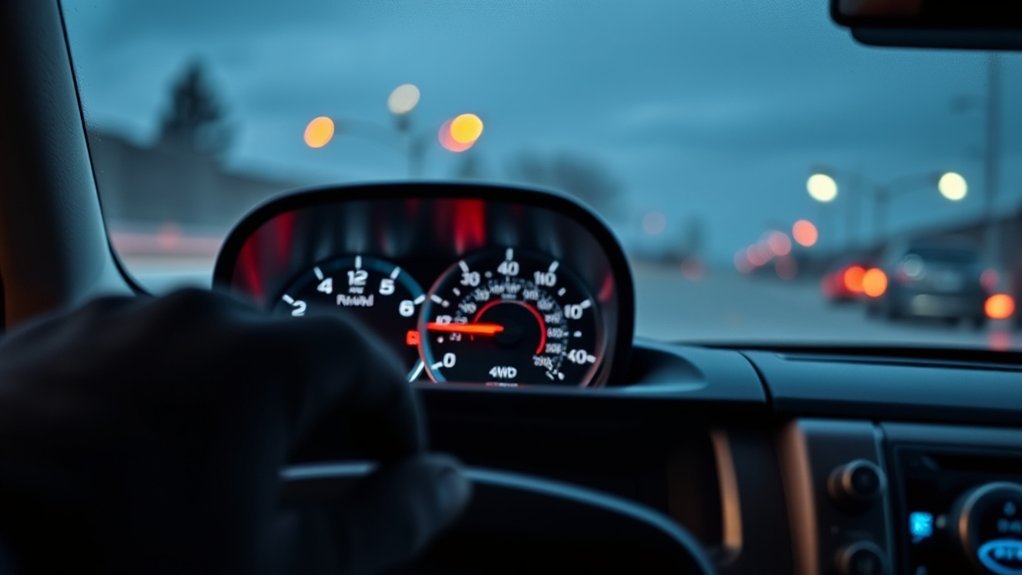
A flashing 4LO light can make your Tundra feel stuck, even when the truck still drives. Start with the safe checks first: stop on level ground, shift to Neutral, select the correct 4WD mode, and wait for the indicator to turn steady. If the light keeps flashing, scan for codes, check wiring and grounds, inspect transfer case fluid, and avoid forcing the system.
Quick Answer
A Toyota Tundra 4LO light usually flashes when the transfer case has not finished shifting or when a sensor, actuator, wiring, or ABS-related fault interrupts the 4WD system. Stop the truck, shift to Neutral, select the mode again, and wait for the indicator to turn steady. If the light keeps flashing, read all codes before you disconnect the battery or clear anything.
Key Takeaways
- Use the correct 4LO shift sequence before you assume a part has failed.
- Do not force the 4WD switch while the wheels spin or slip.
- Scan engine, ABS, chassis, and network codes before clearing faults.
- Check transfer case fluid, wiring, grounds, and connectors for simple causes.
- Visit a mechanic if the light flashes with noises, warning lights, or poor drivability.
What a Flashing 4LO Light Means
A flashing 4LO light usually means the truck has not confirmed a completed low-range shift. The transfer case may still wait for the right gear position, sensor signal, or actuator movement.
The Toyota owner manual says you should stop the vehicle, shift the lever to Neutral, and keep the 4WD control engaged until the 4LO indicator comes on. If the system still cannot shift between 4H and 4L, Toyota advises dealer inspection.
Quick Fix: Safely Reset the Flashing 4LO Light Now

If your Tundra’s 4LO light starts flashing, park on level ground and keep your foot on the brake. Shift the transmission to Neutral, select 4LO or 4Hi as needed, and wait for the indicator to turn steady before you move the shifter again.
If the light still flashes, turn the truck off, wait briefly, restart it, and repeat the correct sequence once. Do not keep cycling the switch many times, because repeated commands can make diagnosis harder.
Warning: Do not operate the 4WD switch while the wheels slip, spin, or bind on dry pavement.
Check the transfer case fluid level and condition if you can do it safely. Low, dirty, or neglected fluid can create drag and poor shift feel, but you should follow the correct fluid spec for your Tundra year.
Verify 4WD Operation and Reproduce the Fault
After the reset steps, test 4WD operation in a safe, open area. Shift through 2Hi, 4Hi, and 4LO only when the truck meets the operating steps in your owner manual.
Write down the exact moment the 4LO indicator flashes. Note the gear, outside temperature, engine state, warning lights, and any unusual noise from the transfer case or front axle.
Repeat the test only after a full stop and a short pause in each mode. Do not use rapid shifts between Park, Drive, and Neutral to force the system.
Read Codes and Test 4WD Components
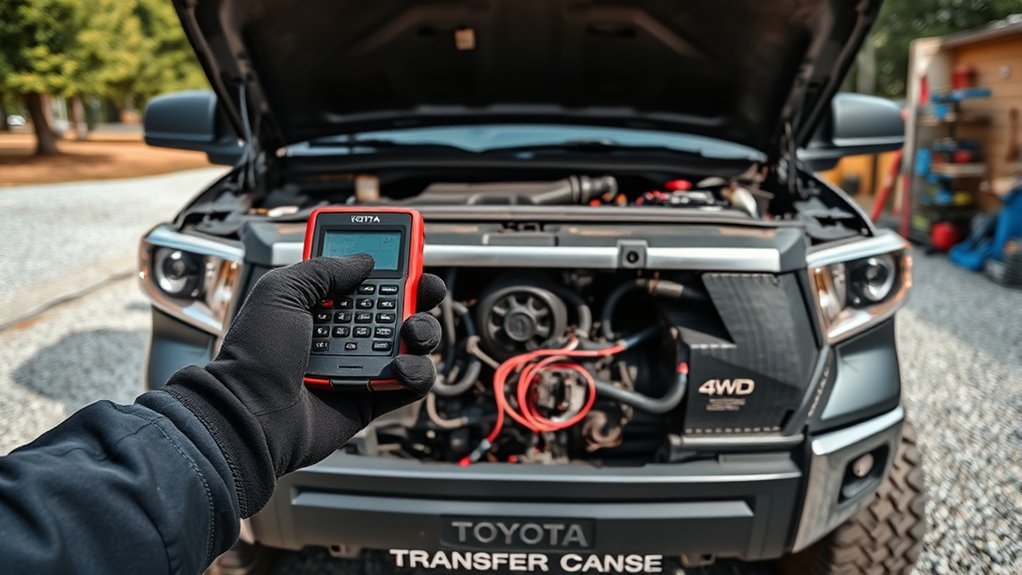
Connect an On-board diagnostics II (OBD-II) scanner that can read more than basic engine codes. You may need access to engine, ABS, chassis, body, and transfer case data, depending on the scanner and model year.
Record stored codes, pending codes, and freeze-frame data before you clear anything. Freeze-frame data can show speed, temperature, load, and other conditions from the moment the system logged a fault.
Next, inspect connector terminals, ground straps, and wiring harnesses at the transfer case, actuator, brake-related sensors, and wheel speed sensors. Look for corrosion, loose pins, broken insulation, mud, or signs of water entry.
If you have a multimeter and service information for your exact truck, test sensor voltage and continuity. If you do not have the correct specs, record the codes and let a qualified technician perform the electrical tests.
Cheap Fixes and Recalibrations You Can Try at Home
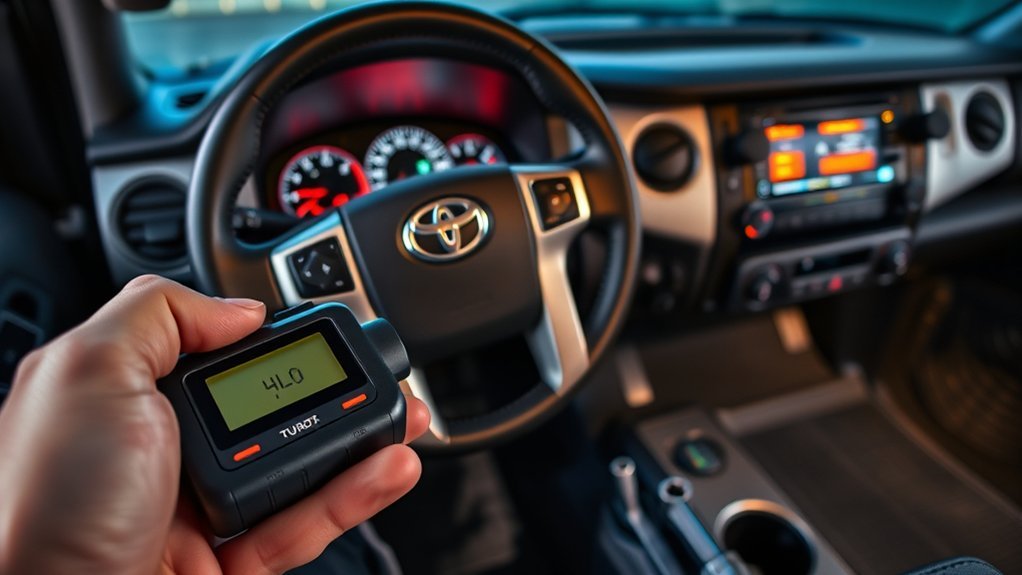
Start with simple checks that do not erase fault data. Make sure the battery has a strong charge, the brake lights work, and the 4WD switch moves cleanly.
Clean visible connector dirt only when the truck sits off and the connector location feels safe to reach. Do not spray random electronics or unplug modules unless you know the correct procedure.
Calibrate 4WD System
Cycle the drivetrain modes with patience. Stop the truck, shift to Neutral, select the next 4WD mode, and pause long enough for the actuator and sensors to confirm the change.
If the light keeps flashing, do not jump straight to a battery disconnect. A battery reset can clear useful diagnostic data, so scan codes first and save the results.
If the system still refuses to complete the shift, stop testing and plan a deeper diagnosis. You may have an actuator, sensor, wiring, module, or transfer case fault.
Inspect Brake Stroke Sensor
The brake pedal switch or brake stroke sensor may affect 4WD logic on some Toyota systems, but you should confirm that with codes and service data. Treat it as one possible cause, not the only cause.
Check the brake pedal area for loose connectors, damaged wiring, or debris that blocks normal pedal travel. If codes point to a brake-related sensor, follow the factory test procedure before you replace parts.
Why the 4LO Light Flashes: Sensors, Temperature, Water, and Electronics
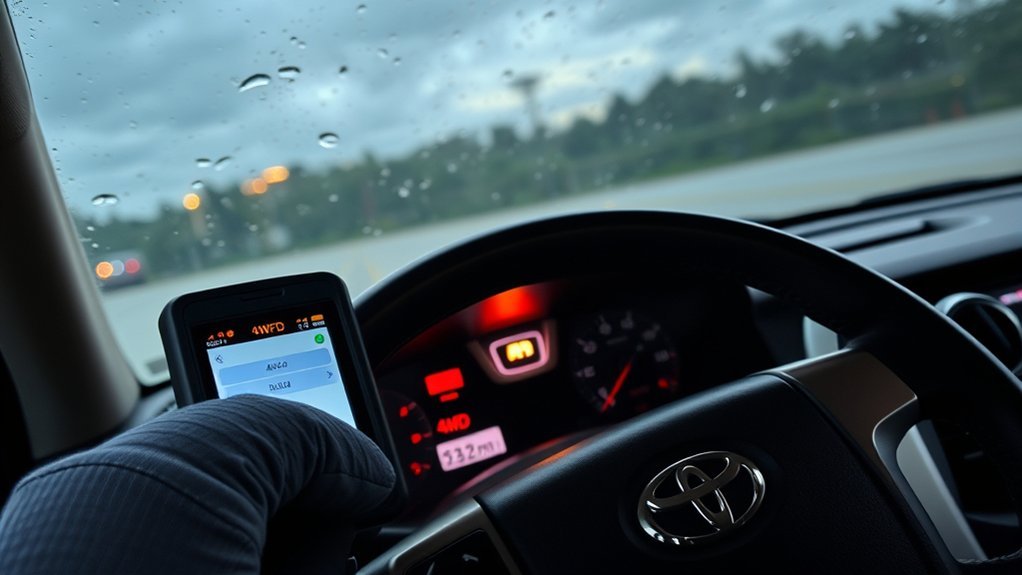
A flashing 4LO light can come from an incomplete shift, a transfer case actuator problem, a weak battery, a bad ground, or a sensor signal that does not match the command. ABS and wheel speed sensor faults can also trigger related traction and drivetrain warnings.
Cold weather can expose weak electrical connections because metal contracts and resistance can change. Water can also enter damaged connectors and create corrosion or short circuits.
A flashing 4LO light means the truck has not confirmed the low-range state, so you should diagnose the system before you keep driving hard.
- Check if the fault appears after rain, washing, mud, or water crossings.
- Check if the fault appears only during cold starts.
- Check if ABS, VSC, traction, or check engine lights appear at the same time.
- Check if the transfer case makes grinding, clicking, or repeated actuator noises.
When to Take Your Tundra to a Mechanic
Take your Tundra to a mechanic if the 4LO light keeps flashing after the safe shift sequence, or if you notice poor drivability, warning lights, grinding, binding, or harsh transfer case noises. Stop driving hard until you know what failed.
Tell the mechanic when the light flashes, which modes you tried, and which warning lights came on. Share any code numbers, freeze-frame data, recent water exposure, low battery symptoms, or 4WD repairs.
Ask for a written diagnostic result before you approve parts. The shop should inspect the transfer case operation, actuator response, wiring, grounds, brake-related inputs, wheel speed data, and fluid condition.
Frequently Asked Questions
Why is my 4LO and ABS light flashing?
Your 4LO and ABS lights may flash together when the truck logs a fault in the drivetrain, ABS, wheel speed, brake input, or network system. Scan all available modules before you replace parts.
Can I drive with the 4LO light flashing?
You should avoid hard driving, towing, off-road use, and high-speed driving while the light flashes. Drive only as needed to reach a safe place or repair shop if the truck still moves normally.
Will disconnecting the battery fix a flashing 4LO light?
Disconnecting the battery may clear a temporary warning, but it can also erase useful code data. Scan and save codes first, then follow the repair steps for the fault that returns.
Can low transfer case fluid cause a flashing 4LO light?
Low or dirty transfer case fluid can make 4WD engagement harder and may add mechanical drag. It may not be the only cause, so check fluid condition along with codes, wiring, and actuator response.
What should I tell the mechanic about a flashing 4LO light?
Tell the mechanic the truck year, engine, mileage, exact warning lights, code numbers, and when the problem appears. Mention cold starts, water exposure, recent repairs, and any trouble shifting between 2Hi, 4Hi, and 4LO.
Safety Disclaimer: This article is for informational purposes only and does not replace professional vehicle diagnosis or repair advice. Always consult a qualified mechanic before you drive, tow, or repair a vehicle with unresolved drivetrain or warning light problems.
Conclusion
A flashing 4LO light needs a calm, step-by-step diagnosis, not guesswork. Start with the correct shift sequence, then scan codes and inspect the simple electrical and fluid checks.
If the light returns or other warning lights appear, save the fault data and take the truck to a qualified mechanic. A careful diagnosis can help you avoid wasted parts and keep your Tundra ready for safe 4WD use.
References
- Toyota 2012 Tundra Owner’s Manual — Toyota via ManualsLib, 2012
- OBD-II Code List — Kelley Blue Book
- Your Guide to Understanding OBD-II Codes — Kelley Blue Book

[…] Tundra Trailer Lights Not Working: Fuse, Ground, and Connector […]