
Use 4-Low, also shown as 4L or 4LO, when you need slow, controlled torque rather than speed. Typical uses include steep off-road climbs and descents, rock crawling, deep mud or snow, soft sand, slippery boat ramps, and low-speed recovery work. In a traditional two-speed transfer case, low range reduces wheel speed and multiplies torque. It can help you meter power and limit wheelspin when you use gentle inputs, but it does not create extra tire grip. Avoid locked part-time 4WD on hard, dry pavement unless your owner’s manual specifically allows it.
Last updated: July 15, 2026 · Reviewed against current manufacturer, land-access, and vehicle-recovery guidance.
Quick Answer
Use 4-Low for slow, controlled work such as steep off-road climbs and descents, rock crawling, deep mud or snow, soft sand, slippery boat ramps, low-speed towing on loose grades, and recovery. Select it before the obstacle and shift only as your owner’s manual directs. Many systems require the transmission in Neutral at a stop or very slow roll. Do not treat 4-Low as a normal-road traction mode.
Key Takeaways
- 4-Low multiplies torque and control, not tire grip. It helps you apply power slowly, but tires, terrain, weight transfer, and throttle input still decide traction.
- Use it before the obstacle. Shift into 4-Low before a steep hill, rock ledge, mud hole, soft sand climb, or recovery pull, not after you are already spinning.
- Keep speeds low. Jeep caps low range at 25 mph (40 km/h), but many obstacles require walking pace and your vehicle may specify a lower limit.
- Avoid hard dry pavement in locked 4WD. Many part-time systems lock the front and rear driveline together, which can cause crow hop, tire scrub, binding, and component wear on high-grip surfaces.
- Your manual wins. Shift procedures vary by transfer case, transmission, drivetrain, model year, and terrain mode.
At a Glance
| Best For | Steep climbs, descents, rock crawling, deep mud, soft sand, deep snow, slow towing, recovery, and controlled crawling |
| Avoid On | Highway speeds, normal commuting, and hard dry pavement when 4-Low locks the front and rear driveline; follow the exact limits in your owner’s manual |
| Typical Speed | Usually walking pace. Jeep caps low range at 25 mph (40 km/h) and describes 1–3 mph as ideal for rock crawling; your manual may be stricter. |
| Helpful Gear | Owner’s manual, tire gauge, air compressor, gloves, shovel, traction boards, rated recovery gear, and a spotter when needed |
Start With These 4-Low Safety Checks
Before you select low range 4WD, confirm three things: your vehicle actually has a low-range mode, the surface permits its use, and you know the correct shift procedure. Dashboard labels are not universal. A mechanical 4L setting in a two-speed transfer case is different from an AWD terrain mode or a software-managed crawl setting.
Check the owner’s manual before the trail, not while the vehicle is already spinning or loaded on a hill. Practice the shift on flat, loose ground and verify that the 4L or 4LO indicator completes its change.
Note: Vehicle systems vary. A Jeep Wrangler, Ford Bronco, Toyota Tacoma, Land Cruiser, older manual-transfer-case truck, and modern full-time 4WD SUV may all use different shift rules. Treat this as general guidance and your owner’s manual as the final authority.
The 10-Second 4-Low Decision Rule
- Surface: Are you on loose, soft, steep, or uneven ground rather than normal high-grip pavement?
- Need: Do you need slower wheel speed, stronger engine braking, or more controlled pulling force than 4H provides?
- Procedure: Do you know the exact shift steps and speed limit for your vehicle?
If all three answers are yes, 4-Low is likely the correct mode. If you mainly need momentum at moderate speed, use 4H or 4A when your vehicle and surface allow it.
Before You Use 4-Low: Know Your 4WD System
Before shifting into 4-Low, know what kind of drivetrain you have. The same label on the dashboard can behave differently from one vehicle to another.
- Part-time 4WD: Often has 2H, 4H, and 4L. In locked 4H or 4L, it should usually be used on loose or slippery surfaces, not dry pavement.
- Full-time 4WD: May use a center differential or controlled clutch that allows front and rear axles to rotate at different speeds in some modes. Low range may still lock that differential, so pavement rules depend on the selected mode.
- 4A or Auto 4WD: Designed for changing traction on mixed surfaces in some vehicles. It is not the same as locked 4H or 4L.
- AWD: Many AWD vehicles do not have a true mechanical low-range gear set. Some use software, motor control, or terrain modes instead.
- Hybrid and electric 4x4s: Some retain mechanical low range, while others create low-speed control through motors, transmission gearing, brakes, or terrain software. Check the exact driveline design instead of relying on the badge.
Jeep’s 4×4 guidance explains that part-time 4WD locks the front and rear driveline together and can bind on dry pavement, while full-time systems use a center differential or clutch to permit speed differences in their normal full-time mode. The correct choice therefore depends on both the system and the selected setting.
What Is 4-Low and How Does It Change Torque and Speed?
In a traditional 4×4, 4-Low engages a reduction gear set in a two-speed transfer case. It lowers driveshaft speed and multiplies torque before power reaches the axles. The wheels therefore turn more slowly for a given engine speed, while the drivetrain gains leverage.
Some modern vehicles use the 4-Low label for a combined transmission, axle-ratio, motor-control, or brake-control strategy rather than a separate reduction gear. Either way, the purpose is similar: low-speed control, smooth torque delivery, and stronger speed control on technical terrain. Follow the vehicle-specific description in your manual.
Gear Ratio Explained
A transfer case with low range works like dropping a bicycle into an easier climbing gear. You move slower, but each pedal stroke has more leverage. In a 4×4, low range does the same thing by using a lower gear ratio between the transmission and driveshafts.
This gives you better control over obstacles because small throttle movements create steady wheel movement instead of sudden surges. It also helps keep the engine in a useful torque range without forcing you to ride the clutch, overwork the brakes, or spin the tires.
Torque Multiplication Effect
The torque multiplication effect is the main reason 4-Low exists. It helps with:
- Steep climbs: More wheel torque helps the vehicle climb without excessive throttle.
- Controlled descents: Low gearing improves engine braking and reduces brake overheating.
- Rock crawling: Slow wheel speed lets you place tires carefully.
- Recovery work: Smooth pulling power is safer than sudden wheelspin.
- Soft surfaces: Gentle torque helps avoid digging into mud, sand, or snow.
4-Low gives you more control over power. It does not magically create tire grip. Tires, tire pressure, surface condition, weight transfer, and throttle discipline still decide whether the vehicle hooks up or digs in.
Speed vs. Power
4-Low trades wheel speed for leverage. That is why it works at crawl speed but is unsuitable for normal road travel. Jeep’s current 4×4 guidance says low range should not exceed 25 mph (40 km/h), should be avoided for normal driving on hard surfaces, and is intended for extreme off-road situations that need more torque at low speed. Treat that as Jeep-specific guidance; your owner’s manual may set a lower limit or a different shift procedure.
When to Use 4-Low vs. 4-High: Clear Decision Rules
Choose the mode by answering one question: do you need momentum, or do you need controlled leverage? Use 4H or 4A for moderate speed on an approved loose or slippery surface. Use 4L when you need to crawl, climb, descend, or pull slowly. The table below describes common selectable systems; your vehicle may not offer every mode.
| Mode | Use It For | Avoid It For |
|---|---|---|
| 2H | Normal dry pavement and commuting in vehicles that offer 2H | Deep mud, snow drifts, steep loose climbs |
| 4A / Auto 4WD | Mixed pavement, changing traction, wet or patchy conditions if your vehicle has this mode | Assuming every 4×4 has it; many part-time systems do not |
| 4H | Snow, gravel, dirt roads, shallow mud, loose surfaces where you need traction and some speed | Dry pavement when 4H locks the driveline; technical crawling that needs lower gearing |
| 4L | Rock crawling, steep grades, deep mud, soft sand, controlled descents, recovery, slow heavy pulling | High speeds and normal road driving; dry pavement when 4L locks the driveline |
[Products Worth Considering]
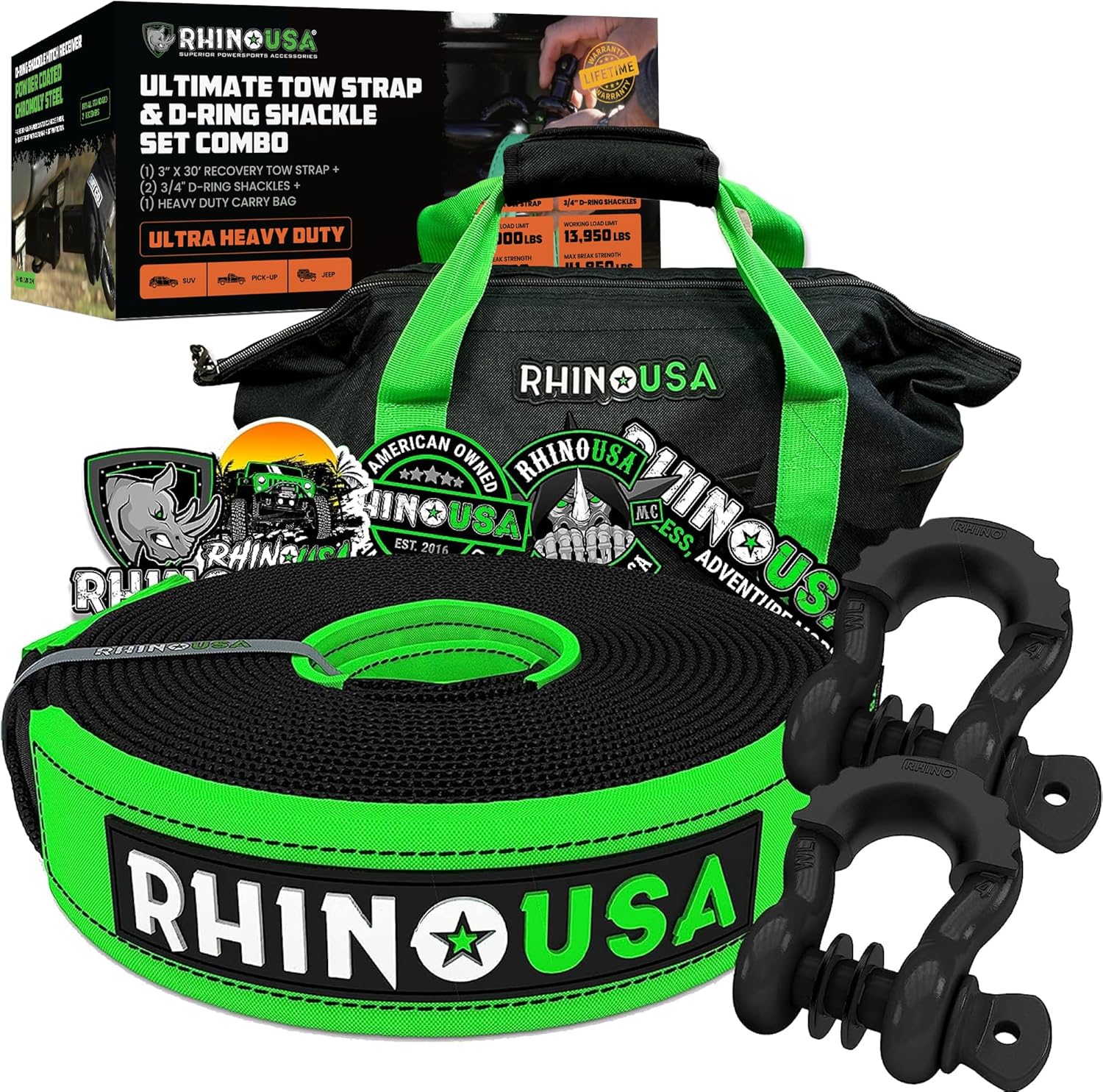
The Rhino USA Recovery Combo Kit is a compact off-road recovery solution designed to help drivers handle basic trail emergencies with confidence. It includes a static tow strap and anchor points with D-ring shackles, giving you essential gear for vehicle recovery when you need it most. Built for peace of mind on the trail, this kit is ideal for off-road enthusiasts looking for a dependable starter recovery setup.

These off-road traction boards are designed to help vehicles recover from mud, sand, and snow with reliable grip and easier ramp-up. Their double-sided diamond construction, cross-shaped teeth, and contoured ramps improve traction while the durable polypropylene build stays flexible in harsh conditions. Convenient mounting points, ergonomic handles, and a visible leash make them practical to carry, store, and retrieve when recovery is needed.

These X-BULL recovery traction tracks help drivers get unstuck from sand, snow, mud, or ice with a stable U-shaped elastic design and a wavy ramp that makes tire entry easier. Built from reinforced nylon, they are flexible, impact-resistant, and designed to perform in extreme temperatures while providing reliable emergency traction for a wide range of vehicles.
Quick 4-Low Decision Checklist
Use 4-Low when at least one of these is true:
- You need to move slower than 4H comfortably allows.
- You need more engine braking on a descent.
- You are climbing a steep, loose grade and want steady throttle instead of wheelspin.
- You are crawling over rocks, ledges, deep ruts, or uneven ground.
- You are pulling a trailer, boat, or stuck vehicle at very low speed on a loose or slippery surface.
- You are already off pavement and need controlled power more than momentum.
Stay in 4H or 4A when you need moderate road or trail speed on loose surfaces and do not need low gearing. Stay in 2H on normal dry pavement unless your vehicle manual says another mode is allowed.
When to Use 4-High
Use 4-High when the surface is loose or slippery but you still need more wheel speed than 4-Low allows. Good examples include gravel roads, snowy roads, wet dirt, light mud, shallow sand, and rough tracks where steady momentum is more important than crawling torque.
For many part-time 4WD vehicles, 4H is still not meant for dry, high-traction pavement because the system can bind. Full-time 4WD and 4A systems are different, so check your manual before using any locked 4WD mode on pavement.
When to Use 4-Low
Use 4-Low when you need maximum low-speed control. The best times to select it are:
- Before steep climbs where you need smooth torque without a fast approach.
- Before steep descents where engine braking can help control speed.
- On rocks or ledges where tire placement matters.
- In deep mud or snow when careful throttle is needed to avoid digging in.
- In soft sand when 4H cannot maintain controlled momentum or the vehicle is heavily loaded.
- On slippery boat ramps where slow, steady pulling power is safer than wheelspin.
- During recovery when you need a slow, smooth pull with rated recovery gear.
Warning: Do not use 4-Low as a way to drive faster through difficult terrain. Low range is for controlled force, not speed. High-speed 4-Low driving can overheat or damage driveline components.
How to Engage and Disengage 4-Low: Step-by-Step
The exact procedure depends on the transfer case and transmission. Some systems require a complete stop, while others shift best during a very slow roll. Jeep’s guidance, for example, prefers 2–3 mph (3–5 km/h) or slower with an automatic transmission in Neutral, or the clutch depressed in a manual. Do not apply that procedure to every vehicle; use the steps printed in your owner’s manual.
[Products Worth Considering]
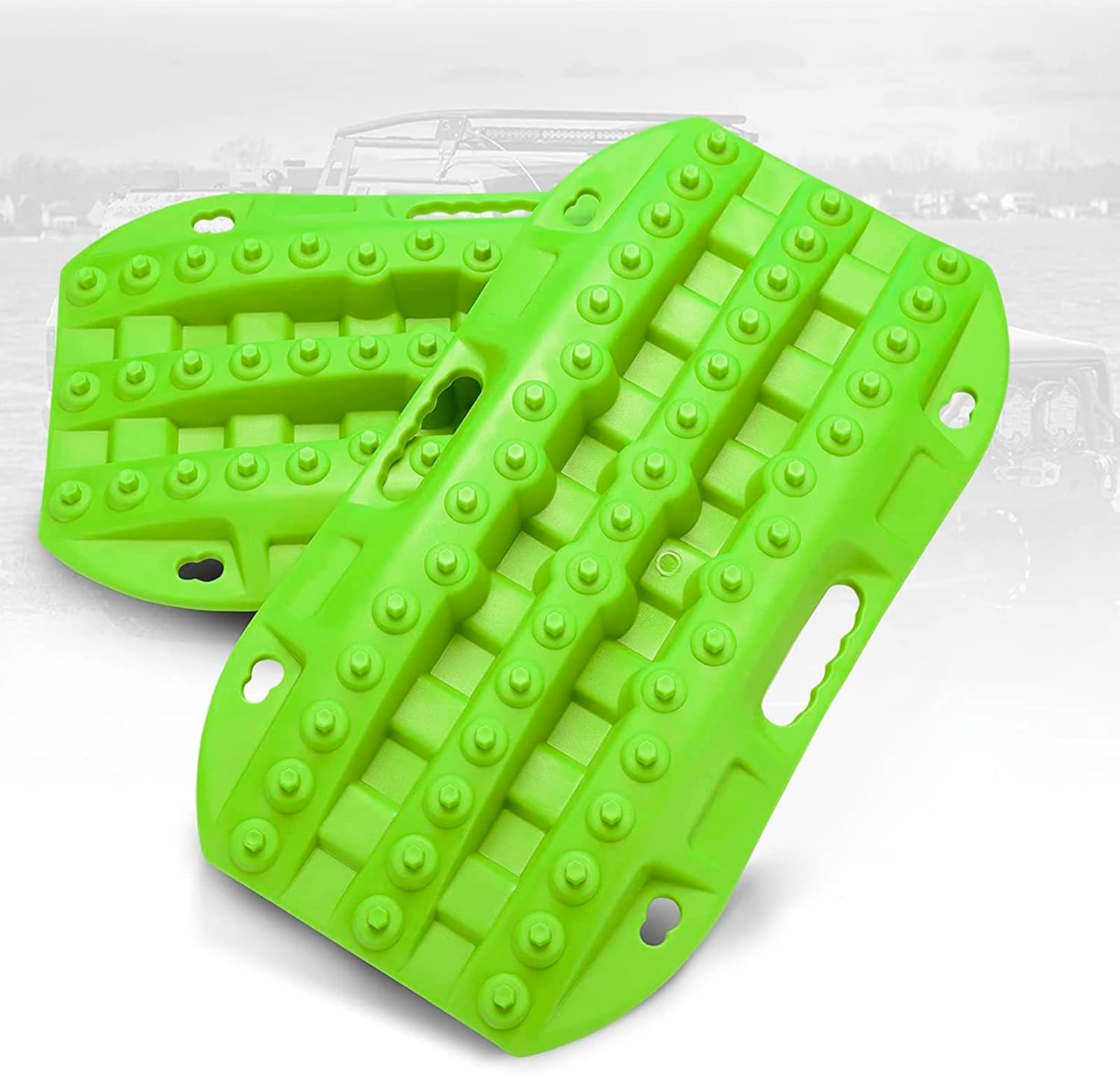
These short recovery traction boards are designed to help ATVs, UTVs, and other off-road vehicles regain grip in mud, sand, and snow. Built with strengthened teeth and a durable polypropylene construction, they provide reliable traction, easy handling, and year-round performance in tough conditions. Their nested, space-saving design and integrated shovels make them practical for carrying and using on remote adventures.

This recovery tow strap kit is built for dependable vehicle recovery and towing in demanding conditions. The heavy-duty strap features fortified reinforced loops and high break strength for secure pulls, while the included D-ring shackles add versatility and reliable connection options. Designed for trucks, SUVs, ATVs, UTVs, and boats, it also includes protective isolators and a storage bag for safer, quieter transport and easy organization.

BUNKER INDUST off-road traction boards help vehicles regain grip in mud, sand, and snow with a double-sided diamond array and cross-shaped teeth for improved bite and stability. Built from upgraded automotive-grade polypropylene, they resist UV damage, cold-weather brittleness, and wheel-spin heat while remaining flexible enough to handle demanding recovery situations. Contoured ramps, ergonomic handles, and multiple mounting points make them practical to use, store, and retrieve when adventure turns into recovery.
Before You Shift
- Read the transfer-case section of your owner’s manual.
- Slow down before the obstacle, not halfway through it.
- Keep the wheels as straight as practical.
- Stop wheelspin before shifting.
- Shift the transmission into Neutral if your manual requires it.
- Do not force a stiff lever; roll slightly if the gears are not aligned and your manual allows it.
General 4-Low Engagement Routine
- Slow to a stop or crawl. Use the speed your owner’s manual specifies.
- Shift the transmission to Neutral. Manual-transmission vehicles may require the clutch fully depressed.
- Select 4L. Use the lever, dial, or button as designed.
- Wait for confirmation. Look for the 4L/4LO indicator and listen for abnormal grinding.
- Select a low gear. First gear, low manual mode, or a dedicated off-road mode gives the best control.
- Drive smoothly. Use gentle throttle and avoid sharp steering on high-traction surfaces.
General 4-Low Disengagement Routine
- Leave the obstacle first. Do not switch modes under heavy load or wheelspin.
- Stop or crawl slowly. Follow your manual’s shift speed.
- Shift to Neutral. Depress the clutch if required.
- Select 4H, 4A, or 2H. Choose the correct mode for the surface ahead.
- Confirm the indicator changes. Do not return to dry pavement in locked 4L.
Pro Tip: Practice shifting into and out of 4-Low on a flat dirt or gravel area before you need it on a hill or trail. You will learn the feel of your transfer case without pressure.
What If 4-Low Will Not Engage or Disengage?
If the 4L light flashes, the lever feels stuck, or the transfer case will not shift, do not force it. Most problems come from speed, gear position, drivetrain load, or gear alignment.
- Stop wheelspin and unload the drivetrain. Ease off the throttle and stop pulling hard.
- Return to the required shift speed. Many systems need a stop or very slow crawl.
- Use Neutral or clutch as directed. Automatic and manual transmissions often have different steps.
- Roll a few feet straight ahead or back. If your manual allows it, this can help gear teeth align.
- Avoid tight turns on high-grip ground. Binding can make the shift feel stuck.
- Stop and inspect if warning lights stay on. A transfer-case, actuator, or sensor issue may need service.
Tire Pressure, Speeds, and Gear Choices for Common Terrains
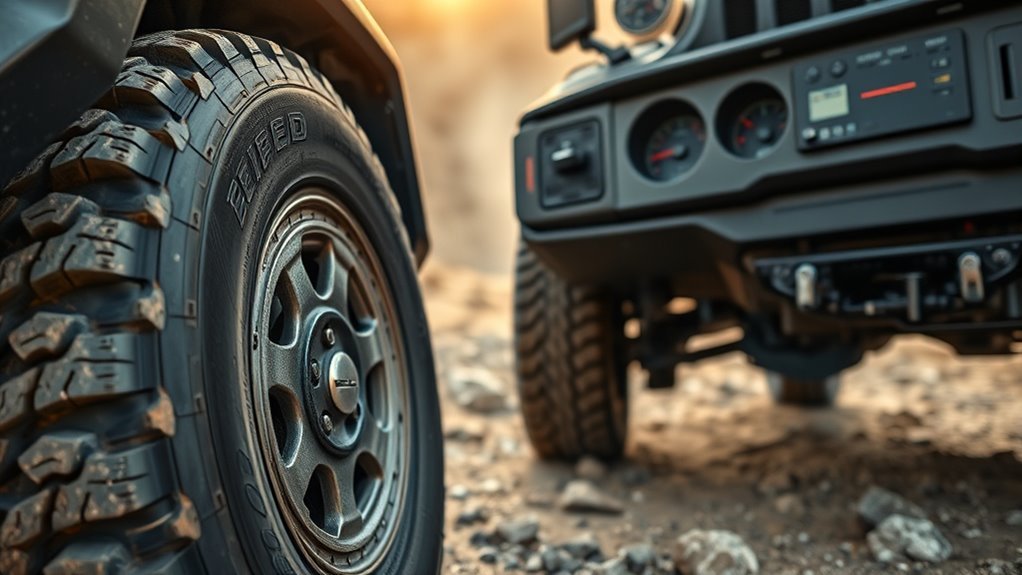
Tire pressure and gear choice can matter as much as 4-Low itself. Lower tire pressure can enlarge the tire’s contact patch and help the tire conform to terrain, but going too low can unseat a bead, damage a sidewall, or make steering vague. Air back up before highway travel.
| Terrain | 4WD Choice | Driving Approach | Tire Pressure Note |
|---|---|---|---|
| Rock crawling | 4-Low | Crawl slowly, use a spotter, avoid throttle spikes | Jeep suggests dropping 3–5 PSI for rocks, then returning to normal pressure afterward |
| Soft sand | Often 4H first; 4-Low if heavily loaded, stuck, or climbing | Maintain smooth momentum and make wide turns | Jeep suggests dropping 10–12 PSI below normal on conventional tires for sand |
| Deep mud | 4-Low for deep ruts or recovery; 4H for moderate mud with momentum | Avoid full-throttle spinning; keep tires cleaning without digging down | Air down cautiously; mud can hide rocks and sidewall hazards |
| Steep climb | 4-Low before the grade | Pick the line first, climb steadily, avoid mid-hill shifts | Use enough pressure to protect the tire under load |
| Steep descent | 4-Low | Let engine braking help; avoid riding the brake pedal | Do not over-air-down if side slopes or sharp rocks are present |
| Snow and ice | 4H for speed; 4-Low for deep snow, pulling, or very slow control | Smooth inputs; avoid sudden throttle and steering | Do not assume airing down is always safer on icy roads |
Note: The Jeep pressure examples above are brand guidance, not universal targets. Airing down depends on tire construction, wheel size, vehicle weight, load, speed, and terrain. Use conservative pressure changes unless you know your tire and wheel setup, and always air back up before highway speeds.
[Products Worth Considering]

The ETENWOLF T300 digital tire pressure gauge delivers accurate readings across a wide pressure range, making it ideal for cars, trucks, and other vehicles. It is built to perform reliably in extreme temperatures and features replaceable AAA batteries plus an LED light for easier checks in low-light conditions. Designed for durability, it can withstand tough use while maintaining dependable performance.

Built for towing, winching, and off-road recovery, this D-ring shackle set delivers dependable strength in a compact, easy-to-use design. The drop-forged steel construction and protective coated finish help provide reliable performance and resistance to rust in demanding outdoor conditions. Compatible with Jeeps, ATVs, UTVs, trucks, trailers, and SUVs, it is a practical recovery accessory for everyday trail and rescue use.
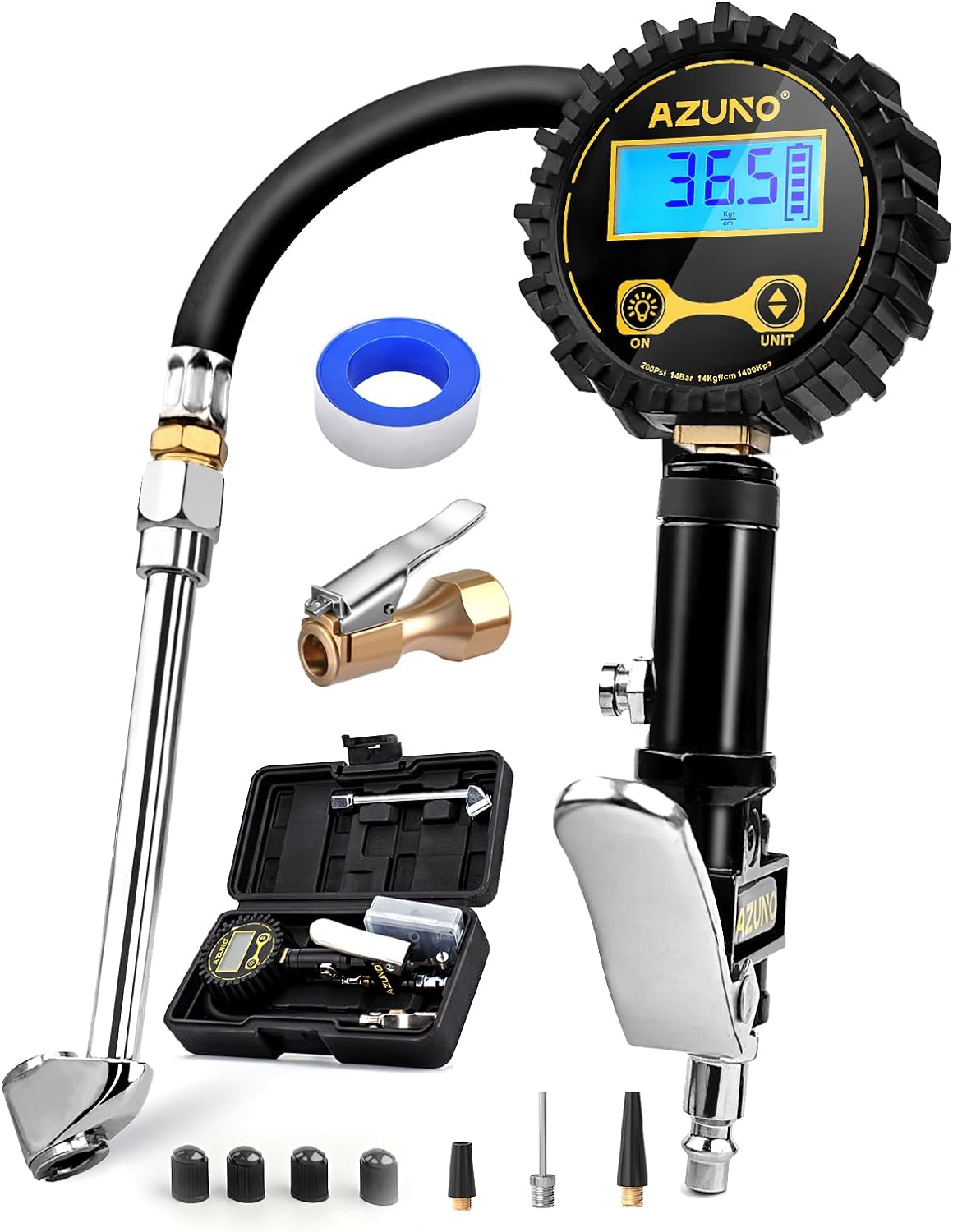
This digital tire inflator delivers accurate, easy-to-read pressure measurements with a bright backlit LCD and precise 0.1 resolution for confident inflation. Designed for single-handed use, it makes it simple to inflate or deflate tires while staying organized in the included portable carrying box. Built for a wide range of vehicles, it is a practical air compressor accessory for cars, trucks, SUVs, motorcycles, and more.
Real Scenarios: Safety, Hill Climbs, and Recovery With 4-Low
4-Low is most useful when the situation demands control instead of speed. Plan the move before you touch the obstacle. Walk the line if safe, identify hazards, choose the correct gear, and engage 4-Low before the vehicle is under stress.
Steep Hill Climbs
For steep, loose climbs, shift into 4-Low before the grade. Use a gear that lets the engine pull without lugging or over-revving. Keep your steering straight, maintain steady throttle, and avoid sudden lifts or stabs of power. If you lose momentum, do not keep spinning. Stop, reassess, and back down safely if needed.
Controlled Descents
On steep descents, 4-Low gives stronger engine braking. Select a low gear before going over the crest. Let the drivetrain help hold speed, then use the brakes lightly and deliberately as needed. Riding the brakes can cause heat and fade, especially on long downhill sections.
Boat Ramps and Slippery Launches
A slick boat ramp is a common place where 4-Low helps. It gives slow pulling power without aggressive throttle. Use it only if the surface and vehicle manual allow it, keep the trailer straight, avoid sudden throttle, and shift back out of 4-Low before returning to normal pavement driving.
Recovery Work
For recoveries, low range can make vehicle movement smoother and easier to control. Use only properly mounted, rated recovery points and equipment rated for the recovery method. Keep spectators away from straps, shackles, and winch lines. ARB’s recovery guidance stresses serviceable rated gear, clear communication, and a safe exclusion zone.
Start with the lowest-risk method: stop wheelspin, clear material from the tires and underbody, straighten the wheels, and use traction boards or a shovel. If a pull is necessary, match the gear to the vehicles, load, and recovery type. Call a professional recovery service when you lack the correct points, equipment, training, or a safe recovery path.
Warning: Never attach a recovery strap to a tow ball or ordinary tie-down point. ARB warns that these parts are not designed for recovery loads and can detach as dangerous projectiles. Use only a properly mounted, rated recovery point.
When 4-Low Will Harm Your Vehicle: Common Mistakes to Avoid
Low range is a precision tool. It can protect the drivetrain in hard off-road work, but it can also create stress when used in the wrong setting.
Mistake 1: Using 4-Low on Dry Pavement
Part-time 4WD systems have no center differential. When locked in 4H or 4L, the front and rear driveline cannot freely rotate at different speeds during turns. On loose dirt, the tires can slip enough to release that stress. On dry pavement, the stress can build as driveline bind, tire scrub, crow hop, noise, and component wear.
Mistake 2: Driving Too Fast in 4-Low
4-Low is not a shortcut for more traction at road speed. It multiplies torque and reduces speed. High-speed use can create excess heat, harsh gear loading, and unnecessary wear.
Mistake 3: Shifting Under Load
Do not shift into low range while the tires are spinning, while climbing under heavy throttle, or while the drivetrain is bound. Slow down, unload the drivetrain, shift as directed, then proceed.
Mistake 4: Using Low Range to Hide Poor Line Choice
4-Low helps you control power, but it cannot fix bad tire placement, unsafe side angles, insufficient ground clearance, or poor recovery planning. If the line looks unsafe, choose another route.
Mistake 5: Forgetting to Shift Back Out
After the trail, ramp, or obstacle, shift out of 4-Low before normal driving. Confirm the indicator is off or the correct mode is selected before returning to pavement.
4-Low System Checks and Maintenance Before Off-Road Trips
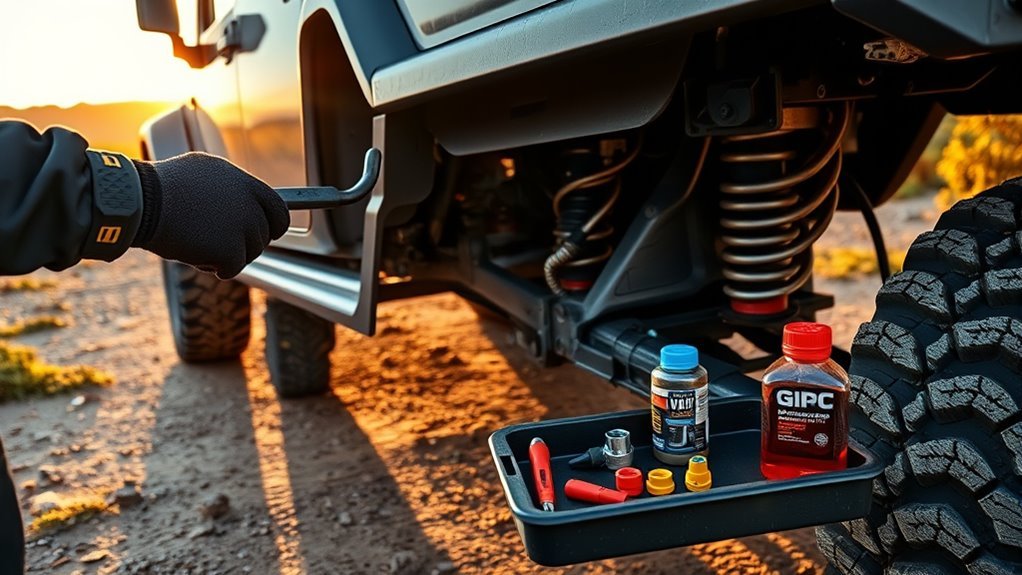
A reliable 4WD system starts before the trail. Off-road vibration, water, sand, and mud can expose weak parts quickly. Add these checks to your pre-trip routine.
- Test 4-Low engagement. Shift in and out on a safe loose surface before you reach the trail.
- Check transfer case and differential fluids. Look for leaks, low fluid, burnt smell, or water contamination.
- Inspect driveshafts and U-joints. Watch for play, torn boots, dents, loose hardware, or clunks.
- Check tires. Inspect tread, sidewalls, valve stems, lug nuts, and spare tire pressure.
- Bring an air system. If you air down, you need a way to air back up before highway speeds.
- Pack recovery gear. Include traction boards, gloves, a shovel, rated soft shackles, a rated strap, and a first-aid kit.
- Plan legal access. The U.S. Forest Service tells drivers to travel only on off-highway-vehicle designated routes and to get a Motor Vehicle Use Map for the specific forest. Tread Lightly! also advises staying on designated roads, trails, and areas.
Post-Trip Checks After Mud, Sand, Water, or Recovery
After the trail, do not just shift back to 2H and forget the vehicle. Mud, sand, and water can hide damage or accelerate wear.
- Rinse mud and sand from brakes, wheels, skid plates, and suspension parts.
- Check for new leaks around the transfer case, differentials, axle seals, and driveshafts.
- Inspect tires for cuts, sidewall bubbles, missing chunks, or damaged valve stems.
- Re-torque lug nuts if your vehicle or wheel manufacturer recommends it after hard off-road use.
- Listen for new clunks, vibration, grinding, or binding during the drive home.
- If you crossed deep water, check the owner’s manual for fluid inspection or service intervals.
Tips and Troubleshooting to Get Unstuck With 4-Low
If you are stuck, stop spinning first. Spinning tires usually dig deeper, polish rocks, pack mud into tread, or bury the frame. Take a breath, step out safely, and inspect what is holding the vehicle.
Unstuck Checklist
- Stop wheelspin. Continuing to spin often makes the recovery harder.
- Clear the tires and underbody. Remove packed mud, snow, sand, or rocks from around the tires and frame.
- Engage 4-Low. Shift according to your manual before applying recovery power.
- Straighten the wheels. Straight tires roll out more easily than turned tires.
- Use gentle throttle. Let low-range torque work; do not shock-load the drivetrain.
- Improve traction. Use purpose-built traction boards or another approved traction aid. Consider a small tire-pressure reduction only when your tire, wheel, load, and terrain make it safe.
- Use a spotter. Clear hand signals prevent confusion and damage.
- Winch or strap safely. Follow the equipment instructions, use rated gear and recovery points, and keep bystanders outside the recovery area.
Note: Lockers, traction control, crawl control, hill descent control, and terrain modes can help, but they do not replace judgment. Use the lowest-risk recovery method first.
Frequently Asked Questions
Can 4-Low be used while towing on steep grades?
Yes, but only in the right setting. 4-Low can help with slow towing on loose, steep, or slippery grades because it gives smoother pulling power and stronger engine braking. Do not use it for normal-speed towing on dry pavement. Follow your towing limits, trailer-brake setup, and owner’s manual.
Will lockers replace the need for 4-Low?
No. Lockers help both wheels on an axle turn together for traction, while 4-Low changes gearing for torque and control. They solve different problems. On technical terrain, lockers and 4-Low often work best together when used correctly.
Can I use 4-Low on dry pavement?
Usually not when 4-Low locks the front and rear driveline together. On high-grip pavement, the axles need to rotate at different speeds during turns, so a locked part-time system can bind, scrub tires, and stress driveline parts. Some full-time systems have different rules. Use the exact pavement guidance in your owner’s manual.
Can electric or hybrid 4x4s use traditional 4-Low?
Some can, and some cannot. Certain hybrid 4x4s retain a two-speed transfer case with low range, while many EVs rely on electric motor control, drive modes, and torque management instead of a traditional mechanical 4-Low gear. Check the exact vehicle’s driveline design.
Can I shift into 4-Low while the vehicle is moving?
Only if your vehicle’s instructions permit it. Jeep recommends a very slow roll of 2–3 mph (3–5 km/h) or less with an automatic transmission in Neutral, or the clutch depressed in a manual. Other systems require a complete stop. Never shift while the tires are spinning or the drivetrain is under heavy load.
How fast can you drive in 4-Low?
Treat 4-Low as a low-speed crawl mode. Jeep’s 4×4 guidance says not to exceed 25 mph (40 km/h) in low range, and many situations require far less speed than that. Always follow your owner’s manual and the terrain.
Can I use 4-Low in snow?
Yes, when the snow is deep, the grade is steep, you are pulling a load, or you need very slow control. For normal snowy roads where you need more speed, 4H or 4A may be better if your vehicle supports it. Avoid locked 4WD on dry or high-traction pavement patches.
Do all 4×4 vehicles have 4-Low?
No. Traditional trucks and trail-focused SUVs often have a two-speed transfer case with 4L, but many AWD crossovers and some modern electric vehicles do not. They may use drive modes, traction control, or electric motor control instead of a mechanical low-range gear.
What if the 4L light keeps flashing?
A flashing 4L light often means the shift has not completed. Stop or crawl at the required speed, shift to Neutral or depress the clutch as your manual directs, keep the wheels straight, and try again without forcing the selector. If the light continues flashing or warning messages appear, stop using the system and have it inspected.
Should I turn off traction control in 4-Low?
It depends on the vehicle and terrain. Some systems automatically change traction-control behavior in 4L or in terrain modes. In deep sand, mud, or snow, reduced intervention may help maintain momentum, but on rocks or descents, traction control and hill-descent systems can help. Follow your manual and use the least aggressive setting that keeps the vehicle controlled.
Conclusion
Use 4-Low when slow control matters more than momentum. Select it before the difficult section, use smooth throttle and steering, let low gearing help on descents, and shift back to the correct road mode before normal pavement travel.
Before your next trip, find the 4WD section in your owner’s manual and practice one complete shift into and out of 4-Low on flat, loose ground. That simple check is more valuable than memorizing a generic procedure that may not match your transfer case.
Sources
- Jeep 4×4 FAQ & Glossary — low-range purpose, 25 mph maximum, 2–3 mph shift guidance, part-time 4WD pavement warnings, terrain techniques, and tire-pressure examples.
- U.S. Forest Service: Off-highway Vehicle Touring — designated-route rules, Motor Vehicle Use Maps, speed control, and trip preparation.
- Tread Lightly! T.R.E.A.D. Principles — responsible travel on designated roads, trails, and areas.
- ARB: Recovery Techniques & Equipment — rated recovery points and gear, exclusion zones, tow-ball warnings, and safe recovery planning.



[…] flashing 4LO light usually means the truck has not confirmed a completed low-range shift. The transfer case may still be waiting for the correct gear position, vehicle speed, […]