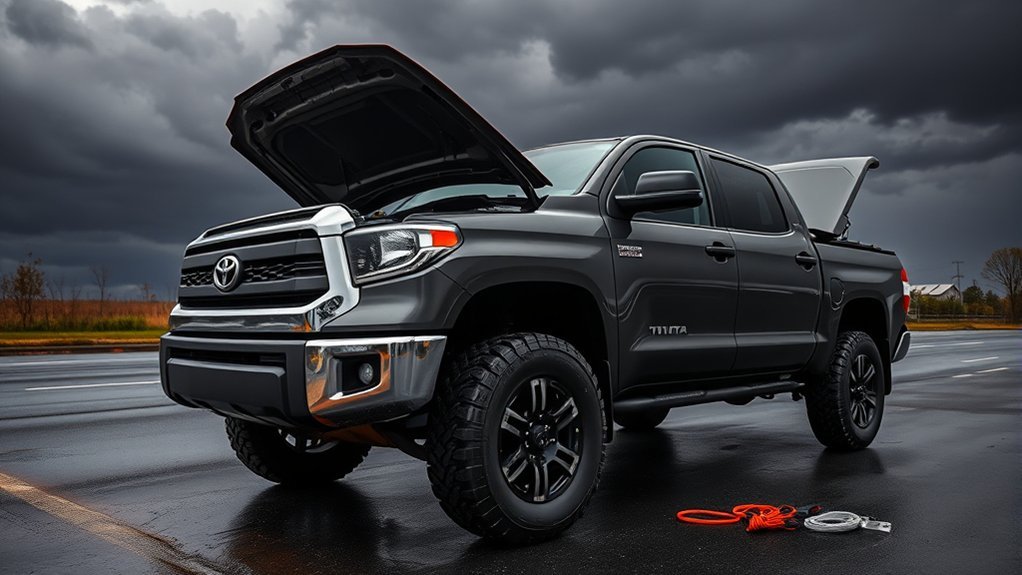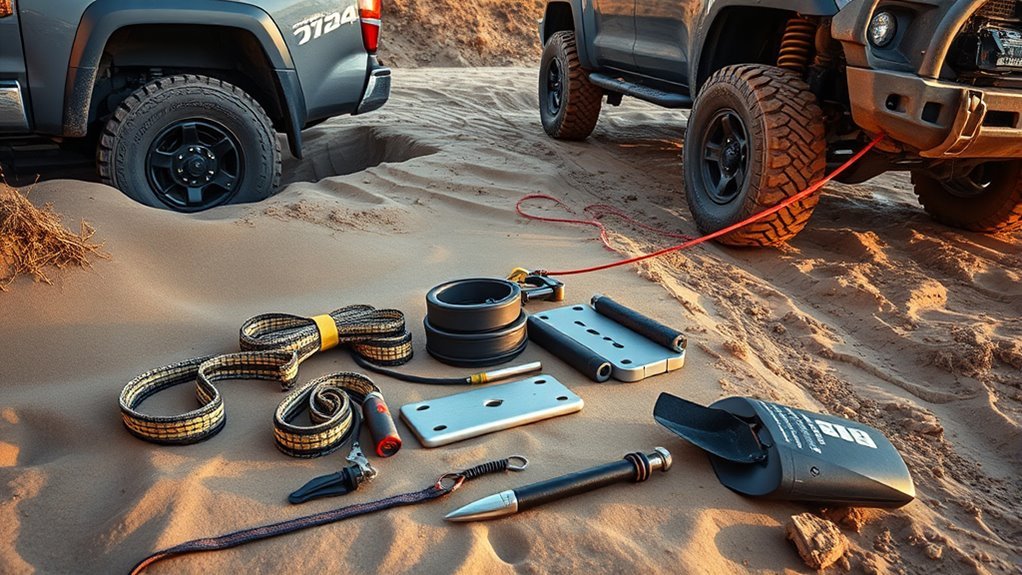
You’ll stop wheelspin, clear debris, and engage 4WD, then lower tire pressure to about 12–17 psi for flotation and use traction boards or mats angled into the tread to regain bite. Shovel ramps, apply steady low‑gear throttle, and reset boards as needed; carry a compressor, shovel, and tow gear for failures. After freeing the truck, reinflate to 30–35 psi, inspect tires and undercarriage, and stow gear—keep going to see winch, jack, and stacking tricks if basic methods don’t work.
Quick Fix: Get a Stuck Tundra Moving (3‑Step Action)
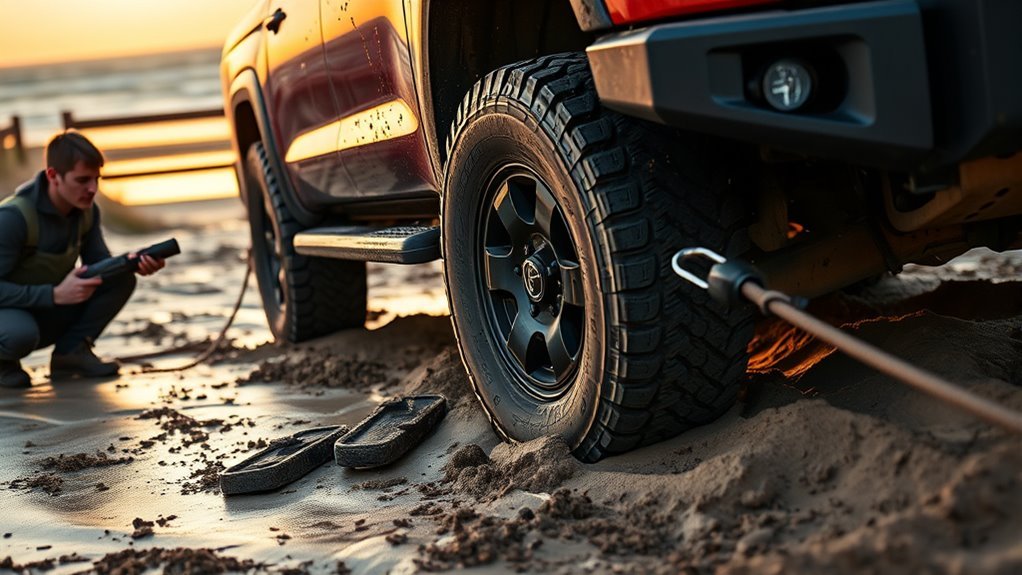
Stop the wheels and assess the situation: don’t keep spinning or you’ll dig deeper—clear debris around the tires, engage 4WD, and drop tire pressure to about 12–15 psi. You’ll follow three focused steps: assess, support, and move. First, inspect tire ruts and terrain; decide if recovery boards or traction mats will fit under tread and angle slightly downward. Second, deploy recovery gear against the tire, placing boards where the tire will next contact the surface to maximize grip. Third, recheck 4WD engagement, then apply controlled throttle—steady, gentle input to maintain momentum without wheelspin. These sand driving traction techniques prioritize flotation and consistent force transfer so you don’t re-bury the truck. You’ll avoid rocketing RPMs or sharp steering inputs that reduce grip. This practical, technical sequence empowers you to escape confinement quickly and confidently, turning a stalled state into movement with minimal risk to vehicle or crew.
Tundra Prep Checklist for Sand & Mud (Tires, Tools, Load)
Before you hit sand or mud, drop your Tundra’s tire pressure to about 12–17 psi and fit all-terrain tires to maximize flotation and bite. Stow a compact shovel, traction mats, and a portable air compressor so you can self-recover without waiting for help. Check load distribution and local beach/mud conditions, including tides, to prevent avoidable bogging.
Tire Pressure Setup
One clear step for sand or mud runs is to set your Tundra’s tire pressure low—typically 12–17 psi depending on load and surface—to increase flotation and reduce digging in. You’ll practice tire maintenance by checking pressures with a reliable gauge before departure and during shifts in sand type. Use adjustable deflators to dial pressure quickly for traction optimization; they save time and let you match conditions precisely. Balance and load matter: distribute cargo so each tire shares weight, maintaining consistent contact patches. Carry a portable compressor to reinflate for road speeds and complete your cycle. These steps give you control and freedom on soft terrain, reducing getoffs and empowering confident, self-reliant travel.
Essential Recovery Gear
Gear matters: outfit your Tundra with AT tires set to 15–17 psi for sand and mud, carry a shovel, traction mats, and a rated tow strap, and pack a portable compressor so you can reinflate on the road. You’ll use these essential tools for basic recovery techniques: a shovel to clear berms, mats under drive tires, and a strap rated above your vehicle’s GVWR for winching or snatching. Keep gear accessible, secured, and inspected; check tire pressure and tread before departure. Load light—remove unnecessary cargo to improve flotation and reduce sink risk. Practice rigging straps and deploying mats so recovery is fast and safe. This checklist gives you mechanical confidence and freedom to explore soft terrain without relying on others.
Airing Down: When, How Much, and Safety Tips
When you’re headed onto soft sand, airing down to about 15–17 psi (and in very loose conditions dropping as low as 12 psi) increases tire flotation and traction, so do it before you enter the beach rather than after you get stuck. You’ll gain flotation benefits immediately: lower tire pressure spreads contact patch, reduces sinkage, and lowers rolling resistance. Use a reliable tire pressure gauge or adjustable deflators to set and monitor pressure.
Air down to 15–17 psi (12 psi in very loose sand) before the beach to boost flotation and traction.
- Prep: check stock and desired tire pressure, carry a gauge and deflators.
- Monitor: recheck pressures during your run; rise in temp can change readings.
- Reinflate: carry a portable compressor and know target highway psi before departure.
Safety tips: avoid sharp maneuvers at very low pressure, maintain moderate speeds, and watch bead seating limits on your wheel. Lowering pressure is a deliberate liberation tactic—freeing you from deep sand—but plan reinflation and gear so you don’t trade freedom for avoidable risk.
Step‑by‑Step Recovery: Boards, Shovels & Throttle
Start by stopping wheelspin, then clear and prep the area around the stuck tire so recovery boards can seat against clean tread. Shovel out sand or mud ahead of and beside the tire, creating a shallow ramp. Position boards snugly against the tread, angled slightly downwards; that vehicle positioning gives the tire an easier climbing plane. Use recovery techniques that prioritize controlled traction: engage low gear, hold the steering straight, and apply steady, gentle throttle so the tire can bite and roll onto the board without digging in.
If the board slips, reset it and remove more resistance with the shovel; small adjustments to angle and placement change outcome. Once you’ve regained momentum, keep moving steadily to clear soft ground. After recovery, stop, clean off embedded debris, and store boards dry to preserve performance. These steps keep you mobile and self-reliant, minimizing reliance on others while maximizing your Tundra’s off‑road capability.
When Basic Methods Fail: Winches, Jacks & Stacking Tricks
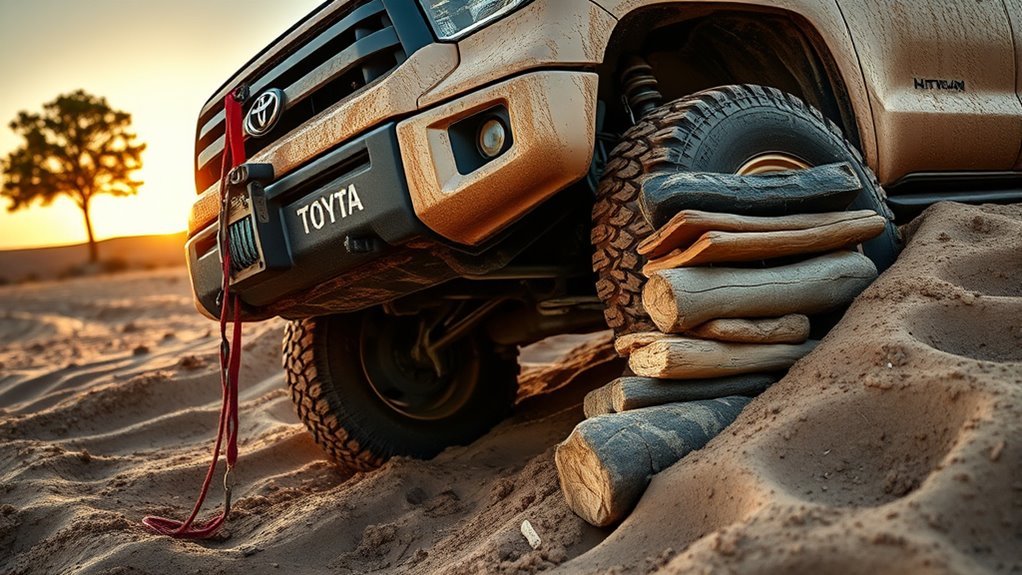
Don’t rely on boards and throttle alone—bring out the winch, jack, and stacking techniques when soft sand or deep mud won’t yield. You’ll want a winch rated at least 1.5× your Tundra’s weight and a plan: clear anchor points, use a snatch block to double effective pull and alter direction, and keep all bystanders clear. Practice basic winch techniques before you need them.
- Inspect anchor and rigging: tree trunk protector, rated straps, and a snatch block to reduce heat and line wear.
- Jack procedure: set jack on a solid base (wood or traction mat), stabilize the truck, and follow jack safety to avoid collapse while inserting boards.
- Stacking boards: double up under driven tires, align tread with board ribs, and incrementally drive or winch while maintaining tension.
You’ll combine controlled winching, safe jacking, and stacked traction to liberate the truck without relying on another vehicle.
Post‑Recovery Checklist: Reinflate, Inspect & Restore
Sit down and work through a short, ordered checklist to return the Tundra to safe, roadworthy condition: Start by using a portable air compressor to reinflate tires to the recommended on-road pressure (typically 30–35 psi for a Toyota Tundra). Perform basic tire maintenance: verify pressures, inspect tread, and look for cuts, punctures, or embedded debris that could fail later.
Next, conduct a focused vehicle inspection of the undercarriage and suspension—check for bent components, torn bushings, leaking shocks, or unusual play. Remove sand and mud from the body, wheel wells, and undercarriage to prevent corrosion and restore cooling and braking performance.
Clean and dry recovery gear, then stow it securely; inspect shovels, straps, and traction mats for wear or damage and replace anything compromised. Finish by driving slowly while rechecking tire pressures and listening for abnormal noises. This ordered, practical routine gets you back on the road fast and keeps your freedom to roam intact.
Frequently Asked Questions
Can You Switch to 4H While Driving Tundra?
Yes — you can switch to 4H while driving; engage 4H driving below about 60 mph for smoother engagement. Trust Tundra capabilities, follow neutral-shift rules if required, and consult your manual to avoid damage.
Conclusion
You’ve got the basics down: prep your Tundra, air down, use boards and shovels, then move to winches or jacks if needed. Think of recovery like surgery—precise, methodical, controlled—so you don’t trade one problem for another. After you’re free, reinflate, inspect, and reset gear like a pro. Stay calm, deliberate, and safety‑first; with practice these steps become second nature, turning sticky situations into routine maintenance.