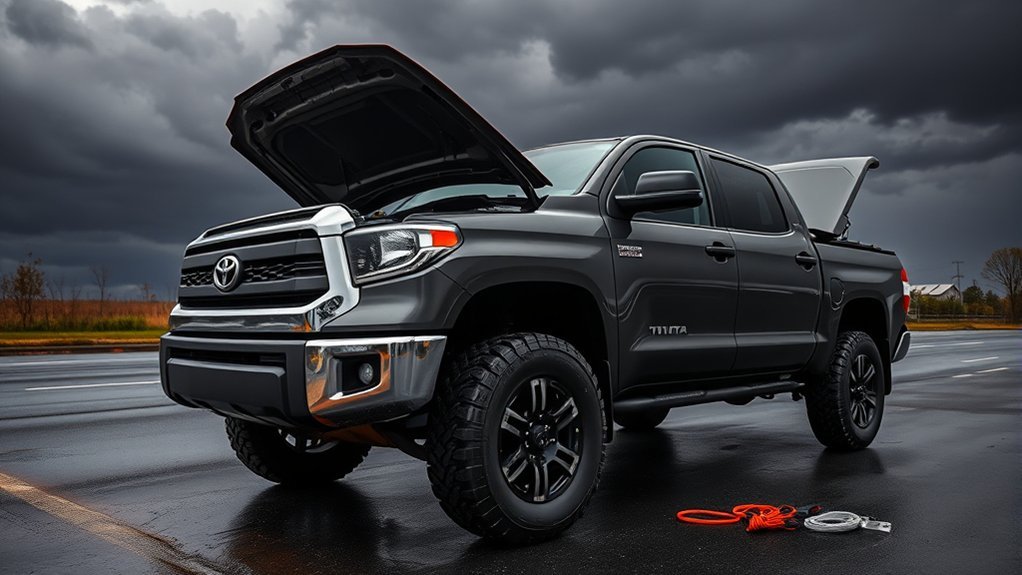
For Toyota Tundra heavy-rain driving, use 2H on ordinary wet pavement if the truck has part-time 4WD, keep Vehicle Stability Control and traction control on, and reduce speed before reaching standing water. Use 4H only when the surface is loose or slippery enough to allow tire slip, such as mud, wet gravel, snow, or ice. Do not confuse AUTO LSD or Multi-Terrain Select AUTO with an automatic 4WD transfer-case setting. No drive mode prevents hydroplaning or makes floodwater safe.
Last updated: July 31, 2026 — drivetrain-label, flood-safety, tire, and driver-assistance guidance reviewed against current NHTSA, National Weather Service, Ready.gov, AAA, and Toyota owner resources.
Quick Answer
Prepare your Tundra for heavy rain by checking tire tread, setting cold Toyota Tundra tire pressure from the driver-side door placard, testing the wipers and lights, and securing all cargo. Use 2H on ordinary wet pavement if your truck has part-time 4WD. Use 4H only on a loose or slippery surface that allows tire slip. AUTO LSD is a traction aid used in 2WD, not an automatic 4WD setting. On certain equipped hybrids, Multi-Terrain Select AUTO adjusts terrain-control behavior while 4H is selected. Slow down, turn off cruise control, avoid standing water, and never enter floodwater you cannot clearly judge.
Key Takeaways
- Check tire tread, cold pressure, wipers, lights, and brakes before storm driving.
- Use the tire pressure listed on your Tundra’s door placard because trims, tire sizes, and loads can vary.
- Use 2H for ordinary wet pavement on a part-time 4WD Tundra and reserve 4H for genuinely low-traction surfaces.
- Do not confuse AUTO LSD or Multi-Terrain Select AUTO with an automatic 4WD transfer-case setting.
- Slow down early because 4WD does not prevent hydroplaning or shorten every wet-road stop.
- Turn around at flooded roads because water depth, current, and road damage can change fast.
Toyota Tundra Heavy-Rain Driving at a Glance
| Condition | Best Response | Why |
|---|---|---|
| Normal wet pavement | Use 2H on a part-time 4WD Tundra and reduce speed. | Wet pavement alone may not provide enough tire slip to relieve part-time 4WD drivetrain windup. |
| Loose, muddy, icy, or very slippery surface | Use 4H only as the owner’s manual directs. | Four driven wheels can help the truck move when traction is low. |
| AUTO LSD or MTS AUTO label | Do not treat it as an AUTO 4WD transfer-case position. | AUTO LSD is a 2WD traction aid. MTS AUTO, where equipped, is a terrain-control mode rather than an automatic 4WD range. |
| Hydroplaning begins | Ease off the accelerator, hold the wheel steady, and avoid hard braking. | Smooth inputs give the tires time to regain road contact. |
| Water covers the roadway | Turn around and use another route. | Water can conceal current, debris, holes, or a washed-out roadbed. |
| Truck stalls or is partly submerged | Do not restart it. Reach safety and arrange professional towing. | Starting wet mechanical or electrical systems can cause more damage. |
[Products Worth Considering]

This dial type tire tread depth gauge helps you quickly check tread wear on motorcycles, cars, trucks, and buses with easy-to-read 1/32-inch increments. Its colorful zone markings make it simple to assess tire condition for safer driving in different weather, while the durable zinc cast body and legible dial provide dependable everyday use.

This 50-pack of tire tread depth gauges offers a simple way to check tire wear quickly and accurately. Color-coded reading zones make it easy to see tread condition at a glance, while the compact design and pocket clip support convenient everyday carry. Built for repeated use, these gauges help drivers monitor tire safety with confidence.

This digital tire tread depth gauge helps you check tire wear quickly and accurately with fractional inch, decimal inch, and millimeter readouts. Its large LCD screen, zero reset function, and automatic shutoff make it easy to use for cars, motorcycles, SUVs, trucks, and pickups. Designed for clear readings and dependable measurement, it is a practical tool for routine tire safety checks.
How to Prepare a Toyota Tundra for Heavy Rain
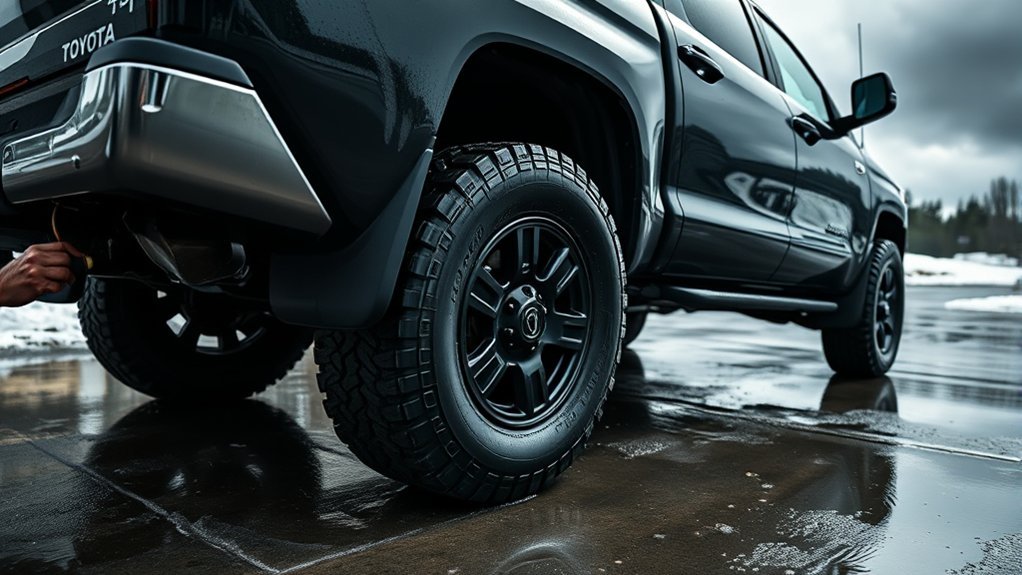
Start with the tires because they create the truck’s contact with wet pavement. The National Highway Traffic Safety Administration says tread supplies the gripping action that helps prevent a car or truck from slipping, especially on wet roads. Check tread and pressure at least once a month and before a storm trip.
Replace a tire no later than 2/32 inch of tread, which NHTSA identifies as unsafe. AAA uses 4/32 inch as a wet-weather replacement benchmark. Treat 4/32 inch as a wet-performance decision point, not a universal legal threshold. Replace sooner when wet braking has declined, wear is uneven, the tire is damaged, or a qualified tire professional recommends replacement. Also inspect the inner and outer shoulders for cuts, bulges, exposed cords, and uneven wear.
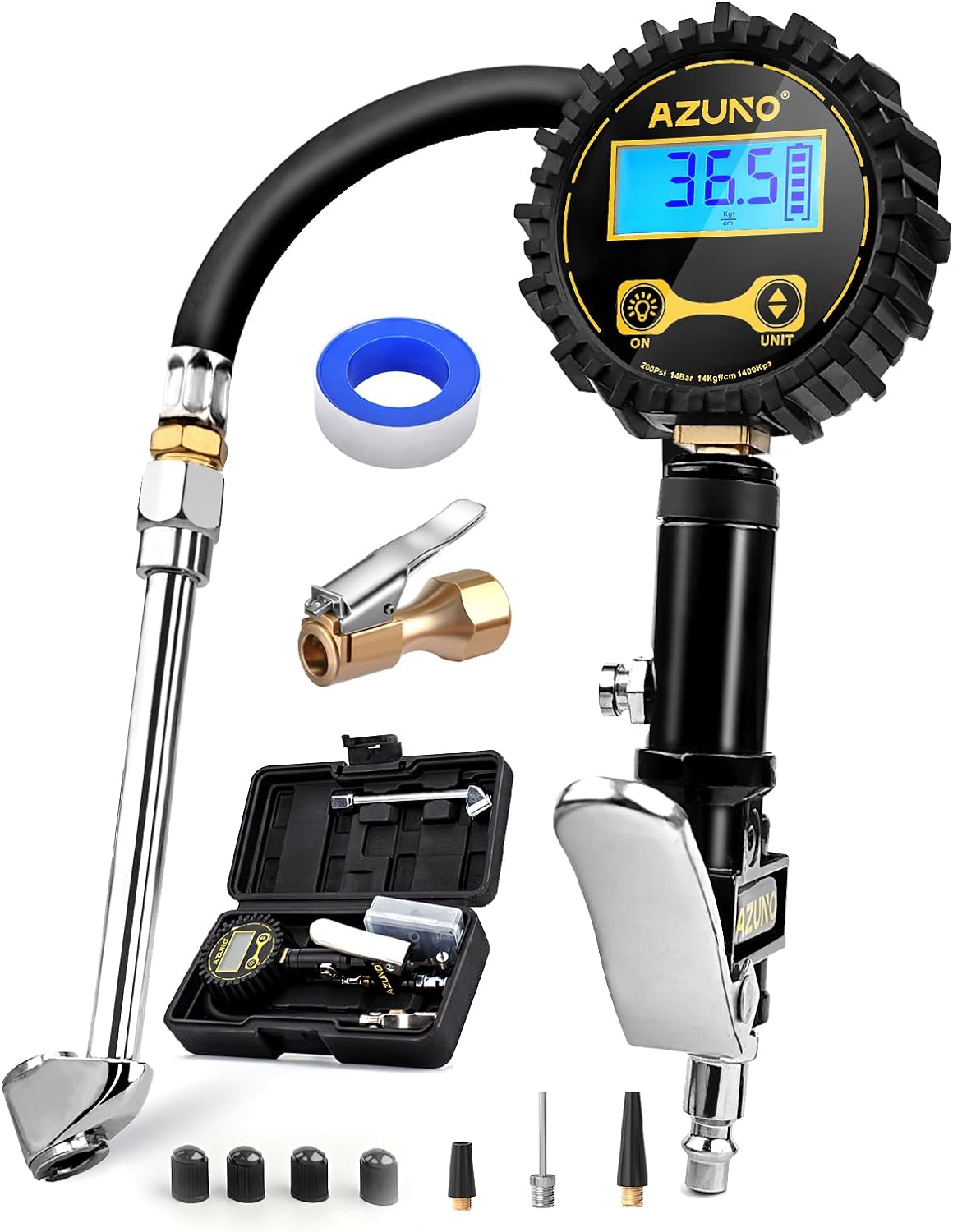
Set cold tire pressure from the Tire and Loading Information label on the driver-side door jamb. Do not use one fixed pressure range for every Tundra. Tire size, model year, trim, load, and aftermarket equipment can change the correct setting.
Note: Check pressure when the tires are cold. NHTSA defines cold tires as tires on a vehicle that has not been driven for at least three hours.
Test the windshield wipers, washer fluid, low-beam headlights, brake lights, defogger, and climate controls before leaving. Replace wiper blades that streak, chatter, or leave unwiped areas. If the steering pulls, the brake pedal feels unusual, or a tire repeatedly loses pressure, correct the problem before storm travel.
Do not add loose ballast as a substitute for tire grip. Secure normal cargo low in the bed, prevent it from sliding, and remain within the truck’s payload limits. Loose tools, containers, or recovery equipment can shift during emergency braking and change the truck’s balance.
Check weather alerts, road closures, and alternate routes before departure. Delay the trip when rainfall overwhelms drainage or visibility drops below what you need to identify lanes, vehicles, and standing water safely.
[Products Worth Considering]

This steering clock spring is designed to restore reliable steering wheel controls across a wide range of Toyota models. It supports audio, cruise control, and other multifunction commands while matching OEM part numbers for confident replacement fitment. Built for dependable signal transfer and straightforward installation, it is an effective solution for repairing steering column control issues.

This LUMITECO tire tread depth gauge set makes it easy to monitor tire wear and maintain safer driving performance. The color-coded scale provides quick, easy-to-read measurements, while the compact pocket-size design and included clip make it convenient to keep in your vehicle or toolbox. Suitable for cars, trucks, motorcycles, and more, it offers a simple reusable way to check tread depth whenever needed.
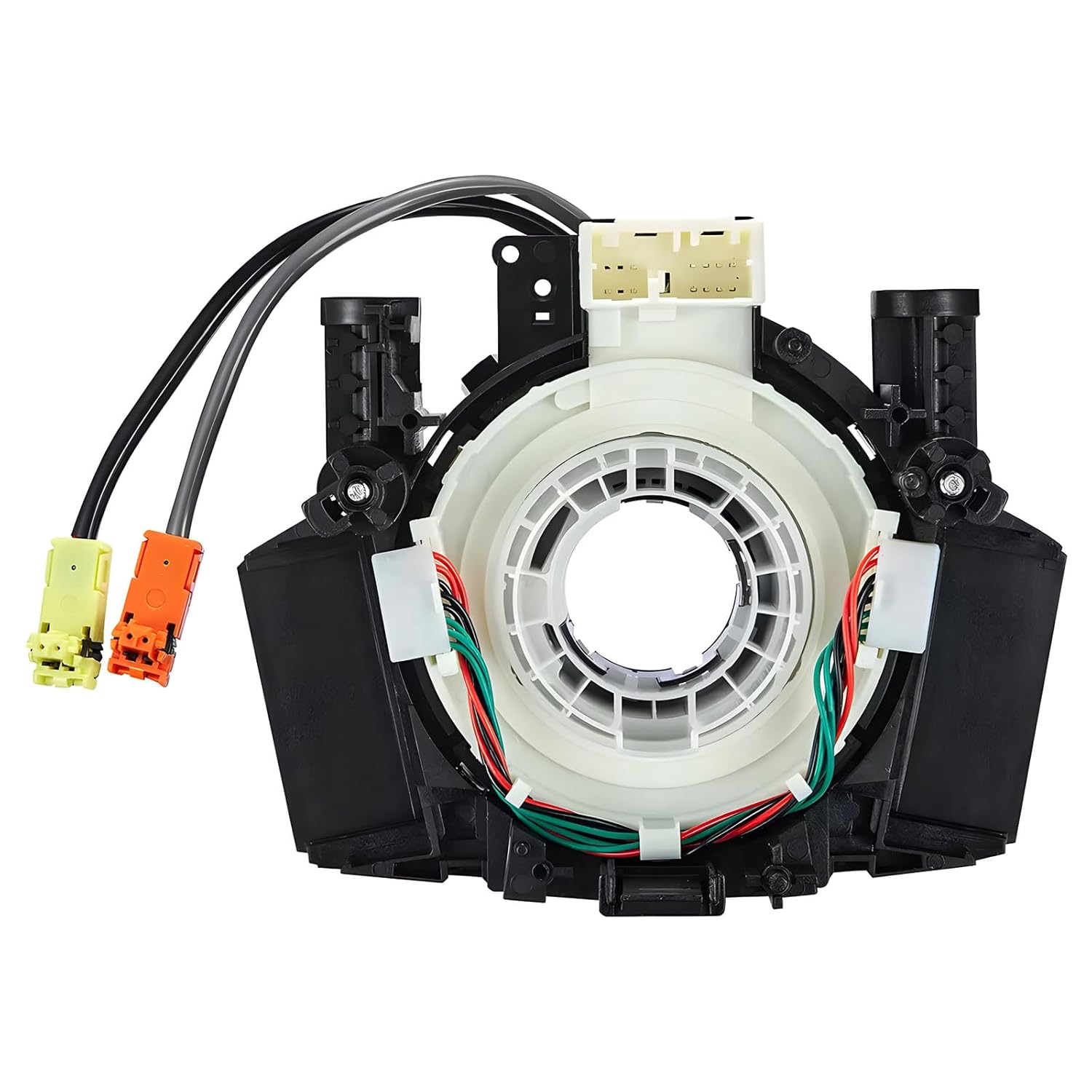
This steering clock spring assembly is an OEM-style replacement designed to restore steering wheel controls and related electronic functions in compatible Nissan vehicles. It supports audio, cruise control, and multi-function button operation while matching multiple factory part numbers for a reliable fit. Built for direct installation with vehicle-specific connectors, it helps return steering column electronics to proper working order.
Which Tundra Drive Mode Should You Use in Heavy Rain?
Identify your truck’s drivetrain before changing modes. Use 2H for normal paved driving on a part-time 4WD Tundra. Use 4H only where the surface is loose or slippery enough to permit tire slip, such as mud, wet gravel, snow, ice, or a slick unpaved climb. Do not engage 4H simply because pavement is wet.
Do not confuse labels that contain “AUTO” with an automatic 4WD transfer-case position. AUTO LSD is a traction aid that works in 2WD. On certain equipped Tundra hybrids, Multi-Terrain Select may display AUTO while 4H is selected; it adjusts terrain-control behavior but does not replace 2H, 4H, or 4L. Confirm the controls and operating limits in the exact model-year manual available through Toyota Manuals and Warranties.
Three-Question Drive-Mode Check
- Is this ordinary paved wet roadway? Stay in 2H and reduce speed.
- Is the surface loose or slippery enough to allow tire slip? 4H may be appropriate if the owner’s manual permits it.
- Do you need very slow, high-torque control? Use 4L only for a manual-approved low-range situation, not normal rain driving.
Do not use 4L for normal rain driving. Low range is intended for slow, high-torque conditions described in the owner’s manual, not ordinary paved travel. See the site’s guide to when to use 4HI vs. 4LO for a separate explanation of low-range situations.
Do not use part-time 4H on dry pavement or other high-traction surfaces. When the tires cannot slip enough to relieve the difference between front- and rear-axle speeds, the drivetrain can bind. Shift into and out of each mode only as the owner’s manual directs, and confirm that the indicator shows the requested mode before relying on it.
Keep Vehicle Stability Control and traction control on for normal wet-road driving. These systems can reduce wheelspin and help the driver control a skid, but they cannot overcome excessive speed, worn tires, or floodwater. Tundra ground clearance is not a floodwater or fording rating. Your main controls remain lower speed, greater spacing, and smooth steering, throttle, and braking.
Disable a traction aid only for a specific recovery situation described in the model-year owner’s manual, such as freeing a stuck truck. The site’s guide to when to disable Tundra traction control covers those limited situations separately.
For a deeper explanation of selectable drivetrain ranges, see the site’s Toyota Tundra 4WD modes guide.
How Should You Drive a Toyota Tundra in Heavy Rain?
NHTSA’s severe-weather guidance recommends extra caution because slick roads make vehicles harder to control and stop. Slow down before reaching pooled water, not after the steering begins to feel light. Increase the gap ahead until you have enough room to brake gradually without a sudden lane change.
Use low-beam headlights so other drivers can see your truck and to reduce reflected glare compared with high beams. Keep both hands available for steering, turn off cruise control when rain becomes heavy, and avoid using a phone or changing vehicle settings while visibility is poor.
Heavy rain, road spray, standing water, and blocked sensors can reduce or interrupt camera-, radar-, and ultrasonic-based driver-assistance functions. Do not rely on adaptive cruise control, lane assistance, blind-spot alerts, rear cross-traffic alerts, or parking sensors to compensate for poor visibility. Follow warning messages, keep sensor areas clear when it is safe to do so, and drive manually with more space.
Use a lower transmission range only when it helps control speed on a slick descent or another slow section. Do not make abrupt throttle changes, sharp steering inputs, or hard brake applications. Sudden weight transfer can break tire traction even when 4WD is engaged.
- Choose the lane with the least standing water.
- Avoid puddles near curbs, bridge joints, road seams, and low spots.
- Stay away from water flowing across the road.
- Turn off cruise control when rain becomes heavy.
- Ease off the accelerator if the truck begins to hydroplane.
- Hold the steering wheel steady and avoid a sharp correction.
- Brake gently only after the tires regain firm road contact, unless braking is necessary to avoid a collision.
Warning: Do not slam on the brakes or jerk the steering wheel during hydroplaning. Hard inputs can worsen the skid or cause overcorrection when traction returns.
If you are towing, reduce speed further and leave more room ahead. Avoid abrupt lane changes, hard trailer-brake inputs, and sudden acceleration. Four-wheel drive may help the truck move on a slippery surface, but it does not prevent trailer sway or improve the trailer tires’ grip.
What Should You Do if Your Tundra Reaches Floodwater or Stalls?
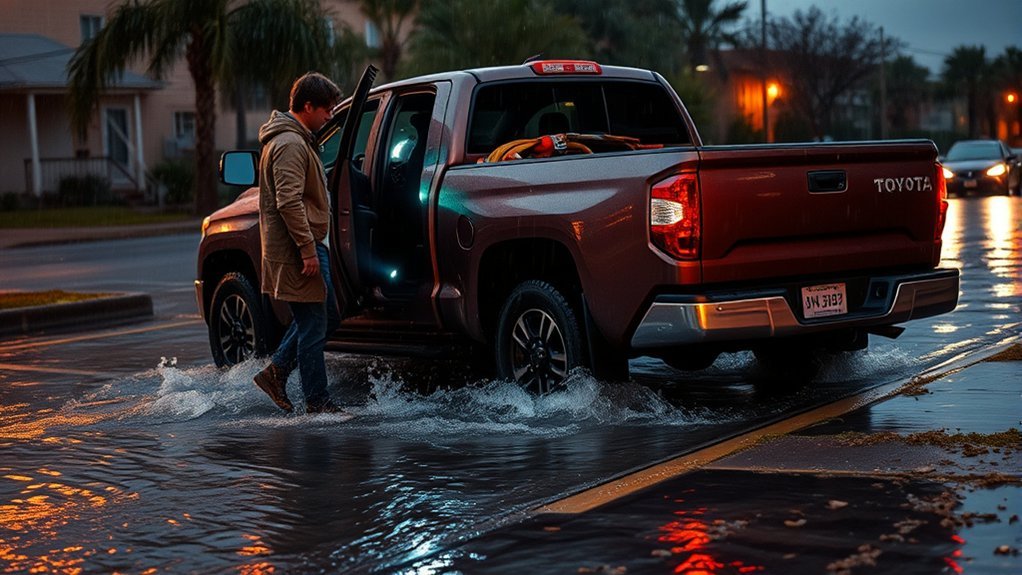
Never treat floodwater like a normal puddle. The National Weather Service warns that 12 inches of rushing water can carry away most cars and 2 feet can carry away SUVs and trucks. Floodwater can also hide debris, deep holes, electrical hazards, and a washed-out roadbed.
- Before entering: turn around. Do not drive around a barricade or rely on the Tundra’s height or 4WD system.
- After a stall or submersion: do not restart the truck. Starting it can draw water into mechanical systems or energize damaged electrical components.
- In standing or slowly rising water: leave only by a clearly safe path. If you can reach higher ground without entering moving water, exit promptly.
- In rapidly moving water: stay inside the vehicle. Ready.gov advises remaining in a vehicle trapped in rapidly moving water.
- If water rises inside: move to the roof. Call 911 and move to the highest safe point available.
- Keep passengers together. Prioritize children and anyone who needs assistance, but do not enter fast-moving water to retrieve replaceable belongings.
Warning: Do not step into fast-moving water. Six inches of moving floodwater can knock an adult down, and the road surface beneath the water may be missing.
[Products Worth Considering]

This dash clock spring replacement is designed for a wide range of Toyota vehicles and helps restore reliable steering wheel control functions. It supports audio controls, cruise control, and other multi-function commands while using vehicle-specific connectors for easier installation. Built with durable materials and OEM-referenced part compatibility, it is a practical solution for repairing steering wheel signal issues.

Rain-X Repellency Water Repellent Wiper Blades help improve visibility by clearing your windshield while applying a water-repellent formula that makes rain, sleet, and snow bead and slide away. Built with beam blade technology for a smooth, streak-free wipe, they offer all-weather performance and a universal adapter for easy installation on most vehicles.

The Masoll M13 Tire Pressure Monitoring System helps monitor tire pressure for sedans, SUVs, pickup trucks, RVs, and travel trailers with four tires. It features automatic reference pressure calibration, alerting you when pressure changes fall outside the set range, while solar charging and auto wake-up support convenient everyday use. With precise pressure detection, an easy-to-read color LCD, and adaptive backlighting, it is designed to improve driving safety and help protect tire life.
Post-Flood Inspection, Documentation, and Repair Next Steps
After reaching safety, document the truck before anyone cleans or dismantles it. Take clear photos and video of the waterline, cabin, engine bay, undercarriage, wheels, cargo, and visible wiring. Record the time, location, weather, and estimated water depth only when doing so is safe.
Do not switch the ignition or power mode on, start the engine or hybrid system, connect external electrical equipment, or test accessories. Flood-damage guidance from State Farm warns that starting the engine or accessories can cause further damage when water has contaminated mechanical, fuel, or electrical systems.
Do not disconnect batteries or touch wet wiring unless model-specific service information says it is safe and you are trained to perform the work. On an i-FORCE MAX hybrid, do not touch orange high-voltage cables, hybrid-battery components, or submerged electrical equipment. Tell the towing company and repair shop that the vehicle is a hybrid when applicable.
Use this order after a flood event:
- Move yourself and passengers to a safe place.
- Call emergency services if anyone faces immediate danger.
- Contact your insurance provider and report the damage.
- Take photos and video from several safe angles.
- Arrange flatbed or manufacturer-appropriate towing to a qualified repair facility.
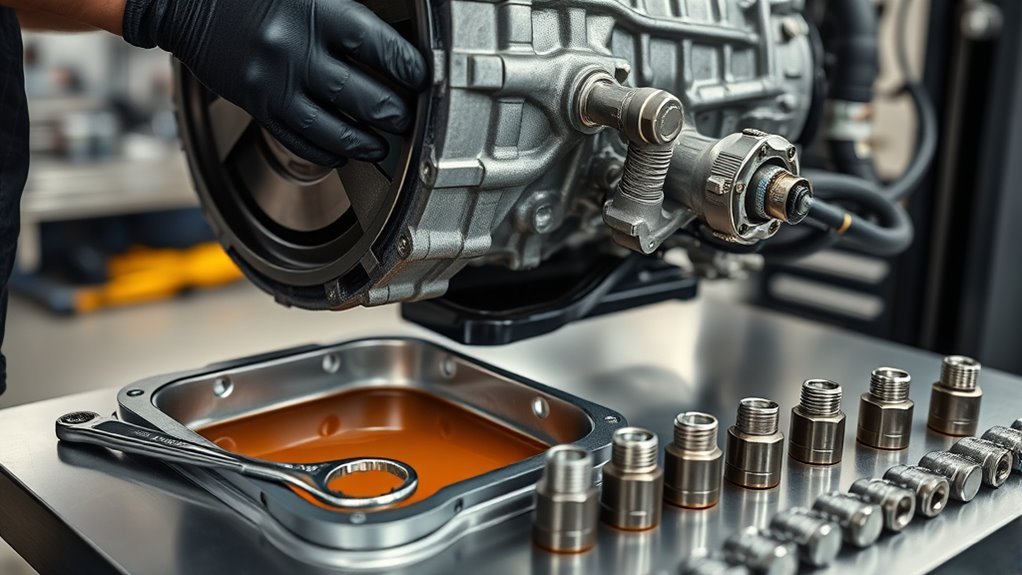
- Request inspection of the engine, transmission, transfer case, differentials, wheel bearings, brakes, wiring, modules, fluids, interior, and hybrid system when equipped.
- Save estimates, invoices, towing records, and inspection reports.
Frequently Asked Questions
Should You Use 4H in Heavy Rain?
Use 4H only when rain has created a genuinely loose or low-traction surface where the tires can slip, such as mud, wet gravel, snow, ice, or a slick unpaved climb. Use 2H on ordinary wet pavement if your Tundra has part-time 4WD. Follow the owner’s manual for your exact model year.
Is AUTO LSD the Same as AUTO 4WD on a Tundra?
No. AUTO LSD is a traction aid that works in 2WD; it is not a transfer-case position. On certain equipped Tundra hybrids, Multi-Terrain Select may display AUTO while 4H is selected, but that is a terrain-control mode rather than automatic 4WD.
Should You Turn Off Traction Control in Heavy Rain?
No. Keep Vehicle Stability Control and traction control on during normal wet-road driving. Disable a traction aid only for a specific recovery situation described in the model-year owner’s manual, such as freeing a stuck truck.
Can Heavy Rain Affect Toyota Safety Sense?
Heavy rain, road spray, standing water, or blocked sensors can reduce or interrupt some camera- and radar-based assistance. Follow dashboard warnings, turn off cruise control when conditions are poor, and do not rely on driver-assistance features to compensate for limited visibility or traction.
How Deep of Water Can a Tundra Drive Through?
Do not drive through floodwater when you cannot see the road surface, confirm the depth, or judge the current. The truck’s ground clearance and 4WD system do not protect it from a washed-out road, moving water, hidden debris, electrical damage, or engine water ingestion.
Does 4WD Help With Hydroplaning?
No. Four-wheel drive does not prevent hydroplaning because hydroplaning happens when water separates the tires from the road. Tire condition, correct pressure, lower speed, smooth control inputs, and avoiding standing water matter more.
Is 4/32 Inch of Tread Enough for Heavy Rain?
AAA uses about 4/32 inch as a wet-weather replacement benchmark, but it is not a universal legal threshold. NHTSA says tires are unsafe at 2/32 inch. Replace sooner when wet braking has declined, wear is uneven, the tire is damaged, or a qualified tire professional recommends replacement.
What Should You Do After Water Reaches the Engine Bay?
Do not start the engine or hybrid system or switch on electrical accessories after water reaches the engine bay. Take photos, call your insurer, and tow the truck to a qualified technician for electrical and mechanical inspection. On an i-FORCE MAX hybrid, do not touch orange high-voltage wiring or hybrid components.
Safety Disclaimer: This article gives general safety information and does not replace your Toyota owner’s manual, local emergency guidance, instructions from first responders, or professional vehicle inspection. Follow official warnings, road closures, and evacuation orders first.
Conclusion
Your safest Toyota Tundra heavy-rain plan starts before the storm with adequate tread, correct cold pressure, working wipers and lights, secured cargo, and a route that avoids flood warnings. Use 2H on ordinary wet pavement when the truck has part-time 4WD. Use 4H only when the surface is loose or slippery enough for tire slip. Do not mistake AUTO LSD or Multi-Terrain Select AUTO for an automatic 4WD transfer-case range.
If floodwater blocks the route, turn around. After a stall or water exposure, protect the passengers, do not restart or energize the truck, document the damage, and arrange professional towing and inspection. Before the next storm, measure the tread, check the placard pressure, test the visibility equipment, and review weather alerts and alternate routes before leaving.
References
- Tire Safety Ratings and Awareness — National Highway Traffic Safety Administration
- Driving in the Rain: Tips for Staying Safe — AAA
- Driving in Severe Weather — National Highway Traffic Safety Administration
- Turn Around Don’t Drown — National Weather Service
- Floods — Ready.gov
- What to Do if Your Car Has Flood Damage — State Farm
- Toyota Manuals and Warranties — Toyota