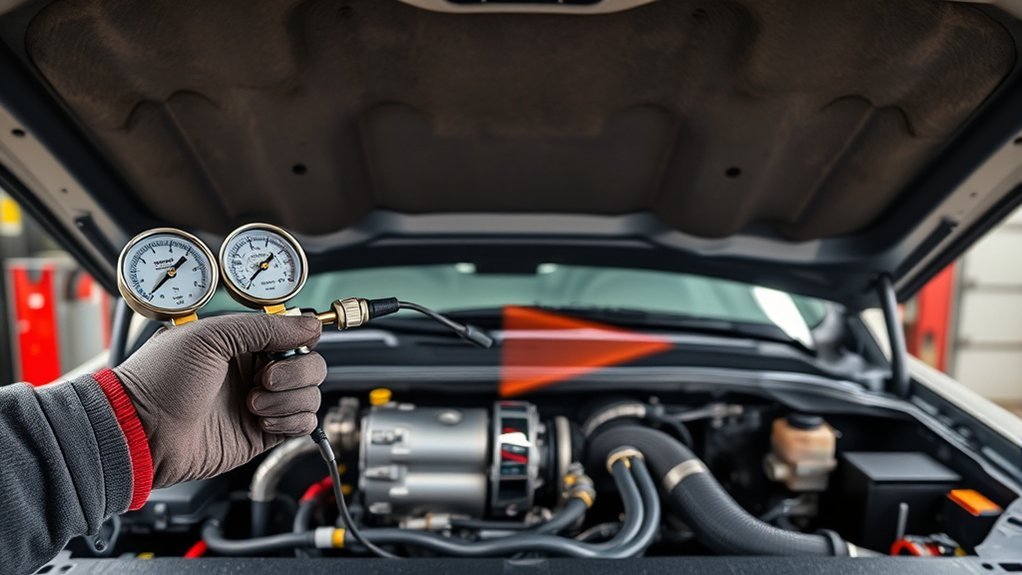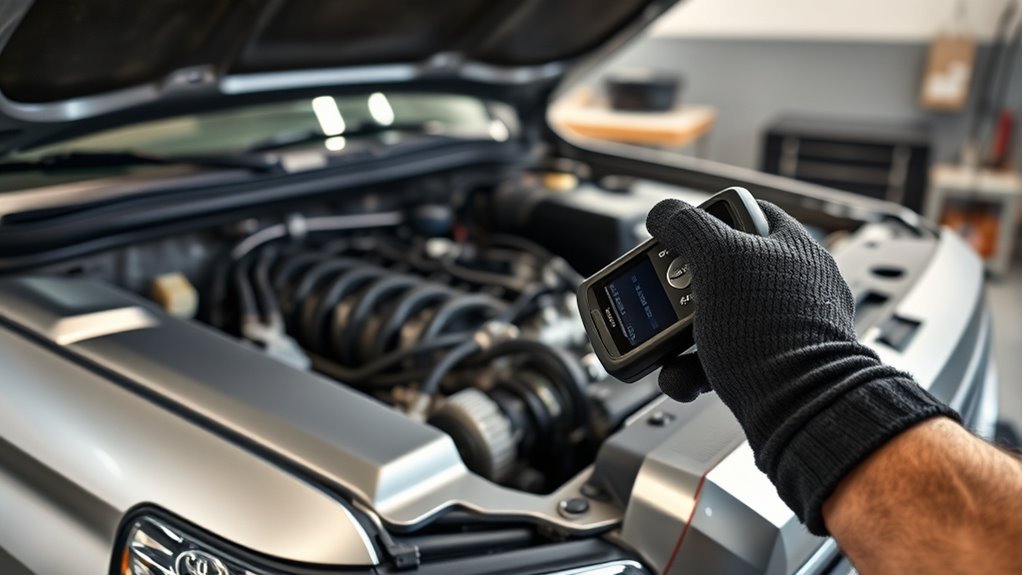
If your Tundra idles rough, start by checking air, fuel, ignition, and vacuum systems since they cause most issues; scan for OBD‑II codes, inspect the MAF and throttle body, verify fuel pressure and injector spray, and test spark plugs and coil resistance. Clean or replace contaminated sensors, seal vacuum leaks, and address misfire codes first to stabilize idle. Replace worn plugs or coils and retest; continue and you’ll find step‑by‑step diagnostics and proven fixes to follow.
Quick Fix Guide: Stabilize a Tundra Rough Idle
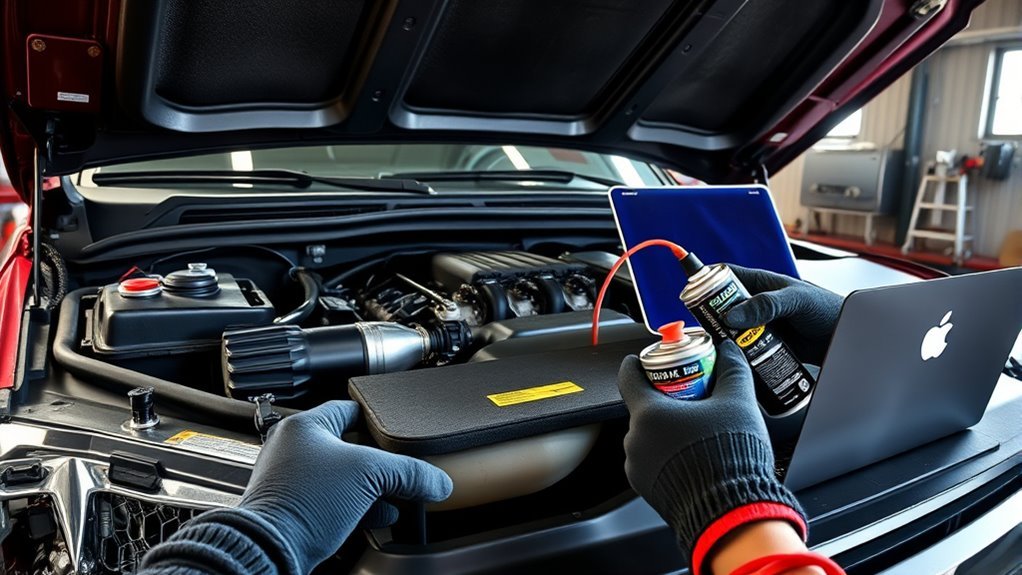
Start by isolating the most common culprits: clean the throttle body, inspect the MAF sensor, and check ignition components and fuel delivery to quickly narrow the cause of a rough idle. You’ll begin with the throttle body—remove deposits that restrict airflow so the idle control system can breathe and respond predictably. Next, test the MAF sensor for contamination or abnormal voltage readings; a faulty MAF skews the air-fuel ratio and destabilizes RPM. Then assess ignition: swap suspect spark plugs or coil packs and watch for misfire codes (P0300 series) with an OBD2 scanner to pinpoint cylinder issues. Finally, verify fuel delivery by checking injector spray patterns and fuel pressure at the rail; a weak pump or regulator will produce lean conditions and rough idling. Work methodically, document each test result, and act on the highest-probability fault first. This approach frees you from guesswork and restores control.
Immediate Checklist to Stop a Rough Idle Now
Begin by verifying basic operating conditions that commonly trigger a rough idle: check the engine oil level (ensure it’s not overfilled), scan for DTCs with an OBD2 tool, and inspect the MAF sensor for contamination or abnormal readings. Next actions are decisive: confirm oil level,讀pull codes, and visually assess vacuum hoses for cracks or loose clamps. If the MAF shows erratic voltage or contamination, clean or replace it. Perform throttle cleaning to remove carbon that restricts airflow; use a proper throttle-body cleaner and follow sequence steps to avoid damage. Address any stored misfire or sensor DTCs before test-driving.
| Task | Tool | Expected result |
|---|---|---|
| Oil level check | Dipstick | Proper level, not overfilled |
| OBD2 scan | Scanner | No DTCs or clear actionable codes |
| MAF inspection | Visual/Multimeter | Clean sensor, stable readings |
| Throttle cleaning | Throttle cleaner | Smooth idle, restored airflow |
Follow methodical verification; act on failures to regain control and freedom on the road.
Top 8 Causes of Rough Idle in Toyota Tundras
Although a rough idle can show up for many reasons, you’ll usually find the root cause among a handful of systems that directly affect air, fuel, ignition, and vacuum control. Start by inspecting the MAF sensor—contamination or failure skews air measurement and produces erratic RPM. Next, address ignition: worn spark plugs or faulty coils cause intermittent combustion and unstable idle. Fuel delivery follows: a weak pump, clogged filter, or failing pressure regulator yields inconsistent fuel flow, especially at low RPM. Check injectors for clogging or poor spray patterns. Examine intake and vacuum for leaks; a single cracked hose can upset the air/fuel ratio. Test the Idle Air Control circuit and valve—carbon buildup or electrical faults prevent steady idle speed. Consider engine mechanical issues—low compression or valve problems—if other systems check out. Methodically rule out each area; liberation comes from disciplined diagnosis and targeted repairs.
Diagnosing Misfires: Read OBD‑II Codes and Live Data

Anyone troubleshooting a misfire should pull OBD‑II codes and watch live data before swapping parts. Use OBD II troubleshooting to read DTCs: P0300 flags multiple misfires, P0302 targets cylinder 2, etc. Note which cylinders register misfire counts and tie them to symptoms.
While driving, run live data analysis for engine RPM, short‑ and long‑term fuel trims, and individual misfire counters. Compare oxygen sensor and MAF sensor readings against expected ranges — lean/rich shifts or MAF discrepancies alter air‑fuel mix and cause combustion loss. Verify throttle position sensor behavior by comparing TPS voltage/percentage to commanded throttle to rule out electronic throttle faults.
Cross‑reference live metrics: a spike in misfire count with abnormal fuel trims suggests fueling issues; misfires with normal trims but odd O2/MAP/MAF readings point to airflow problems. Inspect spark plugs, coils, and injectors based on these diagnostics rather than by guesswork, so you reclaim control and avoid unnecessary parts changes.
Ignition Checks: Coils, Spark Plugs, and Wiring Tests
Start by inspecting each coil pack for cracks, carbon tracking, or resistance anomalies using a multimeter and swap suspected coils between cylinders to confirm faults. Check spark plugs for wear, gap, and fouling and replace per the manufacturer’s interval or if electrodes are damaged. Finally, test ignition wiring and connectors for continuity, corrosion, and secure fit, since poor connections will trigger misfires and rough idle.
Coil Pack Inspection
When diagnosing a rough idle, inspect the coil packs first because they deliver the spark that keeps each cylinder firing; a failing coil pack will often show up as misfires, hesitation, or an uneven idle. You’ll perform a visual and electrical check: look for cracks or carbon tracking, measure primary/secondary resistance (typical 0.4–2.0 ohms), and verify connectors and wiring for corrosion or damage. Don’t ignore the ignition system’s role in freeing you from recurring faults.
- Visually inspect coils for cracks, burns, or carbon tracking.
- Measure coil resistance with a multimeter; compare to 0.4–2.0 ohm spec.
- Probe wiring harnesses and connectors for continuity and corrosion.
- Replace suspect coils promptly to prevent cascade coil pack failures.
Spark Plug Assessment
Because spark plugs form the final link in the ignition chain, you should inspect them methodically to rule out worn electrodes, fouling, improper gap, or heat-range issues that cause misfires and rough idle. Begin by removing plugs in a cold engine, note electrode wear, carbon or oil fouling, and compare to manufacturer specs for spark plug types and gap. Swap suspected plugs with known-good units or use a multimeter to check continuity; consult coil tests separately. Use a scanner to read misfire codes (P0300 series) to target cylinders. Replace plugs at recommended intervals and follow strict spark plug maintenance: correct gap, torque, and heat range selection. This disciplined approach frees you from guesswork and stabilizes idle.
Ignition Wiring Tests
Having confirmed plug condition, move on to the ignition wiring and coils to isolate intermittent sparks or open circuits that mimic plug or coil failures. You’ll perform measured, liberating checks to regain control of your truck’s performance.
- Check coil resistance: measure primary ~0.4–0.6 Ω and secondary ~10k–12k Ω; replace coils out of spec.
- Inspect ignition wire harness and connectors for damage, corrosion, or looseness; secure or replace compromised sections.
- Scan OBD-II for P0300–P0308; correlate misfire codes with physical wiring and coil readings to pinpoint faults.
- Visually and under load test for electrical arcing or shorts; any arcing indicates immediate replacement to prevent further misfires.
Follow these steps methodically to eliminate wiring-related rough idle.
Fuel and Intake Checks: MAF, Injectors, Pressure, Throttle Cleaning
Start by testing the MAF sensor with live airflow readings and a multimeter to confirm accurate voltage and frequency outputs. Check injector condition and choose between on-vehicle cleaning, ultrasonic off-vehicle service, or targeted replacement if flow patterns are inconsistent. Verify fuel pressure at the rail (265–304 kPa / 38–44 psi) with a gauge to rule out delivery faults that mimic intake sensor or injector issues.
MAF Sensor Testing
Anyone troubleshooting a rough-idling Tundra should begin with systematic MAF sensor testing, since its voltage output directly governs fuel trim and engine behavior. You’ll check MAF sensor calibration against expected airflow values while the engine runs, watching for voltage fluctuations that indicate contamination or sensor drift. Verify intake integrity—vacuum leaks skew readings. Use a multimeter or scan tool to log live volts and grams/sec, then compare to factory curves.
- Confirm baseline: key on, engine off voltage and harness continuity.
- Run engine at idle: record MAF voltage and airflow; note sudden drops.
- Induce intake leak: listen for RPM/voltage response to isolate faults.
- Replace or recalibrate sensor if outputs deviate from spec, then re-test.
Injector Cleaning Options
Once you’ve verified MAF output and intake integrity, turn attention to injector cleaning and related fuel/intake checks to isolate causes of a rough idle. You’ll prioritize injector maintenance: use reputable additives like Sea Foam or BG44K for on‑car cleaning to dissolve varnish and restore spray pattern. Perform systematic cleaning techniques—run treatment per instructions, then follow with a throttle body wipe and MAF recheck. If idle persists, swap injectors between cylinders to see if the misfire or roughness follows an injector; that isolates faulty units. Inspect FPR readings for stable 265–304 kPa (38–44 psi) while avoiding deep pressure diagnosis here. Clean the throttle body thoroughly if oil buildup exists. These steps free you from guesswork and regain control of idle quality.
Fuel Pressure Diagnosis
Because fuel pressure directly controls injector flow, you’ll begin diagnosis by measuring static and running pressure with a gauge to confirm the system holds 265–304 kPa (38–44 psi). You’ll monitor pressure during operation and for at least five minutes after shutdown to verify the system seals. Check MAF and throttle cleanliness, and address injector deposits with targeted cleaners.
- Attach a fuel pressure gauge; compare readings to spec and watch for rapid decay indicating regulator or pump failure.
- Perform regulator testing by creating vacuum changes and observing pressure response; a stuck regulator alters idle.
- Clean MAF and throttle to restore accurate air metering and idle control.
- If you see P0300, inspect wiring, connectors, and vacuum hoses for leaks or faults.
Finding Vacuum, Intake, and PCV Leaks
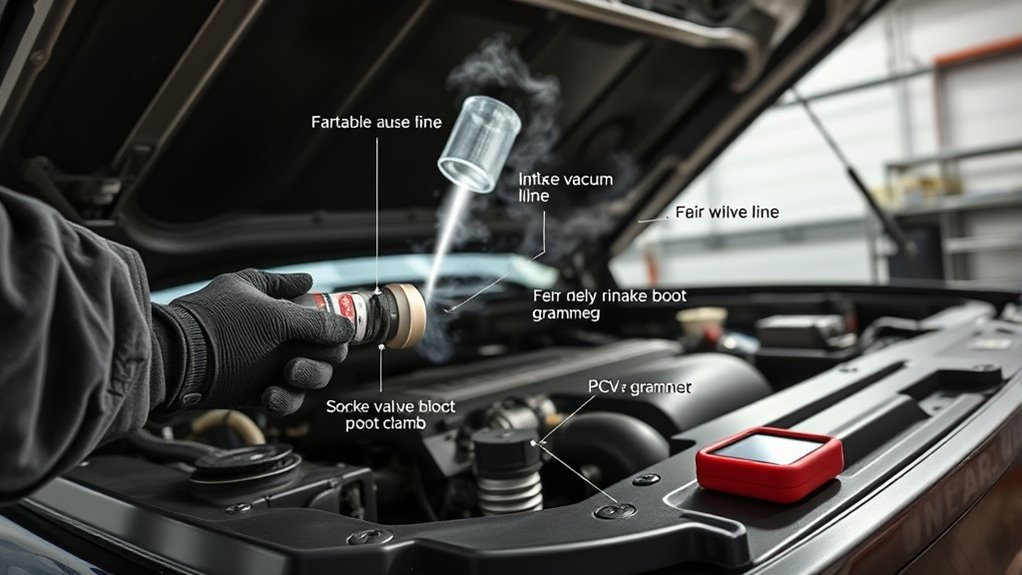
If your Tundra’s idle is rough, start by methodically checking for vacuum, intake, and PCV leaks, since unmetered air and a malfunctioning PCV quickly upset the air–fuel ratio. Begin with vacuum leak detection: run the engine, listen for hissing and probe hoses, fittings, and the intake manifold gasket. Use a smoke test to reveal leaks you can’t hear; escaping smoke pinpoints the breach so you can replace cracked or disconnected lines. Perform a PCV valve inspection next: remove and shake the valve — it should rattle freely; if it’s stuck open or clogged, replace it. Inspect PCV hoses and the valve cover nipple for cracks and oil saturation. Follow the intake tract from MAF to throttle body, checking clamps, boots, and sensors for secure fit and contamination. Regular maintenance prevents escalation. Act deliberately, document findings, and swap faulty components; restoring sealed intake and a healthy PCV system liberates the engine to idle smoothly.
Brake, ABS, Auto Start/Stop, and Idle Interactions
Check the brake and ABS communication pathways first, since a fault or intermittent connection in the ABS module can produce erratic idle behavior by sending incorrect inputs to the vehicle control network. Verify brake booster integrity and look for signs of air in the brake lines, because booster faults can create vacuum feedback that alters idle stability. Finally, test auto start/stop behavior—disable it temporarily to confirm whether its engagement correlates with rough idling.
Brake System Communication
When you investigate rough idle on a Tundra, include the brake system and its electronic interfaces since air in the lines, a failing booster, or disrupted ABS communication can indirectly alter engine control and idle stability. You’ll run brake diagnostics and verify ABS functionality early, freeing you from chasing unrelated symptoms. Check for air in lines, test booster vacuum integrity, and scan for ABS or CAN errors that coincide with misfire codes.
- Inspect brake lines for air and bleed per procedure; soft pedal can correlate with idle dips.
- Test brake booster vacuum and check for leaks affecting intake manifold pressure.
- Reconnect and reseat ABS module connectors; disrupted communication can trigger engine management responses.
- Use combined engine and ABS scans to correlate faults and resolve systemic idle faults.
Auto Start/Stop Effects
Because the auto start/stop system directly interfaces with the brake and ABS networks, its operation can influence idle stability and trigger drivetrain communication faults, so you should treat it as a prime suspect when investigating intermittent rough idle. You’ll check for faint starter sounds on shutoff—this can indicate programming anomalies referenced in TSB T-SB-0110-22. Engage diagnostics while toggling start/stop to correlate idle fluctuations with ABS/brake messages. If you see communication loss, a controlled ABS module unplug/reconnect can restore links and clarify fault origin. Note that aggressive driving increases occurrences as start/stop activates during deceleration, degrading engine performance perception. Maintain dealer software updates and monitor behavior; targeted reprogramming often resolves persistent interactions without unnecessary parts replacement.
When Dealer Updates, Recalls, or ECM Reprogramming Help
If your Tundra shows persistent rough idle despite routine maintenance, contact the dealer about software updates, recalls, or ECM reprogramming, since manufacturers often release fixes that directly address idle and communication faults. You’ll want dealer interventions and software updates logged and applied because they frequently resolve known idle issues and restore intended engine behavior.
- Ask the dealer to check for open recalls and TSBs; applying them can correct firmware-level idle faults noted across fleets.
- Request ECM reprogramming when communication errors appear (ABS, sensors); updated calibrations often eliminate errant idle caused by misreported signals.
- Review dealer service records to identify patterns; technicians can apply proven fixes used on similar Tundras, shortening your path to reliable operation.
- Maintain proactive visits for updates; staying current with OEM software preserves performance and empowers you to drive without electronic constraints.
These steps free you from recurring faults by addressing root software and calibration causes methodically.
Repair Cost Ranges and When to See a Pro
Although some fixes are inexpensive, rough idle repairs on a Tundra can span a wide cost range, so you should prioritize diagnosis before authorizing work. Expect repair cost from about $100 for cleaning a throttle body or MAF sensor to more than $1,000 for fuel pump, ignition module, or major injector work. Start with methodical, low-cost checks: spark plugs, fuel filter, and basic vacuum inspection.
If codes show multiple cylinder misfires or symptoms persist after component swaps, seek professional consultation. A trained technician uses advanced diagnostics to identify vacuum leaks, ECM faults, or wiring issues that DIY steps miss. Routine maintenance—engine diagnostics and periodic cleaning—reduces long-term expenses and preserves freedom from breakdowns.
Book professional consultation immediately if warning lights appear, rough idle worsens, or previous repairs fail. That targeted intervention prevents repeated part replacements and contains total repair cost while returning control of your vehicle to you.
Frequently Asked Questions
Why Does My Engine Shake at Idle but Smooths Out While Driving?
Your engine shakes at idle because uneven air-fuel delivery, misfires, or vacuum/electrical faults cause engine vibrations; higher RPMs mask idle issues by smoothing combustion. Diagnose sensors, vacuum leaks, and ignition components to reclaim control.
What’s the Worst Year for a Toyota Tundra?
You’ll find 2007–2011 often cited as the worst years for Toyota Tundra reliability, with 2007 highlighted most due to Tundra engine issues, oil consumption and brake complaints, so inspect service records and compression data.
What Is the Most Common Cause of a Rough Idle?
The most common cause is ignition-related misfires; you’ll fix coil packs or plugs, follow engine misfire solutions, and check for vacuum leak diagnosis. You’ll act methodically, reclaim control, and free yourself from idling issues.
Conclusion
Think of your Tundra as a seasoned clock: each gear—spark, vacuum, sensor, and software—must mesh precisely. When one tooth slips, the whole rhythm stutters. You’ll methodically isolate the faulty cog: scan codes, probe coils and plugs, pressure‑test for leaks, and verify updates. Fix the worn part or recalibrate the controller, and the engine’s cadence will lock back into place. Trust measured diagnostics; the idle will steady.