Open the driver door and read the sticker for GCWR, GVWR, curb weight and payload; GCWR minus your truck’s curb weight gives the maximum trailer weight. Account for occupants, fuel, cargo and tongue weight (typically 10–15% of trailer mass) which reduce usable payload. Verify axle ratings and any tow-package option codes and inspect hitch class and ball ratings. If sticker numbers don’t match your scale readings, document differences and contact a dealer to resolve before towing — more guidance follows.
Read the Tundra Door Sticker for GVWR & Curb Weight
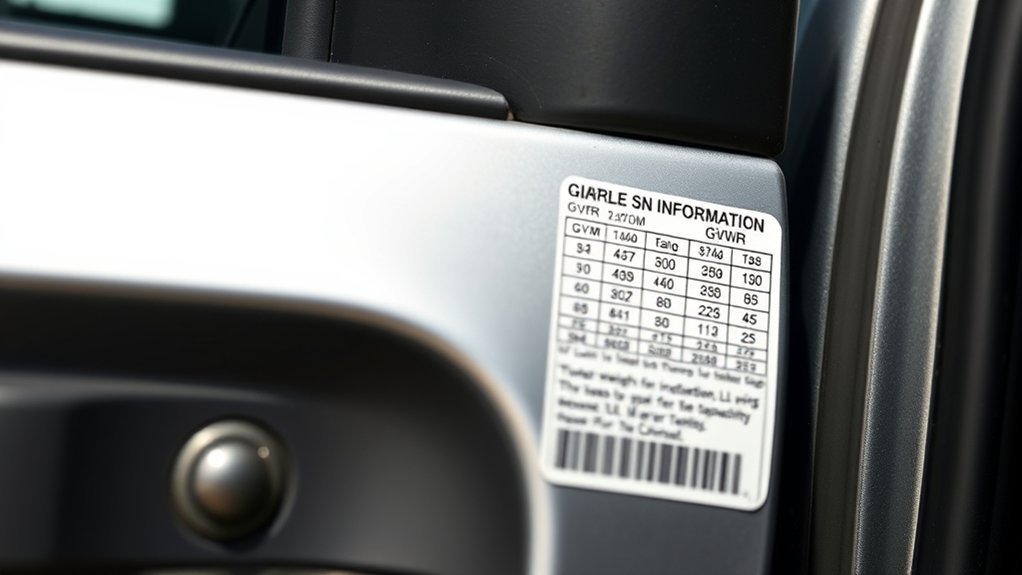
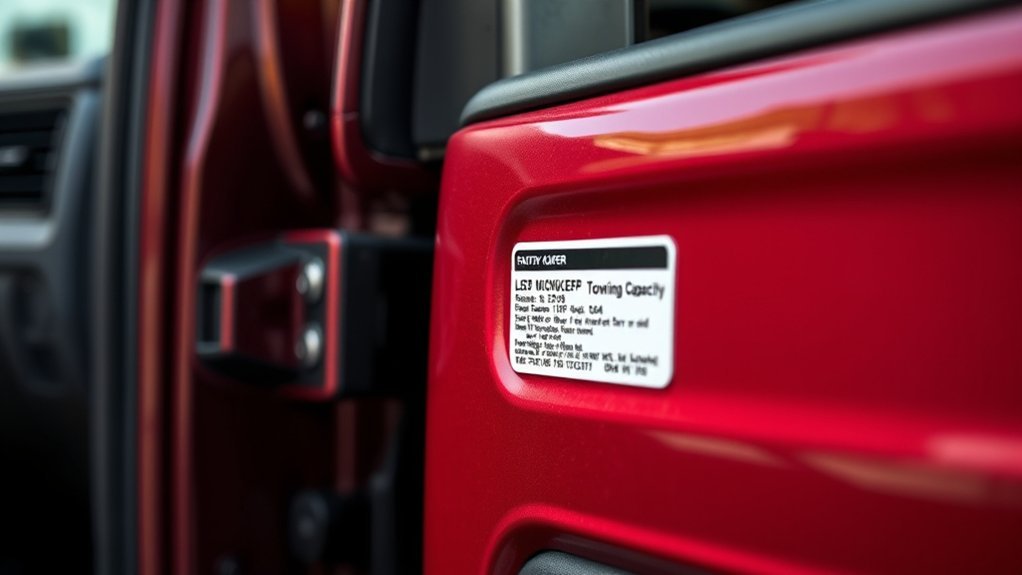
Want to know how much your Tundra can safely tow? Read the door sticker for GVWR & curb weight immediately. You’ll find GVWR, the maximum combined weight the vehicle can handle—truck, passengers, cargo—and curb weight, the empty vehicle mass. Use these door sticker insights to determine available payload before adding a trailer. That payload ceiling dictates how much trailer weight and cargo you can hitch without exceeding limits. The sticker also lists compliance and safety data specific to your model, so you won’t guess incorrectly. Always cross-check the sticker values against your planned load to maintain towing safety and legal compliance. By relying on the factory-provided figures you reclaim control: you’ll avoid overloading, reduce failure risk, and preserve vehicle integrity. Read the sticker, calculate payload precisely, and set limits that free you to tow confidently while keeping occupants and others safe.
Calculate Tundra Towing Capacity: GCWR − Curb Weight
Start by finding the GCWR on your Tundra’s door sticker, then subtract the truck’s curb weight to get the maximum trailer weight you can legally and safely tow. Locate GCWR, note the curb weight, and perform a simple subtraction: GCWR − curb weight = maximum towing capacity. For example, a 15,000 lb GCWR minus a 6,500 lb curb weight yields an 8,500 lb towing capacity. That figure sets the baseline for towing safety; it represents the combined vehicle-and-trailer limit you must not exceed.
Use this calculation as an objective constraint when planning trips that free you from limits without risking control. Remember GCWR on the sticker should already account for typical installed components, but recheck after modifications. This method doesn’t replace attention to weight distribution or proper hitch setup: even within capacity, poor distribution can compromise handling. Apply the computed limit strictly to maintain legality, preserve stability, and protect your right to roam responsibly.
Adjust for Payload: Passengers, Fuel, Cargo & Tongue (Hitch) Weight
When you plan towing, account for every pound in the truck: passengers, fuel, cargo and the trailer’s tongue weight all eat into your payload capacity. You’ll use payload adjustments to reconcile GCWR-based towing numbers with real-world loading. Start by reading the payload sticker on the driver’s door to get your truck’s specific payload limit. Subtract the curb-weight fuel amount and the known weight of occupants and gear. Then subtract tongue weight—typically 10–15% of trailer mass—because it directly reduces payload available for people and cargo.
Example: a 1,500 lb payload minus a 600 lb tongue weight leaves 900 lb for passengers and cargo. Repeat this calculation whenever loading changes, and factor in trim-specific payload variations. These technical checks free you from guesswork, keep the truck within rated limits, and protect chassis, brakes and handling. Make conservative payload adjustments rather than pushing limits; safety and mobility are liberation.
Verify Tundra Stickers, Option Codes and Towing Equipment
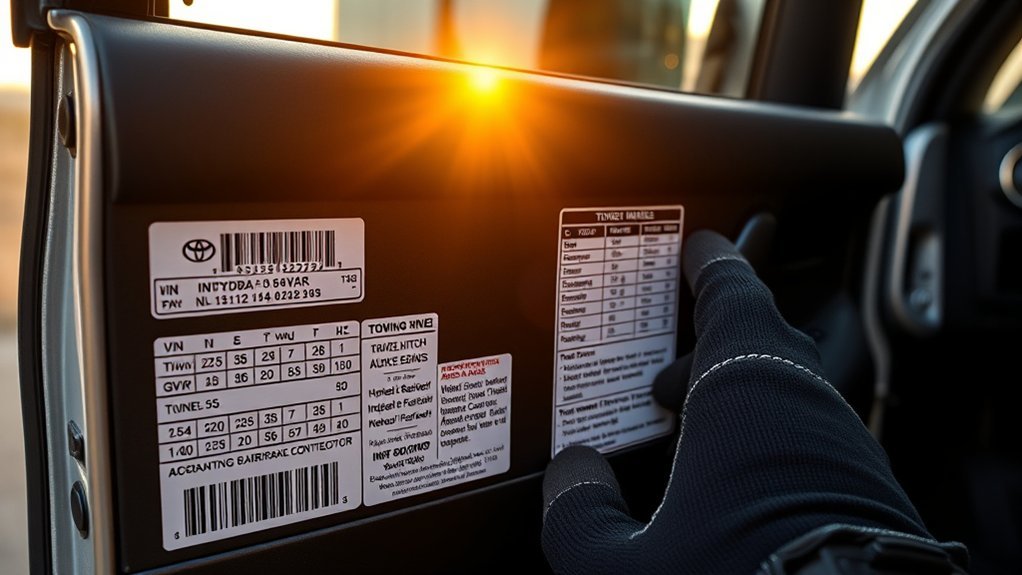
Check the door sticker and option codes on your Tundra first—those markings tell you the GVWR, payload limit, axle ratings and which towing package or hitch your truck left the factory with, all of which directly affect safe towing. You’ll read the specific GVWR and maximum payload; log those values and compare them to your planned load. Decode option codes to confirm installed tow packages, upgraded axles, or factory hitches that change tongue weight allowances and effective trailer capacity.
Inspect the physical towing equipment: hitch class, ball rating, and any reinforced frames or brake controllers. Cross-reference sticker data with the owner’s manual to reconcile any differences and to calculate final limits after passengers, fuel and cargo. Maintain proper payload distribution fore-to-aft and side-to-side to preserve steering, braking and towing safety. If equipment or codes don’t match your needs, choose upgrades or reduce load to stay within manufacturer limits and retain your freedom to tow confidently and responsibly.
Examples & Troubleshooting: Sticker Mismatches and Next Steps
After you’ve compared door-sticker values, option codes and installed hardware, you’ll sometimes find numbers that don’t line up with what you see on the scale or in practice. When sticker interpretation and measured payload disagree, document GVWR, GCWR and curb weight from the sticker, then record actual curb and axle weights on a certified scale. Calculate available tow capacity by subtracting curb weight from GCWR; note any weight discrepancies.
Common causes include factory-added accessories, aftermarket components or incorrect option-code decoding. If you confirm a mismatch, consult the owner’s manual for configuration charts and contact a dealership for official clarification or a corrected sticker. Don’t guess—operating beyond rated limits risks structural damage and legal exposure.
As a liberated operator, insist on accurate data: request a dealership writeup, ask for service technical bulletins, and retain scale receipts. Follow sticker limits until the manufacturer or dealer provides corrected, documented towing specifications.
Frequently Asked Questions
How to Tell Towing Capacity by Door Sticker?
You read the door sticker: locate vehicle ratings like GVWR and GCWR, subtract curb weight from GCWR, and use payload limits; that gives towing specifications so you can confidently and safely determine your Tundra’s towing capacity.
How Do I Know How Much My Tundra Can Tow?
You check your GCWR and GVWR on the sticker, subtract curb weight, and factor tongue weight to know towing capacity; you’ll also consider towing accessories and capacity upgrades, letting you tow freely yet safely and within limits.
Conclusion
You can quickly determine your Tundra’s towing capacity from the door sticker: read GVWR and curb weight, then subtract curb weight from the GCWR to get gross towable mass, and adjust for payload (passengers, fuel, cargo, tongue weight). Verify option codes and hitch specs against Toyota’s data. Note: about 25% of new trucks are optioned with towing packages that raise GCWR—so check the sticker, not assumptions, to avoid overloading and confirm safe, legal towing.