
What’s in This Article
- Why Your Toyota Camry Shudders During Acceleration
- Symptoms of Shuddering: When to Seek Help
- Immediate Steps for DIY Solutions to Shuddering
- Which Transmission Fluid Helps With Camry Shudder?
- Can a Software Update Fix Camry Torque Converter Shudder?
- Dealer vs. Independent Shop: Which Repair Option Makes Sense?
- When Should You Stop Driving and Call a Mechanic?
- Simple Maintenance Tips to Keep Your Camry Running Smoothly
- Frequently Asked Questions
A Camry shudder can feel minor at first, but it can point to a real transmission problem. Toyota documented this issue in some 2012-2014 Camry models with the U760E automatic transmission. This guide explains the likely causes, safe checks you can make, and when your car needs a qualified mechanic.
Quick Answer
If your 2012-2014 Toyota Camry shudders during light acceleration, the torque converter flex lock-up system may cause it. Toyota identified the shudder around 25-50 mph and issued Engine Control Module (ECM) software guidance for affected vehicles. Start with a safe fluid check and VIN history review, but get a mechanic involved if the shudder continues, worsens, or comes with slipping, noise, warning lights, or burnt fluid.
Key Takeaways
- The common shudder pattern affects some 2012-2014 Camry models under light throttle around 25-50 mph.
- Toyota Limited Service Campaign E03 expired on October 31, 2017, so you should verify your VIN history before assuming coverage.
- Dirty, low, burnt, or incorrect automatic transmission fluid can make shudder symptoms worse.
- A software update may help if the ECM calibration remains old, but it will not repair a worn torque converter.
- Stop driving and seek help if the car slips, loses power, shows warning lights, or smells burnt.
Why Your Toyota Camry Shudders During Acceleration
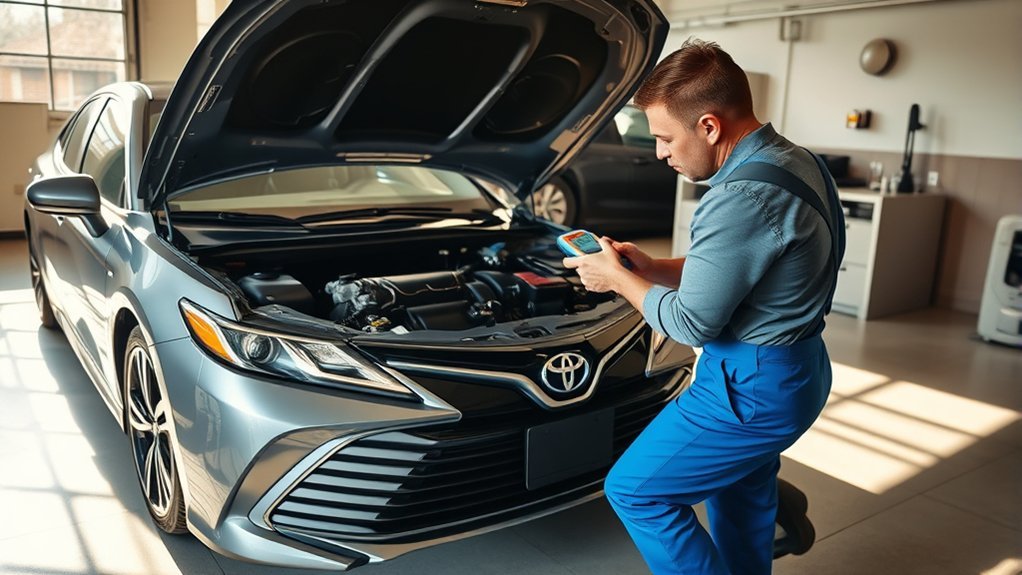
When you feel shuddering in a 2012-2014 Toyota Camry, pay close attention to speed and throttle position. Toyota service documents describe a brief intermittent shudder under light throttle between about 25 and 50 mph in some Camry models with the U760E transmission.
The issue often comes from the torque converter flex lock-up system. The torque converter links engine power to the automatic transmission, and the lock-up clutch helps reduce slip at cruising speed. When that clutch engages poorly, you may feel a rumble, shake, or vibration during light acceleration.
Old or incorrect automatic transmission fluid (ATF) can make the problem more noticeable. Worn engine mounts, tire issues, misalignment, axle problems, or engine misfires can also feel like transmission shudder, so avoid guessing based on feel alone.
Symptoms of Shuddering: When to Seek Help
Transmission shudder can feel like driving over a mild rumble strip. It often appears during light acceleration, then fades when you lift your foot or press the gas harder.
Watch for these signs:
- Vibration at steady speeds: You feel a shake around 25-50 mph under light throttle.
- Rough lock-up or downshift feel: The car feels like it hesitates, grabs, or pulses during gear changes.
- Unusual transmission noise: You hear whining, grinding, clunking, or new humming with the shudder.
- Fluid condition changes: You see dark fluid, smell a burnt odor, or notice delayed engagement.
- Warning lights or slipping: The engine revs without matching vehicle speed, or a warning light appears.
These symptoms can point to a torque converter issue, but they can also come from tires, suspension, ignition, or engine problems. A proper diagnosis should include a road test, fluid check, scan for diagnostic trouble codes, and inspection for non-transmission vibration sources.
Immediate Steps for DIY Solutions to Shuddering
Start with simple checks before you approve a major repair. Park on level ground, review your owner information, and check for leaks, low fluid signs, or a burnt smell if your model allows a safe inspection.
Ask a qualified shop to perform a drain-and-fill service if the fluid looks old, smells burnt, or lacks clear service history. Use Toyota Genuine ATF WS or a fluid that clearly states Toyota WS compatibility. Do not mix random ATF types, because friction behavior matters in the lock-up clutch.
A fluid service may reduce light shudder if old fluid worsens the engagement. It will not fix a damaged torque converter clutch, failed internal part, or software calibration problem.
Pro tip: Ask the shop to save a small fluid sample and note the color, smell, and any metal debris before refilling.
Which Transmission Fluid Helps With Camry Shudder?

The safest baseline is the fluid specification your Camry calls for. Toyota service bulletin parts information lists ATF WS for the torque converter repair procedure on affected vehicles.
If a repair shop suggests a multi-vehicle synthetic ATF, ask them to confirm Toyota WS compatibility in writing. Avoid using a thicker fluid only to hide shudder symptoms, because that approach may mask a problem instead of fixing it.
Do not treat ATF additives as a guaranteed repair. An additive may change shift feel, but it cannot repair worn converter parts, damaged clutch material, or incorrect ECM calibration.
Can a Software Update Fix Camry Torque Converter Shudder?
Toyota Limited Service Campaign (LSC) E03 addressed torque converter shudder with updated ECM software logic. Toyota stated that the campaign covered only the ECM reflash and did not cover component replacement.
The LSC E03 free campaign period expired on October 31, 2017. A Toyota dealer can still check your VIN history and tell you whether the campaign or later calibration was completed.
Note: NHTSA recall lookup may not show expired manufacturer customer service campaigns, so ask Toyota to check campaign history by VIN.
Software Calibration Check
A calibration check helps confirm whether your Camry already received the updated ECM logic. Toyota service instructions use Techstream equipment to check the current calibration ID and reflash the ECM when needed.
- Check VIN eligibility history: Ask a Toyota dealer to review LSC E03 and ZE5 records.
- Confirm the ECM calibration: Have the shop compare your calibration ID with Toyota service information.
- Road-test the vehicle: Confirm whether the shudder happens under light throttle around 25-50 mph.
- Inspect other causes: Check mounts, tires, axles, ignition misfire data, and fluid condition before replacing parts.
Torque Converter Repair Path
Toyota Technical Service Bulletin (TSB) T-SB-0312-17 superseded the older T-SB-0034-14 bulletin. That bulletin covers torque converter flex lock-up shudder and includes a torque converter clutch replacement and ECM reprogramming procedure for qualifying vehicles.
Here is a plain overview of what the update or repair may change:
| Area | Before Diagnosis | After Correct Repair |
|---|---|---|
| Shudder feel | Rumble or vibration under light throttle | Reduced or gone if the root cause was fixed |
| Lock-up behavior | Rough or unstable clutch engagement | Smoother torque converter operation |
| Software status | Old or unknown ECM calibration | Verified or updated calibration |
| Repair need | Unknown without road test and scan | Clearer choice between service, update, or converter repair |
Dealer vs. Independent Shop: Which Repair Option Makes Sense?
When your Camry shudders during acceleration, choose the shop based on the work you need. A Toyota dealer can check Toyota campaign history, calibration data, and dealer-only service records. A strong independent transmission shop may offer lower labor rates and careful mechanical diagnosis.
Repair Process Comparison
Use this checklist when you compare repair options:
- Choose a dealer for campaign history: Dealers can check Toyota records and verify past LSC or warranty enhancement work.
- Choose a dealer for calibration work: ECM reprogramming needs proper Toyota-compatible equipment and procedures.
- Choose an independent shop for second opinions: A skilled transmission shop can confirm whether the shudder comes from the converter or another cause.
- Ask both shops for written findings: Request scan results, road-test notes, fluid condition, and the exact repair plan.
Cost Considerations
Repair cost depends on the diagnosis, location, labor rate, and parts choice. RepairPal listed the average 2012 Toyota Camry transmission fluid change at $213 to $293 in January 2026. A full transmission replacement costs much more, with RepairPal listing a general average of $5,892 to $6,402.
A torque converter repair may cost less than full transmission replacement, but more than a fluid service. Get an itemized quote before approving the work, and ask whether the shop will recheck calibration after repair.
Expertise and Equipment Availability
Dealers often have direct access to Toyota service bulletins, calibration files, and campaign records. Independent shops can still diagnose the issue well if they have Toyota-compatible scan tools and transmission experience.
Before you choose a shop, ask three questions:
- Have you diagnosed 2012-2014 Camry torque converter shudder before?
- Can you check ECM calibration status and scan transmission data?
- Will you rule out tires, mounts, axles, and engine misfires before quoting a converter repair?
When Should You Stop Driving and Call a Mechanic?
Do not keep driving normally if the shudder turns into slipping, delayed engagement, harsh clunks, or power loss. These signs can point to deeper transmission damage or a safety risk.
Warning: Pull over when safe and call a repair shop or towing service if the car loses power, slips badly, shows warning lights, or smells burnt.
You should also seek help if the shudder remains after a correct fluid service and calibration check. A worn torque converter clutch will not heal on its own, and delayed repairs can raise the final bill.
Simple Maintenance Tips to Keep Your Camry Running Smoothly
Good maintenance helps reduce avoidable transmission stress. Follow your Toyota maintenance schedule and ask your mechanic about transmission service intervals based on mileage, driving style, and fluid condition.
Many repair guides recommend regular transmission fluid service in the 30,000 to 40,000 mile range under normal conditions, with shorter intervals for severe use. Severe use can include heavy stop-and-go driving, towing, steep hills, or extreme heat.
Check related vibration sources too. Worn tires, bent wheels, bad axles, weak engine mounts, or suspension wear can mimic a transmission shudder during acceleration.
Keep repair records for fluid service, calibration checks, and transmission work. Good records help the next mechanic avoid repeat tests and give you a clearer path if the shudder returns.
Frequently Asked Questions
Can a Transmission Shudder Be Fixed?
Yes, a transmission shudder can often be fixed after the shop finds the root cause. A fluid service or ECM calibration update may help mild cases, but a worn torque converter may need replacement.
Why Does My Camry Stutter When Accelerating?
Your Camry may stutter because the torque converter clutch engages poorly under light throttle. It may also come from old ATF, engine misfires, worn mounts, axle problems, or tire and suspension issues.
What Is the Transmission Shudder Recall on the 2012 Toyota Camry?
Toyota handled this issue through Limited Service Campaign E03 and Warranty Enhancement ZE5, not a normal active safety recall. LSC E03 expired on October 31, 2017, but a Toyota dealer can still check your VIN history.
Will Changing Transmission Fluid Stop Camry Shudder?
A correct fluid service may reduce shudder if old, dirty, low, or incorrect fluid worsens the torque converter clutch feel. It will not fix damaged clutch material, internal transmission wear, or a missing ECM calibration update.
Is It Safe to Drive With a Camry Shudder?
Light, brief shudder may let you drive to a repair shop, but worsening symptoms need faster action. Stop driving when safe if the car slips, loses power, smells burnt, makes harsh noises, or shows warning lights.
Safety Disclaimer: This article is for informational purposes only and does not replace diagnosis by a qualified automotive technician. Ask a qualified mechanic to inspect your Camry before you approve repairs or keep driving with serious symptoms.
Conclusion
A Toyota Camry shudder during acceleration often points to torque converter lock-up behavior, fluid condition, software calibration, or another vibration source. Start with safe checks, then verify campaign history and ECM calibration before you approve major repairs.
If the shudder persists, get a written diagnosis from a dealer or trusted transmission shop. A clear diagnosis protects your budget and helps keep your Camry safer on the road.
References
- Limited Service Campaign E03 Technical Instructions – Toyota Motor Sales, U.S.A., 2017
- T-SB-0312-17 Torque Converter Flex Lock-up Shudder – Toyota Motor Sales, U.S.A., 2017
- Warranty Enhancement Program ZE5 Dealer Letter – Toyota Motor Sales, U.S.A., 2014
- Check for Recalls – National Highway Traffic Safety Administration, 2026
- 2012 Toyota Camry Transmission Fluid Change Cost – RepairPal, 2026





[…] Toyota Camry trunk can fail at the worst time: bags inside, key fob in hand, and no release sound from the […]