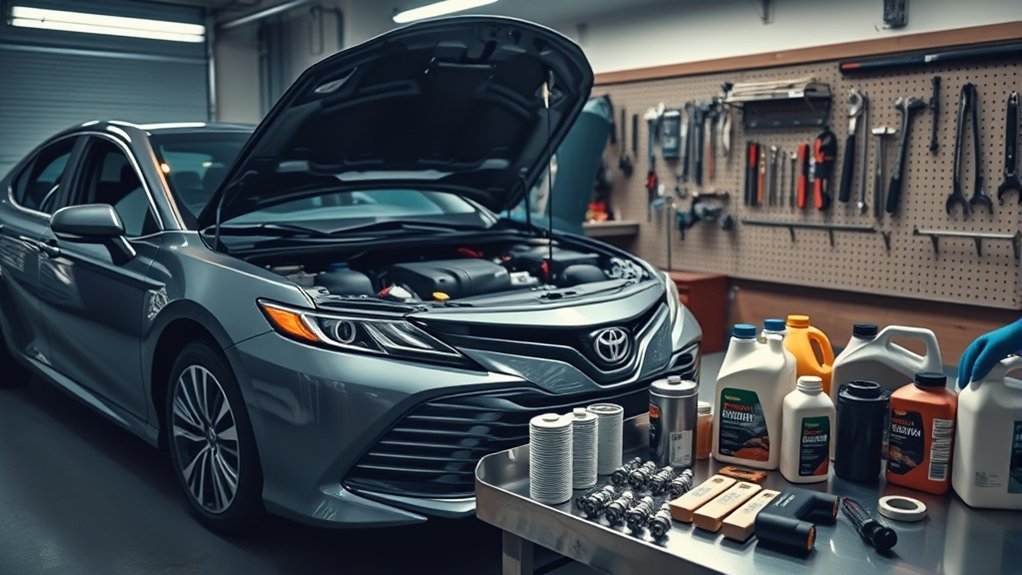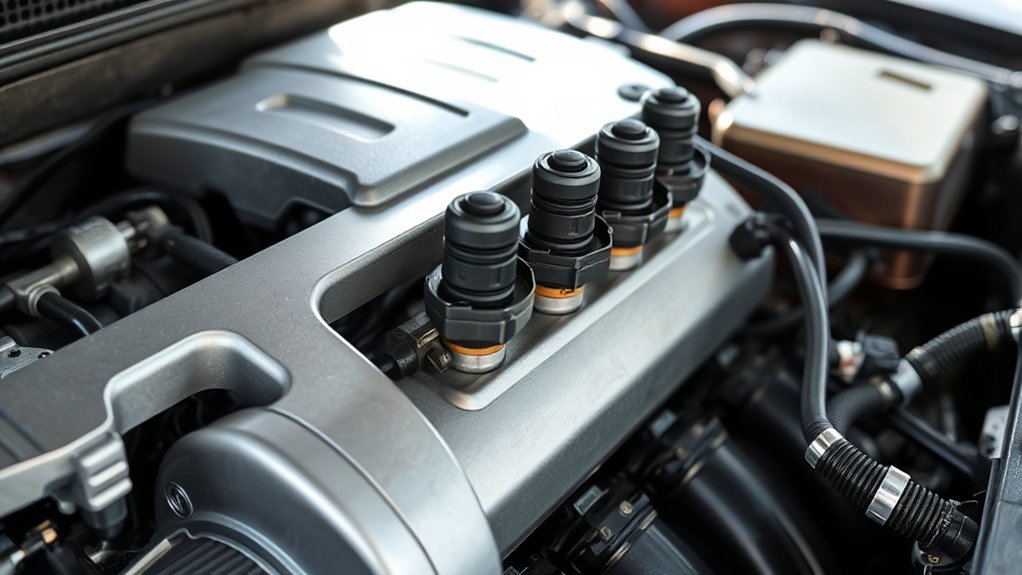
Your Camry uses both port and high‑pressure direct injectors controlled by the ECU to meter fuel precisely; port injectors feed the intake manifold and help wash valves while direct injectors spray into the combustion chamber for finer atomization and efficiency. Fuel pressure is held by a return‑less in‑tank pump and regulated at the pump. Each port injector gets constant 12V while the ECU grounds them in timed pulses; seals and O‑rings prevent leaks. Keep going to learn symptoms, checks, and fixes.
Quick Answer: Camry Fuel Injection in a Nutshell
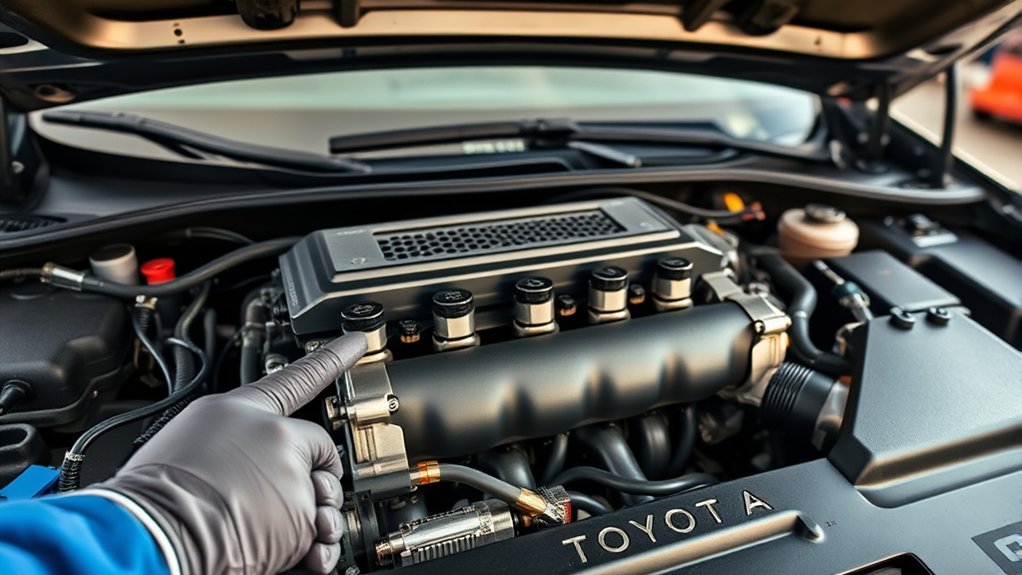
While many Camry models use both port and direct injection, Toyota pairs them to optimize fuel delivery: port injectors meter fuel into the intake manifold and direct injectors spray high-pressure fuel straight into the combustion chamber, and the engine computer times and pulses each injector’s ground to control duration based on air-intake sensors. You’ll see a dual-path architecture that boosts fuel efficiency and enables precise performance tuning: port injectors handle low-load, short-duration fueling while direct injectors add metered, high-pressure charge when needed for power or stratified operation. The in-tank, 12‑volt fuel pump with an integrated, non-serviceable filter sustains consistent pressure to both circuits. Routine service focuses on injector O-ring and seal replacement to prevent leaks; if you encounter misfires, swapping injectors helps isolate the failed unit. You’ll approach diagnostics and tuning methodically, using sensor data and injector control signals to free the engine’s potential without compromising reliability or economy.
What the Camry Fuel Injection System Is and Why It Matters for Drivability
You rely on the Camry’s fuel injection to meter fuel delivery precisely—either at the port or directly into the combustion chamber—so the engine gets the correct amount of fuel for power and efficiency. The ECU controls injector timing and pulse width based on real-time air intake and sensor feedback to maintain the target air‑fuel ratio. Any timing errors, clogged non‑serviceable filter elements, or damaged O‑rings can upset drivability and should be checked when diagnosing performance issues.
Fuel Delivery Functionality
Because the Camry uses a return-less fuel delivery system, fuel pressure is regulated at the pump in the tank and delivered through a single line to a fuel rail where computer-controlled injectors pulse to meter fuel. You rely on consistent fuel pressure and proper injector maintenance to keep drivability crisp and free. The pump runs on 12 volts in-tank, eliminating priming issues and stabilizing delivery. Injectors receive constant 12 volts; the ECU commands openings to match load and speed. Seal integrity matters—bad O-rings cause fuel and vacuum leaks that degrade performance.
- Confirm pump voltage and tank mounting.
- Measure rail pressure against spec.
- Inspect and replace injector seals when removed.
- Monitor for leaks and misfires promptly.
Injector Timing Control
Having verified pump voltage, rail pressure and injector sealing, now focus on how the ECU times injector grounding to shape the air–fuel mixture and drivability. You’ll see the Camry keeps 12V constant to each port injector while the ECU varies ground duration based on intake measurements. That timing accuracy dictates injector performance, engine responsiveness and smooth acceleration. Misfires often signal poor timing or failing injectors, so diagnose by comparing commanded pulse width to actual response under stable rail pressure. Maintain the rail for consistent operation across conditions. You’ll act to free yourself from guesswork: log sensor inputs, confirm pulse widths, swap suspect injectors and restore precise timing to reclaim efficient, reliable drivability.
| Parameter | Effect |
|---|---|
| Pulse width | Fuel quantity |
| Rail pressure | Consistency |
Port vs. Direct Injection on Camrys : Key Differences
When comparing port and direct injection on Camrys, you’ll find they differ chiefly in where and how fuel is delivered: port injection sprays fuel into the intake manifold at relatively low pressure (around 40–60 psi) using simpler, lighter injectors, while direct injection pumps fuel at very high pressure (up to ~3000 psi) directly into the combustion chamber with heavier, metal-sealed injectors for finer atomization and tighter air–fuel control. You’ll use this knowledge to choose systems that free you from compromise between economy and power.
- Atomization: direct injection yields finer droplets and more complete combustion, improving efficiency and power — essential in performance comparison.
- Component design: port injectors are lighter and simpler; direct injectors require robust metal bodies and seals for high-pressure reliability.
- Maintenance: port systems wash intake valves; direct systems can allow carbon buildup, affecting long-term service strategy.
- System role: direct injection reduces fuel travel losses; combined with hybrid integration, it maximizes overall vehicle efficiency and responsiveness.
Camry Fuel Pump and Delivery: Return vs Return‑Less Explained
Most Camry models use a return-less fuel delivery architecture that keeps pressure regulation inside the in-tank pump module, so you’ll see a single feed line to the rail instead of a separate return hose. You rely on the in-tank pump to provide stable fuel pressure regulation at the source; the regulator integrated into the pump assembly meters flow and maintains rail pressure without returning excess fuel to the tank. This reduces plumbing complexity, heat soak risk, and parasitic losses, which aligns with a liberated approach to efficient design.
The pump runs on 12 volts and, in Camrys, is noted for fuel pump reliability—reported failures are uncommon. There’s no initial prime when you cycle the ignition; the system depends on the pump’s readiness and the built-in, non-serviceable filter. As a result, preventive maintenance focuses on fuel quality and timely replacement of the assembly when symptoms appear, rather than periodic regulator or return-line service.
How Injectors Are Powered and Controlled
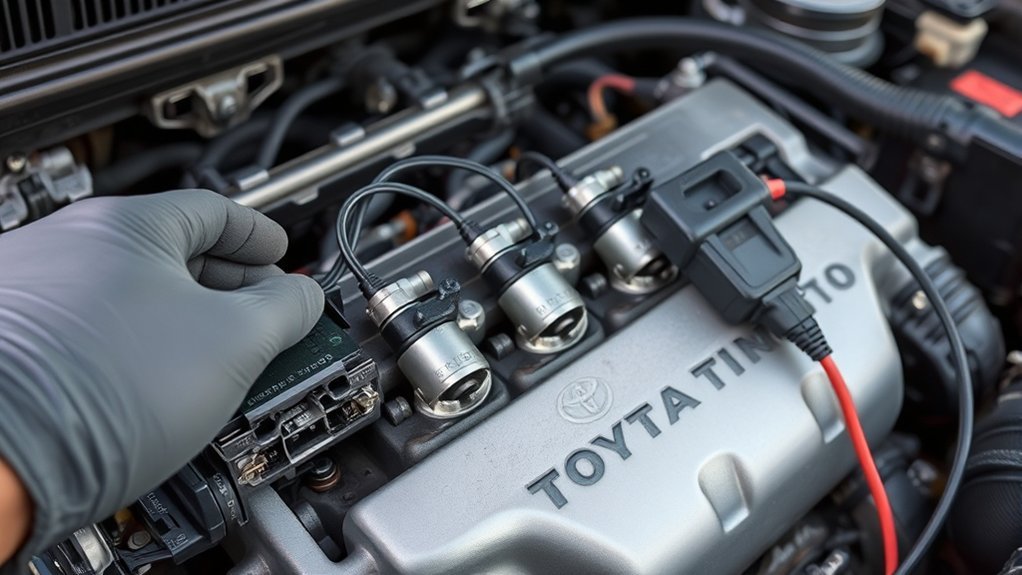
You’ll find each Camry injector tied to a constant 12V supply while the engine computer controls the ground side to time injections. The ECM sends pulsed negative signals in milliseconds based on intake measurements to set duration and achieve target air‑fuel ratios. Replace top o‑rings and bottom seals whenever you remove injectors to prevent fuel or vacuum leaks.
Constant Battery Voltage
Because the injectors need a steady power source to operate reliably, Toyota supplies them with a constant 12-volt feed from the battery while the engine control unit (ECU) switches their ground side to control injection timing and duration. You rely on constant voltage for injector reliability; that steady feed isolates the injector coil from supply-side fluctuations and simplifies diagnostics. You’ll diagnose faults by checking that 12V presence at the injector harness and confirming each injector’s individual control signal integrity. Maintain freedom from guesswork by measuring:
- Battery and harness 12V under key-on and cranking conditions.
- Injector connector resistance for coil health.
- Voltage drops in ground paths to the ECU.
- Individual injector response with a scope or noid light.
This approach empowers precise, effective repairs.
Pulsed Ground Control
When the ECU needs fuel delivered, it leaves the injector power pin at a constant 12 volts and pulses the ground side to start and stop current flow, controlling injector timing and duration in milliseconds. You rely on pulsed control to achieve injector precision: the ECU grounds each injector individually, varying pulse width to match real-time air intake and maintain the ideal air-fuel ratio. That pulse width, measured in milliseconds, adapts instantly to throttle input, load, temperature, and emissions demands. You must protect wiring and connectors because damaged grounds or shorted circuits disrupt timing, cause misfires, and can force expensive ECU repairs. Understanding pulsed ground control lets you reclaim control of engine performance, diagnose faults, and guarantee efficient, liberated operation.
Injector Parts You Should Know: Seals, O‑Rings, Filters
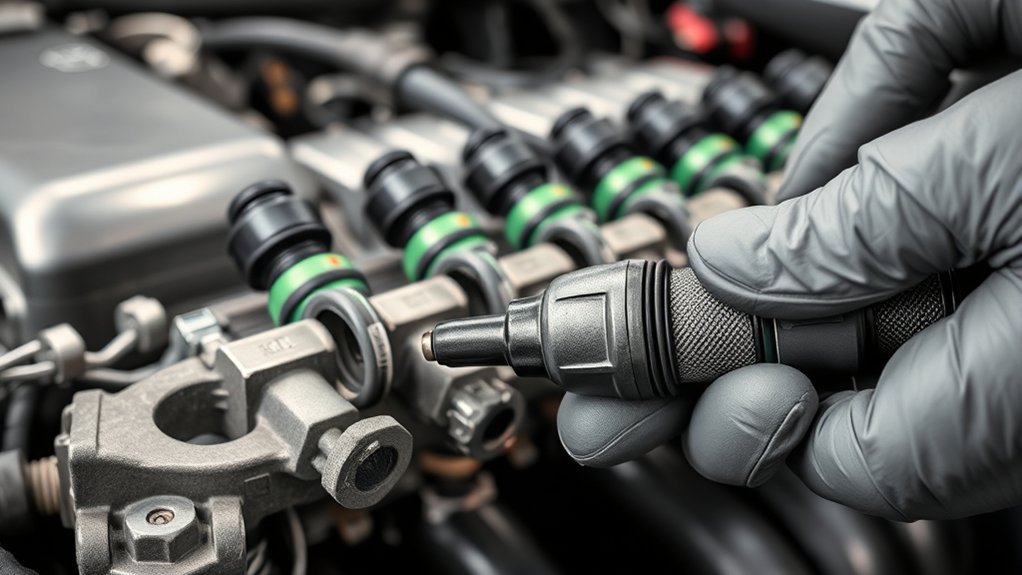
Seals, O‑rings and the in‑tank filter are small components that play outsized roles in fuel injection reliability, and you should treat them as mandatory service items whenever injectors are disturbed. You’ll follow injector maintenance tips: always replace the top O‑ring and bottom seal on removal, and fit direct injector O‑rings and safety rings during installation. Seal replacement importance is practical—failed O‑rings cause fuel or vacuum leaks, metered airflow disruption, and misfires.
- Replace top O‑ring and bottom seal on every injector removal.
- For direct injectors, install multiple seals and safety rings precisely.
- Use correct lubrication and alignment to prevent installation damage.
- Remember the fuel pump’s integrated filter is non‑serviceable; maintain the system instead.
You’ll act deliberately: inspect new seals, avoid nicking edges, and respect torque and seating procedures. These steps free you from repeat failures and preserve safe, reliable fuel delivery.
Camry Fuel Injection: Common Symptoms to Watch For
Now that you’ve inspected and replaced injector seals and rings, pay close attention to how the engine behaves — fuel injection faults reveal themselves through distinct drivability symptoms. You’ll notice rough idling, poor acceleration, and reduced fuel efficiency when injectors clog or fail. Misfires confined to one cylinder suggest an injector fault; swap injectors to confirm if the misfire follows the unit. Hesitation or stalling under load points to compromised fuel delivery or injector performance. Listen for injector clicks — normal operation produces audible pulses; silence can indicate electrical failure. Fuel leaks at seals are urgent safety risks and degrade performance.
| Symptom | Likely Cause | Action |
|---|---|---|
| Rough idle | Clogged/weak injector | Diagnose, consider fuel injector cleaning |
| Misfire | Faulty injector | Swap to confirm, use injector replacement tips |
| Hesitation/stall | Poor fuel delivery | Inspect wiring, seals, test injector flow |
You’ll act decisively, reclaim control, and restore reliable, efficient operation.
Quick DIY Checks and Simple Fixes You Can Try at Home
If you suspect injector problems, start with a few quick checks you can do at home to narrow the fault before buying parts: listen for each injector’s audible click with the engine idling, inspect and replace the top O‑ring and lower seal whenever you pull an injector, and swap suspect injectors between cylinders to see if a misfire follows the unit. These actions form the core of fuel injector maintenance and a basic injector performance evaluation.
- Use audible checks: confirm a uniform click per injector at idle; silence flags a fault.
- Replace seals: always fit new top O‑rings and lower seals to prevent leaks and vacuum loss.
- Swap-test: move a suspect injector to another cylinder; if the misfire moves, replace the injector.
- Scan fuel trims: use an OBD-II reader; large short/long-term fuel trim deviations suggest delivery problems.
Seat injectors correctly and verify they rotate freely during install. These concise DIY steps free you from unnecessary parts purchases and sharpen diagnostic power.
When to See a Mechanic : What Checks and Data to Bring
When you take the Camry to a mechanic for suspected injector or fuel‑system problems, bring the ECU trouble codes, a note of any fuel smells or visible leaks, and a concise log of performance symptoms (rough idle, misfires, poor acceleration) plus recent maintenance on injectors or fuel components; also mention any fuel-quality changes or additives used and any quick home checks you already ran (audible clicks, swap tests, fuel‑trim readings) so the technician can focus diagnostics and avoid redundant tests. Carry records of prior injector repairs, fuel-pump replacements, or filter changes; these show patterns and shorten engine diagnostics. Note exact conditions for failures: load, temperature, RPM, and fuel brand or source. If you smelled vapor or saw wet areas, mark location. Include the date and mileage when symptoms began and any intermittent behavior. Be prepared to authorize pressure or injector-flow tests; that lets the shop proceed without delay. Clear, specific data speeds repair, reduces unnecessary parts replacement, and returns you to the road free.
Frequently Asked Questions
How Does Fuel Injection Work Step by Step?
You follow sensors, ECU signals calibrated to injector calibration, and 12V actuations; injectors open, fuel atomization occurs into the intake or chamber, combustion ignites, exhaust clears, ECU adjusts timing and mixture for efficient, liberating control.
What Are the 4 Types of Fuel Injection Systems?
You’re shown four types: port, direct, sequential, and batch injection. You’ll contrast simplicity versus precision, using injection technology to boost car performance and fuel efficiency while pursuing engine optimization that frees you from waste.
What Are the 6 Basic Components of the Fuel Injection System?
The six basic components are the fuel pump, fuel rail, fuel injectors, ECU, throttle body, and MAF sensor; you’ll optimize fuel efficiency and injector maintenance by monitoring pressure, airflow, signals, and keeping injectors clean and calibrated.
Conclusion
So, you’ve learned how your Camry’s fuel system squints, squirts and sulks — congratulations, you’re now slightly more qualified to diagnose automotive drama than most infotainment systems. Keep seals tight, injectors clean and data ready for your mechanic (or for your own proud, grease-streaked stubbornness). Fix simple stuff, don’t guess at complex failures, and remember: fuel systems obey physics, not optimism — treat them with precision or pay for comedy.