What’s in This Article
- What the EGR System Does in Older Toyota Camrys
- Before You Start: Safety and Model-Year Checks
- How EGR Lowers Combustion Temperatures and NOx in Camrys
- EGR Parts on Older Camrys: Valve, Modulator, VSV, Sensors
- Common Failure Modes: Soot, Sticking, Vacuum Leaks, Sensor Faults
- Symptoms and EGR Trouble Codes to Watch For
- Quick DIY EGR Diagnostic Checks for Older Camry Owners
- Cleaning vs. Replacement: When to Clean the EGR or Replace Parts
- EGR Repair Checklist for Camrys: Parts, Tools, Torques, Tips
- Preventive Driving and Maintenance to Extend EGR Life
An older Toyota Camry can run rough from a small EGR fault that hides in plain sight. Carbon, cracked vacuum hoses, a weak Vacuum Switching Valve (VSV), or a stuck valve can trigger poor idle, weak acceleration, and codes like P0401 or P0402. This guide shows you what the Exhaust Gas Recirculation (EGR) system does, how the parts work together, and what you can check before you replace parts.
Quick Answer
The EGR system sends a controlled amount of exhaust gas back into the intake to lower combustion temperature and reduce nitrogen oxide (NOx) emissions. On older Camrys, clogged EGR passages, a stuck valve, cracked vacuum hoses, a weak VSV, or a bad sensor can cause rough idle, hesitation, stalling, or EGR trouble codes. Start with code reading, vacuum checks, hose inspection, and carbon inspection before you replace the valve.
Key Takeaways
- EGR lowers combustion temperature, which helps reduce NOx emissions.
- P0401 points to low EGR flow, while P0402 points to too much EGR flow.
- Carbon buildup and vacuum leaks cause many older Camry EGR problems.
- U.S.-market 1996 and newer Camrys use OBD-II, but some older models use flash-code diagnostics.
- Clean light carbon deposits first, but replace worn valves, damaged hoses, or failed solenoids.
What the EGR System Does in Older Toyota Camrys
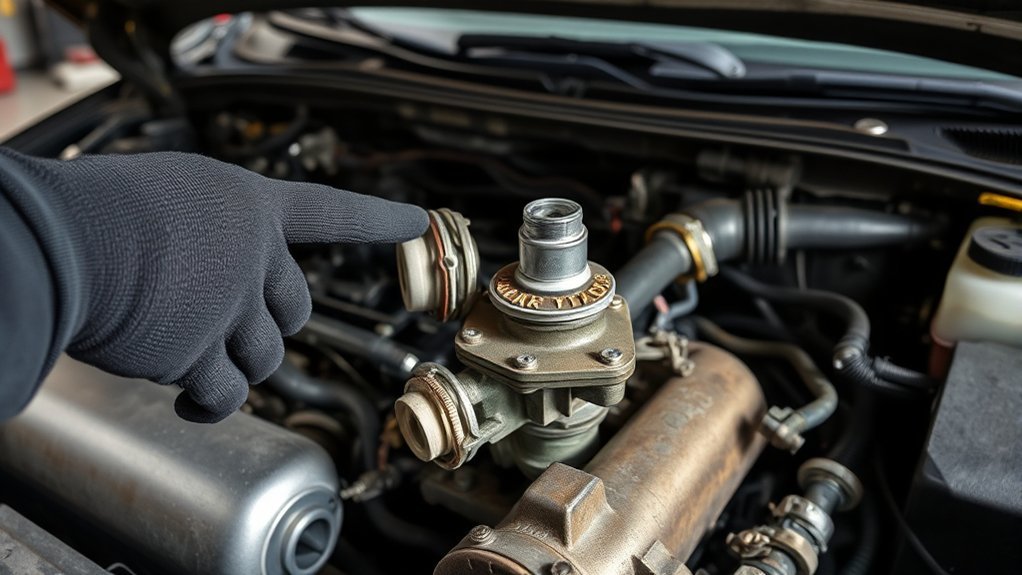
The Exhaust Gas Recirculation (EGR) system sends a measured amount of exhaust gas back into the intake manifold. That exhaust gas dilutes the air-fuel mixture, slows combustion, lowers peak combustion temperature, and helps reduce NOx emissions.
On many older Toyota Camrys, especially 2.2L 5S-FE and V6 models, the system may include an EGR valve, vacuum modulator, Vacuum Switching Valve (VSV), vacuum hoses, and one or more feedback sensors. Exact parts vary by year, engine, and market.
When the system fails, you may feel a rough idle, weak acceleration, stalling, pinging, or higher fuel use. You may also see a Check Engine Light. Carbon often builds up inside the EGR valve, pipe, or intake passages, so inspection and cleaning can restore flow when the parts still move correctly.
Before You Start: Safety and Model-Year Checks
Confirm your Camry year, engine, and emissions label before you test the EGR system. Toyota used different EGR layouts across model years, engines, and markets, so the same symptom can have different causes.
U.S.-market 1996 and newer Camrys use On-Board Diagnostics II (OBD-II). Some 1995 and older Camrys may use Toyota flash-code diagnostics instead of a standard OBD-II scanner. Check the service manual or under-hood emissions label before you assume which diagnostic method applies.
Warning: Let the engine cool before you remove EGR parts, and keep hands, tools, and clothing away from belts, fans, and hot exhaust parts.
How EGR Lowers Combustion Temperatures and NOx in Camrys
The EGR system works because exhaust gas contains less oxygen than fresh intake air. When the engine draws some exhaust back into the intake, the mixture burns at a lower peak temperature.
According to emissions-control references from Toyota and the EPA, lower combustion temperature helps reduce thermal NOx formation. The International Council on Clean Transportation also explains that NOx formation rises as peak combustion temperature rises.
The EGR valve should not stay open all the time. On older Camrys, the system usually adds EGR during warm, steady driving. It should stay closed at idle and during cold starts, because exhaust flow at the wrong time can make the engine shake or stall.
EGR Parts on Older Camrys: Valve, Modulator, VSV, Sensors
Think of the EGR system as a small control loop. Each part must work at the right time, or the engine may get too little or too much recirculated exhaust.
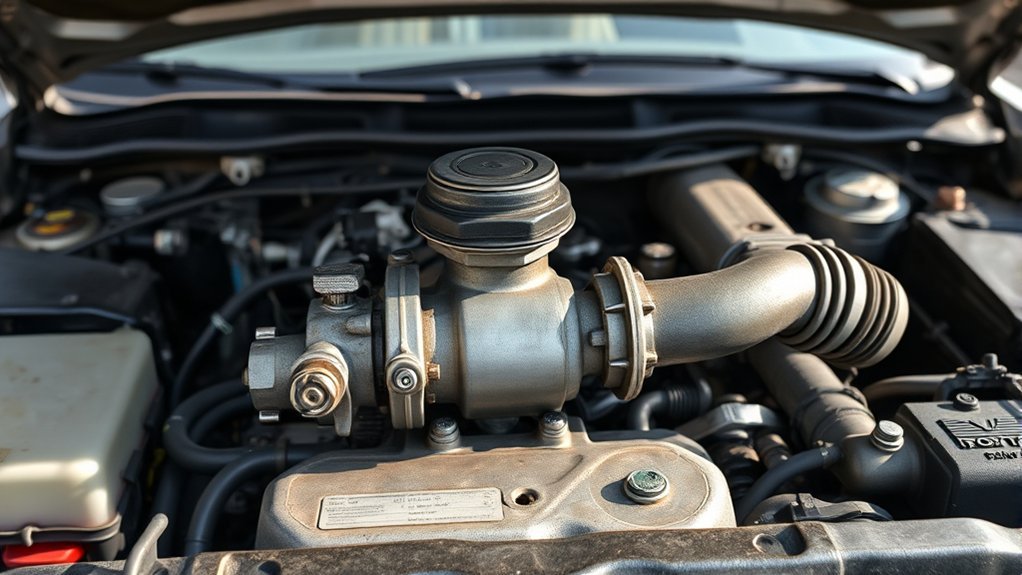
- EGR valve: Opens the passage that lets exhaust enter the intake.
- Vacuum modulator: Regulates vacuum to the EGR valve based on engine load on many older systems.
- Vacuum Switching Valve (VSV): Uses an electrical signal to control vacuum flow.
- Vacuum hoses: Carry vacuum between the valve, modulator, VSV, and intake source.
- Feedback sensors: Help the engine computer confirm EGR flow or related temperature changes on some models.
Start diagnosis with the simple parts first. Cracked hoses, blocked ports, and loose connectors can mimic a failed EGR valve. Replace parts only after you test the system and confirm the fault.
Common Failure Modes: Soot, Sticking, Vacuum Leaks, Sensor Faults
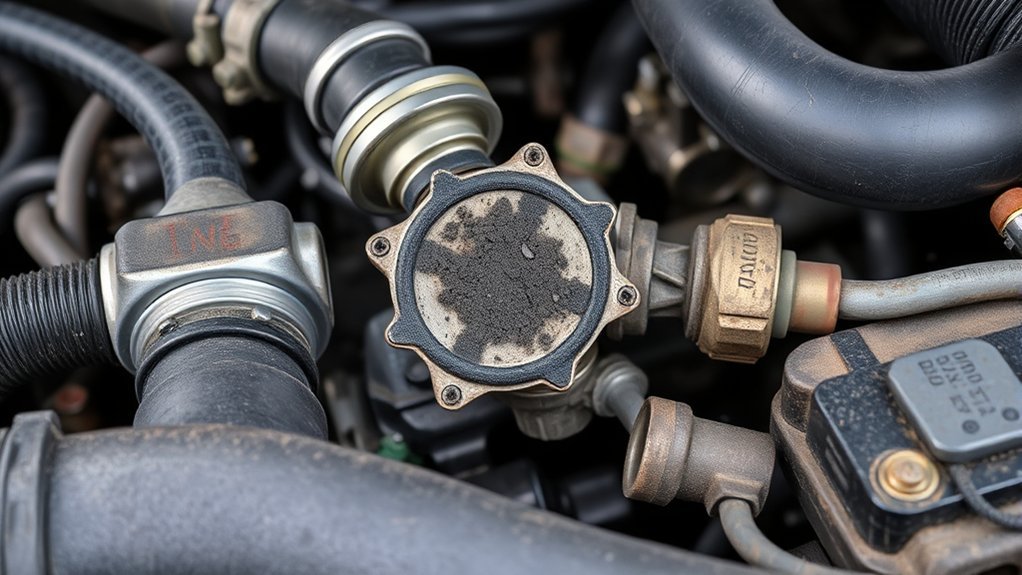
Older Camry EGR problems often start with carbon buildup. Short trips, oil vapor, age, and normal exhaust deposits can narrow the EGR passages until the engine computer sees low flow.
A valve can also stick open or closed. A stuck-open valve can cause rough idle, stalling, and hard starts. A stuck-closed valve or clogged passage can raise combustion temperature and increase NOx emissions.
- Soot and carbon: Blocks the valve, pipe, or intake port and reduces EGR flow.
- Sticking valve: Holds the valve open or closed when it should move.
- Vacuum leaks: Stop the modulator or valve from getting the right vacuum signal.
- VSV faults: Prevent the engine computer from controlling vacuum at the right time.
- Sensor or wiring faults: Send bad feedback and lead to repeat codes.
Use symptoms as clues, not proof. A rough idle can come from EGR, ignition, fuel, vacuum, or intake problems, so test before you buy parts.
Symptoms and EGR Trouble Codes to Watch For
EGR faults can affect drivability because the system changes the amount of inert exhaust in the intake charge. Too much EGR at idle can make the engine stumble. Too little EGR during cruise can raise combustion temperature and emissions.
| Symptom | Likely EGR clue |
|---|---|
| Rough idle or stalling | Stuck-open valve or P0402 |
| Poor acceleration or hesitation | P0401 or P0402 |
| Pinging or hotter combustion | Low flow, clogged passage, or P0401 |
| Check Engine Light | Scan for stored EGR and related codes |
P0401 means the engine computer detected insufficient EGR flow. Common causes include clogged passages, a stuck-closed valve, vacuum leaks, a bad VSV, or sensor feedback faults.
P0402 means the engine computer detected excessive EGR flow. Common causes include a stuck-open EGR valve, wrong vacuum control, VSV faults, or a sensor issue.
Quick DIY EGR Diagnostic Checks for Older Camry Owners
If your Camry shows EGR symptoms or codes, start with the checks that cost little and find common faults fast. You need an OBD-II scanner for most U.S.-market 1996 and newer cars, or the correct flash-code method for some older models.
- Read the codes: Record codes such as P0401 and P0402 before you clear anything.
- Inspect the hoses: Look for cracked, loose, blocked, or misrouted vacuum hoses.
- Check the connectors: Inspect VSV and sensor plugs for corrosion, broken tabs, or damaged wiring.
- Apply direct vacuum: On vacuum-operated valves, apply vacuum at idle. A working valve should make the engine run rough or stall.
- Inspect the passages: Remove the valve only when the engine is cool, then check the valve, pipe, and intake port for carbon.
Toyota diagnostic material uses the vacuum test because it confirms whether the engine reacts when EGR flow enters the intake. If the idle does not change, the valve may not open, the passage may be blocked, or the vacuum signal may not reach the valve.
Cleaning vs. Replacement: When to Clean the EGR or Replace Parts
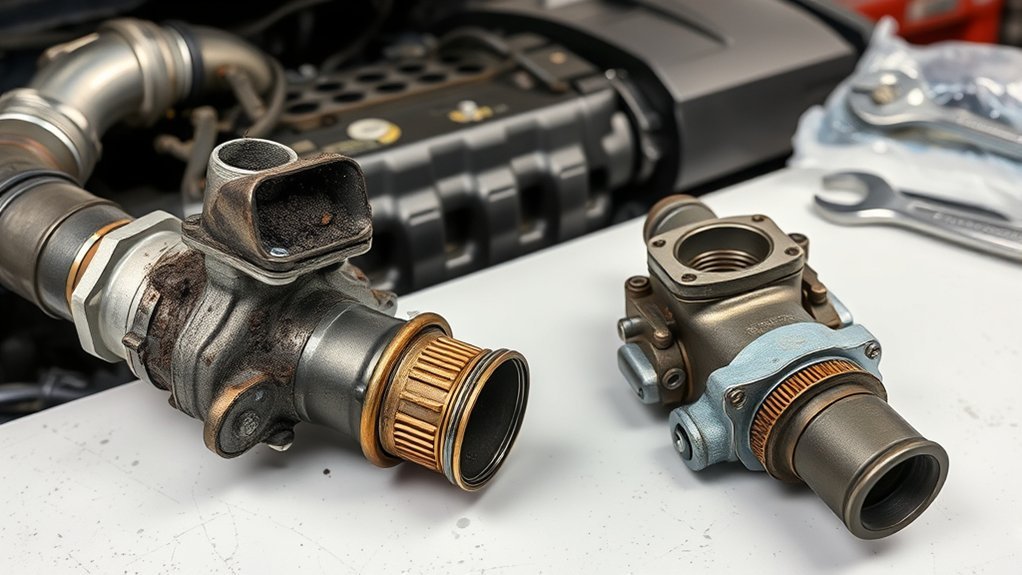
Clean the EGR system when carbon deposits look light and the valve still moves smoothly. Replace parts when the valve sticks after cleaning, the diaphragm will not hold vacuum, the VSV fails an electrical or operation test, or the same code returns after proper cleaning.
When To Clean
Clean first if symptoms seem mild and you find light carbon inside the valve or passage. Use a safe throttle-body or EGR-safe cleaner, follow the cleaner label, and keep solvent away from electrical parts and diaphragms.
- Remove and inspect: Check the valve, gasket surface, pipe, and intake port.
- Clean the carbon: Use solvent and a soft brush where the service manual allows cleaning.
- Replace the gasket: Install a fresh gasket if you remove the valve.
- Retest the system: Confirm idle response, clear codes, and road-test the car.
Signs You Need Replacement
Replace the EGR valve when wear or heavy carbon keeps it from moving correctly. You should also replace it if the diaphragm leaks, the pintle binds, or the code returns after you clean the passages and verify vacuum control.
Do not replace only the valve if the hose, modulator, VSV, or intake passage caused the fault. That shortcut can bring the same P0401 or P0402 code back.
DIY Versus Professional
DIY cleaning can save money when you can reach the parts and remove bolts safely. Stop if bolts feel seized, the pipe looks rusted, or you do not have the tools to test vacuum and electrical control.
- Try DIY: Choose this route for light carbon, easy access, and clear test results.
- Replace confirmed parts: Replace only the part that fails a test or shows clear damage.
- Use a shop: Get professional help for seized hardware, repeat codes, wiring faults, or unclear test results.
A shop can run smoke tests, scan live data, check vacuum control, and confirm sensor feedback. That can save money when the fault does not point to one clear part.
EGR Repair Checklist for Camrys: Parts, Tools, Torques, Tips
Gather the right parts and tools before you remove anything. You may need a replacement EGR valve, vacuum modulator, VSV, vacuum hoses, new gaskets, a socket set, wrenches, screwdrivers, a hand vacuum pump, a digital multimeter, and an OBD-II scanner for 1996 and newer U.S. models.
| Item | Purpose |
|---|---|
| EGR valve | Controls exhaust flow into the intake |
| Hand vacuum pump | Tests valve movement and diaphragm condition |
| Vacuum modulator or VSV | Controls when vacuum reaches the valve |
| New gasket | Helps seal the valve after removal |
| Torque wrench | Tightens fasteners to service-manual values |
Read and record codes before you start. Then inspect the hoses, test the valve with vacuum, check the VSV, and clean blocked passages before you install a new valve.
Note: Torque values vary by engine and model year, so use the correct Toyota Factory Service Manual instead of guessing.
Preventive Driving and Maintenance to Extend EGR Life
After you repair the EGR system, use simple maintenance habits to slow carbon buildup. Older gasoline Camrys do not usually use a diesel particulate filter, so focus on EGR passages, vacuum control, ignition health, and fuel-system condition.
- Limit constant short trips: Let the engine reach full operating temperature when your driving pattern allows it.
- Fix misfires fast: Misfires and poor combustion can add deposits and damage other emissions parts.
- Inspect vacuum hoses: Replace brittle, swollen, cracked, or oil-soaked hoses.
- Use the correct parts: Match the EGR valve, modulator, and VSV to your year and engine.
- Scan after repairs: Clear codes only after repairs, then road-test and confirm the code does not return.
When to Stop DIY Testing and Get Help
Stop DIY work if the car stalls often, runs very rough, overheats, pings under load, or shows more than one system code. EGR faults can overlap with ignition, fuel, vacuum, and catalytic-converter problems.
You should also get help if you find damaged wiring, seized bolts, stripped threads, or heavy rust around the EGR pipe. A trained technician can test live data, vacuum control, and wiring without replacing good parts by mistake.
Frequently Asked Questions
What Is the EGR System on a Toyota?
The EGR system sends a controlled amount of exhaust gas back into the intake. This lowers combustion temperature and helps reduce NOx emissions.
What Are the Different Types of EGR Systems?
Common EGR systems include vacuum-controlled, electronically controlled, cooled, and feedback-monitored systems. Older Camrys often use vacuum parts such as an EGR valve, vacuum modulator, and VSV, but the exact setup depends on year and engine.
Does a Bad EGR Valve Always Trigger a Check Engine Light?
No. A weak or sticking EGR valve can cause drivability symptoms before the engine computer stores a code. You may feel rough idle, hesitation, or pinging before the warning light appears.
Can I Drive an Older Camry With a P0401 or P0402 Code?
You may be able to drive a short distance if the car runs smoothly, but you should diagnose the fault soon. Avoid long trips if the engine stalls, overheats, pings, or loses power.
Should I Clean the EGR Valve or Replace It First?
Clean it first when the valve moves freely and carbon looks light. Replace it when the valve sticks, the diaphragm leaks, the part fails a test, or the same code returns after proper cleaning.
Safety Disclaimer: This article is for informational purposes only and does not replace a factory service manual or professional vehicle repair advice. Always use safe tools, support the vehicle correctly, and consult a qualified mechanic when a repair affects drivability, emissions, wiring, or engine safety.
Conclusion
The most important step is to test the EGR system before you replace parts. Start with codes, hoses, vacuum response, connectors, and carbon inspection. Clean light deposits, replace confirmed failed parts, and use the correct Toyota service information for your year and engine. Careful diagnosis keeps your older Camry smoother, cleaner, and more reliable.
References
- DTC P0401 Exhaust Gas Recirculation Flow Insufficient Detected — Toyota repair manual material
- DTC P0401/71 Exhaust Gas Recirculation Flow Insufficient — Toyota Camry repair manual material
- Alternative Control Techniques Document: NOx Emissions from Stationary Reciprocating Internal Combustion Engines — U.S. Environmental Protection Agency
- Vehicle NOx Emissions: The Basics — International Council on Clean Transportation, 2021
- How Does Exhaust Gas Recirculation Work? — MTU Solutions