You should start with quick checks: warm engine, level ground, inspect the dipstick for color, odor, and particles, listen for whining or clunks, and note shift delays or slipping. Follow Toyota intervals using WS ATF for automatics and correct manual fluid per spec, change at recommended miles or every few years, monitor temperature and leaks, and adopt gentle acceleration and hill manual shifting. Continue for detailed maintenance, troubleshooting, and service guidance.
Quick Checks: How to Assess Your Camry’s Transmission Now
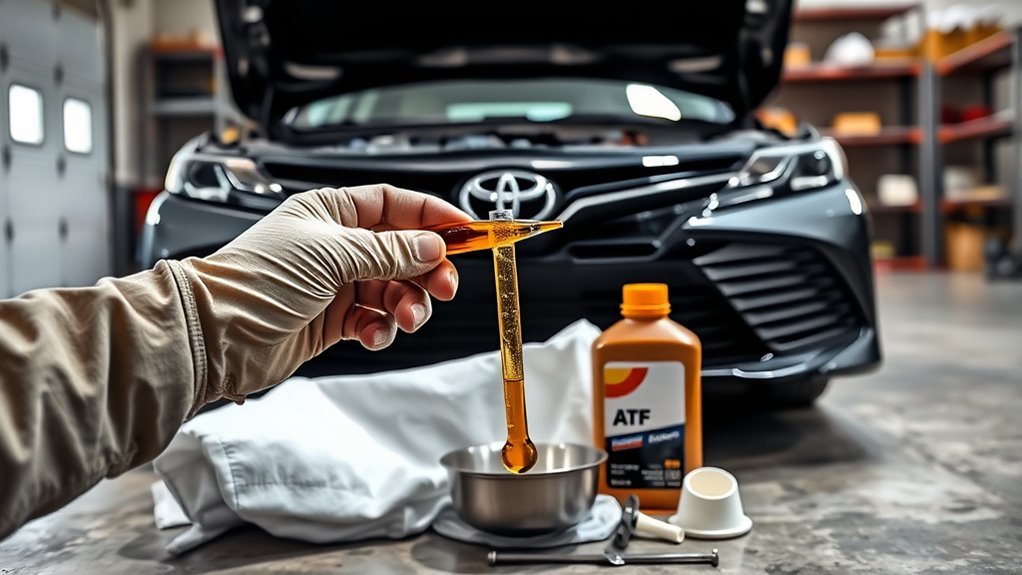
Anyone can do a quick transmission assessment on a Camry in a few focused steps. You start by checking fluid condition and level: warm the engine, park on level ground, remove the dipstick, and inspect color and smell; dark or burnt fluid signals contamination or overheating. Next, perform a targeted noise evaluation by listening for whining, clunking, or grinding during idle, engagement, and steady drive—document when each noise occurs. Scan the vehicle for diagnostic trouble codes to reveal clutch or solenoid faults before they escalate. Observe shift behavior: note delays from Park to Drive, slips under load, or harsh shifts; these indicate low fluid, overheating, or internal wear. Monitor transmission temperature where available; repeated high temps demand immediate intervention. You’ll log findings, prioritize urgent symptoms, and prepare for corrective actions that restore control and free you from preventable failures.
When to Change Your Camry Transmission Fluid : Toyota‑Approved Types
For reliable shift performance and to prevent premature wear, change your Camry’s transmission fluid on the schedule appropriate to its gearbox: generally every 60,000–100,000 miles—toward the lower end for manual gearboxes and the higher end for automatics—and perform manual-transmission changes every 2–3 years due to greater contamination risk. You’ll follow manufacturer guidance on fluid change intervals and approved transmission fluid types to preserve mechanical freedom and reduce failure modes. Use Toyota-approved WS ATF for automatics to meet friction, shear, and thermal specifications; manuals often require distinct specs—confirm via your owner’s manual. Monitor level and fluid condition; dark, burnt, or metallic-contaminated fluid signals immediate service. Prioritize correct fluid chemistry to maintain valve body behavior, clutch engagement, and gear longevity.
- Verify your Camry’s transmission model and specified fluid.
- Schedule automatic ATF service near 100k miles unless severe use.
- Change manual fluid every 2–3 years regardless of mileage.
- Inspect fluid color, odor, and particulates regularly.
- Use only OEM-approved WS ATF or specified manual grades.
Transmission Maintenance Checklist (What to Do and When)
Start with a concise schedule and inspection routine you can follow: check transmission fluid level and condition every 3,000–5,000 miles (or at every oil change), perform a full fluid replacement for manuals every 30,000–60,000 miles (or every 2 years) and for automatics per Toyota intervals—typically up to 100,000 miles under normal use or every 4 years for low-mileage vehicles—and immediately diagnose any abnormal shifts, noises, leaks, or contamination. You’ll adopt a strict maintenance schedule to prevent fluid contamination and component failure. Inspect for discoloration, burnt odor, or particulates; note any erratic shifting. Follow this checklist and act decisively to reclaim control of vehicle reliability.
| Task | Frequency | Diagnostic cue |
|---|---|---|
| Fluid level/condition | 3,000–5,000 mi | Low level, dark/burnt fluid |
| Manual fluid change | 30,000–60,000 mi / 2 yrs | Gear grinding |
| Automatic service | Toyota interval / 4 yrs | Hard shifts |
| Leak inspection | Every oil change | Drips, stains |
| Noise/shift check | Continuous | Slips, clunks |
Driving Habits and Seasonal Care to Extend Transmission Life
When you avoid sudden accelerations and hard shifts, you cut peak loads on gears and clutches, reducing wear and heat buildup that accelerate failure. You’ll use driving techniques that lower mechanical stress and limit transmission overheating, preserving fluid integrity and torque-converter life. Engage manual mode on hills to control shift points and prevent hunting; warm the engine three minutes in cold weather so fluid circulates and viscous drag drops before load. In hot climates, park shaded and inspect cooling lines regularly to prevent fluid degradation.
- Use smooth throttle inputs; eliminate launch-style starts.
- Select manual mode on steep grades; hold lower gears deliberately.
- Warm engine briefly in winter to stabilize fluid viscosity.
- Park in shade and monitor fluid temperature during heat waves.
- Inspect and maintain transmission cooling lines and mounts.
These diagnostic, actionable habits free you from premature failure, combining intentional driving behavior with seasonal care to extend transmission service life.
Troubleshooting Symptoms: DIY Fixes vs. When to Visit a Toyota Dealer
Although some transmission complaints can be resolved at home, you should quickly separate simple fluid-and-filter checks from faults that need dealer-level diagnostics. You’ll first assess fluid condition and leaks: low, dark, or burnt-smelling fluid and visible leaks call for a service or DIY fluid change only if you’re confident; otherwise, see the dealer. For humming or unusual sounds, perform a basic noise diagnosis at various speeds; persistent humming at 40–60 km/h implies internal wear and requires professional evaluation.
Erratic RPM or slipping after checks points to valve body or control issues—these need dealer-level diagnostics and possible software updates. Shifting hesitations often resolve with a transmission software update every two years; apply that fix before invasive repairs. Use the table to prioritize your actions and claim control over maintenance decisions.
| Symptom | DIY action | Dealer action |
|---|---|---|
| Low/degraded fluid | Check/change fluid | Inspect for internal damage |
| Humming noise | Basic noise diagnosis | Internal inspection |
| Erratic RPM/slip | Software update | Valve body repair |
Frequently Asked Questions
Can Aftermarket Transmission Coolers Improve Camry Longevity?
Yes — you’ll gain measurable benefits: cooler installation reduces fluid temperatures, lowers wear, and supports transmission maintenance schedules. You’ll diagnose heat sources, monitor temps, and act decisively to free yourself from premature transmission failure.
Do Warranty Repairs Cover Transmission Failures After Fluid Changes?
Yes — you’re usually covered if authorized fluid maintenance didn’t cause failure; document service, use approved fluids, and follow dealer procedures to preserve warranty coverage, but unauthorized changes or contaminants can void claims, so proceed cautiously.
Is It Safe to Tow Heavy Loads With an Automatic Camry Transmission?
No — you shouldn’t tow heavy loads with an automatic Camry beyond its towing capacity; doing so increases transmission strain, risks overheating and premature failure. Inspect cooling, use proper hitching, and avoid sustained high loads for freedom.
How Often Should the Transmission Filter Be Replaced on Newer Camrys?
You should replace the transmission filter every 60,000–100,000 miles, depending on transmission maintenance and fluid quality; monitor diagnostics, check fluid condition regularly, and adjust intervals sooner if you tow, drive hard, or detect contamination or pressure anomalies.
Are Transmission Software Updates Recommended by Toyota Dealers?
Yes — dealers recommend updates, and by coincidence they often coincide with scheduled service; you’ll get transmission maintenance plus software enhancements that diagnose shifting issues, improve control logic, and liberate you from avoidable drivability problems.
Conclusion
You’ll feel like you’ve got a transmission whisperer under your hood when you follow these checks, fluid specs, schedules, driving tweaks and diagnostic steps precisely. Ignore them and you’ll be buying a new gearbox overnight; follow them and your Camry’s transmission will outlast your lawnmower, neighbour’s SUV and your attention span. Stay methodical: inspect, measure, replace, adapt. When symptoms persist, escalate to dealer diagnostics—don’t gamble with drivetrain integrity.