What’s in This Article
- How long does a Camry timing chain last?
- Common signs your Camry timing chain or guides are wearing
- Cold-start rattles and VVT-i noise
- What to check during a valve-cover inspection
- When overheating requires a deeper timing-chain inspection
- Cost range and repair scenarios
- Safe driving, urgency, and next steps
- Frequently asked questions
Your Camry’s timing chain should not need routine replacement like a timing belt. Most modern Camry engines use a chain, but your exact model year and engine still matter. You should inspect the chain area during valve-cover work, after severe overheating, or when you hear repeat cold-start rattles. This guide explains the warning signs, basic checks, repair choices, and cost factors you should know before the problem grows.
Quick Answer
A Toyota Camry timing chain can last the life of the engine when you keep oil and cooling systems in good shape. You should not replace it by mileage alone unless your maintenance guide says otherwise. Inspect it when you hear cold-start rattles, see guide damage, notice timing faults, or deal with severe overheating.
Key Takeaways
- Check your exact Camry maintenance guide before you assume a timing chain service interval.
- Treat a repeat cold-start rattle as a warning, especially on engines with known VVT-i noise issues.
- Inspect guides, tensioners, and oil leaks when the valve cover comes off for other service.
- Do not rely on missing paint marks alone, since service marks and colored links can fade or change during repairs.
- Stop driving right away if the engine overheats, loses oil pressure, or makes loud metal noise.
How Long Does a Camry Timing Chain Last?
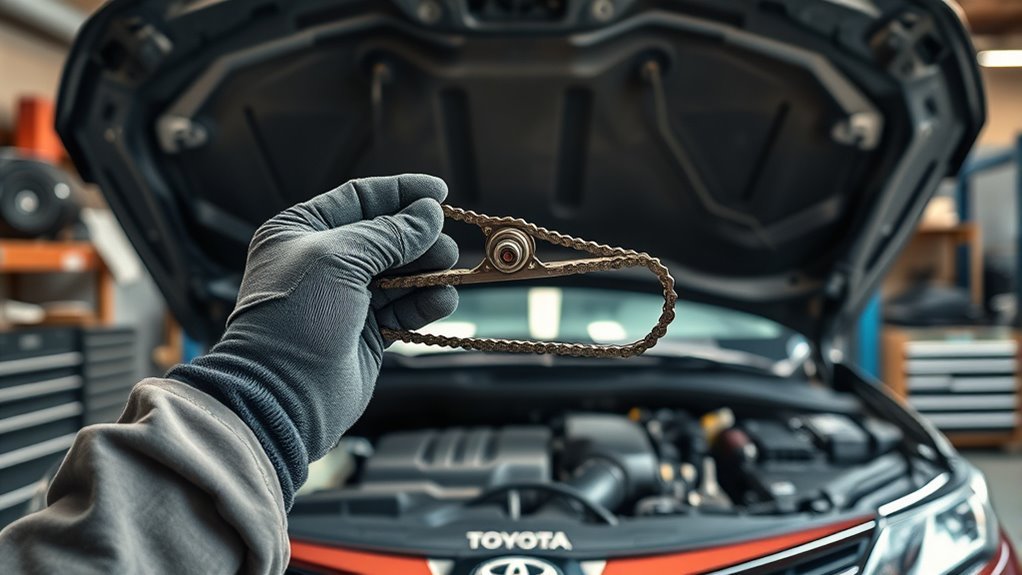
A Camry timing chain often lasts as long as the engine when you change oil on time and keep the cooling system healthy. Toyota tells owners to check the vehicle’s Warranty and Maintenance Guide for belt or chain service needs, since the exact engine and model year decide the schedule.
Unlike many timing belts, most Camry timing chains do not use a fixed mileage replacement interval. You replace the chain when inspection shows real wear, damage, slack, timing faults, or noise that points to a failing part. According to Toyota’s Camry maintenance guide, you should follow scheduled service every 5,000 miles or six months, whichever comes first, for normal maintenance checks.
Focus on smart chain maintenance tips. Keep clean oil in the engine, fix coolant leaks quickly, and inspect the timing area when the valve cover comes off. Heat, dirty oil, and poor lubrication can stress guides, tensioners, Variable Valve Timing with intelligence (VVT-i) parts, and chain surfaces.
Do not replace a quiet, healthy chain only because the odometer looks high. Many Camry owners drive far beyond 200,000 miles without chain replacement, but that does not guarantee every engine will do the same. Use symptoms, inspection findings, and service history to guide your next step.
Common Signs Your Camry Timing Chain or Guides Are Wearing
A worn timing-chain system usually gives you more than one clue. You may hear a sharp rattle at start-up, see guide grooves during inspection, find oil leaks near the valve cover, or notice rough running with cam timing codes. Do not treat one sign as final proof, but do not ignore repeated symptoms either.
Cold-start rattle often points to the VVT-i gear, chain tensioner, oil pressure delay, or worn guides. A Toyota technical service bulletin covered brief cold-start knock or rattle on some 2010-2012 Camry models with 1AR/2AR engines, so model year and engine code matter when you diagnose the sound.
Loud Cold Start Rattle
When your Camry makes a loud rattle on cold starts, write down when it happens and how long it lasts. A short metallic clatter that fades as oil pressure builds can point to VVT-i gear wear, chain tensioner trouble, or guide wear. The sound deserves prompt inspection when it repeats over several starts.
- Listen on the first start after the car sits overnight.
- Note whether the noise lasts less than a second or continues longer.
- Check engine oil level before you blame the chain.
- Ask a technician to confirm whether the noise comes from the VVT-i gear, chain area, or another valvetrain part.
Act early if the rattle grows louder, lasts longer, or appears with a check engine light. Quick diagnosis can prevent a small timing issue from turning into valve or piston damage.
Visible Guide Grooves
Visible grooves in the timing chain guides mean you should inspect the Camry’s timing system closely. Look for scoring, cracks, missing guide material, loose mounting points, or plastic debris in the timing area. Document the location and depth so you can compare it with service manual limits.
Do not rely only on paint or colored chain marks. Toyota repair procedures use paint marks to keep timing aligned during service, and factory colored links can fade or change after work. Missing paint alone does not prove overheating, but missing marks plus heat damage, slack, noise, or guide scoring gives you a stronger reason to inspect deeper.
Check guide wear and tensioner operation together. Worn guides often appear with poor tension control, chain slap, or start-up noise. Replace damaged guides before they break apart and let the chain move out of line.
Engine Overheating Signs
Severe overheating can damage more than the radiator or head gasket. Heat can stress timing-chain guides, seals, oil quality, and VVT-i components. After any serious overheating event, check the timing area if you also hear rattles or see oil and coolant problems.
- Temperature gauge climbs above normal and stays high.
- Coolant level drops often without a clear external leak.
- Engine oil looks burnt, thick, or contaminated.
- Cold-start rattle appears after an overheating event.
- Guide surfaces show scoring, glazing, cracking, or missing material.
Fix the cooling fault before you judge the chain repair. A new chain will not solve repeat overheating, and the same heat can damage new parts again.
Cold-Start Rattles and VVT-i Noise: What They Mean
If your Camry makes a distinct rattle on cold starts, treat it as an early warning. The sound can come from the VVT-i gear, a weak tensioner, worn guides, low oil level, dirty oil, or delayed oil pressure. You should confirm the source before you approve a major timing-chain repair.
Toyota’s T-SB-0041-13 bulletin describes a brief engine knock or rattle at cold start for some 1AR/2AR engines, including certain Camry models. The repair procedure includes confirming the noise, removing the cylinder head cover, handling the chain tensioner, marking the chain and gears, and replacing the intake-side VVT gear when the bulletin applies.
This bulletin does not cover every Camry or every start-up noise. Your technician should verify your engine code, production range, oil condition, and fault codes. A correct diagnosis protects you from replacing a timing chain when a VVT-i gear, oil control valve, or tensioner caused the noise.
Note: A start-up rattle can sound like a chain problem even when the VVT-i gear or oil pressure causes the noise.
What to Check During a Valve-Cover Inspection
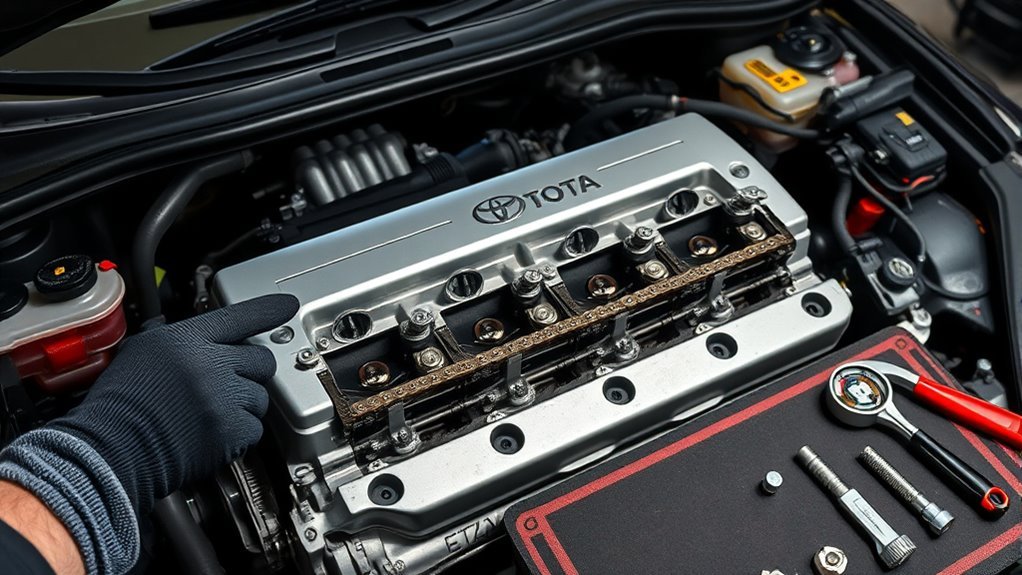
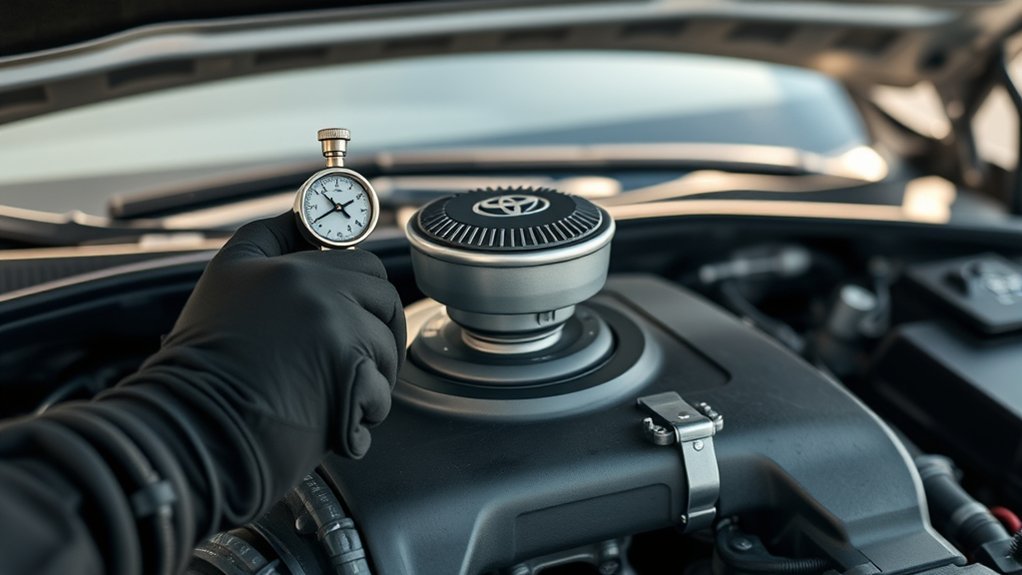
When you remove the valve cover, inspect the timing chain, guides, tensioner area, seals, and visible oil condition. You should not disturb timing parts unless you have the correct service information and tools. A simple visual check can still reveal cracks, scoring, oil leaks, or chain slack.
Warning: Do not rotate the engine or remove timing parts without the correct Toyota service procedure, because misalignment can damage the engine.
Inspect Chain And Guides
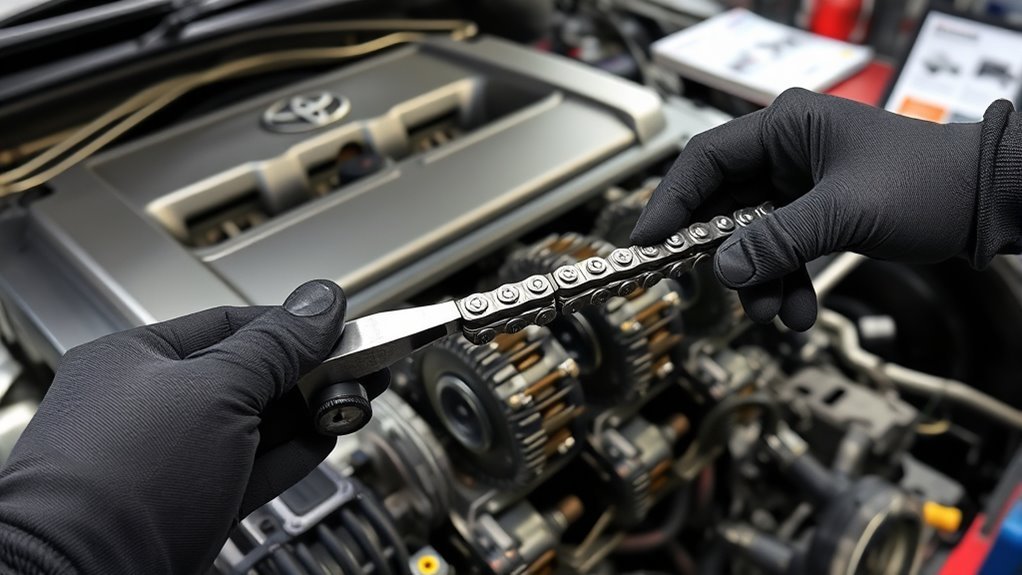
With the valve cover off, inspect the timing chain and guides for visible damage. Look for chain slap marks, guide scoring, cracked plastic, metal debris, loose fasteners, or uneven guide contact. These clues can reveal heat stress or tension loss before the engine fails.
- Check guide faces for grooves, cracks, or missing pieces.
- Look for metal flakes, plastic debris, or heavy sludge.
- Confirm that service paint marks line up if a technician already marked the chain.
- Note any cold-start rattle pattern before and after inspection.
Pair the visual check with oil-pressure and fault-code checks when possible. Timing faults often show up as symptoms from more than one system.
Check Tensioners And Seals
After you check the chain and guides, focus on the tensioners and valve-cover seals. These parts control chain tension and oil containment. A stuck or weak tensioner can let the chain rattle, especially right after start-up.
Look for tensioner wear, scoring, leaks, loose mounting, or uneven movement. Inspect valve-cover seals and mating surfaces for cracked rubber, hardening, or oil seepage. Oil leaks can lower oil level over time and worsen VVT-i or tensioner noise.
Document each finding before you replace parts. Good notes help you decide whether the chain, guides, tensioners, seals, or VVT-i parts need work together.
When Overheating Requires a Deeper Timing-Chain Inspection
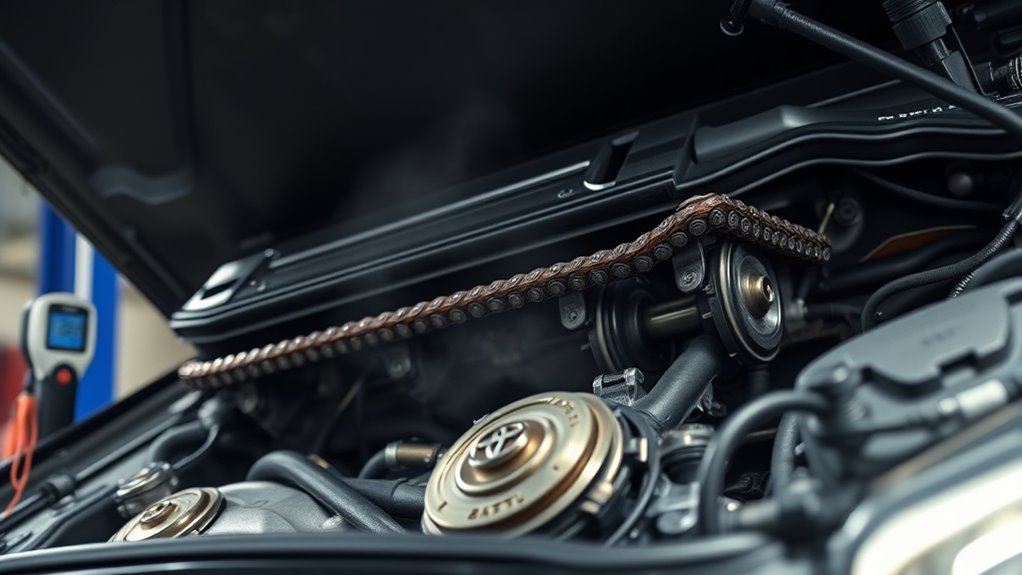
Overheating does not automatically force a timing chain replacement. It does create a reason to inspect the chain system when the engine also shows noise, timing faults, oil damage, or guide wear. Replace parts only when inspection proves damage or the service manual requires it.
Heat can harden seals, break down oil, weaken plastic guides, and increase friction in the timing system. If the engine overheated badly, check the cooling system first, then inspect the chain area during related work. A repair that skips the root cooling problem can fail again.
- Inspect for scored links, guide damage, and plastic debris.
- Check cam timing behavior if the engine runs rough or sets codes.
- Review oil condition after severe overheating.
- Replace the chain, guides, and tensioners together when heat damage changes alignment or tension control.
You need a clear replacement threshold: visible damage, poor tension control, repeated VVT-i noise, timing faults, or guide failure. Prompt action protects the engine from progressive damage.
Why You Should Replace Guides and Tensioners Together
Guides and tensioners share load with the chain, so you should replace damaged related parts as a set during a major timing-chain job. Fresh guides and tensioners restore the chain path, tension control, and damping. A new chain on worn guides can still rattle or wear faster than it should.
Worn guides can create heat, uneven contact, and plastic debris. Weak tensioners can let the chain slap, jump, or wear the guide surface. Replacing related parts together can reduce repeat labor and give the repair a better chance to last.
Do not replace every part blindly. Use inspection results, service manual guidance, and a trusted technician’s diagnosis. A complete repair makes sense when wear affects more than one timing component.
Quick DIY Checks You Can Do at Home for a Camry Timing Chain
You can do a few quick checks at home before you visit a shop. These checks do not replace a professional diagnosis, but they help you describe the problem clearly. They also help you decide whether you should stop driving or schedule service soon.
Quick DIY checks can help you spot cold-start rattle, oil-level problems, overheating signs, and visible leaks before a timing-chain problem gets worse.
- Listen for cold-start rattles after the car sits overnight.
- Check engine oil level and condition before each diagnosis.
- Watch the temperature gauge during short and normal drives.
- Look for oil leaks around the valve cover and timing cover area.
- Scan for check engine codes if the engine runs rough.
Do not remove covers, tensioners, or timing parts unless you have the correct tools and service data. If you hear a loud metal rattle, see an oil-pressure warning, or notice overheating, stop driving and get help.
Cost Range and Real-World Camry Repair Scenarios
Timing-chain repair costs vary by engine, labor rate, location, and how many related parts need replacement. RepairPal’s national timing chain replacement estimate lists a typical range of about $2,074 to $2,701 before taxes, fees, location changes, and related repairs. A Camry-specific quote can come in lower or higher based on engine layout and shop pricing.
You should compare the repair cost with the risk of waiting. Many Camrys never need a chain replacement, but severe overheating, guide damage, VVT-i noise, or chain slack can force action earlier. If the chain jumps timing or breaks, you may face valve, piston, cylinder head, or complete engine work.
Real-world scenarios usually fall into three groups:
- Inspection only: You hear a small noise, but oil level, codes, guides, and tension look normal.
- Related-part repair: You need a VVT-i gear, tensioner, seal, or guide repair without a full chain job.
- Full timing repair: You need chain, guides, tensioners, seals, and related parts because wear or damage affects the whole system.
Ask the shop to show you photos of worn parts, fault codes, and the exact repair plan. Clear proof helps you avoid both under-repair and unnecessary parts replacement.
Is It Safe to Keep Driving? Urgency and Next Steps for Owners
If you hear a persistent cold-start rattle or unusual engine noise, do not ignore it. You can drive gently to a nearby shop if the engine runs normally, the temperature stays normal, and no warning lights appear. Stop driving if the engine overheats, loses oil pressure, runs very rough, or makes loud metal noise.
- Check oil level first, since low oil can worsen VVT-i and tensioner noise.
- Schedule inspection soon if the rattle repeats after cold starts.
- Stop the engine if the temperature gauge rises above normal.
- Ask the technician to inspect guides, tensioners, VVT-i parts, and fault codes.
A quick, honest diagnosis gives you control over the repair. You can often prevent a breakdown when you respond to noise and heat before the chain system fails.
Frequently Asked Questions
Can a Timing Chain Last 300,000 Miles?
Yes, a timing chain can last 300,000 miles in a well-maintained engine, but you should not treat that mileage as a promise. Clean oil, normal engine temperature, and healthy guides give the chain the best chance to last.
Does Toyota Recommend Timing Chain Replacement?
Toyota tells owners to follow the Warranty and Maintenance Guide for the exact vehicle. Many Camry timing chains do not have a routine replacement interval like timing belts, so you replace the chain when inspection or symptoms show a problem.
What Is the 100,000-Mile Service on a Toyota Camry?
The 100,000-mile service depends on your Camry year, engine, and maintenance guide. You may need inspections, fluid checks, filters, spark plugs, coolant service, or other items based on the schedule, but the timing chain usually needs inspection only when symptoms or service access justify it.
How Can You Tell If Your Timing Chain Needs Replacing?
Watch for repeat cold-start rattle, cam timing codes, rough running, guide damage, chain slack, or visible timing-system wear. A technician should confirm the cause before you approve a full timing-chain replacement.
Can Overheating Damage a Camry Timing Chain?
Severe overheating can damage guides, seals, oil quality, and timing components. It does not prove the chain needs replacement by itself, but it gives you a strong reason to inspect the timing area if noise or running problems appear.
Conclusion
Your Camry timing chain usually needs attention because of symptoms, not mileage alone. Listen for repeat cold-start rattles, keep oil and coolant in good shape, and inspect the timing area during related service. If overheating, oil-pressure warnings, or loud metal noise appear, stop driving and get a professional diagnosis. Early action can turn a major engine risk into a controlled repair.
References
- Does my vehicle have a timing belt or timing chain? — Toyota Support
- 2025 Camry Warranty and Maintenance Guide — Toyota, 2025
- T-SB-0041-13: Brief Engine Knock/Rattle Noise at Cold Startup (1AR/2AR) — Toyota Motor Sales, USA via NHTSA, 2013
- Timing Chain Replacement Cost Estimate — RepairPal, 2026