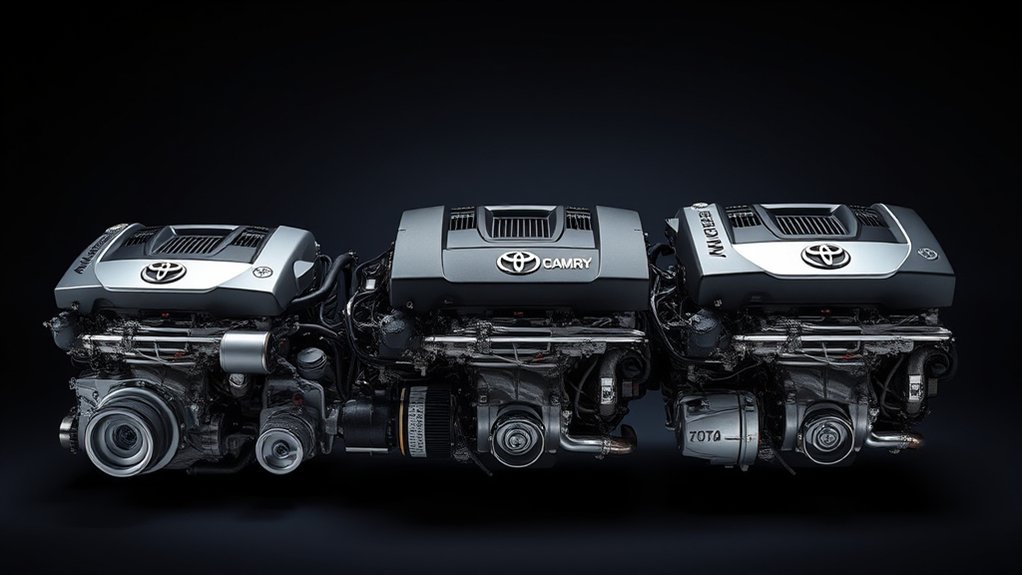
The Toyota Camry’s engine options have changed from simple gas engines to a hybrid-only U.S. lineup. Early Camrys used small inline-four engines, while later models added stronger V6 options for drivers who wanted more power. The 2018-2024 U.S. Camry reached 301 horsepower with its 3.5L V6, but the 2025 and 2026 U.S. models use a 2.5L hybrid system instead. This shift shows how Toyota now balances performance and efficiency in one powertrain.
Quick Answer
Toyota Camry engines evolved from early 1.8L and 2.0L four-cylinder engines to stronger V6 engines and then to hybrid powertrains. The 2025 and 2026 U.S. Camry lineup uses only a 2.5L hybrid system, with 225 net combined horsepower in front-wheel drive and 232 horsepower with all-wheel drive.
Key Takeaways
- Early Toyota Camry engines focused on simple four-cylinder power and fuel economy.
- V6 engines gave later Camry models stronger acceleration and a smoother highway feel.
- The 2018-2024 Camry offered the strongest U.S. V6, rated at 301 horsepower.
- The 2025 and 2026 U.S. Camry lineup uses hybrid power across every trim.
How Toyota Camry Engines Have Changed Over Time
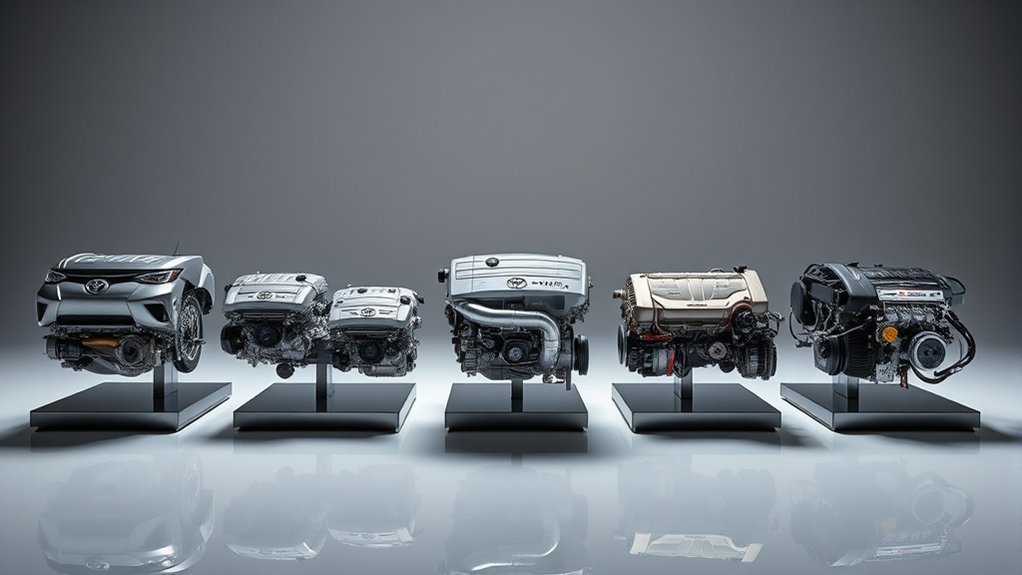
As the Toyota Camry grew from its early 1980s roots, Toyota changed its engines to match buyer needs. Toyota Global lists the March 1982 Camry sedan with a 1.8L inline-four engine rated at 100 PS. Toyota later added a 2.0L engine, a turbo diesel option, and a sportier twin-cam engine in the same early generation.
Those early choices showed the Camry’s basic formula: keep the car practical, efficient, and easy to drive. Later generations added more power, smoother automatic transmissions, and stronger highway performance. By the 2000s, the Camry gave you a clear choice between fuel-saving four-cylinder engines and stronger V6 engines.
Notable Features of Early Camry Engines
Early Camry engines focused on low running costs and daily dependability. The 1.8L inline-four gave the first standalone Camry enough power for normal driving without making the car costly to own. Toyota also offered a 2.0L fuel-injected engine and a diesel option in some markets, which helped buyers choose between power and fuel savings.
The Camry grew wider and more refined in the 1990s. Toyota offered a 3.0L V6 on select models, giving the sedan a smoother and stronger feel. This change helped the Camry move from a basic family car toward a more comfortable midsize sedan.
By the late 1990s and early 2000s, Toyota kept improving both sides of the lineup. Four-cylinder models stayed popular with drivers who wanted lower fuel use. V6 models served drivers who wanted more passing power and a quieter highway drive.
Toyota Camry Engine Timeline by Generation
| Era | Main Engine Change | Why It Mattered |
|---|---|---|
| Early 1980s | 1.8L and 2.0L inline-four engines | Toyota built the Camry around simple, efficient daily driving. |
| 1990s | Available V6 engines | The Camry gained smoother power and stronger highway performance. |
| 2007-2011 | 3.5L V6 rated at 268 horsepower | Toyota gave the Camry a major power boost for its class. |
| 2018-2024 | 3.5L V6 rated at 301 horsepower | The Camry reached its strongest U.S. gas-only performance era. |
| 2025-2026 | Hybrid-only U.S. lineup | Toyota shifted the Camry toward higher efficiency across every trim. |
Engine Performance Enhancements in Mid-Generation Camrys
The Camry’s mid-generation engine updates gave drivers more power without turning the car into a sports sedan. Toyota’s 3.5L V6 became one of the biggest changes. In the 2011 Camry, Toyota rated that V6 at 268 horsepower and 248 lb-ft of torque.
The 2018 redesign raised performance again. Toyota Canada listed the 2018 Camry with a 203 horsepower 2.5L four-cylinder, 206 horsepower in the XSE, and a 301 horsepower 3.5L V6. Toyota also paired the 2018 Camry with an eight-speed automatic transmission, which helped the car feel more responsive.
The 2024 Camry brochure showed the TRD trim with a standard 301 horsepower 3.5L V6. That made 2024 the final model year for the V6 in the U.S. Camry before Toyota moved the lineup to hybrid-only power.
Transitioning to Hybrid Powertrains in Recent Camrys
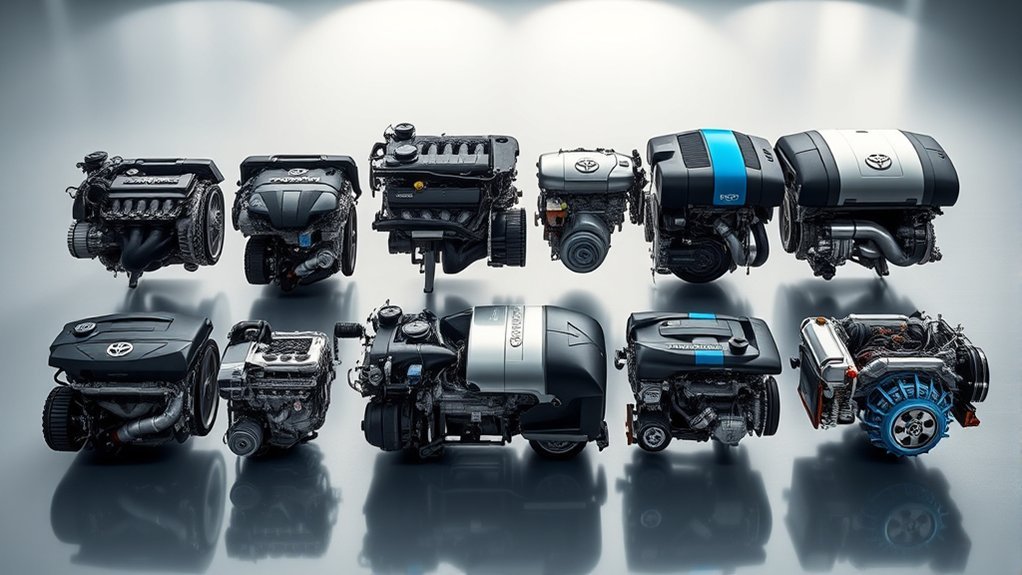
Hybrid technology changed the Camry from an engine-choice story into an efficiency story. The U.S. Environmental Protection Agency (EPA) lists the 2022 Camry Hybrid LE at 52 mpg combined, 51 mpg city, and 53 mpg highway. That rating shows why many buyers started to view the hybrid as more than a niche option.
For 2025, Toyota made a larger shift in the U.S. market. The company paired its fifth-generation Toyota Hybrid System (THS 5) with a 2.5L four-cylinder engine across the Camry lineup. Toyota rated the system at 225 net combined horsepower with front-wheel drive (FWD) and 232 horsepower with Electronic On-Demand All-Wheel Drive (AWD).
What the 2025 and 2026 Camry Engine Lineup Offers
The 2025 and 2026 U.S. Toyota Camry lineup uses a hybrid powertrain on every trim. You no longer choose between a gas four-cylinder, a V6, and a hybrid in the U.S. market. Instead, you choose trim level and drivetrain.
The front-wheel-drive version makes 225 net combined horsepower. The all-wheel-drive version adds a rear electric motor and raises output to 232 net combined horsepower. Toyota also lists up to a manufacturer-estimated 51 mpg combined rating on the LE FWD grade.
Note: Camry engine choices can vary by country, so check your local Toyota market before comparing trims.
This change does not mean the Camry lost its focus on usable power. It means Toyota now uses electric assist to support acceleration while keeping fuel use low. For most drivers, the 2025 and 2026 setup makes the Camry easier to understand and cheaper to fuel than older V6 models.
Frequently Asked Questions
What Engines Do Toyota Camrys Have?
Toyota Camry engines have included inline-four gas engines, diesel engines in some markets, V6 engines, and hybrid powertrains. In the U.S., the 2025 and 2026 Camry use a 2.5L hybrid system across the lineup.
Which Toyota Camrys Have a V6 Engine?
Many U.S. Camry models from the 1990s through 2024 offered a V6 engine on select trims. The 2018-2024 Camry used a 301 horsepower 3.5L V6 on certain trims, including TRD in 2024.
Did Toyota Discontinue the Camry V6?
Yes, Toyota removed the V6 from the U.S. Camry lineup when the 2025 model moved to hybrid-only power. The 2025 and 2026 U.S. Camry models use a 2.5L hybrid system instead.
Is the Newer Camry Hybrid More Efficient Than Older Gas Models?
Yes, the Camry Hybrid can deliver much better fuel economy than many older gas-only Camry models. For example, the EPA lists the 2022 Camry Hybrid LE at 52 mpg combined.
Conclusion
The Toyota Camry’s engine history shows a steady move from simple power to smarter efficiency. Early models gave you basic four-cylinder strength, while later V6 models added smooth and confident power. The 2025 and 2026 U.S. Camry lineup takes a different path by making hybrid power standard. If you compare Camry generations, focus on the engine type, drivetrain, horsepower, and fuel economy before you choose one.
References
- Toyota Camry Vehicle Lineage, Toyota Motor Corporation Global Website, 2012
- Toyota Camry Goes Exclusively Hybrid Plus a New Look and More Technology, Toyota USA Newsroom, 2024
- Toyota Camry Brings Bold New Nightshade Edition to Lineup in 2026, Toyota USA Newsroom, 2025
- Fuel Economy of the 2022 Toyota Camry Hybrid LE, U.S. Department of Energy and U.S. Environmental Protection Agency
- Transformed From Every Angle: The 2018 Toyota Camry, Toyota Canada, 2017
- 2024 Toyota Camry Brochure, Toyota, 2024