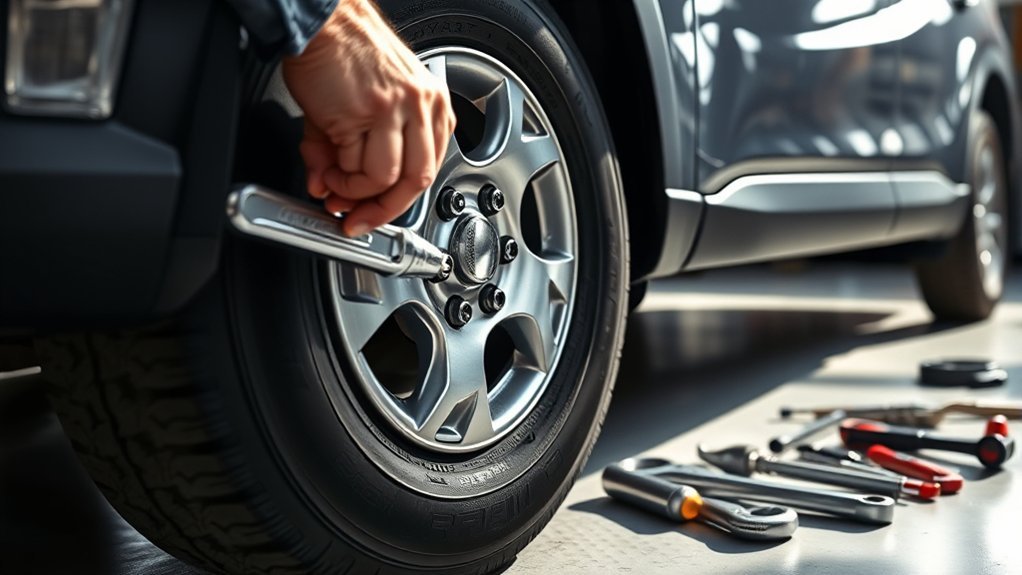
Rechecking your RAV4’s wheel torque is essential for safety and performance. After installation or tire rotations, you should retorque the lug nuts to the recommended 76 ft-lbf (103 Nm) within 50-100 miles. This prevents wheel detachment and minimizes the risk of damage. Regular checks every 5,000 miles are vital, as loose lug nuts can lead to vibrations or vehicle pulls. Knowing the signs and tools for accurate measurement is key to effective maintenance. You’ll find more insights ahead.
Understand RAV4 Wheel Torque
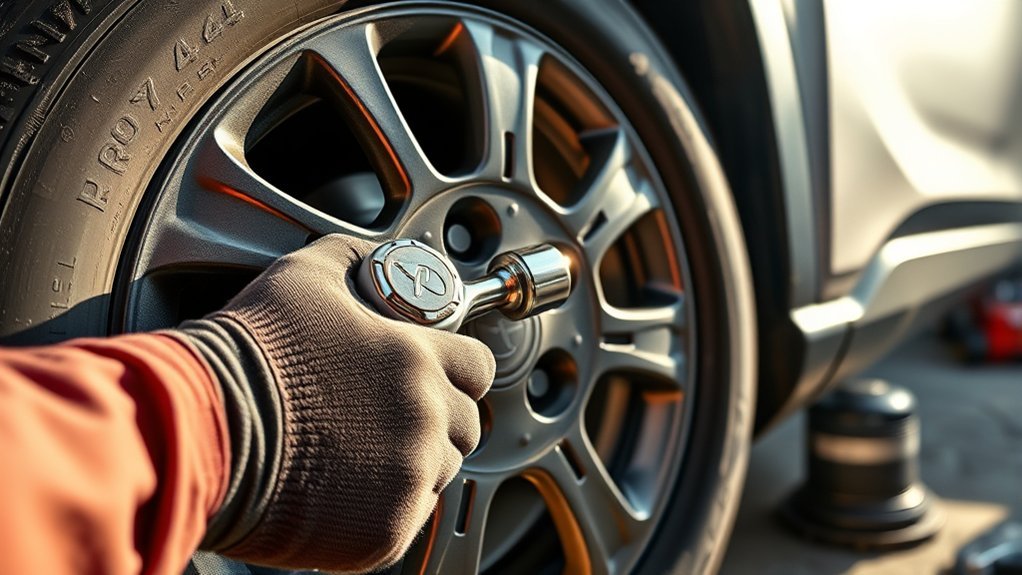
Understanding RAV4 wheel torque is fundamental for your vehicle’s safety and performance. The recommended torque is 76 ft-lbf (103 Nm), which is essential for guaranteeing wheel safety. Proper torque prevents wheel detachment, a serious hazard while driving. You need to be cautious about both over-torquing and under-torquing; over-torquing can damage wheel studs, while under-torquing may cause lug nuts to loosen, risking wheel loss.
To achieve torque accuracy, always use a torque wrench when tightening lug nuts to manufacturer specifications. It’s not just a good practice; it’s crucial for maintaining the integrity of your wheels. Regularly checking and retorquing lug nuts, especially after tire installation or maintenance, helps guarantee that your RAV4 operates safely. Don’t underestimate this simple yet significant task; it can make a substantial difference in your driving experience and vehicle reliability.
Recognize the Risks of Improper Torque
Improper torque on your RAV4’s lug nuts can lead to serious safety hazards, as a loose wheel may detach while driving. Understanding the torque consequences is important for your safety and the integrity of your vehicle.
Improperly torqued lug nuts on your RAV4 can create serious safety hazards, risking wheel detachment while driving.
- A detached wheel poses risks for you and passengers.
- Loose wheels can damage rotors, with repair costs exceeding $300.
- Over-torquing can damage lug studs, compromising wheel security.
- Under-torquing may result in loosening due to dynamic forces during driving.
Regularly checking torque after tire installation or maintenance is necessary. Retorquing lug nuts within the first 50-100 miles is a critical preventive measure. Neglecting these checks can result in significant safety implications, potentially leading to accidents. Prioritizing proper torque not only keeps you safe but also extends the life of your vehicle components. Don’t overlook this important aspect of vehicle maintenance; it’s your responsibility to guarantee a secure driving experience.
Learn How to Retorque Your RAV4 Wheels
To guarantee your RAV4 wheels are secure, retorque them after driving 50-100 miles following installation. Use a torque wrench to achieve the manufacturer-recommended 76 ft-lbf (103 Nm) and follow a star pattern for even pressure distribution. Regular checks every 5,000 miles will help maintain peak safety and performance.
Proper Retorquing Techniques
When you’ve just installed your RAV4 wheels, it’s essential to retorque them after driving 50-100 miles to confirm the lug nuts have settled properly. This practice guarantees adherence to torque specifications, enhancing wheel maintenance and safety.
- Use a torque wrench set to 76 ft-lbf (103 Nm) for accurate tightening.
- Finger-tighten the lug nuts first to prevent cross-threading.
- Follow a star pattern while tightening to evenly distribute pressure.
- Regularly check torque settings every 5,000 miles or after any wheel service.
Timing for Retorque Checks
After confirming your RAV4 wheels are properly tightened, knowing when to check the torque is crucial for ongoing safety. Retorque your wheels after driving 50-100 miles post-installation; this allows the lug nuts to settle and guarantees they’re tightened to the manufacturer-recommended torque of 76 ft-lbf (103 Nm). Regular retorque checks are important, ideally every 5,000 miles or during tire rotations, to combat loosening from driving vibrations and temperature changes. Always perform retorque checks after any service involving wheel removal, such as brake or suspension work, to safeguard vehicle integrity. Utilizing a torque wrench for accurate adjustments is essential, as proper retorque frequency directly influences installation impact and prevents wheel detachment, enhancing overall safety and performance.
When Should You Retorque After Installation?
After installing your RAV4 wheels, it’s essential to retorque the lug nuts within the first 50-100 miles of driving to guarantee they’re properly seated. Additionally, make it a habit to check the torque every 5,000 miles or during tire rotations to maintain safety and performance. Following these guidelines helps prevent loosening due to vibrations and temperature fluctuations.
Initial Retorque Timing
For ideal safety and performance, it’s important to retorque your RAV4 wheels after the initial installation. You should do this after the first 50-100 miles of driving. During this period, the lug nuts undergo settling due to initial driving conditions. Neglecting to retorque can lead to various issues, making this step crucial.
- Prevent wheel detachment
- Enhance overall safety
- Avoid uneven tire wear
- Maintain peak vehicle performance
Regular checks are crucial since vibrations and temperature changes can cause lug nuts to lose torque. Always refer to the manufacturer’s specifications, which state a torque value of 76 ft-lbf (103 Nm) for your RAV4 wheels. Prioritize this maintenance step to guarantee a smooth and safe driving experience.
Regular Maintenance Schedule
A regular maintenance schedule is fundamental for guaranteeing your RAV4 wheels remain secure and perform at their best. You should retorque your lug nuts after the first 50-100 miles post-installation to confirm they’ve settled correctly. Following that, retorquing every 5,000 miles or during tire rotations is essential, as driving vibrations can loosen them over time. Don’t forget to perform a post-service retorque after any wheel removal, such as during brake or suspension repairs, to maintain safety. Regularly checking torque specifications is crucial, adhering to the manufacturer’s recommended 76 ft-lbf (103 Nm) for your RAV4. This practice not only enhances wheel hardware longevity but also guarantees ideal wheel alignment and tire pressure, contributing to overall vehicle performance.
Benefits of Regular Torque Checks
Regularly checking wheel torque is essential for maintaining your vehicle’s safety and performance. Ensuring your lug nuts are properly torqued provides significant torque benefits and enhances safety assurance. Here are some key advantages of regular torque checks:
- Prevents wheel detachment: Avoids serious safety risks from improperly torqued lug nuts.
- Ensures proper settling: Retorquing after 50-100 miles confirms adherence to manufacturer specifications.
- Mitigates vibration risks: Regular checks every 5,000 miles or during tire rotations reduce chances of loosening.
- Improves vehicle handling: Proper torque maintenance enhances fuel efficiency and tire longevity.
Signs Your Lug Nuts May Be Loose?
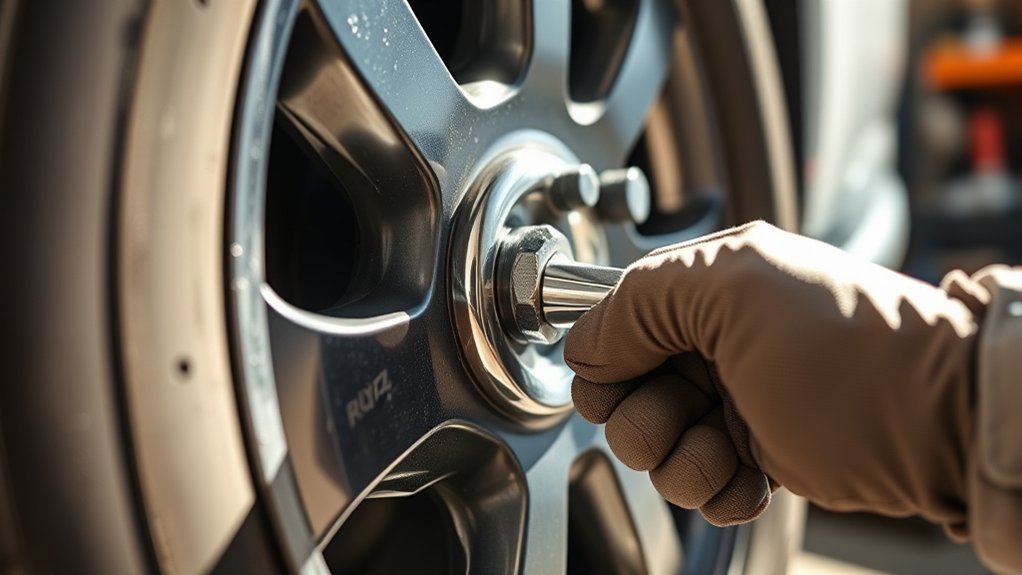
After understanding the importance of regular torque checks, it’s essential to recognize the signs that your lug nuts may be loose. One of the most telling indicators is vibration detection; if you feel noticeable vibrations in the steering wheel, especially at higher speeds, it could signal uneven tire wear or movement. In addition, pay attention to noise identification—if you hear popping or clunking sounds when driving over bumps, your lug nuts might not be properly tightened.
A visual inspection can also help; gaps between the lug nut and wheel surface may indicate loosening. Moreover, if your vehicle pulls to one side while driving, it might be a sign of imbalanced wheels caused by loose lug nuts. Regularly checking the torque of your lug nuts, particularly after the first 50-100 miles post-installation, can prevent these issues and enhance your safety on the road.
Best Tools for Accurate Torque Measurement
When it comes to ensuring your RAV4’s lug nuts are tightened to the correct specifications, having the right tools for accurate torque measurement is vital. Here are some of the best tools you should consider:
- Digital wrenches: These provide precise readings and can store settings for consistent measurements.
- Beam wrenches: They offer visual indications of torque applied, making it easy to see when you’ve reached the desired specification.
- Torque sticks: Ideal for use with impact wrenches, they prevent over-tightening by limiting torque applied to lug nuts.
- Calibration importance: Regularly calibrating your torque tools is essential to maintain accuracy; even minor deviations can pose safety risks.
DIY vs. Professional Retorquing: Which Is Right for You?
Choosing between DIY retorquing and relying on professionals depends on your comfort level with tools and knowledge of torque specifications. If you’re familiar with a torque wrench and understand that RAV4 requires 76 ft-lbf, DIY advantages include cost savings and the satisfaction of handling maintenance yourself. However, improper torque can lead to serious safety risks, like wheel detachment while driving.
On the other hand, professional expertise offers peace of mind. Experienced technicians not only guarantee adherence to manufacturer specifications but can also spot potential issues during the process. Many shops provide free retorquing after tire installation, guaranteeing you meet safety standards without extra costs. If you choose DIY, invest in a quality torque wrench and commit to a retorquing schedule every 5,000 miles or after major services. Weigh your options carefully to decide which method aligns with your skills and safety priorities.
Frequently Asked Questions
How Important Is It to Get Your Wheels Retorqued?
Getting your wheels retorqued is essential for wheel safety. It guarantees your lug nuts meet torque specifications, preventing detachment while driving. Regular checks maintain performance and stability, safeguarding your vehicle and enhancing your driving experience.
What Happens if I Don’t Retorque My Wheels?
Neglecting to retorque your wheels can compromise wheel safety, leading to loose lug nuts and potential detachment. Are you willing to risk adhering to torque specifications? It could cost you considerably in repairs and safety.
How Often Should Lug Nuts Be Retorqued?
You should retorque lug nuts every 5,000 miles or after tire rotations, ensuring they meet torque specifications. Regular lug nut maintenance prevents loosening and enhances safety, keeping your vehicle’s performance ideal on the road.
Conclusion
In the world of automotive safety, proper wheel torque is your trusty armor against potential hazards. Retorquing your RAV4 wheels isn’t just a chore; it’s a shield that guards you on every journey. By regularly checking those lug nuts, you guarantee a snug fit, keeping your drive smooth and secure. So, whether you’re a DIY enthusiast or prefer professional help, make it a habit to recheck—your wheels will thank you, and so will your peace of mind.