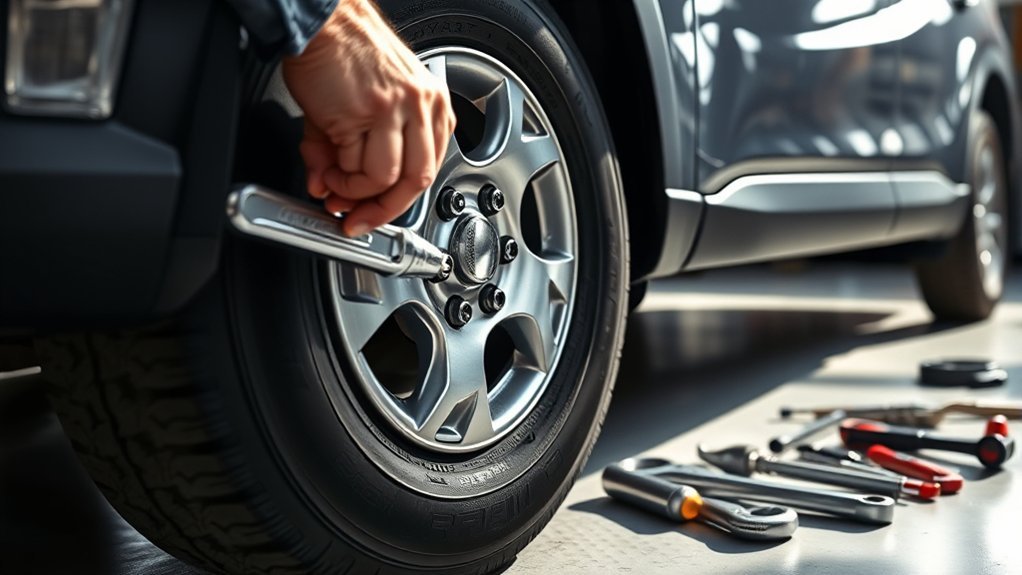
Rechecking your Toyota RAV4’s wheel torque is a small maintenance step with a big safety payoff. After a wheel has been removed for a tire rotation, flat-tire change, brake work, suspension repair, or new tire installation, the lug nuts should be tightened to the correct specification with a torque wrench, not guessed by feel.
Quick Answer
For many Toyota RAV4 model years, the wheel nut torque specification is 76 ft-lbf (103 N·m). Retorque after any wheel removal, recheck new or reinstalled wheels after the first 50–100 miles, and follow Toyota’s guidance to confirm wheel nuts are still tight after driving 1,000 miles following tire rotation, repair, or replacement.
Key Takeaways
- Use a torque wrench set to the Toyota specification: commonly 76 ft-lbf (103 N·m) for RAV4 wheel nuts.
- Recheck torque after tire installation, tire rotation, brake work, suspension work, or any flat-tire change.
- Tighten in a star pattern so the wheel seats evenly against the hub.
- Do not use an impact wrench for final torque; it can under-tighten or over-tighten the hardware.
- Stop driving and inspect the vehicle if you notice vibration, clunking, visible gaps, missing lug nuts, or pulling to one side.
At a Glance
| Time Required | 10–15 minutes |
| Difficulty | Easy, if you are comfortable using a torque wrench |
| Tools Needed | Torque wrench, correct lug-nut socket, optional wheel chocks |
| Cost | Usually free if you already own the tools; many tire shops also offer a quick torque check |
Understand RAV4 Wheel Torque

Wheel torque is the measured twisting force used to tighten the lug nuts that clamp the wheel to the hub. For many RAV4 models, Toyota lists the wheel nut tightening torque as 76 ft-lbf (103 N·m). Always confirm your exact model year, wheel type, and owner’s manual if you are working on a different RAV4 generation, aftermarket wheels, or non-original lug nuts.
Proper torque matters because lug nuts do more than hold the wheel in place. They create clamping force between the wheel, hub, and studs. Too little torque can allow movement. Too much torque can stretch or damage studs, distort hardware, or make roadside removal difficult.
Note: Torque specifications are normally based on clean, dry threads. Do not oil or grease lug nut threads or seats unless the vehicle or wheel manufacturer specifically instructs you to do so.
Recognize the Risks of Improper Torque
Improperly tightened lug nuts can create two different problems: under-torque and over-torque. Both can affect safety.
- Under-torqued lug nuts may loosen as the wheel settles, vibrates, heats, and cools during driving.
- Over-torqued lug nuts can stretch wheel studs, damage threads, or make a future tire change much harder.
- Uneven torque can prevent the wheel from seating evenly against the hub.
- Wrong hardware can stop the lug nut from clamping correctly, especially with aftermarket wheels.
Warning: If a lug nut is missing, a stud is broken, or a wheel feels loose, do not continue driving. Pull over safely and contact roadside assistance or a qualified repair shop.
A torque wrench is not just a precision tool; it is the difference between “tight enough by feel” and a verified wheel installation.
When Should You Retorque After Installation?
You should retorque your RAV4 wheels any time a wheel has been removed and reinstalled. That includes tire rotations, new tires, seasonal wheel swaps, flat-tire changes, brake service, suspension repairs, and wheel bearing or hub work.
A practical schedule is:
- Immediately after installation: Torque the lug nuts to specification before driving.
- After 50–100 miles: Recheck new or reinstalled wheels, a common wheel-industry recommendation also noted by Tire Rack’s wheel torque guidance.
- After 1,000 miles: Toyota’s aluminum wheel precautions say to check that wheel nuts are still tight after driving 1,000 miles following tire rotation, repair, or tire change.
- At regular service: Check torque during tire rotations and anytime you notice vibration, clunking, or wheel-related symptoms.
Many RAV4 maintenance schedules include tire inspection and rotation around regular service intervals, often every 5,000 to 7,500 miles depending on model year, driving conditions, and maintenance guide. Retorque checks fit naturally into that service routine.
Learn How to Retorque Your RAV4 Wheels
Retorquing is simple, but it needs to be done carefully. Work on a flat surface, keep the vehicle in Park, set the parking brake, and make sure the wheels are cool before checking torque.
[Products Worth Considering]

This click torque wrench delivers accurate, repeatable tightening for automotive and home repair tasks, helping prevent over-tightening and fastener damage. Its dual-range scale, knurled non-slip grip, and durable ratchet head make it easy to use, while the included extension bar and storage case add extra convenience.

MaxxHaul 50515 car ramps provide a stable, elevated platform for performing vehicle repairs and maintenance beneath your car. Built from heavy-duty plastic with rubber stops and a ridged surface, they help keep tires securely positioned during use. Their compact ramp design offers dependable access and support for everyday garage work.

The MaxxHaul Solid Rubber Wheel Chock 2-Pack provides dependable vehicle stabilization for cars, trucks, trailers, and RVs in garages, driveways, job sites, and campgrounds. Its solid rubber construction, non-slip traction surface, and built-in handle make placement easy while delivering long-lasting grip and all-weather durability for safer parking and storage.
Tools You Need
- A calibrated torque wrench that covers 76 ft-lbf comfortably
- The correct lug-nut socket for your RAV4 wheel nuts
- A short extension if needed for clearance
- Wheel chocks for extra safety on a flat surface
- Your owner’s manual or service information for the exact specification
Proper Retorquing Techniques
- Park safely. Use a level surface, shift into Park, apply the parking brake, and chock a wheel if available.
- Let the wheels cool. Avoid torquing hot wheels because heat can affect readings.
- Set the torque wrench. For many RAV4 models, set it to 76 ft-lbf (103 N·m), unless your manual or wheel manufacturer specifies otherwise.
- Use a star pattern. On a 5-lug RAV4 wheel, move across the wheel rather than tightening neighboring lug nuts in a circle.
- Apply smooth pressure. Pull steadily until the wrench clicks or indicates the target torque. Stop at the click; do not keep pulling.
- Make a second pass. Repeat the same star pattern once more to confirm all lug nuts reached the same torque.
- Inspect the hardware. Look for missing lug nuts, damaged studs, cross-threading, rust trails, or a wheel that does not sit flush.
Pro Tip: Start lug nuts by hand whenever a wheel is installed. Hand-starting helps prevent cross-threading before the final torque wrench pass.
Star Pattern for Five-Lug Wheels
Most RAV4 wheels use a five-lug pattern. Start at one lug nut, move to the lug nut roughly opposite it, and continue crossing the wheel until all five are checked. This helps the wheel seat flat against the hub and spreads clamping force evenly.
Regular Maintenance Schedule
A good wheel torque routine is easy to remember:
- After every wheel removal: Torque before driving.
- After the first 50–100 miles: Recheck after new tires, tire rotation, or wheel service.
- After 1,000 miles: Confirm the wheel nuts are still tight after rotating, repairing, or changing tires, consistent with Toyota’s aluminum wheel precautions.
- At tire rotations: Have torque checked during regular tire service.
- Anytime symptoms appear: Stop and inspect if you hear clunks, feel vibration, or see hardware movement.
This routine is especially important if you drive on rough roads, tow, use aftermarket wheels, change between winter and summer wheel sets, or recently had service performed with impact tools.
Signs Your Lug Nuts May Be Loose
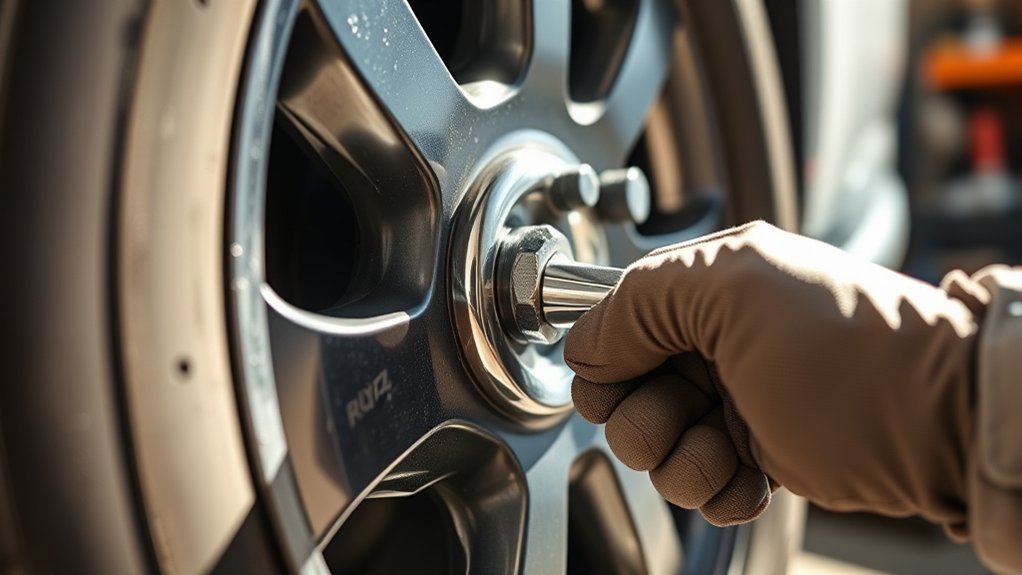
Loose lug nuts are not always obvious at first, but several warning signs can point to a problem:
- Steering wheel vibration: A vibration that appears after tire work may mean the wheel is not seated correctly or the tire/wheel assembly has another issue.
- Clunking or popping: Noise over bumps or while turning can point to wheel movement or other suspension problems.
- Visible gaps: A lug nut that does not sit flush against the wheel should be inspected.
- Rust dust or shiny metal around studs: This can indicate movement between parts.
- Vehicle pulling: Pulling to one side can have many causes, but it should be checked if it starts after wheel service.
- Missing or backed-off lug nut: Stop driving and get help immediately.
Warning: Do not ignore vibration that starts right after a tire rotation or wheel installation. Pull over safely, inspect the wheel area, and have the torque checked before continuing at highway speeds.
Best Tools for Accurate Torque Measurement
The best tool for RAV4 wheel torque is a quality torque wrench in the correct range. A wrench that measures up to about 150 ft-lbf is usually a practical choice because 76 ft-lbf falls comfortably within its working range.
- Click-type torque wrench: Common, affordable, and easy to use. Stop when it clicks.
- Beam-style torque wrench: Simple and durable, but you must read the scale carefully while applying force.
- Digital torque wrench: Accurate and easy to read, but usually more expensive and battery-dependent.
- Torque sticks: Helpful in some shop workflows, but they should not replace a final torque check with a torque wrench.
- Impact wrench: Useful for removal or initial snugging only. Do not rely on it for final torque.
Keep your torque wrench clean, store it properly, and follow the manufacturer’s instructions for calibration. If the wrench has been dropped or abused, have it checked before trusting it on wheel hardware.
[Products Worth Considering]

This all-in-one roadside emergency kit is designed to help drivers handle common breakdowns, minor repairs, and first aid needs with confidence. It includes a portable air compressor with tire pressure measuring and memory settings, safe jumper cables, and a versatile 14-in-1 pliers tool set, all organized for easy trunk storage. With a wide range of emergency supplies packed into one compact case, it is a practical choice for new drivers, daily commuters, and anyone preparing for unexpected roadside situations.

This EL-50448 TPMS relearn tool helps quickly activate and reset tire pressure sensors so your vehicle’s monitoring system stays accurate after tire rotations, sensor replacement, or seasonal tire changes. Designed for many GM-related vehicles and compatible with common 315 and 433 MHz TPMS systems, it offers simple one-button operation and reliable performance for clearing warning lights and relearning sensor positions.

PRECISE & HIGH QUALITY - Manufactured in Taiwan, our torque wrench is engineered for superior precision. It ships pre-calibrated to +/- 4% accuracy, ensuring dependable results every time. Includes a calibration certificate with a trackable serial number for your assurance.
DIY vs. Professional Retorquing: Which Is Right for You?
DIY retorquing is a good option if you own a torque wrench, know the correct specification, and feel comfortable working around vehicle wheels. It saves time and lets you check torque whenever you rotate tires or return from a tire shop.
Professional retorquing is the better choice if you notice damaged studs, seized lug nuts, missing hardware, aftermarket wheels with special lug nuts, vibration after service, or uncertainty about the correct torque specification. A technician can also inspect the wheel seat, hub surface, studs, and lug nuts for damage.
Many tire shops will perform a quick retorque check after installation. If your invoice recommends returning after a short break-in drive, follow that instruction.
[Products Worth Considering]
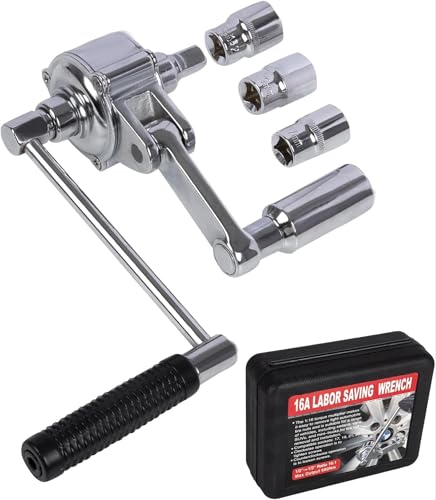
【MANUAL TORQUE MULTIPLIER FOR LUG NUT REMOVAL】Designed primarily for loosening automotive wheel lug nuts when the included socket fits correctly and sufficient operating clearance is available. The manual gear mechanism increases mechanical advantage without electricity, batteries or compressed air. Fit depends on lug nut size, wheel recess, stud length and reaction-arm clearance.
Common Retorquing Mistakes to Avoid
- Guessing by feel: A lug wrench cannot confirm torque accurately.
- Using an impact wrench for final torque: Impact output can vary widely and may damage hardware.
- Skipping the star pattern: Tightening in a circle can seat the wheel unevenly.
- Lubricating threads: Oil or grease can change friction and lead to inaccurate torque.
- Torquing hot wheels: Let wheels cool to ambient temperature first.
- Ignoring damaged hardware: Replace damaged lug nuts or studs before they become a safety issue.
- Using the wrong lug nuts: Aftermarket wheels may require different seat types, thread engagement, or hardware.
Frequently Asked Questions
How important is it to get your RAV4 wheels retorqued?
It is very important after any wheel removal. Retorquing confirms the lug nuts are still clamping the wheel properly after the wheel has settled from driving, heat cycles, and vibration.
What happens if I don’t retorque my wheels?
If the lug nuts were under-tightened or the wheel did not seat fully during installation, they may loosen over time. That can cause vibration, wheel damage, stud damage, or in severe cases, wheel separation.
How often should RAV4 lug nuts be retorqued?
Retorque after any wheel installation or removal, then recheck after the first 50–100 miles. Also confirm wheel nuts are still tight at regular tire rotations and after 1,000 miles following tire rotation, repair, or tire change when following Toyota’s aluminum wheel precautions.
What is the correct Toyota RAV4 lug nut torque?
Many Toyota RAV4 owner’s manuals list 76 ft-lbf, equal to 103 N·m. Confirm the exact value in your owner’s manual, especially if your RAV4 has aftermarket wheels, non-original lug nuts, or model-year-specific requirements.
Can I use an impact wrench to torque RAV4 lug nuts?
Use an impact wrench only for removal or light snugging if needed. Final tightening should be done with a torque wrench so each lug nut reaches the correct specification without over-tightening.
Conclusion
Retorquing your RAV4 wheels is one of the easiest safety checks you can do after tire or wheel service. Use a torque wrench, follow the star pattern, and aim for the correct Toyota specification, commonly 76 ft-lbf (103 N·m). A quick check after installation, again after the first 50–100 miles, and during regular tire service helps keep the wheels seated securely and your drive safer.
Sources
- Toyota Owners: 2022 RAV4 flat tire instructions — wheel nut torque specification and wheel installation precautions.
- Toyota Owners: 2025 RAV4 wheels — aluminum wheel precautions and checking wheel nuts after tire rotation, repair, or change.
- Tire Rack: How to properly torque wheel lug nuts or bolts — dry-thread guidance, torque pattern, impact wrench cautions, and 50–100 mile retorque guidance.
- Discount Tire: Wheel Torque Specifications — torque wrench basics, manufacturer specifications, and tightening patterns.
- AAA: How to change a tire in 11 easy steps — hand-starting lug nuts and star-pattern tightening during a tire change.