Toyota RAV4 Transmission Fluid: When to Change It and What to Watch For
What’s in This Article
- Why Transmission Fluid Matters for Your RAV4
- When Should You Change Your RAV4’s Transmission Fluid?
- Signs It’s Time for a RAV4 Transmission Fluid Change
- How to Check Your RAV4’s Transmission Fluid Condition
- Should You DIY or Hire a Pro for Your RAV4’s Transmission Service?
- Drain and Refill vs. Flush: Which Service Fits Your RAV4?
- How Regular Maintenance Extends Your RAV4’s Lifespan
- Frequently Asked Questions
A late fluid service can turn a smooth Toyota RAV4 into a rough-shifting SUV. Wrong fluid can cause even more trouble, especially on sealed transmissions that need the right fill level. This guide explains when to change your RAV4’s transmission fluid, what warning signs to watch, and when a technician should handle the job.
Quick Answer
Check your RAV4 owner’s manual first because Toyota’s schedule varies by model year and use. Toyota’s 2019 RAV4 maintenance guide lists automatic transmission fluid replacement at 60,000 miles or 72 months for special operating conditions, such as towing, heavy loading, or long low-speed use. If you want proactive protection, ask a Toyota dealer or trusted mechanic whether a drain and refill every 30,000 to 60,000 miles fits your model and driving style. Dark fluid, a burnt smell, slipping, delayed shifts, or vibration means you should book an inspection soon.
Key Takeaways
- Check your owner’s manual because RAV4 transmission service intervals vary by model year, transmission type, and driving conditions.
- Service the fluid sooner if you tow, carry heavy loads, idle often, drive in heavy traffic, or notice shifting problems.
- Use Toyota Genuine ATF WS only when your manual calls for WS fluid, or confirm any equivalent fluid with a qualified technician.
- Watch for dark color, a burnt smell, slipping, delayed shifts, vibration, or leaks because these signs need prompt inspection.
- Many 2013-2025 RAV4 models use sealed transmissions, so fluid level checks often need a dealer or trained mechanic.
Why Transmission Fluid Matters for Your RAV4

Transmission fluid lubricates internal parts, helps control heat, and supports smooth gear changes. Old or contaminated fluid can let heat rise, friction increase, and shifting quality drop. Toyota advises you to follow your owner’s manual because the right schedule depends on your model year, transmission type, and driving conditions.
A drain and refill replaces only part of the old fluid, while a flush replaces nearly all of it. Toyota explains that a fluid change often replaces about 30% to 40% of the fluid, so some owners repeat drain-and-refill services over time. Always match the fluid to your owner’s manual, especially if your RAV4 calls for Toyota WS fluid.
Note: Some earlier RAV4 models use Toyota T-IV automatic transmission fluid instead of WS. Check your owner’s manual, dipstick label, or dealer parts desk before you buy fluid.
When Should You Change Your RAV4’s Transmission Fluid?
The safest interval comes from your owner’s manual, not a single mileage rule. Toyota’s 2019 RAV4 maintenance guide lists automatic transmission fluid replacement at 60,000 miles or 72 months only for special operating conditions. Those conditions include towing, using a car-top carrier, heavy vehicle loading, extensive idling, or long low-speed driving.
Use these guidelines to choose the right next step:
- Check the maintenance guide for your exact RAV4 model year, engine, drivetrain, and transmission type.
- Schedule service sooner if you tow, haul, idle often, drive in stop-and-go traffic, or notice shifting issues.
- Ask a Toyota dealer or trusted mechanic whether a 30,000 to 60,000-mile drain and refill makes sense for proactive care.
- Avoid a power flush on a neglected high-mileage transmission until a qualified technician inspects the fluid and service history.
Signs It’s Time for a RAV4 Transmission Fluid Change
Your RAV4’s transmission fluid can show early warning signs before a major repair starts. Healthy automatic transmission fluid often looks pinkish-red and clear, though color can vary by age and fluid type. A very dark color or burnt smell points to heat, breakdown, or contamination.
Watch for performance warning signs too. Gear slippage, delayed shifting, harsh shifting, grinding noises, leaks, or excessive vibration can point to low or degraded fluid. Stop guessing when these symptoms appear, and book a professional inspection to prevent more damage and avoid costly repairs.
How to Check Your RAV4’s Transmission Fluid Condition
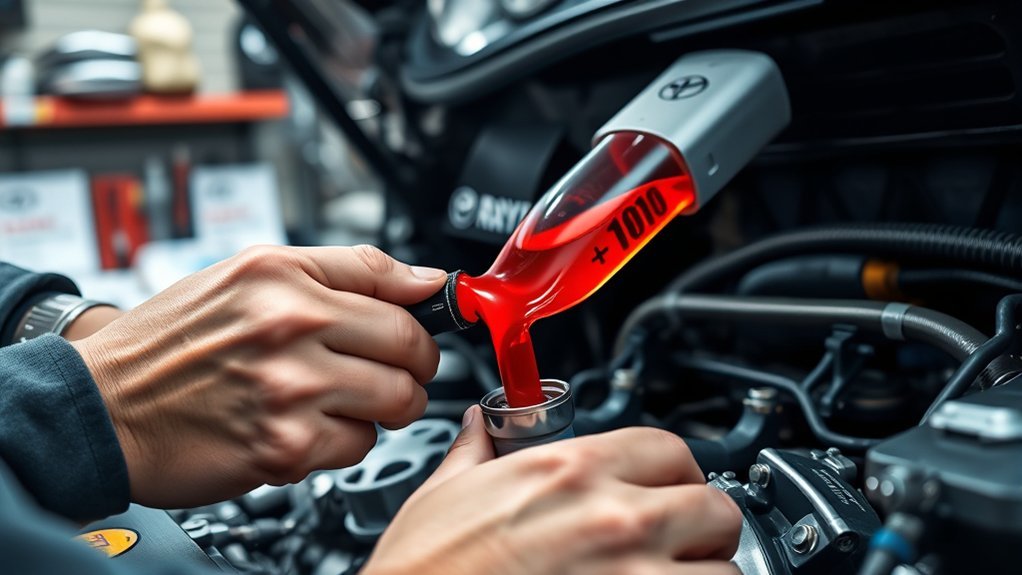
Warning: Many 2013-2025 RAV4 models use a sealed automatic transmission with no dipstick. If your RAV4 doesn’t have a transmission dipstick, ask a Toyota dealer or trusted mechanic to check the fluid level and condition.
If your RAV4 has a transmission dipstick, use this basic check:
- Warm Up Your Engine: Park on a level surface and run the engine until it reaches normal operating temperature.
- Locate the Dipstick: Find the transmission dipstick near the back of the engine bay. Stop if your model doesn’t have one.
- Check Fluid Level: Remove the dipstick and wipe it with a lint-free cloth. Reinsert it fully, then pull it out again.
- Assess Fluid Color: Look for clear pinkish-red fluid. Dark fluid, grit, or a burnt smell means you need a professional inspection.
Regular inspection helps you catch small problems before they turn into large repairs. If the fluid looks wrong or the transmission shifts poorly, don’t keep driving and hoping it improves.
Should You DIY or Hire a Pro for Your RAV4’s Transmission Service?
Choose DIY only if your RAV4 has a service procedure you can follow safely. Sealed transmissions need the correct fluid temperature, fill level, and drain plug procedure. A small mistake can leave the transmission overfilled, underfilled, or filled with the wrong fluid.
| DIY Advantages | Professional Service Considerations |
|---|---|
| Lower parts cost if you already own the tools | Better fluid-level accuracy on sealed transmissions |
| Full control over fluid brand and condition | Access to service data, lift equipment, and scan tools |
| Useful for simple drain-and-refill service on serviceable models | Safer choice for high-mileage or neglected transmissions |
| Good learning value for experienced home mechanics | Higher cost, but lower risk if the transmission has no dipstick |
Pro tip: On a high-mileage RAV4 with unknown service history, ask for an inspection before a flush. A gradual drain-and-refill plan may suit the vehicle better.
A DIY drain and refill can work well on the right model when you have the proper tools, fluid, and service steps. Professional service makes more sense when your RAV4 has a sealed transmission, leaks, burnt fluid, or shifting symptoms. Either way, match the fluid specification in your owner’s manual.
Drain and Refill vs. Flush: Which Service Fits Your RAV4?
A drain and refill removes the fluid that drains from the pan, then replaces it with fresh fluid. Toyota states that this type of service may replace about 30% to 40% of the old fluid. This method works well for routine maintenance because it changes fluid more gently.
A flush replaces nearly all of the old fluid and can clean more of the system. That sounds helpful, but it may not suit a transmission with burnt fluid, heavy debris, or unknown service history. Ask a technician to inspect the fluid first if your RAV4 has more than 100,000 miles and no clear service record.
How Regular Maintenance Extends Your RAV4’s Lifespan
Timely transmission fluid service and routine checks help prevent heat, wear, and poor shifting. Your best schedule depends on your RAV4’s model year and use, so treat the owner’s manual as your baseline.
Preventive Maintenance Practices
Prioritizing preventive maintenance keeps your RAV4 running reliably and helps you catch problems early. Start with these four steps:
- Check the Maintenance Guide: Use the service schedule for your exact model year before you choose an interval.
- Monitor Fluid Condition: Check the dipstick regularly if your model has one. Dark or burnt fluid needs prompt attention.
- Use the Correct Fluid: Follow the fluid type listed in your owner’s manual, not a general online chart.
- Adjust for Driving Conditions: Towing, heavy loading, long idling, and stop-and-go traffic can shorten fluid life.
Cost-Effective DIY Methods
A DIY drain and refill can save money on serviceable RAV4 models. Sealed transmissions need more care because you must set the fluid level at the correct temperature.
| Task | Tools Needed | Tips |
|---|---|---|
| Fluid Drain/Refill | Drain pan, funnel | Use the fluid listed in your owner’s manual |
| Pan or Strainer Service | Socket set, wrench | Leave sealed or complex service to a trained mechanic |
| Fluid Disposal | Sealable containers | Follow your local used-fluid disposal rules |
| Regular Maintenance Check | Torque wrench, funnel | Inspect for leaks at every oil change |
Importance of Fluid Quality
Transmission fluid quality affects how your RAV4 shifts, how much heat the transmission carries, and how long parts last. Pay attention to these fluid-quality basics:
- Smooth Performance: Clean fluid helps the transmission shift smoothly under normal driving conditions.
- Damage Prevention: Dark or burnt fluid signals heat, wear, or contamination that needs inspection.
- DIY Savings: A careful drain and refill can reduce costs when your model supports safe home service.
- Condition-Based Intervals: Towing, heavy loads, and long idling can shorten the service interval.
Using the right fluid and service method protects your RAV4’s reliability at any mileage.
Frequently Asked Questions
How Often Should You Change Transmission Fluid in a Toyota RAV4?
Check the maintenance guide for your exact Toyota RAV4. Toyota’s 2019 RAV4 guide lists automatic transmission fluid replacement at 60,000 miles or 72 months for special operating conditions, not as a blanket rule for every driver.
At What Mileage Does Toyota Recommend a Transmission Flush?
Toyota explains that a transmission fluid change and a transmission flush are different services. Many RAV4 maintenance guides focus on inspection or fluid replacement, so don’t assume Toyota wants a power flush at one set mileage.
Can You Use Any WS-Compatible Fluid in a RAV4?
Use Toyota Genuine ATF WS when your owner’s manual calls for WS fluid. If you want to use another fluid, confirm the specification with your Toyota dealer or a qualified technician first.
hybrid-use-the-same-transmission-fluid-schedule”>Does a RAV4 Hybrid Use the Same Transmission Fluid Schedule?
RAV4 Hybrid and Plug-in Hybrid models use a hybrid transaxle, so you should not copy advice from a gas-only automatic transmission without checking the manual. This matters even more for 2026 and newer RAV4 models because Toyota moved the lineup to hybrid and plug-in hybrid powertrains.
Automotive Safety Disclaimer: This article gives general maintenance information and does not replace professional mechanical advice. Always use safe lifting practices, handle hot fluid with care, and consult a qualified technician before you service a sealed transmission or drive with shifting problems.
Conclusion
Your RAV4’s transmission fluid matters because it controls heat, wear, and shift quality. Start by checking the service schedule for your exact model year, then shorten the interval if you tow, haul, idle often, or see warning signs. Use the correct fluid, and don’t guess on sealed transmissions that need precise fluid-level checks. A careful inspection today can help your RAV4 shift smoothly for many more miles.
References
- How Often Should You Change Your Transmission Fluid?, Toyota, accessed 2026
- 2019 RAV4 Warranty & Maintenance Guide, Toyota, 2019
- Toyota World Standard Automatic Transmission Fluid, Toyota Genuine Parts, accessed 2026
- Toyota Debuts All-New 2026 RAV4, Toyota USA Newsroom, 2025