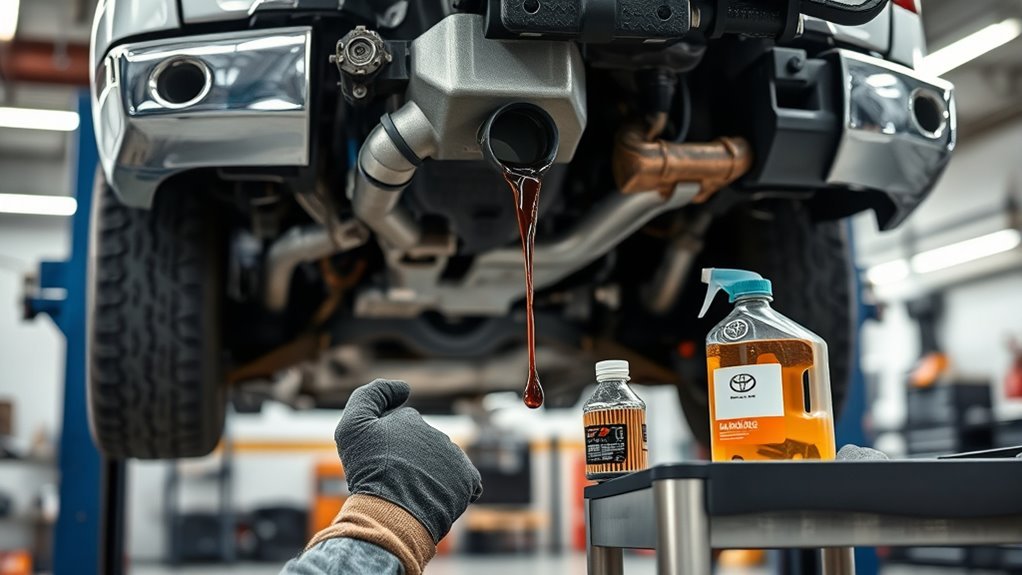
You should change your Toyota Tundra’s transmission fluid based on use: for light driving follow Toyota’s 60,000–100,000 mile guidance, but if you tow frequently or drive aggressively plan service near 40,000 miles. Inspect the fluid every 30,000 miles for color, odor, and debris; perform drain‑and‑refill regularly and consider a flush by ~100,000 miles. After service warm the trans and verify level; continue for practical step‑by‑step guidance and service tips.
Quick Answer: When to Change Tundra Transmission Fluid
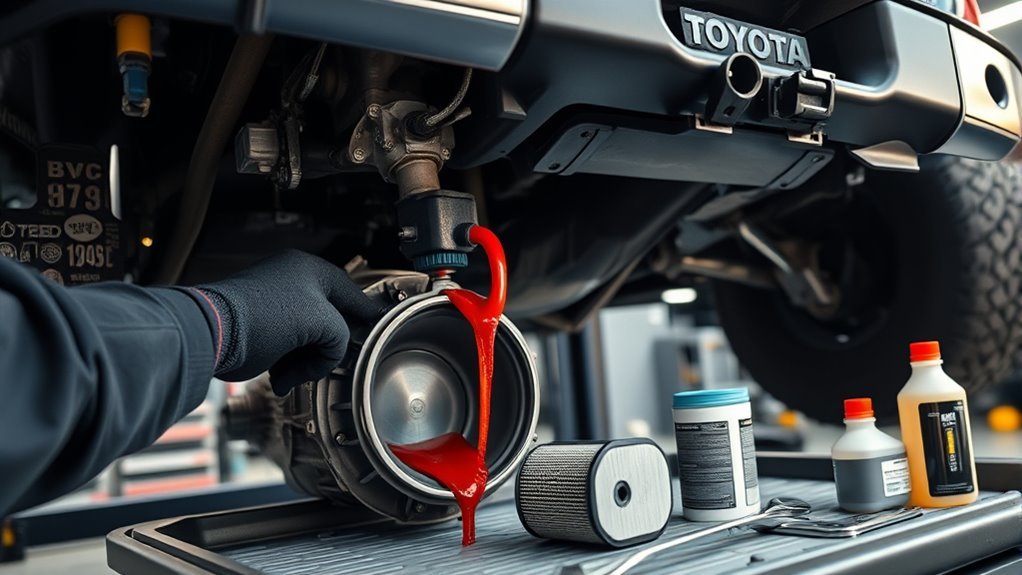
Although Toyota lists the transmission as a “lifetime” fluid fill, you should still plan service based on use: most owners change Tundra transmission fluid between 60,000 and 100,000 miles, with more aggressive schedules (around 40,000 miles) for frequent towing. You’ll treat that guidance as a baseline, not doctrine. Evaluate driving patterns, towing frequency, and fluid condition to set an interval that preserves drivetrain control and resale value.
You’ll reject maintenance myths that equate “lifetime” with “never.” Fluid longevity depends on thermal stress, contamination, and mechanical wear. Inspect fluid every 30,000 miles for discoloration or debris; dark or burnt-smelling fluid signals action. When you change fluid, prefer drain-and-refill if you want to avoid flushing debris into narrow passages; flushing can be useful but risks dislodging contaminants. Decide proactively: regular monitoring and conservative replacement protect your freedom to use the truck hard without accepting preventable failures.
Decide: Follow Toyota Schedule or Change Sooner
When you decide whether to follow Toyota’s “lifetime” fill guidance or change fluid sooner, weigh your actual use against the manufacturer’s baseline: Toyota assumes normal driving and minimal towing, but heavy loads, frequent trailer duty, or repeated stop‑and‑go heat cycles justify earlier service. You’ll balance Toyota’s design claim of fluid longevity against practical evidence: some Tundra owners report flawless performance past 100,000 miles without changes, while others notice measurable improvement after servicing at 60,000 miles. The owner’s manual gives two schedules; follow Schedule B if your duty matches heavy use. Treat forum reports as data points, not doctrine, and challenge maintenance myths that claim one-size-fits-all answers. Inspect fluid condition regularly—color, smell, metal particles—and correlate findings with your operating profile. If inspections or performance indicators suggest degradation, change earlier than “lifetime.” Aim for autonomous maintenance: use objective checkpoints, document intervals, and make a deliberate decision based on measured wear rather than marketing language or anecdote.
How Towing & Driving Style Shorten Fluid Life
If you routinely tow heavy loads or drive aggressively, expect your transmission fluid to degrade faster because higher torque and sustained heat accelerate oxidation and breakdown of additives. You’ll need a stricter maintenance cadence when towing impact and driving habits impose extra thermal and mechanical stress. Heat, load, and repeated torque cycles shorten additive life and increase wear particles.
- Schedule: If you tow regularly, change intervals often move from factory 60k–100k recommendations to about 40,000 miles; adjust sooner under severe duty.
- Stop-and-go: Urban traffic and aggressive shifts raise fluid temperature spikes, raising oxidation rate and viscosity loss.
- Terrain: Hilly or off-road use maintains higher trans temps and continuous loading, accelerating breakdown and contaminant generation.
- Monitoring: Track duty cycle and service sooner if towing impact or your driving habits are severe; proactive changes preserve control and free you from avoidable failures.
Fluid Checks: Color, Smell, and Performance Signs

Check the transmission fluid regularly for color changes: a dark maroon is typical, while brown indicates degradation. Smell the fluid—any burnt odor or cloudiness signals overheating or contamination and requires immediate attention. Also monitor shifting performance; smooth shifts mean healthy fluid, while delayed or rough shifts suggest a fluid change may be needed.
Fluid Color Changes
How can you tell if your Tundra’s transmission fluid needs attention? You’ll rely on color as a primary indicator of fluid degradation and follow maintenance tips methodically. Fresh fluid is bright red; monitor for shifts away from that hue.
- Bright red indicates healthy fluid; document color during routine checks as a liberation of control over maintenance.
- Dark maroon shows normal aging; schedule service but don’t panic if no other signs exist.
- Brown or muddy color signals contamination or severe degradation; act promptly to prevent damage.
- If color change coincides with unusual odor or performance anomalies, prioritize inspection and fluid replacement per service manual.
Check regularly, record results, and intervene when color drift suggests risk.
Smell And Performance
Having noted color shifts, also smell and shifting behavior to determine whether the fluid needs service. You’ll check for transmission symptoms like sweet or burnt odors and for shifting quality. A burnt smell signals overheating or contamination and confirms fluid degradation; smooth, quiet shifts indicate healthy fluid. If shifts are rough or erratic, plan a change. High-mileage Tundras can remain serviceable if fluid stays clean and odorless. Monitor every 30k miles to catch early issues and preserve your vehicle’s autonomy.
| Sign | Implication |
|---|---|
| Sweet or burnt odor | Fluid degradation; possible overheating |
| Dark maroon | Normal wear if odorless |
| Rough shifts | Immediate service recommended |
| Smooth shifts | Fluid functioning normally |
Recommended Mileage Intervals for Light, Mixed, and Heavy Use
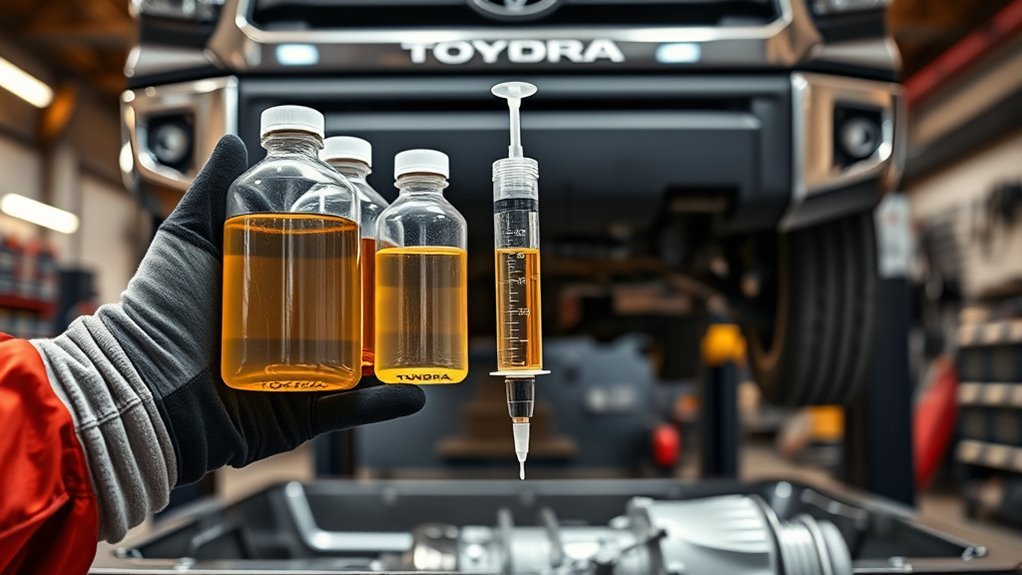
For routine light use, plan on changing the transmission fluid around 100,000 miles per Toyota’s longevity guidance. If your driving is mixed—city starts, highway, occasional loads—target a 60,000–80,000 mile interval to preserve shift quality. For frequent towing or heavy payloads, shorten service to roughly 40,000–60,000 miles and follow Schedule B recommendations.
Light Use: 100K Miles
Although you may drive a Toyota Tundra mostly in easy, low-stress conditions, plan on changing the transmission fluid at about 100,000 miles under the light-use Schedule A to preserve shifting performance and component life. You’ll follow a preventative mindset: Schedule A targets fluid longevity while minimizing risk to the transmission. Even if some owners exceed 100K, sticking to the interval reduces wear. Perform regular fluid inspections to confirm color and smell; document findings.
- Inspect fluid condition every 12 months to assess degradation.
- Replace fluid at ~100,000 miles using OEM-specified ATF to maintain shift quality.
- Keep maintenance tips log: dates, mileage, fluid type, and observations.
- Monitor your use pattern; adjust interval if light use becomes heavier.
Mixed Driving: 60–80K Miles
When you drive a Tundra in mixed conditions—daily commuting combined with occasional towing or off-road use—plan on changing the transmission fluid between 60,000 and 80,000 miles to preserve shift quality and reduce wear. You’ll lean toward 60K if you occasionally tow or subject the truck to higher loads; 70K is common and often successful for balanced mixed use. Inspect fluid color and consistency near these intervals—dark maroon can be normal, but burnt smell or sludge demands action. Follow Schedule B procedures when applicable: change filter and drain at 60K to enhance fluid longevity. Maintenance tips: perform regular visual checks, document intervals, and prioritize proactive service to keep the drivetrain reliable and free you to drive without constraint.
Heavy Towing: 40–60K Miles
If you regularly tow heavy loads, change the transmission fluid every 40,000 to 60,000 miles to prevent overheating and premature wear. You’ll protect gearsets, control clutch slips, and sustain hydraulic pressure under load. Follow Schedule B when towing frequently; it calls for fluid and filter service at 60,000 miles, though many owners opt for 40,000 miles for proactive care. Check fluid condition more often, especially after sustained climbs or hot-weather towing. Consider transmission upgrades if you run near capacity—upgraded coolers and reinforced internals extend service life.
- Inspect fluid color and smell after heavy trips.
- Drain and replace per Schedule B or at 40k for severe use.
- Monitor temperatures; adjust towing techniques to reduce strain.
- Pair service with transmission upgrades for lasting freedom.
Flush vs. Drain-And-Refill: Which to Choose for Your Tundra
Curious which service best suits your Toyota Tundra—flush or drain-and-refill—you’ll want to weigh effectiveness, risk, and maintenance history. A transmission flush uses a machine to purge nearly all fluid and contaminants; flush benefits include more complete fluid replacement and potential smoother shifts. Drain-and-refill replaces only part of the fluid, leaving older fluid mixed with new; drain risks are lower for older units because you avoid dislodging debris that can circulate and cause issues. If you tow frequently, stick to drain-and-refill every 30k–60k miles; consider a flush near 100k miles if the transmission is healthy and free of symptoms. Owners report mixed results, so choose based on age, service records, and tolerance for intervention. Below is a concise comparison to help you decide.
| Method | Effectiveness | Risk |
|---|---|---|
| Flush | High fluid replacement | Potential debris dislodgement |
| Drain | Partial replacement | Lower disturbance risk |
Pan Drop, Filter Change & Refill : Step‑by‑Step
Before you start, park the Tundra on level ground, set the parking brake, and warm the transmission to about 104–113°F so level checks will be accurate; drop the pan on the passenger side using a 12 mm socket for pan bolts and a 14 mm for the drain plug. You’ll remove the strainer (four 10 mm bolts), extract the O‑ring, and inspect magnets for debris.
- Remove pan, drain fluid, inspect magnets and clean pan; install new Toyota gasket, aligning precisely to prevent leaks.
- Unscrew strainer, replace O‑ring, lubricate new strainer and gasket with WS fluid, hand‑start bolts then torque to 7 ft‑lbs.
- Reattach pan, torque pan bolts evenly, reinstall drain plug; use magnets to trap residual particles for transmission longevity tips.
- Refill ~6 quarts via drill pump and adapter, check level at 104–113°F; integrate fluid maintenance strategies into routine service.
This methodical procedure frees you from guesswork and preserves transmission health with precise, actionable steps.
Dealer Costs, Questions to Ask, and Post‑Service Checks
How much will it cost and what exactly will they do? Expect dealer costs around $320 for a transmission flush and refill, with service taking roughly 2.5–3 hours. Ask whether they recommend a flush or a drain-and-refill: flush machines can dislodge debris, so confirm their justification and risk mitigation to set clear service expectations.
Question their Tundra transmission experience and whether the filter will be drained and replaced—many service myths assume a flush covers everything, but filters and pan cleaning may be separate. Request documented procedures and parts used.
After service, warm the transmission to 104–113°F, then check fluid level via the overflow tube to verify correct fill. Schedule follow-up checks on solenoid function and overall transmission health every 30,000 miles. Stay proactive: demand transparency, reject complacency, and use these checks to liberate yourself from preventable failures and unnecessary repeat service.
Frequently Asked Questions
How Often Should I Change the Transmission Fluid in My Tundra?
Change it every 60,000–100,000 miles, sooner if you tow heavily or see fluid change indicators; follow transmission maintenance tips, inspect fluid color/odor regularly, and perform a pan drop and filter change around 100,000 miles.
How Much Does a Transmission Flush Cost on a Toyota Tundra?
Think of freeing a stuck gear; you’ll pay about $320 for a transmission flush at dealerships, taking 2.5–3 hours. You’ll want transmission maintenance tips, watch fluid change signs, and expect regional price and repair variations.
Conclusion
Keep a strict change schedule based on use: follow Toyota for light driving, move intervals up for mixed or heavy/towing duty, and inspect fluid regularly for dark color, burnt smell, slipping or delayed shifts. Choose drain‑and‑refill for routine service, flush only when necessary, and drop the pan and replace the filter when contaminated. Ask the dealer about procedure and torque specs, verify fluid level/drain plug tightness, and test‑drive to be sure everything’s shipshape — no cutting corners.