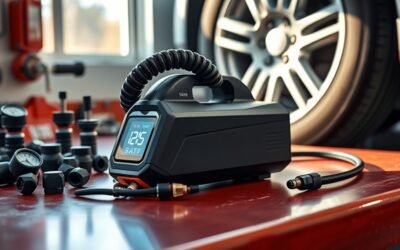
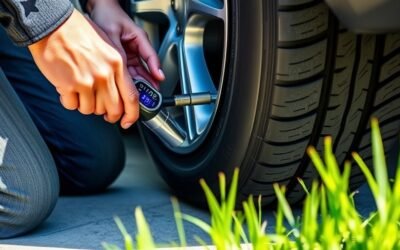
For your SUV tires, the recommended PSI typically ranges from 30 to 35 PSI. It’s essential to check your vehicle’s manual or the door frame for specific guidelines, as front and rear tires may differ. Common mistakes include ignoring the recommended PSI, using uncalibrated gauges, and checking pressure only occasionally. Maintaining proper tire pressure is important for safety, handling, and fuel efficiency. Keep going to discover best practices for tire pressure management and avoid common pitfalls.
What Is the Recommended PSI for SUV Tires?

When it comes to ensuring your SUV runs smoothly, the recommended tire pressure typically falls between 30 to 35 PSI. However, it’s essential to check your vehicle’s manual or the door frame for specific guidelines, as different tires may require varying PSI levels based on load and driving conditions. Measuring tire pressure when tires are cold gives you accurate readings, since driving can inflate tires by several PSI. Keeping to the proper PSI not only enhances vehicle handling and fuel efficiency but also promotes tire longevity. If your tire pressure drops considerably, your SUV’s TPMS will alert you, usually when it’s about 25% below the recommended levels. Stay vigilant and keep those tires in check!
How to Find the Correct Tire Pressure for Your SUV
To find the correct tire pressure for your SUV, start by checking the manufacturer’s recommendations, which are often listed in your owner’s manual or on the tire placard inside the driver’s door frame. It’s essential to follow these guidelines, as they provide the specific PSI values tailored for your vehicle. Regularly monitoring your tire pressure guarantees safe driving and peak performance, keeping your SUV in top shape.
Locate Manufacturer’s Recommendations
Finding the correct tire pressure for your SUV is essential for safety and performance. To locate the manufacturer’s recommendations, start by checking the tire placard on the driver’s side door frame or the fuel filler door. This placard displays the recommended PSI values for your specific model. Additionally, your owner’s manual provides detailed tire pressure guidelines that might vary for front and rear tires. For most low-load SUVs, a common recommendation hovers around 2.4 bar, or roughly 35 PSI, but always refer to your specific vehicle’s data. Remember to measure tire pressure when the tires are cold for the most accurate reading. Regularly checking and maintaining the correct tire pressure contributes to ideal handling, fuel efficiency, and tire longevity.
Check Door Frame Labels
Checking the door frame labels is a straightforward way to confirm your SUV’s tires are inflated to the correct pressure. These labels provide essential information that guarantees your safety and vehicle performance. Here’s what to check:
- Locate the Labels: Look on the driver and passenger side door frames and the fuel filler door for tire pressure specifics.
- Recommended PSI: Most low-load SUVs recommend around 35 PSI, but always verify against your vehicle’s labels.
- Regular Checks: Make a habit of checking these labels to maintain ideal tire pressure, keeping your SUV running smoothly.
Utilize Owner’s Manual
While it might seem convenient to guess the right tire pressure for your SUV, relying on your owner’s manual is a far better approach. This essential document provides specific PSI (pounds per square inch) recommendations tailored to your vehicle’s model and load conditions. You’ll find the recommended pressure not just in the manual, but also on the driver’s side door jamb or fuel filler door. Most low-load SUVs typically require around 35 PSI, but this varies. To guarantee accuracy, check your tires when they’re cold, as temperature affects pressure. By regularly verifying your tire pressure, you enhance fuel efficiency, improve handling, and extend tire life, allowing you to drive with confidence and peace of mind.
How Overinflation and Underinflation Affect Tire Performance
When it comes to your SUV’s performance, tire pressure plays a vital role. Overinflated tires can lead to a bumpy ride and higher blowout risks, while underinflated tires compromise handling and increase wear. Keeping your tires at the right PSI not only enhances safety but also boosts fuel efficiency and overall driving experience.
Effects of Underinflation
Underinflation greatly impacts your SUV’s performance, leading to issues that go beyond just a rough ride. Here are three critical effects to take into account:
- Poor Handling: Underinflated tires compromise your SUV’s grip and stability, making it harder to control on the road.
- Increased Wear: Tires that aren’t inflated to the correct tire pressure wear unevenly, particularly on the edges, shortening their lifespan.
- Fuel Inefficiency: Excess rolling resistance from underinflated tires can greatly decrease fuel efficiency, costing you more at the pump.
Additionally, the risk of tire blowouts rises as underinflation generates excess heat. Regular tire maintenance and checks are vital to prevent these issues and guarantee a safe, efficient driving experience.
Consequences of Overinflation
Overinflation may seem like a minor issue, but it can greatly compromise your SUV’s performance and safety. When your tires are overinflated, you diminish their contact patch with the road, leading to a harsh ride and reduced traction. This not only affects handling but also accelerates uneven tire wear, particularly in the center of the tread, shortening their lifespan. Furthermore, excessive heat buildup from overinflated tires increases the risk of blowouts, especially during high-speed driving or hot weather. You might also notice a spike in fuel consumption, as overinflation can negatively impact fuel efficiency. To keep your SUV performing at its best, always adhere to the recommended maximum pressure for your tires.
The Importance of Regular Tire Pressure Checks
Regularly checking your tire pressure is essential for ensuring your SUV handles well and stays safe on the road. Even a small deficiency in air pressure can lead to significant issues. Here’s why you should make tire pressure checks a habit:
- Optimal Traction: Properly inflated tires improve grip, enhancing your SUV’s handling.
- Safety First: A mere 5% drop in tire pressure can increase the risk of blowouts.
- Fuel Efficiency: Maintaining the right tire pressure can boost your vehicle’s fuel economy.
Remember to check when tires are cold for accurate readings. While the TPMS light can alert you to low pressure, routine manual checks are vital for overall tire health. Stay liberated and proactive—your tires deserve it!
How Tire Pressure Monitoring Systems (TPMS) Help You Stay Safe
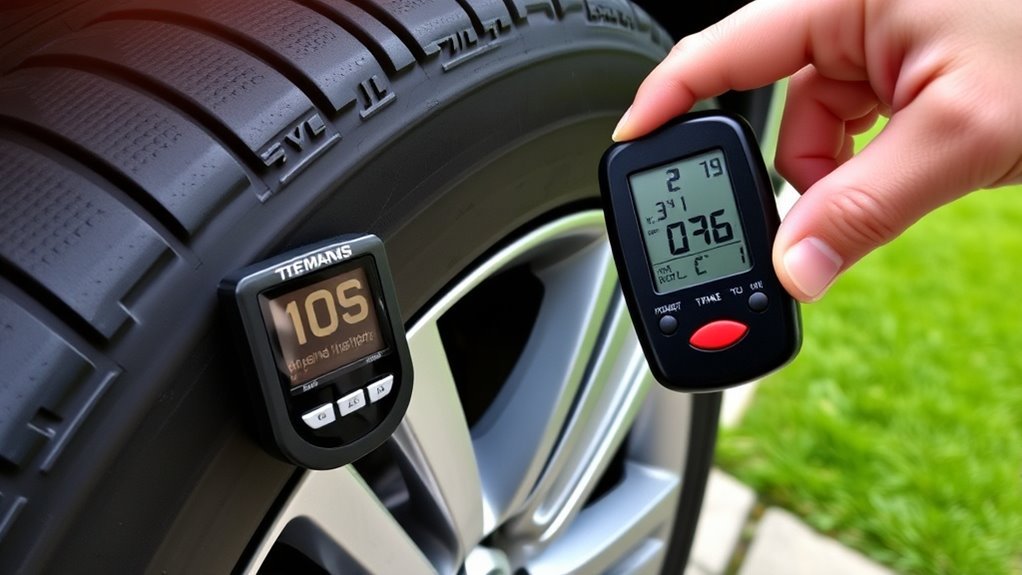
While driving, you might not always notice when your tires are losing air, but that’s where Tire Pressure Monitoring Systems (TPMS) come into play. These systems continuously check your tires’ air pressure, alerting you with a dashboard warning light when the pressure drops below 25% of the recommended level. With real-time data, the TPMS guarantees your tires remain properly inflated, enhancing your safety on the road. When the TPMS light comes on, it’s a critical reminder to check your tire pressure and prevent blowouts or handling issues. However, remember that regular tire inspections are still necessary, as the TPMS doesn’t replace the need for checking tire condition and confirming the sensors function properly. Stay informed for peak safety!
Adjusting Tire Pressure for Off-Road Safety
When you’re gearing up for an off-road adventure, adjusting your tire pressure is essential for maximizing safety and performance. Here’s what you need to keep in mind:
- Lower Your PSI: Aim for 15-25 PSI to enhance traction on soft or uneven terrain.
- Shock Absorption: Reduced tire pressure helps absorb bumps and obstacles, improving stability during off-road driving.
- Reinflate Post-Adventure: Don’t forget to inflate your tires back to the manufacturer’s recommended PSI for proper handling on regular roads.
While lowering tire pressure enhances your off-road experience, be cautious not to go too low, as this can lead to tire bead separation or overheating at higher speeds. Always consult your vehicle’s guidelines for ideal safety.
What Are the Best Practices for Checking Tire Pressure?
Maintaining ideal tire pressure is essential for your SUV’s performance and safety. To guarantee you’re always driving on the right PSI (pounds per square inch), follow these best practices:
| Action | Details |
|---|---|
| Frequency | Check tire pressure every two weeks and before long trips. |
| Equipment | Use a reliable, calibrated gauge for accuracy. |
| Location of PSI | Find the correct pressure on your door frame or in the manual. |
Always check tire pressure when your tires are cold for precise readings. Firmly press the gauge on the valve stem, wait for the hissing to stop, and then read the displayed pressure. Adjust as necessary to match the manufacturer-recommended PSI, leveraging your vehicle’s pressure monitoring system (TPMS) for added convenience.
Frequently Asked Questions
Is 40 PSI Good Tire Pressure for SUVS?
No, 40 PSI isn’t suitable for SUVs. It can negatively affect tire performance, increase wear patterns, and compromise SUV safety. Regularly check tire pressure and follow maintenance tips to guarantee peak performance and longevity.
What Is the Best Tire Pressure for a SUV?
The best tire pressure for your SUV typically hovers around 35 PSI. Following tire pressure guidelines helps prevent the effects of underinflation, while seasonal tire adjustments and monitoring keep your ride smooth and safe.
Is 35 PSI Good for a SUV?
Yes, 35 PSI is generally good for your SUV, enhancing handling performance and fuel efficiency. Make certain you check tire pressure regularly with an accurate gauge, and adjust seasonally for ideal maintenance and safety.
Is 37 PSI Too High for a Car Tire?
37 PSI might feel like a tightrope walk—too high can spark safety concerns, fuel efficiency dips, and uneven tire wear. Always check your load capacity to guarantee your tires dance smoothly on the road.
Conclusion
In conclusion, staying savvy about your SUV’s tire pressure is essential for safety and performance. Regularly check your PSI to prevent pesky problems like premature wear and poor handling. Remember, the right pressure keeps your ride reliable and responsive, whether you’re cruising city streets or tackling tough trails. So, don’t neglect this necessary nuance—make tire pressure checks a part of your routine, and enjoy a smoother, safer journey every time you hit the road!