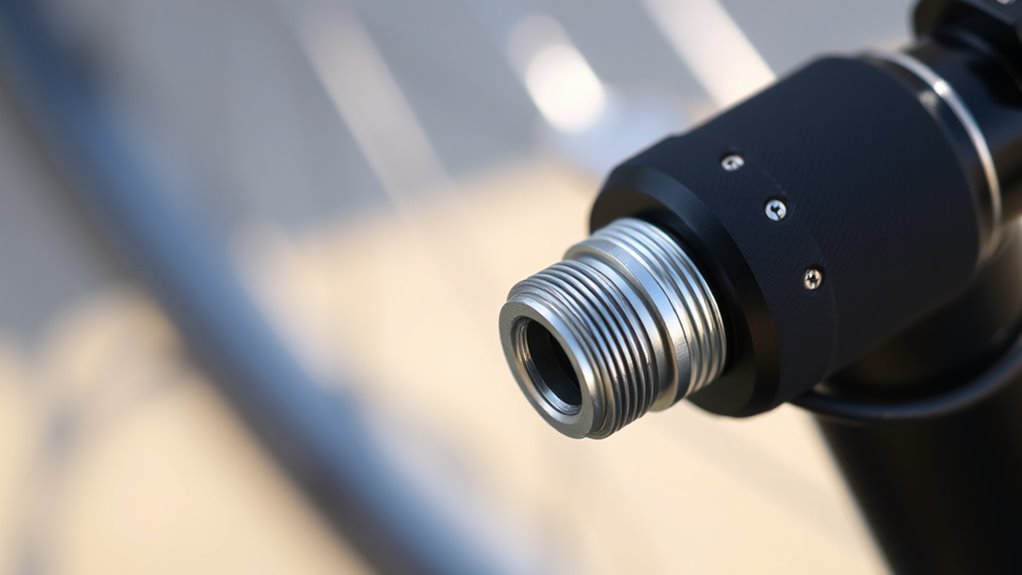
A Presta valve is a specialized valve for high-performance bicycles, designed for narrow rims and ideal aerodynamics. To inflate it, you’ll need to unscrew the lock nut, attach a compatible pump, and inflate to the recommended pressure. The slimmer design provides enhanced wheel strength but requires specific equipment. Regular maintenance, like checking the valve core and cleaning the stem, can prevent issues. For more on its features and comparisons with other valves, keep exploring further.
What Is a Presta Valve and Why Is It Important?
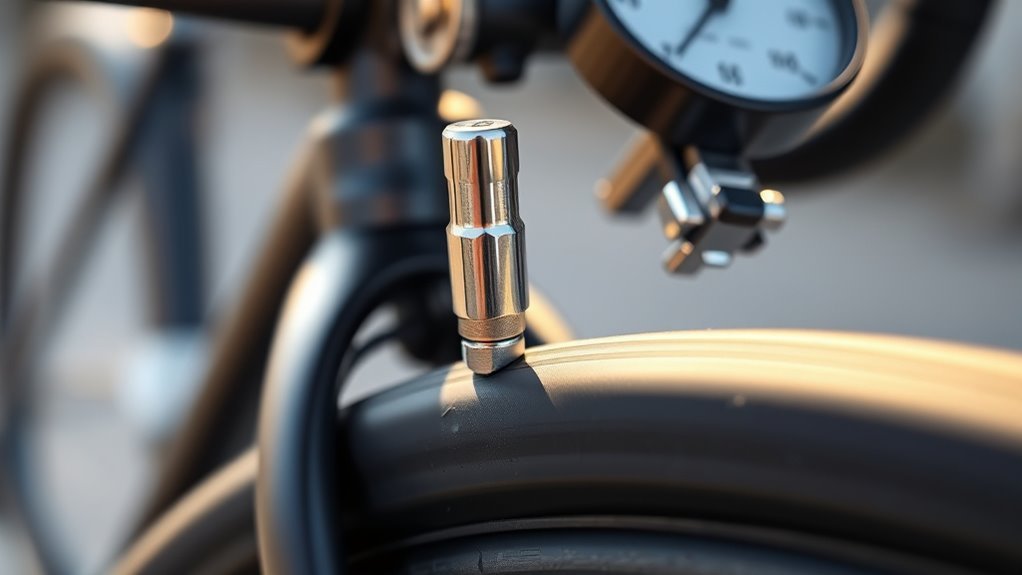
A Presta valve, often referred to as a French valve, is an important component in the world of high-performance bicycles. Designed for narrow rim holes, these valves guarantee enhanced wheel strength and aerodynamics. With a diameter of just 6mm, Presta valves are slimmer than their Schrader counterparts, contributing to lighter bike designs. To inflate, you simply unscrew the top, allowing for a quick and easy air release. It’s vital to choose a valve stem length at least 10 mm longer than your rim depth for peak function, especially with deeper rims. Some Presta valves even feature removable cores, enabling you to add sealant for tubeless setups, enhancing tire performance and simplifying maintenance.
Key Features of Presta Valves
Presta valves offer various stem lengths, ensuring compatibility with different rim depths for ideal inflation. Their removable cores provide the flexibility to add sealant, enhancing maintenance for both tube and tubeless setups. Understanding these features can greatly improve your tire management and overall riding experience.
Valve Stem Length Options
When choosing a valve stem length for your bike, it’s important to take into account the rim depth, as ideal performance typically requires a stem that’s at least 10 mm longer than the rim. This guarantees your Presta valve functions effectively, especially under high pressure.
Consider the following valve stem length options:
- Standard lengths: Available to fit most rim depths.
- Extended lengths: Suitable for deep-rimmed wheels.
- Valve extenders: Useful for adding length to shorter valves, enhancing compatibility.
- Lightweight design: Presta valves are lighter than other types, making them suitable for high-end bicycles.
Choosing the correct valve stem length not only aids in inflation but also maximizes your bike’s performance and reliability.
Removable Core Benefits
Choosing the right valve stem length enhances your bike’s performance, but the benefits of Presta valves extend beyond length options. One significant advantage is the removable cores, which allow you to add sealant directly into your tubeless systems. This feature enhances tire maintenance, ensuring better sealing and air retention. With removable cores, you can easily access the valve for cleaning or replacement, keeping it functional over time. Not all Presta valves come with this feature, so check before attempting to add sealant. By incorporating sealant through the removable core, you gain flexibility in your maintenance approach, ultimately improving your cycling experience. Embrace the efficiency that removable cores provide, and ride with confidence!
How to Inflate a Presta Valve: A Step-by-Step Guide
To inflate a Presta valve, you need to prepare your equipment first, including a compatible pump or adapter. Next, open the valve by unscrewing the lock nut to allow air in. Finally, inflate the tire to the recommended pressure and securely close the valve to maintain air pressure.
Prepare Your Equipment
Preparing your equipment for inflating a Presta valve is essential for a smooth process. First, verify you have the right tools ready. Here’s what you’ll need:
- A compatible Presta pump or adapter
- A tool to unscrew the lock nut
- Tire sealant (if applicable)
- A pressure gauge to monitor air pressure
Before you begin, unscrew the lock nut at the top of the Presta valve to allow air to flow in. If your valve has a removable core, consider adding sealant for better performance. Always check the recommended air pressure for your tire to avoid damage. After inflating, securely tighten the lock nut back onto the valve to prevent air from escaping.
Open The Valve
With your equipment ready, the next step is to open the valve for inflation. Start by unscrewing the top of the Presta valve stem, allowing air to flow in. Confirm the valve is clean to prevent any issues during inflation.
| Action | Description |
|---|---|
| Unscrew the valve top | Open the valve for air flow |
| Attach pump head | Use an adapter if using an air compressor |
| Inflate | Pump air until reaching the desired pressure |
Once you’ve inflated the tire to the recommended pressure marked on the sidewall, remember to screw the valve top back on. This tight closure prevents any air loss, confirming your ride is smooth and efficient.
Inflate Tire Properly
Inflating a Presta valve correctly is essential for maintaining peak tire performance. To guarantee you inflate the tire properly, follow these steps:
- Unscrew the top nut to open the valve, allowing air to flow in.
- Use a pump compatible with Presta valves or an adapter if necessary.
- Insert the pump head firmly onto the valve to create a seal, then inflate to the recommended pressure.
- After inflating, carefully remove the pump head and quickly screw the top nut back onto the valve to prevent air loss.
Always check the tire pressure printed on the sidewall to achieve maximum performance. Remember, understanding Presta vs Schrader valves helps you make informed choices for your bike’s needs.
Identifying Common Problems With Presta Valves
Presta valves, while popular for their efficiency and design, can present several common issues that may hinder their performance. One frequent problem is air leaks, often caused by a damaged or improperly sealed valve core. It’s essential to check for tightness and integrity. In addition, if the lock nut seizes due to dirt or rust, operating the valve can become difficult, necessitating cleaning or replacement. Users may also face challenges inflating Presta valves at gas stations, as their narrower design typically requires an adapter. Moreover, removable cores can complicate matters if not securely fastened, leading to potential air loss. Ultimately, if a Presta valve is too short for a deeper rim, valve extenders might be necessary for proper inflation.
What Maintenance Does Your Presta Valve Need?
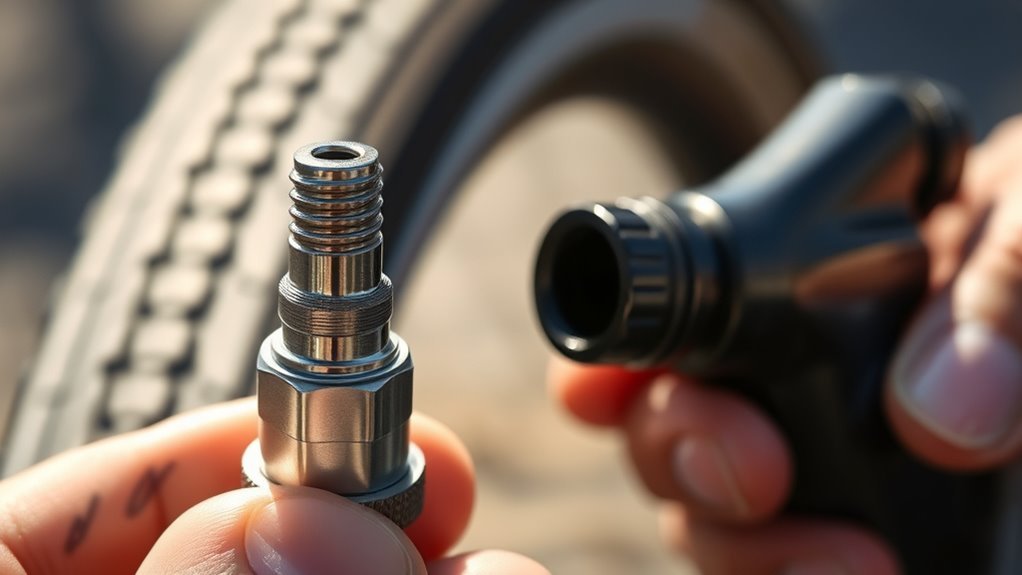
To keep your Presta valve functioning at its best, regular cleaning is essential. Check the valve core for any dirt or damage that could affect air retention. Incorporate these maintenance practices to guarantee your valve operates smoothly and efficiently.
Regular Cleaning Procedures
Maintaining your Presta valve is crucial for best performance and longevity. To guarantee your valve functions at its best, follow these regular cleaning procedures:
- Regularly inspect the valve stem for dirt or debris to prevent air leaks.
- Clean the valve and surrounding area with a soft cloth to avoid corrosion.
- Periodically check the lock nut for rust or seizing; apply lubricant if needed.
- If applicable, remove and clean the valve core to enhance airflow.
Securing the valve cap after inflation is critical, too—it keeps contaminants out and extends the valve’s lifespan. By incorporating these simple practices, you can guarantee your Presta valve remains in top condition, providing reliable service during your rides.
Checking Valve Core Integrity
Confirm your valve core is in top condition by regularly checking its integrity. Start by ensuring it’s tightly screwed in and free from leaks when closed. Inspect the valve core for any signs of damage or wear; a defective core can cause air loss and compromise your tire’s performance. If your Presta valve has a removable core, use a core tool to unscrew it for cleaning or replacement if needed. Remember to keep the valve area clean, as dirt can seize the lock nut, hindering functionality. If you notice a persistent air leak, it might be time to replace the entire Presta valve, since the valve body can wear out over time, affecting overall performance.
How Presta Valve Extenders Enhance Compatibility With Deep Rims
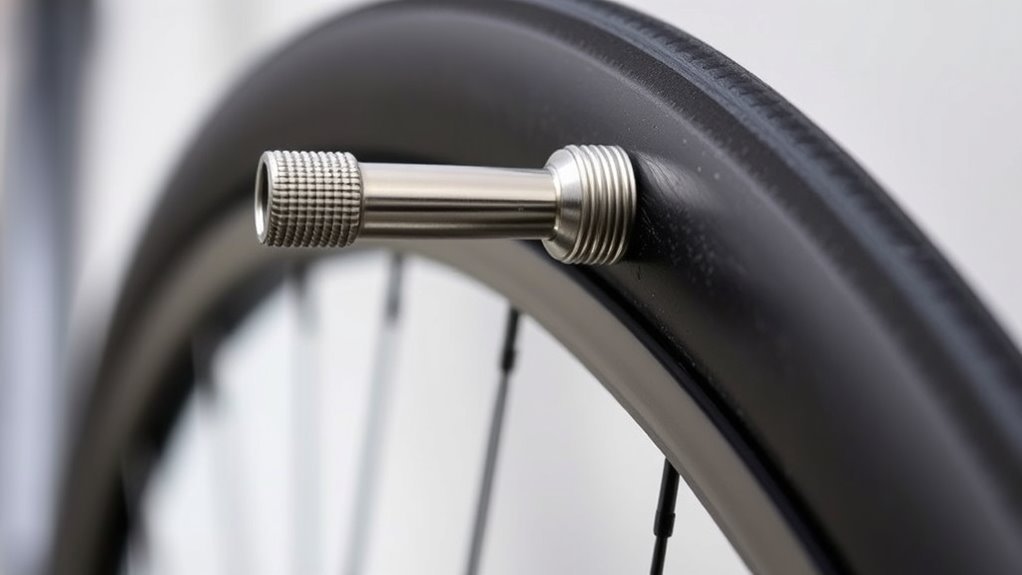
While deep rim profiles offer aerodynamic advantages, they can pose challenges for tire inflation with standard Presta valves. That’s where Presta valve extenders come in. These extenders lengthen shorter valves, enhancing compatibility with deeper rims and making inflation easier. They’re essential for competitive cyclists who prioritize performance.
- Available in two types: with or without a removable core
- Facilitate easy addition of sealant in tubeless setups
- Provide extra reach for pumps and inflators
- Guarantee a secure attachment to prevent air leaks
Presta Valves vs. Schrader Valves: Key Differences Explained
Understanding the differences between Presta and Schrader valves is essential for cyclists looking to optimize their tire setup. Presta valves, with a smaller 6mm diameter, fit through narrower rim holes, making them ideal for lightweight wheels. Unlike Schrader valves, which rely on a spring mechanism, Presta valves require you to unscrew the top for inflation, simplifying the pumping process. While Presta valves are typically found on higher-end bikes, Schrader valves dominate car tires and general bicycles, particularly for children. Keep in mind that inflation options for Presta valves are limited without an adapter, while Schrader valves can be inflated easily at gas stations. Additionally, replacement tubes for Schrader valves are more robust and readily available compared to their Presta counterparts.
Troubleshooting Presta Valve Issues
When you encounter issues with a Presta valve, it’s crucial to identify the problem quickly to maintain ideal tire pressure. Here are some common troubleshooting tips:
- Check that the screw top is fully tightened and inspect the valve core for damage or debris that could cause air leaks.
- If a lock nut is stuck, clean the area and apply lubricant to free it.
- Confirm the pump head is securely attached and that the valve is fully open before you try to inflate.
- For removable valve cores, make sure they’re properly seated and tightened with a valve core tool to prevent air loss.
When Should You Pick Presta Valves Instead of Schrader Valves?
If you’re choosing between Presta and Schrader valves for your bicycle, consider the specific demands of your riding style and equipment. Presta valves are ideal for higher-end bicycles and lightweight wheels due to their smaller diameter, allowing for a reinforced rim hole. When using deeper rims, opt for Presta valves as they come in various lengths and can easily pair with valve extenders. If you want a straightforward air release process, Presta valves excel since they lack the spring mechanism of Schrader valves, simplifying inflation. Additionally, for performance cycling, Presta valves support tubeless setups, enabling sealant addition through removable valve cores. If speed and lighter pump connections matter, choose Presta valves over Schrader valves for your bicycle tire.
Frequently Asked Questions About Presta Valves?
What questions do you have about Presta valves? These valves are commonly found on high-end bikes and have specific characteristics worth understanding. Here are answers to common inquiries:
- How do you inflate a Presta valve? Unscrew the top to release the inner body and allow air flow.
- What’s the recommended valve stem length? It should be at least 10 mm longer than the rim depth for proper fitting.
- Can you add sealant? Yes, many Presta valves come with removable cores for tubeless setups.
- Are they more fragile than Schrader valves? Yes, while they offer benefits like improved rim strength, they can be more delicate and harder to find replacements for.
Understanding these aspects can enhance your biking experience.
Frequently Asked Questions
How Do You Put Air in a Presta Valve?
To put air in a Presta valve, unscrew the top nut, use a compatible pump, and guarantee proper valve maintenance. This process highlights Presta valve advantages, like easier inflation and better performance for high-pressure applications.
What Is the Difference Between a Presta Valve and a Regular Valve?
A Presta valve differs from regular valves in size, requiring specific maintenance and tools for inflation. Its advantages include enhanced rim strength and removable cores for sealant, making it ideal for high-performance bicycles.
Do You Need a Special Pump for Presta Valves?
Yes, you need a special pump for Presta valves, or verify pump compatibility with Presta valve types. Their advantages include lighter weight and better pressure retention, making them ideal for performance-oriented bicycles.
What’s Better, Presta or Schrader Valve?
With 85% of high-end bikes using Presta valves, they offer advantages like better air retention and lighter designs. However, their fragility contrasts with Schrader’s robustness, making Presta vs Schrader a matter of preference for cyclists.
Conclusion
In summary, mastering the Presta valve opens up a world of efficient inflation and ideal bike performance. But what if you encounter unexpected issues or maintenance challenges? Don’t worry—armed with the right knowledge, you can tackle those hurdles with confidence. Whether you choose to stick with Presta or explore Schrader valves, understanding these components is essential for any cyclist. So, are you ready to guarantee your ride is smooth and hassle-free? The road awaits your next adventure!