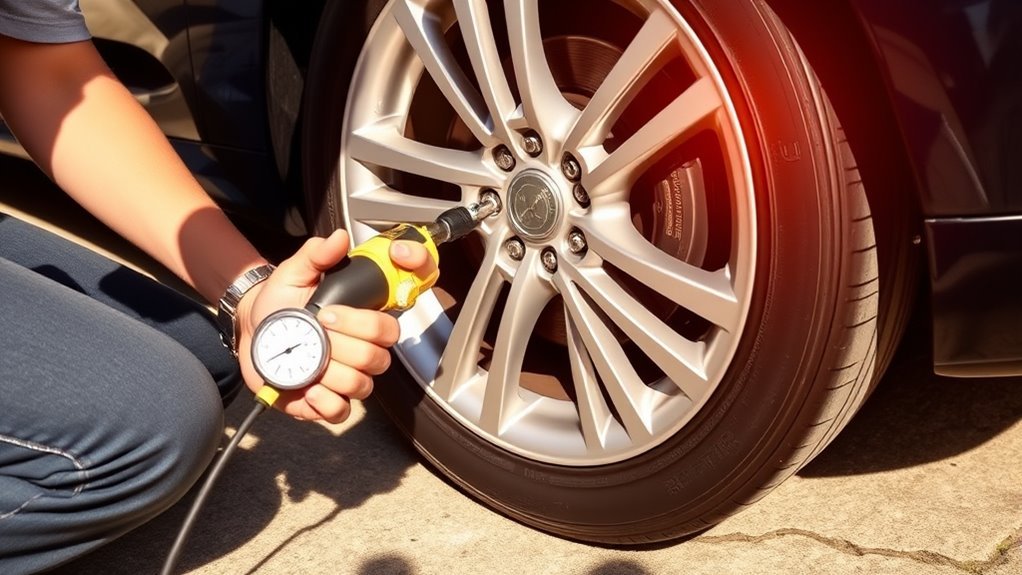
A portable tire inflator is a compact air compressor that lets you add air to a low tire without hunting for a gas station pump. It is especially useful for slow leaks, seasonal pressure drops, road trips, bikes, sports balls, and other inflatables. Used correctly, it helps you keep tires closer to the vehicle maker’s recommended pressure, which supports safer handling, better tire life, and more efficient driving.
Quick Answer
A portable tire inflator works by using a small electric compressor to push air through a hose into your tire valve. Connect it to power, set the recommended PSI from your vehicle’s door placard or owner’s manual, attach the hose, and inflate until the tire reaches the correct pressure.
Key Takeaways
- Use the tire pressure listed on your vehicle’s placard or owner’s manual, not the maximum PSI printed on the tire sidewall.
- Check and inflate tires when they are cold whenever possible for the most accurate reading.
- Choose the power source based on where you will use it: 12V for roadside use, cordless for portability, and AC for home or garage use.
- Auto shutoff, a clear gauge, a long hose, a long power cord, and a built-in light make an inflator much easier to use.
- A tire inflator can top off a low tire, but it cannot safely fix sidewall damage, exposed cords, bulges, or a tire that will not hold air.
What Is a Portable Tire Inflator and How Does It Work?

A portable tire inflator is a small compressor designed to add air to tires and other inflatables. Most models include a motor, an air hose, a valve connector, a pressure display, and a power source. When you turn it on, the motor drives the compressor, which pulls in air and pushes it through the hose into the tire.
These inflators are useful for routine tire-pressure maintenance and for roadside situations where a tire is low but still intact. They are not a replacement for a spare tire, tire repair kit, or roadside assistance if the tire is badly damaged.
For vehicle tires, the most important number is the recommended cold tire pressure from the vehicle manufacturer. You can usually find it on the driver-side door placard, inside the fuel door, in the glove box area, or in the owner’s manual.
Warning: Do not inflate a tire that has sidewall damage, exposed cords, a bulge, a split, or a puncture that will not hold air. Install the spare tire or call roadside help instead.
Comparing Different Types of Portable Tire Inflators
Portable tire inflators are usually grouped by power source. The best choice depends on whether you plan to use it at home, on the roadside, or away from your vehicle.
| Type | Power Source | Best For | Watch Out For |
|---|---|---|---|
| 110V AC Inflators | Wall outlet | Garage and home use | Not helpful on the road unless you have access to an outlet |
| Cordless Battery-Powered | Rechargeable battery | Portability, bikes, motorcycles, and quick top-offs | Battery charge, heat buildup, and tire-size limits |
| 12-Volt Plug Inflators | Vehicle 12V outlet | Road trips and emergency tire top-offs | Cord length, outlet rating, and the need to avoid enclosed-garage engine use |
| Heavy-Duty Clamp-Style Inflators | Battery clamps | SUVs, trucks, trailers, and off-road use | Larger size, higher cost, and more setup time |
If you only want a glove-box tool for a compact car, a small 12V or cordless model may be enough. If you drive a truck, tow a trailer, air down tires off-road, or inflate large tires often, look for a stronger compressor with a clear duty-cycle rating.
[Products Worth Considering]
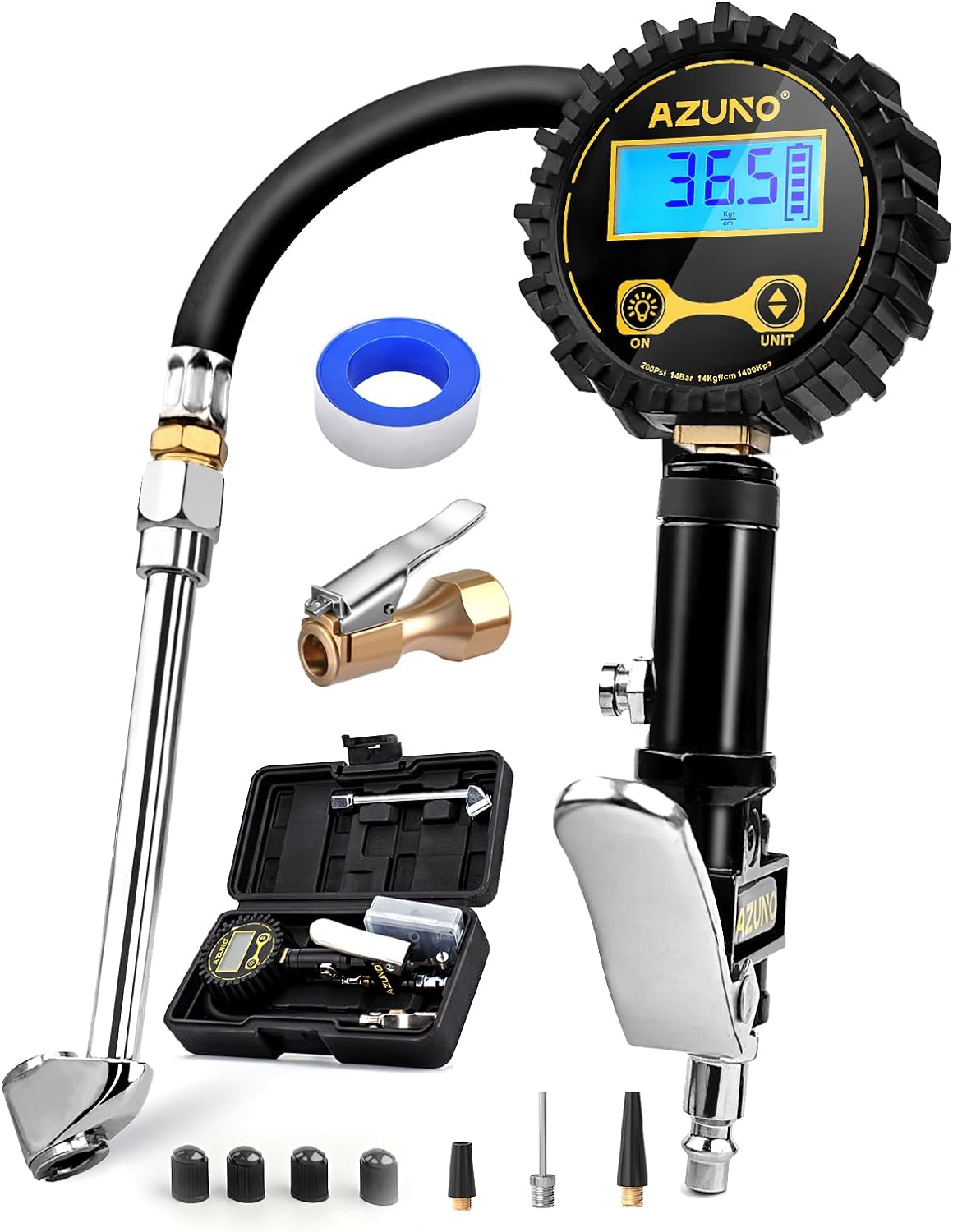
This digital tire inflator delivers accurate, easy-to-read pressure measurements with a bright backlit LCD and precise 0.1 resolution for confident inflation. Designed for single-handed use, it makes it simple to inflate or deflate tires while staying organized in the included portable carrying box. Built for a wide range of vehicles, it is a practical air compressor accessory for cars, trucks, SUVs, motorcycles, and more.

The Drymate XL Oil Spill Mat is designed to trap and contain messy liquid leaks while protecting your garage floor from stains and damage. Its absorbent surface wicks away moisture, and the waterproof, slip-resistant backing helps keep motor oil, brake fluid, gasoline, and coolant from soaking through. Reusable, durable, and easy to clean, it offers a practical long-term solution for garage and shop spill protection.

This portable tire inflator delivers fast, convenient inflation for cars, bikes, motorcycles, and balls with dual power options from a rechargeable battery or a 12V car cord. Its digital LCD pressure gauge and automatic shutoff help prevent over-inflation, while multiple preset modes and a custom setting make it easy to use for different inflation tasks. Built-in flashlight and USB power ports add extra emergency utility on the road.
Key Benefits of Using a Portable Tire Inflator
A portable tire inflator gives you more control when tire pressure drops. That can happen after a temperature change, a slow leak, or normal air loss over time.
- Convenience: You can top off a tire at home, at work, or during a trip instead of searching for a working air pump.
- Better tire maintenance: Checking tire pressure at least monthly helps catch low pressure before it becomes a bigger problem.
- Fuel economy support: The U.S. Department of Energy’s FuelEconomy.gov notes that keeping tires properly inflated can improve gas mileage by 0.6% on average and up to 3% in some cases.
- Tire life: Correct pressure helps reduce uneven wear caused by chronic underinflation or overinflation.
- Emergency confidence: If a tire is low but not damaged, an inflator may give you enough pressure to reach a tire shop safely.
Note: A tire pressure monitoring system, or TPMS, is a warning system for significant underinflation. It should not replace regular tire-pressure checks with a gauge.
Must-Have Features in a Portable Tire Inflator
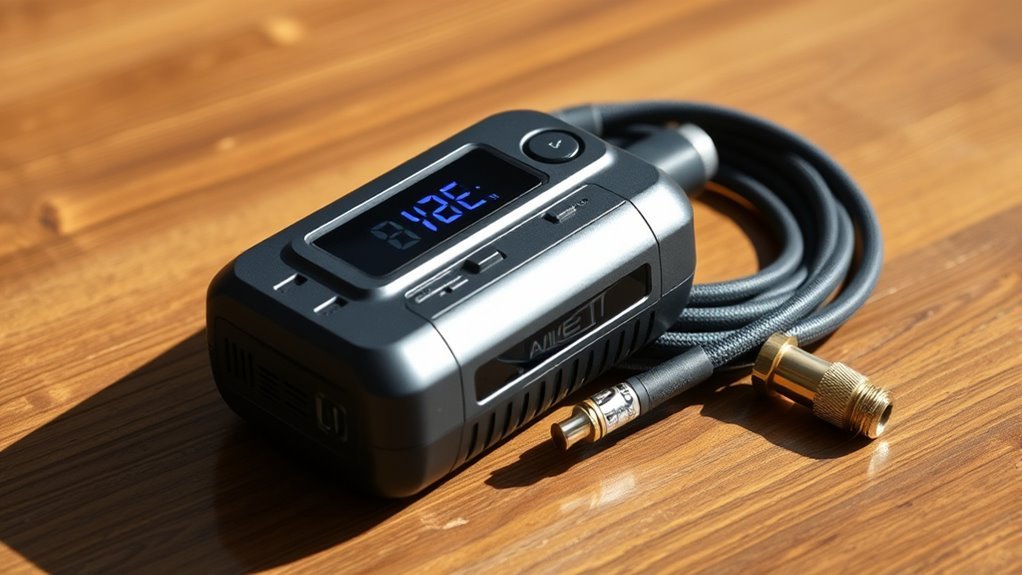
The best portable tire inflator is not always the one with the highest maximum PSI. For everyday use, practical features matter more than big marketing numbers.
- Accurate pressure display: A clear digital or analog gauge helps you avoid guessing.
- Automatic shutoff: Lets you set a target PSI so the inflator stops when it reaches the selected pressure.
- Long hose and cord: Makes it easier to reach all four tires, especially on SUVs and trucks.
- Built-in light: Helpful at night or in a dark garage.
- Adapters: Needle and nozzle attachments let you inflate sports balls, bike tires, air mattresses, and pool toys.
- Duty-cycle rating: Shows how long the inflator can run before it needs to cool down.
- Storage case: Keeps the hose, power cord, and adapters together.
Power Source Options
Choose the power source around your real use case. A 12V plug-in inflator is one of the most practical choices for road trips because it uses the vehicle’s power outlet. A cordless inflator is easier to carry around, but you must keep the battery charged. A 110V AC inflator is convenient in a garage, but it is not useful if you are stranded away from an outlet.
If your 12V inflator manual says to run the engine during use, do it only outdoors or in a well-ventilated area. Never run a vehicle engine inside a closed garage.
Integrated Pressure Gauge
An integrated pressure gauge is useful because it shows tire pressure as you inflate. Still, built-in gauges can vary by model. For best results, keep a separate quality tire pressure gauge in your vehicle and compare readings occasionally.
Use the vehicle’s recommended cold PSI as your target. The number printed on the tire sidewall is usually the tire’s maximum pressure, not the recommended pressure for your specific vehicle.
Pro Tip: Check pressure before driving or after the vehicle has been parked for at least three hours. Warm tires can read higher than cold tires.
How to Use a Portable Tire Inflator: A Step-by-Step Guide

At a Glance
| Time Required | About 5–15 minutes for a routine top-off, depending on tire size and inflator power |
| Difficulty | Easy |
| Tools Needed | Portable tire inflator, tire pressure gauge, valve cap, and your vehicle’s placard or owner’s manual |
| Cost | No added cost after you own the inflator; replace missing valve caps as needed |
- Park safely. Pull off the road, turn on hazard lights if needed, and park on a flat surface away from traffic.
- Inspect the tire. Look for sidewall cuts, bulges, exposed cords, or major punctures. Do not inflate a severely damaged tire.
- Find the correct PSI. Check the driver-side door placard or owner’s manual for the recommended cold tire pressure.
- Power the inflator. Plug it into a 12V outlet, connect the battery, or use a wall outlet depending on the model.
- Attach the hose. Remove the valve cap and secure the air hose to the valve stem so it does not leak.
- Set the target pressure. If your inflator has auto shutoff, set the recommended PSI.
- Inflate and monitor. Watch the gauge. Stop if the hose gets very hot, the inflator sounds strained, or the tire does not hold pressure.
- Check with a gauge. Confirm the final pressure with a separate gauge when possible.
- Replace the valve cap. Tighten it by hand and store the inflator after it cools.
Warning: Follow your inflator’s manual for duty cycle and cooling time. Some compact inflators are not designed to run continuously for long periods and can overheat.
Beyond Tires: Other Uses for Tire Inflators
Many portable tire inflators include adapters for more than vehicle tires. Depending on the model, you may be able to inflate:
- Bicycle tires: Use the correct valve adapter for Schrader or Presta valves.
- Sports balls: Use a needle attachment and inflate slowly to avoid overfilling.
- Air mattresses and pool toys: Use the wide nozzle attachment if included.
- Motorcycle tires: Choose a compact inflator with accurate low-volume control.
- Small trailer tires: Check the inflator’s PSI rating and duty cycle first.
Always check the recommended pressure for the item you are inflating. Small inflatables can overinflate quickly.
How to Maintain Your Portable Tire Inflator
A portable tire inflator is only helpful if it works when you need it. Add it to your normal vehicle maintenance routine.
- Charge cordless models regularly. Top off the battery before long trips.
- Inspect the hose and connector. Replace cracked hoses, loose fittings, or damaged power cords.
- Keep adapters together. Store needles and nozzles in the case or a small bag.
- Let it cool before storage. Compressors and hoses can get hot after use.
- Keep it dry. Store it away from water, extreme heat, and heavy impacts.
- Test it occasionally. Use it to top off a tire at home so you know it works before an emergency.
How to Choose the Right Portable Tire Inflator
Before buying, match the inflator to your vehicle and driving habits. A compact commuter car, a motorcycle, and a truck with large tires do not need the same compressor.
- Vehicle size: Larger tires need more airflow and a stronger motor.
- Power access: Choose 12V for roadside use, cordless for portability, or AC for garage use.
- Auto shutoff: Helpful for avoiding overinflation.
- Gauge readability: Look for a display you can read in daylight and at night.
- Cord and hose length: Make sure it can reach every tire without stretching.
- Duty cycle: Important if you inflate multiple tires in one session.
- Noise and heat: Compact inflators can be loud and hot, so check user manual guidance.
- Accessories: A carrying case, LED light, and adapters add real convenience.
[Products Worth Considering]

This color coded tire tread depth gauge helps you quickly check tire wear and monitor when replacement is needed. Calibrated in easy-to-read 32nds with clear red, yellow, and green ranges, it offers fast visual results for cars, trucks, motorcycles, and other passenger vehicles. The pocket clip makes it simple to keep on hand for routine maintenance and safety checks.

This tire repair rubber nail kit offers a fast, simple way to seal punctures in tubeless tires without removing the wheel. Designed for reliable grip and effective sealing, it helps reduce air loss and keep vehicles moving across a wide range of everyday repair needs. The assorted sizes provide versatility for minor and larger punctures on cars, trucks, motorcycles, tractors, and more.
Portable Tire Inflator Troubleshooting
| Problem | Likely Cause | What to Do |
|---|---|---|
| Air leaks at the valve | Loose hose connection | Reattach the hose straight and tighten the connector by hand |
| Inflation is very slow | Large tire, weak compressor, low battery, or hot motor | Pause, let the unit cool, check the battery, and confirm the model is suitable for your tire size |
| Pressure reading seems wrong | Gauge variation or warm tires | Recheck with a separate tire pressure gauge when the tire is cold |
| Inflator shuts off early | Auto shutoff setting, overheating, or weak power supply | Check the target PSI, power connection, fuse, and manual instructions |
| Tire loses air again quickly | Puncture, valve leak, rim leak, or tire damage | Do not keep driving on it; have the tire inspected or repaired |
Is It Time to Buy a Portable Tire Inflator?
A portable tire inflator is worth buying if you drive often, take road trips, live where temperatures swing sharply, carry bikes or sports gear, or want a simple way to handle low tire pressure at home. It is also a smart addition to an emergency kit with a tire gauge, flashlight, gloves, reflective triangles, and a properly inflated spare.
Proper tire pressure is a small maintenance habit with a real payoff: it supports safer handling, longer tire life, and better fuel economy.
You may not need a high-end inflator if you only top off compact-car tires a few times per year. But if you drive long distances, own multiple vehicles, or regularly inflate larger tires, a better compressor with auto shutoff and a clear duty-cycle rating is worth the upgrade.
Frequently Asked Questions
How does a portable tire inflator work?
A portable tire inflator uses a small electric compressor to push air through a hose into the tire valve. It may run from a 12V vehicle outlet, a rechargeable battery, or a wall outlet. Most models show pressure as they inflate, and many let you set a target PSI.
Do cordless tire inflators really work?
Yes, cordless tire inflators work well for topping off low tires, bikes, motorcycles, and sports equipment. Their limits are battery charge, heat buildup, airflow, and tire size. For large truck tires or repeated use, a stronger 12V or clamp-style compressor may be a better choice.
What is the best portable tire inflator to buy?
The best portable tire inflator is the one that matches your vehicle and use case. Look for enough power for your tire size, auto shutoff, a readable gauge, a long hose, a long power cord, a built-in light, useful adapters, and a clear duty-cycle rating in the manual.
Do I need a portable tire inflator if my car has TPMS?
Yes, it can still be useful. TPMS warns you when pressure is significantly low, but it does not replace regular pressure checks. A tire inflator lets you correct low pressure before it becomes a warning light or handling problem.
Should I use the PSI on the tire sidewall?
No, not for normal inflation. The sidewall usually lists the tire’s maximum pressure. Use the recommended cold tire pressure listed on your vehicle’s door placard or in the owner’s manual.
Can a portable tire inflator fix a flat tire?
It can help with a tire that is low but still holds air. It cannot repair a puncture, sidewall damage, valve failure, or a tire that immediately loses pressure again. If the tire will not hold air, stop driving and get it repaired or replaced.
Conclusion
A portable tire inflator is a practical tool for keeping tires topped off and handling low-pressure surprises. The key is to use it correctly: check the vehicle’s recommended PSI, inflate cold tires when possible, watch for tire damage, and follow the inflator’s duty-cycle instructions. With the right model in your car, you can handle routine pressure checks faster and travel with more confidence.
Sources
- NHTSA TireWise — correct tire pressure, cold-tire readings, and tire safety guidance
- FuelEconomy.gov: Keeping Your Vehicle in Shape — fuel-economy impact of proper tire pressure
- eCFR 49 CFR 571.138 — tire pressure monitoring system purpose and requirements
- NHTSA tire pressure guide PDF

Related Articles