When you see i-FORCE on a Toyota Tundra, it means the truck has one of Toyota’s branded truck engine packages. The badge has appeared on several Tundra engines over the years, from the early 4.7-liter V8 to the later 5.7-liter V8 and today’s twin-turbo V6 and hybrid i-FORCE MAX powertrains. The exact meaning depends on the model year, so badges, engine cover labels, window-sticker specs, and VIN information all matter.
Quick Answer
On a Toyota Tundra, i-FORCE is Toyota’s name for its truck-focused engine family. Older Tundras used i-FORCE V8 engines, while current Tundras use an i-FORCE twin-turbo V6. i-FORCE MAX means the hybrid version, pairing the V6 with an electric motor for more torque and power.
Key Takeaways
- i-FORCE is a Toyota powertrain badge, not one single engine design.
- Early Tundras used 4.7-liter i-FORCE V8 engines; later second-generation trucks offered the 5.7-liter i-FORCE V8.
- Current Tundras use a 3.4-liter twin-turbo V6 branded i-FORCE, rated up to 389 horsepower and 479 lb-ft of torque on most grades.
- i-FORCE MAX is the hybrid version, rated at 437 horsepower and 583 lb-ft of torque in the Tundra.
- Do not rely on the badge alone when buying parts or comparing specs; confirm the model year, trim, drivetrain, and VIN.
What “i-FORCE” Means on a Toyota Tundra
i-FORCE is Toyota’s branding for truck engines built around strong low-end torque, smooth power delivery, and durability under load. In simple terms, it tells you the Tundra has Toyota’s truck-focused engine package rather than describing one specific part.
That distinction matters because the badge has changed meaning across generations. A first-generation Tundra may use a 4.7-liter i-FORCE V8, a second-generation Tundra may use a 5.7-liter i-FORCE V8, and a current Tundra uses a 3.4-liter twin-turbo V6 marketed as i-FORCE. Toyota’s current Tundra page lists the modern i-FORCE V6 at up to 389 horsepower and 479 lb-ft of torque, while the hybrid i-FORCE MAX is rated at 437 horsepower and 583 lb-ft of torque.
The “i” is commonly tied to Toyota’s use of intelligent engine controls, including systems such as variable valve timing, electronic throttle control, and computer-managed fuel and ignition calibration. But it is safer to think of i-FORCE as a powertrain family name, not a guarantee that every i-FORCE engine has the same displacement, output, fuel economy, or towing capacity.
Note: If you are buying used, “i-FORCE” by itself is not enough information. A 2003 i-FORCE Tundra, a 2018 i-FORCE Tundra, and a 2026 i-FORCE Tundra can all have very different engines.
How i-FORCE Has Changed Over the Years
The biggest mistake in many i-FORCE explanations is treating every Tundra engine as if it were the same. Toyota has used the name across multiple generations.
| Tundra Era | Common i-FORCE Engine | What It Means |
|---|---|---|
| Early first generation | 4.7-liter i-FORCE V8 | Toyota’s first Tundra V8 engine family, focused on smooth torque and reliability. |
| Mid-2000s first generation | Updated 4.7-liter i-FORCE V8 with VVT-i | Added variable valve timing for better response and efficiency. |
| Second generation | 5.7-liter i-FORCE V8 | The well-known naturally aspirated V8 rated at 381 horsepower and 401 lb-ft of torque in many model years. |
| Current generation | 3.4-liter twin-turbo i-FORCE V6 | The modern gas powertrain, using turbocharging and a 10-speed automatic transmission. |
| Current generation hybrid | i-FORCE MAX twin-turbo V6 hybrid | The high-output hybrid version, built for stronger torque and quick response under load. |
For example, Toyota Canada’s 2007 Tundra specifications listed a 4.7-liter i-FORCE V8 with VVT-i and a 5.7-liter i-FORCE V8 rated at 381 horsepower and 401 lb-ft of torque. Toyota’s later U.S. newsroom materials also describe the 5.7-liter i-FORCE V8 at the same 381-horsepower and 401-lb-ft rating.
i-FORCE vs. i-FORCE MAX: Key Differences
The current Tundra lineup makes the difference clearer: i-FORCE is the gas twin-turbo V6, while i-FORCE MAX is the hybrid twin-turbo V6. Both are strong truck engines, but they are built for different priorities.
| Feature | Current i-FORCE | Current i-FORCE MAX |
|---|---|---|
| Engine type | 3.4-liter twin-turbo V6 | 3.4-liter twin-turbo V6 hybrid |
| Power | Up to 389 hp on most grades | 437 net combined hp |
| Torque | Up to 479 lb-ft | 583 lb-ft |
| Main advantage | Strong performance with less complexity than the hybrid | More torque, quicker response, and stronger acceleration |
| Best fit | Daily driving, towing, hauling, and lower purchase cost | Frequent towing, premium trims, and drivers who want maximum output |
| Maximum towing | Varies by configuration | Tundra lineup rated up to 12,000 lb when properly equipped |
Toyota says the 2026 Tundra’s available i-FORCE MAX powertrain produces 437 horsepower and 583 lb-ft of torque, and the Tundra lineup offers a maximum towing capacity of up to 12,000 pounds when properly equipped. That does not mean every i-FORCE MAX trim tows 12,000 pounds; cab style, bed length, drivetrain, trim, axle ratio, equipment, and payload all affect the final tow rating.
Warning: Always use the tow rating on your specific truck’s door jamb, owner materials, and towing guide. The highest advertised tow number is for a specific configuration, not every Tundra with the badge.
[Products Worth Considering]

This ignition coil pack and double iridium spark plug set is designed to restore reliable ignition performance for compatible Toyota, Scion, and Lexus 2.5L and 2.7L L4 gas models. It helps improve starting, fuel efficiency, and smooth engine operation while reducing misfires and emissions. Built for direct plug-and-play installation, this kit is a practical replacement for worn ignition components.

This 2-piece oil control variable valve timing solenoid set is designed to help restore proper VVT operation and engine performance across a wide range of Toyota, Lexus, Scion, and Pontiac applications. Built to meet or exceed OE performance, it uses quality seals for reliable oil control and helps reduce issues caused by improper oil flow. It is a practical replacement choice for maintaining smooth engine timing and dependable drivability.

This coolant electric water pump is designed as a replacement for select Toyota vehicles, helping maintain proper engine cooling performance and reliable temperature control. Built to OE specifications, it offers fitment support for compatible Avalon, Camry, and RAV4 models with 2.5L L4 engines. It also includes cross-reference part numbers for easier matching and comes with after-sales support for covered defects.
i-FORCE Tech Explained: VVT-i, Turbocharging, ETCS, and Hybrid Parts
The technology behind i-FORCE depends on the model year, but the goal is consistent: deliver strong, controllable torque for a truck. Here are the systems you will see most often.
VVT-i and Dual VVT-i
VVT-i means Variable Valve Timing with intelligence. It adjusts valve timing to help the engine balance low-speed torque, higher-rpm power, fuel economy, and emissions. Older i-FORCE V8s used VVT-i or Dual VVT-i depending on the year and engine. Current i-FORCE V6 engines also use modern valve-timing control as part of the overall calibration.
Electronic Throttle Control
Electronic throttle control replaces a direct mechanical throttle cable with sensors, actuators, and computer control. That lets the engine computer shape throttle response based on load, traction, drive mode, transmission behavior, and emissions needs. In daily driving, this helps the truck feel smoother; under load, it helps manage torque more precisely.
Turbocharging on the Current i-FORCE V6
The current i-FORCE engine uses twin turbochargers to help a smaller-displacement V6 produce strong torque. Compared with the older 5.7-liter V8, the modern V6 relies more on boost pressure and calibration rather than raw displacement. The result is a broad torque curve and strong pull at lower rpm.
How i-FORCE MAX Works
The i-FORCE MAX system places an electric motor-generator between the twin-turbo V6 and the transmission. Toyota explains that the system was designed for truck use, including towing and off-road driving, not just fuel savings. The electric motor helps fill in torque quickly, which is why the i-FORCE MAX feels especially strong when launching, passing, or pulling a load.
The biggest difference is torque: the current i-FORCE MAX Tundra is rated at 583 lb-ft, compared with up to 479 lb-ft for the current non-hybrid i-FORCE V6.
i-FORCE Power: Factory Horsepower, Torque, and Driving Feel
The feel of an i-FORCE Tundra depends heavily on which generation you are driving.
The early 4.7-liter V8 is known for smooth, steady power rather than huge peak output. The 5.7-liter i-FORCE V8 feels more traditional: large displacement, naturally aspirated response, and a familiar V8 pull. The current twin-turbo i-FORCE V6 feels different because turbo boost creates strong torque without needing the engine to rev as high.
The i-FORCE MAX has the strongest shove of the current lineup. Its electric motor helps the truck respond quickly before the turbos are fully working, then the gas engine and turbos carry the power through the rev range. That is why the hybrid often feels more effortless during merging, hill climbs, and trailer launches.
For most drivers, the practical difference is simple:
- Older 4.7-liter V8: smooth, durable, and modest by modern power standards.
- 5.7-liter V8: strong traditional V8 character and proven towing confidence.
- Current i-FORCE V6: strong torque, quicker response than its displacement suggests, and better efficiency potential than the old V8.
- i-FORCE MAX: the strongest factory Tundra powertrain for torque and acceleration.
Fuel Economy: i-FORCE vs. i-FORCE MAX
Fuel economy depends on model year, drivetrain, trim, tire package, and driving conditions. Do not compare an older 5.7-liter V8 directly with the current i-FORCE V6 as if they are the same engine.
For current Tundras, Toyota and EPA listings show the best gas and hybrid ratings can be close on the highway, while the hybrid’s biggest advantage is often torque and drivability rather than a huge fuel-economy jump in every configuration. The EPA’s 2026 Toyota Tundra fuel-economy listings show that exact mpg varies by drivetrain and powertrain.
| Powertrain | Fuel-Economy Note | What to Expect |
|---|---|---|
| Older 4.7-liter i-FORCE V8 | Older ratings and real-world mpg are much lower than modern trucks. | Reliable and smooth, but not a fuel-saver. |
| 5.7-liter i-FORCE V8 | Strong power but thirsty compared with the current V6 lineup. | Expect fuel use to rise quickly when towing or driving fast. |
| Current i-FORCE V6 | EPA ratings vary by 2WD/4WD and trim. | Better efficiency potential than the old V8 with strong torque. |
| Current i-FORCE MAX | Hybrid system improves response and can improve city/mixed efficiency depending on configuration. | Best for drivers who want maximum torque with competitive mpg for a full-size truck. |
Pro Tip: When comparing fuel economy, match the exact configuration: 2WD vs. 4WD, CrewMax vs. Double Cab, tire package, trim, and hybrid vs. non-hybrid. Small equipment differences can change the EPA rating.
Towing and Off-Road Benefits of i-FORCE
The main benefit of i-FORCE in a truck is usable torque. Whether it comes from a V8, turbocharged V6, or hybrid system, Toyota tunes these powertrains to move weight smoothly.
For towing, torque matters because the truck needs to launch from a stop, climb grades, and maintain speed without constant gear hunting. The i-FORCE MAX is especially strong here because its electric motor can add immediate torque at low speed. That helps when pulling away with a trailer, crawling over uneven ground, or accelerating onto a highway.
Off road, the benefit is control. Smooth throttle mapping, low-rpm torque, and selectable drive modes can make it easier to manage traction on dirt, gravel, mud, sand, or rock. On TRD Off-Road and TRD Pro models, the powertrain works with features such as Multi-Terrain Select, Crawl Control, off-road suspension tuning, skid plates, and terrain-focused tires, depending on model year and trim.
Still, the engine badge is only one part of capability. Tires, gearing, suspension, ground clearance, cooling, payload, and driver skill matter just as much.
[Products Worth Considering]

This mech-style heavy metal key fob cover is designed to protect compatible Toyota E-style smart keys with a precise 1:1 fit. Built with a durable zinc alloy frame and soft silicone buttons, it helps guard against daily wear while keeping full access to key functions. The set includes a metal keychain and screwdriver for easy installation, making it a practical upgrade for select Toyota models.

This dual filter kit helps keep your vehicle running and riding cleaner by replacing both the engine air filter and cabin air filter at the same time. It is designed for a range of Toyota and Lexus hybrid models, helping support engine performance while reducing odors and airborne particles inside the cabin. Built with high-quality filtration materials, it offers a convenient maintenance solution for routine filter replacement.

This windshield sun shade umbrella is designed for Toyota Tundra models from 2007 to 2026, helping block harsh sunlight and reduce interior heat buildup. Its reflective cooling coating and high-density fabric work together to protect dashboards, seats, and trim while keeping the cabin more comfortable. The umbrella-style design installs quickly, folds down easily, and stores neatly for everyday convenience.
What Driving an i-FORCE Tundra Is Like
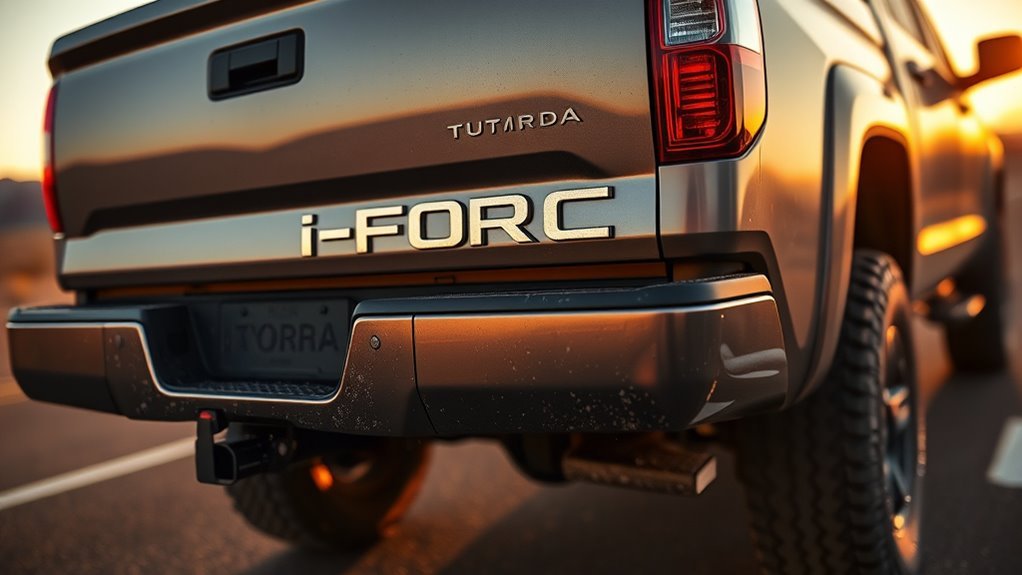
A Tundra with i-FORCE usually feels stronger in normal driving than the numbers alone suggest because the torque is easy to access. You do not need to rev the engine hard to feel movement from a stop, especially in the current twin-turbo and hybrid trucks.
Acceleration and Power Delivery
The older 5.7-liter V8 gives a direct, familiar response. It builds power in a way many truck owners like because there is no turbocharger lag and the sound is unmistakably V8. The current i-FORCE V6 feels more modern: quieter, quicker to build torque, and paired with a 10-speed automatic that keeps the engine in its strongest range.
The i-FORCE MAX feels the most responsive. Its hybrid system helps fill the gap before turbo boost peaks, so the truck feels ready immediately when you press the pedal. That helps with passing, merging, towing, and low-speed trail work.
Ride Comfort and Handling
Engine choice affects how relaxed the truck feels, but suspension and trim matter more for ride comfort. A Tundra Limited, Platinum, 1794, TRD Pro, and Capstone can all feel different because of wheel size, tire type, suspension tuning, seat design, and available adaptive systems.
With the current i-FORCE and i-FORCE MAX powertrains, the truck generally feels calm because the engine does not need to work hard in normal driving. The 10-speed automatic also helps reduce engine noise by keeping rpm lower during cruising.
Fuel Economy on Trips
On long highway trips, the difference between i-FORCE and i-FORCE MAX may be smaller than some shoppers expect. The hybrid’s main advantage is not only mpg; it is the combination of fuel economy, torque, and smooth power. If most of your driving is city traffic, mixed commuting, towing, or mountain roads, the i-FORCE MAX advantage may feel more noticeable.
Maintenance, Reliability, and Ownership Costs
i-FORCE maintenance depends on which engine you have. An older V8, a newer twin-turbo V6, and a hybrid MAX system do not have the same parts, service needs, or repair costs.
Routine Oil and Filter Service
Follow the maintenance guide for your exact model year. Toyota’s owner and warranty resources state that scheduled maintenance should be performed at specified intervals, and the current Tundra warranty and maintenance guide emphasizes routinely checking engine oil and replacing the engine oil and filter according to the maintenance chart. You can find the latest official manuals through Toyota Owners manuals and warranties.
For many current Toyota trucks, routine service commonly alternates between 5,000-mile inspections and 10,000-mile oil-change intervals under normal use, but severe use can shorten the interval. Severe use can include frequent towing, repeated short trips, dusty conditions, heavy idling, extreme heat, or off-road driving.
- Check oil level regularly: Turbocharged engines are less forgiving of low oil levels.
- Use the correct oil specification: Follow the oil grade and spec listed in your owner’s manual.
- Do not skip filters: Oil and air filtration are especially important for trucks used in dust, towing, or heat.
- Keep service records: Records help with warranty claims, resale value, and long-term troubleshooting.
Long-Term Ownership Costs
The older 5.7-liter V8 is often praised for durability, but it usually costs more in fuel. The current i-FORCE V6 can be more efficient, but turbocharged engines add components that may cost more to repair outside warranty. The i-FORCE MAX adds a hybrid battery, motor-generator, and related electronics, but it also delivers the strongest torque and power.
| Powertrain | Ownership Strength | Potential Cost Concern |
|---|---|---|
| 4.7-liter V8 | Simple feel, strong reputation, older parts availability | Age-related repairs, timing-belt service on many versions, lower mpg |
| 5.7-liter V8 | Strong towing power and proven design | Fuel cost and age/mileage wear |
| Current i-FORCE V6 | Strong torque with better efficiency potential | Turbo system complexity outside warranty |
| i-FORCE MAX | Highest torque and smooth hybrid assist | Hybrid components can raise repair complexity later in life |
How to Identify i-FORCE on Your Tundra: Badges, VIN, and Specs
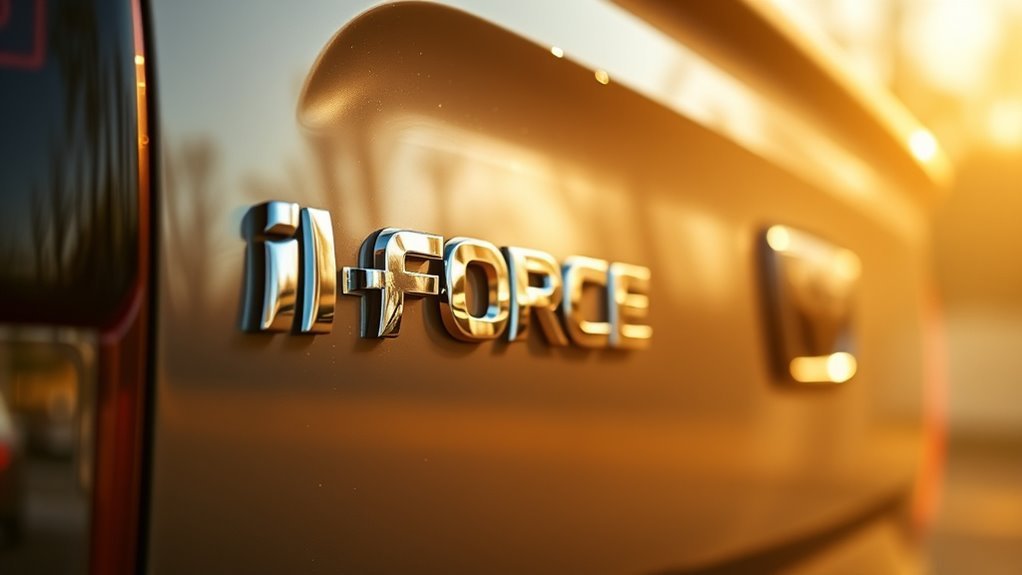
The fastest way to identify an i-FORCE Tundra is to check three things: the badge, the model year, and the engine information. A tailgate or door badge can tell you the powertrain family, but it does not always tell you the exact output.
- Look for exterior badging. Current trucks may show i-FORCE or i-FORCE MAX badging, depending on trim and powertrain.
- Check the engine cover. Toyota often labels the engine cover with i-FORCE, i-FORCE MAX, V8, or hybrid branding.
- Read the window sticker or build sheet. This is the clearest source for engine, drivetrain, trim, and tow package information.
- Use the VIN. A dealer, insurance database, or official parts lookup can decode the truck’s original engine and configuration.
- Confirm the model year. The same badge can mean different engines in different years.
If you are buying parts, do not order by badge alone. A water pump, oil filter, spark plug, turbo component, hybrid part, or belt for one i-FORCE engine may not fit another.
Which Engine Should You Choose?
The best i-FORCE engine depends on what you value most: simplicity, fuel economy, torque, towing confidence, purchase price, or long-term ownership cost.
| Choose This | Best For | Why |
|---|---|---|
| 4.7-liter i-FORCE V8 | Budget used-truck shoppers | Smooth, durable, and simple, but older and less powerful by modern standards. |
| 5.7-liter i-FORCE V8 | Drivers who want traditional V8 character | Strong naturally aspirated power and a proven reputation, with higher fuel use. |
| Current i-FORCE V6 | Most new Tundra shoppers | Strong torque, modern transmission, and lower complexity than the hybrid. |
| i-FORCE MAX | Towing, premium trims, and maximum torque | Best factory output and the strongest low-speed response. |
If you want the simplest used Tundra experience, a well-maintained V8 can still make sense. If you are shopping new, the standard i-FORCE V6 is the practical choice for many buyers. If you tow often or want the strongest factory Tundra, the i-FORCE MAX is the one to test-drive first.
[Products Worth Considering]

This complete ignition kit includes six direct replacement coil packs and six pre-gapped iridium spark plugs designed for select Toyota and Lexus 3.5L V6 vehicles. It can help address misfires, rough idle, hard starting, hesitation, and check engine light issues caused by worn ignition components while supporting smooth, reliable engine performance. Built for easy installation and backed by testing, warranty coverage, and technical support, it is a convenient tune-up solution.

This A-Premium cartridge engine oil filter is designed for a wide range of Toyota and Lexus vehicles, helping support cleaner oil flow and dependable engine protection. With high filtration efficiency and included O-rings, it offers a practical replacement solution for routine maintenance. Built for extended service intervals, it is suitable for conventional or synthetic oil applications.

This engine water pump kit is designed to help maintain reliable cooling performance across a wide range of compatible Toyota, Lexus, Scion, and Pontiac vehicles. Built with aluminum and tested for leak-free operation, it offers a direct replacement solution that supports engine efficiency and long-term service life. The kit includes a professional water pump and gasket for a convenient installation-ready repair.
Frequently Asked Questions
What does i-FORCE mean on a Toyota Tundra?
i-FORCE is Toyota’s name for its truck-focused engine family. On older Tundras, it usually refers to a V8 engine. On current Tundras, it refers to the 3.4-liter twin-turbo V6, while i-FORCE MAX refers to the hybrid version of that V6.
What is better, i-FORCE or i-FORCE MAX?
i-FORCE MAX is better if you want the most power and torque. In the current Tundra, it produces 437 horsepower and 583 lb-ft of torque. The standard i-FORCE V6 is still strong and may be the better value if you do not need the hybrid’s extra output.
Is the Toyota 5.7-liter i-FORCE V8 a good engine?
Yes, the 5.7-liter i-FORCE V8 has a strong reputation among many Tundra owners because it delivers smooth, naturally aspirated power and strong towing performance. Its main drawback is fuel economy, especially compared with the current twin-turbo V6 engines.
Is i-FORCE MAX just a fuel-saving hybrid?
No. Toyota designed i-FORCE MAX as a performance-focused truck hybrid. It can help fuel economy in some driving, but its bigger advantage is immediate torque, stronger acceleration, and better response when towing or driving under load.
How do I know which i-FORCE engine my Tundra has?
Check the model year, engine cover, exterior badges, window sticker, and VIN. The badge alone is not enough because Toyota has used i-FORCE on different V8 and V6 engines over several Tundra generations.
Does every i-FORCE MAX Tundra tow 12,000 pounds?
No. Toyota advertises up to 12,000 pounds for the Tundra lineup when properly equipped, but the exact rating depends on cab, bed, trim, drivetrain, equipment, payload, and tow package. Always verify the rating for your specific truck.
Conclusion
i-FORCE on a Toyota Tundra means the truck has Toyota’s branded truck engine package, but the exact engine depends on the year. Older trucks used i-FORCE V8 engines, while current trucks use a twin-turbo V6. i-FORCE MAX is the hybrid version, built for the strongest factory torque and power.
If you are comparing Tundras, do not stop at the badge. Match the model year, engine, trim, drivetrain, towing equipment, and maintenance history. That is the only reliable way to know what the truck can tow, how it will drive, what it may cost to maintain, and whether i-FORCE or i-FORCE MAX is the better fit for your needs.
Sources
- Toyota Tundra official page — current i-FORCE and i-FORCE MAX power, torque, towing, and model overview.
- Toyota USA Newsroom: 2026 Toyota Tundra — 2026 Tundra powertrain details, 437 hp, 583 lb-ft, and maximum towing information.
- Toyota USA Newsroom: How Does i-FORCE MAX Work? — explanation of Toyota’s i-FORCE MAX hybrid truck system.
- FuelEconomy.gov: 2026 Toyota Tundra — EPA fuel-economy listings by Tundra configuration.
- Toyota Owners Manuals and Warranty Guides — official Tundra owner, warranty, and maintenance resources.
- Toyota Canada: 2007 Toyota Tundra release — historical 4.7-liter and 5.7-liter i-FORCE V8 specifications.