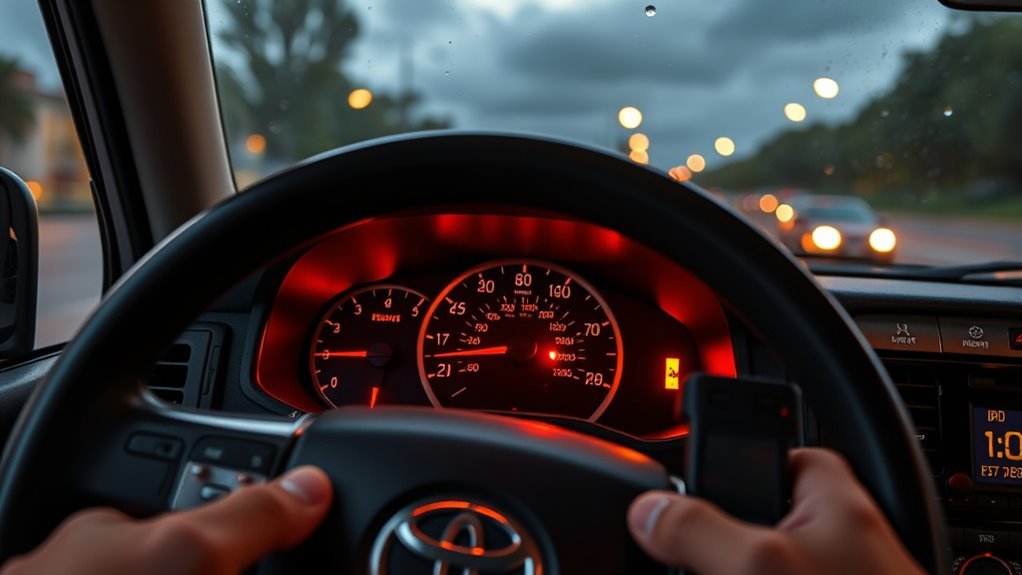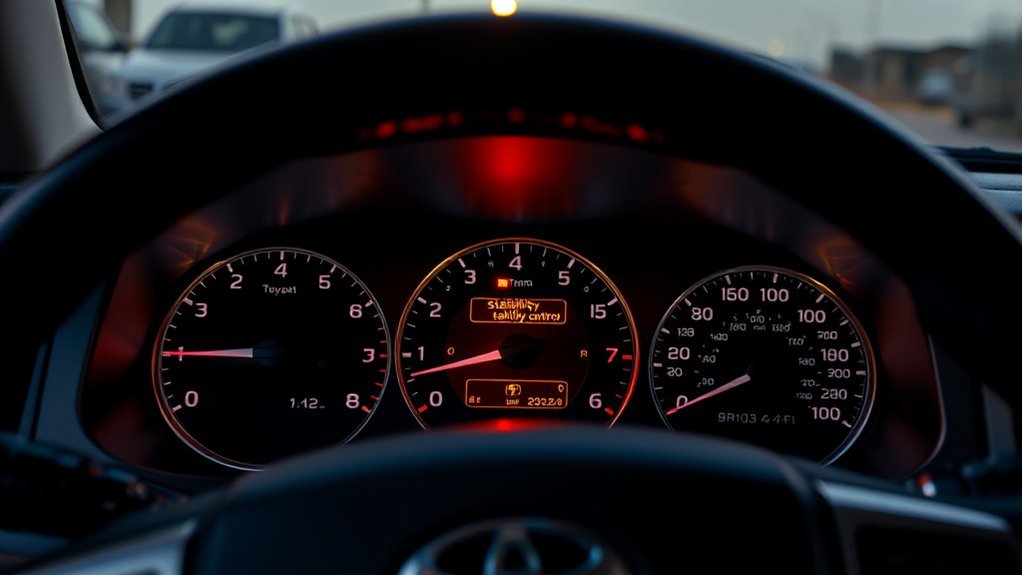
When your Toyota Land Cruiser shows a VSC, TRAC OFF, A-TRAC, ABS, or Check Engine warning, the vehicle is telling you that one or more traction, stability, braking, or engine-management systems may not be working normally. You can usually drive carefully for a short distance if the vehicle feels normal and only amber lights are on, but you should reduce speed, avoid sudden steering or braking, and diagnose the warning as soon as possible.
Quick Answer
A Land Cruiser VSC or TRAC OFF light means stability control or traction control is turned off, limited, or disabled because another fault is present. Check the TRAC/VSC switch, gas cap, brake fluid, tires, battery voltage, wheel-speed sensors, ABS wiring, and engine codes. Drive gently and scan both engine and ABS/VSC systems.
Key Takeaways
- VSC helps reduce skids by using braking and engine-control inputs; TRAC and A-TRAC help limit wheel spin.
- If Check Engine, VSC, and TRAC OFF appear together, start with engine and emissions codes before replacing traction-control parts.
- If ABS or BRAKE appears with VSC, treat the warning as a brake or skid-control issue until proven otherwise.
- A basic OBD-II scanner may read engine codes, but many ABS/VSC faults need an ABS-capable scanner or Toyota-level diagnostic tool.
- Do not ignore a red brake warning, flashing Check Engine light, low brake fluid, or any change in brake feel.
At a Glance
| Time Required | 10 to 30 minutes for basic checks; longer if ABS/VSC testing, wiring inspection, or calibration is needed |
| Difficulty | Easy for visual checks; moderate to advanced for sensor testing, live data, wiring faults, and module codes |
| Tools Needed | Owner’s manual, tire-pressure gauge, flashlight, battery tester or multimeter, OBD-II scanner, ABS-capable scanner if available |
| Cost | Free for simple checks; diagnostic and repair costs vary by model year, labor rate, scanner access, and failed part |
What It Means When Your Land Cruiser’s VSC or TRAC OFF Light Comes On
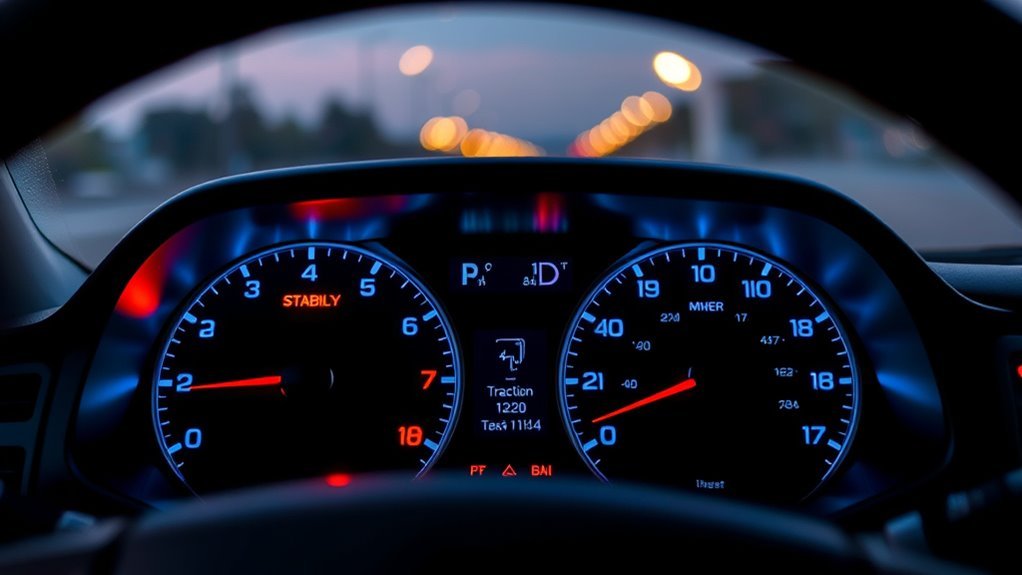
VSC stands for Vehicle Stability Control. It helps the Land Cruiser reduce skids by comparing steering input, vehicle movement, and wheel-speed data, then applying braking or engine-control corrections when needed. TRAC or A-TRAC helps reduce wheel spin during acceleration, especially on loose, wet, snowy, or uneven surfaces.
On many Toyota models, these lights can appear for three broad reasons:
- The system was turned off intentionally with a TRAC/VSC button, A-TRAC button, or off-road drive mode.
- The traction or stability system detected a fault, such as a wheel-speed sensor, yaw-rate sensor, steering-angle sensor, wiring, ABS actuator, or skid-control ECU problem.
- An engine or emissions fault is present, and the vehicle disables or limits VSC/TRAC as a fail-safe response.
Toyota’s owner information for the Land Cruiser warns drivers to be especially careful and drive at a speed appropriate for road conditions when Active TRAC/VSC systems are turned off, because these systems help enhance vehicle stability and driving force. You can confirm model-specific behavior in the Toyota Land Cruiser owner’s manual.
Note: Land Cruiser wording varies by year and market. Older models may show VSC/TRAC, VSC OFF, A-TRAC, ABS, or brake warnings. Newer U.S. Land Cruisers may refer to Active TRAC, VSC, Trailer Sway Control, and Toyota Safety Sense systems. Always match the warning to your exact owner’s manual.
What Each Warning Light Means
The exact icon and message can vary, but this table gives you a practical starting point before you scan for codes.
| Light or Message | What It Usually Points To | Urgency |
|---|---|---|
| VSC or VSC OFF | Stability control is off, limited, or faulted | Drive gently and diagnose soon |
| TRAC OFF | Traction control is off, limited, or disabled by another fault | Check mode settings and scan if it returns |
| A-TRAC | Active traction control behavior changed, often during off-road use or due to a fault | Confirm selected drive mode and scan persistent warnings |
| ABS | Anti-lock brake or wheel-speed signal problem | Inspect braking system and scan ABS/VSC modules |
| Red BRAKE | Parking brake, low brake fluid, hydraulic issue, or another brake-system warning | Stop safely and inspect before driving farther |
| Check Engine | Engine or emissions fault that may disable traction and stability control | Read OBD-II codes first |
Is It Dangerous? Immediate Steps to Take
A VSC or TRAC OFF light does not always mean the vehicle is unsafe to move, but it does mean you should drive as though traction assistance is reduced. That matters most on rain, snow, ice, gravel, mud, steep grades, or during emergency steering.
Warning: Stop in a safe place and get help if the red brake warning light is on, the brake pedal feels soft or sinks, brake fluid is low, the Check Engine light is flashing, the vehicle is misfiring badly, or you hear grinding, scraping, or ABS pump noises. Toyota’s warning-light guidance says red icons require immediate attention and safety-system warnings should be taken seriously.
Take these steps first:
- Ease off the throttle. Reduce speed smoothly and increase following distance.
- Avoid abrupt inputs. Do not make sharp steering, hard braking, or sudden acceleration moves unless needed to avoid a crash.
- Look for other lights. Note whether ABS, BRAKE, Check Engine, tire-pressure, or 4WD warnings are on.
- Pull over safely if anything feels wrong. Brake feel, steering feel, engine misfire, or loss of power changes the situation from “diagnose soon” to “stop and inspect.”
- Restart once, safely. If the light was caused by a temporary traction event or system toggle, it may reset. If it returns, diagnose it.
Toyota’s general warning-light guidance also reminds owners to check the owner’s manual or schedule service when warning lights appear. Do not rely only on dashboard color if the vehicle feels different than normal.
[Products Worth Considering]

The KONNWEI KW208 is a versatile 12V battery tester designed to quickly analyze battery health, cranking performance, and charging system status for cars, trucks, boats, motorcycles, and more. It supports multiple battery types and provides clear guidance on whether a battery should be recharged or replaced, helping you diagnose issues before they become failures. With plug-and-play use, high accuracy, and multilingual support, it offers a convenient way to test batteries in-vehicle or out-of-vehicle.
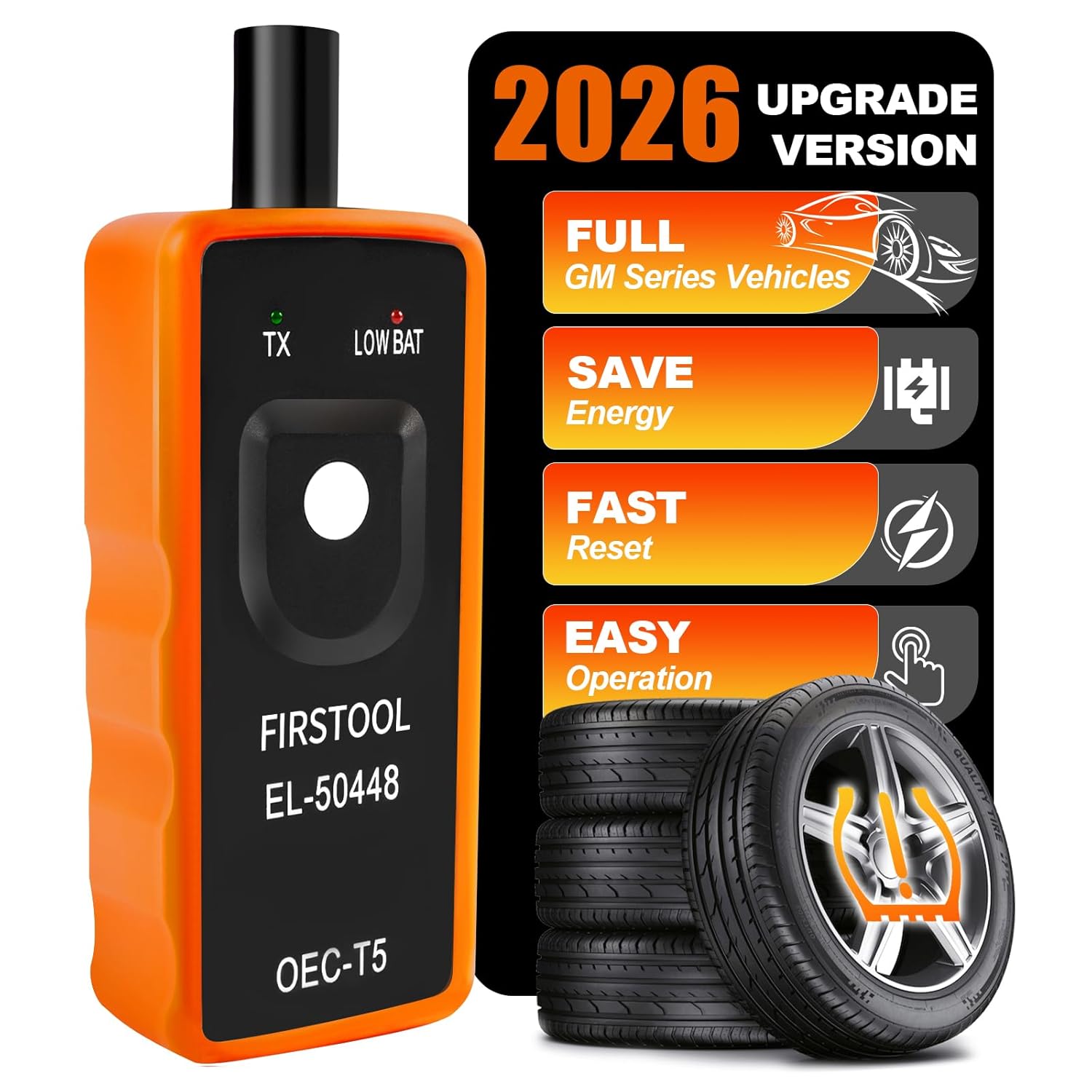
This EL-50448 TPMS relearn tool helps quickly activate and reset tire pressure sensors so your vehicle’s monitoring system stays accurate after tire rotations, sensor replacement, or seasonal tire changes. Designed for many GM-related vehicles and compatible with common 315 and 433 MHz TPMS systems, it offers simple one-button operation and reliable performance for clearing warning lights and relearning sensor positions.

The AstroAI M4K0R Digital Multimeter delivers accurate TRMS measurements for AC/DC voltage, current, resistance, continuity, diode testing, and battery checks, making it a versatile tool for home and automotive troubleshooting. Its non-contact voltage detection, backlit LCD, flashlight, data hold, and auto-ranging design help simplify everyday electrical diagnostics while supporting safer use with audible and visual alarms. Built with double ceramic fuses and a protective silicone cover, it is designed for reliable performance and added protection during demanding tasks.
Quick Checks: Gas Cap, Fluids, Tires, Battery, and Warning-Light Combos
Before replacing parts, do the easy checks. Many VSC/TRAC warnings are secondary warnings caused by another system fault.
Check the TRAC, VSC, or A-TRAC Button First
On some Land Cruiser models, pressing and holding a traction-control button can disable or partially disable traction and stability systems. Off-road modes, crawl control, multi-terrain settings, or 4WD modes can also change how traction control behaves. If the light appeared after pressing a button, check your owner’s manual and return the system to normal mode before assuming there is a fault.
Check the Gas Cap and Check Engine Light
A loose, missing, or damaged gas cap can trigger an evaporative-emissions fault and illuminate the Check Engine light. The U.S. Environmental Protection Agency explains that OBD systems monitor emissions controls and can identify problems such as a loose gas cap or incomplete combustion. Because Toyota stability and traction warnings can appear alongside engine faults, a gas-cap problem can indirectly bring VSC/TRAC warnings with it.
- Turn the engine off in a safe place.
- Remove the gas cap and inspect the seal for cracks, dirt, or deformation.
- Reinstall it until it clicks or tightens as specified in your manual.
- Drive normally for a few trips. The light may not clear immediately.
If the Check Engine light is flashing, do not treat it like a simple gas-cap issue. Reduce load, avoid hard acceleration, and get the vehicle checked quickly.
Inspect Brake and Engine Fluids
Low brake fluid is a safety issue, not just a dashboard nuisance. Check the brake-fluid reservoir against the MIN/MAX marks, and look for leaks around the master cylinder, calipers, brake lines, and under the vehicle. Also check engine oil and coolant levels, because engine faults can set Check Engine codes that affect traction and stability control operation.
Do not overfill brake fluid to hide pad wear or a leak. If the level is low, find out why. Worn brake pads, leaks, or hydraulic problems need inspection.
Check Tire Pressure, Size, and Condition
VSC and ABS depend on accurate wheel-speed comparisons. Mismatched tire sizes, uneven tread depth, very low tire pressure, or a temporary spare can confuse the system. Check all tires for correct pressure, similar tread depth, and the correct size and load rating. Your exact Land Cruiser manual will also list tire-size, load-capacity, and replacement guidance for your model year.
Check the Battery and Charging System
Low voltage can create confusing warning-light combinations at startup. If the lights appeared after a slow crank, jump start, battery replacement, or long storage period, test battery voltage and charging-system output. A weak battery does not prove the ABS/VSC system is healthy, but it can trigger communication and sensor-voltage faults that should be ruled out early.
Note Concurrent Warning Lights
The combination of lights tells you where to start:
| Warning Combo | Most Likely Starting Point | What to Do |
|---|---|---|
| VSC/TRAC OFF only | System switched off, temporary traction event, low voltage, or stored VSC fault | Check button/mode settings, battery condition, restart, then scan if it returns |
| VSC + TRAC OFF + Check Engine | Engine/emissions fault causing traction systems to disable | Read OBD-II P-codes first, then repair the root cause |
| VSC + ABS | ABS sensor, wheel-speed signal, wiring, actuator, or skid-control issue | Use an ABS-capable scanner and inspect sensors/wiring |
| VSC + red BRAKE light | Brake fluid, parking brake, hydraulic, or brake-system fault | Stop safely and inspect before driving farther |
Top Causes: Wheel-Speed Sensors, ABS Faults, and Engine Problems
The right fix depends on the codes. Still, these are the most common areas to check when VSC or TRAC OFF lights stay on.
Wheel-Speed Sensor or Tone Ring Problems
Each wheel-speed sensor reports wheel rotation to the ABS and stability-control system. If a sensor is dirty, cracked, unplugged, corroded, damaged by road debris, or reading through a damaged tone ring, the skid-control ECU may not trust the signal. That can trigger ABS, VSC, or TRAC warnings.
Signs that point toward a wheel-speed sensor include:
- ABS and VSC lights together
- A code naming a specific wheel-speed sensor circuit
- Warnings after brake, hub, axle, or suspension work
- Intermittent lights after driving through mud, snow, water, or heavy road salt
- One wheel-speed reading that drops out or does not match the others on live data
ABS Actuator, Skid-Control ECU, or Wiring Faults
The ABS actuator and skid-control ECU manage braking inputs for ABS, traction control, and stability control. A fault here may come from the module itself, low voltage, weak grounds, corroded connectors, damaged harnesses, or communication problems on the vehicle network.
Before replacing an expensive ABS actuator or ECU, a technician should verify power, ground, communication, sensor signals, and brake-fluid condition. Random module replacement is one of the fastest ways to waste money on this type of warning.
Engine or Emissions Faults
On many Toyota and Lexus vehicles, a Check Engine light can be accompanied by VSC/TRAC warnings. That does not always mean the stability-control system itself failed. The engine computer may have detected a fault and reduced or disabled related traction-control functions.
Possible engine-side triggers include:
- Loose or damaged gas cap or EVAP leak
- Oxygen sensor or air-fuel ratio sensor faults
- Misfires
- Throttle-body or accelerator-pedal sensor issues
- Mass airflow sensor problems
- Low battery voltage or charging-system faults
The EPA explains that OBD systems monitor engine, transmission, and emissions components and alert drivers through the Check Engine or Malfunction Indicator Light. You can read more in the EPA’s OBD frequently asked questions.
Step-by-Step Diagnostic Flow
Use this order so you do not waste time or replace good parts.
| Step | What to Check | Why It Matters |
|---|---|---|
| 1 | Safety warnings, brake feel, steering feel, and engine running quality | These decide whether to stop driving or continue carefully |
| 2 | TRAC/VSC/A-TRAC button and selected drive mode | The system may have been turned off intentionally |
| 3 | Gas cap, fluids, tires, and battery voltage | Simple faults can create warning-light chains |
| 4 | OBD-II engine codes if Check Engine is on | Engine faults commonly disable or limit VSC/TRAC |
| 5 | ABS/VSC/skid-control codes and live wheel-speed data | Generic readers may miss chassis faults |
| 6 | Wiring, connectors, sensors, calibration, and road test | Confirms the repair fixed the real cause |
[Products Worth Considering]

This automotive circuit tester checks low-voltage DC systems from 3-65V, making it useful for diagnosing headlights, taillights, fuses, sockets, and other vehicle wiring issues. The digital backlit display provides clear voltage readings with fine accuracy, while the bidirectional polarity indicator helps you test from either ground or positive. Built with a durable probe, insulated tip, and extra-long spring wire, it is designed for dependable everyday use in automotive and household electrical work.

Masoll’s TPMS sensor set includes four advanced sensors and a relearn tool to help GM vehicle owners replace factory tire pressure sensors at home. Designed for broad compatibility with GM vehicles after 2006, it supports dual-frequency operation for easier fitment across Chevy, GMC, Buick, Cadillac, Pontiac, and select trucks. With low power use, high accuracy, and DIY installation, it offers a convenient way to clear TPMS warnings and restore proper tire pressure monitoring.
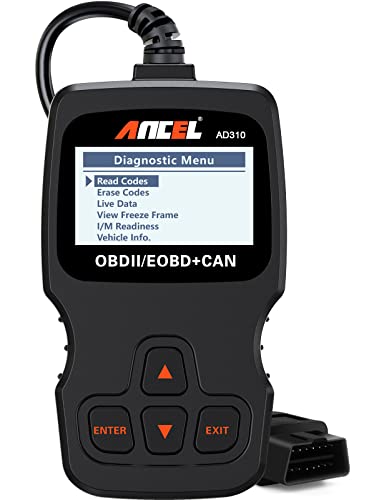
CEL Doctor: The ANCEL AD310 is one of the best-selling OBD II scanners on the market and is recommended by Scotty Kilmer, a YouTuber and auto mechanic. It can easily determine the cause of the check engine light coming on. After repairing the vehicle's problems, it can quickly read and clear diagnostic trouble codes of emission system, read live data & hard memory data, view freeze frame, I/M monitor readiness and collect vehicle information
Reading Codes: OBD-II vs. ABS/Skid-Control ECU
A basic parts-store code reader usually reads OBD-II engine and emissions codes, such as P0300 misfire codes, P0420 catalyst-efficiency codes, or EVAP leak codes. That is useful when the Check Engine light is on.
However, many VSC, TRAC, and ABS problems are stored in the ABS/skid-control ECU as chassis codes, often beginning with “C.” A generic scanner may miss these entirely. For a complete diagnosis, use one of these:
- An ABS-capable scan tool
- Toyota Techstream or a Toyota-level diagnostic system
- A professional shop scanner that can read live wheel-speed data and skid-control codes
Pro Tip: Do not clear codes before writing them down. Freeze-frame data, stored codes, and pending codes can show whether the fault happened at startup, during braking, during acceleration, or after a specific wheel lost signal.
Common DTCs That Can Trigger VSC or TRAC OFF
These codes do not apply to every Land Cruiser year, but they show the kinds of faults that often appear with VSC/TRAC warnings:
| Code Type | Example Codes | What They Suggest |
|---|---|---|
| Engine/emissions | P0300, P0301-P0308 | Misfire that may trigger fail-safe behavior |
| EVAP | P0440, P0442, P0455, P0456, P0457 | Evaporative-emissions leak, sometimes as simple as a loose gas cap |
| Catalyst/O2 sensor | P0031, P0135, P0420 | Oxygen-sensor heater, air-fuel control, or catalyst-efficiency issue |
| Wheel-speed/ABS | C0200-series or model-specific C-codes | Wheel-speed sensor, sensor circuit, or ABS signal issue |
| Skid-control communication | Model-specific C/U-codes | ABS actuator, skid-control ECU, wiring, voltage, or network fault |
Do not diagnose by code number alone. A code points to a circuit or condition; it does not always identify the failed part. For example, a wheel-speed sensor code can be caused by the sensor, connector, wiring, tone ring, bearing play, debris, or an ECU input problem.
Temporary Triggers vs. Persistent Faults: Will the Light Reset?
Some warnings are temporary. Others are stored faults that will come back until repaired.
Temporary Causes Explained
A temporary VSC/TRAC warning may happen after:
- Wheel spin on snow, ice, mud, sand, or gravel
- Using a traction-control or off-road mode
- Installing a temporary spare tire
- Low tire pressure or uneven tire grip
- A weak battery or low-voltage event during startup
- Water, slush, or mud around a wheel-speed sensor
If the light goes out after restarting and does not return, write down what happened and keep monitoring. If it repeats, scan it before clearing anything.
When Persistent Faults Persist
If the light stays on after restart or returns every drive, treat it as a real fault. Persistent warnings usually need code retrieval, live-data checks, wiring inspection, and sometimes brake or ABS testing.
| Symptom | Likely Area | Best Next Step |
|---|---|---|
| Persistent VSC/TRAC light | Stored skid-control or engine fault | Scan all modules, not just engine |
| Warning after hub/brake work | Wheel-speed sensor, connector, tone ring | Inspect the worked-on corner first |
| Lights plus poor running | Engine misfire, throttle, MAF, O2/A/F sensor | Repair engine fault before chasing VSC |
| ABS and VSC lights together | ABS sensor, actuator, wiring, brake system | Use ABS live data and inspect brake system |
Should You Reset the Land Cruiser VSC or TRAC OFF Light?
You should not reset the light just to make it disappear. Resetting without recording codes can erase the information you need to find the fault. A reset makes sense only after you have documented the codes, corrected the cause, and confirmed that the warning does not return during a safe road test.
If the light came on after a known temporary event, such as wheel spin in mud or a dead battery jump start, one safe restart may clear it. If it comes back, scan it. If brake feel changes, the red brake light stays on, or the Check Engine light flashes, do not keep resetting and driving.
Driving Advice When VSC or TRAC OFF Is Illuminated
If the Land Cruiser feels normal and only amber/yellow warning lights are on, you may be able to drive cautiously to a safe location or repair shop. Use conservative inputs:
- Slow down. Stability control is most valuable when traction is poor or when a quick maneuver is needed.
- Increase following distance. Give yourself more time to brake and steer.
- Avoid towing heavy loads if possible. Trailer Sway Control may be unavailable when VSC is disabled or malfunctioning.
- Do not test the system on public roads. Avoid hard acceleration, sudden lane changes, and aggressive off-road driving until the fault is fixed.
- Plan the shortest safe route. Choose dry, low-speed roads over highways or steep terrain if the warning persists.
If you are off-road, stop in a safe, level spot and check the selected drive mode. Some lights may appear because a mode changed system behavior, but a persistent ABS/VSC fault still deserves diagnosis before difficult terrain.
DIY Fixes You Can Try and When to Stop
Start with low-risk checks before you spend money:
- Confirm the traction-control switch or mode setting. Make sure the system was not intentionally disabled.
- Tighten and inspect the gas cap. Replace it if the seal is cracked or the cap no longer clicks or tightens properly.
- Check brake fluid. Low fluid needs a brake inspection, not just a top-off.
- Check tire pressure and tire matching. Correct obvious tire issues before scanning again.
- Check battery health. A weak battery or poor charging output can create low-voltage and communication faults.
- Inspect visible wheel-speed sensor wiring. Look for unplugged connectors, broken clips, corrosion, mud buildup, or damage after brake or suspension work.
- Scan the engine computer. Record all codes and freeze-frame data.
- Scan ABS/VSC if possible. If your scanner cannot access those modules, that is a tool limitation, not proof that no fault exists.
Note: Disconnecting the battery may turn lights off temporarily, but it can also erase useful data and may not clear permanent or module-specific faults. Fix the root cause before clearing codes.
Stop DIY work and use a qualified technician if you find brake-fluid loss, damaged brake wiring, ABS actuator codes, network communication codes, repeated warning lights with no obvious cause, or any change in braking performance.
[Products Worth Considering]

[Easy to Use—Work Out of the Box] + [FOXWELL 2026 New Version] FOXWELL NT604 Elite scan tool is the 2026 new version from FOXWELL, designed for car owners who want to figure out the cause of issues before fixing car problems by scanning common systems like ABS, SRS, engine, and transmission. The NT604 Elite obd2 scanner diagnostic tool comes with the latest software—no need to waste time downloading software first. Plug the scanner into the OBDII port with OBDII cable to start the diagnosis.

[All System Diagnostics, Professional-Level Scanner] - BLCKTEC 460T is the ultimate OBD2 diagnostic tool for home mechanics and professionals. It supports all 10 OBD2 modes, reads and clears Engine/Transmission/ABS/SRS codes, performs All-System Diagnostics, offers workshop reset tools, and provides real-time live data. It helps you pinpoint issues, assess your car's condition, and prepare for SMOG checks with ease. NOTE: Function availability depends on your vehicle. Before you buy, be sure to use the Compatibility Checker on BLCKTEC website or contact our customer support to verify that the features you need are supported for your vehicle’s specific year, make, and model.
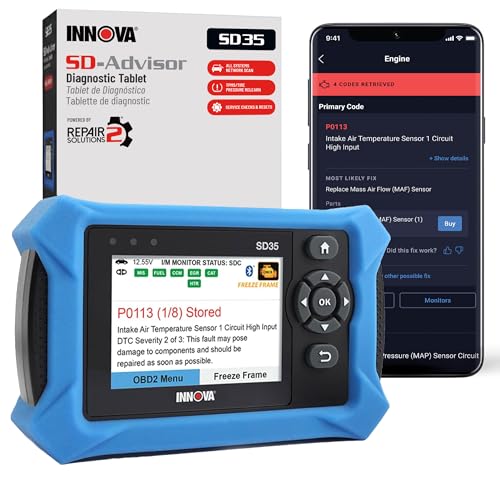
OBD2 SCANNER FOR ALL SYSTEMS – The INNOVA SD35 is a tablet-based OBD2 scanner designed for advanced diagnostics. Read and clear check engine light, ABS, SRS, and TPMS codes, plus test your car battery and alternator to prevent unexpected failures. Vehicle coverage may vary. Please use Innova’s Coverage Checker to verify compatibility.
After the Repair: Clearing Codes, Calibration, and Road Test
After the confirmed repair, the warning may not disappear until the correct module codes are cleared. Some repairs may also require calibration or relearn steps, especially after steering-angle sensor work, yaw-rate sensor work, brake actuator work, alignment-related work, or battery disconnection on some models.
A proper final check should include these steps:
- Clear codes with a scanner that can access the affected module.
- Perform any required calibration or zero-point procedure for your model year.
- Confirm live wheel-speed data looks normal at low speed.
- Road-test the vehicle in a safe area without aggressive maneuvers.
- Re-scan for current, pending, and history codes after the test drive.
What a Shop Will Do and Typical Repair Costs
A good shop should not guess. The diagnostic process usually includes:
- Scanning the engine, ABS, skid-control, and related modules
- Recording stored, pending, current, and history codes
- Checking freeze-frame data and live wheel-speed readings
- Inspecting tires, brake fluid, wiring, grounds, and connectors
- Testing suspect sensors before replacing them
- Performing required calibration or relearn procedures
- Confirming the repair with a road test and code recheck
Tell the shop when the lights appeared, which lights came on together, whether the vehicle was recently off-road, whether the battery was replaced or jump-started, and whether any brake, hub, axle, suspension, or tire work was done recently. Those details can shorten diagnostic time.
Costs vary widely by market, model year, parts availability, and labor rate. Simple checks or a basic code scan may be relatively inexpensive. Wheel-speed sensor diagnosis and replacement can cost more because of labor, corrosion, or hub access. ABS actuator, skid-control ECU, wiring, or hydraulic repairs can be much more expensive than sensor work.
Before approving repairs, ask for a written estimate that separates diagnosis, parts, labor, shop fees, and taxes. The Federal Trade Commission recommends understanding the repair, asking questions, and getting clear authorization before work begins. Review the FTC’s Auto Repair Basics before authorizing major work.
Check for Recalls and Service Campaigns
If your Land Cruiser has persistent safety-system warnings, also check whether your VIN has an open safety recall. The National Highway Traffic Safety Administration provides a VIN lookup for open safety recalls. This will not diagnose your VSC light, and it may not show every manufacturer service campaign, but it can reveal safety-related repairs that should be handled by a dealer. Use the official NHTSA recall lookup.
Frequently Asked Questions
What causes the VSC light to come on in a Toyota Land Cruiser?
The VSC light can come on because the system was switched off, traction was temporarily poor, or a fault was stored in the engine, ABS, skid-control, braking, steering-angle, yaw-rate, or wheel-speed sensor system. If the Check Engine light is also on, diagnose engine and emissions codes first.
Is it safe to drive with a VSC warning light on a Toyota?
It may be safe to drive slowly for a short distance if the vehicle feels normal and only amber warning lights are on. However, stability and traction assistance may be reduced. Stop driving if the red brake light is on, the Check Engine light is flashing, brake feel changes, or the vehicle runs poorly.
What does VSC mean on a Toyota Land Cruiser?
VSC means Vehicle Stability Control. It helps the vehicle stay more stable by using sensor data, braking control, and engine-management inputs when the vehicle begins to skid or move differently than the driver’s steering input suggests.
Why are the Check Engine, VSC, and TRAC OFF lights on together?
This combination often means the engine computer stored a fault and the vehicle disabled or limited traction and stability control as a fail-safe response. Read the OBD-II engine codes first. A loose gas cap, EVAP leak, misfire, oxygen sensor, throttle, or mass airflow fault can all be possible causes depending on the code.
Will the VSC or TRAC OFF light reset by itself?
It can reset if the cause was temporary, such as a traction event, low-voltage startup, mode selection, or a loose gas cap that was corrected. If a fault remains stored or returns after driving, the light will usually come back until the root cause is repaired and codes are cleared properly.
Can I reset the Land Cruiser VSC light by disconnecting the battery?
Disconnecting the battery may turn the light off temporarily, but it can erase useful diagnostic data and may not fix the fault. Record codes first, repair the confirmed cause, then clear codes with the proper scanner. Some repairs may also need calibration before the light stays off.
Can a normal OBD-II scanner diagnose a VSC fault?
A normal OBD-II scanner can usually read engine and emissions codes, which is helpful when the Check Engine light is on. But many VSC, ABS, and skid-control faults require an ABS-capable scanner, Toyota Techstream, or a professional diagnostic tool that can access Toyota chassis modules and live wheel-speed data.
Can a bad battery cause VSC or TRAC OFF lights?
Yes, low voltage can cause communication, sensor-voltage, or startup-related faults on some vehicles. If the warning appeared after a slow crank, jump start, battery replacement, or long storage, test the battery and charging system. Still scan the vehicle if the lights return.
How long does it take for the light to go off after tightening the gas cap?
It may take several normal drive cycles for an EVAP-related Check Engine light to clear after the gas cap is tightened. If the light stays on, returns, or appears with ABS/VSC warnings, read the stored codes instead of assuming the cap is the only problem.
Conclusion
When your Land Cruiser’s VSC or TRAC OFF light comes on, do not panic, but do not ignore it. Start with simple checks: confirm the system was not switched off, tighten the gas cap, check brake fluid, inspect tires, test battery condition, and note any other warning lights. Then read codes from the correct systems. A basic engine scan may find the cause when the Check Engine light is on, but ABS/VSC warnings often require an ABS-capable scan tool. Drive gently until the fault is fixed, and get professional help immediately if braking, steering, or engine operation feels abnormal.
Sources
- Toyota Land Cruiser Owner’s Manual – Active TRAC/VSC information – backs up cautions about driving when traction and stability systems are turned off.
- Toyota Owners – Dashboard Warning Lights – backs up official guidance to consult the owner’s manual or service provider for warning lights.
- U.S. EPA – OBD Frequently Asked Questions – backs up OBD-II, Check Engine, emissions-monitoring, and loose gas-cap explanations.
- NHTSA – Vehicle Safety Recall Lookup – backs up VIN-based recall-check guidance.
- Federal Trade Commission – Auto Repair Basics – backs up advice about repair estimates, authorization, and choosing a mechanic.