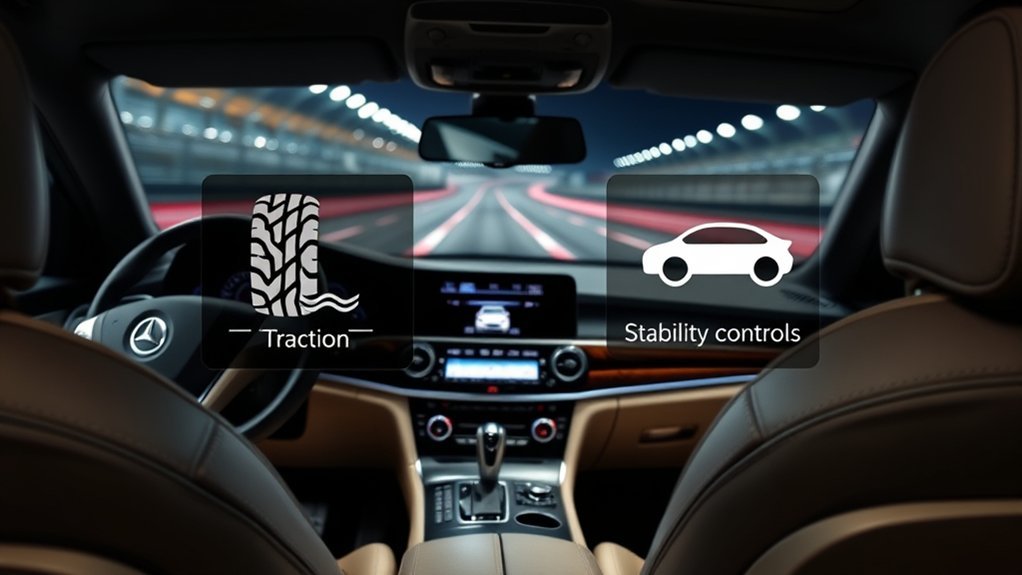
Traction control and stability control are both essential safety systems in your vehicle. Traction control kicks in to prevent wheel slip during acceleration by applying brakes or reducing engine power. In contrast, stability control monitors your vehicle’s dynamics, helping to maintain your intended path, especially during sharp turns. While traction control can often be switched off, stability control remains active for safety. Understanding their differences can improve your driving experience—there’s more to explore about optimizing performance and safety.
What Is Traction Control and How Does It Work?
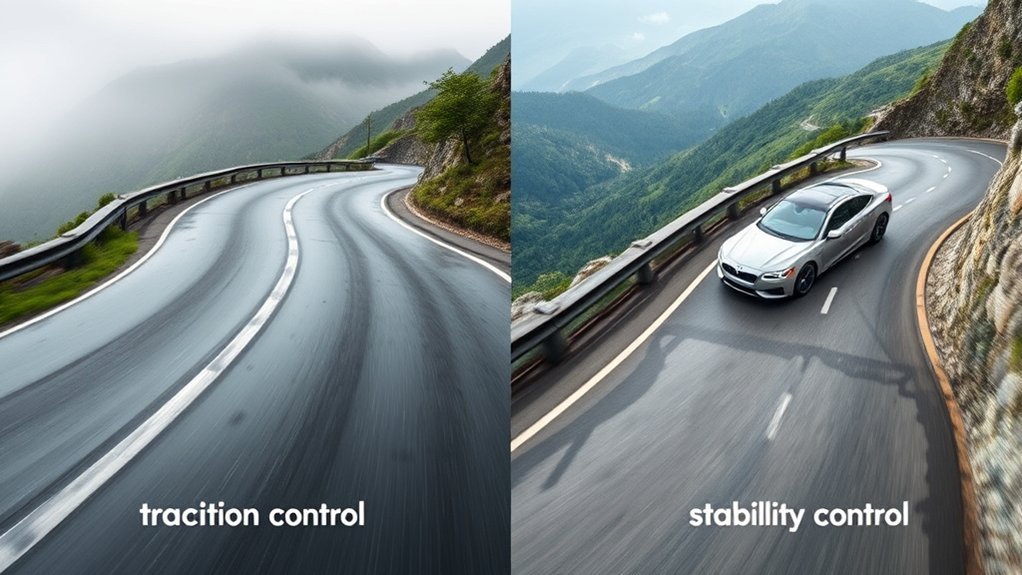
Traction control is an essential safety feature in modern vehicles, designed to enhance your driving experience by preventing wheel slip during acceleration. Introduced in the mid to late 1990s, this system uses advanced sensor technology to monitor wheel speed. When it detects that one wheel is spinning faster than the others, it engages to prevent slip.
By applying brakes to the slipping wheels and reducing engine power through electronic throttle control, traction control optimizes grip on various surfaces. It works seamlessly with the anti-lock braking system (ABS), utilizing its hydraulic components to manage braking pressure effectively.
Many vehicles come with a “TC” or “TCL” switch, allowing you to deactivate the system in specific conditions like snow or sand, offering you flexibility. Ultimately, traction control not only prevents wheel slip but also enhances overall vehicle safety, giving you greater confidence on the road.
Why Stability Control Matters: Key Features and Benefits
While traction control focuses on maintaining grip during acceleration, stability control complements this by ensuring your vehicle stays on its intended path, especially in challenging conditions. This system is essential for enhancing safety and boosting your driving confidence. Here’s why stability control matters:
Stability control ensures your vehicle remains on its path, enhancing safety and boosting your confidence in challenging driving conditions.
- Prevents skidding: It helps maintain control during slippery or uneven road conditions.
- Real-time adjustments: Advanced sensors assess vehicle dynamics, correcting them instantly.
- Autonomous operation: It intervenes without notice, indicated only by a blinking stability-control lamp.
- Individual wheel braking: This feature prevents fishtailing and stabilizes the vehicle during sharp turns.
Since stability control became mandatory for new passenger vehicles in 2012, its role as a safety enhancement can’t be overstated. Embracing this technology empowers you to navigate diverse driving scenarios with greater assurance.
Key Differences Between Traction Control and Stability Control
Understanding the key differences between traction control and stability control is essential for any driver looking to enhance their safety on the road. Traction control primarily focuses on managing wheelspin by applying brakes to slipping wheels or reducing engine power, delivering crucial traction control benefits in slippery conditions. In contrast, stability control technology goes further, evaluating overall vehicle dynamics to maintain your intended direction during maneuvers. It uses additional sensors, like yaw and steering position, to monitor stability beyond wheel speed.
Both systems utilize the anti-lock braking system (ABS), but stability control employs a more advanced processor for superior vehicle management. While you can often switch off traction control for specific conditions like snow or sand, stability control is designed to remain active, ensuring enhanced safety on public roads. Since its mandatory adoption in 2012, stability control has become a cornerstone of modern vehicle safety standards, emphasizing its significance in your driving experience.
Common Faults That Trigger the Stability Control Light?
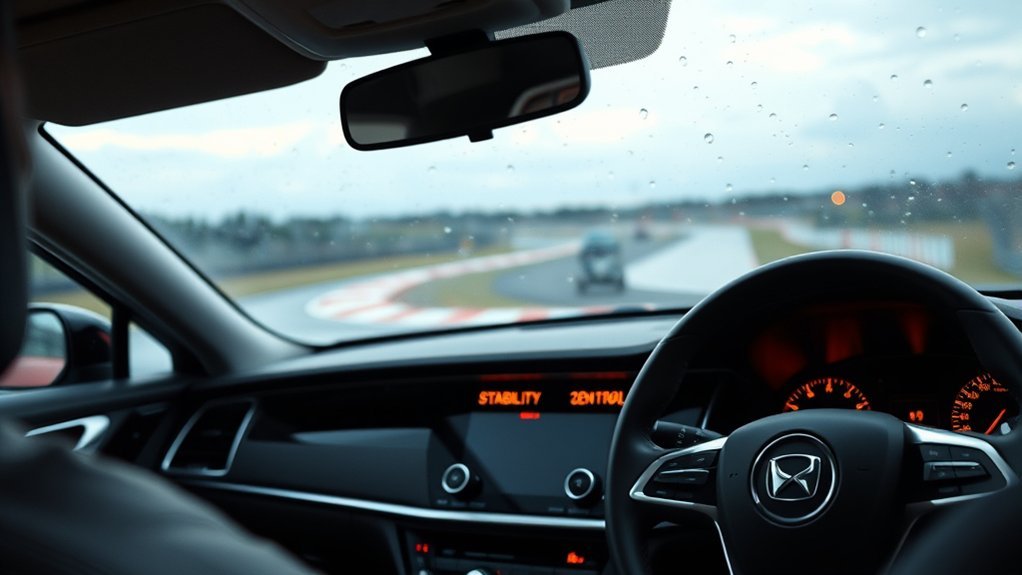
When the stability control light on your dashboard illuminates, it often signals an underlying issue that needs attention. Ignoring it could lead to compromised vehicle stability. Here are some common faults that might trigger this warning:
- Sensor malfunctions: Issues with wheel speed sensors can cause incorrect readings.
- Corrosion: Road hazards can corrode wheel speed sensors, leading to erroneous data.
- System settings: If the stability control system is turned off or set to lower sensitivity, the light may activate.
- ABS problems: Faults in the anti-lock braking system can negatively impact overall vehicle dynamics.
A flashing stability control light during driving indicates that the system is actively working to assist you. Understanding these triggers empowers you to take action, ensuring your vehicle maintains its ideal performance and safety.
Situations to Disable Traction or Stability Control
Knowing when to disable traction or stability control can enhance your driving experience, especially in challenging conditions. In snowy conditions or on sandy terrains, disengaging traction control allows for deliberate wheelspin, which can help your tires dig in and gain better traction. If you’re off-road driving, consider using your vehicle’s terrain modes, specifically designed to optimize performance in various environments.
For performance vehicles, you might find settings that let you deactivate stability control for an aggressive driving experience. However, exercise caution—this should only be done in controlled environments where you can fully manage the vehicle’s dynamics.
Always be aware of your surroundings and vehicle capabilities. Finally, regularly check for any system faults, as malfunctions can impact the effectiveness of both traction and stability control, potentially leading to unsafe situations.
Enhancing Vehicle Safety With Traction and Stability Control
While you navigate various driving conditions, traction and stability control systems play essential roles in enhancing your vehicle’s safety. By optimizing vehicle performance, these systems empower you to drive with greater confidence, especially in challenging environments.
- Traction control prevents wheelspin by applying brakes to slipping wheels, ensuring better grip on slippery surfaces.
- Stability control assesses vehicle stability with additional sensors, helping you maintain control during sharp turns.
- Both systems work in tandem with the anti-lock braking system (ABS), effectively managing wheel speed and braking pressure.
- Since 2012, stability control has been mandatory for new passenger vehicles in the U.S., emphasizing its importance in modern safety standards.
Engaging these technologies greatly reduces accident risks, allowing you to embrace the road ahead with freedom and assurance. So, trust in traction and stability control systems to enhance your driving experience and keep you safe on your journeys.
Frequently Asked Questions
What Is the Difference Between TCS and ESC?
TCS functions to optimize traction by managing wheelspin, while ESC benefits your driving by maintaining vehicle stability during skids. Both enhance safety, but ESC offers broader control in challenging conditions. Choose wisely for your journey.
What Is the Difference Between Traction Control and Stabilitrak?
Think of traction control as your vehicle’s safety net for wheelspin, while Stabilitrak enhances your braking performance and vehicle handling, correcting skids. Together, they guarantee a smoother, more controlled driving experience.
Conclusion
In the dance between traction and stability control, your vehicle becomes a graceful partner on the road. Understanding these systems not only enhances your driving experience but also keeps you safer in unpredictable conditions. By knowing when to rely on these technologies—and when to take the lead yourself—you harness the full potential of your car. So, buckle up and embrace the journey, equipped with the knowledge that keeps you in sync with the asphalt beneath you.