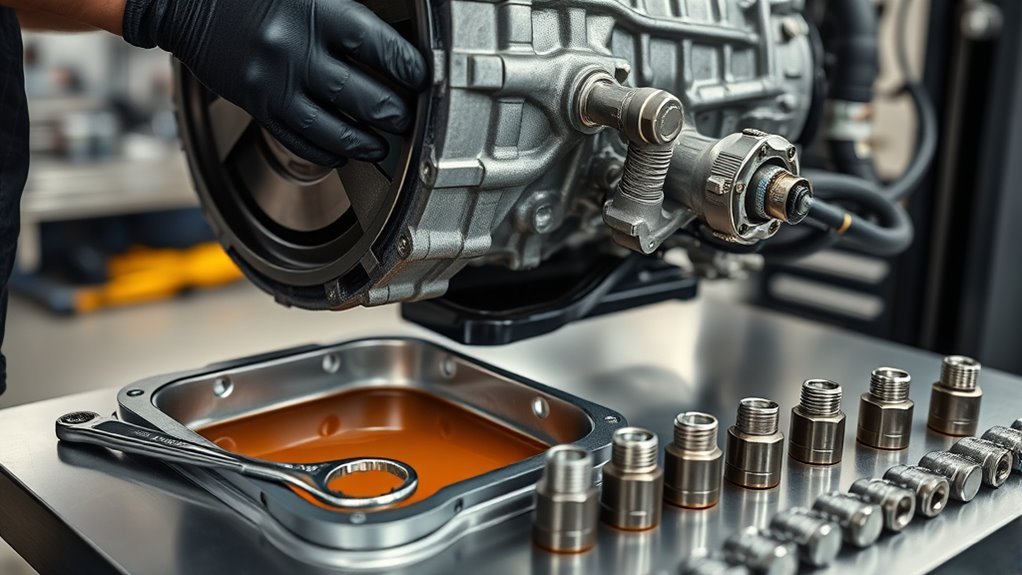
You should inspect your Tundra’s automatic transmission fluid at about 30,000 miles and plan a drain‑and‑fill by 60,000 miles (aim for ~50k if you tow regularly), checking the fill‑plug sample for bright red color, grit, or a burnt smell. “Lifetime” ATF is for normal use only, so proactive exchanges preserve performance. Choose drain‑and‑fill for routine care and full exchange only when necessary; continue for guidance on exact procedures, tools, and warning signs.
Quick Answer: When to Change Tundra Transmission Fluid
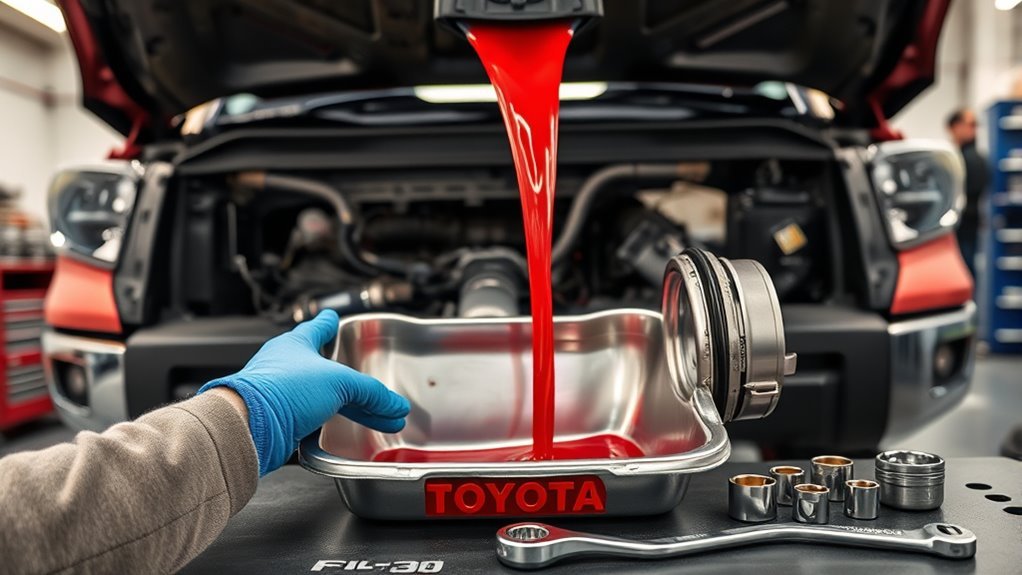
If you drive a Toyota Tundra, check the automatic transmission fluid at 30,000 miles and change it whenever you see discoloration, sediment, or a burnt smell; for regular towing, plan a drain-and-refill at about 60,000 miles regardless of fluid appearance. You’ll inspect ATF at that 30k mark, then follow condition-based replacement: dark, gritty, or foul-smelling fluid gets replaced immediately. For routine towing or hard use, schedule a drain-and-fill near 60,000 miles; many owners do this DIY for peace of mind and consistent performance. Some recommend 60k–100k mile intervals for fuller changes under heavy use. Don’t let marketing-driven transmission myths convince you to ignore wear indicators — proactive service preserves shifting precision and maximizes fluid longevity. You’ll extend the Tundra’s life by combining manufacturer guidance with community-honed practices: inspect early, act on symptoms, and use conservative service intervals when towing or hauling. Take control of maintenance to free yourself from preventable failures.
What Toyota Means by “Lifetime” ATF and Why It Matters
Although Toyota labels certain ATF fills as “lifetime,” that term simply means the fluid is expected to last for the normal service life of the vehicle under typical driving conditions, not that it never needs attention under heavy use. You should treat “lifetime” as conditional, not absolute. ATF myths circulate because owners tow, haul, or drive hard, accelerating fluid breakdown, sediment, and discoloration. With no dipstick on many Tundra models, you can’t easily monitor condition, so proactive exchanges make sense.
| Claim | Reality |
|---|---|
| “Lifetime” ATF lasts forever | Intended for normal use; not guaranteed under heavy duty |
| No dipstick = safe | No; it complicates inspections |
| No change needed | Experts advise periodic exchanges for towing |
You want freedom from avoidable failures. For peace of mind and transmission resilience, follow expert guidance on fluid longevity—inspect and exchange on a schedule that matches how you use the truck, not just the label.
Which Interval Fits You: Light Use, Mixed, or Towing?
If you mostly do light-duty daily driving, Toyota recommends inspecting the ATF every 30,000 miles and you can usually skip regular changes unless the fluid shows degradation. For mixed-use—city stops, highway miles, and occasional loads—plan a drain-and-fill around 60,000 miles to keep shifting crisp. If you regularly tow or haul heavy loads, change the fluid by 60,000 miles (many owners prefer 50,000 miles) to control transmission temperature and extend service life.
Light-Duty Daily Driving
When you use your Tundra mainly for daily driving with light loads, plan on having the transmission fluid inspected every 30,000 miles and a drain-and-refill at about 60,000 miles to keep shifting crisp and prevent premature wear. You’ll want practical fluid maintenance tips: monitor color and odor at each inspection, document changes, and favor drain-and-fill over a full flush to avoid mixing fluids or disturbing sensitive internals. Some owners opt for a proactive 50,000-mile change for extra assurance, but 60,000 is the manufacturer guideline. Staying diligent with these transmission longevity strategies preserves drivability, protects components as fluid degrades after 60–80k miles, and boosts resale value. Stay consistent, liberate yourself from breakdowns, and keep your Tundra reliable.
Mixed Use Balance
Pick the interval that matches how you use the truck: stick with a 60,000-mile drain-and-fill for primarily light-duty daily driving, move that target forward to about 50,000 miles for mixed-use duty to guard against higher heat and stop-and-go stress, and shorten it to roughly 30,000–60,000 miles for regular towing depending on load and frequency. If you split time between errands, occasional trail work, and longer hauls, aim for 50,000 miles to preserve transmission longevity without over-servicing. Check fluid color regularly—bright red means healthy, brown or burned tones mean act sooner. Proactive, predictable maintenance gives you freedom from breakdowns; schedule based on real use, monitor fluid condition between intervals, and adapt if you see darker fluid or performance changes.
Regular Heavy Towing
Because heavy towing drives transmission temperatures and wear far beyond daily driving, you should treat your Tundra to more frequent, scheduled ATF service rather than waiting for visible signs of trouble. You’ll follow a drain and refill every 60,000 miles, inspect ATF at 30,000 miles, and consider a fluid exchange near 55–60k if you tow regularly. Towing raises temperatures; good towing techniques and proactive fluid changes prevent transmission overheating and extend freedom on the road. Without a dipstick, stick to the schedule and check for discoloration or sediment. Choose reliability over risk: inspect, exchange, and maintain. This disciplined approach keeps your transmission cool, strong, and under your command.
| Interval | Action | Why |
|---|---|---|
| 30k | Inspect ATF | Check for sediment |
| 55–60k | Exchange | Proactive reliability |
| 60k | Drain/refill | Prevent overheating |
| Ongoing | Monitor | No dipstick, schedule |
| Towing | Use techniques | Reduce stress |
Drain‑And‑Fill vs Full Exchange vs “Lifetime”: Pros & Cons
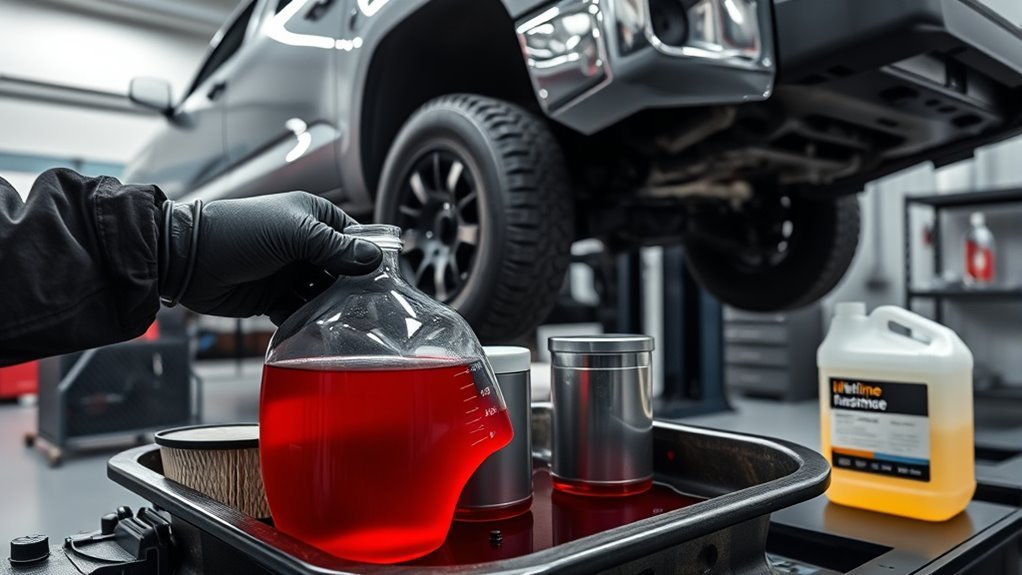
Although manufacturers often tout “lifetime” transmission fluid, you should weigh three real-world options—drain-and-fill, full fluid exchange, and leaving fluid untouched—against your use case, towing habits, and service history. You’ll confront fluid longevity claims and maintenance myths head-on: “lifetime” can be marketing, not gospel. For heavy use, proactive service buys freedom from costly repairs.
- Drain-and-fill: replaces ~3L of ~11L every ~60k miles (sooner for towing), preserves fluid quality without upsetting seals.
- Full exchange: removes nearly all old fluid via machine; gives a cleaner swap but sparks debate over torque converter cleanliness and potential risks.
- Lifetime/no-change: low cost short-term; some owners report high-mileage success, but you risk sediment, discoloration, and eventual wear under load.
Decide based on how you use the Tundra. If you tow or seek long-term reliability, favor periodic drain-and-fill and regular checks over blind faith in “lifetime” claims.
Owner and Shop‑Recommended Intervals (30k–100k Scenarios)
When you’re deciding between a 30k, 60k, or 100k change interval, match the schedule to actual use: frequent towing, heavy loads, or lots of stop‑and‑go miles justify moving toward 30k–60k service, while mostly light-duty highway driving can make a 100k interval more defensible—though regular checks remain essential. You’ll find many Tundra owners and shops favor 60k as a practical middle ground—especially if you tow—because it balances fluid longevity with cost and effort. Some insist on 30k for maximum protection; others tolerate 100k, citing Toyota’s “lifetime” claim, but that’s one of several maintenance myths you should question. Regular drain-and-fill at roughly $45 is inexpensive insurance against expensive repairs and supports transmission life. Decide by duty cycle, inspect fluid condition periodically, and choose a shop or DIY plan that respects real-world use rather than dogma. That approach frees you from false certainty and preserves your truck’s capability.
How to Check Tundra Transmission Fluid Condition Without a Dipstick
Start by locating the transmission fill plug on the Tundra and warm the vehicle to operating temperature so the fluid reads correctly. Remove the plug and inspect the fluid’s color and smell — amber and clean is good, while dark discoloration, burnt odor, or sediment signals service is needed. If you need to remove fluid, drain via the drain plug and refill through the fill plug to the correct temperature-based level.
Locate The Fill Plug
Locate the fill plug on your Tundra’s transmission to check fluid level and condition without a dipstick; it’s typically on the transmission’s side and requires a socket wrench to remove while the truck’s on a level surface. You’ll gain reliable fluid access through that plug—no dipstick needed. Be deliberate: secure the truck, loosen the plug, and observe whether fluid trickles out to judge level.
- Verify the truck is level and the parking brake’s engaged before accessing the fill plug.
- Use a socket wrench sized to the plug, and keep a clean catch pan and funnel ready for topping with Toyota WS fluid.
- Inspect for metal particles or heavy sediment around the opening; that signals service.
This step frees you to maintain control and guarantee proper transmission care.
Check Fluid Appearance
With the fill plug removed you can directly assess the transmission fluid’s condition through the opening; stick a clean flashlight and inspect the fluid’s color, smell, and clarity. You’ll want a clear red color with no dark streaks; brown or black tint signals oxidation or overheating. Sniff for burnt or metallic odors—those indicate breakdown or contamination. Use a clean lint-free cloth to catch a small sample if visibility’s limited, then check for grit or black flecks; sediment detection is critical because the Tundra lacks a dipstick and early signs matter. If you see discoloration, sediment, or off-odors, plan service sooner. Inspect every 30,000 miles and consider drain-and-refill at 60,000 miles under towing to protect freedom from failure.
Measure Fluid Temperature
One reliable way to assess your Tundra’s transmission fluid without a dipstick is to monitor its operating temperature—higher-than-normal readings often signal fluid breakdown or excessive load from towing. You’ll use fluid monitoring to infer condition: elevated temps point to oxidation, reduced lubricity, and potential clutch wear. Track temps during typical driving and while towing to see temperature impacts clearly. Perform a drain-and-fill near 60,000 miles (or around 55,000 for a deeper exchange) if temps run high.
- Use an OBD-II reader or aftermarket gauge to log transmission temperature under load.
- Compare idle, cruise, and towing numbers; sustained high readings demand service.
- Use the service-level check procedure to confirm level after cooling.
Stay empowered: measure, act, and liberate your truck from neglect.
DIY Drain‑And‑Fill for Tundra: Tools, Parts, and Quantities
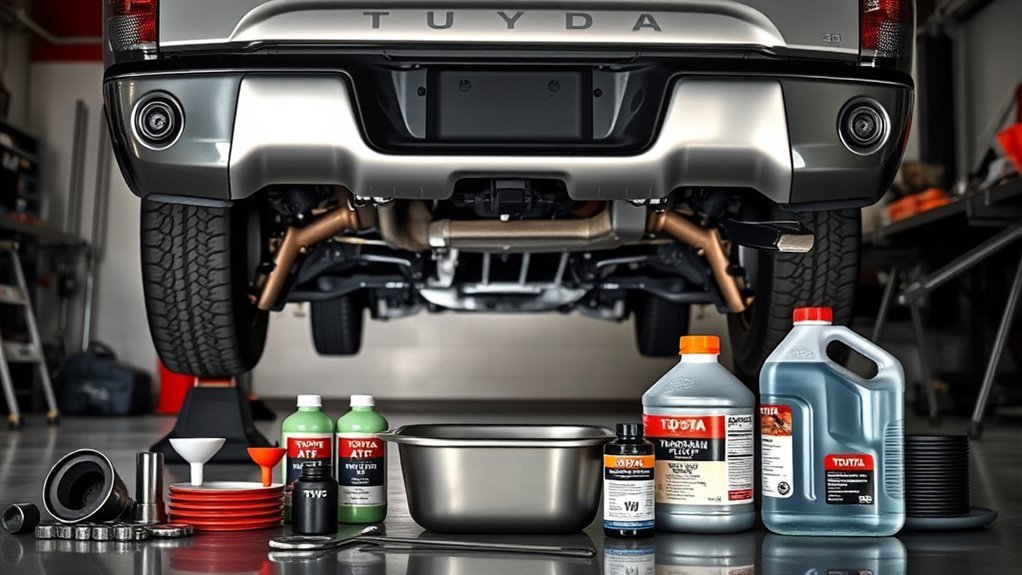
Tackle a Tundra drain‑and‑fill with a basic socket set, funnel, torque wrench, about 4 quarts of Toyota WS ATF, and a new crush washer for the drain plug; you’ll drain roughly 4 quarts through the plug (no pan removal), then refill and verify level by removing the add plug and measuring what drained to confirm proper top‑up. Use this fluid maintenance tips and DIY tools checklist: 1) socket set (with correct drain‑plug socket), 2) torque wrench set to factory spec, 3) funnel or fluid pump, 4) catch container for ~5 qts, 5) new crush washer, 6) ~4 quarts Toyota WS ATF. Expect to replace roughly 80–90% of the fluid volume by this method. Work on a level surface, wear gloves, and torque the plug to spec to avoid leaks. After refilling, run the engine to reach operating temperature, recheck by removing the add plug, and measure drained amount to confirm proper level and liberation from poor maintenance.
When to Remove the Pan and Change the Filter (Signs & Risks)
You shouldn’t remove the pan or change the filter for routine drain-and-fill service, but you should act if you see visible metal shavings or persistent fluid contamination. Finding metal particles or dark, gritty fluid indicates internal wear or a failing component and usually warrants pan removal and filter replacement. Be aware pan removal carries risks—seized bolts and housing damage—so plan repairs with the right tools or a qualified technician.
Visible Metal Shavings
If you spot metal shavings in the transmission fluid, pull the pan and change the filter promptly—these particles usually indicate internal wear that can accelerate component failure if left unchecked. You’ll act to stop transmission wear and limit fluid contamination; changing the filter during a pan drop removes trapped debris and restores flow. Inspect fluid every 30,000 miles or sooner if you tow. Small shavings can be cleaned, large quantities suggest a failing component and risk imminent failure. If you see significant metal, get a professional evaluation immediately.
- Tiny flakes clinging to the magnet after a pan drop.
- Darkened fluid with visible metallic specks.
- Noticeable increase in debris after heavy towing.
Be decisive—liberate your vehicle from avoidable damage.
Persistent Fluid Contamination
Finding metal shavings during a pan drop is a clear red flag, but persistent fluid contamination can be a subtler yet equally damaging sign that it’s time to remove the pan and change the filter. You should act when fluid discoloration or an unusual odor appears, or when fluid looks dark maroon or carries visible debris. Toyota advises inspecting ATF every 30,000 miles and replacing it if sediment or discoloration is present; you’ll free yourself from preventable failure by following that guidance. Regular fluid changes and diligent filter maintenance stop deposit buildup from friction clutches, especially under towing stress. Don’t postpone a pan drop and filter replacement when contamination shows up—neglect risks accelerated wear, slipping, and costly transmission failure.
Monitor Temps, Sample Analysis, and Towing Best Practices
1 key practice for Tundra owners who tow is to actively monitor transmission temperatures and fluid condition, since elevated temps signal stress that can lead to accelerated wear or failure. You’ll embrace transmission maintenance and towing techniques that keep your drivetrain reliable and give you freedom on the road. Check ATF color and smell every 30,000 miles, and plan a fluid exchange at 55,000 miles if you tow regularly—users report measurable temperature drops afterward.
Use sample analysis to make objective decisions: pull a fluid sample, note discoloration or sediment, and compare against baseline values to decide on replacement. When towing, manage load and cooling proactively.
- Monitor temp gauge or an aftermarket sensor during climbs and long hauls.
- Schedule fluid inspections and exchanges based on sample findings and towing frequency.
- Adopt conservative towing techniques: lower speeds, engine braking, and staged rest to reduce thermal load.
These steps extend transmission life and let you tow with confidence and autonomy.
Cost, Scheduling, and Dealer/Parts Hours to Expect
While proactive owners budget for both DIY and dealer options, you’ll typically spend roughly $25+ for a DIY drain-and-fill (about 4 quarts of ATF) versus roughly $45 plus labor at the dealer, so plan your maintenance strategy around cost, convenience, and skill level. Do a clear cost comparison: DIY buys you control and savings, dealer service adds warranty protection and calibrated labor. Check fluid condition every 30,000 miles and schedule a drain-and-refill at 60,000 miles, sooner if you tow heavily. Use maintenance scheduling to lock in slots during dealer hours—service and parts run Monday–Saturday, 7 AM–7 PM, and Sunday, 8 AM–3 PM—so you can work with your calendar, not against it. Keep meticulous service records to validate intervals and prolong transmission life. If you want freedom from surprises, balance your budget, time, and competence: perform DIY tasks when confident, and reserve dealer visits for complex diagnostics, warranty concerns, or when you need parts immediately.
Frequently Asked Questions
How Often Should I Change the Transmission Fluid in My Toyota Tundra?
You should change your transmission fluid roughly every 60,000 miles, but inspect every 30,000 miles; adjust fluid change frequency for towing or severe use. Maintenance tips: drain-and-fill, monitor fluid condition, and prioritize proactive service.
Should I Change My Toyota Lifetime Transmission Fluid?
Think of your transmission as a clock you’ll free from dust: yes, you should change lifetime fluid despite transmission myths; you’ll extend life, reduce risk, and reclaim control by servicing per heavy-use intervals and inspections.
What Is the 100 000 Mile Service on a Toyota Tundra?
The 100,000-mile service inspects and refreshes engine maintenance items, checks transmission fluid (consider changing if you tow), evaluates brakes, suspension, and fluids, ensuring your Tundra’s towing capacity and reliability stay uncompromised.
Does Toyota Recommend Transmission Service?
Yes — Toyota says you don’t need routine transmission service, but you should inspect ATF regularly. Picture a clear river: transmission maintenance tips and fluid quality importance free you from costly failures, so you’ll act proactively.
Conclusion
Think of your Tundra’s transmission like a well-tuned orchestra: change the fluid on a schedule that matches your tempo—light use, mixed driving, or heavy towing—and you’ll keep the performance in tune. Don’t be seduced by “lifetime” claims; drain‑and‑fill or full exchange gives you control. Watch temps, sample the fluid, and replace the pan filter when contamination or slippage appears. Follow the intervals here, and you’ll extend service life, prevent costly failures, and keep reliability playing on.