
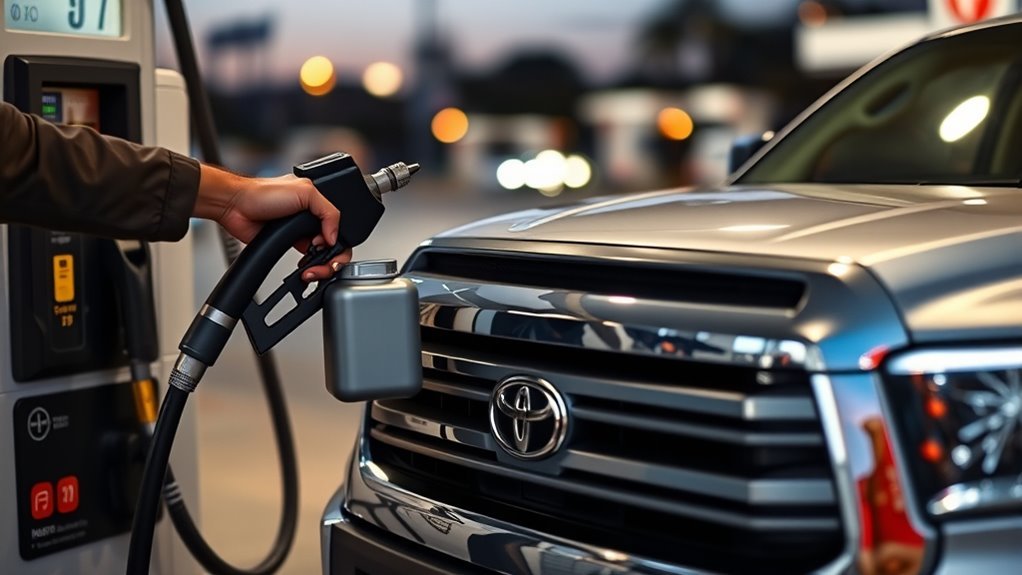
What Octane Gas Does a Toyota Tundra Take?
Last updated: July 31, 2026. Reviewed against Toyota owner-manual guidance, Toyota’s TRD Performance Package announcement, and AAA premium-fuel research.
Most stock U.S.-market Toyota Tundras use 87-octane regular unleaded gasoline or higher. That includes stock late-model i-FORCE and i-FORCE MAX trucks. At a U.S. pump, choose 87 when a Toyota manual lists “87 octane (Research Octane Number 91).” The parenthetical 91 is the equivalent RON rating used in other markets, not an instruction to buy U.S. 91-octane premium.
A TRD Pro trim does not automatically require premium. Toyota’s separately equipped TRD Performance Package uses 91-octane premium fuel for its calibrated output. An aftermarket tune may also require premium, so the owner’s manual, fuel label, package documentation, and tune instructions always take priority.
Quick Answer
Use 87 AKI regular unleaded in most stock Toyota Tundras. Use 91 or higher only when Toyota package documentation, the fuel label, or an aftermarket tune requires it. Do not use 85 octane when Toyota lists 87 as the minimum.
Toyota Tundra Octane by Setup
| Tundra Setup | Fuel Guidance | What to Know |
|---|---|---|
| Stock late-model i-FORCE or i-FORCE MAX | 87 AKI or higher | Premium is not required for the normal factory calibration. |
| Many stock 2000–2021 engines | 87 AKI or higher | Confirm the exact model-year and engine manual. |
| 2006 4.0L V6 | 87 minimum; 91 noted for improved performance | Follow the wording in that specific owner’s manual. |
| TRD Pro trim without the Performance Package | Follow the stock manual and fuel label | The TRD Pro name alone does not prove that premium is required. |
| Toyota TRD Performance Package | 91 AKI premium | Toyota optimized the package calibration around 91-octane fuel. |
| Aftermarket tune or boost change | As specified by the tune | Do not substitute a lower grade than the tuner requires. |
| Tundra identified as a flex-fuel vehicle | 87 gasoline, E85, or an approved blend | Use E85 only when the truck is explicitly labeled for flex fuel. |
What’s in This Article
- Toyota’s Fuel Recommendation: Why 87 Octane Works
- Check Exceptions Before You Choose Fuel
- What Octane Numbers Actually Mean: 87 vs. 91 to 93
- When Does Premium Gas Help a Toyota Tundra?
- Should You Pay for Premium?
- What Happens If You Use the Wrong Octane?
- How to Test Higher-Octane Fuel Fairly
- Tundra Maintenance and Tuning
- Frequently Asked Questions
- Conclusion
Key Takeaways
- Most stock Tundras use 87 AKI regular unleaded or higher.
- Toyota’s “87 AKI / 91 RON” wording still means selecting 87 at a U.S. pump.
- TRD Pro and the TRD Performance Package are not the same fuel requirement.
- Towing does not automatically change the factory minimum octane.
- Use E85 only in a truck explicitly identified as a flex-fuel vehicle.
- Fix knock, overheating, ignition, or fuel-quality problems instead of covering them with premium.
Toyota’s Fuel Recommendation: Why 87 Octane Works
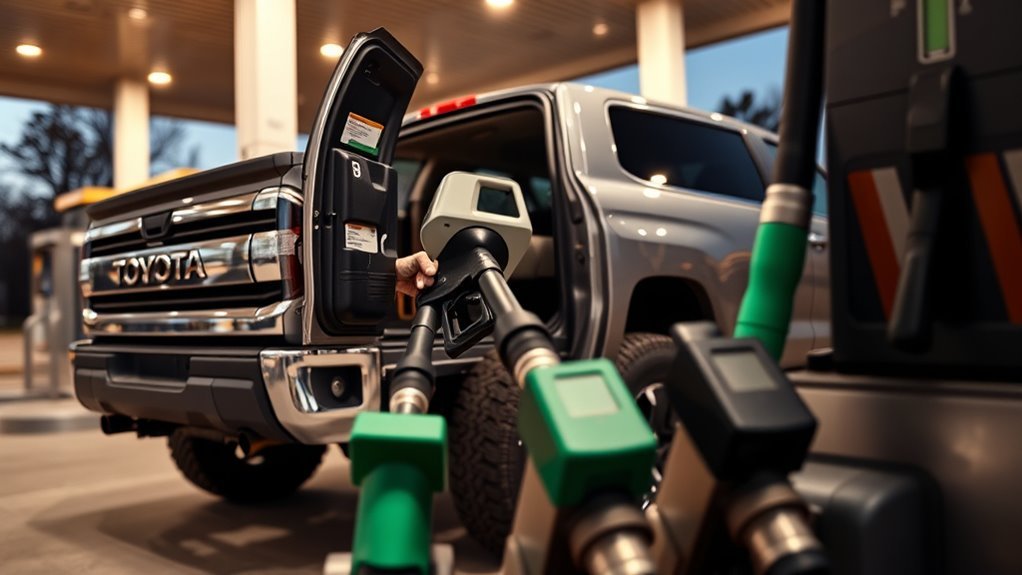
Toyota specifies 87 AKI regular unleaded or higher for most stock Tundra engines because the factory calibration is designed to deliver its normal power, drivability, and durability on that grade. Check the Toyota Tundra owner-manual page for the documentation that matches your exact year and powertrain.
The engine control system monitors combustion and can adjust ignition timing when it detects knock. That protection does not make below-spec fuel acceptable. Toyota warns that persistent knock caused by fuel below the stated minimum can lead to engine damage.
Higher octane does not automatically mean more energy, better detergency, or more power. Octane primarily measures the fuel’s resistance to abnormal combustion. An engine calibrated for regular gasoline cannot necessarily use the extra knock resistance in premium fuel.
Pair the correct fuel with a current Toyota Tundra maintenance schedule. Healthy spark plugs, proper oil, unrestricted airflow, correct cooling-system operation, and appropriate tire pressure influence performance more reliably than unnecessary premium fuel.
Why Does Toyota List 87 and 91 Together?
U.S. fuel pumps normally display the Anti-Knock Index, or AKI. Many other countries use the Research Octane Number, or RON. Toyota may therefore write the same requirement as “87 octane (Research Octane Number 91) or higher.”
Those numbers describe the same minimum fuel in two rating systems. In the United States, select the pump button marked 87. Do not read the parenthetical 91 RON value as a requirement to purchase 91 AKI premium.
Check Exceptions Before You Choose Fuel
Your exact truck has the final say. Check the owner’s manual, fuel-filler information, build sheet, and any tune documentation before filling a used or modified Tundra.
[Products Worth Considering]

This replacement gas cap is designed for a wide range of Toyota and Lexus models, offering a direct-fit solution for restoring a proper seal at the fuel tank. It helps address check engine light issues related to the fuel cap while providing easy installation and dependable performance. Built from durable materials and rigorously tested before shipping, it is a practical replacement for worn or damaged fuel caps.

These heavy-duty running board side steps are designed to improve access to your Toyota Tundra without reducing ground clearance. Built for Double Cab and CrewMax front door applications, they offer practical convenience for everyday entry, roof loading, and off-road use. The durable iron construction and easy no-drill installation make them a reliable upgrade for rugged driving.
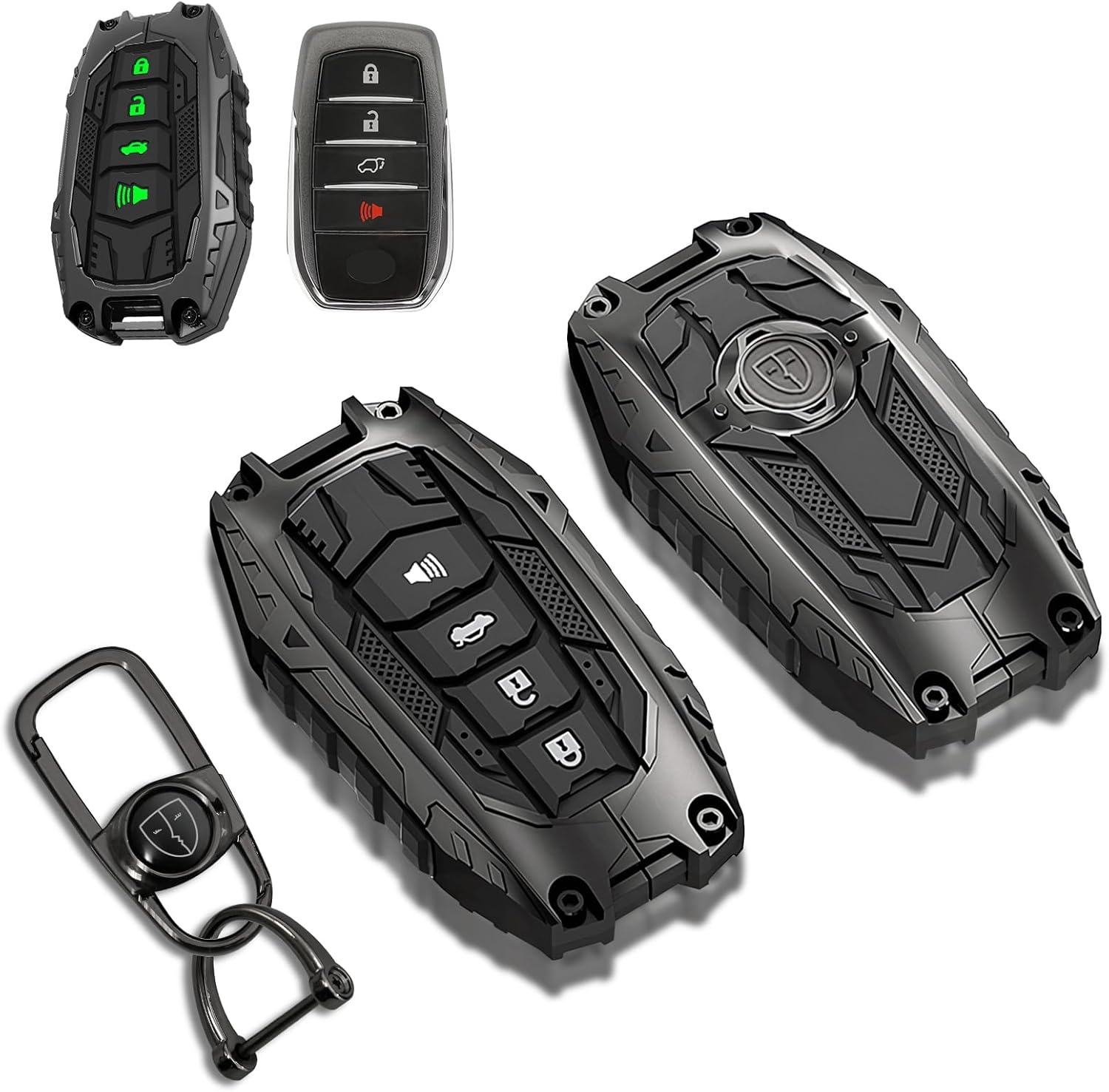
This mech-style metal key fob cover adds a sleek armored look while helping protect your Toyota key from scratches, drops, and everyday wear. Designed for compatible 4-button Toyota smart keys, it preserves full remote functionality with no signal interference and includes glow-in-the-dark buttons for easier nighttime use.
TRD Pro vs. the TRD Performance Package
A TRD Pro trim is not automatically the same as Toyota’s TRD Performance Package. Toyota states that the Performance Package combines intake, exhaust, and engine-management changes with a calibration optimized around 91-octane premium fuel. :contentReference[oaicite:11]{index=11}
Look for package documentation rather than relying on exterior TRD badges. A truck can have TRD styling, suspension, or off-road equipment without carrying the premium-fuel Performance Package calibration.
Older Tundra Model-Year Differences
Many older Tundra engines also list 87 octane as the minimum. However, wording can vary. For example, the 2006 owner’s manual for the 4.0L V6 lists 87 as the minimum and notes premium 91 for improved performance. That is a performance recommendation, not permission to use fuel below 87.
Do not apply one model year’s wording to every generation. Use Toyota’s model-year manual library when checking an older truck.
Aftermarket Tunes and Boost Changes
An aftermarket tune can advance ignition timing, change boost targets, alter fueling, or revise thermal protections. Use the minimum octane written by the tuner. Returning to the stock fuel requirement is safe only after restoring the stock calibration and confirming that no other modifications change the requirement.
What Octane Numbers Actually Mean: 87 vs. 91 to 93
Octane rating measures gasoline’s resistance to knock, not its overall quality. Higher-octane fuel can tolerate more pressure and temperature before abnormal combustion begins, but the engine must be calibrated to use that additional resistance.
- 87 AKI: The regular-grade minimum for most stock Tundras.
- 89 AKI: Offers more knock resistance than 87 but normally adds no useful benefit when Toyota specifies regular fuel.
- 91 to 93 AKI: Appropriate when a Toyota performance package or aftermarket tune requires premium.
- 85 AKI: Below Toyota’s common 87-AKI minimum and not a substitute merely because it is sold as regular at altitude.
- 91 RON: Approximately equivalent to 87 AKI and not the same as the 91 button on a U.S. pump.
Choose the octane that matches the truck’s documented calibration. Separately, choose a reputable fuel retailer with adequate detergent quality and regular fuel turnover.
When Does Premium Gas Help a Toyota Tundra?
Premium helps when the engine or calibration is designed to use its added knock resistance. Clear examples include Toyota’s TRD Performance Package, an aftermarket tune that specifies premium, and an older manual that explicitly says premium may improve performance.
Premium should not be used as a repair for worn spark plugs, overheating, lean operation, contaminated fuel, excessive deposits, or an engine-control fault. If your truck knocks steadily while using the required fuel, diagnose the cause instead of continuing to increase octane.
Warning: Reduce throttle and load if you hear steady heavy knock. Avoid towing or hard acceleration until the truck is inspected.
[Products Worth Considering]

The FOXWELL NT301 is a plug-and-play OBD2 code reader designed to help drivers and home mechanics diagnose check engine light issues with ease. It reads fault codes, clears emissions-related warnings, displays live sensor data in graph form, and shows I/M readiness so you can quickly check vehicle status before an emissions test. With broad compatibility across many OBD2 vehicles and a clear color screen, it offers a practical, user-friendly way to monitor and troubleshoot engine performance.

This windshield sun shade umbrella is designed for Toyota Tundra models from 2007 to 2026, helping block harsh sunlight and reduce interior heat buildup. Its reflective cooling coating and high-density fabric work together to protect dashboards, seats, and trim while keeping the cabin more comfortable. The umbrella-style design installs quickly, folds down easily, and stores neatly for everyday convenience.

This ignition coil pack and pre-gapped spark plug set is designed for select 3.5L V6 Toyota and Lexus models, helping restore smooth engine performance and reliable starting. Built to meet or exceed OEM specifications, it can help fix common issues like misfires, rough idle, poor fuel economy, and reduced power. The complete 6-piece set offers a convenient replacement solution for compatible vehicles.
Does Towing Require Premium Gas in a Tundra?
Towing does not automatically change Toyota’s minimum octane requirement. A stock Tundra that specifies 87 should continue to use 87 or higher while towing unless its manual, package documentation, or tune says otherwise.
Heat, heavy load, and steep grades place more demand on the engine, but buying premium is not a substitute for correct coolant temperature, spark-plug condition, air-fuel control, transmission operation, or proper tire pressure and load setup.
If the engine develops steady knock on the correct fuel, reduce load and acceleration. Try fresh fuel from a trusted station and schedule diagnosis if the sound continues. Do not deliberately reproduce knock during a towing test.
Should You Pay for Premium?
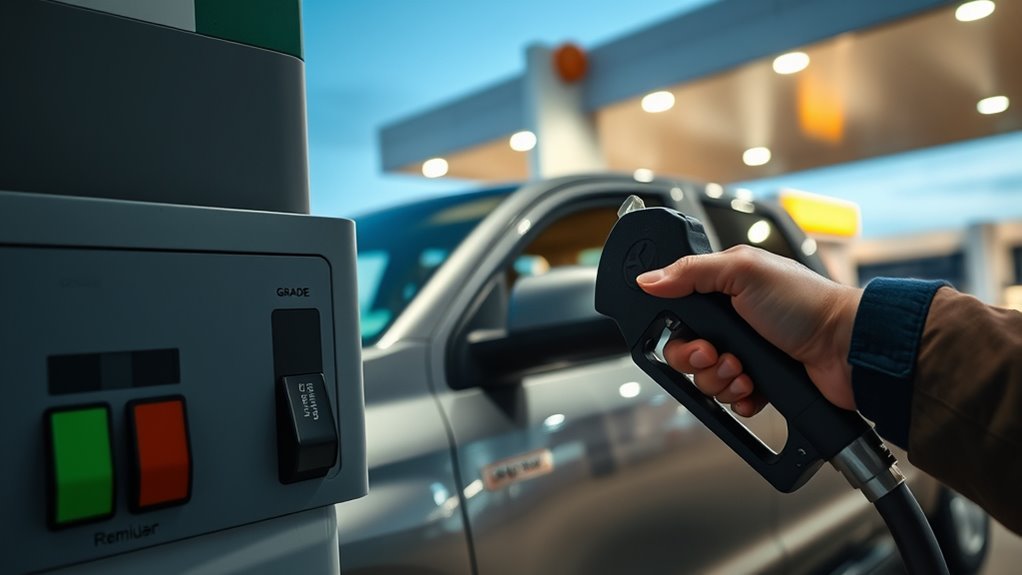
If your stock Tundra runs normally on 87 and does not have documentation requiring or recommending premium, remain with 87. AAA testing found no significant horsepower, fuel-economy, or emissions improvement when premium was used in vehicles designed for regular gasoline. AAA’s premium-fuel research recommends following the manufacturer’s fuel guidance.
[Products Worth Considering]

These heavy-duty running boards are designed to improve access to your Toyota Tundra CrewMax while maintaining ground clearance for off-road use. Built from durable aluminum with a high weight capacity, they provide stable step-up support for daily driving, cargo loading, and outdoor adventures. The no-drill installation makes setup simple, and the included customer support adds extra peace of mind.

This Snap & Zap towing mirror set adds expanded rear visibility for safer towing on compatible Toyota Tundra and Sequoia models. The clip-on design installs easily with no tools or drilling, fits over the factory mirrors, and still allows the mirrors to fold without removal. It includes both driver and passenger side extensions and is molded to match the original mirror shape for a secure, OE-style fit.

The Scepter Duramax Flo 'N Go is a portable fuel caddy designed to make refueling vehicles, lawn equipment, boats, and farm machinery easier. Its large-capacity tank, wheeled design, and two fueling modes provide convenient fuel transfer with less hassle. Built with durable corrosion-resistant construction and safety-focused features, it helps deliver efficient, mess-free fueling at home or on the go.
Cost Versus Benefit
Compare fuel by cost per mile, not by a single MPG reading. Use this break-even calculation:
Break-even premium MPG = regular-fuel MPG × (premium price per gallon ÷ regular price per gallon)
Premium must reach at least that break-even MPG before its fuel cost per mile matches regular. For a stock truck designed for 87, the required increase is usually unrealistic because the calibration cannot convert extra octane into a comparable efficiency gain.
Quick Practical Rule
- Manual says 87 required: Use 87 or higher; premium is optional but normally unnecessary.
- Manual says premium may improve performance: Test only if the added performance matters to you.
- Package or tune requires 91: Use at least 91.
- Steady knock occurs on the correct fuel: Diagnose the truck instead of treating premium as the repair.
What Happens If You Use the Wrong Octane?
Fuel below Toyota’s stated minimum can increase knock risk. The ECU may reduce ignition timing to protect the engine, which can make the truck feel weaker and may reduce efficiency. Persistent heavy knock can lead to engine damage.
Using a higher grade than required is not harmful when the gasoline otherwise meets Toyota’s fuel specifications. It generally costs more without delivering a measurable benefit in a stock regular-fuel truck.
Engine Knock Damage
Modern Tundras use knock sensors and timing controls, but those systems are a safety response rather than permission to use below-spec gasoline. Persistent heavy knock can stress or damage combustion-chamber components, including pistons, valves, and spark plugs.
Knock and pre-ignition are not identical events. Both require attention when they are severe, persistent, or accompanied by power loss, overheating, rough running, or a warning light.
- Timing correction can reduce power under load.
- Persistent heavy knock can damage combustion-chamber components.
- Overheating or lean operation can make abnormal combustion more severe.
- A continuing knock on the correct fuel requires diagnosis.
Fuel Economy Impact
Octane affects MPG mainly when the engine must change its operation to prevent knock or when the calibration is designed to take advantage of premium. A truck that already performs normally on 87 seldom gains enough economy from premium to offset its added price.
Calculate MPG over several complete fill-ups. A single tank can be distorted by pump shutoff, idle time, weather, wind, traffic, towing weight, tire pressure, route, or the amount of fuel remaining when you refill. Your truck’s fuel tank size and usable range can also affect how you interpret fill-up data.
| Scenario | Fuel Used | Likely Outcome |
|---|---|---|
| Stock Tundra with no knock | 87 | Normal factory-calibrated power and economy |
| Premium used without a requirement | 91 to 93 | Usually little or no measurable benefit |
| Fuel below Toyota’s minimum | Below 87 when 87 is specified | Greater knock risk and possible timing reduction |
| TRD Performance Package | 91 or higher | Fuel matches Toyota’s performance calibration |
| Aftermarket premium tune | As specified | Required to support the tuner’s calibration |
What Should You Do After Accidentally Using Low-Octane Fuel?
If you added a small amount of fuel below the required octane, avoid towing, full-throttle acceleration, and steep high-load driving. Add 87 or higher as soon as practical to raise the tank’s blended octane.
If most of the tank contains below-spec fuel, or the engine knocks, runs roughly, overheats, loses power, or displays a warning light, stop demanding driving and contact a Toyota dealer or qualified repair shop. Do not continue testing the truck under heavy load.
Repair and Maintenance
Return to the correct fuel first, then scan for stored, pending, and permanent trouble codes if symptoms remain. The site’s Toyota Tundra OBD2 code guide explains how to preserve code and freeze-frame information before clearing it.
- Use the fuel grade listed for the exact model year and calibration.
- Replace worn spark plugs at the specified interval.
- Correct overheating, misfires, lean-running faults, and fuel-pressure problems quickly.
- Try fresh gasoline from a high-turnover station after suspected poor fuel.
- Do not clear diagnostic data before recording the codes and operating conditions.
Use the correct Tundra spark-plug interval because worn plugs can increase ignition demand and cause misfires under load.
How Can You Compare Regular and Premium Fairly?
Estimated test length: two to three comparable full tanks per grade.
A premium-fuel comparison is most useful when the manual says premium may improve performance, when a tune permits more than one grade, or when you are checking a repeatable drivability difference after maintenance is current. Do not use below-spec fuel as a test grade.
- Confirm eligibility. Read the exact manual, fuel label, package documentation, or tune instructions.
- Bring maintenance current. Correct active warning lights, overheating, misfires, worn plugs, and incorrect tire pressure first.
- Record the 87-octane baseline. Log gallons, miles, station, route, load, weather, towing status, and average speed.
- Keep the route comparable. Use similar speeds, payload, traffic conditions, and driving style.
- Test the allowed higher grade. Use two to three full tanks so residual fuel and one unusual trip do not dominate the result.
- Calculate cost per mile. Divide the fuel price per gallon by measured MPG for each grade.
- Compare repeatable outcomes. Look for consistent changes in knock behavior, drivability, MPG, and cost per mile.
- Use the lower-cost compliant grade. Return to 87 when premium produces no repeatable benefit and is not required.
Pro tip: Never create knock intentionally. A fuel comparison should remain within Toyota’s or the tuner’s approved octane range.
Tundra Maintenance and Tuning to Prevent Knock
If you want to prevent knock and preserve fuel economy, start with maintenance rather than premium gasoline. A healthy stock engine should operate on the grade Toyota specifies.
Premium and fuel quality are separate ideas. U.S. gasoline contains minimum detergent additives, while TOP TIER Detergent Gasoline follows an enhanced detergent standard across participating brands and octane grades. Regular TOP TIER gasoline can therefore offer strong detergent quality without being premium.
Owner forums can reveal symptom patterns, but forum reports do not replace model-specific diagnosis. Use service records, scan data, Toyota documentation, and measured operating conditions.
- Change oil and filters according to the correct normal or severe-use schedule.
- Replace spark plugs at the model-specific interval.
- Keep the cooling system in proper condition.
- Correct misfires and lean fuel trims before increasing engine load.
- Maintain tire pressure and alignment to reduce unnecessary rolling resistance.
- Use the required octane after any software, intake, exhaust, or boost change.
- Keep the stock calibration file and documentation when using an aftermarket tune.
These steps protect engine longevity and help separate a true octane requirement from a maintenance or calibration problem.
Frequently Asked Questions
What Octane Gas Does a Toyota Tundra Take?
Most stock Toyota Tundras take 87 AKI regular unleaded gasoline or higher. Check the exact owner’s manual, fuel label, performance-package documentation, and tune because those can change the requirement.
Does a 2026 Toyota Tundra Need Premium Gas?
A stock 2026 Toyota Tundra does not normally need premium gasoline. Use 87 AKI regular unleaded or higher unless the truck has the TRD Performance Package or another calibration that specifically requires premium.
Does a Tundra TRD Pro Require Premium Gas?
The TRD Pro trim name alone does not mean premium is required. Toyota’s separate TRD Performance Package uses 91-octane premium, so check the truck’s package documentation rather than relying only on its TRD badges.
Does “91 RON” Mean I Should Use 91 Premium?
No. Toyota’s “87 octane (Research Octane Number 91)” wording describes the same minimum fuel under two rating systems. At a U.S. pump, that instruction means selecting 87 AKI regular.
Should I Use Premium Gas When Towing With a Tundra?
Towing does not automatically change Toyota’s fuel requirement. Continue using the documented grade. If the truck develops steady knock on the correct fuel, reduce load and diagnose the cause rather than assuming premium is the repair.
Can I Use 85 Octane in a Tundra at High Altitude?
Do not use 85 octane when Toyota lists 87 as the minimum. The fact that 85 is sold as regular at some high-altitude stations does not override the truck’s owner-manual requirement.
Can a Toyota Tundra Use E85?
Use E85 only in a Tundra explicitly identified as a flex-fuel vehicle, normally by the fuel-cap label and owner’s manual. Do not put E85 in a non-flex-fuel Tundra.
Can I Mix Regular and Premium Gas in a Tundra?
Yes, approved unleaded regular and premium gasoline can be mixed. The resulting octane will fall between the two grades. The final blend must still meet the truck’s minimum octane and ethanol requirements.
What If I Accidentally Put 85 Octane in My Tundra?
Avoid towing and hard acceleration, then add 87 or higher as soon as practical. Seek service if the engine knocks, runs roughly, loses power, overheats, or displays a warning light.
Does Premium Gas Clean a Tundra Engine Better?
Premium does not automatically clean a Tundra engine better than regular. Octane and detergent quality are separate. Use the correct octane and consider a reputable TOP TIER fuel retailer.
Conclusion
Most stock Toyota Tundras use 87 AKI regular unleaded gasoline or higher. The “91 RON” notation in a Toyota manual is the international equivalent of 87 AKI, not a U.S. premium-fuel command.
Check the exact documentation when the truck is older, modified, or equipped with performance hardware. The TRD Pro trim alone does not establish a premium requirement, but Toyota’s TRD Performance Package uses 91-octane fuel. Towing also does not change the minimum by itself.
Use the documented fuel grade, maintain the engine, and investigate steady knock promptly. That approach protects the truck without spending extra on octane the calibration cannot use.
References
- 2026 Toyota Tundra manuals and warranties — Toyota Motor Sales, U.S.A.
- 2006 Toyota Tundra manuals and warranties — Toyota Motor Sales, U.S.A.
- 2026 Toyota Tundra overview and specifications — Toyota Motor Sales, U.S.A.
- Toyota Unleashes the TRD Performance Package Power-up Option for Tundra — Toyota USA Newsroom, October 31, 2023
- What Is Octane Rating? — Toyota Motor Sales, U.S.A.
- Premium Fuel Research — AAA, accessed July 31, 2026
- The Low-Down on High Octane Gasoline — Federal Trade Commission, 2003
- List of Registered Gasoline Additives — U.S. Environmental Protection Agency, accessed July 31, 2026

[…] a problem. Persistent, heavy, or steady knock is different and should be diagnosed. The dedicated Toyota Tundra octane guide explains fuel requirements in more […]