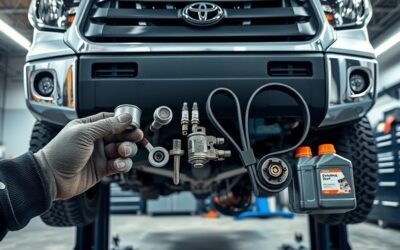
If your Tundra cranks slowly, start by checking the battery, terminals and ground connections, then test starter current draw and relay/fuse continuity. Measure fuel rail pressure (43–50 psi) and verify the pump primes with the key; inspect the pump check valve and filter. Scan for ECM codes, vacuum leaks and weak injector spray. Cold, low fuel or ethanol blends can worsen starts. Follow these steps and you’ll find targeted fixes and when to escalate for dealer-level diagnostics.
Quick Checklist: 6 Tests for Slow Tundra Starts
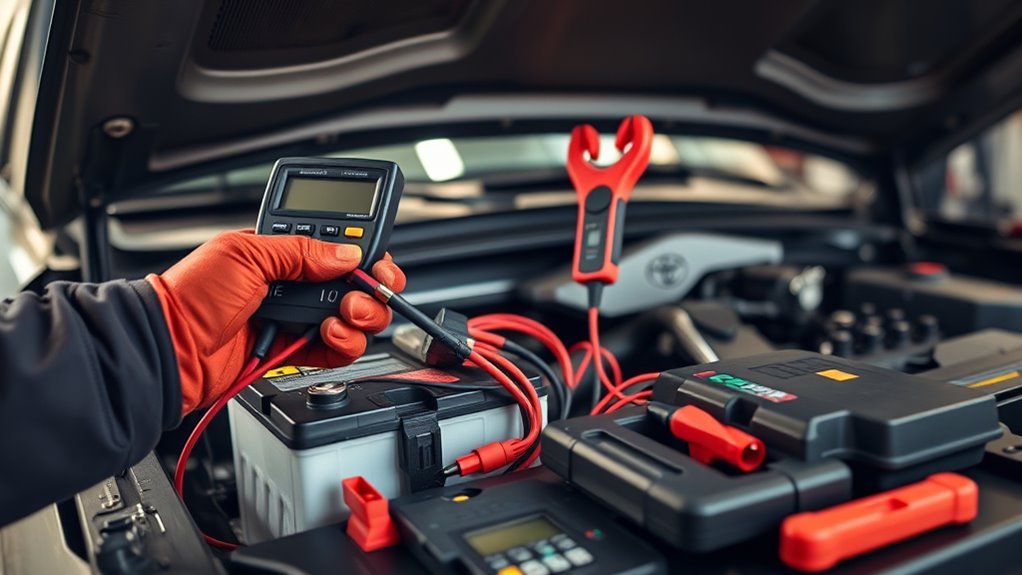
Start with these six targeted checks to quickly isolate why your Tundra’s cranking is slow: verify battery health and clean/tighten terminals, measure fuel pressure (including during cold cranks), inspect for fuel-system air leaks, cycle the ignition to prime the system, assess fuel type and tank level, and confirm the fuel pump’s check valve operation. You’ll first verify battery voltage and load capacity; poor connections or low cold-cranking amps reduce starter torque. Next, attach a fuel pressure gauge and record static and cold-crank readings to catch pump decline or a failed check valve. Inspect fuel-system fittings and hoses for air ingress that lets fuel siphon back to the tank. Use controlled ignition cycling to prime rails and observe starting consistency; repeated weak primes point to delivery or ignition issues. Finally, evaluate fuel composition and maintain above a quarter tank—ethanol blends and low volume amplify cold-start problems. Follow these methodical checks to free yourself from slow-start frustration and target repair actions.
How Your Tundra Starts : Parts That Matter
Those six checks narrow down symptoms, but understanding the components that actually make your Tundra crank and catch will tell you what to test next. You’ll focus on the ignition system, fuel delivery, and control logic. The ECM interprets sensor inputs and fuel type; if it misreads fuel or sensor data, ignition timing and injector pulse suffer, so confirm ECM codes and fuel-type settings first. Fuel pump pressure must meet spec—monitor rails for retention after inactivity; loss of pressure points to pump or check-valve failure. Fuel injectors must spray reliably; poor spray patterns or clogged injectors cause hard starts even with correct pressure. Electrical integrity at grounds and connectors affects these systems; don’t ignore corroded or loose terminals that alter ECM signals or injector voltages. You’ll methodically isolate failures: verify ECM diagnostics, measure static fuel pressure, bench-test injectors, and inspect ignition outputs. That approach frees you to target repairs instead of guessing.
Battery, Starter & Wiring Tests to Rule Them Out
Start by checking battery voltage with the engine off; you should see at least 12.6 volts or the battery may be weak. Next perform a starter crank test, observing engagement and measuring amperage draw to confirm the starter is operating within spec. Finally inspect wiring and grounds for loose, corroded, or damaged connections that could restrict current flow.
Battery Voltage Check
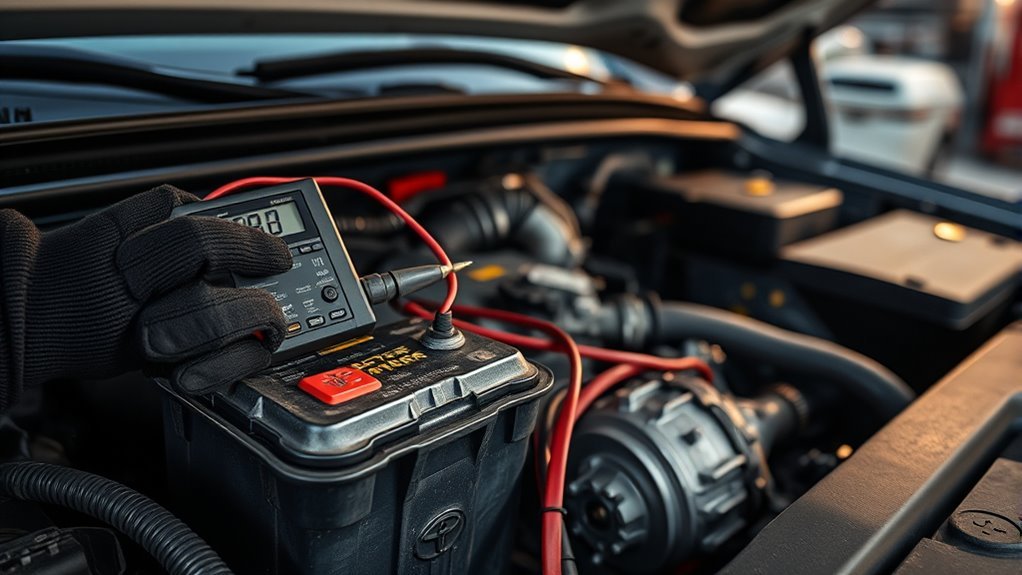
Battery voltage is the quickest way to rule out basic electrical causes of slow cranking: with the truck at rest a fully charged battery should read about 12.6 V, and you should perform a load test—if voltage falls below ~9.6 V under load the battery is likely failing. Check battery health by recording static voltage readings first, then apply a calibrated load tester while observing drop rate. Inspect terminals and cables for corrosion or looseness; clean and torque to spec to restore solid conductance. Measure starter circuit voltage during cranking to confirm wiring integrity, watching for excessive voltage drop. Scan wiring harnesses for frays, damage, or poor grounds. Clear, methodical checks free you from guesswork and point to targeted repair.
Starter Crank Test
1 procedure helps you isolate whether the battery, starter, or wiring is causing slow cranking: verify battery open-circuit voltage is ≥12.4 V (or perform a load test), then measure voltage drop at the starter terminals while cranking—anything >0.3 V indicates excessive resistance in cables or connections. After confirming battery health and adequate cold cranking amps, perform voltage testing across starter circuit points: battery positive to starter B, battery negative to starter case. Monitor voltage while an assistant turns the key; drops beyond 0.3 V at either point point to poor connections or relay issues. Check starter relay and fuses for continuity. Measure starter motor resistance with a multimeter; values above spec signal impending starter performance failure. Act decisively to regain mobility.
Wiring And Grounds
When diagnosing slow cranking, focus first on wiring and grounds because even a healthy starter and battery can’t deliver current through corroded terminals, frayed cables, or loose grounds; clean and tighten all battery terminals, inspect the negative cable for corrosion or damage, and guarantee the engine and chassis ground straps are secure. You’ll verify wiring integrity with a voltage drop test across the starter circuit to locate excessive resistance; exceed ~0.5V under load and you’ve found a fault. Use a multimeter to measure starter voltage during cranking—below 9.6V signals wiring or battery issues. Check the starter relay and fuses for function and replace if intermittent. Secure and clean all ground connections; liberation comes from methodical, measured repairs that restore reliable current flow.
Tundra Fuel Delivery: Pressure, Priming & Check Valves
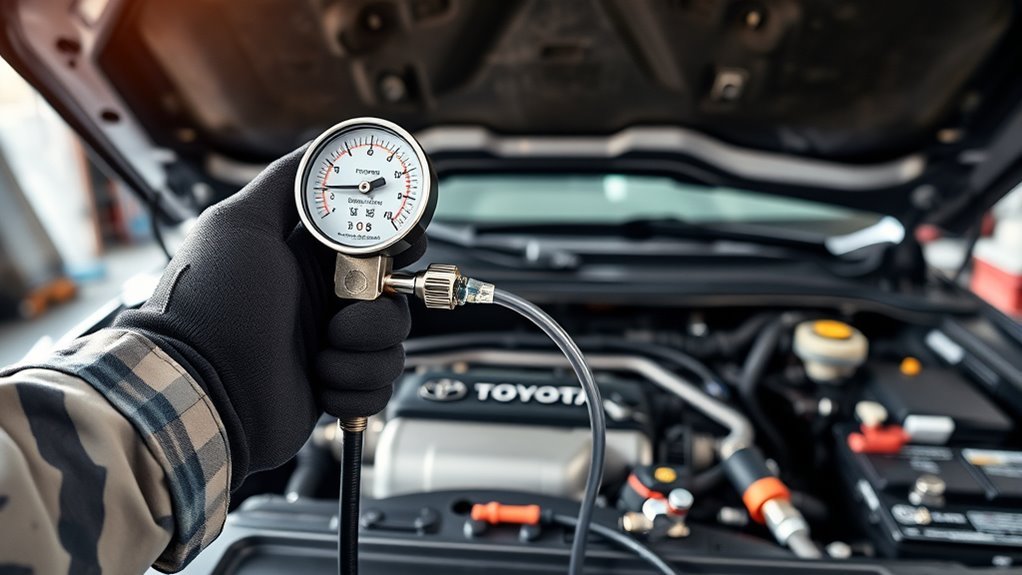
Although the Tundra’s engine will crank, you’ll often get long cranks or hard starts if fuel pressure isn’t held in the lines; the system normally needs about 43–50 psi at the rail for reliable starting and operation. You should verify fuel pressure with a gauge at the rail to confirm pump output and detect leaks or air ingress. Prime the pump by cycling the ignition key—this builds pressure and reduces starter load during initial attempts. Inspect the check valve in the pump assembly: if it fails, pressure bleeds back into the tank overnight and you’ll face extended cranking until the pump repressurizes. Maintain proper fuel type and avoid running low fuel, since sensor readings and pump behavior change with contamination or ethanol blends like E85. If measured pressure falls short of spec, pursue pump, filter, or regulator replacement methodically. These steps free you from guesswork and restore dependable starts through controlled, measurable repairs.
Cold-Weather and Fuel Quirks That Slow Starts
When temperatures drop to single digits your Tundra will take longer to crank because cold fuel flows slower and vaporization is reduced, which impairs priming and injector response. Try ethanol-free fuel where possible and keep at least a quarter tank to reduce vapor lock and misreads in flex-fuel ECUs. Also inspect fuel pressure and electrical connections regularly so you can isolate whether the issue is temperature, fuel composition, or a delivery fault.
Cold Weather Fuel Effects
If temperatures drop to around 3°F, expect thicker oil and heavier fuel vapors that extend crank time and slow ignition; low fuel levels make this worse because the pump struggles to maintain pressure in cold conditions. You’ll notice increased fuel viscosity and reduced flow, so plan to keep fuel above a quarter tank to avoid pump cavitation and weak delivery. Cold weather stresses seals and can reveal air leaks that cause RPM hesitation during initial starts. Swap to ethanol-free fuel where available to reduce gelling risk and improve cold-start consistency, but don’t confuse this with fuel type priming procedures discussed later. Diagnose methodically: check tank level, confirm pump pressure, inspect for leaks, and catalog RPM behavior during successive start attempts to isolate the issue.
Fuel Type And Priming
Because fuel composition and priming behavior directly affect pressure and vaporization at low temperatures, you should treat fuel type and pump priming as primary variables when diagnosing slow cold cranks on a 2020 Tundra. At ~3°F, heavier vaporization delays and reduced pump flow lengthen crank times; using 87 ethanol-free fuel has improved cold starts in practice, so test alternate fuels to isolate ethanol content effects. Maintain ≥1/4 tank to avoid air ingestion and slosh-induced priming loss. Before cranking, cycle ignition to prime the pump and let pressure stabilize; measure fuel rail pressure during cold attempts to confirm retention and check-valve integrity. These steps optimize cold-start reliability while preserving fuel efficiency and give you actionable data to free the truck from winter constraints.
Practical DIY Fixes for Slow Cranking
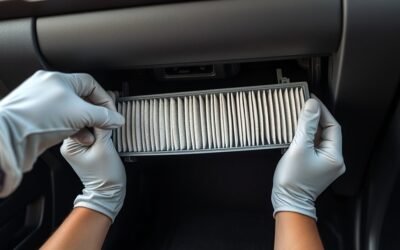
Although cold weather exposes weak components, you can often fix slow cranking yourself by methodically checking power, fuel, and intake systems. Start with battery maintenance: clean and tighten terminals, test open-circuit voltage, and perform a load test to confirm cranking amps—cold temperature effects hit weak batteries hardest. Inspect the ignition system for corroded connections and worn leads; replace suspect parts. Monitor fuel pressure during cold starts; low pressure points to a failing fuel pump or check valve. Before cranking, cycle the ignition a few times to let the fuel pump prime the rail. Remove and inspect air filters; replace clogged filters to restore airflow. Scan for vacuum leaks at hoses and intake gaskets—use propane or smoke testing to locate leaks that lean the mixture and hinder starts. Proceed methodically, record results, and prioritize fixes that restore cranking power and reliable starting under low-temperature conditions for greater independence and control.
When to Call the Dealer or a Shop
After you’ve run through basic checks—battery connections, voltage/load tests, starter inspection, fuel pressure and intake checks—and the slow crank persists, it’s time to contact a dealer or qualified shop. If your attempts at repairs haven’t fixed it, seek dealer diagnostics; dealers carry manufacturer-specific scanners, wiring diagrams, and recall/TSB databases that reveal faults standard tools miss.
You should call for professional intervention when symptoms worsen: irregular engine behavior, intermittent starting, or full no-start events. Mention every test you’ve done and any replaced parts so technicians avoid repeating work. Prioritize dealers if you suspect software, immobilizer, or module-level faults; independent shops suit mechanical issues but confirm they offer OEM-level diagnostic capability. Emergency situations—stranded, repeated failures, or smoke/odors—require immediate tow and shop evaluation to prevent collateral damage. Take control: choose a provider with documented experience on Tundra systems, request diagnostic scope traces, and get a written estimate before authorizing repairs.
Frequently Asked Questions
Why Is My Tundra Struggling to Start?
Your Tundra’s struggle likely stems from poor battery maintenance, weak cranking amps, fuel delivery faults, or a failing starter; you’ll inspect cables, test battery voltage, prime the fuel pump, and consider starter replacement if diagnostics confirm.
What Causes a Slow Cranking Starter?
You get slow cranking from battery issues, starter problems, poor connections, cold viscosity, or fuel delivery faults; inspect voltage, terminals, starter motor, fuel pump/filter, and replace or repair components to regain reliable starting freedom.
Why Is My Toyota Having a Hard Time Starting?
A neighbor’s Tundra stalled overnight; you’ll likely have starter issues or poor battery health, a clogged fuel pump, or leaking fuel prime. Inspect connections, test voltage and fuel pressure, then replace failing components to regain freedom.
What Causes Low Cranking Speed?
Low cranking speed stems from battery issues, starter problems, poor connections, cold temperature, or fuel delivery faults; you should test battery voltage, load, starter draw, inspect terminals, and validate fuel pressure to reclaim reliable starts.
Conclusion
Summing up, systematically suss out slow-start causes: battery, starter, and wiring first, then fuel pressure, priming, and check valves. In cold conditions, consider condensation, clogged filters, and weak pumps. Use methodical measurements, simple swaps, and selective cleaning before costly repairs. DIY fixes can be decisive, but don’t delay professional diagnostics for persistent problems. Swift, sensible steps save time, stress, and money—stick to a clear checklist and stay steadfast in solving slow-crank snags.