You’ll start with a quick pre-trip check: confirm brake fluid below the max line and cap area clean, then inspect pads for thickness (replace at 3 mm) and matched wear. Spin wheels to detect rotor runout and measure thickness, then test caliper slide and guide pins for smooth movement, probing lines and seals for leaks or damage. Adjust the parking brake and perform a controlled road test to verify performance—keep going to see detailed inspection and repair steps.
Quick Pre-Trip Brake Checklist & Safety Steps
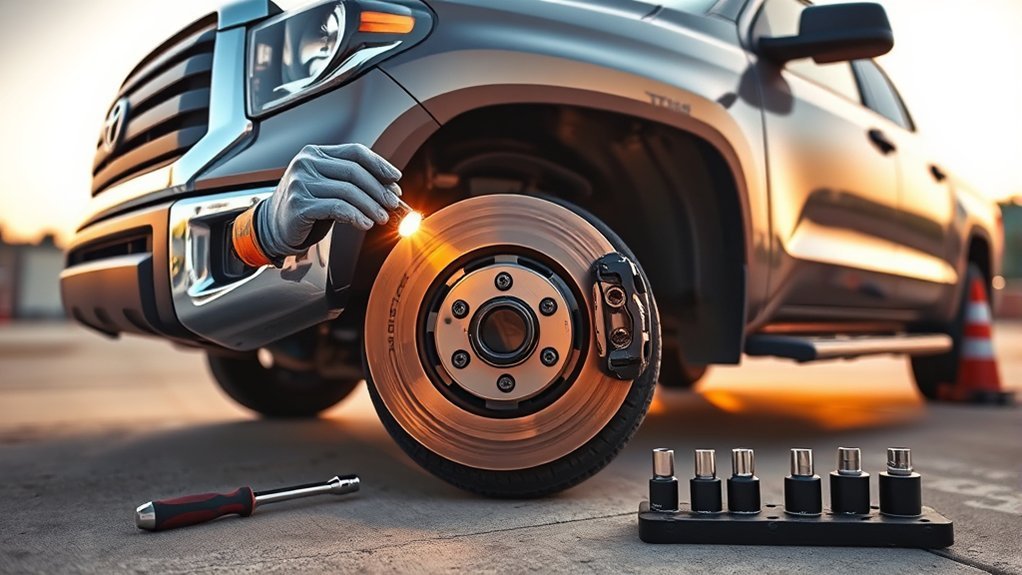
Before you hit the road, run a focused brake check to verify safe stopping performance: start by visually confirming the brake fluid reservoir sits just below the maximum line to prevent dash warnings and preserve brake performance. Next, inspect pad thickness—if pads look thin or uneven, replace them in matched pairs to maintain balanced braking. Spin each wheel (with the truck safely secured) to feel for rotor runout or vibration; significant warping means rotor replacement. Test caliper movement; a bound or sticky caliper will reduce stopping power and must be serviced or replaced. Finally, scan brake lines and connections for leaks, corrosion, or damage; any compromise requires immediate repair to protect hydraulic integrity. You’ll want to keep records of these checks so you stay free from unexpected failures and maintain confident control of your Tundra. Perform this quick checklist before longer trips to guarantee predictable, liberated travel.
Check Brake Fluid, Master Cylinder, and Sensors
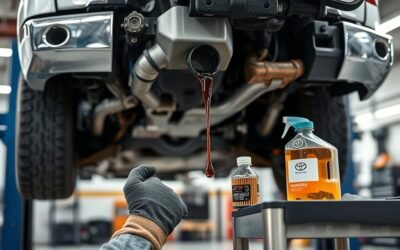
After you’ve checked pads, rotors, calipers, and lines, move on to the master cylinder and brake fluid to verify the hydraulic system’s integrity. Start by cleaning the reservoir cap area, then check brake fluid maintenance: fluid should sit just below the maximum line. If it’s low, top with the manufacturer-recommended DOT fluid and note the rate of loss.
Perform a focused master cylinder inspection for leaks at the base and around seals; replace seals or the cylinder if you find dampness or corrosion. Remember low fluid can drop after aggressive driving, so track levels before and after spirited use to detect trends.
Check sensors and dashboard indicators: Toyota trucks have sensitive sensors that trigger warnings when fluid is low. If a warning lights, don’t delay—inspect the reservoir and master cylinder immediately. Promptly addressing low levels or leaks preserves stopping power and keeps you free from avoidable failure or costly repairs.
Inspect Brake Pads, Hardware, and Parking-Brake Adjustment
Now inspect the brake pads for remaining thickness and replace them in pairs to preserve balanced stopping performance. Check the parking brake adjustment by rotating the adjuster until the shoes lock, then back it off slightly so the rotor or drum turns freely. While you’re here, examine hardware and guide pins for rust or wear and lubricate moving parts with brake-specific grease.
Brake Pad Wear
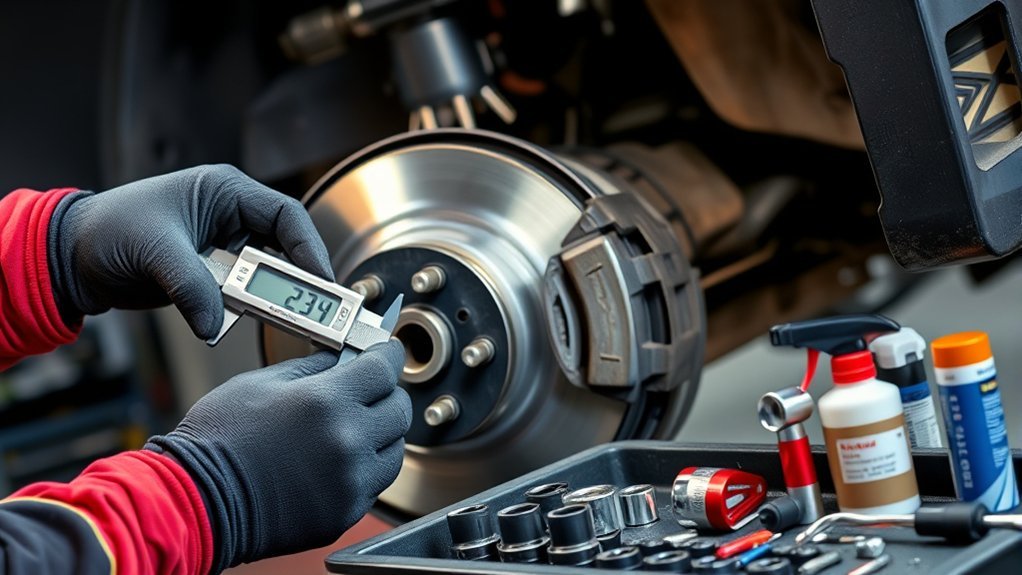
When you inspect the Tundra’s brake pads, measure pad thickness and examine the hardware carefully. You’ll confirm remaining friction and note any wear indicators contacting the rotor; replace pads when thickness reaches 3 mm or less. Perform pad replacement in matched pairs—both front or both rear—to preserve balanced braking and protect rotors. Inspect anti-rattle clips and shims for rust, deformation, or missing pieces; damaged hardware causes noise and uneven wear, so renew those components alongside the pads. Clean mounting surfaces, apply appropriate lubricant where specified, and torque hardware to spec. After installation, test braking feel at low speed to verify even engagement and absence of vibration or noise. Maintain this routine to keep control and extend component life.
Parking Brake Adjustment
Having verified pad thickness and refreshed any worn hardware, inspect the parking-brake assembly and adjust the shoes so the system holds reliably without dragging. You’ll insert the adjustment tool into the disc access hole, rotate the star wheel until the shoes lock, then back off eight notches to set proper tension. Check clips, guide pins, and all hardware for rust or damage; replace non-reusable items. Operate the mechanism to confirm smooth, non-binding movement. Verify the disc still rotates freely yet the parking brake holds securely when engaged. Use these adjustment techniques routinely to maintain balanced stopping power and personal freedom on the road.
| Step | Action | Outcome |
|---|---|---|
| 1 | Inspect pads | Wear within limits |
| 2 | Check hardware | Replace if rusted |
| 3 | Adjust wheel | Shoes lock |
| 4 | Back off 8 notches | Proper tension |
| 5 | Test operation | Holds without drag |
Check Calipers, Guide Pins, and Brake Lines for Leaks or Seizure
Start by visually and manually inspecting the calipers, guide pins, and brake lines for signs of wear, corrosion, leaks, or binding, since these faults directly affect braking performance and safety. You’ll perform caliper maintenance and guide pin inspection with intent: probe seals, feel for sticky movement, and watch for fluid seepage. If a pin resists sliding or a seal looks cracked, act.
Start by probing calipers, guide pins, and lines—feel for sticking pins, cracked seals, or fluid seepage and act.
- Picture a caliper piston retreating smoothly when you press the pad back.
- Imagine a guide pin gliding free of rust, its boot intact.
- Visualize brake lines free of cracks, bulges, or wetness along fittings.
- Envision seals and O-rings firm, not swollen or brittle.
Check hoses and hard lines for abrasions and leaks; any dampness or drips mean immediate repair. Seized pins lead to uneven pad wear and diminished stopping power. Inspect these parts during routine maintenance to keep your Tundra controlled, safe, and liberated from preventable failures.
Inspect Rotors: Thickness, Runout, and TSB-Related Issues
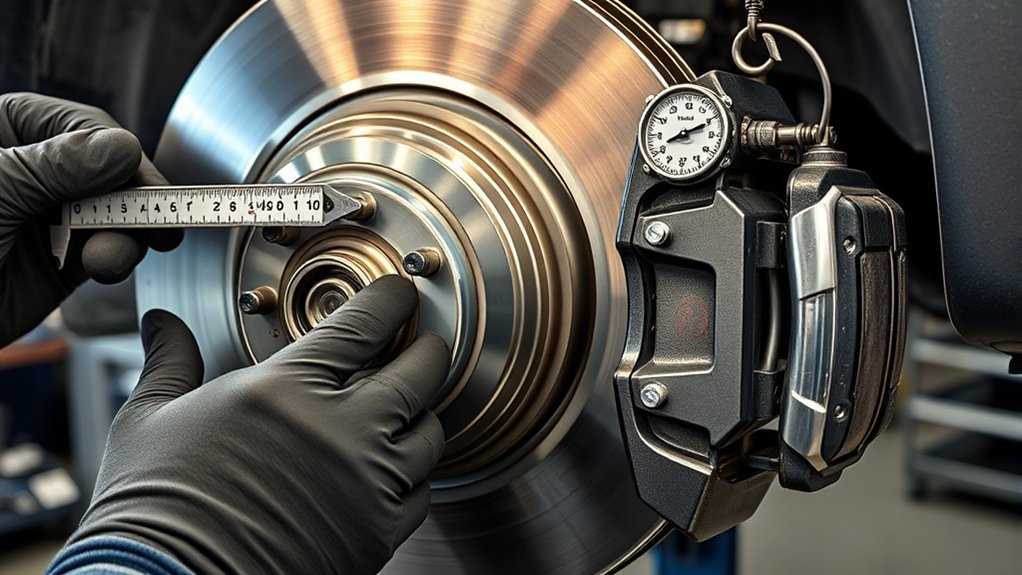
Because rotor condition directly affects braking feel and safety, measure thickness and runout before reinstalling pads or wheels. You’ll use a micrometer to confirm rotor thickness meets the manufacturer’s minimum; rotor maintenance isn’t optional, since undersized rotors reduce brake performance and invite heat-related failure. Next, mount the rotor and use a dial indicator to measure lateral runout—keep it at or below 0.05 mm (0.002 in) to prevent pedal pulsation and vibration.
Visually inspect for uneven wear, grooves, or warping; any irregularity that causes vibration must be corrected. When fitting new rotors, hand-tighten one lug nut to stabilize the rotor during pad installation so alignment stays true. Finally, check model-specific Technical Service Bulletins for known rotor issues or updated procedures; applying TSB guidance can liberate you from repeated failures and guarantee your brake performance meets intended standards.
Road Test, Noise Diagnosis, and When to Visit a Shop
With the rotors checked and reinstalled, take the Tundra for a controlled road test to confirm braking performance under real conditions. Drive on varied surfaces and apply firm, gradual stops to evaluate brake performance and perform a focused noise assessment. Note any pulsation, grinding, clunking, or squeaking and mark where they occur.
After reinstalling rotors, road-test the Tundra—gradual and firm stops, varied surfaces; note pulsation, grinding, clunks, or squeaks.
- Apply progressive stops at low speed to detect pulsation or pedal vibration.
- Brake harder on a safe stretch to reveal grinding or reduced efficiency.
- Turn and brake to check for uneven wear indications or caliper drag.
- Listen inside the cabin for faint squeaks and outside for metallic clunks.
If the pedal feels spongy or braking efficiency drops, inspect for fluid leaks or air in the lines immediately. Uneven pad or rotor wear suggests caliper/alignment problems requiring removal and measurement. If a brake warning light illuminates, or you can’t isolate the noise source, visit a shop for diagnostic scanning and professional repair without delay.
Frequently Asked Questions
What Is Included in a Brake Inspection?
You inspect brake fluid level and master cylinder for leaks, check pads and calipers for wear and binding, assess rotor condition for warping or uneven wear, and guarantee balanced replacement so you retain safe, liberated control of braking.
How Often Should I Change the Brake Pads on My Tundra?
Picture your Tundra stopping sharp and sure: you should change brake pads every 30,000–70,000 miles, though brake pad longevity depends on driving habits; inspect at 15,000 miles and replace sooner if you hear grinding or feel fade.
Conclusion
When you finish this checklist, you’ll know your Tundra’s brakes are ready for the road. Remember: 90% of stopping power comes from properly maintained pads and rotors—picture 9 out of every 10 emergency stops relying on those components. If fluid, calipers, or sensors show issues, address them now to avoid bigger failures. Follow the steps methodically, document findings, and visit a pro when measurements or noises fall outside spec.