If your Toyota Tundra ABS light stays on, do not start by replacing random parts. Start by checking whether the truck is safe to drive, then scan the ABS/VSC system for codes, verify the brake-light circuit, inspect the correct model-year fuses, check brake fluid and battery voltage, and compare live wheel-speed data. The steps below walk you from simple checks to sensor, wiring, and module-level diagnosis.
Quick Answer
A Toyota Tundra ABS light usually means the anti-lock braking system detected a fault in a wheel-speed sensor, brake-light switch circuit, fuse, wiring harness, low-voltage supply, sensor rotor, or brake actuator control circuit. Scan the ABS module first, save the codes, then test the exact circuit before replacing parts.
Key Takeaways
- If the red BRAKE warning light, low brake fluid, a soft pedal, or a leak appears with the ABS light, stop driving and have the truck inspected or towed.
- Use an ABS-capable scanner, not just a basic engine-code reader. Toyota-enhanced or Techstream-class tools are best for ABS/VSC C-codes and live data.
- Do not trust universal wheel-speed sensor resistance numbers. Follow the service data for your exact Tundra year, drivetrain, and DTC.
- Check the brake-light switch, STOP/brake-light fuse, ABS/VSC fuses, battery voltage, grounds, sensor connectors, and harness routing before replacing the ABS actuator.
- After repairs, clear codes with the scanner and road-test while watching live wheel speeds to confirm the light does not return.
At a Glance
| Time Required | 15 minutes for basic checks; 1–3 hours for code-based sensor or harness diagnosis |
| Difficulty | Beginner for lights/fuses/fluid; intermediate for electrical testing; advanced for brake actuator or calibration work |
| Tools Needed | ABS-capable scan tool, multimeter, basic hand tools, flashlight, contact cleaner, wiring diagram or service data |
| Typical Cost | $0–$30 for checks and cleaning; $20–$70 for many brake-light switches; $40–$180+ for many wheel-speed sensors; more for professional module or actuator repair |
Warning: The amber ABS light means the anti-lock function may be disabled, but the red BRAKE warning light can indicate a more serious hydraulic-brake problem. If the brake pedal feels soft, fluid is low, braking distance changes, or you see a leak, do not continue normal driving. Stop safely and get professional help.
Toyota Tundra ABS: Quick Checks First
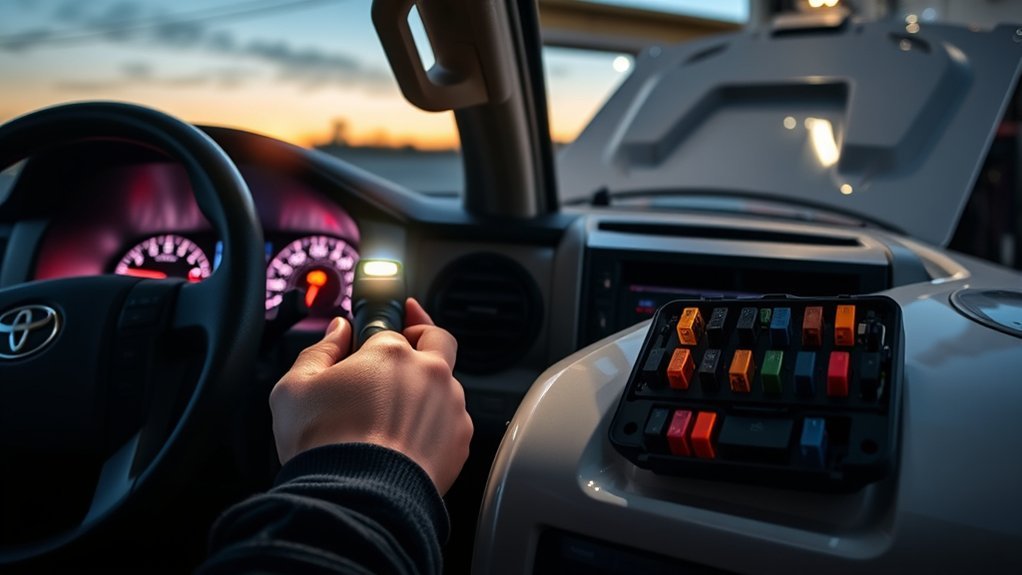
Before deeper diagnosis, do the simple checks that often explain an ABS, VSC, traction-control, or shift-lock complaint:
- Check brake lights. Have someone press the brake pedal while you watch the rear lamps and center high-mounted stop lamp. If the brake lights are dead or intermittent, inspect the brake-light switch circuit before blaming wheel sensors.
- Check brake fluid level. Verify the fluid is between the MIN and MAX marks. Low fluid can point to worn pads, a leak, or a hydraulic issue that should be handled before ABS diagnosis.
- Check the correct fuses for your year. Look up your model-year diagram in the Toyota Tundra owner’s manual. Depending on year and trim, related fuses may include STOP, ECU-IG/IGN, ABS, VSC, ABS SOL, or ABS MTR. Do not assume one fuse rating fits every Tundra.
- Check battery and charging voltage. Low system voltage can set ABS/VSC faults. If the truck cranks slowly or multiple warning lights appear together, test the battery and alternator before replacing sensors.
- Look for obvious damage. Inspect wheel-well harnesses, sensor connectors, recent brake-work areas, and any place a lift, tire, or road debris could have pulled or pinched wiring.
Note: Save all ABS/VSC codes and freeze-frame data before clearing anything. A battery disconnect or blind reset can erase clues without fixing the root problem.
Step-By-Step Diagnostic Checklist: Tools and Data to Collect
ABS diagnosis is fastest when you collect the right data in the right order. The federal ABS definition describes ABS as a system that senses wheel rotation and modulates brake force to control wheel slip. In plain language, the Tundra needs reliable wheel-speed signals, brake-pedal input, power, ground, and actuator control to make ABS work.
[Products Worth Considering]

The TOPDON VeriDiag X800 BT is a wireless bidirectional automotive diagnostic scanner designed for full-system troubleshooting, active testing, and advanced service resets. It supports broad vehicle coverage, live data viewing, AutoVIN identification, and lifetime free updates to help DIYers and professionals diagnose issues faster and with greater confidence.

This automotive test light combines a bright LED voltage display with quick polarity indication for fast, accurate circuit checks in a wide range of vehicle systems. It helps diagnose battery, charging, lighting, and fuse issues with a sharp stainless probe, long spring wire, and easy-to-use alligator clip for efficient troubleshooting.
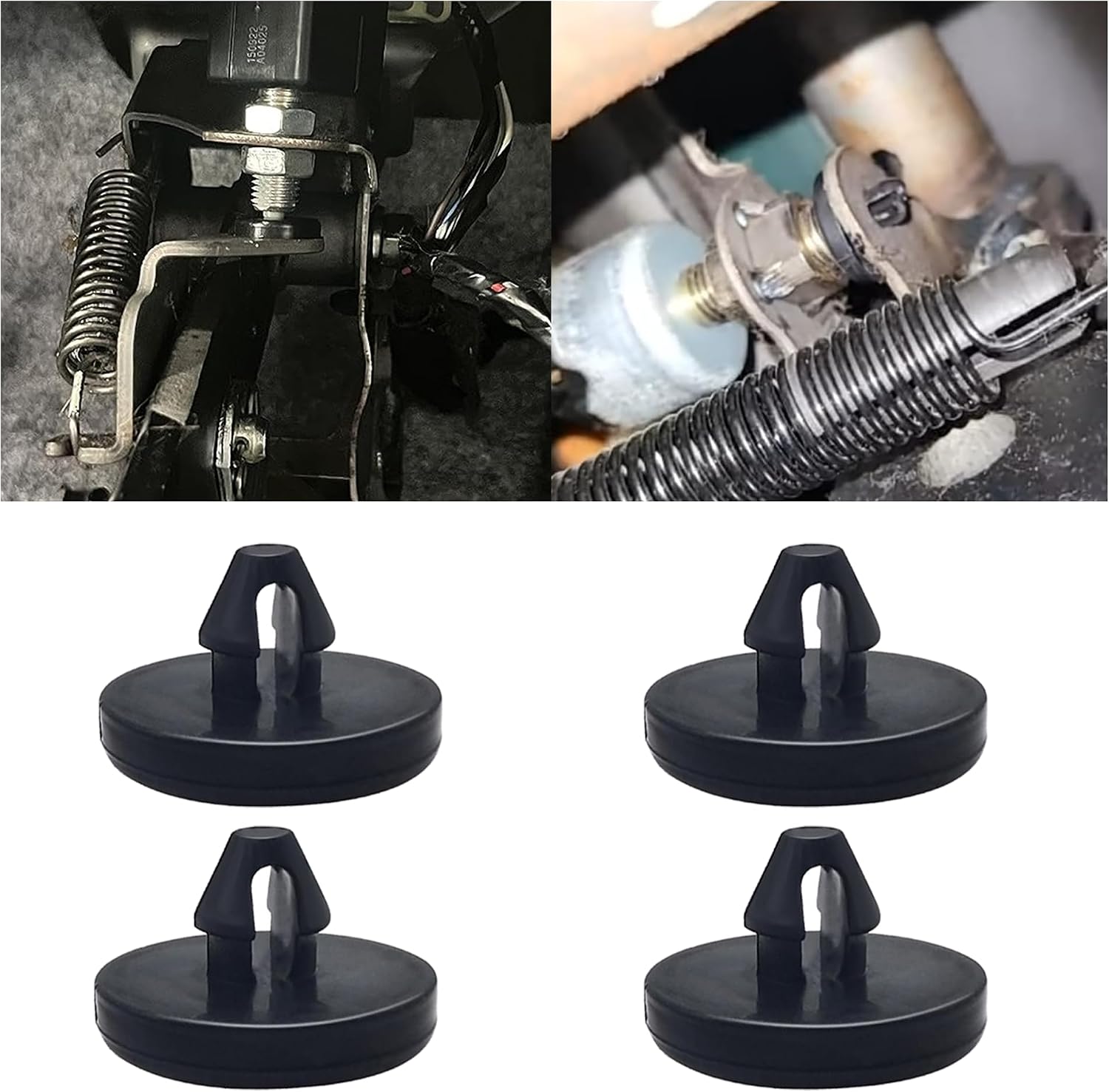
This brake pedal stop pad set is designed as an OEM replacement for compatible Toyota, Lexus, and Scion models, helping restore proper brake light switch function when the brake light stays on. Made from durable nylon, these compact stoppers are built for reliable long-term use and quick, tool-free installation. The set includes multiple pieces for convenient replacement and sharing.
Required Diagnostic Tools
- ABS-capable scan tool: Choose a scanner that reads chassis/ABS/VSC C-codes and live wheel-speed data. Toyota Techstream or a Toyota-enhanced professional scanner is ideal. Basic engine-code readers may miss ABS faults.
- Digital multimeter: Use it for fuse continuity, battery voltage, ground voltage-drop checks, and service-manual wiring tests.
- Back-probe leads or piercing-free test probes: These help test circuits without damaging terminals.
- Electrical contact cleaner and small brush: Use these for dirty connectors. Let connectors dry fully before reconnecting.
- Model-year wiring diagram or service data: Use Toyota Technical Information System or reliable service information for the exact year and drivetrain.
Live Data Parameters
Connect the scanner, enter ABS/VSC live-data mode, and watch the values below. Test in a safe area with a helper operating the scanner, or record data for later review.
| Parameter | What You Want to See | What to Do if It Looks Wrong |
|---|---|---|
| ABS/VSC DTCs | Codes that identify a specific circuit, sensor, voltage issue, or actuator fault | Write down codes and freeze-frame data before clearing anything |
| Wheel speeds | All four wheels rise smoothly and match closely when driving straight | Inspect the sensor, connector, wiring, hub bearing, and tone/encoder ring for the wheel that drops out or reads differently |
| Brake-pedal switch status | Changes cleanly from OFF to ON when the pedal is pressed | Test the brake-light switch, STOP fuse, rear lamps, and related wiring |
| Battery/IG voltage | Stable system voltage with key ON and engine running | Test battery, alternator, grounds, ABS power feed, and low-voltage DTCs |
| Yaw/steering/acceleration data | Reasonable values with no sensor initialization faults | Follow the service manual; calibration may be required after some repairs |
How ABS, Traction Control, VSC, and Shift-Lock Interact
The ABS, traction-control, and VSC systems share information. Wheel-speed data helps ABS manage brake lockup, traction control detect wheel spin, and VSC compare the truck’s path with driver input. A single failed wheel-speed signal can trigger multiple lights. The brake-light switch also matters because the skid-control system needs to know when the driver is applying the brakes.
Shift-lock problems can overlap with brake-light switch faults. If the truck will not shift out of Park and the brake lights do not work, inspect the brake-light switch circuit before replacing ABS parts.
- Brake-light switch circuit: Confirm brake lamps work, then verify switch status on the scan tool.
- STOP/brake-light fuse and related feeds: Check with a meter, not just by looking at the fuse.
- ABS/VSC power and grounds: Verify clean, tight grounds and stable voltage at the actuator/control-unit circuits.
- Wheel-speed circuits: Look for corrosion, loose pins, broken wires, damaged sensor tips, and hub or tone-ring problems.
Common Toyota Tundra ABS Codes and What They Point To
Code definitions vary by year, so always verify them with your scanner and service data. These examples show the type of direction ABS codes can provide:
| Code or Code Family | Common Direction | First Checks |
|---|---|---|
| C0200, C0205, C0210, C0215 or similar | Wheel-speed sensor circuit or signal issue | Live wheel-speed comparison, connector, sensor wiring, hub/tone ring |
| C1237 or similar | Speed sensor rotor/encoder issue | Hub bearing, magnetic encoder, debris, sensor gap, sensor mounting |
| C1241 or similar | Low power supply voltage | Battery, alternator, ABS power feed, grounds, main fuses |
| C1249, C1425, C1426 or similar | Stop-light switch circuit issue | Brake lights, STOP fuse, switch adjustment, switch voltage, wiring |
| C1300 or actuator/ECU codes | Skid control ECU or brake actuator concern | Confirm power, grounds, connectors, and service-manual tests before replacing expensive parts |
Pro Tip: If one wheel reads 0 mph while the others show speed, focus on that wheel’s sensor circuit. If all wheel speeds drop out together, look harder at power, ground, scanner communication, or the ABS control unit.
Test Wheel Speed Sensors: Multimeter and Scope Tips
A wheel-speed sensor fault does not always mean the sensor itself is bad. The problem can be a corroded connector, broken harness, damaged hub bearing, dirty sensor tip, missing sensor bolt, incorrect air gap, or damaged tone/encoder ring.
[Products Worth Considering]

This enhanced OBD2 scanner helps drivers quickly diagnose check engine light issues, read and clear trouble codes, and check emissions readiness before a smog test. It also adds EVAP and O2 sensor testing, live data, freeze frame capture, and a one-click battery health check in a simple plug-and-play tool with a bright color screen.

This Yuirote universal car motor diagnostic tool helps drivers quickly detect engine fault codes and identify system issues for routine inspections and maintenance. It also supports electronic parking brake reset and emergency release functions, making it useful for handling EPB-related problems without a repair shop visit. Its compact, ergonomic design and broad vehicle compatibility make it a practical choice for car owners and DIY repair enthusiasts.
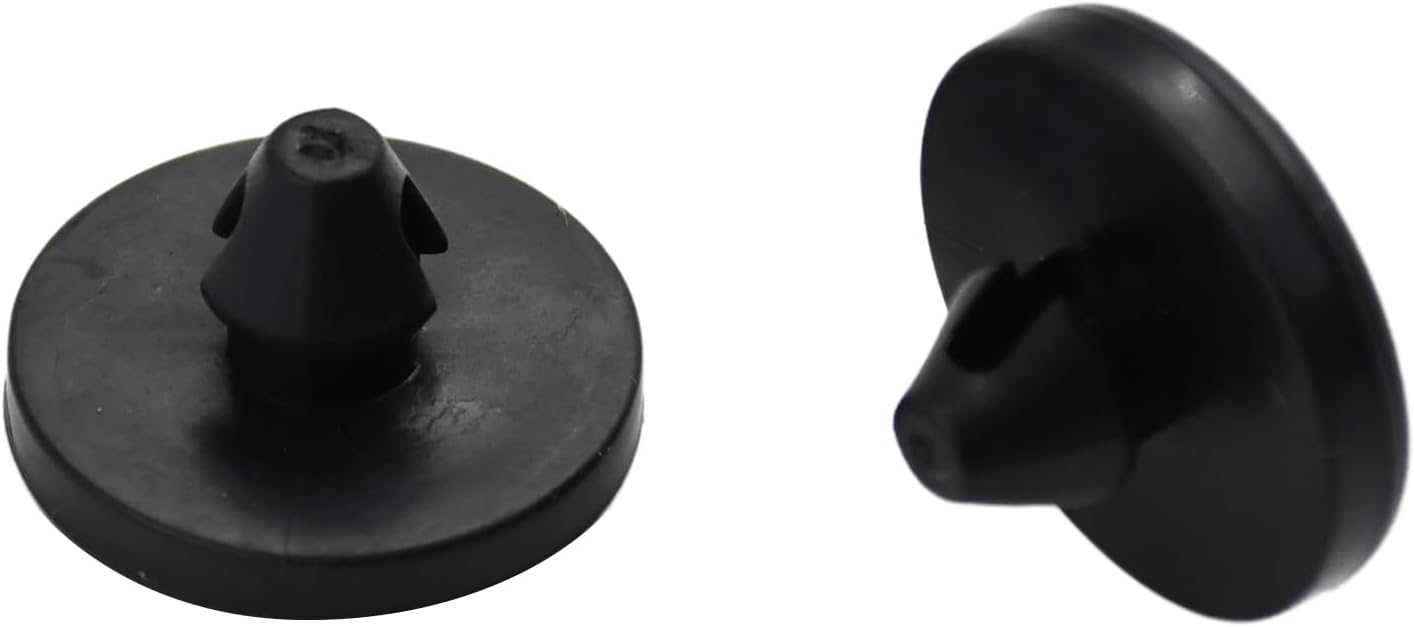
This brake switch stopper set helps restore proper brake pedal and brake light switch operation on a wide range of Toyota, Lexus, and Scion vehicles. Designed as a direct replacement part, it supports reliable pedal contact and can help fix worn or missing stoppers that affect brake light function. The package includes two stoppers for convenient replacement or spare use.
Do Not Use a Universal Resistance Spec
Some older passive sensors can be resistance-tested, but many modern wheel-speed sensors are active sensors that require voltage and signal checks. Do not apply a universal “good sensor” resistance value to every Tundra. Use the service manual for your exact year and DTC. When Toyota service data calls for circuit checks, it may ask you to verify connector condition, supply voltage, continuity, and shorts-to-ground rather than simply measuring sensor resistance.
Safe Multimeter Checks
- Turn the ignition off before unplugging ABS sensor connectors.
- Inspect the connector case and terminals for water, green corrosion, bent pins, loose terminals, or broken locks.
- Check the related fuse with a meter on both sides of the fuse.
- Use the service manual to test power, ground, continuity, and isolation. Do not probe randomly into ABS module terminals.
- After a wiring repair, secure the harness away from moving suspension parts and sharp edges.
View Waveforms With an Oscilloscope
An oscilloscope can reveal dropouts, noise, weak signals, or missing pulses while the wheel turns. Passive sensors often produce an AC waveform that changes with wheel speed. Active sensors may produce a square-wave or current-modulated signal depending on design. Compare the suspect wheel with a known-good wheel on the same truck when possible.
Spin the wheel by hand only when the truck is safely lifted and supported. Never work under a vehicle supported only by a jack.
Check the ABS Module, Connectors, and Grounds for Corrosion/Moisture
ABS and VSC faults can come from poor connections as easily as failed parts. Moisture intrusion, road salt, mud, and previous repairs can all create intermittent faults.
- Inspect ABS actuator/module connectors. Look for moisture, green or white deposits, bent pins, backed-out terminals, and broken locking tabs.
- Inspect chassis grounds. A loose or corroded ground can mimic a sensor or module failure.
- Check harness routing. Pay close attention near the front knuckles, rear axle, frame clips, and any area disturbed during brake, suspension, or wheel-bearing work.
- Clean carefully. Use electrical contact cleaner, dry the connector, then reconnect firmly. Use dielectric grease only where appropriate; do not pack terminals so heavily that it interferes with contact.
- Retest before replacing the module. Brake actuator and skid-control ECU repairs are expensive and may require calibration or bleeding procedures.
Check Recalls and Service Campaigns Before Buying Parts
Before you spend money on an ABS actuator, sensor, or harness, check for open recalls and service campaigns. Use both the Toyota Safety Recall and Service Campaign lookup and the NHTSA recalls page. A VIN check is better than a year/make/model search because it tells you whether your specific truck has an unrepaired campaign.
You can also use the NHTSA VIN lookup tool to check unrepaired safety recalls from participating manufacturers. This step is especially important on newer Tundras with multiple electronic brake, parking brake, lighting, camera, and body-control systems.
Common DIY Fixes and Expected Costs
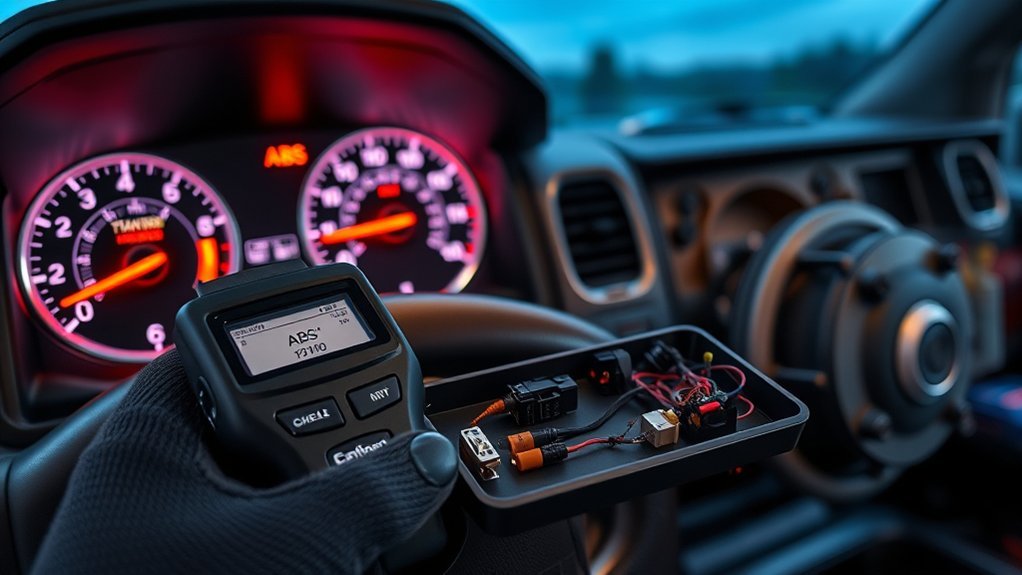
Use testing to decide what to fix. The cheapest part is not always the right part.
| Item | Typical DIY Action | When to Stop and Recheck |
|---|---|---|
| Fuse or power feed | Test both sides of the fuse, inspect fuse box, repair short if fuse blows again | If a replacement fuse blows immediately |
| Brake-light switch | Verify brake lights and scan-tool switch status, adjust or replace if faulty | If lights work but ABS still reports switch-circuit faults |
| Wheel-speed sensor | Inspect connector, wiring, mounting, hub/encoder, and live wheel-speed data | If the signal is still wrong after connector and harness checks |
| Wiring harness | Repair chafed, pinched, corroded, or open wiring using sealed automotive repair methods | If damage is near the ABS module, actuator, or multiple circuits |
| Brake actuator/skid control ECU | Confirm power, ground, and circuit tests first | Call a pro; replacement may require calibration and brake bleeding with scan-tool functions |
[Products Worth Considering]

This brake switch stopper helps restore proper brake light operation by providing a precise pedal stopping point, reducing issues where brake lights stay on. Made from durable nylon, it is designed for easy installation and dependable fitment across many Toyota, Lexus, and Scion models. The multi-pack supply makes it convenient to replace worn stoppers and keep spares on hand for future maintenance.

FOXWELL NT201 is an easy-to-use OBD2 scanner designed to help drivers quickly read and clear check engine codes, view live engine data, and check emissions readiness. Its color screen, one-key I/M readiness test, and broad compatibility with most gasoline vehicles since 1996 make it a practical tool for everyday diagnostics and maintenance. With plug-and-play operation and lifetime free updates, it offers a simple way to understand vehicle issues without expensive shop visits.

The GEARWRENCH Professional Bi-Directional Diagnostic Scan Tool brings OE-level diagnostics to your smart device for efficient troubleshooting and repair. It offers full bi-directional control, live actuation testing, live data mapping, freeze frame capture, and support for 23 reset and relearn functions to help technicians complete complex jobs with confidence. With software updates included, broad vehicle coverage, and a two-year warranty, it delivers powerful shop-ready capability without ongoing fees.
When to DIY vs. Call a Pro
You can safely DIY visual checks, brake-light checks, fuse testing, battery testing, connector cleaning, and some wheel-speed sensor replacements if you have the right tools and service information. Call a professional if the ABS light appears with brake-fluid loss, a soft pedal, red brake warning light, actuator codes, calibration codes, communication faults, or wiring damage near the ABS module.
Bring this concise packet to the shop:
Bring ABS/VSC codes, freeze-frame data, live wheel-speed notes, recent brake or suspension repairs, recall-check results, and a list of fuses, connectors, and grounds you already inspected.
- Scanned ABS/VSC codes: Include current, history, and pending codes if your scanner shows them.
- Freeze-frame data: Note speed, voltage, and which warning lights appeared.
- Live data notes: Record which wheel speed dropped out or did not match.
- Recent repairs: Mention brake pads, wheel bearings, tires, suspension work, battery replacement, or accident damage.
- Recall/campaign check: Tell the shop whether Toyota or NHTSA showed an open campaign for your VIN.
Final Troubleshooting Flowchart: Next Steps Based on Test Results
- ABS light only, brakes feel normal: Drive cautiously to a safe place, scan the ABS/VSC module, and save codes.
- ABS light plus red BRAKE light, low fluid, leak, or soft pedal: Stop driving and inspect the hydraulic brake system before any ABS diagnosis.
- No brake lights or shift-lock issue: Test the STOP fuse, brake-light switch, switch adjustment, rear lamps, and stop-lamp circuit.
- One wheel-speed code or one bad live-data reading: Inspect that sensor, connector, hub/encoder, and harness. Repair wiring or replace the failed part only after testing.
- Multiple wheel-speed faults or low-voltage code: Test battery, alternator, ABS fuses, power feeds, and grounds.
- Sensor rotor or hub code: Inspect the wheel bearing, magnetic encoder/tone ring, sensor mounting, and debris on the sensor tip.
- Actuator, ECU, or communication code: Verify power, ground, connector integrity, and service-manual pinpoint tests before replacing expensive components.
- After repair: Clear codes with the ABS-capable scanner, road-test safely, confirm all four wheel speeds match, and rescan to make sure the fault did not return.
Frequently Asked Questions
Why is my ABS light on in my Toyota Tundra?
The ABS light comes on when the anti-lock brake system stores a fault. Common causes include a bad wheel-speed signal, damaged sensor wiring, brake-light switch circuit fault, blown fuse, low battery voltage, dirty or damaged encoder ring, poor ground, or brake actuator/control-unit issue.
Can I drive my Tundra with the ABS light on?
If only the amber ABS light is on and the brake pedal feels normal, you may be able to drive carefully to a repair location, but ABS lockup protection may be disabled. If the red BRAKE light is also on, fluid is low, the pedal feels soft, or braking changes, stop driving and get the brake system inspected.
Will a basic OBD-II scanner read Toyota Tundra ABS codes?
Many basic OBD-II readers only read engine and emissions codes. For ABS/VSC diagnosis, use a scanner that supports Toyota chassis codes, live wheel-speed data, brake switch status, and ABS actuator data. Toyota Techstream or a Toyota-enhanced professional scanner is the best option.
Should I replace a wheel-speed sensor as soon as I get a sensor code?
Not immediately. A wheel-speed sensor code can be caused by the sensor, connector corrosion, broken wiring, a damaged hub bearing, a dirty or cracked encoder ring, or poor sensor mounting. Compare live wheel-speed data and inspect the circuit before buying parts.
Can I reset the ABS light by disconnecting the battery?
Do not use a battery disconnect as your main fix. It can erase useful diagnostic data and the light will return if the fault is still present. Save the codes, repair the cause, clear the ABS codes with a scan tool, and road-test the truck.
Can mismatched tires cause ABS or traction-control warnings?
Yes. Tires with different sizes, very uneven wear, or incorrect inflation can make wheel-speed readings disagree. Use the correct tire size, keep pressures set correctly, and avoid mixing tire diameters on the same truck.
Conclusion
You now have a safer, more accurate path for a Toyota Tundra ABS light: check brake safety first, scan the ABS/VSC system, verify brake lights and fuses by model year, inspect fluid and battery voltage, compare live wheel speeds, and test the exact circuit before replacing parts. Many ABS lights come down to a sensor signal, stop-light switch circuit, wiring issue, low voltage, or connector problem. Expensive ABS actuator or skid-control ECU replacement should come only after power, ground, connector, and service-manual tests confirm it.
Sources
- Toyota Owners Manuals & Warranties — model-year owner’s manual and fuse/service reference starting point
- Toyota Dashboard Warning Lights — owner-facing warning-light reference
- Toyota Technical Information System — official Toyota service-information source for model-specific ABS diagnostic procedures
- Toyota Safety Recalls & Service Campaigns — Toyota VIN recall and service-campaign lookup
- NHTSA Recalls — U.S. government safety recall lookup and recall guidance
- 49 CFR § 571.135, Light Vehicle Brake Systems — federal ABS definition and brake-system standard