

Toyota Supra model codes are easiest to understand in two layers. A40/A50, A60, A70 and A80 are useful generation-family identifiers for the first four generations. The fifth-generation GR Supra is commonly called A90, but its technical identifiers use the J29/DB family. For exact engine, electrical, drivetrain or replacement-part fitment, use the car’s complete VIN, frame/model information, model year and market rather than the generation nickname alone.
Quick Answer
Supra generation shorthand runs from A40/A50 through A60, A70 and A80. The fifth-generation GR Supra is widely called A90, while its technical identifiers use J29 and DB codes. These broad labels help identify the generation, but they do not by themselves prove the exact engine, transmission or parts fitment. Check the complete vehicle identification information before ordering components.
Last updated: September 1, 2026. Generation naming, fifth-generation production status and key technical claims were rechecked against Toyota history and technical materials.
Affiliate disclosure: This page may contain affiliate links. We may earn a commission from qualifying purchases at no extra cost to you.
Supra Model Codes: Quick Reference

The important distinction is between a broad generation name and a complete vehicle identifier. Enthusiasts often say A70, A80 or A90 because those terms quickly identify an era. A parts catalog, however, may require a more specific chassis/model code, VIN, engine, transmission, production date or market.
| Generation | Common shorthand | Approximate era | Identification note |
|---|---|---|---|
| Mk1 Celica Supra / Celica XX | A40/A50 | 1978–1981 | Use the complete vehicle code and market specification for exact engine and parts identification. |
| Mk2 Celica Supra / Celica XX | A60 | 1981–1985 production era | Engine and equipment differed significantly by market, so A60 alone is not a complete fitment identifier. |
| Mk3 Supra | A70 | 1986–1992 production era | Full identifiers vary with engine and market. Examples within the family include MA70- and JZA70-series cars. |
| Mk4 Supra | A80 | 1993–2002 globally | JZA80 is a key Toyota chassis-family identifier, but engine, transmission, market and production details still matter for parts. |
| Mk5 GR Supra | A90; A91 appears in special-edition naming | 2019–2026 production | Technical identification uses the J29/DB family. Treat A90/A91 as search and lineage terms, not complete parts-fitment codes. |
If you are buying a car, verifying provenance or ordering parts, start with the broad Supra generation and then narrow the search with the complete identifiers on the vehicle. This is more reliable than assuming every A70, A80 or A90 uses the same components.
What Do A40/A50 and A60 Mean?
The first two Supra generations were still tied closely to the Celica. Toyota introduced the Supra name in 1978 on the first-generation Celica-based car, commonly grouped as the A40/A50 family. The A60 followed in 1981 in Japan and for the 1982 model year in major export markets. It retained the Celica connection while adding features such as retractable headlights and independent rear suspension.
The A40/A50 and A60 names identify broad Celica Supra generation families. They do not replace the complete chassis/model information needed to identify a specific engine, trim or replacement part.
Power figures also changed by country, transmission and model year. In North America, for example, the A60’s 2.8-liter 5M-GE began at 145 hp for the 1982 model year and received output increases later in the production run. Other markets used different specifications, so an advertised horsepower figure should always be tied to a year and market.
- Generation check: Confirm whether the car is an A40/A50 or A60 before using a parts catalog.
- Market check: Do not assume a Japanese, European and North American car uses the same engine or equipment.
- Rust check: On an older candidate, inspect structural areas carefully before treating rarity or originality as the main buying factor.
- Parts check: Match the complete vehicle and engine information instead of buying by “Mk1” or “Mk2” alone.
The A60 also developed a genuine motorsport record. Toyota’s published history notes competition success in British saloon-car racing and Group A rallying. That history is useful context, but it does not mean an ordinary road car has competition provenance unless its individual documentation proves it.
[Products Worth Considering]

This cordless BLACK+DECKER dustbuster makes everyday cleanup quick and convenient at home or in the car. Its rotating slim nozzle, pull-out crevice tool, and flip-up brush help reach tight spaces and clean upholstery, while cyclonic action and a 16V MAX lithium-ion battery deliver strong, consistent suction. The translucent washable dirt bowl empties easily for mess-free disposal and simple maintenance.

The MaxxHaul Solid Rubber Wheel Chock 2-Pack provides dependable vehicle stabilization for cars, trucks, trailers, and RVs in garages, driveways, job sites, and campgrounds. Its solid rubber construction, non-slip traction surface, and built-in handle make placement easy while delivering long-lasting grip and all-weather durability for safer parking and storage.

The Siivton car seat protector helps keep your vehicle seats looking new by shielding them from pressure marks, scratches, and everyday wear caused by child car seats, booster seats, and bulky gear. Its triple anti-slip design, thick padding, and ISOFIX-compatible cutouts help ensure a secure fit and easy installation, while the built-in mesh pockets add convenient storage for family road trips. Designed to work with most leather and fabric seats, it offers practical protection without sacrificing a clean interior look.
What Does the A70 Supra Code Identify?
Toyota separated Supra from Celica with the A70 generation in 1986. The A70 used its own coupe body and double-wishbone suspension at all four corners. It is still important to treat “A70” as a generation family rather than a complete engine or parts code.
Why A70 Engine Codes Matter
The A70 engine range differed substantially by market. Toyota offered several straight-six engines from 2.0 to 3.0 liters. The lineup included naturally aspirated and turbocharged versions, including the 7M-GE and 7M-GTE, while later Japanese-market cars also received JZ-series powertrains.
The turbocharged 7M-GTE was rated at about 230 hp in several period specifications, but output and engine choice were market-dependent. If you are buying engine, cooling, ignition or turbo hardware, identify the exact engine rather than assuming “A70 Turbo” provides enough information.
How Should You Check an A70 Before Buying Parts?
- Read the vehicle identifiers: Record the complete VIN or frame/model information rather than only “A70.”
- Confirm the engine: Determine whether the car has a 7M-series, JZ-series or another market-specific engine.
- Confirm the transmission: Transmission type can change clutch, driveline, electronic and service-part requirements.
- Confirm the market: Japanese, North American and European configurations are not always interchangeable.
What About the A70 Head-Gasket Reputation?
The 7M-GE and 7M-GTE cylinder-head history deserves attention when evaluating an A70. Toyota factory service information for the original cylinder-head bolts specifies a tightening torque of 58 lb-ft. Aftermarket repair practices may use different gaskets, studs or procedures, so a generic alternate torque number should not be treated as universal.
When inspecting a car, review previous head-gasket and cooling-system work, look for evidence of overheating or coolant/oil contamination, and verify what parts were installed. For cylinder-head assembly work, follow the service information for the exact engine and the instructions supplied with the exact gasket and fasteners being used.
What Is the Chassis Code for the Mk4 Supra?
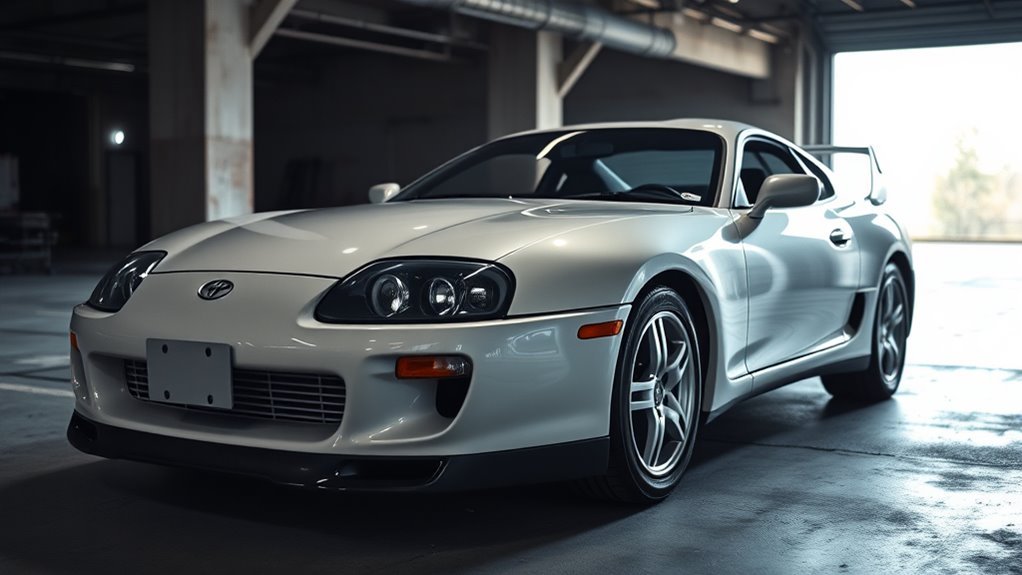
The fourth-generation Supra is commonly called the A80 or Mk4. JZA80 is one of the key Toyota chassis-family identifiers associated with this generation. The A80 used 3.0-liter 2JZ-family straight-six engines, including naturally aspirated and twin-turbocharged versions depending on market and specification.
For the U.S. market, Toyota rated the 2JZ-GTE Turbo at 320 hp and paired manual Turbo models with a six-speed transmission. Those facts help identify the major configuration, but they still do not make “A80” a universal replacement-part number.
When evaluating an A80, record whether the car is naturally aspirated or turbocharged, the transmission type, model year, market and evidence of modifications. A highly modified car may no longer match assumptions based on its original chassis code, so compare the physical components with the documentation before ordering expensive parts.
For ownership planning beyond code identification, prioritize documented maintenance and correct parts matching to support long-term reliability.
Is A90 the Real Chassis Code for the Mk5 GR Supra?
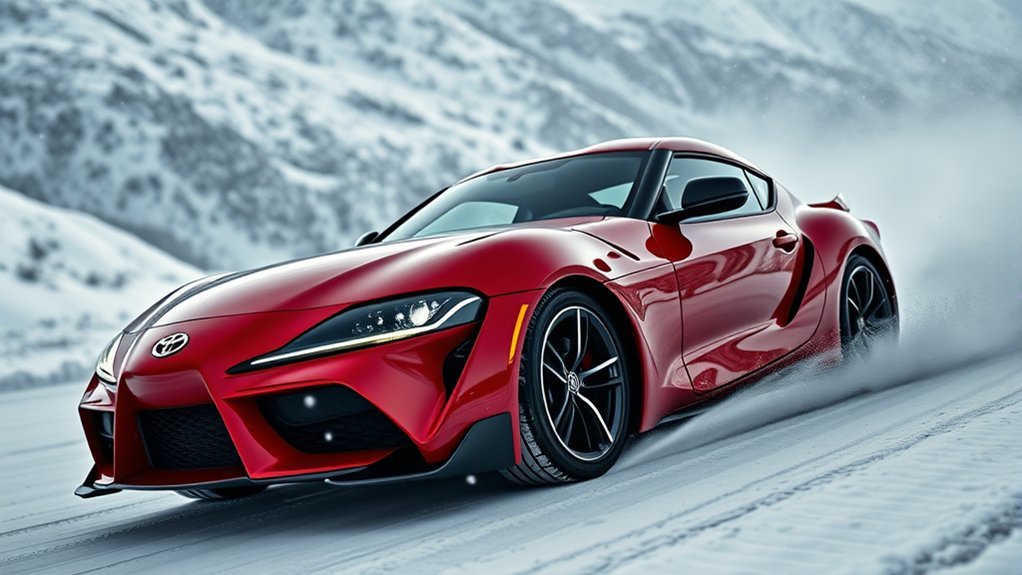
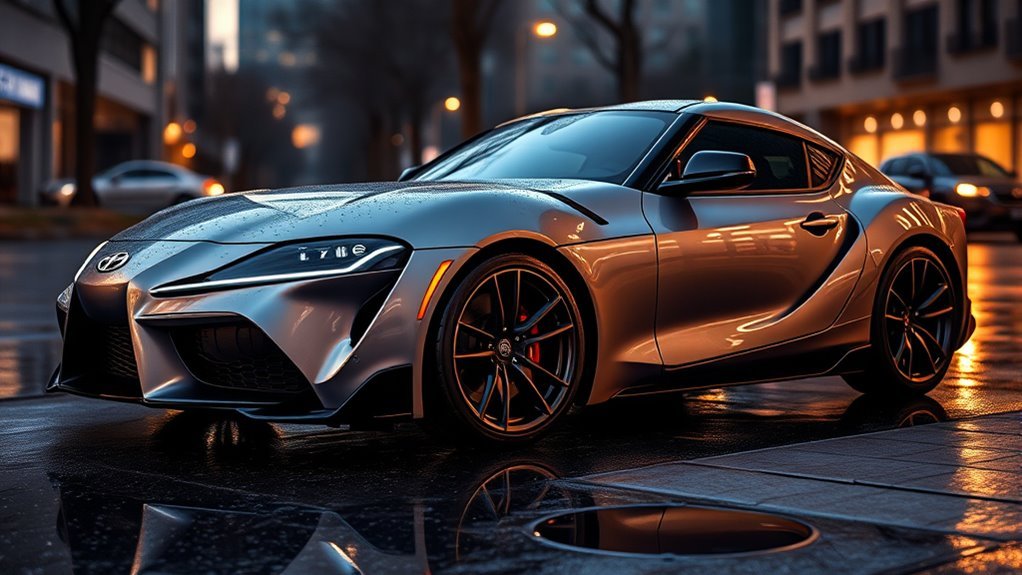
A90 is the familiar enthusiast and Toyota lineage term for the fifth-generation GR Supra, but it should not be treated as the car’s complete technical identifier. The fifth-generation platform uses the J29 series with DB model codes. It was developed alongside the BMW Z4, and that shared engineering explains why some technical documentation follows BMW-style code conventions.
Toyota also used A91 in names such as the A91 Edition and A91-MT Edition. That makes A91 useful when discussing those special editions, but it does not create a simple rule in which every fifth-generation car can be identified for parts by A90 or A91 alone.
How J29 and DB Codes Affect Parts Sourcing
For fifth-generation replacement or performance parts, identify the model year, engine, transmission, market and relevant DB/VIN information. A catalog listing that merely says “A90 Supra” may cover several configurations, so verify its application chart before purchase.
- A90: Common fifth-generation Supra shorthand and lineage term.
- A91: Used by Toyota in fifth-generation special-edition naming.
- J29: Fifth-generation technical/platform-series identifier.
- DB codes: More specific fifth-generation model identifiers that vary with configuration and market.
The fifth-generation GR Supra was developed with BMW and shares major architecture with the BMW Z4, but shared architecture does not make every component interchangeable. Confirm the Toyota application or an explicit cross-reference before installing a BMW-listed component on a Supra.
What Engines Does the Fifth-Generation GR Supra Use?
Fifth-generation 2.0-liter GR Supras use BMW B48-family turbocharged four-cylinder engines, while 3.0-liter cars use B58-family turbocharged inline-sixes. Exact engine suffixes and availability differ by model year and market. In the United States, Toyota’s 2026 final-production-run lineup used the 3.0-liter turbocharged inline-six.
Toyota designated the 2026 model year as the final production run for the fifth-generation GR Supra. That makes production year especially important when comparing late Mk5 trims, special editions and replacement components.
How to Identify a Supra Before Ordering Parts
The safest identification process starts broad and becomes more specific. A generation name tells you where to begin; it should not be the final proof of compatibility.
- Identify the generation: A40/A50, A60, A70, A80 or fifth-generation GR Supra.
- Record the model year and market: Equipment and engines differ between Japan, North America, Europe and other regions.
- Read the complete vehicle identification information: Use the VIN and, where applicable, the Toyota frame/model information rather than copying only the generation number.
- Confirm the engine and transmission: These can change mechanical, electrical and drivetrain fitment within one generation.
- Compare the catalog application: The seller or manufacturer should explicitly list the relevant year, engine, transmission or chassis/model identifier.
- Check modified cars physically: Engine swaps, transmission conversions, brake upgrades and suspension changes can make the original code insufficient for the installed parts.
This approach matters most on A70, A80 and fifth-generation cars because enthusiasts frequently refer to them only by broad labels such as “Mk3,” “Mk4” or “A90.” Those names are useful in conversation but are not a substitute for vehicle-specific fitment data.
[Products Worth Considering]

This anti-theft license plate screw kit helps secure front or rear plates with a tamper-proof design that resists common removal tools. Made from rustproof 304 stainless steel, it is built for durable outdoor use while helping reduce plate vibration and paint scratching. The kit includes screws, nuts, caps, washers, a screwdriver, and nylon plugs for broad compatibility with cars, trucks, motorcycles, and trailers.

This license plate screw kit provides a complete, rustproof mounting solution for securing front and rear plates on most vehicles. Made from stainless steel with included washers, foam pads, covers, and inserts, it helps prevent corrosion, reduce vibration, and create a clean finished look. The self-tapping design makes installation quick and simple with basic tools.
Reading VINs, Frame Codes and Model Information
A VIN, Toyota frame/model code and enthusiast generation name serve different purposes. For older Supras, the full Toyota identifier can reveal more than the broad A70 or A80 family name. For the fifth generation, A90 is not the technical identifier you should expect to control a parts lookup; J29/DB and vehicle-specific data are more useful.
If you are verifying a used car, compare the identification plate or label, registration/title documentation, VIN history, installed engine and transmission, and service records. A code can establish what a car was built as, but it cannot prove that an older or modified Supra still retains its original drivetrain.
[Products Worth Considering]

Genuine Toyota Parts/Tools Kit Includes: 1 of part# 09120-14011 -- 1 of part# 09169-14010 -- 1 of part# 09168-14010 These are the tools and tool bag for the 1993-1998 Supra...
Frequently Asked Questions
What are the Toyota Supra model codes?
The main Supra generation shorthand is A40/A50 for the first generation, A60 for the second, A70 for the third and A80 for the fourth. The fifth-generation GR Supra is commonly called A90, while its technical identifiers use the J29/DB family.
Is A90 the real chassis code for the Mk5 Supra?
A90 is a widely used fifth-generation Supra lineage and enthusiast term. For technical identification, the Mk5 uses the J29 series and DB model codes. Use the vehicle’s full identification data when ordering parts.
What is the chassis code for a Mk4 Supra?
The fourth-generation Supra is commonly called A80, and JZA80 is a key Toyota chassis-family identifier associated with the generation. Exact engine, transmission, market and production details should still be confirmed separately.
What does JZA80 mean on a Supra?
JZA80 is a Toyota chassis-family identifier associated with the fourth-generation Supra and its JZ-series engine platform. It is more specific than simply saying “Mk4” or “A80,” but additional vehicle details are still needed for many parts.
Can I order Supra parts using only A70, A80 or A90?
Do not rely on the broad generation name alone for expensive or safety-critical components. Confirm the model year, market, VIN or frame/model information, engine, transmission and the part manufacturer’s application listing.
What engines are used in the fifth-generation GR Supra?
Fifth-generation 2.0-liter GR Supras use BMW B48-family turbocharged four-cylinder engines, while 3.0-liter models use B58-family turbocharged inline-sixes. Exact versions and availability vary by model year and market.
Final Thoughts
Supra model codes are most useful when you treat them as the first step in identification rather than the final answer. A40/A50, A60, A70 and A80 organize the earlier generations, while the fifth-generation GR Supra adds the important distinction between the familiar A90 name and the technical J29/DB identifiers.
Before buying a car or ordering a component, verify the complete vehicle information, engine, transmission, market and any modifications. That extra check reduces expensive fitment mistakes and gives you a clearer picture of what the car actually is. Once the correct configuration is established, use that information when you maintain your Supra or compare replacement parts.


[…] For deeper chassis-code detail, see the Supra model-code guide from A40 to A90. […]