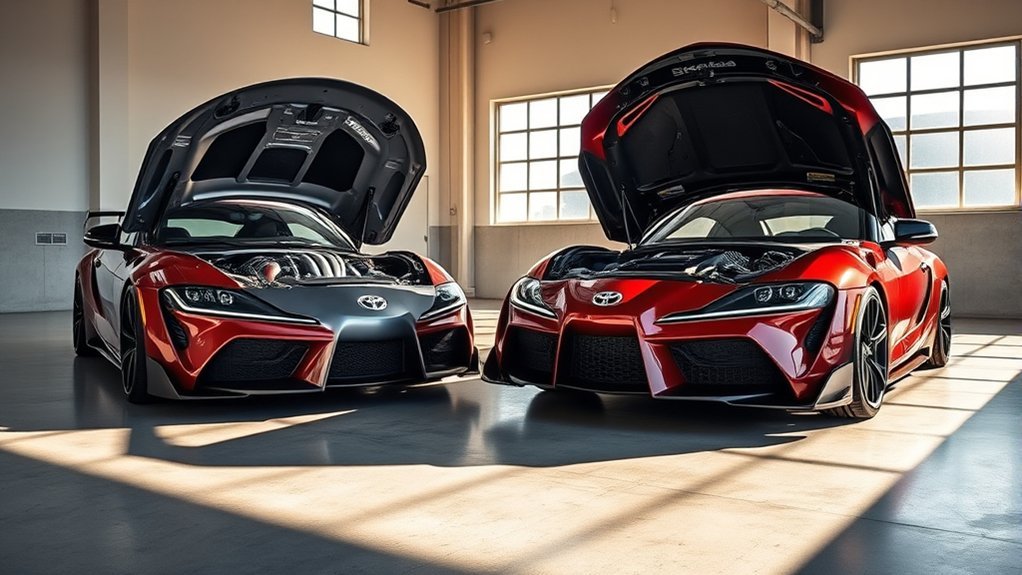
The Toyota Supra offers a choice between an inline-four and an inline-six engine. The 2.0-liter turbo-four delivers 255 horsepower, prioritizing fuel efficiency with an EPA rating of 25 mpg city, 32 highway and 28 combined. In contrast, the 3.0-liter turbo-six packs 382 horsepower, excelling in performance with a swift 0-60 mph in 3.9 seconds. While the 2.0 offers agility and daily usability, the 3.0 provides thrilling dynamics and luxury features. Explore further to see which Supra truly fits your driving style.
Key Specifications of Each Engine
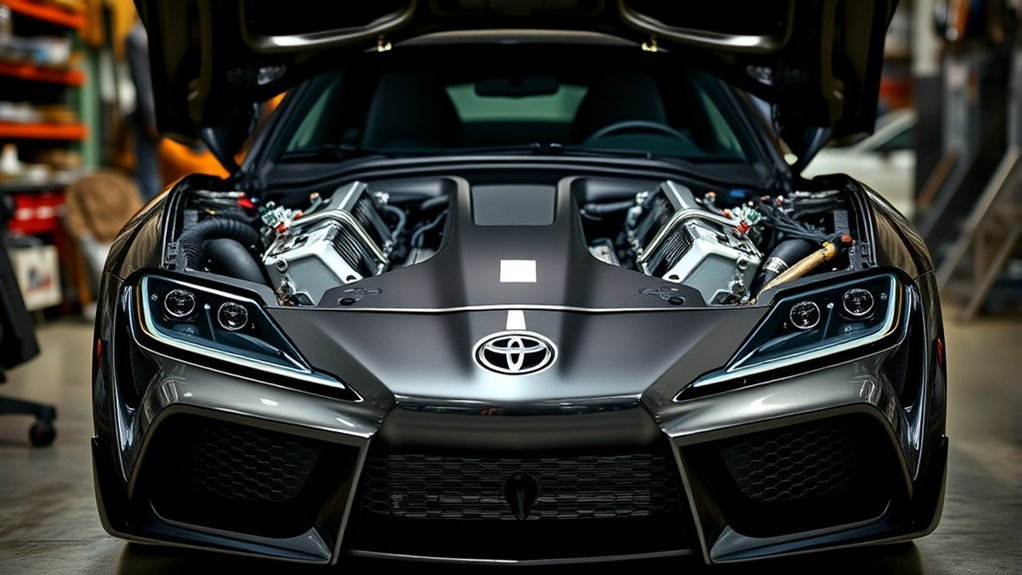
When comparing the engines of the 2021 Toyota Supra, you’ll notice distinct specifications that cater to different driving preferences. The Supra 2.0 features a 2.0-liter turbocharged inline-four engine, delivering 255 horsepower and 295 lb-ft of torque. Its lighter weight of 3,181 pounds enhances agility, achieving 0-60 mph in just 5.0 seconds. On the other hand, the 3.0 boasts a 3.0-liter turbocharged inline-six engine, producing 382 horsepower and 368 lb-ft of torque, with a quicker 0-60 time of 3.9 seconds. While both engines share an 8-speed automatic transmission, the turbo benefits of the inline-six provide a more powerful driving experience. Ultimately, each engine’s characteristics cater to varied desires for performance and efficiency.
Performance Metrics Comparison
The distinct specifications of the 2021 Toyota Supra engines lead to notable differences in performance metrics that can markedly influence your driving experience. The inline-four offers a balance of agility and economy, while the inline-six delivers raw power and speed. Here’s a snapshot of their performance:
| Model | Horsepower | 0-60 mph | Torque |
|---|---|---|---|
| Supra 2.0 | 255 | 5.0 sec | 295 lb-ft |
| Supra 3.0 | 382 | 3.9 sec | 368 lb-ft |
| Top Speed | 155 mph | ||
| MPG (Combined) | 30 | ||
| Weight (lbs) | 3,181 |
The turbocharger benefits of the 3.0 engine, coupled with superior engine tuning, make it a thrilling choice for those craving speed, while the 2.0 excels in everyday efficiency.
How Does Weight Affect Handling?
Weight plays an essential role in handling dynamics, especially in the Toyota Supra lineup. When you consider how a lighter car enhances weight distribution, you’ll notice quicker turn-in responses and improved cornering stability. Plus, less weight means better acceleration and braking performance, making every drive more engaging and precise.
Weight Distribution Impact
While you might not immediately think about weight when considering a car’s performance, it plays an essential role in handling dynamics. The 2021 Toyota Supra 2.0, weighing 220 pounds less than the 3.0, showcases significant weight dynamics that enhance agility. Its lighter frame leads to improved weight distribution, allowing for quicker turn-in and more precise handling. Toyota quotes a near 50:50 weight distribution for both versions, so the 3.0’s extra weight shows up more in turn-in feel than in balance. Although both models benefit from a low center of gravity, the 2.0’s reduced weight gives it a nimble feel on the road. Meanwhile, the 3.0’s adaptive suspension manages weight transfer, but it can’t quite match the 2.0’s sharp handling characteristics.
Cornering Stability Benefits
When considering cornering stability, lighter vehicles like the 2021 Toyota Supra 2.0 excel due to their ability to respond quickly and precisely during turns. This agility enhances your cornering dynamics, providing you with a more engaging driving experience.
| Feature | Supra 2.0 | Supra 3.0 |
|---|---|---|
| Weight | 3,181 lbs | 3,401 lbs |
| Turn-in Response | Quicker | Improved with suspension |
| Cornering Confidence | High | Enhanced with LSD |
| 0–60 mph (Toyota) | 5.0 seconds | 3.9 seconds |
The Supra 2.0’s reduced weight not only delivers stability enhancement but also allows for sharper cornering at high speeds.
Acceleration and Braking Response
As you accelerate in the 2021 Toyota Supra, the difference in weight between the 2.0 and 3.0 models becomes immediately apparent. The 2.0, lighter by 220 pounds, offers sharper acceleration dynamics, reaching 0-60 mph in just 5.0 seconds. This nimbleness translates into improved agility in tight corners, making the drive exhilarating. However, the 3.0’s heavier build comes with advanced braking technology, featuring larger four-piston brakes and adaptive suspension. This setup enhances braking response, especially under heavy loads, providing stability when pushing limits. While the 2.0 excels in quick, responsive turns, the 3.0 thrives in high-performance scenarios, balancing acceleration and braking to suit your preferences.
What Driving Experiences Do Each Supra Offer?

What kind of driving experience can you expect from each Toyota Supra model? The 2021 Toyota Supra 3.0, with its turbocharged inline-six engine, delivers exhilarating driving dynamics, achieving 0-60 mph in just 3.9 seconds. Its 382 horsepower and adaptive suspension create unmatched engine responsiveness, making it a thrilling choice for performance enthusiasts. In contrast, the 2021 Supra 2.0 offers a lighter, agile experience with its inline-four engine, generating 255 horsepower and reaching 0-60 mph in 5.0 seconds. While it may lack raw power, it still provides sharp handling and meets around 95% of the 3.0’s performance metrics.
Which Toyota Supra Model Offers the Best Value?
Finding the right balance between performance and affordability can be challenging, especially with the Toyota Supra lineup. If you’re looking for the best value, the 2021 Supra 2.0 stands out as an excellent budget option. It offers a sharp 0-60 mph time of 5.0 seconds and 255 horsepower, all while being 220 pounds lighter than the 3.0 model. This enhanced agility leads to a more nimble driving experience, which many enthusiasts crave. Plus, with an EPA rating of 28 mpg combined, it’s the economical choice for everyday driving. While the 3.0 delivers more power and advanced features, the value comparison clearly favors the Supra 2.0 for those prioritizing usability without sacrificing sporty performance.
Available Technology and Features in Each Model
While both the 2021 Toyota Supra 2.0 and 3.0 models feature impressive technology, they cater to different levels of luxury and performance. The 3.0 model boasts a 10-speaker audio system, delivering superior audio enhancements compared to the 2.0’s four-speaker setup. Both models come equipped with an 8.8-inch infotainment system and essential safety features like adaptive cruise control and lane departure warning, ensuring modern connectivity and protection.
However, the 3.0 elevates the experience with luxury options, including full leather upholstery and advanced active safety systems. A newly available safety package enhances both models with Dynamic Radar Cruise Control, Blind Spot Monitor, and Rear Cross Traffic Alert, creating a bridge in technology while the 3.0’s adaptive suspension refines handling and ride quality.
Which Supra Suits Your Driving Style?
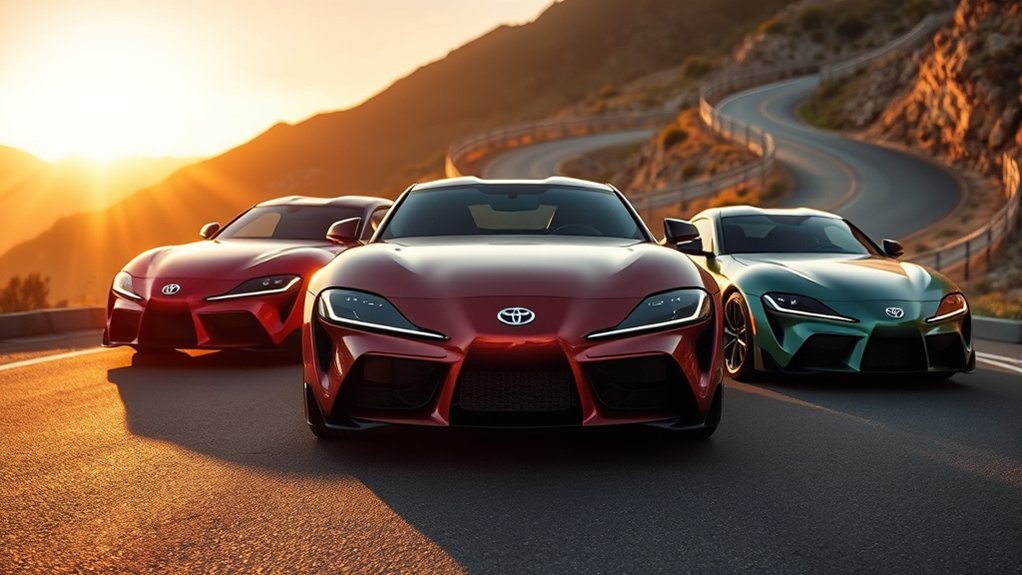
When choosing between the Toyota Supra models, consider how you prioritize performance and daily usability. If you crave exhilarating speed and advanced features, the 3.0 might be your best fit. However, if you prefer a nimble, budget-friendly ride that excels in everyday driving, the 2.0 offers a compelling alternative.
Performance Preferences
Choosing the right Toyota Supra for your driving style can greatly enhance your experience on the road. If you’re leaning towards performance and agility, consider these factors:
- Engine Power: The Supra 3.0 offers 382 horsepower, perfect for performance enthusiasts craving speed.
- Handling: The lighter Supra 2.0, weighing 220 pounds less, provides sharper handling for agile driving in tight corners.
- Acceleration: With a 0-60 mph time of 3.9 seconds, the Supra 3.0 delivers exhilarating thrills.
- Fuel Efficiency: The Supra 2.0 is EPA-rated at 28 mpg combined, ideal for those wanting budget-friendly performance.
Ultimately, your choice depends on whether you prioritize raw power or nimble agility. Both options promise an engaging driving experience tailored to your preferences.
Daily Driving Considerations
For those managing daily commutes, understanding which Toyota Supra best fits your lifestyle is essential. If you’re maneuvering urban commuting, the 2021 Supra 2.0 shines with its turbocharged inline-four engine, offering a budget-friendly option rated at 28 mpg combined. Weighing 220 pounds less than the 3.0, it delivers sharper handling for tight city corners. Conversely, the 3.0 impresses with 382 horsepower, perfect for weekend thrills but less efficient at an EPA-rated 25 mpg combined.
| Feature | Supra 2.0 | Supra 3.0 |
|---|---|---|
| Fuel Efficiency | 28 mpg combined (EPA) | 25 mpg combined (EPA) |
| Weight | 3,181 lbs | 3,401 lbs |
| 0-60 mph | 5.0 seconds | 3.9 seconds |
| Handling | Agile | Sporty |
| Ideal Use | Daily driving | Weekend fun |
Frequently Asked Questions
Will the 2026 Supra Have a 5.0 L V-8?
Toyota hasn’t confirmed a 5.0-liter V8 for the 2026 Supra yet. If introduced, you’d enjoy V8 advantages like increased engine performance, but it might impact the Supra’s signature lightweight dynamics and handling.
Conclusion
In choosing between the inline-six and inline-four Toyota Supra, consider what you value most in your driving experience. Do you crave raw power and performance, or are you drawn to efficiency and agility? Each engine offers unique advantages, catering to different preferences and driving styles. Ultimately, your choice will shape not just your journey but your connection to the road. So, which Supra will you take for a spin?
Sources
- FuelEconomy.gov: 2021 Toyota models — GR Supra 2.0 EPA 25/32/28 mpg and 3.0 EPA 22/30/25 mpg.