Last updated: July 31, 2026
How this guide was checked: This guide compares Toyota GR Supra owner documentation with Toyota U.S. model-year and engineering materials for the 2020–2026 fifth-generation car. Toyota lists more than one 2026 owner’s manual by production date, so match the instructions to your vehicle’s build information or VIN. This is a documentation-based guide and does not claim instrumented or closed-course testing.
Quick Answer
The main whole-vehicle Toyota GR Supra drive modes are Normal and Sport. Normal is selected at startup. The owner’s manual calls the customizable setup SPORT INDIVIDUAL, while recent Toyota model-year materials often shorten the label to Individual. Manual shifting, Traction mode, VSC OFF, Hairpin+, and Launch Control are separate functions. Eco and Sport+ are not listed as stock U.S.-market GR Supra modes. Toyota’s 2023 launch material uses the term Track mode for a retuned performance-oriented stability calibration, but the driver-facing owner manual presents a short press of the VSC control as Traction mode, not as a third Normal/Sport console mode.
This guide covers the 2020–2026 U.S.-market fifth-generation GR Supra. Its controls are easier to understand when you separate three systems. Normal, Sport, and the customizable Individual setup change the car’s broader driving calibration. The automatic transmission’s M position and paddle shifters control gear selection. The VSC button changes traction and stability intervention.
Toyota’s GR Supra Owner’s Manual treats these as related but separate functions. Toyota also lists additional 2026 manuals for later production dates through its 2026 GR Supra manual portal. Use the manual that matches your exact vehicle.
Key Takeaways
- Normal and Sport are the core whole-vehicle drive modes shown in the owner manual.
- SPORT INDIVIDUAL, also called Individual in recent Toyota materials, customizes supported settings.
- Manual shifting does not automatically change every vehicle system to Sport.
- Sport does not automatically turn off Vehicle Stability Control.
- Traction mode and VSC OFF are separate settings with different safety effects.
- Track mode appears in Toyota’s 2023 engineering material, but it is not shown in the owner manual as a third Normal/Sport console button.
- Hairpin+ was introduced for 2023 GR Supra 3.0 models.
Toyota GR Supra Drive Modes at a Glance
Use Normal for commuting, traffic, highway cruising, wet roads, and unfamiliar routes. Normal is the startup default and provides the most balanced response.
Use Sport when you want a more responsive powertrain and the sport calibration of supported steering, suspension, display, and cruise-control functions. Sport changes response and behavior; it does not create more tire grip or automatically disable VSC.
Use SPORT INDIVIDUAL or Individual when your vehicle lets you combine supported settings. The exact menu choices depend on model year, transmission, market, production date, and installed equipment.
At a Glance
| Control | What It Does | Best Use | Important Limit |
|---|---|---|---|
| Normal | Uses balanced tuning for everyday comfort, response, and efficient driving. | Commuting, traffic, highways, rain, and unfamiliar roads. | It cannot overcome poor tires, standing water, ice, or excessive speed. |
| Sport | Applies a more dynamic calibration to supported powertrain, chassis, steering, display, and cruise functions. | Responsive road driving and closed-course instruction. | Sport does not automatically mean VSC OFF. |
| SPORT INDIVIDUAL / Individual | Lets the driver combine supported standard and sport settings. | Drivers who want a mixed setup. | Toyota’s label and the available choices vary by model year and equipment. |
| M and Paddle Shifters | Give the driver manual control of the automatic transmission’s gears. | Engine braking, winding roads, and deliberate gear selection. | This is a transmission setting, not a separate whole-vehicle drive mode. |
| Traction Mode | Changes VSC operation to prioritize forward movement on certain loose or snow-covered surfaces. | Brief use in deep snow, slush, loose ground, or with snow chains. | Driving stability is reduced compared with normal VSC operation. |
| VSC OFF | Deactivates Vehicle Stability Control. | Special controlled situations only. | Stability is reduced during acceleration and cornering. |
| Track Terminology | Toyota’s 2023 launch material uses “Track mode” for a retuned stability and torque-control calibration. | Understanding Toyota’s source-dependent wording. | The owner manual does not show a separate Track button beside Normal and Sport; a short VSC-button press displays TRACTION. |
| Hairpin+ | Changes torque-control behavior in specific tight, uphill turns. | High-friction uphill hairpins on applicable 3.0 models. | Toyota introduced it for 2023 GR Supra 3.0 models; confirm availability for your car. |
| Launch Control | Coordinates an automatic-model standing start under specific conditions. | Controlled closed-course use on a dry, high-grip surface. | It is not a drive mode, causes extra wear, and must not be used during break-in. |
Why Do Toyota Sources Say Individual, Traction, and Track?
Toyota uses different labels depending on whether you are reading the owner manual or model-year marketing. The owner manual groups Normal and Sport under driving modes and describes the configurable setup through “Configure SPORT INDIVIDUAL.” Recent Toyota model-year materials commonly summarize the choices as Normal, Sport, and Individual.
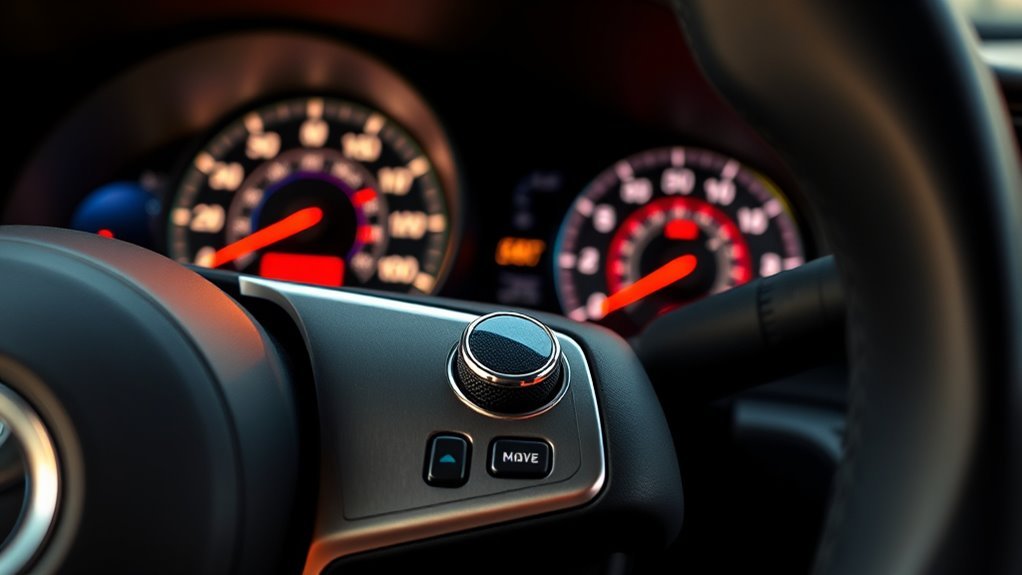
The VSC button belongs to the stability-control system. A short press activates Traction mode and displays TRACTION in the instrument cluster. Holding the button activates VSC OFF.
Toyota’s 2023 U.S. launch release also says a Track mode calibration was retuned for more controllable performance driving. That wording describes the performance-oriented stability and torque-control strategy; it does not establish a third console drive-mode button beside Normal and Sport. When identifying what your car is doing, use the label shown in its instrument cluster and the owner manual for its production date.
What Changes Between Normal and Sport Mode?
Normal uses balanced tuning intended to combine everyday comfort, predictable response, and efficient driving. The car selects Normal automatically when it enters drive-ready state.
Sport applies a more dynamic calibration. Toyota’s owner documentation lists the following systems as examples of what the Sport button can affect:
- Engine characteristics
- Automatic-transmission behavior
- Adaptive variable suspension, where equipped
- Steering
- Instrument-cluster display
- Cruise-control behavior
On applicable models, Sport also deactivates the Auto Start/Stop function while the sport setting is active. Toyota’s product materials describe a more prominent exhaust sound and more performance-oriented shift behavior. Exact operation depends on model year, transmission, production date, and equipment.
Sport does not add horsepower beyond the engine’s rated output. It changes how supported systems respond to driver inputs. Confirm the selected mode in the instrument cluster rather than relying only on steering feel, engine sound, or transmission behavior.
For detailed activation and configuration steps, see the site’s Toyota Supra Sport mode guide.
[Products Worth Considering]

This LivTee license plate screw kit provides a secure, rust-resistant mounting solution for front and rear plates on most U.S. vehicles. Made from premium stainless steel with included washers, foam pads, screw caps, and optional nylon inserts, it helps prevent rattling, loosening, and corrosion for a cleaner, longer-lasting installation.

This wireless CarPlay screen adds modern smartphone connectivity to almost any vehicle with easy plug-and-play installation. It supports Apple CarPlay and Android Auto, online maps, voice control, phone mirroring, and multiple audio output options for safer, more convenient driving. The included night vision backup camera and OTA updates help improve visibility, compatibility, and long-term performance.

The PixelMan PMD2A-S is a rearview backup camera designed to improve reversing visibility with crisp 1080P AHD output, a wide 170-degree viewing angle, and enhanced night vision. Its alloy housing, IP69 waterproof construction, and flexible HD/AHD switching help deliver reliable performance in harsh weather and low-light conditions. Built for easier installation with included brackets and RCA connectivity, it suits cars, SUVs, RVs, and other vehicles with compatible screens.
Does the Toyota GR Supra Have Eco, Sport+, or Track Mode?
Eco and Sport+ are not listed as stock selectable U.S.-market GR Supra drive modes in Toyota owner documentation. Menus with names such as Eco Pro or Sport+ may appear on cars that have been coded or otherwise modified, but they should not be presented as standard Toyota GR Supra settings.
Track mode requires a more careful answer. The owner manual does not show Track as a third primary drive mode beside Normal and Sport. It shows Traction mode as the short-press VSC setting and displays TRACTION in the instrument cluster. However, Toyota’s official 2023 launch material used “Track mode” when describing a retuned stability and torque-control calibration. Both statements can be true because the sources are describing the system from different perspectives.
For calmer and potentially more efficient driving, leave the car in Normal and use smooth accelerator inputs. Sport prioritizes a more responsive feel and may increase fuel use depending on the transmission’s behavior and how the car is driven.
On a closed course, begin with Sport while leaving VSC active. Change stability intervention only after reviewing the exact owner manual and following the instructor’s direction.
[Products Worth Considering]

This pure sine wave inverter converts 12V DC battery power into stable 120V AC power for off-grid and backup applications. It delivers reliable output for sensitive electronics, offers a clear LCD display for monitoring, and includes multiple connection options with remote control convenience. Built-in protections help safeguard connected devices and support dependable use in RVs, trucks, and outdoor setups.

These CAR PASS floor mats provide universal-fit protection for SUVs, vans, sedans, and trucks with a stylish rainbow-inspired look. The anti-slip nibbed backing helps keep each mat securely in place, while the waterproof design makes cleanup quick and easy after dirt, mud, or spills. Designed as a set of four, they offer a practical blend of everyday protection, easy maintenance, and eye-catching style.
How Do Sport and Manual Transmission Controls Work?
On an automatic GR Supra, Sport can change transmission behavior along with other supported systems. Toyota does not provide one fixed shift RPM for every situation because response changes with vehicle speed, load, accelerator position, road grade, and driving style.
The selector lever’s M position is separate from the Sport button. Move the selector from D into M when you want continuous manual gear control. You can then shift with the selector or the steering-wheel paddles. The transmission accepts a requested shift only when engine and road speed are suitable.
Using a paddle while the selector remains in D activates temporary manual control. After a period of conservative driving without acceleration or another paddle request, the transmission can return to automatic operation. In M, paddle control remains active continuously.
A GR Supra equipped with the six-speed manual transmission does not use the automatic car’s M position. It has a physical manual gearbox and an intelligent Manual Transmission rev-matching function. On applicable manual models, the iMT function can be switched off through the customizable Sport or Individual settings.
Is Launch Control a GR Supra Drive Mode?
No. Launch Control is a separate automatic-transmission function, not another Normal, Sport, or Individual mode. The owner manual requires specific operating conditions and uses Sport together with Traction mode to prepare the system.
Launch Control is intended for a dry surface with good traction after the engine reaches operating temperature. It places a heavy load on the transmission and other components, must not be used during the vehicle’s break-in period, and should not be used repeatedly at short intervals. Follow the exact procedure and cooldown instructions in the owner manual for your model year and production date. Use it only in a legal, controlled area with adequate space.
Does Sport Mode Disable Traction or Stability Control?
No. Selecting Sport does not by itself mean that Vehicle Stability Control is disabled. The Sport button and VSC button operate different systems.
A brief press of the VSC control activates Traction mode. Toyota describes this as a VSC variation intended to improve forward movement on certain loose or snow-covered surfaces. It can be useful briefly when starting in deep snow, loose ground, slush, or with snow chains. Driving stability is more limited than it is with normal VSC operation.
Holding the control activates VSC OFF. With VSC deactivated, stability is reduced during acceleration and cornering. Reactivate VSC as soon as the special situation has passed.
For a deeper explanation of ABS, traction control, VSC, and the active rear differential, see the site’s Toyota Supra stability-control guide.
Safety Warning
Sport, Traction mode, VSC OFF, Hairpin+, and Launch Control do not increase available tire grip. Slow down for rain, cold pavement, snow, or standing water. Keep the correct Toyota Supra tire pressures, use tires suited to the conditions, and leave VSC active for normal public-road driving.
Which Setting Is Best for Each Driving Situation?
- Daily commute: Use Normal for smooth, balanced response.
- Highway cruising: Use Normal unless you need the sharper response of Sport for a specific maneuver.
- Spirited road driving: Use Sport on a suitable road while keeping VSC active.
- Rain or cold pavement: Use Normal, reduce speed, and keep all stability systems active.
- Deep snow or loose ground: Start with Normal. Use Traction mode briefly only when extra wheel movement is needed to get the car moving.
- Closed-course instruction: Begin in Sport with VSC active. Follow the instructor before changing any stability setting.
- Unfamiliar driver: Leave the vehicle in Normal and explain the separate Sport and VSC controls before driving.
[Products Worth Considering]

Customized Design: Our Glossy Black Driving Mode Switch Panel Control Button (OFF/Sport /ECO PRO/P) Button is specifically tailored compatible with BMW 1 Series F20/F21 (2012-2018), 2 Series F22/F23 (2014-2018), 3 Series F30/F31/F34 (2013-2019), 4 Series F32/F33/F36 (2014-2019).

Direct Fit

Vehicle Specific
What Is Hairpin+ on a 2023 GR Supra 3.0?
Toyota introduced the Hairpin+ function for 2023 GR Supra 3.0 models, including automatic- and manual-transmission versions. It was designed for tight uphill bends with a gradient above 5 percent and a high-friction road surface. The control strategy allows a greater difference in wheel speed between the left and right rear tires, which can help the car rotate through that specific type of turn.
Hairpin+ should not be described as another button beside Normal and Sport. It is a model-specific control function operating within the car’s chassis and torque-management systems. It does not replace safe speed selection or the driver’s responsibility to maintain control. Confirm availability in the owner documentation for your exact model year and equipment.
Frequently Asked Questions
What drive modes does the Toyota GR Supra have?
The owner manual presents Normal and Sport as the core whole-vehicle driving modes. Normal is selected automatically at startup. SPORT INDIVIDUAL lets you customize supported settings, and recent Toyota model-year materials often shorten that label to Individual.
How do Normal and Sport modes differ?
Normal provides balanced tuning for daily driving. Sport applies a more dynamic calibration and can affect engine characteristics, the automatic transmission, adaptive suspension, steering, the instrument display, cruise-control behavior, Auto Start/Stop operation, and other supported functions. Exact changes depend on model year and equipment.
Does the GR Supra have Eco mode?
Eco is not listed as a stock selectable U.S.-market GR Supra drive mode. Use Normal and smooth accelerator inputs when you want calmer, potentially more efficient driving. Eco Pro menus found on some cars may result from aftermarket coding.
Does the Toyota GR Supra have Track mode?
Track is not shown in the owner manual as a third primary drive mode beside Normal and Sport. Toyota’s 2023 launch material did use the term Track mode for a retuned performance-oriented stability calibration. In the driver-facing owner manual, a short press of the VSC control activates Traction mode and displays TRACTION.
Does Sport mode turn off traction control?
No. Sport mode and the VSC control are separate. A brief press of the VSC control activates Traction mode, while holding it activates VSC OFF. Selecting Sport alone does not mean stability control is disabled.
What is SPORT INDIVIDUAL?
SPORT INDIVIDUAL is a customizable driving configuration. On supported vehicles, open Toyota Supra Command and select My Vehicle, Vehicle settings, and Configure SPORT INDIVIDUAL. Recent Toyota materials may call the customizable selection simply Individual. Available settings vary by equipment and production date.
Is Manual mode a GR Supra drive mode?
Not in the same sense as Normal or Sport. On automatic models, M and the paddle shifters control gear selection. A six-speed-manual GR Supra uses a physical manual gearbox and may include an iMT rev-matching function.
Is Launch Control a GR Supra drive mode?
No. Launch Control is a separate automatic-transmission function that uses specific Sport and Traction settings under controlled conditions. It causes additional component wear, must not be used during break-in, and should be operated only by following the exact owner-manual procedure.
Which mode is best for rain or snow?
Use Normal with VSC active for ordinary rain, cold roads, or light winter conditions. Traction mode may help briefly when starting in deep snow or loose material, but it provides less stability than normal VSC operation.
Official Sources Used
- Toyota Owners: 2026 GR Supra manuals and warranties
- Toyota USA Newsroom: 2023 GR Supra manual transmission, Hairpin+, and drive-dynamics updates
- Toyota USA Newsroom: 2026 GR Supra MkV Final Edition
Conclusion
The GR Supra’s controls make sense once they are separated by purpose. Normal and Sport change the broader driving calibration. SPORT INDIVIDUAL, or Individual in recent Toyota materials, lets the driver combine supported settings. M and the paddle shifters control automatic-transmission gear selection. Traction mode and VSC OFF change stability intervention. Hairpin+ and Launch Control are separate specialized functions.
Keep VSC active on public roads unless a specific low-traction situation requires brief use of Traction mode. Before changing performance or stability settings, confirm the instructions for the vehicle’s exact model year, production date, transmission, market, and equipment. For a Supra that is driven infrequently, also follow a suitable battery maintenance and charging routine.