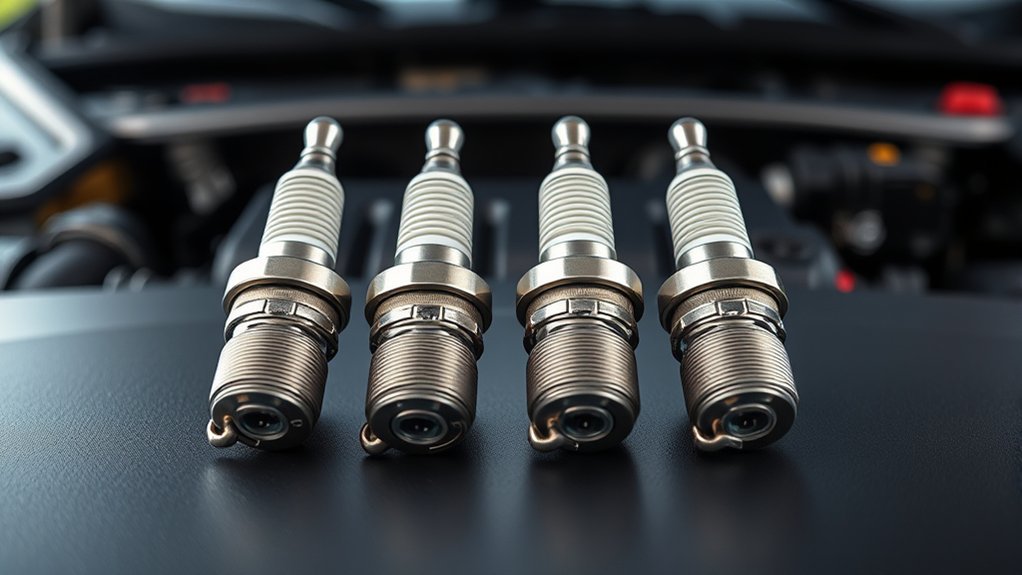
Your Toyota RAV4’s spark plugs are vital for igniting the air-fuel mixture, ensuring efficient combustion and ideal engine performance. They work alongside ignition coils to create high-voltage sparks. If they’re worn, you’ll notice issues like rough idling, difficulty starting, and reduced fuel efficiency. Selecting the right type—like iridium or platinum—is essential for longevity. Regular inspections and timely replacements can prevent further engine damage. There’s much more to take into account about maintenance and performance enhancements.
Why Spark Plugs Matter
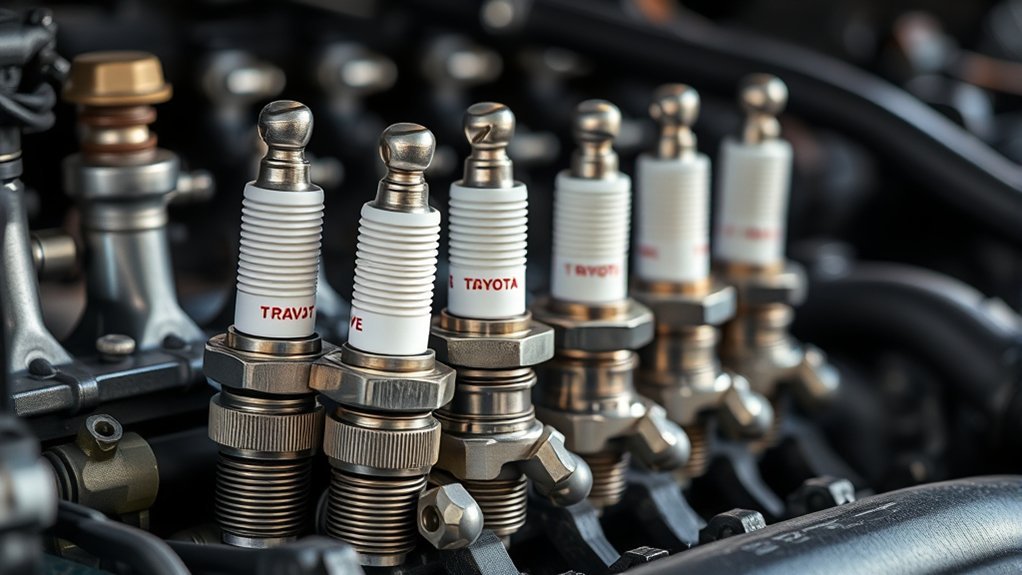
Spark plugs play an essential role in your Toyota RAV4’s performance by igniting the air-fuel mixture in the combustion chamber, enabling the engine to operate smoothly. Proper spark plug maintenance is vital; worn plugs can lead to increased fuel consumption, engine misfires, and even costly breakdowns. By replacing spark plugs every 50,000 to 100,000 miles, you guarantee peak engine performance and fuel efficiency.
The benefits of maintaining your spark plugs extend beyond just performance. Faulty plugs can cause damage to the catalytic converter due to incomplete combustion, jeopardizing your vehicle’s emissions standards. Keeping an eye out for signs of bad spark plugs—like rough idling or difficulty starting—can help you maintain overall vehicle health. By prioritizing spark plug maintenance, you empower yourself to enhance your driving experience and avoid unnecessary expenses, liberating you from the stress of unforeseen repairs.
How Spark Plugs Ignite Fuel?
Spark plugs play a critical role in igniting the fuel-air mixture inside your engine’s combustion chamber. When you turn the ignition key, the Engine Control Unit activates the ignition coils, generating a high-voltage spark that triggers combustion. This precise interaction guarantees peak engine performance and efficiency, making your drive smoother and cleaner.
Spark Plug Operation Mechanism
When the ignition key is turned, the Engine Control Unit (ECU) activates the ignition coils, sending high voltage to the spark plugs. This spark plug design is essential, as each spark plug generates a spark within milliseconds, igniting the air-fuel mixture in the combustion chamber. The ignition timing is precisely calibrated to guarantee that this process occurs at the ideal moment, maximizing combustion efficiency and energy production. If a spark plug fails, it can lead to incomplete combustion, resulting in engine misfires and diminished efficiency. Therefore, maintaining proper spark plug function is crucial for achieving optimal engine performance and fuel economy. Understanding this mechanism empowers you to appreciate the intricate workings of your Toyota RAV4.
Role of Ignition Coils
The ignition coils play a pivotal role in the combustion process by converting the car battery’s low voltage into the high voltage required to create a spark at the spark plugs. When you turn the ignition key, the Engine Control Unit (ECU) activates the ignition coils, sending a high voltage pulse to each corresponding spark plug. This guarantees the spark plugs ignite the air-fuel mixture at the precise moment for peak combustion. The spark generated occurs in milliseconds, kickstarting the engine’s power. However, if there’s a coil failure, it can result in misfires, reduced engine performance, and increased emissions due to incomplete combustion. Understanding ignition coil types and their importance helps maintain your RAV4’s efficiency.
Fuel-Air Mixture Interaction
As the ignition coils deliver high voltage to the spark plugs, a precise interaction occurs within the combustion chamber, igniting the air-fuel mixture. This ignition is triggered when you turn the ignition key, activating the engine control unit (ECU), which sends a powerful jolt to the plugs. The spark created ignites the mixture, powering the engine’s pistons in mere milliseconds. This rapid ignition is essential for maintaining combustion stability, ensuring your engine runs smoothly. Properly functioning spark plugs not only enhance combustion but also improve fuel efficiency and reduce emissions. By understanding this interaction, you empower yourself to maintain your RAV4, optimizing performance and enjoying a liberating driving experience.
Signs You Need New Spark Plugs
If you’re having difficulty starting your Toyota RAV4, it could indicate worn spark plugs. Additionally, an increase in fuel consumption may suggest that those plugs are failing to ignite the air-fuel mixture efficiently. Addressing these signs promptly can help maintain your engine’s performance and longevity.
Difficulty Starting Engine
Experiencing difficulty starting your Toyota RAV4 can often signal worn spark plugs. These components may emit a weak or inconsistent spark, leading to frustrating starting issues. If you find your engine requires multiple attempts to start, or if it runs roughly, it’s time to assess your spark plugs. Here are key signs to watch for:
- Multiple Start Attempts: If your engine struggles to ignite on the first try, spark plugs might be failing.
- Rough Idle: A shaky engine when running indicates incomplete combustion, often due to misfiring plugs.
- Poor Performance: Notice a lack of power? Worn plugs can’t efficiently ignite the air-fuel mixture, causing engine misfires.
Regular inspection and timely replacement can prevent further complications.
Increased Fuel Consumption
When spark plugs wear out, you may notice a significant increase in fuel consumption, signaling inefficient combustion of the fuel-air mixture. A faulty spark plug can cause engine misfires, which directly decreases fuel efficiency and leads to more frequent trips to the gas station. By regularly monitoring your fuel economy, you can catch spark plug issues early; a notable drop in miles per gallon (MPG) often indicates the need for replacement. Worn or damaged spark plugs result in incomplete combustion, causing your engine to consume more fuel than necessary. Replacing spark plugs before they fail is essential for maintaining ideal fuel efficiency and ensuring high combustion quality, ultimately saving you money and enhancing your driving experience.
Types of Spark Plugs for Your RAV4
What types of spark plugs should you consider for your Toyota RAV4? Choosing the right spark plug can greatly impact your vehicle’s performance. Here are the main spark plug types you should know:
- Iridium Spark Plugs: These are the go-to choice for most RAV4 models, lasting up to 100,000 miles. They offer enhanced durability and efficiency.
- Platinum Spark Plugs: Suitable for older RAV4 models, these last around 50,000 miles, providing a balance between performance and cost.
- OEM Spark Plugs: Always recommended for ideal compatibility, these spark plugs guarantee your engine runs smoothly and efficiently.
Refer to your RAV4 owner’s manual for specific spark plug materials and specifications, including gap settings. Regular inspection and timely replacement are essential to avoid misfires and maintain engine performance. Make the right choice to enjoy a liberated driving experience!
When to Replace Spark Plugs?
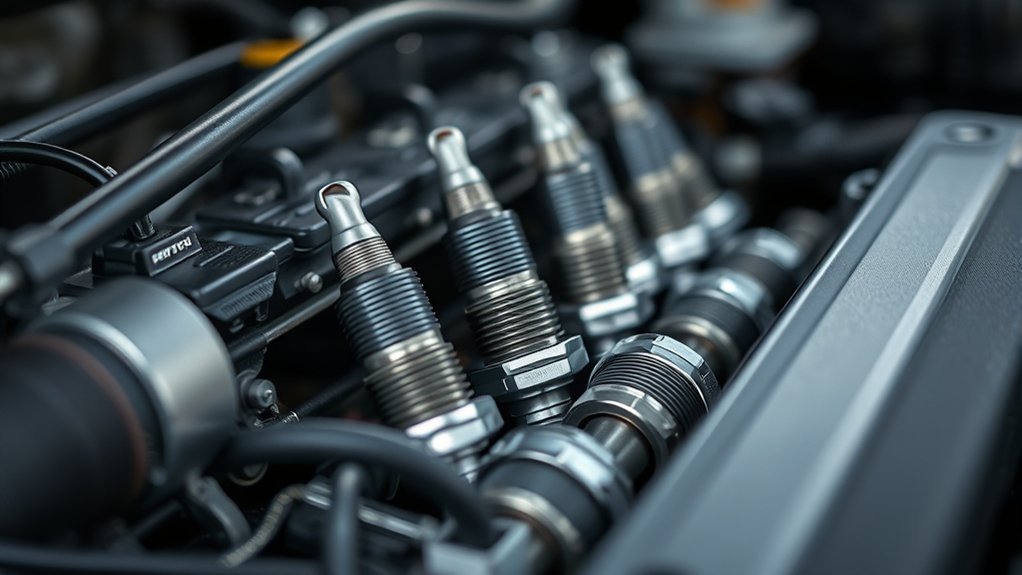
How can you tell when it’s time to replace the spark plugs in your Toyota RAV4? Typically, you should consider replacement around 80,000 miles, but driving conditions and maintenance habits can affect this spark plug lifespan. Watch for signs like difficulty starting, rough idling, or sluggish acceleration—these often indicate worn plugs.
Increased fuel consumption is another red flag. If you’re filling up more often without changing your driving habits, it’s time for an inspection. Regular check-ups are essential, even if your RAV4 seems to be running fine. This proactive approach guarantees peak engine performance and prevents unexpected breakdowns.
Don’t forget to consult your owner’s manual for specific recommendations tailored to your model. Following these maintenance tips will help you maintain your vehicle’s performance and longevity.
Top Reasons Spark Plugs Fail
Even with regular maintenance and timely replacements, spark plugs can still fail due to various factors. Understanding these reasons is essential for maintaining peak engine performance. Here are the top three causes of spark plug failure:
Even with upkeep, spark plugs can fail due to various factors, impacting your engine’s performance.
- Buildup of Oil and Carbon: This accumulation diminishes the spark plug’s ability to ignite the air-fuel mixture effectively.
- Overheating: An incorrect fuel-to-air ratio can lead to excessive heat, accelerating spark plug degradation.
- Poor Fuel Quality: Low-quality fuel contributes to rapid wear and tear, resulting in performance issues.
Additionally, a malfunctioning fuel filter can cause carbon buildup, while loose wire connections and using low-quality spark plugs can lead to premature failure. Neglecting these factors can severely impact your spark plug maintenance routine and overall engine performance. Stay vigilant to guarantee your RAV4 runs smoothly and efficiently.
Step-by-Step Guide to Replacing Spark Plugs in Your RAV4
Replacing spark plugs in your Toyota RAV4 is a straightforward process that can greatly enhance engine performance and fuel efficiency. Start by verifying the engine is cool, then disconnect the negative battery terminal to avoid electrical issues. Carefully remove the engine cover and ignition coils, blowing out any debris from the spark plug holes with compressed air.
Before installation, apply a small amount of anti-seize compound to the threads of the new spark plugs. This step aids in spark plug maintenance and guarantees easier future removal. Install the new plugs by hand to prevent cross-threading, and tighten them to the manufacturer-specified torque setting for peak performance.
Reassemble everything by reconnecting the ignition coils, reinstalling the engine cover, and finally reconnecting the negative battery terminal. Once done, test your vehicle to verify the ignition system is functioning properly, and enjoy the improved performance of your RAV4.
Frequently Asked Questions
What Are the Three Types of Spark Plugs?
The three types of spark plugs are copper, platinum, and iridium. Each spark plug material affects spark plug performance; copper offers good conductivity, platinum enhances durability, while iridium provides superior longevity and efficiency.
How Often Should Spark Plugs Be Changed on a Toyota RAV4?
You might think spark plugs last forever, but they don’t. Change your Toyota RAV4’s spark plugs every 30,000 to 100,000 miles for peak ignition performance. This guarantees better fuel efficiency and prolongs your engine’s lifespan.
How to Know What Type of Spark Plugs to Get?
To determine spark plug compatibility, check your owner’s manual for specifications. Look for OEM parts, inspect your existing plugs for markings, and follow installation tips for peak performance and longevity in your Toyota RAV4.
Conclusion
In summary, understanding spark plugs in your Toyota RAV4 is essential for peak performance. Coincidentally, while you’re enjoying a smooth drive, it’s easy to overlook these small yet powerful components. By recognizing the signs of wear and knowing when to replace them, you’ll keep your engine running efficiently. So, next time you hit the road, remember the important role spark plugs play—after all, a little maintenance can lead to a big difference in your driving experience.