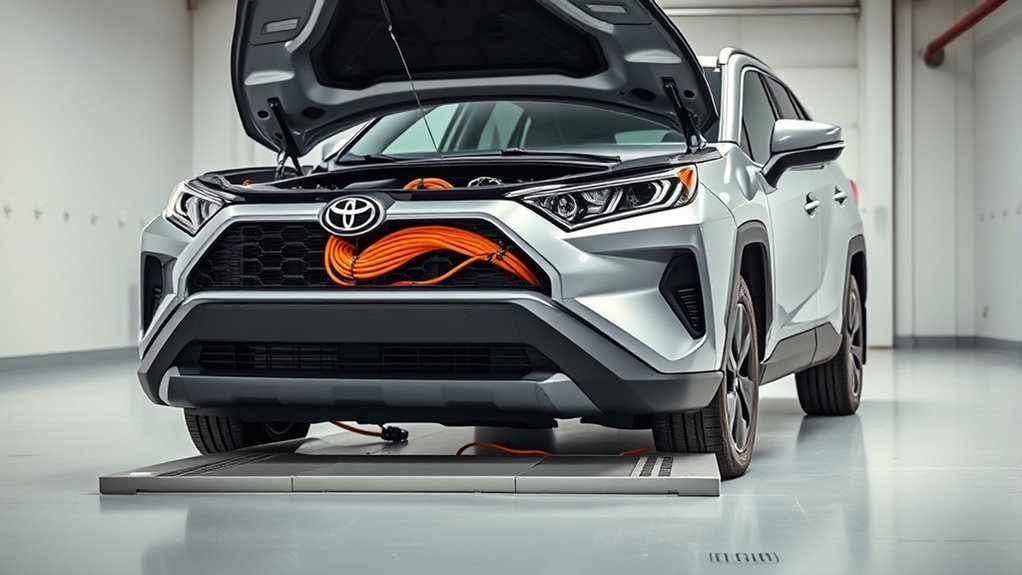
The RAV4 Prime works like a normal hybrid when you need long-distance flexibility, but it adds a larger plug-in battery so you can handle many daily trips on electricity first. One important update: Toyota changed the RAV4 Prime name to RAV4 Plug-in Hybrid for model year 2025, and the redesigned 2026 model uses a newer plug-in hybrid system with stronger output and more electric range.
Quick Answer
The RAV4 Prime uses a high-voltage battery, electric motors, a 2.5-liter gasoline engine, regenerative braking, and Toyota’s power-split hybrid control system. It drives on electric power when the battery has charge, then automatically blends the gas engine and motors in hybrid mode when more power or longer range is needed.
Key Takeaways
- “RAV4 Prime” is the older name; Toyota renamed it RAV4 Plug-in Hybrid for 2025.
- The 2021–2025 system delivers up to 302 net combined horsepower and about 42 miles of electric-only range.
- The redesigned 2026 RAV4 Plug-in Hybrid is rated at 324 net combined horsepower and up to an EPA-estimated 54 miles of all-electric range on the SE grade.
- You can plug it in, drive it like an EV for short trips, or let it operate as an efficient hybrid when the battery is low.
- Regenerative braking helps recover energy, but plugging in is what unlocks the biggest fuel savings.
Is the RAV4 Prime Right for You? Quick Verdict
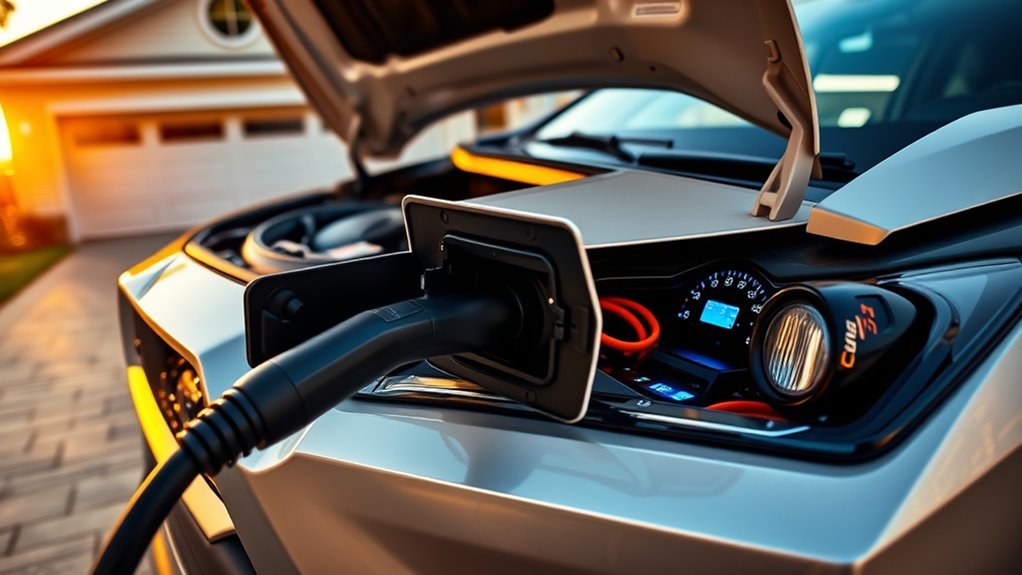
The RAV4 Prime, now called the RAV4 Plug-in Hybrid, makes the most sense if you can charge at home or work and your normal driving fits within its electric range. For many owners, that means grocery runs, school drop-offs, commuting, and local errands can happen with little or no gasoline use.
It is also practical for road trips because it does not depend only on charging stations. Once the battery’s usable EV charge is low, the vehicle keeps going in hybrid mode using the gasoline engine, electric motors, and regenerative braking. That is the main appeal: EV-like driving for short trips, with gasoline backup for longer drives.
If you rarely plug in, the RAV4 Plug-in Hybrid still works, but you give up its biggest advantage. You would be carrying a larger battery without using much of the electric-only capability, so a regular RAV4 Hybrid may be the better value.
Note: Specs vary by model year. The 2021–2025 RAV4 Prime/RAV4 Plug-in Hybrid is commonly associated with 302 horsepower and 42 miles of EV range, while the redesigned 2026 RAV4 Plug-in Hybrid increases output and range.
RAV4 Prime Battery and Real-World EV Range
The plug-in battery is the biggest difference between the RAV4 Prime and a regular RAV4 Hybrid. A normal hybrid uses a smaller battery that is charged mainly by the engine and regenerative braking. The RAV4 Prime uses a much larger lithium-ion battery that can be charged from an outlet or Level 2 charger.
For 2021–2025 models, Toyota lists a manufacturer-estimated 42 miles of EV-only range, and FuelEconomy.gov lists the 2024 RAV4 Prime at 94 MPGe, 38 MPG combined in hybrid mode, and 42 miles of all-electric range. For 2026, Toyota lists the RAV4 Plug-in Hybrid at 324 net combined horsepower and up to an EPA-estimated 54 miles of all-electric range on the SE grade.
Real-world EV range depends on temperature, speed, tires, terrain, cabin heat or air conditioning, cargo weight, and driving style. Short city trips usually favor electric driving. Cold weather, fast freeway speeds, roof cargo, and aggressive acceleration can reduce electric miles.
| Model | Name Used by Toyota | Power | Electric Range |
|---|---|---|---|
| 2021–2024 | RAV4 Prime | 302 net combined hp | About 42 miles |
| 2025 | RAV4 Plug-in Hybrid | 302 net combined hp | Manufacturer-estimated 42 miles |
| 2026 | RAV4 Plug-in Hybrid | 324 net combined hp | Up to EPA-estimated 54 miles on SE |
[Products Worth Considering]

This A-Premium serpentine belt is designed to deliver dependable drive performance for compatible Toyota and Scion vehicles with exact-fit sizing for smooth operation. Built with premium EPDM and polyester cord construction, it helps resist cracking, reduce noise, and maintain stable tension in demanding engine conditions. It is a practical replacement choice for restoring reliable accessory drive performance and long-term confidence.

This vehicle-specific cabin and engine air filter combo is designed for Toyota RAV4 2.5L L4 models from 2013 through 2018, excluding hybrids. It helps improve cabin air quality by capturing pollutants while supporting engine airflow for smoother performance. With a direct replacement fit and simple home installation, it offers an easy way to maintain your vehicle.

This engine air filter is designed to fit select Lexus and Toyota hybrid models, helping maintain clean airflow to the engine for reliable performance. Built with high-fiber filter paper and a fine filtration layer, it offers strong dust capture while minimizing airflow resistance. It is a direct replacement for multiple OEM part numbers and is backed by warranty support.
RAV4 Prime Charging Options: Home, Level 2, and Onboard Charging
You can charge the RAV4 Prime from a standard 120-volt household outlet or a 240-volt Level 2 charging setup. On 2025 models, Toyota says the standard 6.6-kW onboard charger can recharge the battery in about 12 hours on a 120-volt outlet or about 2.5 hours on a Level 2 charger under ideal conditions.
A 120-volt outlet is convenient because it does not require special charging hardware, but it is slow. Level 2 charging is much better if you want to refill the battery between daily trips or start each morning with the full EV range available.
The vehicle also recovers some energy through regenerative braking. That helps efficiency, especially in stop-and-go driving, but it is not the same as plugging in. Regeneration can extend range; charging from the grid is what fully restores the plug-in battery.
Pro Tip: Use scheduled charging if your electricity plan has cheaper off-peak rates. Plug in when you get home, let the vehicle charge overnight, and reserve gasoline for longer drives.
[Products Worth Considering]
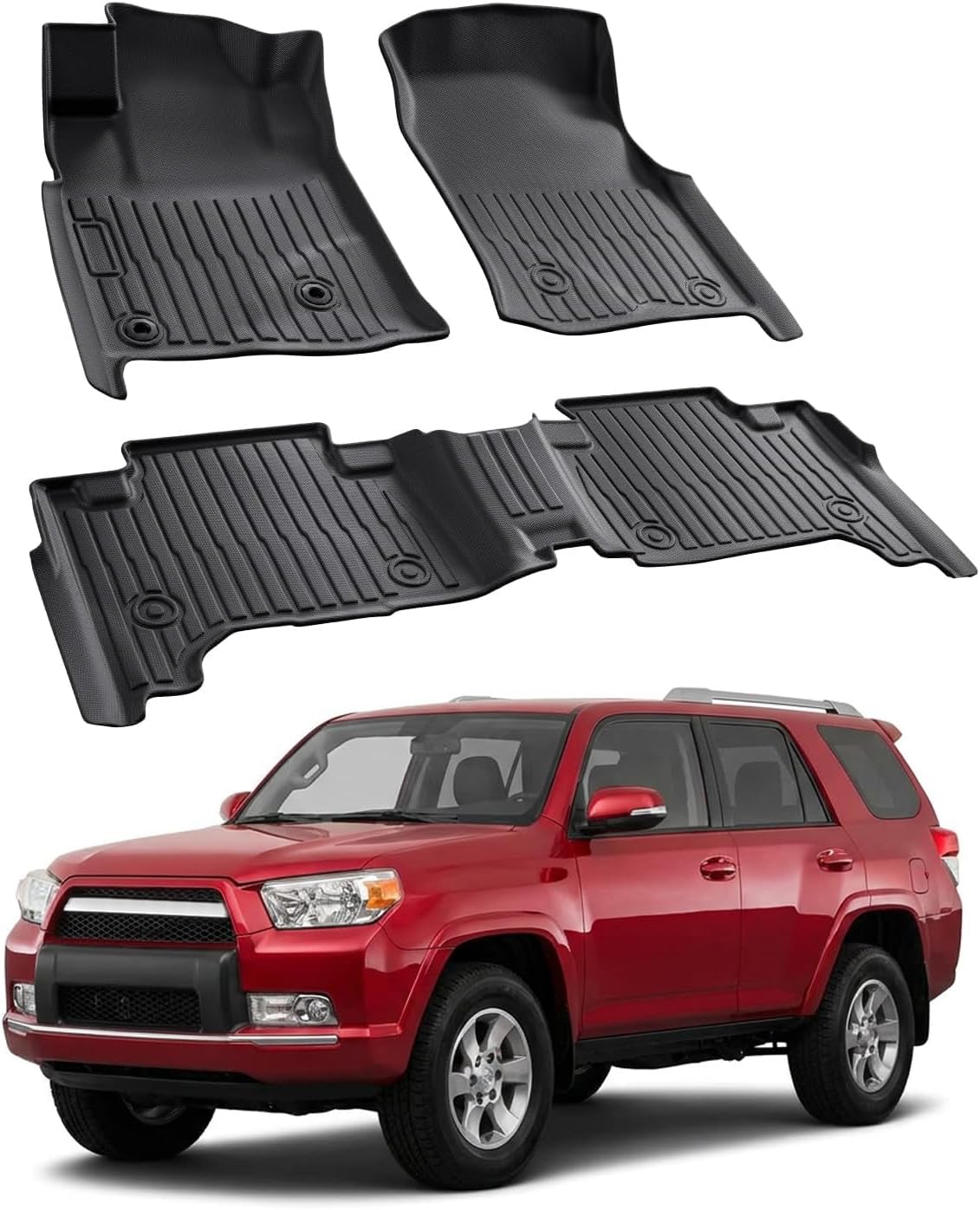
These custom-fit floor mats are designed for Toyota 4Runner models from 2003 to 2009, offering edge-to-edge coverage for a factory-like fit without trimming. Built for all-weather protection, they help shield your interior from mud, snow, sand, rainwater, and daily debris while staying securely in place. The durable TPE construction is flexible, easy to clean, and made to handle regular use with minimal maintenance.

High Charging Speed: The Seguma 32amp Level 2 EV charger equipped with NEMA 14-50 plug, provides faster charging (approx. 6 times faster) compared to standard Level 1 EV chargers, allowing you to charge your electric vehicle more quickly
Powertrain: Gas Engine, Electric Motors, and Power Split
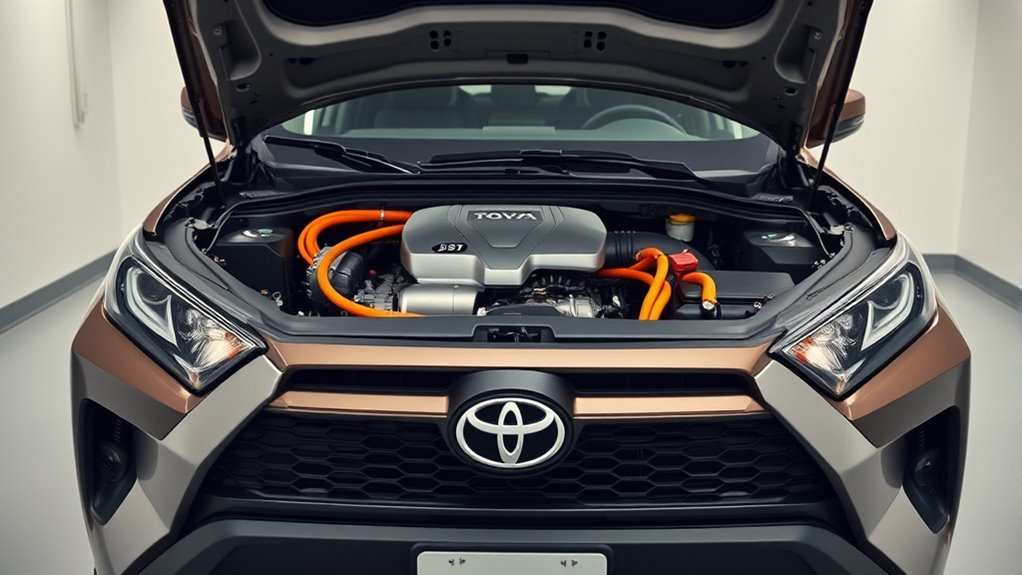
The RAV4 Prime powertrain combines a gasoline engine, electric drive motors, a high-voltage battery, power electronics, and Toyota’s hybrid control logic. The system decides when to use electric drive, when to start the engine, when to blend both, and when to recover energy during braking.
Gas Engine Role
The 2.5-liter gasoline engine is not just a backup generator. In hybrid driving, it can help power the wheels, support acceleration, and operate in efficient ranges while the electric motors smooth out response. When the EV charge is low, the RAV4 behaves much like a Toyota hybrid, automatically balancing engine power, motor assist, and battery charge.
In Charge mode on 2021–2025 models, the engine can also raise the battery’s state of charge while driving. That mode can be useful before entering an area where you want to save EV range, but it usually uses more gasoline than simply charging from the wall.
Electric Motor Dynamics
The electric side gives the RAV4 Prime its quick response. Electric motors can deliver torque immediately, so the vehicle feels strong from a stop and smooth in traffic. The rear-mounted electric motor also supports Toyota’s Electronic On-Demand AWD system, helping add rear-wheel traction when needed without a traditional driveshaft.
- Traction battery: Stores plug-in energy for EV driving and hybrid assist.
- Front electric motor system: Provides electric propulsion and supports acceleration.
- Gasoline engine: Powers the vehicle in hybrid operation and supports longer trips.
- Rear electric motor: Adds all-wheel-drive traction when conditions call for it.
- Regenerative braking: Recovers energy during coasting and braking.
THS in the RAV4 Prime: What It Actually Does
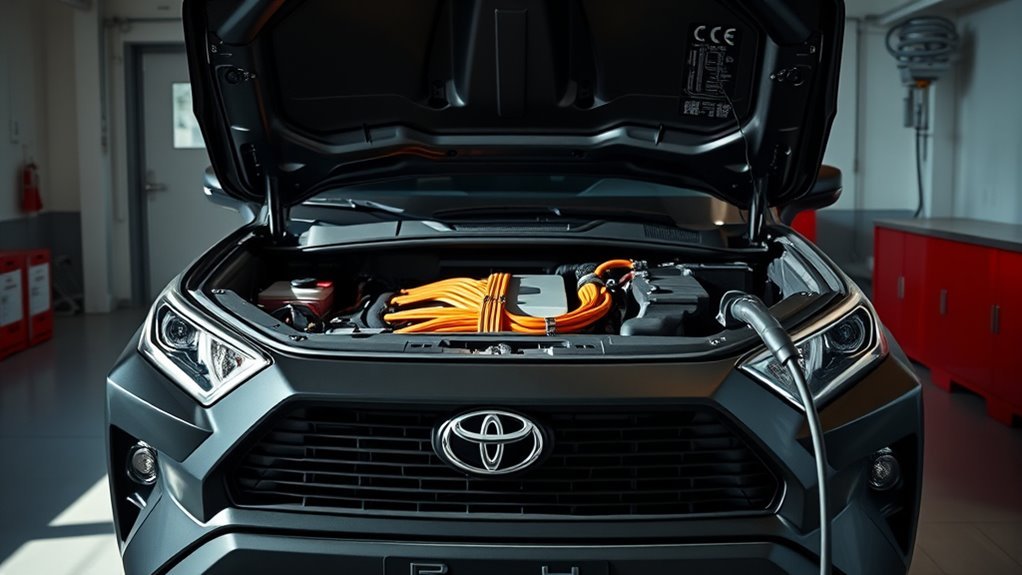
THS stands for Toyota Hybrid System. In simple terms, it is the control strategy that manages power flow between the engine, electric motors, battery, and wheels. The driver does not have to manually coordinate these pieces. The system watches speed, battery charge, accelerator input, traction needs, and driving mode.
How THS Manages Power
When the battery has enough charge and the driving demand is reasonable, the system prioritizes electric operation. If you ask for more power, drive at higher speeds, climb a hill, or run the battery low, the engine can start automatically and blend with the electric motors.
That blending is what makes the RAV4 Prime feel normal to drive. There is no clutch pedal, no manual switching between engine and electric power, and no need to stop when EV range is depleted. The vehicle simply changes from EV-first driving to hybrid driving.
EV Mode and Transitions
In EV mode, the RAV4 Prime tries to use battery power as much as possible. In Auto EV/HV mode, it can decide when electric-only driving is best and when the engine should help. In HV mode, it preserves more battery charge and operates more like a conventional hybrid.
Toyota’s owner guidance recommends using EV mode or Auto EV/HV mode for city driving and HV mode for highways when you want to save battery for later. That is especially useful if your trip includes both freeway miles and slower city driving near the destination.
EV vs. Hybrid Modes: When and How the RAV4 Prime Switches
The RAV4 Prime switches modes based on battery charge, speed, temperature, power demand, and driver-selected settings. You can influence the behavior with the mode buttons, but the vehicle still protects the battery and powertrain automatically.
- EV Mode: Best for short local trips when the battery has charge.
- Auto EV/HV Mode: Lets the vehicle decide when to use electric-only driving and when to bring in the engine.
- HV Mode: Runs like a hybrid and helps save battery charge for later parts of the trip.
- Charge Mode: Uses the gasoline engine to add battery charge while driving, though it usually increases fuel use.
- Trail Mode: Helps manage traction on loose or uneven surfaces by coordinating AWD, braking, and drive force.
Warning: Do not treat EV range as guaranteed. Weather, speed, tire pressure, terrain, and heater use can change the number you see on the dashboard. Plan longer trips around total hybrid range, not EV range alone.
Performance and Efficiency: Acceleration, MPG, and Regeneration
The older RAV4 Prime earned attention because it was both efficient and quick. Toyota listed the 2025 RAV4 Plug-in Hybrid at 302 net combined horsepower and a 0–60 mph time of 5.5 seconds. The redesigned 2026 model raises output to 324 net combined horsepower and Toyota lists a 0–60 mph time of 5.4 seconds.
Efficiency depends heavily on charging habits. If you charge daily and your commute fits inside the EV range, fuel use can be very low. If you mostly drive long highway trips without plugging in, the vehicle will spend more time in hybrid mode, where the EPA-rated 2024 RAV4 Prime is listed at 38 MPG combined.
The RAV4 Prime’s real savings come from using the plug-in battery often. Regenerative braking helps, but daily charging is what turns short trips into mostly electric miles.
How to Get the Best Results From a RAV4 Prime
Use the RAV4 Prime like an EV during the week and like a hybrid when you need distance. That simple habit gets the most value from the powertrain.
- Charge every night when practical. A full battery gives you the best chance of avoiding gasoline on short trips.
- Use EV mode around town. Low-speed and stop-and-go driving are ideal for electric operation.
- Use HV mode on long highway legs. This can preserve battery for city driving later in the trip.
- Precondition while plugged in. Heating or cooling the cabin before unplugging can help preserve EV range.
- Keep tires properly inflated. Tire pressure affects both electric range and gasoline economy.
- Brake smoothly. Gentle braking gives the regenerative system more time to recover energy.
Ownership Reality: Daily Use, Maintenance, and Cost Trade-Offs
The RAV4 Prime can reduce fuel costs, but the ownership math depends on the price you pay, electricity rates, gasoline prices, charging access, incentives, insurance, and how often you plug in. The higher purchase price makes the most sense when you use the EV range frequently.
Maintenance is similar to other Toyota hybrid models in many ways. The engine still needs oil changes, coolant service, filters, tires, and normal inspections. Regenerative braking can reduce brake wear, but it does not eliminate brake maintenance. The high-voltage battery and hybrid components are designed for long service life, but buyers should still review the warranty booklet for their exact model year and state.
If you are shopping used, check charging behavior, service records, tire condition, brake condition, recall status, and whether both charging cables and manuals are included. Also confirm whether the vehicle is a RAV4 Prime, a renamed 2025 RAV4 Plug-in Hybrid, or the redesigned 2026 model, because the specs are not identical.
RAV4 Prime vs. RAV4 Hybrid: What’s the Difference?
The regular RAV4 Hybrid is simpler and usually cheaper. It does not plug in, and its smaller battery is charged by the engine and regenerative braking. It is a strong choice if you want good fuel economy without changing your routine.
The RAV4 Prime/RAV4 Plug-in Hybrid adds a larger battery, more electric-only driving, stronger acceleration, and the ability to charge from the grid. It is better if you want to drive locally on electricity but still want the flexibility of a gasoline engine for road trips.
| Feature | RAV4 Hybrid | RAV4 Prime / Plug-in Hybrid |
|---|---|---|
| Plugs in | No | Yes |
| Electric-only driving | Limited, low-speed situations | Meaningful EV range when charged |
| Best for | Drivers who want simple hybrid efficiency | Drivers who can charge often and want EV-style daily driving |
| Long trips | Hybrid operation | EV first, then hybrid operation |
[Products Worth Considering]

[2026 INTELLIGENT CHARGING UPGRADE — PRECISION CONTROL MEETS SMART SCHEDULING] After surveying 100K+ U.S. EV owners, the Raylix R&D team found that nearly all drivers recognized the necessity of adjustable current and scheduled charging. Our upgraded J1772 charger features 4-level adjustable current (8A/10A/12A/16A) and a 1–12 hour smart delay timer. Whether you're charging overnight or during off-peak hours, enjoy smarter energy use, lower costs, and total convenience—on your schedule.

【Precision Fitment】The door side storage box compatible with 2026 Toyota RAV4 Plug-in Hybrid (SE/Woodland/XSE/GR SPORT) & 6th Gen RAV4 Hybrid (LE/SE/XLE Premium/Woodland/XSE/Limited) side door organizer tray is designed based on the original car size.

INTELLIGENT CHIP PRIMECOMTECH designs its own SMART chargers electronic circuitry-intelligent Chip & software here in the USA, unlike other chargers which dump all the current at once. PRIMECOMTECH EV Chargers communicate with your EV via the data connection port to gather 6 different types of data such as, ambient and battery temperature, EVs current battery level, Battery Capacity, etc. to automatically adjust the voltage to get the longer / most life expectancy from your battery.
Frequently Asked Questions
How does the RAV4 plug-in hybrid work?
It uses a larger plug-in battery for electric driving, then switches to hybrid operation when the EV charge is low or when more power is needed. The gasoline engine, electric motors, regenerative braking, and hybrid control system work together automatically.
What is the RAV4 Prime hybrid system?
It is Toyota’s plug-in version of its hybrid system. Compared with a regular RAV4 Hybrid, it has a larger battery, stronger electric-drive capability, more total system power, and the ability to recharge from an external power source.
What is the difference between RAV4 Prime and RAV4 Plug-in Hybrid?
RAV4 Prime was the original U.S. name for Toyota’s plug-in hybrid RAV4. For model year 2025, Toyota renamed it RAV4 Plug-in Hybrid. The 2025 model kept the same basic 302-hp powertrain, while the redesigned 2026 model introduced updated specs and more EV range.
Can the RAV4 Prime drive if I never charge it?
Yes. If you never plug it in, it can still run as a hybrid using gasoline, electric assist, and regenerative braking. However, you will miss the main benefit of the plug-in system: low-gas electric driving on short daily trips.
Does regenerative braking fully recharge the RAV4 Prime battery?
No. Regenerative braking recovers some energy that would otherwise be lost during braking or coasting, but it will not replace a full plug-in charge. To get the full EV range, you need to charge from an outlet or charging station.
Is the RAV4 Prime better than the regular RAV4 Hybrid?
It depends on how you drive. The RAV4 Prime is better if you can charge often and want electric-only driving for daily trips. The regular RAV4 Hybrid may be better if you cannot charge, want a lower purchase price, or prefer a simpler ownership routine.
Conclusion
The RAV4 Prime succeeds because it does not force you to choose between electric commuting and long-distance flexibility. When charged, it can handle many daily miles on electricity. When the battery runs low, it automatically becomes a capable hybrid. The key is using it as intended: plug in often, choose the right drive mode for the trip, and let Toyota’s hybrid system manage the power flow in the background.
For shoppers, the biggest detail is model year. A 2021–2025 RAV4 Prime/RAV4 Plug-in Hybrid is known for 302 horsepower and about 42 miles of electric range. The redesigned 2026 RAV4 Plug-in Hybrid updates the formula with more power, more range, and a newer plug-in hybrid system.
Sources
- Toyota RAV4 Plug-in Hybrid official page — current 2026 horsepower, EV range, acceleration, trims, and official product information.
- Toyota USA Newsroom: 2025 RAV4 Plug-in Hybrid — RAV4 Prime name change, 2025 powertrain specs, EV range, charging times, and drive modes.
- Toyota USA Newsroom: 2026 RAV4 launch details — sixth-generation updates, 2026 PHEV powertrain changes, range increase, horsepower, and fuel economy estimates.
- FuelEconomy.gov RAV4 Prime ratings — EPA fuel economy, MPGe, MPG, and all-electric range listings for prior RAV4 Prime model years.
- Toyota Owners Manual: Plug-in hybrid system features — EV, Auto EV/HV, HV, Charge mode, and plug-in hybrid system operation details.
- FuelEconomy.gov: How hybrids work — general hybrid operation and regenerative braking background.