
Last updated: July 31, 2026
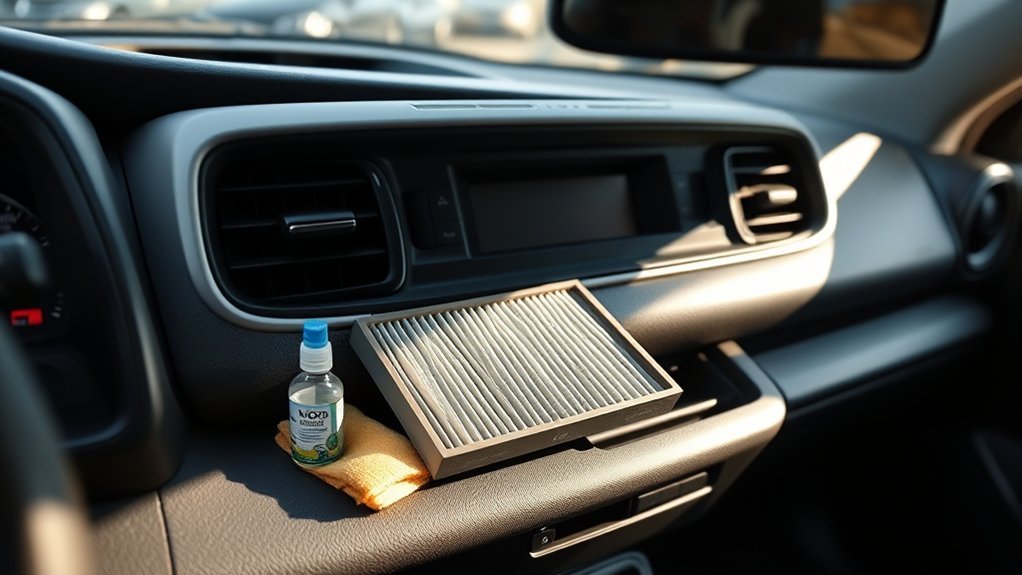
If your RAV4 smells musty from the vents, moisture and odor buildup around the AC evaporator are common causes, especially when the smell is strongest for the first few seconds after startup. A dirty cabin air filter, restricted evaporator drain, leaves in the cowl intake, or water leaking into the carpet can create the same symptom. Start by identifying when the smell appears, checking for wet carpet, inspecting the cabin filter, and confirming that AC condensation drains outside. Use an automotive evaporator cleaner only through an access route approved by its label and your model-year service information.
Do not treat every vent odor as mold. A sweet smell with a greasy windshield film can indicate coolant, while burning, fuel, or exhaust odors need prompt diagnosis. A rotten or urine-like odor may come from trapped debris or rodent nesting rather than the evaporator.
Quick Answer
- A musty smell that is strongest when the AC first starts usually points to moisture, debris, or odor buildup in the evaporator case.
- Check the cabin air filter and passenger-side carpet before spraying any cleaner.
- After several minutes of AC use in humid weather, look for condensation dripping under the passenger side. No drip plus damp carpet can indicate a restricted drain.
- Remove leaves and sludge from the cowl intake so fresh air does not carry wet debris into the HVAC system.
- Use only an automotive HVAC evaporator cleaner, and follow its approved access route, dwell time, ventilation, and drying instructions.
- Before parking, switch to outside-air mode. If practical, turn the AC off and run the blower for a few minutes to help the evaporator dry.
- Get professional diagnosis for recurring wet carpet, weak cooling, a sweet coolant-like smell, burning odor, fuel smell, or exhaust odor.
RAV4 Musty Vent Smell Fix at a Glance
| Symptom | Likely Source | First Fix |
|---|---|---|
| Musty smell for a few seconds when AC starts | Damp evaporator or odor buildup in HVAC case | Inspect filter and drain, then use approved evaporator cleaner |
| Musty smell after AC use, with little or no water dripping outside | Restricted evaporator drain | Check the drain outlet and passenger carpet |
| Odor or wet carpet mainly after rain or a car wash | Cowl, windshield, door, roof, or sunroof water leak | Trace the water-entry path before HVAC cleaning |
| Weak airflow plus stale or dusty odor | Dirty, damp, or incorrectly fitted cabin filter | Inspect and replace with the correct-fit filter |
| Rotten, urine-like, or decaying smell | Rodent nesting or organic debris | Inspect the cowl, filter housing, blower area, and ducts |
| Sweet smell, greasy glass film, or coolant loss | Heater-core or cooling-system leak | Book a cooling-system and HVAC inspection |
| Burning, fuel, or exhaust odor | Electrical, fuel, or exhaust fault | Turn the HVAC off, ventilate, and seek prompt service |
What Does the Timing of the RAV4 Vent Smell Mean?
The timing helps separate an evaporator odor from a cabin water leak or another fault. A musty smell that appears only when the blower first starts and then fades usually points toward the filter, evaporator case, or ducts. A smell that remains with the fan off is more likely to come from wet carpet, floor mats, cargo-area moisture, a spill, or debris elsewhere in the cabin.
- Only at startup: inspect the cabin filter, evaporator drain, and HVAC case.
- Only after rain or washing: inspect the cowl, windshield, doors, roof rails, moonroof drains, and carpet padding.
- Only on fresh-air mode: inspect the cowl intake for wet leaves, nesting material, or outside odor sources.
- Only on recirculation: inspect interior fabrics, floor mats, spills, and the filter housing.
- With weak cooling or oily residue: stop treating it as a simple odor problem and have the AC system diagnosed.
This quick separation prevents a common mistake: cleaning the evaporator while a body leak continues soaking the carpet, or replacing the cabin filter when the drain is still holding condensation inside the HVAC case.
Is the Smell Mold in My RAV4’s Vents?
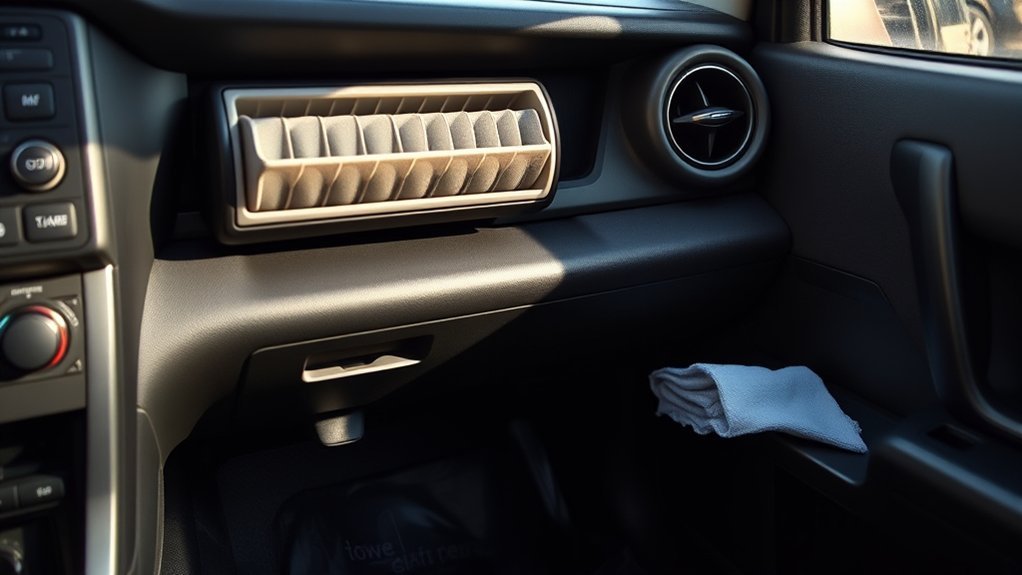
A musty or damp odor is consistent with moisture and microbial activity, but smell alone cannot prove that visible mold is growing in the vents. The source may also be bacteria, wet organic debris, a damp cabin filter, or odor compounds that have accumulated on the evaporator. The practical fix is the same: find the moisture source, remove debris, clean the affected HVAC surfaces with a compatible product, and dry the system.
Before using cleaners, check for water. Feel the passenger-side carpet and padding, look for dampness under the dash, and inspect the fresh-air intake at the cowl for leaves or sludge. The EPA’s mold guidance emphasizes moisture control, cleanup, and complete drying rather than masking an odor with fragrance. EPA mold cleanup guidance explains why moisture control is the core fix.
[Products Worth Considering]

This cabin air filter replacement helps keep the air inside your vehicle cleaner and fresher for driver and passengers. Designed for broad fitment across Toyota, Lexus, Subaru, and Mazda models, it supports improved HVAC performance and includes soda and carbon filtration for odor reduction. It is a practical maintenance part with a recommended replacement interval for continued cabin comfort.

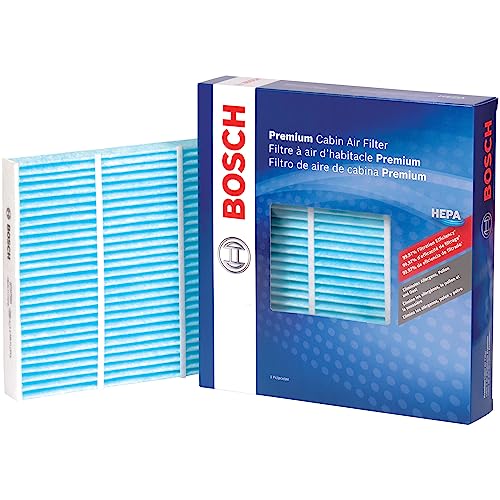
Bosch 6029C HEPA cabin air filter is designed to help keep your vehicle’s passenger compartment filled with clean, fresh, odor-free air. Its dense HEPA media and electrostatic layer are engineered to capture fine particles while the added cotton layer supports higher filtration capacity. Built with structural ribs for stability, it helps maintain filter shape and airflow performance over time.

EPAuto CP134 is a premium cabin air filter designed to help keep the air inside your vehicle cleaner and fresher. It includes activated carbon to help reduce odors and support a more comfortable ride for drivers and passengers. Built as a replacement option for many Honda and Acura models, it offers broad compatibility and dependable cabin air filtration.
Quick Fixes for RAV4 AC Smell: Filter, Drain, Intake, Cleaner
Use this order so you do not clean the evaporator and then let trapped water or dirty debris contaminate it again. First, identify the odor and check for wet carpet. Second, inspect or replace the cabin air filter. Third, confirm that AC condensation drains outside. Fourth, remove leaves from the fresh-air intake. Fifth, apply a compatible foaming evaporator cleaner only as its label directs. Finally, use outside-air mode before shutdown and dry the evaporator when practical.
[Products Worth Considering]

This mud flaps kit helps protect your Toyota Camry’s lower body panels from snow, salt, sand, rocks, and road debris thrown up by the wheels. Designed for SE and XSE Sport models, it offers a direct-fit install with included mounting hardware for a cleaner, more finished look. Built from durable ABS thermoplastic, it is made to handle harsh driving conditions while helping keep your vehicle cleaner.
Chemical Guys Headlight Restore & Protect is an all-in-one solution designed to clean, restore, and shield cloudy plastic lenses for better clarity and safer nighttime driving. It removes yellowing, haze, oxidation, and light surface marks while leaving a durable protective layer that helps resist future fading and discoloration. Suitable for headlights, taillights, fog lights, and turn signals, it delivers quick, easy results by hand or machine.

[Vehicle Fitment]: For Toyota: 4Runner (2010-2024), Avalon (2005-2018), Camry (2007-2017), Corolla (2009-2019), Corolla iM (2017-2018), Highlander (2008-2019), Land Cruiser (2008-2011,2013-2021), Matrix (2009-2014), Mirai (2016-2020), Prius (2010-2015), Prius C (2012-2019), Prius Plug-In (2012-2015), Prius V (2012-2018), RAV4 (2006-2018), Sequoia (2008-2022), Sienna (2011-2020), Tundra (2007-2021), Venza (2009-2016), Yaris (2007-2018).
Check and Clear the Drain Safely
A restricted drain can hold condensation in the evaporator housing and wet the passenger carpet. The exact outlet location and access route vary by RAV4 generation, production plant, and powertrain. Confirm the drain in model-year repair information before inserting a tool or cleaner hose.
Do not push a sharp pick or wire deep into the tube, and do not blast uncontrolled high-pressure air toward the evaporator. If the exterior outlet is accessible, gently inspect and massage the soft end for debris. A brief application of low suction at the exterior end may remove loose material without forcing it deeper into the case. Stop if the tube is damaged, disconnected, inaccessible, or still will not drain.
After the check, run the AC for several minutes in humid weather and look for water dripping outside under the passenger side. A normal drip supports an open drain, although it does not rule out a partial restriction. No drip plus wet carpet needs closer inspection.
Inspect or Replace the Cabin Filter Before Cleaning
A dirty cabin filter can hold dust, pollen, leaves, and moisture close to the HVAC system. Remove it before evaporator treatment so you can inspect the filter tray and avoid pulling old debris back through the system. Replace a dark, damp, damaged, badly clogged, or odor-soaked filter with one listed for your exact RAV4 year and trim.
A particulate filter mainly targets dust and pollen. An activated-carbon or charcoal filter can provide better odor adsorption, but it will not fix a wet evaporator, blocked drain, body leak, or rodent nest. For the glove-box procedure and arrow-orientation details, see this RAV4 cabin air filter replacement guide.
If airflow stays weak after a correctly fitted filter is installed, inspect for debris near the blower, a restricted evaporator face, a blocked intake screen, or a blower and mode-door fault.
Use Evaporator Foam Only as Labeled
Choose a cleaner labeled for automotive HVAC evaporators. Depending on the product, the approved application route may be the drain tube, cabin-filter opening, blower opening, fresh-air intake, or another service port. Do not assume that a product designed for one route is safe through another.
Clear or confirm the drain first so liquefied foam and loosened debris can leave the housing. Follow the cleaner’s contact time, quantity, personal-protection, ventilation, and blower instructions. Keep liquid away from exposed electronics, do not overfill the case, and never mix bleach, ammonia, vinegar, peroxide, disinfectant spray, or multiple HVAC cleaners.
Clean the evaporator when odor persists after the filter, drain, intake, and cabin have been checked. A fixed six-month schedule is not necessary for every RAV4; climate, parking conditions, model year, and recurrence matter.
Use Outside Air and Dry the Evaporator
Before parking, switch from recirculation to outside-air mode so fresher air moves through the HVAC case. Toyota has used this recommendation in owner information and odor-maintenance guidance because odors from inside and outside the vehicle can accumulate in the system.
If practical, turn the AC compressor off near the end of the drive and run the blower on outside air for a few minutes. This can reduce residual condensation, but it is a prevention habit rather than a repair for a clogged drain, saturated carpet, or contaminated evaporator. Do not sacrifice windshield defogging or safe cabin temperature to follow the habit.
How to Check the RAV4 Evaporator Drain Step by Step
Start by confirming the AC drain outlet for your exact RAV4 model year. It is generally low on the passenger side near the HVAC case and firewall area, but the visible end may be reached from underneath rather than through the passenger footwell. Hybrid, Prime, gasoline, and different-generation models can use different routing.
Locate the Correct Drain Outlet
Park on a level surface, set the parking brake, and let hot engine and exhaust parts cool before reaching underneath. Use a flashlight to look for a short rubber outlet or drain path near the lower passenger-side firewall or underbody area. Do not identify a hose by position alone. Compare it with model-year repair information or ask a technician if more than one tube or opening is present.
Inside the cabin, lift the passenger floor mat and press the carpet and padding. Water appearing after AC use points toward condensate drainage. Water appearing mainly after rain or a car wash points more strongly toward a body, windshield, cowl, door, roof, or moonroof leak.
Clear and Test the Drain
Remove only visible debris at the outlet. Gently squeeze a soft rubber tip if the design allows it. Use low suction at the exterior end or a soft flexible nylon line only when you can identify the drain and work without forcing the tool. Do not use a sharp metal wire, drill bit, or uncontrolled compressed air.
Then run the AC for several minutes in humid weather and watch for water beneath the passenger side. A steady drip indicates that condensate is leaving the case. If the carpet is already wet, dry the padding as well as the surface; trapped moisture can keep the odor returning even after the drain is open.
If the drain repeatedly blocks, the outlet cannot be identified, or water continues entering the cabin, stop the DIY work and have the system inspected. Some RAV4 model years have drain-related service information that requires checking production details or VIN applicability.
When Wet RAV4 Carpet Is Not the AC Drain
Do not assume every wet passenger floor comes from the evaporator drain. The timing and location of the first fresh moisture are more useful than the final puddle location because water can travel behind trim and under carpet padding.
- Wet after AC use in dry weather: prioritize the evaporator drain, HVAC case, and drain-hose connection.
- Wet after rain or washing: inspect the cowl, windshield bond, door vapor barrier, roof rails, body seams, and moonroof drains.
- Sweet or slippery moisture: check coolant level and have the heater core inspected.
- Water near the A-pillar or headliner: inspect roof and moonroof drainage before cleaning the evaporator.
For rain-related symptoms, use the separate RAV4 sunroof and body-leak guide or the RAV4 sunroof drain cleaning guide. Saturated padding may require trim removal and professional drying so moisture does not remain against wiring, insulation, or the floor pan.
How to Clean the RAV4 Evaporator and Ducts With Foam
Use a foaming AC cleaner only through the access point recommended by the cleaner manufacturer and permitted by your RAV4 service information. Wear gloves and eye protection, ventilate the cabin, and keep the cleaner away from exposed wiring, control modules, sensors, and the blower motor unless the label specifically allows contact.
- Inspect or replace the cabin filter and remove visible debris from the filter housing.
- Confirm that the evaporator drain is open.
- Turn the vehicle and HVAC system off unless the cleaner label says otherwise.
- Insert the applicator only as far as the instructions allow.
- Dispense the stated amount and let it dwell for the label’s contact time.
- Allow the liquefied cleaner to drain completely.
- Open the doors and run the blower on outside-air mode as directed.
- Confirm normal drainage, airflow, cooling, and odor afterward.
Do not spray household bleach, ammonia, vinegar, peroxide mixtures, or general disinfectant deep into the vents. These products may create irritating fumes, damage materials, leave residue, or become dangerous when mixed. If odor returns within days, look again for trapped debris, a partial drain restriction, saturated carpet, or a water leak rather than repeatedly adding chemicals.
When to Replace the Cabin Air Filter and Which Type to Use
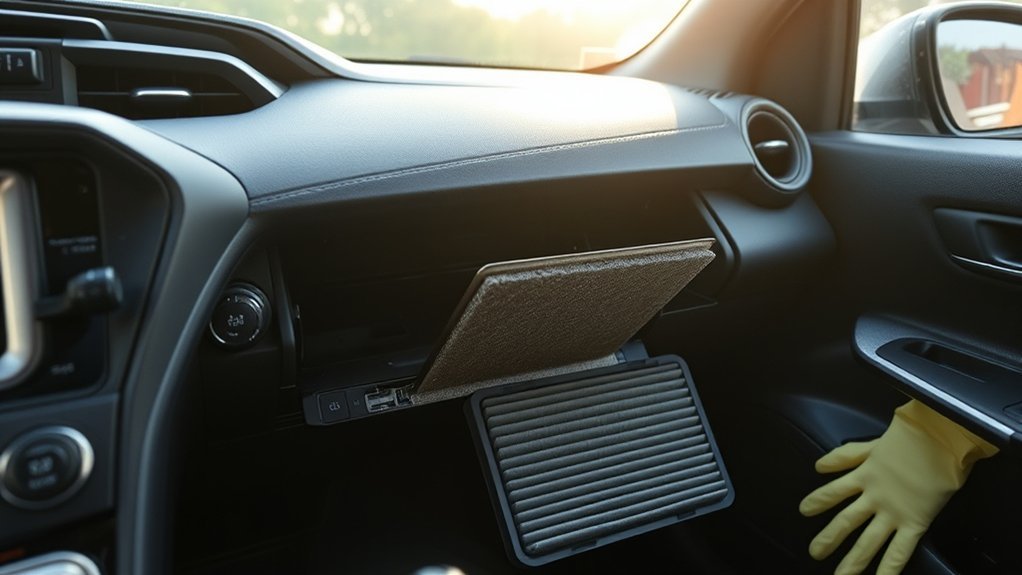
Inspect the cabin air filter whenever airflow drops or the vents smell stale, dusty, or musty. Replace it at the interval in the maintenance guide for your exact RAV4, or sooner when it is damp, damaged, packed with debris, or used in heavy dust, smoke, pollen, humidity, or traffic.
Pull the filter and look for packed dirt, leaves, dark staining, crushed pleats, a damaged frame, or moisture. Also check that it sits flat and that the filter cover seals correctly. A filter installed in the wrong direction or forced into the tray can reduce airflow and let debris reach the blower area.
| Filter Type | Best For | Limit |
|---|---|---|
| Standard particulate | Dust, pollen, and general debris | Limited odor adsorption |
| Activated carbon or charcoal | Traffic, smoke, and odor reduction | Cannot fix moisture or leaks |
| High-efficiency compatible filter | Fine-particle reduction | Must maintain acceptable airflow and exact fit |
No cabin filter can clean a contaminated evaporator or dry soaked carpet. If a new filter improves airflow but the musty odor remains, continue with the drain, intake, evaporator, and water-leak checks.
[Products Worth Considering]

Compatible Auto List: Our cabin air filter is compatible with Toyota: Avalon (2019-2022), Camry (2018-2026), Corolla (2019-2026), Corolla Cross(2022-2026), CROWN(2023-2026), Highlander (2020-2026), Prius (2016-2026), Prius AWD-E (2019-2022), Prius Prime (2017-2024), RAV4 (2019-2025), RAV4 Prime (2021-2024), Sienna (2021-2026), Venza (2021-2024), Grand Highlander (2024-2026), GR Corolla (2023-2026), Crown Signia (2025-2026), C-HR (Japan Built Models Only) (2018-2022).

Compatible Auto List: Our cabin air filter is compatible with Toyota: Avalon (2019-2022), Camry (2018-2026), Corolla (2019-2026), Corolla Cross(2022-2026), CROWN(2023-2026), Highlander (2020-2026), Prius (2016-2026), Prius AWD-E (2019-2022), Prius Prime (2017-2024), RAV4 (2019-2025), RAV4 Prime (2021-2024), Sienna (2021-2026), Venza (2021-2024), Grand Highlander (2024-2026), GR Corolla (2023-2026), Crown Signia (2025-2026), C-HR (Japan Built Models Only) (2018-2022).
Deeper Cleaning: Blower Access and Professional Service
If filter replacement and label-directed evaporator cleaning do not stop the smell, deeper inspection may be needed. Removing the blower can expose leaves, nesting material, or buildup that cannot be reached through the vents. Dashboard or evaporator-case disassembly is an advanced repair because it can involve electrical connectors, airbags, refrigerant recovery, and delicate HVAC doors.
| Task | Benefit | Best For |
|---|---|---|
| Filter-housing and intake vacuum | Removes accessible leaves and loose debris | Light odor with visible contamination |
| Blower removal and inspection | Improves access to the blower and lower HVAC case | Rodent debris, rattle, or persistent odor |
| Professional HVAC and leak diagnosis | Checks drainage, case contamination, coolant leaks, and hidden water | Wet carpet, repeat clogs, poor cooling, or warning odors |
CDC/NIOSH guidance on dampness and mold emphasizes finding and correcting the moisture source instead of relying on air sampling alone. CDC/NIOSH mold testing and remediation guidance supports that moisture-first approach.
RAV4 Model-Year Service Bulletin Notes
Toyota has published different HVAC odor and drain bulletins over time. A bulletin is not a recall and does not automatically apply to every vehicle in the listed model year. A dealer or repair-information service must confirm the production date, VIN, plant, and superseded bulletin status.
- 2006–2009 RAV4: Toyota bulletin T-SB-0378-09 addressed intermittent HVAC odor on certain vehicles built before listed production changes and described a redesigned evaporator sub-assembly.
- 2006–2015 RAV4: T-SB-0142-13 Rev1 described odor-maintenance steps for listed Toyota vehicles, including outside-air mode when parking, charcoal-filter replacement, and evaporator cleaning based on climate and recurrence. Use the current maintenance guide for your exact vehicle rather than treating that older bulletin as a universal schedule.
- 2020–2021 RAV4 and RAV4 Hybrid from specified plants: T-SB-0007-22 addressed damp front carpeting caused by plastic obstructing the HVAC drain cooler hose on certain TMMC- and TMMK-built vehicles.
If your symptoms and model year match one of these notes, ask a Toyota dealer or qualified technician to check bulletin and VIN applicability before replacing parts.
How to Prevent a Musty RAV4 Vent Smell
Prevention works best after the drain, filter, evaporator, and any cabin leak have been corrected. Use habits that reduce trapped moisture and organic debris without relying on fragrances.
- Switch to outside-air mode before parking so fresher air moves through the HVAC case.
- If practical, turn the AC off and run the blower on outside air for a few minutes near the end of the drive.
- Remove leaves, pine needles, and sludge from the cowl intake before they enter the filter and blower area.
- Inspect the cabin filter at scheduled service and sooner when airflow drops or the filter becomes damp.
- Dry wet floor mats, carpet, and cargo-area fabric completely after rain, spills, or washing.
- Check for normal condensation drainage when humid-weather odor begins to return.
Leaving a window cracked is not a universal moisture fix. It can admit rain, humid air, dust, insects, or security risk. Use it only when conditions are dry, secure, and appropriate.
Persistent Smell Checklist and When to See a Mechanic
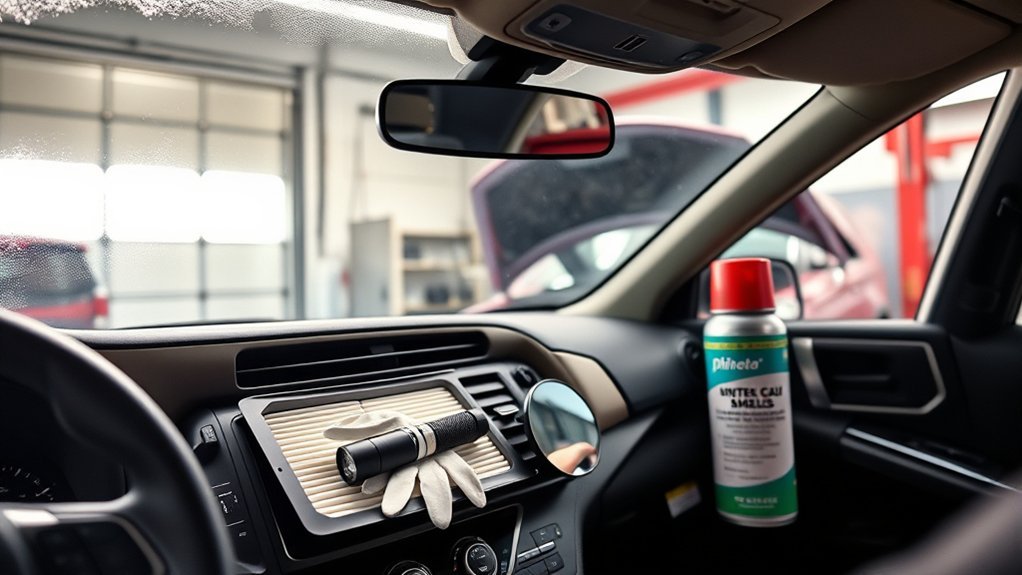
Use this checklist to identify why the musty smell keeps returning. Note whether the odor appears on startup, in fresh-air mode, in recirculation, after rain, or after AC use. Then check the filter, cowl, passenger carpet, drain flow, and accessible blower area before repeating chemical treatment.
- Confirm whether the smell appears only when the blower runs or remains with the HVAC off.
- Check whether condensation drips outside after several minutes of AC use in humid weather.
- Remove leaves and nesting material from the cowl and filter-housing area.
- Replace a dirty, damp, damaged, or incorrectly fitted cabin filter.
- Lift floor mats and press the carpet and padding after both AC use and rain.
- Use evaporator foam only through an approved route and according to the label.
- Stop repeated cleaning if the odor returns within days; find the remaining moisture or debris source.
Book service when carpet stays wet, the drain repeatedly blocks, cooling is weak, the blower rattles, or the odor is sweet, burning, fuel-like, or exhaust-like. Also seek help if you find rodent contamination, extensive mold-like growth, soaked insulation, or moisture near electrical components. A mechanic can inspect the heater core, evaporator case, drain routing, cowl, blower, and hidden leak paths that are difficult to reach safely at home.
Frequently Asked Questions
How do you get rid of a musty smell in RAV4 vents?
Inspect the cabin filter and passenger carpet, confirm that AC condensation drains outside, remove leaves from the cowl intake, and use an automotive evaporator cleaner through the route approved by its label. Then switch to outside-air mode before parking and dry the evaporator with the blower when practical.
Why do my RAV4 vents smell musty when the AC starts?
The smell is often strongest at startup because the blower moves air across a damp evaporator, dirty filter, or odor buildup that sat inside the HVAC case while the vehicle was parked. A restricted drain or wet organic debris can make the odor return.
Can a dirty cabin air filter make a RAV4 smell bad?
Yes. A dirty or damp cabin filter can hold dust, pollen, leaves, moisture, and odors close to the HVAC system. Replace it if it is damp, damaged, heavily clogged, incorrectly fitted, or due under the maintenance guide. A new filter will not fix a wet evaporator or cabin leak.
Is a sweet smell from RAV4 vents the same as mold?
No. A sweet odor, especially with a greasy windshield film, damp carpet, or falling coolant level, can indicate a heater-core or cooling-system leak. Have it diagnosed instead of adding deodorizer or evaporator foam.
How often should you clean RAV4 AC vents and the evaporator?
Inspect the filter, cowl, and drainage during routine service and when odor appears. Clean the evaporator only when symptoms and inspection support it, using the product label and model-year service information. A universal six-month cleaning interval is unnecessary for every RAV4.
Where is the RAV4 AC drain?
The evaporator drain is generally low on the passenger side near the HVAC case and firewall, but the visible outlet and access method vary by generation, powertrain, and production details. Confirm the location in model-year repair information before inserting a tool or cleaner hose.
Can a clogged RAV4 AC drain wet the passenger carpet?
Yes. A restricted or disconnected drain can allow condensate to back up into the HVAC case and front floor area. However, carpet that becomes wet mainly after rain or washing may come from the cowl, windshield, doors, roof, or moonroof drains instead.
Can you spray household disinfectant into RAV4 vents?
Do not use household disinfectant as the default evaporator treatment. Use a cleaner labeled for automotive HVAC systems and follow its approved application route. Never mix cleaners, soak electronics, or spray a chemical into the vents unless its label specifically permits that use.
Conclusion
Most musty RAV4 vent smells are solved by finding the moisture or debris source rather than masking the odor. Identify when the smell appears, inspect the cabin filter and carpet, confirm the evaporator drain works, clean the cowl intake, and use label-approved evaporator foam only when needed. Use outside-air mode before parking to reduce odor buildup.
Move to professional diagnosis when the carpet stays wet, the drain repeatedly blocks, cooling weakens, or the smell is sweet, burning, fuel-like, or exhaust-like. Model-year bulletins may also change the correct repair, especially for certain 2006–2009 and 2020–2021 RAV4 vehicles.



[…] musty A/C smells: Odors can come from moisture in the HVAC system, a dirty cabin filter, or debris in the intake […]