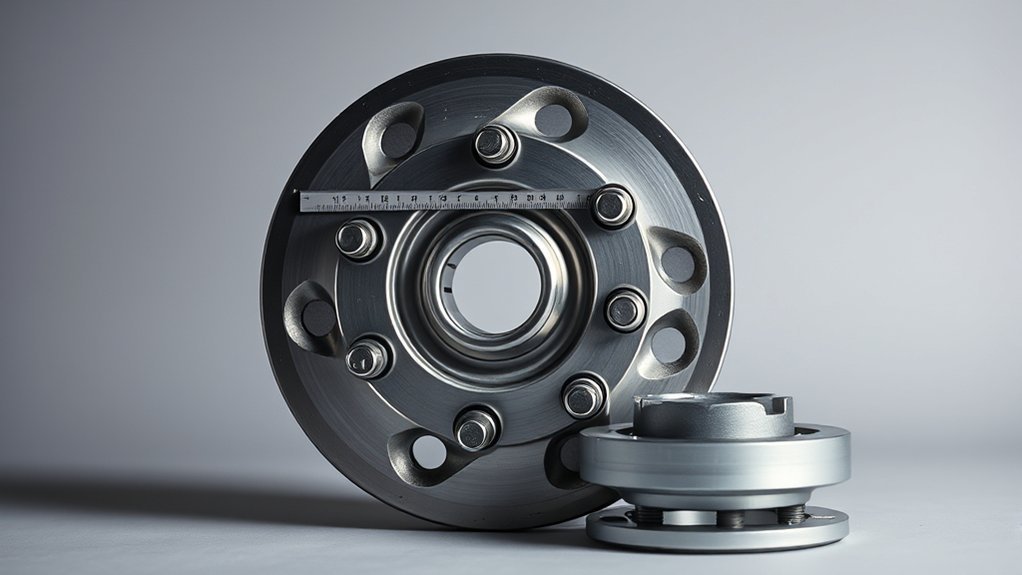
Your Camry uses a 5×114.3 (5×4.5) bolt pattern with an approximate 60.1 mm hub bore and common lug threads of 12×1.5 or 14×1.5, so you’ll want hub‑centric wheels or rings for correct seating. Stick to factory offsets around +35 to +45 mm to avoid strut, caliper, and fender interference; wider wheels and negative offsets risk rubbing, especially if lowered. Follow the fitment checklist and mock‑up wheels to verify clearance, and you can learn more about safe tire and spacer choices.
Camry Bolt Pattern: What 5×114.3 (5×4.5) Means
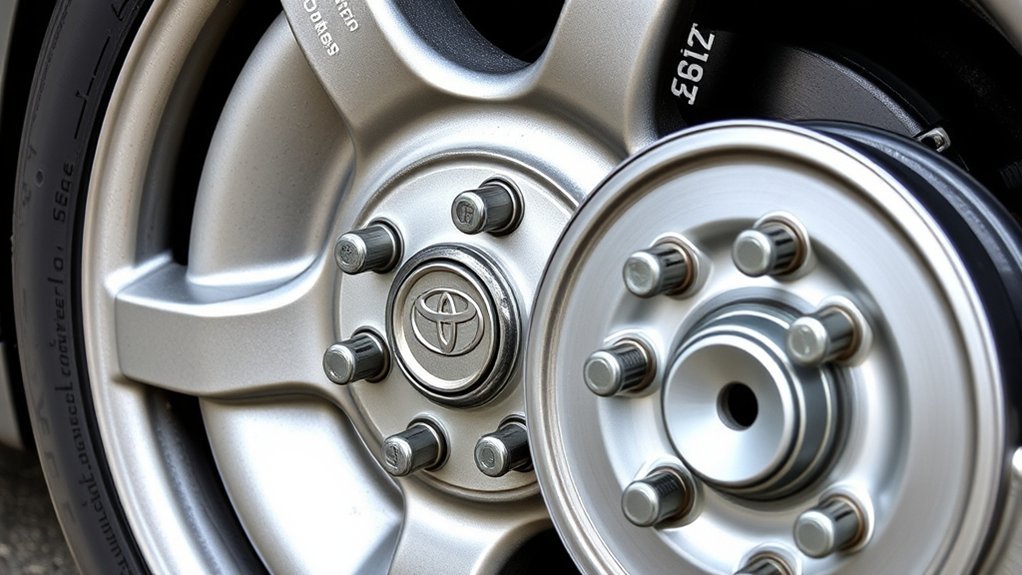
Think of the 5×114.3 (also listed as 5×4.5) spec as the wheel’s mating template: it tells you there are five lug holes arranged on a 114.3 mm diameter circle, so any aftermarket wheel using that same bolt pattern will physically mount to your Camry. You rely on that numeric shorthand to confirm basic wheel compatibility before checking other dimensions. The “5” denotes five lug nuts needed to secure each wheel, a simple but critical element for stability and safety under load.
Because 5×114.3 is common, you gain freedom to explore a wide range of aftermarket options without needing custom drilling. Still, you must verify that the wheel’s hub bore and mounting surface align (addressed elsewhere), but bolt-pattern matching removes a major barrier. Use this knowledge to confidently filter choices, prioritize structurally sound designs, and focus on finishes, offsets, and tire fitment that match your driving goals and liberated style.
Camry Hub Bore & Lug Nuts : Why Hub‑Centric Fit Matters
You’ll need to account for the Camry’s ~60.1 mm hub bore to guarantee wheels seat on the hub rather than just the lug nuts, which prevents vibration. If an aftermarket wheel’s center bore is larger, use hub‑centric rings to fill the gap and restore concentric alignment. Also confirm lug nut size (typically 12×1.5 or 14×1.5 by year) so threads and seat type match for safe, secure mounting.
Hub Bore Importance
A snug hub bore is essential for a vibration-free ride on your Camry: the stock hub measures about 60.1 mm, so wheels that match that diameter (or use properly sized hub-centric rings) seat directly on the hub instead of relying solely on lug nuts for centering. You’ll appreciate the hub bore significance when you swap wheels — correct mating reduces play, improves lateral alignment, and contributes to vibration reduction at speed. Check that aftermarket wheels accept the Camry’s 14mm x 1.5 lug pattern and that the center aperture aligns with the 60.1 mm hub. If it doesn’t, you must address the mismatch before driving. Proper fitment protects bearings, maintains steering precision, and keeps you free from avoidable shakes.
Hub‑Centric Rings Explained
Now that you know the Camry’s hub bore measures about 60.1 mm and why a proper fit reduces vibration, let’s cover how hub‑centric rings solve mismatches between that hub and aftermarket wheels. You want clean, safe contact where the wheel centers on the hub, and hub rings deliver that.
- They fill the gap when aftermarket options have larger center bores, restoring precise wheel alignment on the 60.1 mm hub.
- By centering the wheel on the hub, hub ring benefits include vibration reduction and consistent load transfer across the wheel face.
- You maintain steering stability and avoid stress on studs and lug seats, improving safety and performance.
- Choose quality rings sized to your wheel bore and the Camry hub for reliable, long‑term results.
Lug Nut Compatibility
Because lug nuts are the final interface that secures the wheel to the Camry’s 60.1 mm hub, you need to match their size and seating to avoid vibration and safety issues. You’ll confirm bolt pattern 5×114.3mm, then pick correct lug nut types: older Camrys use 12mm x 1.5, newer ones 14mm x 1.5. If aftermarket wheels have larger center bores, use hub-centric rings to restore hub-centric fit and minimize runout. Follow torque specs and these installation tips: clean mating surfaces, hand-start threads, torque in star pattern, recheck after 50–100 miles.
| Item | Why it matters |
|---|---|
| Bolt pattern | Fitment baseline |
| Hub bore | Centers wheel |
| Lug size | Thread engagement |
| Rings | Restore centricity |
| Torque | Safe retention |
Factory Camry Offsets : Safe Range (+35 to +45mm) and Quick Rules
While staying within the factory +35 to +45mm offset range, you’ll preserve suspension geometry and minimize rubbing or handling issues; offsets toward +35mm push the wheel outward toward the fender, while +45mm moves it inward toward the strut. You want freedom to modify without compromising safety, so follow clear rules that respect offset impact and alignment considerations.
- Choose wheels with +35 to +45mm to maintain designed scrub radius and predictable steering feel.
- Avoid positive offsets outside the range; they can induce rubbing or change contact patch under load, especially if lowered.
- When swapping wheel widths, recalculate effective offset and check for caliper and inner clearance; maintain factory alignment specs after installation.
- Use the 5×114.3mm bolt pattern standard for fitment; adapters alter offset and handling, so treat them as last-resort tools.
These rules let you pursue style and liberation while keeping handling precise and mechanically sound.
How Offset Affects Clearance: Struts, Fenders, and Calipers
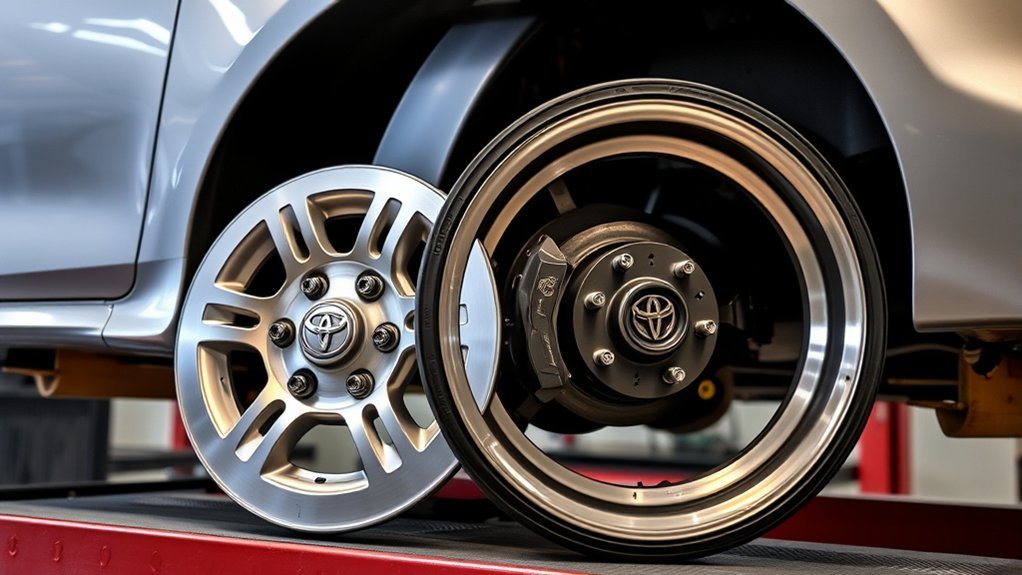
Having settled on the factory +35 to +45mm range, you should understand how offset actually changes clearances around the struts, fenders, and calipers. Offset impact is direct: the mounting face position alters wheel geometry, moving the rim inward or outward and changing contact points. Clearance considerations require you to visualize the wheel relative to suspension and bodywork. A more positive offset shifts the wheel inward and can cause strut interference if the wheel is wider than stock; a lower (less positive) offset pushes it out and raises fender issues, especially on lowered Camrys. Caliper clearance is usually generous but always verify brake-to-wheel spacing with your chosen wheel and tire. When evaluating aftermarket options, prioritize wheels that match the factory envelope to avoid fitment dilemmas. Measure, mock-up with spacers if needed, and accept that conservative choices preserve handling and free you from return hassles while maintaining your vehicle’s liberated stance.
Wheel Widths & Tire Sizes for 18–20 Camry Wheels (Recommended Combos)
When upgrading to 18–20 inch wheels you’ll want wheel widths and tire sizes that match the Camry’s suspension and fender clearances. For 18s, use 8–8.5″ wheels with 225/40 or 245/45 tires; for 19s, 8.5–9″ widths with 235/35 or 245/40; and for 20s, 9–10″ widths with 245/35 or 255/30, noting 20s may need minor modifications. Keep offsets between +35mm and +45mm to maintain proper handling and avoid interference.
Recommended Tire Combos
If you’re swapping up to 18–20-inch wheels on a 2018–2024 Camry, match wheel widths and tire heights to preserve handling and clearance: keep tire pressure tuned for load and seasonal changes to maintain grip and efficiency. Pick combos that respect the Camry’s +35mm to +45mm offset window and 5×114.3mm bolt pattern.
- 18″ — 225/40 on 8″ wheels for balanced ride, or 245/45 for added comfort and sidewall compliance.
- 19″ — 245/35 on wider rims for a sporty stance; 245/40 if you want more cushioning.
- 20″ — 245/35 to retain steering responsiveness without harshness.
- Use consistent diameters to avoid speedometer error and preserve stability.
Wheel Width Guidance
Because wheel width directly affects tire fitment, handling, and clearance, you should match rim widths to tire sizes and the Camry’s +35 to +45 mm offset window. Stay within stock 6.5–8 in for OEM consistency; move to 8.5 in only if you want clearer performance upgrades and controlled wheel aesthetics. For 18-in rims, pair 6.5–8 in with 225/40 or 245/45 tires. For 19-in rims, use 7.5–8.5 in with 245/35 or 245/40 for ideal contact patch and steering feel. For 20-in rims, 8 in with 245/35 balances ride comfort and grip. Prioritize clearance: avoid widths that push tires past fenders or increase scrub. Choose sizes that free you to drive confidently and look intentional.
Hub Rings, Spacers, and Studs : When and How to Use Them Safely
Three components—hub centric rings, wheel spacers, and extended studs—play distinct roles in safe wheel fitment, and you need to use them correctly to maintain alignment, load capacity, and thread engagement. For hub ring installation, match the ring to the Toyota hub (60.1mm) and the wheel bore to center the load on the hub, not the lug nuts. Spacer safety means checking effective offset and clearance: a 10mm spacer on a +40mm wheel yields +30mm effective offset.
- Verify hub ring fit to eliminate runout and secure wheel centering.
- Calculate effective offset after spacing; confirm tire/arch clearance and load limits.
- Use extended lug studs when spacers exceed 5mm to preserve thread engagement and clamping force.
- Confirm lug nut compatibility (Toyota 12mm x 1.5 or matching aftermarket) and torque to spec.
You’ll free your fitment choices while keeping structure, safety, and vehicle dynamics uncompromised.
Quick Fitment Checklist: Measure, Mock‑Up, and Test Before You Buy
Start by measuring and verifying key dimensions: count the lug holes and confirm the 5×114.3mm bolt pattern, check the center bore is about 60.1mm, and measure the wheel offset (aim for +35 to +45mm) so you know the basic fitment will match the Camry’s hub and suspension geometry. Next, use fitment tools to confirm offset and bore, and inspect wheel materials for strength and weight. Mock‑up wheels on the hub to check brake caliper and suspension clearance; don’t assume stock components will accept any aftermarket wheel. Test tire sizes against chosen wheel width—common Camry combos include 225/40 and 245/45—before purchase.
| Item | What to Measure | Pass Criteria |
|---|---|---|
| Bolt pattern | Lug count & PCD | 5×114.3mm |
| Center bore | Hub fit | ≈60.1mm |
| Offset | Mount to centerline | +35 to +45mm |
| Clearance | Calipers/fenders | No contact |
| Tire test | Size vs wheel | Proper clearance |
Follow this checklist to free yourself from fitment guesswork and buy with confidence.
Common Fitment Issues & Fixes (Lowering, Rubbing, Rolling, Ideal Tire Swaps)
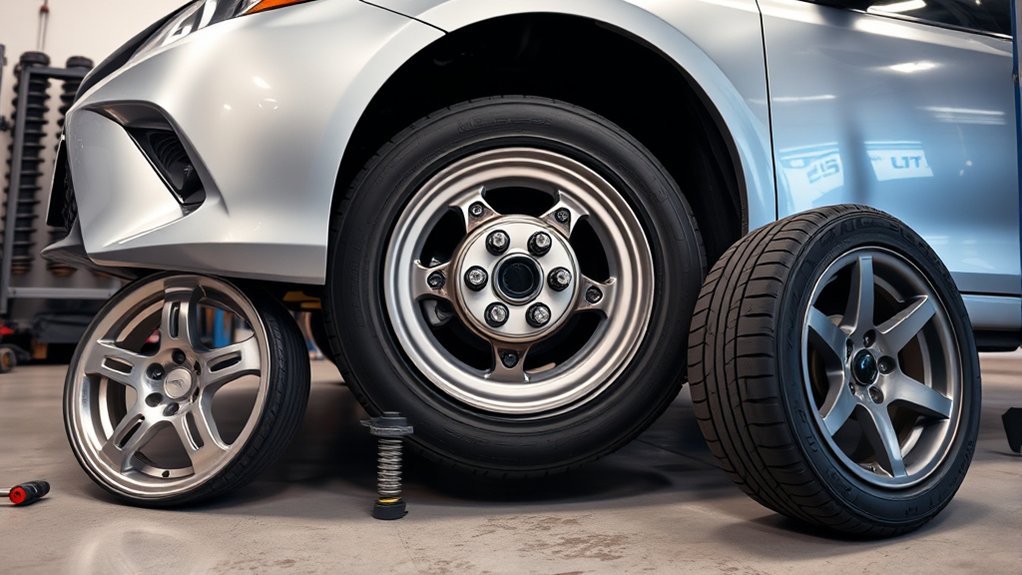
When you lower a Camry, expect tighter clearances that often reveal issues with struts, calipers, and fenders, especially if you push wheel width or run low offsets; plan accordingly by choosing conservative tire sizes and verifying suspension travel. You’ll face rubbing if you ignore fitment adjustments and tire selection—wider tires and low offsets create interference with strut components and inner fenders.
- Inspect: mock up wheels/tires and cycle suspension to find caliper or strut contact before finalizing components.
- Offset control: stay in +35 to +45mm to prevent outer lip and inner clearance problems on stock arches.
- Fender work: roll or slightly pull fenders for aggressive setups (e.g., 18×8.5 +33) to stop rubbing during turns and compression.
- Tire swaps: choose 225/40/18 or 225/45/18 as ideal compromises for lowered Camrys—maintain ride quality, reduce rubbing, and preserve confident handling.
Frequently Asked Questions
How to Tell Wheel Size and Offset?
Measure wheel diameter and width in inches for wheel measurement, then read stamped offset or perform offset calculation from mounting surface to centerline in millimeters. You’ll free yourself by verifying specs and avoiding fitment issues.
Conclusion
Think of wheel fitment like tuning a musical instrument: small changes make big differences. You’ll want to match the Camry’s 5×114.3 bolt pattern, hub bore, and lug specs, stick close to factory offsets (+35–+45mm), and choose widths/tires that maintain clearance for struts, calipers, and fenders. Use hub rings, spacers, or studs only when measured and mocked up. Measure, test-fit, and drive slowly to confirm before finalizing. Safe, precise adjustments keep things reliable.