By [VERIFY: add real author name and credentials] · Last updated: June 16, 2026
A Toyota Camry PCV (positive crankcase ventilation) valve meters blow-by vapors from the crankcase into the intake so the engine burns them instead of venting them to the atmosphere. When it sticks, clogs, or wears out, common symptoms include rough or high idle, a hissing oil cap, oil leaks, blue smoke, and rising oil consumption. The system is small, but a healthy PCV valve is what keeps crankcase pressure, fumes, sludge, and gasket wear under control.
Quick Answer
A Camry PCV valve meters crankcase vapors into the intake. When it sticks, clogs, leaks, or uses the wrong flow rate, you may notice rough idle, high or erratic idle, oil leaks, oil-cap hissing, smoke, sludge, or rising oil consumption. Inspect the valve, hose, and grommet first, then replace any suspect part with a VIN-correct PCV valve.
Key Takeaways
- The PCV valve does not simply stay “closed” at idle; it usually meters a small, controlled flow when intake vacuum is high.
- Common bad-PCV symptoms include rough idle, hissing, smoke, oil leaks, sludge, dipstick pressure, and increased oil use.
- Part numbers vary by Camry year, engine, build market, and VIN. Always verify fitment before buying.
- Use the oil grade and specification in your owner’s manual. Do not blame 0W-16 or 0W-20 by viscosity alone.
- Replace the PCV valve or hose when it fails inspection, sticks, clogs, cracks, leaks, or your exact maintenance schedule calls for it.
At a Glance
| Time Required | 10–30 minutes on many older/common engines; longer if access is tight |
| Difficulty | Beginner to intermediate |
| Tools Needed | Gloves, flashlight, pliers, small pick, scan tool if diagnosing codes, VIN-correct PCV valve and grommet/hose if needed (many 2AZ-FE engines use a 22mm / 7/8-inch wrench or socket on the threaded valve) |
| Cost | The OEM valve itself typically runs about $6–$11 depending on part number and engine [VERIFY: confirm current price at time of purchase]; labor cost depends on engine access |
What the PCV System Does in a Toyota Camry
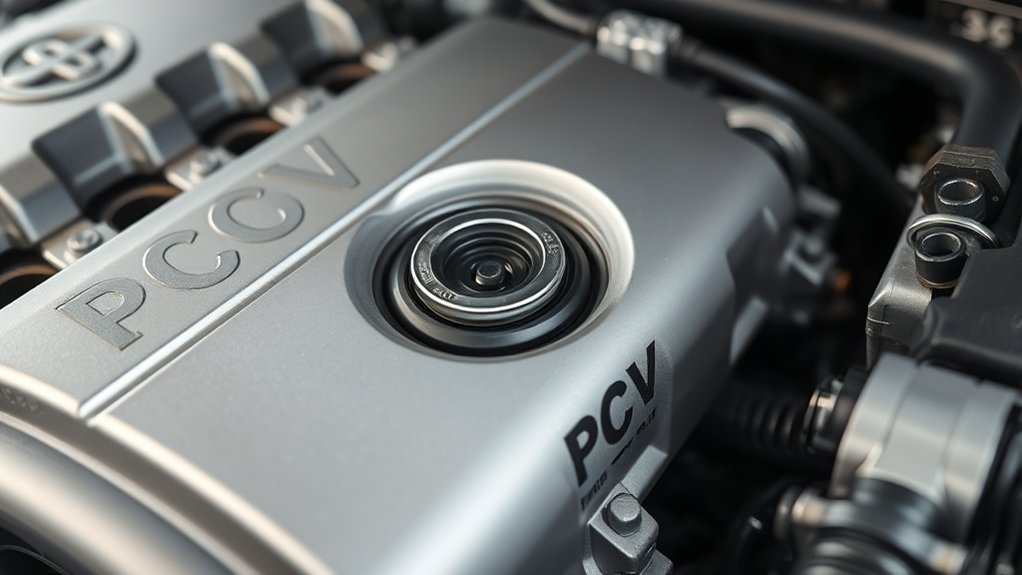
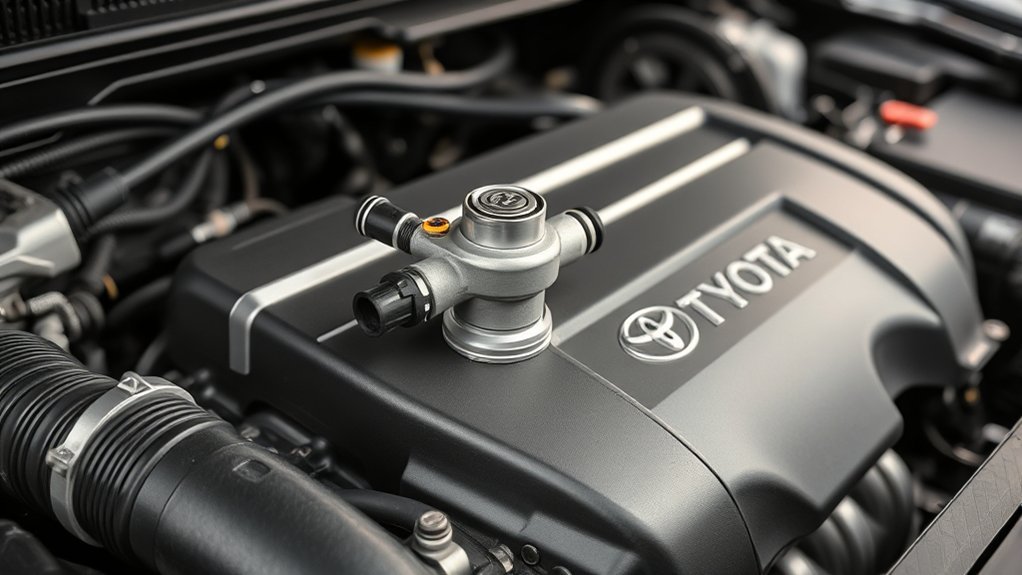
The PCV system is the Camry’s crankcase ventilation path. Combustion gases that slip past the piston rings are called blow-by. Instead of letting those vapors build pressure in the crankcase or escape to the atmosphere, the PCV system meters them into the intake stream so the engine can burn them.
This matters for three practical reasons. First, controlled crankcase ventilation helps reduce hydrocarbon emissions, which is why the PCV valve or orifice is part of Toyota’s emissions-related systems. Second, it helps prevent pressure from pushing oil past gaskets, seals, the dipstick tube, or the oil filler cap. Third, it helps remove moisture and fuel vapors that can contribute to sludge when oil changes are neglected.
For background on why PCV exists, the U.S. Environmental Protection Agency’s older but still useful emissions reference explains positive crankcase ventilation as an emissions-control system that handles crankcase vapors: EPA Positive Crankcase Ventilation Systems.
Note: A PCV system can reduce oil mist and crankcase pressure, but it will not fix worn piston rings, worn valve guides, a failed gasket, or an engine that is already producing excessive blow-by.
Symptoms of a Bad Camry PCV: Quick Checklist
A bad Camry PCV valve can mimic other intake, ignition, oil-control, and emissions problems, so use symptoms as clues rather than proof. The most useful signs are the ones that point to either a vacuum leak or crankcase pressure problem.
| Symptom | What it may mean | What to check first |
|---|---|---|
| Rough idle, high idle, or erratic idle | PCV stuck open, cracked hose, or vacuum leak | Hose fit, grommet seal, valve seating, fuel trims |
| Hissing from oil cap or dipstick area | Abnormal crankcase pressure or vacuum path issue | PCV valve, hose blockage, breather hose, grommet |
| Oil leaks around seals or gaskets | Pressure not venting correctly | PCV restriction, worn rings, clogged hoses |
| Blue smoke or rising oil consumption | Oil entering intake, worn engine parts, or PCV fault | PCV valve, intake oil residue, compression/leak-down if severe |
| Sludge in hose or valve | Poor oil maintenance, moisture, short-trip operation, restriction | Oil history, hose condition, valve movement |
| Check engine light with lean or misfire clues | Unmetered air or unstable crankcase ventilation | Scan codes, freeze-frame data, fuel trims, vacuum leaks |
Some Toyota parts catalogs describe PCV-related symptoms such as smoke, high or erratic idle, oil-cap hissing, or a dipstick that will not stay seated. Those symptoms are useful, but they are not exclusive to the PCV valve. Diagnose before replacing multiple parts.
Quick DIY Checks for the Camry PCV System
Warning: Work on a cool engine whenever possible. Keep hands, hair, sleeves, tools, and test hoses away from belts, pulleys, fans, and hot exhaust parts. If you perform a running-engine vacuum check, do it briefly and stop if the idle becomes unstable.
Start with the basics before buying parts. Many PCV problems come from a cracked hose, hardened grommet, loose clamp, or blocked passage rather than the valve alone.
- Locate the PCV valve and hose. On many Camry engines, the valve is on or near the valve cover and connects to the intake through a hose. Some later engines and hybrid layouts may package the system differently.
- Inspect the hose. Look for cracks, soft spots, collapse, oil saturation, loose fit, or sludge. A leaking hose can act like a vacuum leak.
- Check the grommet or seal. A hard or cracked grommet can leak even when the valve is good.
- Shake the valve if it is removable. A rattle can suggest the plunger is free, but it is not a complete test. A valve can rattle and still flow incorrectly.
- Check for vacuum carefully. With the engine idling, a working PCV path should usually show controlled vacuum at the valve or hose. Blocking the hose briefly may change idle speed, but do not hold it blocked.
- Scan the car if the check engine light is on. Lean codes, misfire codes, and unusual fuel trims can support a vacuum-leak diagnosis, but they do not automatically condemn the PCV valve.
Pro Tip: If the valve is cheap and easy to access, replace the grommet or hose at the same time when they are brittle. A new valve installed into an old cracked grommet can still leak.
Camry PCV Operation: Idle, Cruise, and Load
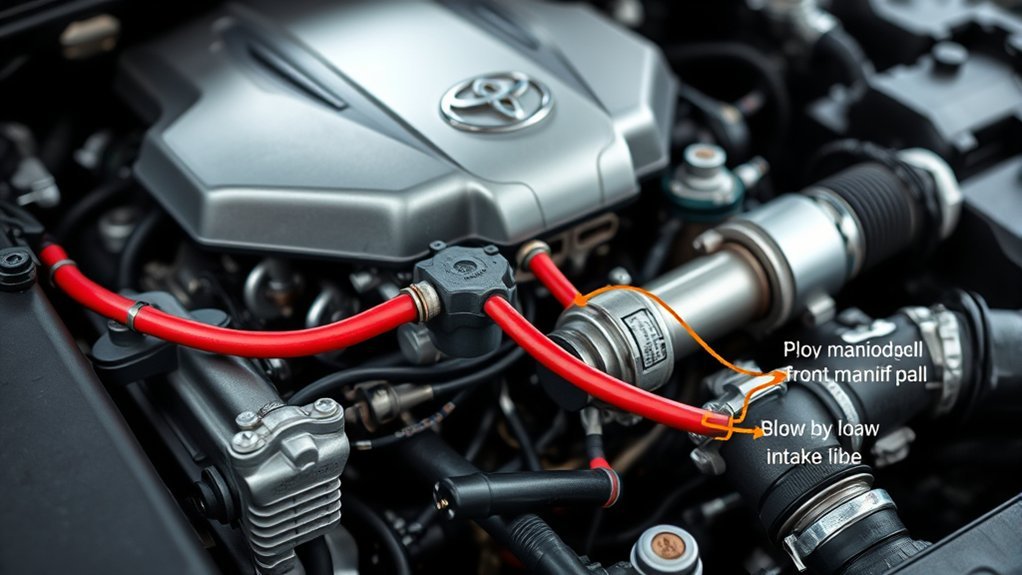
A PCV valve is a metering device, not just an on/off plug. Its position changes with intake manifold vacuum and crankcase flow.
- Idle and deceleration: Intake vacuum is high, so the valve usually moves to a restricted low-flow position. This prevents the engine from pulling too much unmetered air and vapor at idle.
- Light cruise: Vacuum and blow-by are moderate, so the PCV system can scavenge crankcase vapors efficiently.
- Acceleration and heavy load: Intake vacuum drops while blow-by increases. The valve and breather path must still control crankcase pressure, but flow behavior depends on the engine design.
- Backfire protection: A traditional PCV valve also helps block flame or pressure from traveling backward into the crankcase.
This is why the wrong PCV valve can cause driveability problems even if it fits physically. PCV valves have specific flow rates and vacuum transition points. A valve that looks similar may not meter the same way.
Camry PCV Types by Model Year and Engine: Location and Part Numbers
Camry PCV fitment depends on model year, engine, build location, emissions package, hybrid/non-hybrid layout, and VIN. Treat the table below as a practical starting point, not a final buying decision.
Note: Before ordering, verify the PCV valve by VIN through Toyota’s parts catalog, a Toyota dealer, or a trusted OEM parts supplier. Do not buy from a blog table alone.
| Camry range | Common engines | Example OEM listings to verify | Typical location notes |
|---|---|---|---|
| 2002–2006 | 2.4L (2AZ-FE), 3.0L (1MZ-FE), 3.3L (3MZ-FE) | 12204-28020 confirmed for the 2.4L 2AZ-FE; a separate number applies to the 3.0L/3.3L V6 — do not assume the 4-cylinder number fits [VERIFY V6 part number] | Often valve cover or ventilation hose area; access varies by I4/V6 |
| 2007–2011 | 2.4L (2AZ-FE), 2.5L (2AR-FE from 2009), 3.5L (2GR-FE) | 12204-28030 confirmed for the 2.4L; 12204-31040 commonly listed for the 3.5L V6 [VERIFY exact V6 start year] | Trace the hose from the intake to the valve cover area |
| 2012–2017 | 2.5L (2AR-FE), 3.5L (2GR-FE), hybrid | 12204-36020 for the 2.5L (also widely listed for 2009–2019 non-hybrid 2.5L applications across several Toyota models — confirm your exact year by VIN); 12204-31040 appears in some 3.5L listings | Usually accessible from the valve cover/ventilation hose area, but confirm routing |
| 2018–2024 | 2.5L (A25A-FKS), 3.5L (2GR-FKS), hybrid (A25A-FXS) | 12204-31040 for the 2.5L four-cylinder; 12204-0P020 confirmed specifically for the 3.5L V6 — not the 2.5L [VERIFY hybrid A25A-FXS number separately] | Later layouts can be more integrated; verify by VIN and diagram before removal |
For current fitment research, use Toyota’s owner and parts resources such as Toyota Manuals and Warranties and an OEM parts catalog such as Toyota Camry PCV valve listings. Toyota’s own parts site also lists genuine ventilation valve sub-assemblies, such as Toyota ventilation valve sub-assembly 12204-0P020.
[Products Worth Considering]

Turn your iPhone, Android device, or Windows PC into a professional-grade diagnostic scan tool with this Bluetooth OBD2 adapter. It is designed for broad vehicle compatibility and supports popular apps for deeper diagnostics, live data, and code clearing. Built-in protections and firmware updates help keep your vehicle and scanner safe while delivering reliable performance.

This PCV valve and hose kit is designed as a direct replacement for select Toyota, Scion, and Lexus applications, helping restore proper crankcase ventilation and engine performance. Built with durable NBR rubber and made for straightforward installation, it offers a reliable fit for compatible 2.4L models. It is a practical maintenance part for addressing worn or failing PCV components while supporting smoother engine operation.

This genuine Toyota vent valve is designed as a vehicle-specific replacement part to support proper engine ventilation and reliable PCV system performance. It helps maintain correct airflow and crankcase function, making it a dependable choice for restoring original operation. Built to Toyota specifications, it offers a direct-fit solution for compatible vehicles.
How Oil Choice and Volatility Affect Your Camry PCV
Oil choice matters, but the simple rule is this: use the oil grade and specification Toyota calls for in your exact owner’s manual. Toyota’s support page directs owners to verify the correct motor oil in the owner’s manual for their vehicle: Toyota motor oil guidance.
Do not assume that a lower viscosity grade such as 0W-16 automatically causes PCV oil consumption. Oil consumption depends on engine condition, ring seal, valve-stem sealing, oil volatility, oil temperature, driving pattern, PCV design, and maintenance history. Research into oil consumption also shows that the PCV path is one of several oil-consumption mechanisms, not the only one: MIT study on lube oil characteristics in the PCV system.
- Use the specified oil. Match the owner’s manual for your year, engine, and climate.
- Do not overfill. Too much oil can increase oil mist and intake contamination.
- Do not stretch oil changes. Old oil, short-trip moisture, and fuel dilution can create deposits that restrict small passages.
- Use a quality filter and oil. Cheap oil and neglected service increase sludge risk.
- Investigate heavy oil use. A PCV valve may be part of the issue, but worn rings, valve guides, or intake deposits may also be involved.
Pro Tip: If the PCV valve is oily and clogged soon after replacement, look beyond the valve. Check oil level, oil-change history, breather hoses, intake deposits, and engine blow-by.
Replacing the Camry PCV Valve: Step-by-Step for Common Engines
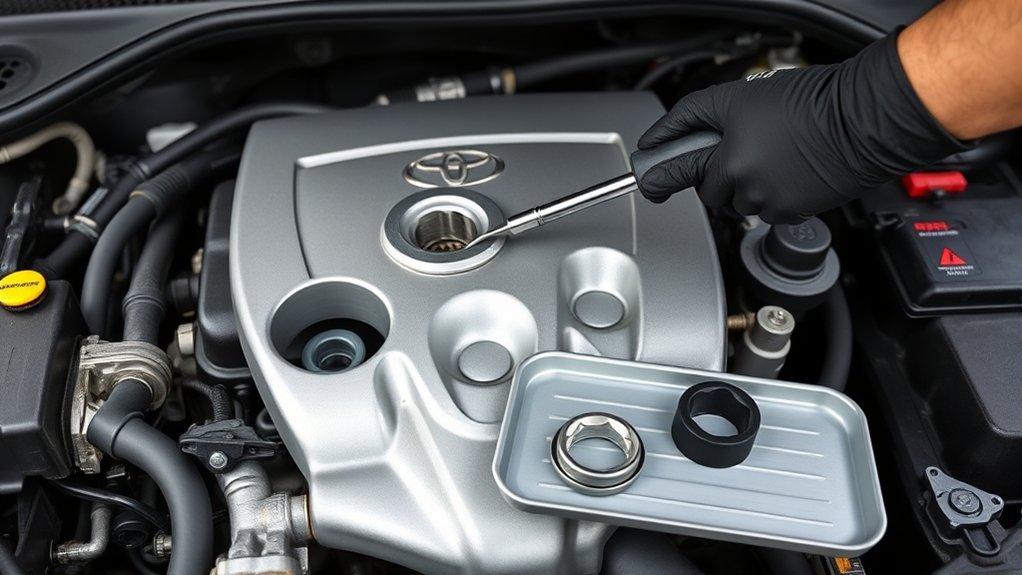
The basic replacement process is simple on many Camrys: locate the valve, remove the hose, remove the valve, inspect the seal, install the new VIN-correct valve, reconnect the hose, and test for leaks. Access varies by engine, so stop if the valve is buried under components you are not comfortable removing.
Warning: Do not force a brittle PCV valve, hose, or grommet. Broken plastic can fall into the valve cover area or leave you with a vacuum leak. If the grommet is hard, replace it instead of reusing it.
[Products Worth Considering]

This engine oil filler cap is a direct replacement designed for a wide range of Toyota, Lexus, and Scion vehicles. It helps restore a secure seal, supports reliable engine operation, and is made for easy installation with compatible factory fitment. Multiple part numbers are referenced to help ensure the correct match before ordering.

This replacement gas cap is designed to restore a tight fuel-tank seal, helping reduce vapor leaks, prevent check engine light issues, and maintain proper fuel system performance. Built in OE-style form for a wide range of Toyota and Lexus vehicles, it offers a direct DIY fix with durable materials for reliable, long-lasting use.

Castrol EDGE 0W-20 advanced full synthetic motor oil is engineered for drivers seeking strong wear protection, excellent viscosity control, and thermal stability. It delivers superior performance in critical engine areas, including fuel economy, high-temperature protection, sludge control, and wear defense. Designed for extended oil-change intervals, it helps keep modern engines running smoothly under demanding conditions.
Locate the PCV
With the engine cool, open the hood and follow the ventilation hose from the intake manifold or intake tube back toward the valve cover. On many common Camry engines, the PCV valve is a small plastic or metal valve seated in a grommet or threaded into the valve cover area.
- Use a flashlight to identify the valve and hose routing before pulling anything apart.
- Confirm you are working on the PCV valve, not an electrical connector, vacuum switching valve, or coolant hose.
- Take a quick photo before disassembly so hose routing is easy to restore.
- Compare the new valve with the old valve before installation, including hose diameter, thread or grommet style, and flow direction.
Remove and Inspect
Grip the hose close to the valve and twist gently to break it loose. If the hose is stuck, use pliers carefully or a small pick around the hose end, but avoid cutting into the fitting. Remove the valve by pulling it from the grommet or unscrewing it if your engine uses a threaded style.
| What to check | What to look for | Best fix |
|---|---|---|
| PCV valve | No movement, sticky plunger, sludge, cracked body | Replace with VIN-correct valve |
| Hose | Cracks, swelling, collapse, loose fit | Replace hose with PCV-rated hose or OEM hose |
| Grommet or seal | Hard, cracked, flattened, oil-soaked | Replace grommet/seal |
| Valve cover passage | Heavy sludge or blocked port | Clean carefully; investigate oil maintenance and blow-by |
Install and Test
Install the new valve in the same orientation as the original. Press it straight into the grommet or tighten it gently if threaded. Reconnect the hose fully so it seals around the fitting.
- Confirm the valve is seated and the hose is not kinked.
- Start the engine and listen for hissing.
- Watch idle quality for a minute.
- If you have a scan tool, check short-term fuel trim at idle. A major change after repair can confirm you fixed or created an air leak.
- After a short drive, recheck for oil seepage, hose movement, and stored/pending codes.
OEM vs Aftermarket Camry PCV Parts: When to Choose Which
PCV valves are small and inexpensive, but they are calibrated parts. The wrong valve can fit the hose and still flow incorrectly. That is why OEM or high-quality aftermarket fitment matters.
[Products Worth Considering]

This set of four ignition coils is designed to restore smooth engine performance and reliable starting for compatible Toyota, Scion, and Lexus applications. Built to meet or exceed OE specifications, these coil packs help reduce misfires, hesitation, and check engine light issues while supporting stronger ignition output. The direct-fit design makes installation straightforward, and the package includes a warranty for added peace of mind.

Castrol GTX Full Synthetic 5W-30 motor oil is designed to deliver maximum engine protection in severe driving conditions. It helps fight wear, control sludge, and resist viscosity breakdown while supporting longer intervals between oil changes. Formulated to meet or exceed key industry and vehicle manufacturer specifications, it offers dependable performance for modern engines.

This Fel-Pro valve cover gasket set is designed to help restore a reliable seal on compatible Toyota, Lexus, and Scion engines. It uses a proprietary cork-rubber formulation that conforms well to imperfect sealing surfaces, and each set includes the parts needed for the repair. Real-world testing helps ensure dependable performance and long-lasting sealing confidence.
Cost Versus Quality
OEM parts usually cost more, but they reduce guesswork because the valve is designed for the engine’s expected vacuum and blow-by range. A reputable aftermarket valve can be acceptable if it cross-references correctly and comes from a trusted manufacturer. A no-name valve is risky because the flow rate may be wrong even if the shape looks correct.
- Choose OEM when the vehicle is newer, emissions compliance matters, the old valve failed early, or access is difficult.
- Choose trusted aftermarket when the brand provides accurate fitment data and a clear warranty.
- Avoid cheap unknown valves when you are chasing lean codes, idle problems, or warranty-sensitive repairs.
Fitment and Compatibility
Confirm engine, year, trim, build market, and VIN. Check the old valve style before ordering: some valves press into a grommet, some thread into a cover, and some later systems use different ventilation hardware nearby. Hose diameter, mounting angle, and flow direction all matter.
Warranty and Support
Toyota’s warranty and maintenance guidance says replacement parts do not have to be Toyota Genuine Parts, but non-equivalent parts may impair emissions-system effectiveness. That makes quality documentation important. If you use an aftermarket part, keep the receipt and choose a part warranted as equivalent in quality and function.
You can review Toyota’s maintenance and emissions warranty language in the Toyota Warranty & Maintenance Guide.
Preventive Maintenance and Oil-Change Tips to Protect the PCV
There is no single universal PCV replacement mileage that applies to every Camry. A better routine is to inspect the system during oil changes and replace parts when they fail inspection, leak, clog, stick, or match a model-specific maintenance schedule.
- Inspect the PCV hose and valve at oil-change time. Look for cracks, loose fit, and sludge — this is easiest to fold into your regular Camry maintenance schedule visit.
- Use the correct oil specification. The wrong oil can affect deposits, wear, and fuel economy.
- Avoid overfilling the crankcase. Overfilled oil can increase oil mist in the intake.
- Do not ignore short-trip sludge. Repeated cold starts and short drives can leave moisture in the crankcase.
- Fix overheating or coolant leaks quickly. Heat and contamination can accelerate oil breakdown.
- Keep records. Maintenance records help with warranty questions and make repeat problems easier to diagnose.
Troubleshooting Persistent Blow-By, Sludge, and Related Issues
If a new PCV valve does not solve the problem, do not keep replacing it. Persistent pressure, sludge, smoke, or oil consumption means the engine needs a broader diagnosis.
| Problem after PCV service | Likely next checks | When to get help |
|---|---|---|
| Oil cap hisses or dipstick pops up | Blocked breather hose, restricted PCV passage, excessive blow-by | If pressure remains after hoses and valve are clear |
| Rough idle remains | Intake vacuum leak, throttle body issue, MAF contamination, misfire source | If fuel trims are high or misfire codes return |
| Heavy oil consumption continues | Oil level, intake oil pooling, compression, leak-down, valve seals | If oil use is rapid or blue smoke is frequent |
| New valve clogs quickly | Oil-change history, coolant contamination, short-trip use, engine wear | If sludge returns within one oil-change interval |
| Oil leaks continue | Gaskets, seals, crankcase pressure, clogged ventilation port | If leaks worsen after PCV replacement |
A PCV valve is a cheap part, but a repeat PCV failure is not a cheap-parts problem. It is a clue to inspect oil quality, hoses, crankcase pressure, and engine condition.
Frequently Asked Questions
How does a Toyota Camry PCV valve work?
It meters blow-by vapors from the crankcase into the intake so the engine can burn them. At idle, high vacuum usually pulls the valve into a restricted low-flow position. At cruise and load, flow changes with vacuum and blow-by volume.
What are the most common bad PCV symptoms on a Camry?
Common symptoms include rough or high idle, hissing, oil-cap pressure, dipstick pressure, oil leaks, blue smoke, increased oil consumption, sludge in the hose, and lean or misfire-related check-engine clues. These symptoms can also have other causes, so inspect before replacing parts.
Can I test a PCV valve by shaking it?
A rattle test is only a quick clue. If the valve rattles, the plunger may be free, but the valve can still flow incorrectly. Combine the rattle test with visual inspection, hose inspection, vacuum checks, and scan-tool data when symptoms are present.
How often should I replace a Camry PCV valve?
Replace it when it sticks, clogs, leaks, cracks, fails a vacuum/flow check, or your exact Toyota maintenance information calls for replacement. A universal 30,000–50,000 mile rule is not reliable for every Camry engine.
Can the wrong PCV valve cause idle problems?
Yes. A PCV valve can fit physically but have the wrong flow rate. If it flows too much at idle, it can act like a vacuum leak. If it flows too little, crankcase pressure and sludge problems can increase.
Does a bad PCV valve always trigger a check engine light?
No. A small restriction or cracked hose may cause oil or idle symptoms before a code appears. If the light is on, scan the codes and look at fuel trims instead of replacing the valve based on the light alone.
Is it safe to drive with a bad PCV valve?
A short drive with a suspected bad PCV valve is not usually an immediate emergency, but it is not something to put off. A stuck or clogged valve can worsen oil leaks, increase oil consumption, and act like a vacuum leak that causes rough or unstable idle. If you notice hissing, visible smoke, or a rapidly dropping oil level, have the system inspected before driving any distance.
Conclusion
Think of the Camry PCV system as a small metered breathing path for the crankcase. When it works, it helps control vapors, pressure, sludge, and emissions. When it fails, it can create rough idle, hissing, leaks, smoke, and oil-use complaints that look worse than the part itself.
The smart fix is simple: inspect the valve, hose, grommet, and passages; use the oil Toyota specifies; verify the replacement part by VIN; and treat repeat PCV symptoms as a sign to check crankcase pressure and engine condition. A good PCV repair is not just a new valve. It is a sealed, correctly routed, correctly metered system.
Sources
- U.S. EPA — Positive Crankcase Ventilation Systems — backs up PCV emissions purpose and crankcase vapor control.
- Toyota Owners — Manuals and Warranties — backs up using Toyota owner information for vehicle-specific maintenance and oil requirements.
- Toyota Support — Motor Oil Guidance — backs up checking the owner’s manual for the correct oil type.
- Toyota Warranty & Maintenance Guide — backs up PCV as an emissions-system component and replacement-parts quality guidance.
- ToyotaPartsDeal — Toyota Camry PCV Valve Fitment Listings — backs up model-year and part-number variation that must be verified by VIN.
- MIT DSpace — Lube Oil Characteristics in the PCV System — backs up PCV-related oil-consumption mechanisms and why repeat oil use needs broader diagnosis.