Understanding OBD-II readiness monitors in your Toyota Camry is essential for meeting emissions standards and ensuring peak vehicle performance. These monitors assess your emissions control system’s functionality and need to be free of active diagnostic trouble codes (DTCs) to be ready. Factors like engine temperature and proper thermostat function play critical roles. Regular maintenance and a specific drive cycle can help achieve readiness. Discover more about common issues and solutions to keep your vehicle compliant and efficient.
Understanding OBD2 Monitors: Why They Matter
OBD2 monitors play an essential role in your vehicle’s emissions control system. These monitors guarantee critical components, like the catalytic converter and oxygen sensors, function correctly, maintaining your vehicle’s overall performance. Each monitor evaluates different systems, and their readiness signifies that you meet the necessary performance criteria for emissions compliance.
When you disconnect the battery or clear diagnostic trouble codes, all OBD2 monitors reset, requiring a defined drive cycle to achieve readiness. It’s important that the Malfunction Indicator Light (MIL) is off, as an illuminated light indicates issues that need fixing. Additionally, environmental conditions, such as maintaining a fuel level between 35% and 85%, can impact monitor functionality, necessitating ideal conditions for accurate assessments. Understanding these factors empowers you to guarantee your Toyota Camry adheres to emissions standards, enhancing both performance and compliance.
Common Issues Affecting OBD2 Monitor Readiness
When you check OBD2 monitor readiness, be aware that active diagnostic trouble codes (DTCs) can block completion. Additionally, sensor and component failures, like those in the catalytic converter or oxygen sensors, can severely impact readiness. Ensuring these elements function properly is essential for passing readiness checks.
Diagnostic Trouble Codes
Diagnostic Trouble Codes (DTCs) play an important role in determining OBD2 monitor readiness, as any active codes can prevent the monitors from resetting. Understanding DTC definitions and engaging in DTC troubleshooting is vital for ensuring your Toyota Camry runs efficiently. Here are some common DTCs that may affect readiness:
- P0420: Catalyst System Efficiency Below Threshold
- P0138: Oxygen Sensor Circuit High Voltage
- Defective catalytic converter: Can trigger persistent codes
- Malfunctioning oxygen sensors: Lead to readiness failures
- Temperature-related codes: Affect monitor completion
Make sure the Malfunction Indicator Light (MIL) is off after repairs. Ideal driving conditions are also important for monitors to reset successfully.
Sensor and Component Failures
Active DTCs can considerably impact the readiness of your Toyota Camry’s OBD2 monitors, but sensor and component failures often play a significant role as well. Oxygen sensor failures can hinder the catalytic converter monitor from running, triggering DTCs and affecting readiness. Defective catalytic converters are essential for emission controls; their issues can cause the Malfunction Indicator Light (MIL) to activate and monitors to remain incomplete. Additionally, exhaust leak impacts can lead to erroneous readings from oxygen sensors, disrupting the air-fuel mixture. Faulty thermostats prevent the engine from reaching the ideal temperature necessary for monitor completion. Finally, inconsistent driving conditions can impede drive cycles, emphasizing the importance of readiness monitors in ensuring your vehicle operates efficiently.
How to Achieve OBD2 Monitor Readiness
To achieve OBD2 monitor readiness, you need to maintain your engine at an ideal temperature between 180°F and 183°F during the warm-up phase. Follow the recommended drive cycle to guarantee all monitors complete their checks under optimal driving conditions. Make sure your fuel level stays between 35% and 85% to support the readiness process effectively.
Ideal Driving Conditions
Achieving OBD2 monitor readiness requires specific driving conditions that allow your vehicle’s systems to perform at their best. To optimize your Toyota Camry’s readiness, focus on the following:
- Maintain a steady speed between 40 and 70 MPH, ideally around 55 MPH, for at least 10 minutes.
- Drive approximately 30 kilometers, mixing city and highway routes over a week.
- Start with a cold engine; idle for 2.5 minutes with the A/C on.
- Keep the fuel level between 35% and 85% to meet monitor requirements.
- Confirm engine temperature stays between 180°F and 183°F for effective fuel efficiency.
Engine Temperature Maintenance
Maintaining your Toyota Camry’s engine temperature between 180°F and 183°F is essential for ideal fuel combustion and OBD2 monitor readiness. A faulty thermostat can severely hinder your ability to reach this optimal range; therefore, checking and potentially replacing it is critical. During colder weather, expect longer warm-up times, complicating the drive cycle needed for readiness checks. Before starting your drive cycle, verify the engine is fully warmed up—idling for at least 2.5 minutes can help you achieve the necessary temperature. Throughout the drive cycle, consistent temperature maintenance, especially during acceleration and deceleration, is fundamental for completing the catalyst monitor and other OBD2 readiness tests. Effective engine cooling is key to achieving monitor readiness.
The Role of Temperature and Thermostat in OBD2 Monitors
While a properly functioning thermostat plays an essential role in ensuring your Toyota Camry’s engine reaches the ideal temperature, it also directly impacts the readiness of OBD2 monitors. If the thermostat fails, your engine might not reach the necessary range of 180°F to 183°F, hindering diagnostic completion.
Consider these key points:
- Cold weather can complicate engine temperature maintenance.
- Temperature fluctuations disrupt monitor readiness, especially for the catalyst monitor.
- A defective thermostat prevents efficient fuel combustion.
- Consistent engine temperature is critical for OBD2 monitors.
- Monitoring driving conditions is essential for successful diagnostics.
Using Diagnostic Tools to Check Monitors
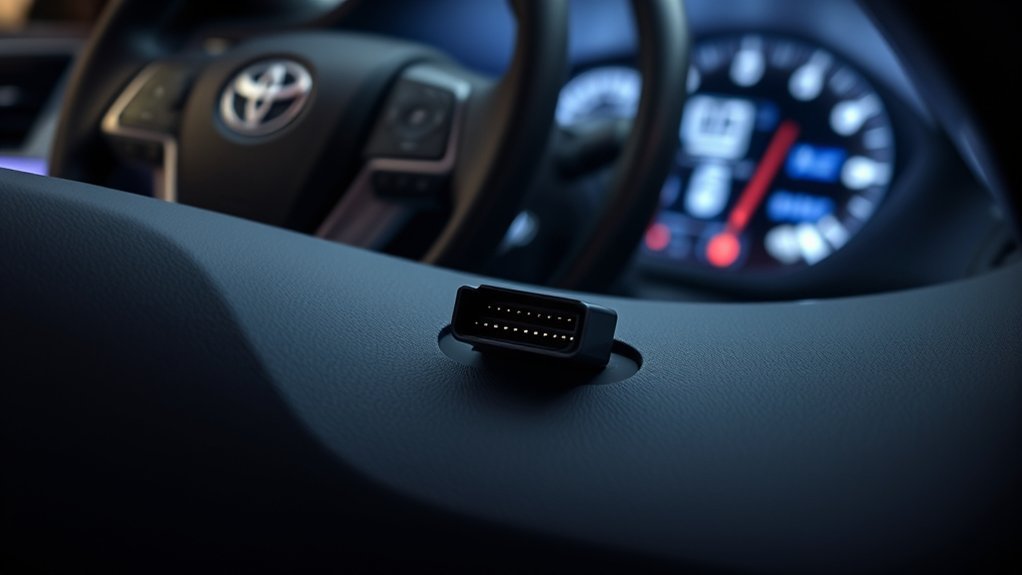
A properly functioning thermostat is vital for ideal engine temperature, but understanding how to check the status of your OBD2 monitors is equally important. Using an OBD-II scanner, you can easily perform monitor testing by connecting to the vehicle’s DLC connector, usually found under the driver’s side dashboard. Once connected, the tool automatically displays the status of each monitor, indicating whether they’re completed or still resetting. This is significant for passing emissions tests. Additionally, you’ll see the Malfunction Indicator Light (MIL) status and any Diagnostic Trouble Codes (DTCs) that might hinder monitor readiness. For effective use, verify the ignition is on and close the driver’s door to minimize distractions. Regularly checking monitor readiness with a diagnostic tool can help you identify potential issues before a state inspection, allowing you to address outstanding problems proactively. Always consider scanner recommendations for peak performance.
How to Fix Persistent Readiness Issues
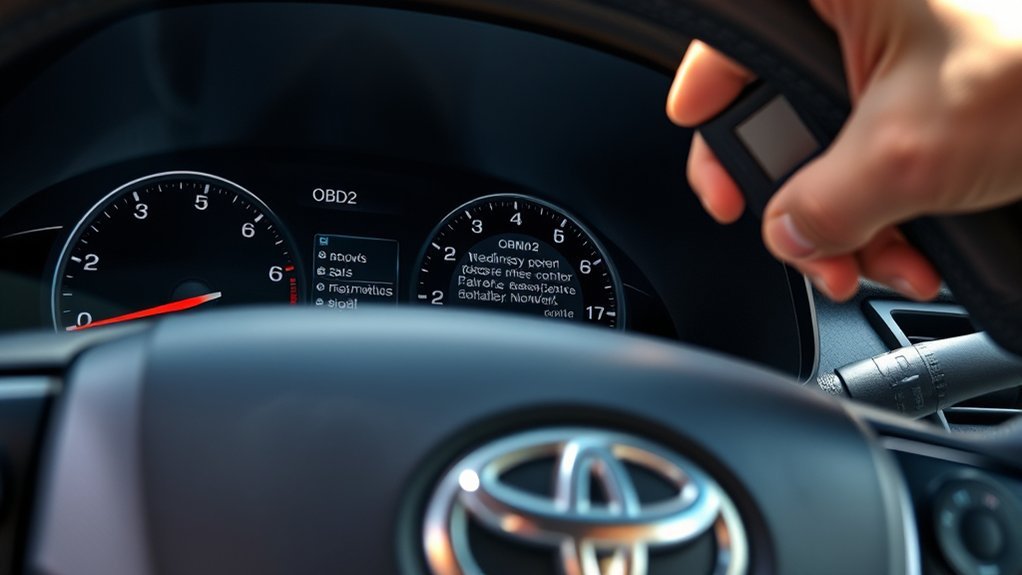
If you’re facing persistent readiness issues with your Toyota Camry, addressing the underlying causes is crucial for smooth operation and compliance with emissions standards. Here are some effective readiness strategies to tackle those persistent codes:
- Verify the engine reaches ideal temperatures (180°F to 183°F); replace a faulty thermostat if necessary.
- Clear any diagnostic trouble codes (DTCs) before starting the readiness process to prevent monitors from being stuck.
- Follow the specific OBD-II drive cycle: start cold, idle for 2.5 minutes with A/C on, and maintain 55 mph for at least three minutes.
- Regularly check for exhaust leaks and verify sensors (especially oxygen sensors and catalytic converters) are functioning correctly.
- Use an OBD-II scanner, like the Autel AL319, to monitor readiness status and confirm the Malfunction Indicator Light (MIL) is off.
Implementing these steps will help resolve persistent readiness issues effectively.
Preparing Your Toyota Camry for Emissions Testing
Preparing your Toyota Camry for emissions testing requires careful attention to several key factors. First, check that your Malfunction Indicator Light (MIL) is off; any active codes will prevent your OBD-II monitors from being ready. Drive your Camry for about 30 km under normal conditions, mixing city and highway driving, to reset these monitors effectively.
Ensure your engine reaches a temperature between 180°F and 183°F for ideal fuel combustion, so warm up your vehicle fully prior to testing. Maintain your fuel level between 35% and 85% to support the operation of certain monitors essential for meeting emissions regulations. Finally, follow the specific drive cycle instructions, including idle time and keeping a steady speed of 40 to 70 MPH, to maximize your chances of achieving monitor readiness. By adhering to these testing procedures, you’ll enhance your vehicle’s performance and compliance.
Frequently Asked Questions
What Are OBD2 Readiness Monitors?
OBD2 readiness monitors assess your vehicle’s emissions systems, ensuring they function correctly. This OBD2 functionality is essential for vehicle diagnostics, as it determines if your car can pass emissions tests and comply with regulations.
How Do You Know When OBD2 Is Ready?
You know OBD2’s ready when the Malfunction Indicator Light’s off, and readiness monitor indicators show “ready” after completing a specific drive cycle. Use OBD2 troubleshooting tips to verify status with a scan tool.
What Does I’m Readiness Mean on an OBD2 Scanner?
“I’m Ready” on your OBD2 scanner means all necessary diagnostics have passed. It confirms your vehicle’s systems are functioning properly, ensuring compliance for emissions testing and ideal OBD2 functionality. Drive cycles may be needed for readiness.
How to Complete Readiness Monitors?
To complete readiness monitors, follow diagnostic procedures by driving under specified conditions. Confirm the engine’s ideal temperature, maintain fuel levels between 35% and 85%, and keep the Malfunction Indicator Light off for monitor completion.
Conclusion
In the world of emissions testing, think of OBD2 monitors as the health check-up for your Toyota Camry. Just like confirming your body’s essential signs are in order before a big event, achieving readiness guarantees your car runs cleanly and efficiently. If your monitors aren’t ready, you risk failing the test — like showing up unprepared for an exam. Stay proactive with diagnostics and maintenance, and your Camry will breeze through emissions like a champ.