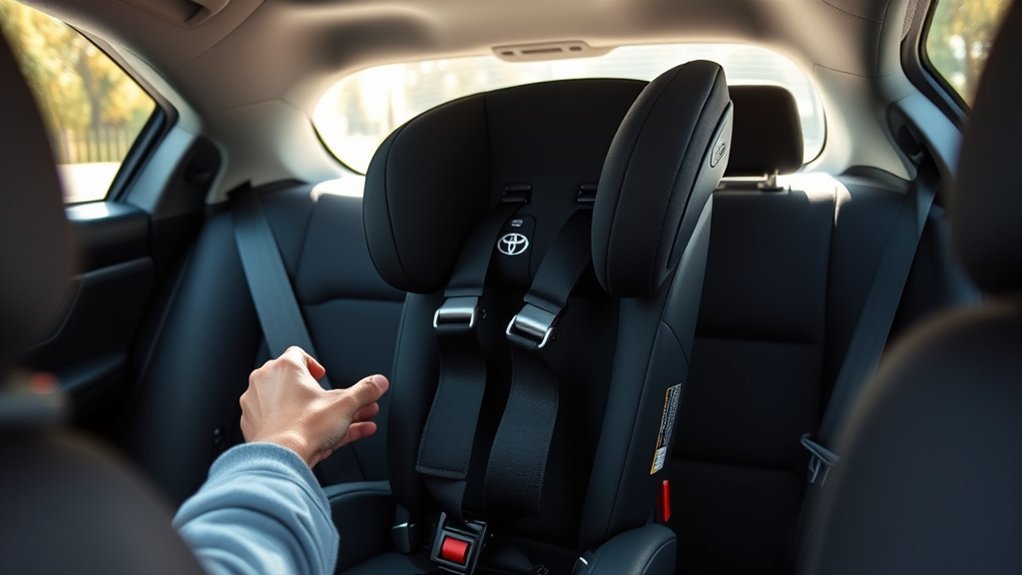
Installing a car seat in a 2018 Toyota Camry is straightforward once you know where the anchors are, which seating positions work best, and when to use the seat belt instead of LATCH. The safest setup is the one that matches your child’s seat manual, the Camry owner’s manual, your child’s size, and the position that gives a tight, correct fit.
Quick Answer
Use the 2018 Camry’s back seat for every child restraint. The rear outboard seats have lower LATCH anchors, and the rear center seat can use the seat belt or borrowed inboard anchors only if the car seat manual allows 16.1-inch anchor spacing. Forward-facing seats should use the top tether.
Key Takeaways
- The back seat is the correct place for car seats and boosters; children should ride in the back seat until at least age 13.
- The 2018 Camry has lower LATCH anchors for the rear outboard seats, not a dedicated lower-anchor set for the center seat.
- Center LATCH borrowing is allowed only when the child restraint manufacturer permits the 16.1-inch spacing stated in the Camry manual.
- Use either lower anchors or the seat belt to install a harnessed car seat, not both, unless both manuals specifically allow it.
- A forward-facing car seat should be attached with the top tether whenever the car seat and vehicle instructions allow it.
At a Glance
| Time Required | 10–30 minutes, plus extra time for a first-time test fit |
| Difficulty | Moderate for new users; easier after reading both manuals |
| Tools Needed | 2018 Camry owner’s manual, car seat manual, and a flashlight if anchors are hard to see |
| Cost | $0 if you already own the correct child restraint |
Choose the Safest Seat: Center vs. Side in a Camry
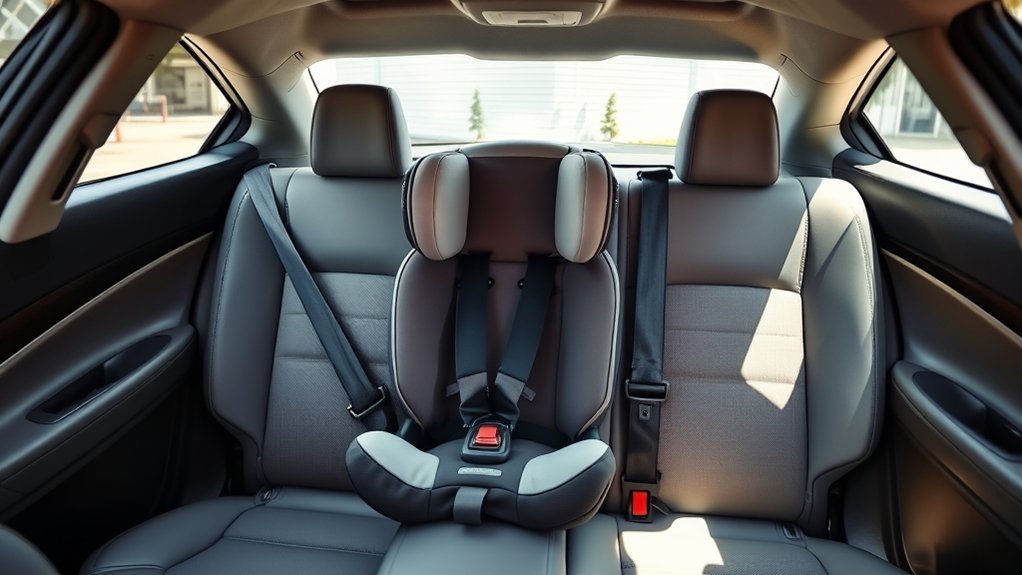
Start with one clear rule: place the car seat in the back seat. The center rear position is often preferred because it is farther from side impacts, but it is only the best choice when you can get a correct installation and the child restraint fits the Camry’s seat shape.
In the 2018 Toyota Camry, the rear center position does not have its own dedicated pair of lower LATCH anchors. Toyota says the inboard anchors from the two outboard positions are 16.1 inches apart and may be used for a center installation only if the child restraint manufacturer allows that anchor spacing. Child restraints with rigid lower attachments cannot be installed in the center using lower anchors.
If the center position gives you a loose fit, blocks buckle access, causes the car seat to lean, or conflicts with the child seat instructions, use one of the rear side seats instead. A correct side-seat installation is safer than a poor center-seat installation.
Note: The “best” seating position is the one where the car seat fits according to both manuals, moves less than 1 inch at the belt path, and allows the child to be harnessed or buckled correctly every trip.
LATCH vs. Seat Belt: Which to Use in a Camry?
Use either the lower LATCH anchors or the vehicle seat belt for a harnessed car seat installation. Do not use both at the same time unless both the car seat manual and the Toyota manual clearly allow that setup.
LATCH can make installation easier in the rear outboard seats because the lower anchors are built into the seat bight. However, lower anchors have weight limits. According to NHTSA, if your car seat label does not list a lower-anchor child weight limit, subtract the car seat’s weight from 65 pounds to find the maximum child weight for lower-anchor use.
The seat belt is the better choice when the child plus seat exceeds the lower-anchor limit, when the center position is used without approved lower-anchor borrowing, or when the seat belt gives the more secure installation. To install with the Camry’s seat belt, route the belt through the correct belt path, buckle it, slowly pull the shoulder belt all the way out to switch it into locking mode, then let it retract while pressing the child restraint firmly into the vehicle seat.
Warning: Do not guess on lower-anchor limits or use a seat belt and lower anchors together just to make the seat feel tighter. Follow the car seat label, the car seat manual, and the Camry owner’s manual.
Locate Camry Lower Anchors and Plastic Covers
The 2018 Camry’s lower LATCH anchors are located in the rear outboard seating positions, where the seatback meets the seat cushion. Look for the small plastic anchor covers at the seat bight. Open or remove the cover to expose the metal lower anchor bar.
Attach the car seat’s lower connectors to the correct pair of anchors only. Pull the LATCH strap straight through the car seat’s approved belt path while pressing the seat into the Camry’s cushion. When finished, grab the child restraint at the belt path and check movement from side to side and front to back.
If you are installing in the rear center seat, confirm whether your child restraint permits the 16.1-inch borrowed-anchor spacing Toyota lists for the Camry. If your seat does not clearly allow that spacing, use the center seat belt or move the car seat to an outboard position.
Pro Tip: Before tightening, pull the Camry’s buckle stalks and plastic LATCH covers out of the way so they do not get trapped under the car seat base.
Find & Connect Top Tethers
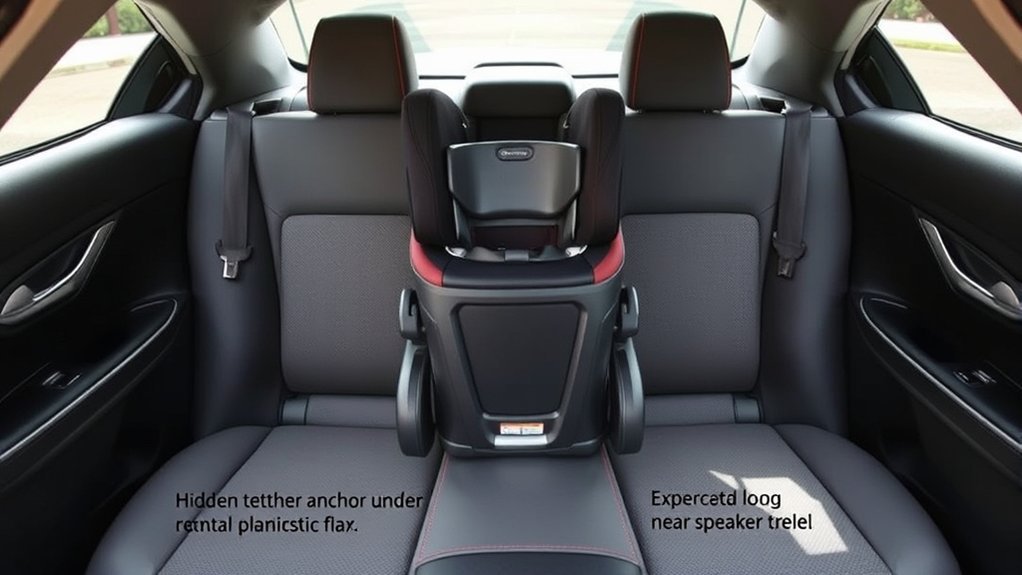
For a forward-facing car seat, the top tether is a major safety step because it helps limit how far the seat and child move forward in a crash. NHTSA recommends using the tether with a forward-facing car seat when the vehicle and car seat manufacturer allow it.
In the 2018 Camry, the top tether anchor brackets are on the rear package shelf behind the back seat. Open the anchor cover that lines up with your seating position, attach the tether hook to the bracket, and tighten the strap until the slack is removed.
If a head restraint interferes with the car seat, follow Toyota’s instructions for that seat position. The Camry manual says to remove the head restraint only if it can be removed and it interferes with installation. When the head restraint is raised, Toyota instructs that the top tether strap should pass underneath it.
Install a Rear-Facing Infant Seat in a Camry
- Place the rear-facing infant seat base on the Camry’s rear seat. Choose the rear center seat only if you can get a correct fit with the seat belt or approved borrowed anchors.
- Use either the lower anchors in an outboard position or the vehicle seat belt. Follow the infant seat manual for the correct belt path.
- If using the seat belt, route it through the rear-facing belt path, buckle it, lock the shoulder belt according to the Camry manual, and remove slack while pressing down on the base.
- If using LATCH, connect both lower connectors to the correct anchor pair and tighten the LATCH strap without twisting it.
- Set the recline angle according to the infant seat’s built-in indicator or manual. Never rely on a generic angle if your car seat gives a specific range.
- Click the carrier into the base, then confirm it locks securely.
- Place the harness at or below the baby’s shoulders, put the chest clip at armpit level, and tighten until the harness lies flat and you cannot pinch slack at the shoulder.
- Check the base at the belt path. It should move less than 1 inch side to side or front to back.
NHTSA found an estimated 46% combined misuse rate for car seats and booster seats, which is why a final hands-on check matters as much as the installation method.
[Products Worth Considering]

This Yangday steering wheel cover is designed for a custom fit on select Toyota models, helping improve grip, comfort, and control during everyday driving. Its breathable leather construction and non-slip inner lining offer a secure feel, while the sport-inspired design adds a stylish upgrade to the car interior. The cover is easy to install and helps protect the original steering wheel from heat, wear, and seasonal discomfort.

These custom-fit seat covers are tailored for Toyota RAV4 gasoline models from 2019 through 2025, giving your SUV a refined interior upgrade with a precise OEM-inspired look. The spill-resistant faux leather surface helps protect against daily messes, scuffs, and pet wear while staying easy to clean, and the reinforced airbag-compatible stitching supports safety without sacrificing style. A secure strap, zipper, and Velcro installation system helps keep the covers in place for a stable, comfortable fit in all seasons.

These universal seat belt pads add cushioned comfort to reduce rubbing and irritation from seat belts during daily drives and long trips. Made with soft foam lining and durable polyester fiber, they help protect the neck, shoulders, chest, and collarbones while adding a clean, stylish look to your vehicle interior. The easy Velcro closure makes installation quick, and the versatile design works with many straps beyond car seat belts.
Install a Forward-Facing Convertible Seat and Tether
A forward-facing convertible seat can be installed with lower anchors or the seat belt, but it should also use the top tether when permitted. Confirm that your child has outgrown rear-facing mode by height or weight before turning the seat forward.
[Products Worth Considering]

This multifunctional car seat back organizer combines a cup holder, phone holder, and purse hook in one compact accessory to help keep rear-seat essentials neatly arranged. Designed for easy headrest installation, it adds convenient storage for drinks, phones, bags, and other everyday items while helping reduce clutter during travel. The universal fit and durable construction make it a practical upgrade for most vehicles.

This front bumper license plate bracket is designed for Toyota Camry and Camry Hybrid models from 2018 to 2026, offering a secure and street-legal way to mount your plate. Built from durable, rust-proof plastic with included screw bolts and a wrench, it helps protect your bumper paint while making installation straightforward. The bracket fits US and Canada plates and is made to keep your license plate and registration sticker visible.

This multifunctional rear seat organizer combines a cup holder, phone mount, and hook to help keep passengers' essentials secure and within reach. Made from durable ABS plastic, it is designed for long-lasting use and helps reduce clutter while maximizing back-seat space. Its universal fit and simple tool-free installation make it a practical upgrade for everyday driving, road trips, and family travel.
Choosing the Right Anchor
Use the rear outboard lower anchors if your child and car seat are within the lower-anchor weight limit. If the combined setup exceeds the allowed limit, or if you are installing in a seating position where lower anchors are not approved, use the Camry’s seat belt instead.
For the rear center seat, do not assume you can use LATCH. Toyota allows the inboard lower anchors from the outboard positions only when the child restraint manufacturer permits 16.1-inch anchor spacing. Rigid lower-attachment seats cannot use the center lower-anchor setup.
Securing and Tethering
Route the LATCH strap or seat belt through the forward-facing belt path. Tighten until the child restraint moves less than 1 inch at the belt path. Then open the correct rear-shelf tether anchor cover, attach the tether hook, and pull the tether strap snug.
Finish by placing the harness at or above the child’s shoulders, setting the chest clip at armpit level, and tightening the harness until it passes the pinch test.
Warning: Do not turn a child forward-facing just because they meet a minimum age. The CDC and American Academy of Pediatrics recommend keeping children rear-facing until they reach the maximum rear-facing height or weight limit of their car seat.
Install Booster Seats With Fixed Head Restraints
A booster seat is not installed the same way as a harnessed car seat. Its job is to position the Camry’s lap-and-shoulder belt correctly on the child. Use a booster only after the child has outgrown the forward-facing harness by height or weight.
Place the booster on the back seat so it sits flat and stable. Buckle the child with the Camry’s lap-and-shoulder belt, then check the belt fit. The lap belt should lie low across the upper thighs, not the stomach. The shoulder belt should cross the center of the shoulder and chest, not the neck, face, or upper arm.
If a high-back booster conflicts with the Camry’s head restraint, check both manuals. Do not force the booster into a reclined or gapped position unless the booster manufacturer says that fit is acceptable. A backless booster may work better for some older children if the vehicle head restraint supports the child’s head properly and the booster manual allows it.
[Products Worth Considering]

These curved headrest hooks add convenient rear-seat storage for bags, coats, and groceries, helping keep your car interior neat and organized. Designed to fit matching headrest posts, they install quickly without removing the headrest and provide reliable support for everyday items in cars, SUVs, trucks, and more.

This car seat headrest hook set turns unused seat space into organized storage for bags, groceries, umbrellas, backpacks, and everyday essentials. With sturdy support, smooth rounded edges, and 360-degree rotation, it helps keep items upright, secure, and easy to reach while reducing clutter during drives. The quick, tool-free installation fits most vehicles with compatible headrest bars for a simple upgrade to your interior.

Keep your car interior tidy with these durable headrest hooks that add convenient hanging storage behind your seats. Designed to hold bags, coats, umbrellas, bottles, and groceries, they help prevent items from rolling around during drives. The tool-free, rotating design fits most vehicles and swings flush when not in use for a clean, space-saving setup.
Fix Fit Issues: Narrow Center, Short Buckles, Anchor Borrowing
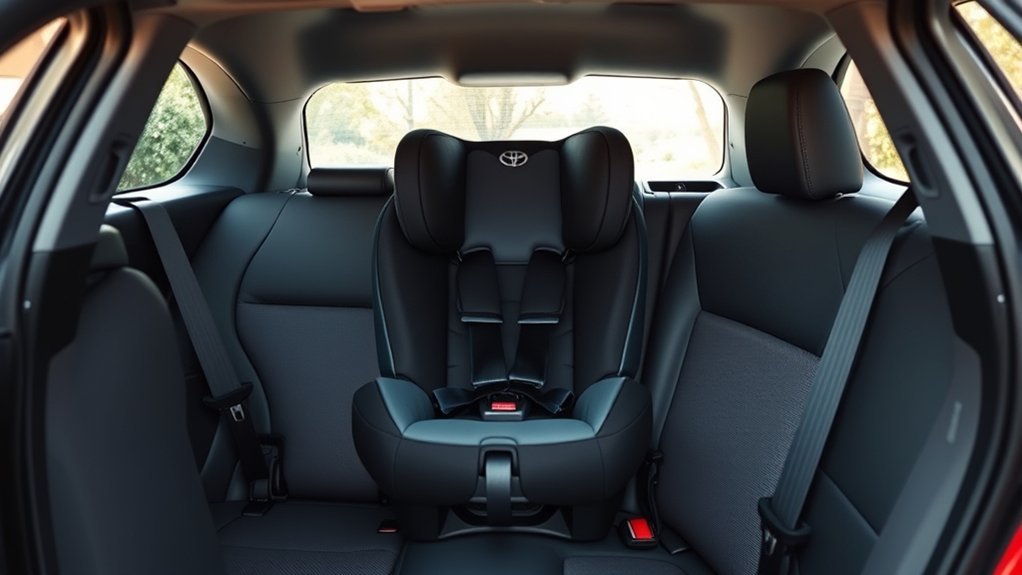
The Camry’s rear seat can fit many car seats, but the center position, buckle locations, and head restraints can make some combinations tricky. Fix the fit problem before you drive, not after.
Narrow Center Seat
If the center position is too narrow, try a narrower car seat or move the restraint to an outboard seat. Do not let the car seat ride on top of a buckle, tilt sharply, or press so tightly against another restraint that either seat becomes hard to buckle or check.
When installing multiple seats, install and test one seat at a time. After both seats are installed, recheck each one independently at its own belt path. Each seat still needs to move less than 1 inch.
Short Seat Belt Buckles
Short buckle stalks can make it harder to route and tighten the seat belt. Before setting the car seat in place, identify which buckle belongs to your chosen seating position and make sure it will not be trapped under the base.
Do not use an aftermarket seat belt extender to solve a car seat installation problem unless both Toyota and the child restraint manufacturer explicitly approve that exact use. In most cases, a different seating position, a different belt path technique, or a certified technician inspection is the safer fix.
Borrowing Lower Anchors
Borrowing lower anchors means using the inboard anchors from the two outboard seating positions for a center installation. In the 2018 Camry, Toyota lists this spacing as 16.1 inches, but the child restraint manufacturer must also approve that spacing.
Never attach two car seats to the same lower anchor at the same time unless both the vehicle and car seat manufacturers explicitly allow it. When in doubt, use the seat belt for the center seat or move one restraint to an outboard position.
Final Safety Checks and When to Get Inspection
After installation, grab the car seat at the belt path and move it side to side and front to back. If it moves more than 1 inch, tighten it again or choose another installation method or seating position.
Next, check the basics: the belt or LATCH strap is routed through the correct belt path, the seat belt is locked if used for installation, the tether is attached for forward-facing mode, the recline angle matches the car seat instructions, and the harness is flat and snug on the child.
Register the car seat with its manufacturer so you can receive recall notices. You can also use NHTSA’s car seat inspection resources to find a certified technician. Get an inspection after a crash, after moving the seat to a different vehicle, when switching from rear-facing to forward-facing, or anytime the installation does not feel solid.
Frequently Asked Questions
Can you put a car seat in a Toyota Camry?
Yes. You can install a car seat in a Toyota Camry as long as the child restraint fits the vehicle seat and is installed according to both manuals. In a 2018 Camry, use the back seat, choose either lower anchors or the seat belt for a harnessed seat, and use the top tether for forward-facing seats when allowed.
Does the 2018 Camry have LATCH in the center seat?
The 2018 Camry does not have a dedicated set of lower LATCH anchors for the rear center seat. Toyota allows use of the inboard outboard anchors, spaced 16.1 inches apart, only if the child restraint manufacturer permits that spacing. Seats with rigid lower attachments cannot be installed in the center using lower anchors.
Is LATCH safer than the seat belt in a Camry?
No. LATCH is not automatically safer than the seat belt. The safer method is the one that is allowed for your child’s weight, your car seat, and your chosen seating position, and that gives a correct installation with less than 1 inch of movement at the belt path.
Where are the top tether anchors in a 2018 Toyota Camry?
The top tether anchor brackets are on the rear package shelf behind the back seat. Open the anchor cover for the seating position you are using, connect the tether hook to the bracket, and tighten the tether strap until it is snug.
Can three car seats fit across a 2018 Camry?
Sometimes, but it depends on the exact car seats, child sizes, and buckle access. Use narrow restraints, test each installation independently, and do not share lower anchors between seats unless both manufacturers clearly allow it. A certified child passenger safety technician can help confirm a safe three-across setup.
Conclusion
You can install a car seat safely in a 2018 Toyota Camry by choosing the back seat, using the correct belt path, following the LATCH weight rules, and attaching the top tether for forward-facing seats. The biggest decisions are whether the center position truly fits and whether lower anchors or the seat belt are the correct method for your child restraint.
Before every trip, do the simple final check: less than 1 inch of movement at the belt path, no twisted straps, correct recline, snug harness, chest clip at armpit level, and proper lap-and-shoulder belt fit for booster riders. If anything feels uncertain, schedule a hands-on inspection with a certified child passenger safety technician.
Sources
- Toyota Owners: 2018 Camry manuals and warranties — official owner’s manual source for vehicle-specific child restraint instructions.
- National Highway Traffic Safety Administration: Car Seats and Booster Seats — LATCH limits, tether guidance, installation help, recalls, and inspection resources.
- CDC Child Passenger Safety Resources — rear-facing, forward-facing, booster, and back-seat age guidance.
- CDC Child Passenger Safety — proper booster belt fit and back-seat recommendations.
- NHTSA Research Note DOT HS 812 157 — 46% estimated combined misuse rate for car seats and booster seats.